The Andy Hnilo Show with Master Coach Christine Hassler
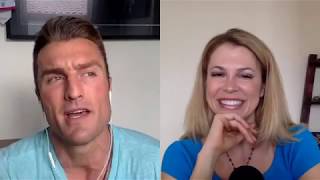
A recorded interview on The Andy Hnilo Show (host Andy Hnilo) featuring master coach and author Christine Hassler. Christine recounts her trajectory from aspiring actor and Hollywood agent to a personal crisis (career collapse, relationship breakup, health and mental-health struggles) that catalyzed a shift into coaching, writing and teaching about emotional healing and personal transformation. The conversation covers evidence-based-seeming coping vs healing distinctions, concrete emotional-release practices (release writing, temper-tantrum technique), belief-system work, visualization/visioning (including voice-memo replay), and practical steps for making life changes (change your environment, expect old fears to surface, prioritize self-care, get accountability, engage your spiritual sense, and serve others). The episode closes with where to find her books and podcast (Expectation Hangover; Over It And On With It) and links to her Inner Circle community.
All right, everyone, thank you so much for joining me on the Andy Nilo Show. I have my guest, Christine Hassler, and this is really cool for me. I actually, you know, like, a lot of. A lot of people out there, obviously millions of people out there that listen to Joe Rogan. I first heard your podcast with him when was. So it was months ago. Was it October?
End of October.
Okay. Yeah, it was October. And it was just. It was one of those things where I was. I was listening. I mean, I. We'll get into our morning routines, but I think I was upside down on my inversion table.
I love those tables.
Yeah, they're great. I just did it, actually, before I hopped on here with you for the second time today. It's good to just get the blood flowing, especially if you've been up. I get up pretty early in the morning as we dip into the afternoon. It's a good way to really oxygenate that blood and get the cognitive function going, and it's fun. Yeah. Yeah, absolutely. So I remember hearing your podcast with him, and a lot of things hit home with me. And then also, he said some really cool things. I remember getting up and just, you know, you listen to a podcast and then you watch a podcast. Like, I had to just lock in and just watch both of you two just kind of going back and forth, and I just really. It was funny. I was just standing over my computer just watching. It was great, because I can really relate to several things that you touched on, and I know a lot of other people can as well, so it's really an honor to have you on, so thank you for taking the time to join me.
Absolutely. Happy to be here.
Nice. All right, well, if you would. You'd like to introduce yourself to my audience.
Sure. What does your audience like to know about people?
Well, so just where are you from originally? From Texas, right?
I am Texas, yes.
Okay.
Grew up in Dallas, then my family moved to Austin. So I spend about probably about a quarter of my year in Austin. I have three nephews that I'm super close to, and my parents live there, too. It's actually quite cool. My parents and my sister and her husband and their kids all live on the same street. So it's kind of like a compound when I go, and I just bounce back and forth between their homes, which is great. And that was an accident, the way it all happened. It was kind of a synchronicity thing. So I spent a lot of time there, spent a lot of time traveling. I've been. I've had A. I call it a personal transformation company for about 11 years now. And I'm just super passionate about helping people live into their full potential. And the way I think that we do that is we clear ourselves of our suffering.
Yeah.
We heal our past. We transform it. We become the person that we're meant to be versus the person we were told we are or that we created to survive. And. And that takes the form of writing books, speaking, coaching online courses, hosting a podcast where I coach people live on the air. I think I said retreats. Just a lot of different things where I get to basically just teach, teach and inspire and give people. You know, we're taught algebra, which is. I've never used algebra. I took a year of Texas history that was worthless. I was never taught how to process my emotions. I was never really taught that my thoughts create my reality. I was never really taught how to make use of this human thing that we are so blessed to have. And so that's really what I'm here to do, is to share what I've learned. I've had amazing teachers and experiences and I feel like I've eaten at a really great restaurant and I want everybody to try it.
There you go. I just said that similar to. I have a skincare line and it's like I want to create something similar to like a meal. And you want everyone to love it and kind of explain, you know, it's just that's how I feel about my products. And it sounds like that's how you feel about what your knowledge base and what you've learned through both experience, but also through your education as well, which I want to get into. So I really liked your story about small town girl moving to la. You originally wanted to get into the entertainment industry, but as an actor. And then that led to. Well, I'll let you explain it.
Well, as a kid, I was an actor. Socially, it was really hard for me. I didn't have a lot of friends. And so my parents, they did a really smart thing. They were like, well, why don't you act? That kind of gave me permission to, I don't know, be more extroverted when I was pretending to be someone else. And then I got scouted and I got moved out to LA when I was, I think between my junior and senior year in high school. And I did the whole audition thing and I got a couple things, but I just saw the amount of rejection that was involved and my, like, tender heart could not take that. And although I was desperately insecure socially, I Did really well in school. Like, I won the science fair. I was a huge nerd. And so I knew I could rely on this. That was always the thing I knew I could count on. I'm like, okay, well, I need to do something where it's not based on someone else giving me a job because, like, I have the right hair color, but it's more about I want to be able to create it. So I went into the business side of entertainment. I worked for an agency, worked at Paramount for a while, circled back to becoming an agent and was, I think the youngest ever female agent ever. And I was 25 when I got promoted and I was living this crazy, amazing Hollywood life. I was dating a big time movie producer. And I had everything, like my life checked, all the boxes of everything I thought would make me happy. Because I was definitely someone that lived in. When thens. When I get this thing, whether it be a job or money or lose £5 or get this guy, then that will magically be the thing that makes me happy. And Andy, I'm sure you can relate. Like, I kept checking things off the list and it was like, nope, that's not it. Nope, that's not it. Nope, that's not it. So to make a long story short, everything kind of came crashing down right before I turned 26, left my career, was estranged from my family, got diagnosed with an undiagnosable autoimmune disorder. On top of being on antidepressants for. I was put on antidepressants when I was like 11. So I was also struggling with depression. I was a functional. I was functional, but definitely struggling with depression and anxiety. My fiance dumped me six months before my wedding and I was in tons of debt. So everything that, that I, that we cling to for security and identity, gone. Had very dark night of the soul period of time that turned into a bit of an awakening. And that's what was the pivot point for me and got me on this whole track of what I do now. So this was never planned. It was something that I think, you know, was always meant to be, but I didn't, I didn't know it. Like, I had to discover it myself.
How did you discover that? I'm just, I mean, that I've been through dark periods myself, so I'm just trying. What did you do for coping mechanisms? Did you. Did you kind of. Did you do a lot of reading? Did you. I know eventually you ended up in the. Well, I'll let you.
I. So when I was very lucky, When I was 23, I met my first coach, and her name is Mona. And so I had three years of doing some pretty intense personal growth work. I'd been seeing shrinks since I was a little girl. And I think therapy and psychologists and psychiatrists are very helpful, but sometimes you can get into just telling the same story over and over again. And I was very identified with being depressed. And Mona was the first person that was like, you can get off these meds if you want to. Like, this doesn't have to be your identity. And I was like, no. Like, this is who I am. And so the seeds were starting to be planted, and she started to really explain things to me in a way I had never heard before. So when all this happened, I did have a bit of a foundation. But then really the turning point was I went to go look for a book to help me, and there was a book called the Quarter Life Crisis. And I'm like, awesome. That's my book. That's what I'm having. And I read it, and it's a great book, and it's helpful. But I found that it was more advice on how to get the relationship or how to get the career. It was kind of the external things, which we all need advice on, but I wanted the internal stuff. And so I was like, well, maybe I'll just write one. Like, I need to get myself out of this mess. Maybe I'll just write this for me and other people will like it. And I think that that's what, you know, I'm sure you've interviewed a lot of people. This is part of your story, too. It's like the things we struggle with and the things that we want that aren't out there, we either end up inventing or creating. And then it really resonates with other people because we're. It's on. It's riding on so much authenticity and so much heart, because it's like we're our own best client.
Right? Yeah, that's. Yeah, I can definitely relate.
Yeah. So that was it. 20 something 20 everything was my first book. And what was it called? 20 something 20 everything.
Okay?
Yeah. And, you know, I just. Everybody watching or listening, you know, it's like, I'm glad I wrote that book in 2005, and I'm really glad social media wasn't big then, because I probably would have looked at everybody else doing things and said, oh, who am I to blah, blah, blah, blah, blah. And I did it. I just did it. And I share that because I think so many people Have a moment like I had and you've had. And they think, well, who am I to share my story or who am I to create this like other people are doing it. And I just want to say, please don't let that be an excuse.
Right.
Only you can do it your way and there are billions of people in the world and now more than ever we need these stories of transformation out there. Like we need to be creating services and products that aren't out there that we need. So please don't let the who am I? And the comparison thing stop you.
And I could definitely relate to that. I had some of my best friends telling me just with no, with all due respect, I'll never forget it. With all due respect, what do you know about skincare? It's just, I just had. When you're using yourself as your own biggest science experiment, as you did, and you're using yourself as the work and as the patient or in my case, just like regenerating my skin and alleviating scarring and things like that. So I could totally relate to that. Who else are you going to put more effort towards than your own in your own recovery? That's really cool. So. But yeah, it's interesting though. I mean I didn't. Yeah. 2005. So I was I guess technically on social media, but I wasn't. It wasn't anywhere near where it is right now. No.
So I think I still had a BlackBerry, if I even had that. Like it was. Things have moved so rapidly, you know.
Yeah, definitely. And it's like you said, I grew up. I think it's a luxury, as you said, to speak to someone, to kind of just air it out. But it's. You talked about. But okay, you leave, say it's a 45 minute session or an hour session. It's like. But what work do you do? You got to commit, you use that word into taking action, into really identifying whatever that issue is. And then you had the example of like you're frustration, something. Say if you have like a little anger thing, you just take it out, you acknowledge it and you just identify. You don't just push it away and just let it fester and let it. And suppress the emotion. I think it is. So like for people out there. Yeah, for people out there. What are some of. I mean, I know every situation is different, but it's in your case, depression. But say, say in my case, coming up with, I had anxiety in high school and I saw people for that and I was just, what are some great Coping mechanisms that you can. That you turn to for that.
Yeah, well, I think there's coping mechanisms and then there's actually healing mechanisms. Right? There's both. And I think so many people struggle with anxiety too, because we're not really. Emotions are not something that are really, like, encourage in our world. Happiness, sure, but anger and sadness and shame and guilt. It's like, especially those of us who, you know, may be people pleasers or maybe control freaks or any of those things. It's like we just manage our emotions with our mind. That's how most humans try to manage their emotions. They manage them with their minds. And I love the personal growth industry, but I think one way it misleads people is that you can just positively think your way out of trauma or positively think your way out of emotional feelings. And yes, in a lot of ways, our thoughts create our feelings. We also have emotions that are natural responses to things that happen. If you've just had a breakup, if you lost your job, you're not just gonna pep talk your way right out of that. And this is why I was so. My last book is called Expectation Hangover. And one of the reasons I wanted to write it is because there was so much out there that promised quick fixes to people's lives, like disappointment and heartbreak and curve balls that we don't really want. And the first section of the treatment plan is the emotional section, the emotional release work. And the tools that. There's a bunch of tools that I teach in it, tools that have worked for me, everything that I've learned from Mona to different teachers, to my spiritual psychology program, to all of it, and just things I found for myself. So the biggest thing is expression of emotion. Getting it out is so important. And I don't mean getting it out, people. So, like, Andy, if you really made me mad, the healthy way to handle that would not be to go and just scream my head off at you and point my fingers and blame you. A more healthy way would be to do something that I call release writing or the temper tantrum technique. So release writing is you would. I would just write like, oh, my God, I'm so angry like that, Andy. Probably as I'm writing, it would remind me of other things that have made me angry, like whatever. And. And it's not like journaling. It's basically so messy, you can't even read it because you're writing so fast. And then when you feel the emotion kind of up and out, you just rip it up. And then temper tantrum is like you get like a pillow and you just like scream and yell and let yourself have an adult temper tantrum, kind of like kids do. If you let a kid have a temper tantrum and just let them be, they'll ride the wave all the way through it and end up self soothing and then they're done. The number one problem that adults have with releasing emotion is we recycle it instead. And how we do that is. Let's say I'm having a good cry. Okay? Let's say, you know, I was going through heartbreak or something and I'm crying, I'm crying, but I'm not feeling better. That's because I'm having the emotion, but I'm analyzing. I'm going, why did this happen, what you did? Why am I so sad? I'm such a loser. There's like this mental judgment and commentary going on at the same time. So the emotion that's coming up and out is met with analysis and judgment which just kind of like makes it loop back around because it doesn't get free when we analyze and judge it. So what we have to learn is how to meet our emotion with compassion. Compassion co means with passion, actually means suffering. The original definition of passion is suffering. So being with the suffering and when we're having that emotion, just being with ourselves and being kind and saying it's okay, like just letting the emotion ride its way through and that is such an important thing to learn how to do, to be that compassionate, loving parent to ourselves is one of the things that I think is foundational to having like a healthy psyche and a healthy relationship with ourselves. So I just like rambled on for a while. I hope I answered your question.
Oh, you did? No, I'm listening. It's difficult because I'm trying so hard just to listen because I want to learn, but I also want to keep creating as much conversation as possible for the listeners. So I mean, it's. Nah, what you said is absolutely something I can relate to. I had some questions because right at the beginning, I'm one of those persons that. One of those people that just like, what's next? What's next? What's next? It's part of the reason. I mean, I don't know, but you got to really enjoy it. I remember you touching on something. We're always so planned out in the future and like, what's next? And rather than, I mean rather than enjoying the journey, not like just constantly searching for the next destination of success and achieving things like that, it sounds like that was like your first. How you were when you first. When you first came into LA and you were just success, success, success, and then just. But you didn't really get to enjoy the moment. And so, I mean, what did you do for that? That kind of let you just go, you know, I'm, I'm good, you know, with.
Yeah, I wish I could say it was just this 1, 2, 3, step.
Yeah, right, yeah.
That I could sell to you in an ebook. No, it was. Here's the thing, it was the constant overachieving as a compensatory strategy because, like, insecurity is a major driver. Like, insecurity can breed wonderful success. It really can. I mean, Hollywood's a great industry, but I worked in it for a while and I can say that a lot of people are compensating for something, you know, and that's not just in Hollywood, that's out there in a lot of places. A human thing. We think something is going to make us feel better about ourselves and it's really an inside job. So for me, it was major expectation, hangover. It was losing everything that I used to define myself and having to kind of get down on my knees and be like, okay, I surrender. Like, I am willing to learn a different way. And for someone who prided herself on being intelligent, I had to have beginner's mind, Nandy. I had to be like, okay, I don't know, like, I don't know. And really kind of empty my mind of everything I thought I knew and everything I thought would make me happy. Which is major scary. Major is really scary because then, you know, I went into the land of uncertainty. And most of us don't love uncertainty, right? It's like, we want pleasant surprises, but that whole, like, leap of faith thing into the land of the total unknown is like, ah, yeah, so it was that. It was losing things, going into uncertainty, and then having a beginner's mind and asking this was the pivotal question. I stopped asking, why is this happening? Or why is this not happening? And started asking, what am I learning? And had to learn that things don't happen to me, they happen for me and I create my reality. So I told my, you know, sob story of lost my job, family, fiance, blah, blah, blah.
It's a lot, right?
Yeah, that could be a major pity party, like throw. You know, there's a lot that happened. But that totally would have kept me in victim. And I had to be honest with myself, compassionate with myself, but also honest with myself and go, okay, Cristine, the common Denominator here is you. Like, this isn't just random. Like, you're the common denominator in all these situations. So learning that balance, Andy, between self responsibility and acknowledgement and also compassion is huge. And knowing too, that we don't necessarily want the things we think we want because of the things we want them because of the way we think they're going to make us feel.
Yeah.
So I think having vision is important and being in the present moment is important. Having a positive vision of where you're going is great because we're always creating our reality. So if we're gonna, like, imagine something in the future, let's make it good, but create the feeling of it now. You know, like being able through visualization.
Do you do visualization? Obviously, yeah.
Yeah. So, like, for me, I'll give. I'll just get super personal and give an example of my life. Is that correct? Sure.
Oh, yeah, yeah, please.
Yeah. So for me, I really wanted a romantic relationship. I got partnership. Not just a relationship, it's easy to get a relationship, but a partnership, shared vision, like walking in the same direction. Just like, really. I've had many different kinds of relationships, really just an aligned partnership. And so I've been really conscious about calling that in. And so I have to feel what it would feel like to have that. So honor the longing. Right. But at the same time feel those amazing feelings that that would be like, right now. Because it's like so many people want something in the future. So, like, let's say I want a relationship, but right now, in the present moment, I'm feeling lonely and I'm feeling like a loser, and I'm feeling like it's never going to happen then. Like, that's not creating positive vision. So it's being in the now, being so grateful for everything I have in the now, and just feeling into that feeling of that desire while at the same time having a vision. And so I write things out. The other thing that I do, which is one of my favorite tricks, and I do little voice memos and I record my living vision. And our own voice is incredibly hypnotic. You've been talking to yourself your whole life, so your brain listens to your own voice very, very well. And so I'll just throughout the day, throw in my earbuds and listen to myself reading my vision of it. I do the same thing for work. I have, you know, whiteboard my goals and everything like that. So I'm constantly, constantly feeling it, thinking it, listening to it. You want all your senses involved when you're visioning and at the same time. So I love my life, like so in the sense of nothing's missing. So that balance between letting yourself feel the longing, because the longing and the desire brings a vision forward, but not from the place that anything's missing. Longing from a fulfilled place is, to me, the sweet spot.
Yeah, definitely. Now, I mean, acting as if. I mean, I play baseball and just intrinsic moto. Well, that's actually different. I was going to say intrinsic motivation, but visualization. And then just we did little exercises of laying on our back and going through the at bats and then feeling how it would feel to round the bases after hitting a home run or whatever. You know what I mean? Just feeling that. But in your case, it's very similar to walking, wanting that relationship, that partner. So, yeah, you put in the work. I've experienced that time and time again. I know you had touched on the Secret in the podcast I listened to, and I was doing that even before. It was just kind of just letting it out there to some type of higher power that you believe it's going to happen. Being. Gratitude and perspective have been my driving forces.
Yeah.
And just go ahead.
I think also the thing about the Secret is, I mean, it's great in a lot of ways, but it missed a lot. It missed one, two key things. Number one, you've got to update your belief system. So it doesn't matter how much I visualize being in an amazing relationship, if I don't think I'm worthy, if I don't think I can balance that and my work, if I don't think it's going to happen. Right. If deep down there's a limiting belief that contradicts my vision, it doesn't matter how many vision boards I do, it's not going to happen. So we've got to work with the unconscious mind and reprogram and update belief systems. A lot of people watch the Secret. They do all their visioning, but it's still not happening because they haven't gone back and dealt with the issues that created the programming and therefore then updated the belief system. So that's. That's a huge one. And then the next part is, you've got to take action.
Take action. Yeah.
You know, take one step. Even if it's just a little, little baby steps. It doesn't just happen. You know, the universe is not a restaurant. You don't just, like, put in your order and boom, it appears like it. The. I always say that spirit, insert whatever word, works for you. Universe, whatever. Meets us at the point of action and intention. And we really need both of those things to co create what we want in our life.
Right? No, I love that, I love that. I do similar stuff that all day long and it, and it just regardless of the result, the destination, whatever, it feels good while you're doing it, you're going to see little, just, you know, you buy in. You're going to see little hints here and there and you're going to feel good because you're following, you're feeding that soul of just believing, you know, I mean, belief, inner belief, self belief, treating others right, perspective, gratitude. I keep it really simple then. Also, I know you like to work out. I mean, nutrition's played a big part also in your. Just in your own mental health. I mean it's so everything. You just cover your bases and just really believe in the system and that it's going to happen. It's tough to teach, but it's work. But it's. So I'm just kind of curious. I've had so many, I've had some people that I used to consult with that, you know, are a little down and out and just trying to find their way and wanting to take that leap. And so it's difficult when say, for instance, they're in a profession that they, they're not passionate towards. I mean, what do you do if you, I'm sure you consult with some people that are just, they're just going through the motions and not following their passion in life. I'm wondering what your advice to them would be as far as taking that leap. I mean, how do you quit your job to follow your heart? It's really difficult. I was told that for a while and I'm like, God, I almost took offense to it because I couldn't. I was like, man, here I am, you know, what am I going to do? Quit my job? But man, that person was correct. I was, you know. So do you have any advice on that?
Yeah, I think you have to, you have to know yourself a little bit. Some people taking a big leap is invigorating and like that's the only way they can do it. They've got to rip the band aid off fast. So if you're the kind of person that like will jump in a pool, just dive right in of cold water, then you're probably, you know, risk is kind of accepted, exciting to you. If you're the kind of person that steps into a pool step by step and gets used to the temperature, then you're probably someone who needs to take it one step at a time. So if you know that your job is sucking the life out of you or it's just not where you want to be or you feel called to do something else, you can quit tomorrow. That definitely will light a fire under your butt. Or you can make a plan and take action steps and start doing other things on the side and coach. And I think that people wait too long for some big epiphany or to have it feel safe or some sign from the universe. Here's the thing. If you're miserable, that's the freaking sign. If you don't like something in your life, boom, there it is.
Yeah.
What more confirmation do you need than that? So stop waiting for it to feel safe. Because any big change, anything I've done in my life that has ever been really transformational has never felt safe. I've always been scared a little. It's never been like, oh, I'm totally sure about this. I mean, I was married, and when I left, when we split, I was like, 51% sure it was the right choice and 49%, I don't know, but that I was more this way. And I had. I knew, like, the feeling that I had of, this has reached its expiration date. I've got to honor this. It's like, we've got to listen to that. And our head is so. Our mind is so powerful, but our heart is where wisdom is. And that's been a big thing for me because I was very safe in my head. And I like to intellectualize things. And so really listening to my heart and the feelings that, you know, our heart doesn't give us, like, the full picture. It's just like, this is a no. This is a yes. And we don't know what's next, but we have to take that step. So if you're somebody to get back to the job thing that's feeling like you want to get out, start taking action now. Because the other thing that does is it builds momentum.
Right?
Starts building momentum. Even if the action is you have. You call people that are doing things that you really want to do or that are interesting. You do informational interviews with them. Maybe it's taking a course. Maybe who. It's like spending more time doing a hobby that you really enjoy. Just sort of get your creativity going again. You can't just sit and wait for the whole plan and the whole future to be revealed to you, because it usually doesn't work like that. Yeah, yeah, but don't you know, don't be a victim and don't blame the job and don't blame the government and don't blame the economy and don't blame Trump. Like you, you have power over your life.
No, absolutely. I mean, and then trusting, I call it intuition, it sounds like. Yeah, the same thing. Heart, mind, everything. I mean, it's just these signs that keep pointing towards your path. Gosh. Was it you? Yeah, it was, it was some. I don't. It's a similar situation. It was a policeman. I don't know if you're getting a ticket or you talked to someone. He called his wife and said, I want you to talk to my wife or something.
This on Rogan. He was, he was so funny. His face when I was telling this story, he was like, you do what with these people? So at some of the retreats that I do, I do what's called an anger burn. And this is specifically for a retreat for women. Women have never, for the most part, really don't learn how to process our anger. We can do sadness, but we tend to withhold anger. And that makes a lot of women irritable or bitchy or judgmental or throws our hormones and thyroid off and things like that. Weight gain, that's another. When women suppress emotion or people in general. And so I facilitate an anger burn where in a very therapeutic way. It's not just, it's not just cathartic. It's not like I say, okay, everybody just start screaming. Like there's a build up to it. And it's, it's, it's a way to, like I said, release emotion. So I was having one of these in this house. I rented a house to hold the retreat. And it's loud. I mean, when women, when, like that starts to be unleashing, it's loud and it's awesome. It's so awesome. It's like freedom. Like, I see people just getting free and somebody called the cops because it sounded pretty bad. And they show up at the door and I kind of saw them out the window and I say to my assistant, like, okay, you manage this. I go out to the cops and the cops are like, what is going on here? Like, And I explained to them, I'm like, oh, I'm a life coach and blah, blah, blah. And women can get irritable, bitchy if they. And the cops just look at me. And one cop is like, okay. And the other one just looks at me. And I don't know, I'm like, is he gonna give me a ticket? Like, what's going on? And he goes, can I have your card? I need to send my wife.
That's what it was. That's hilarious. I mean, there it is. I mean, it's just, you're right where you're supposed to be. I love that. I, you know, I want just like, you know, I know you, I know you have another call coming up and I just want like, yeah, I mean, if you, if you have any like top five or. I know that top three. Just tips for. If you're kind of in a, in a similar situation of when you're in that breaking point. Right. You know, picture yourself. I forget, you know, in the beginning stages of when you were leaving and just starting to find yourself into your past path, what are some action steps that you would recommend into doing that, into taking that step, into taking that leap? Because I'm sure a lot of people can relate to that. I know I definitely could back in the day, but I didn't. It took me getting into an accident to rock me towards my path. But I mean, and then look at you right now. You moved into. Is it Encinitas? Is it Encinitas? Yeah. Beautiful. God, I love Encinitas, by the way. But I mean, just things happen. But I'm just wondering. Yeah. So what would your top three action steps into taking that leap?
Maybe I'll get five. We'll see.
Sure. Yeah. Yeah.
So the first thing is who you surround yourself and what you surround yourself with. If you're sitting around watching CNN or Fox News and hanging around with people that are like drinking every night to relieve stress and are also miserable in their job or just kind of living a rinse and repeat life, it's going to be really hard to make changes because we're sponges and we're very susceptible to our environment. So an easy change to make if you're looking to make change in your life is to change your environment. Like, listen to inspiring podcasts like this one, read different kinds of books, find like minded people. You know, it's so easy with the Internet to find like minded people and things like meetup and group and there's a lot going on, like through the Internet, but there's also a lot of communities forming throughout the world. There are people waking up everywhere. So I've had people say, well, I live in, you know, whatever, whatever, Idaho. And I'm like, not an excuse. You can still find people. Even if it's one person that's still people. So really look at what, who and what you're surrounding yourself with and what you're programming your mind with because that's, if you want to make change in your life, the things you surround yourself with are a major, major, major factor in like keeping your vibe. Because we're energetic beings. So if you, you know, if you're making a positive change in your life, you've got to keep your vibration in that kind of positivity and in those kind of conversations with people that also believe in growth and also believe in change. And so that, that's number one. Number two, expect your old, I don't know if I can swear on the show. Go ahead, come up. Like basically expect your shit to come up. Like expect, you know, any of your fears. Whenever we're going to make change. Like the heart may really want it. Intuition may be really like, yes. Ego's like, hell no, no, no, no. Like I like it this way. I'm going to fight for how I used to be. And so whenever we're going through any kind of growth or change, the ego grips on even harder. And it will tell us things like you can, can't do it and this is bad and it is really scary and you're gonna lose everything. And so just be mindful that that's like a natural thing and all your old fears. And you know that time in fourth grade when someone told you that you weren't smart? Like that's gonna come up, all your comparison stuff. So know that that may happen, that that's very typical. And so get some skills or maybe get a coach to work, work with that. Don't let it be a hindrance, don't interpret it as a sign that you shouldn't do it. Know that you're growing. So I love the book the Big Leap by Gay Hendricks and he talks about upper limits. And whenever we start to reach a higher level of possibility or love or success or health, there's a part of us that's like, ah, unfamiliar. And so it's like even though it's good, positive part of us freaks out and we almost sabotage it or we get too scared of it to keep moving. So just know that that's normal and know how to work with it. That would be number two. Number three would really be like, this is kind of the physical side. You know how you take care of yourself, your exercise, your nutrition, your sleep. Major, majorly important because again, when we're making change, the ego and the basic self, think of like your basic self as like a five year old. Like that's the part of you that gets super cranky when you're not fed and you don't sleep well and you don't feel safe. And so when we're making change, we need to take really good care of that basic self and make sure we're not in addictive patterns like watching too much tv, eating too much sugar, drinking too much, all those kinds of things. And that we're exercising to get our endorphins and adrenaline and our body moving and we're sleeping and all of those kinds of things. Like your basic self care. Care is a major one. And then four and maybe we'll see if I get to five. 4. Get an accountability partner, be it a coach or another person who's making a change. Have somebody you're accountable to, whether it's a daily check in or a weekly check in, that you're moving forward, that you're achieving your goals. We tend to have integrity with other people more than we have integrity with ourself until we really learn that that's important. So get that. And then five. I'm an overachiever.
There you go. There you go. Nice.
Five would be whatever your spiritual beliefs are, consider that it's not just you, that there is a greater force in the world, call it nature if you want, but tapping into that and being intentional about being a co creator and having faith and praying in whatever way that means for you and connecting to something bigger than yourself is big. And then just for extra credit. 6. Some kind of service, right when you're making change, you're very self absorbed. Do something, even if it's small, that is you giving back to someone else. Okay, that's it.
Hey, that's awesome. I love that. I love that. Did you, do you volunteer or anything like that? Like what are your examples service that you do?
Yeah, I do different things. So a lot of times I do pro bono speaking or facilitating that type of thing to groups that really need it. I'm involved in an organization called GenNext and we have a foundation that's all about making the world a better place for the next generation. So I actually just came from a meeting with them and then, you know, wherever I have volunteer opportunities, I tend to do that. It's obviously I give money to charitable causes as well, but I really like being involved. I'm talking to a group of people about going down since I'm closer to the border and doing some work in orphanages down there. I love working with kids too because back to my mission of teaching about human potential, like kids Their minds are just so open. It's awesome to work with them.
Yeah. And then you just see them light up, you know, I mean, when I was at UC Berkeley, we had like, I don't know if it was with. We just volunteered. Went to a middle school and Daiwon was his name. Man, I'll never forget it. They just, you know, they're such an impressionable age and, you know, they, you know, it's really cool when you can have some type of positive impact towards them. So, hey, I do have to say again, I really appreciate you joining me on this. It was very beneficial to me. I know this is going to turn out awesome for my audience as well. Can you tell. Just tell my audience where they can find you, where they can read more about you. If you have any books coming up, I know you have expectation hangover. Where can they find that? And then anything else?
Anywhere that is out in paperback and hardcover, Amazon bookstores, wherever, men, women, all ages. And then if you like listening to podcasts. So my podcast over it and on with it. I coach people live on the air, so you get to listen to me do live coaching sessions with people and then I break down the call afterwards and explain what I did and give you assignments. So people love it. We just hit a million downloads, so I'm super excited about that. Yeah, it's really. I never thought, you know, well, I didn't know it was an intuitive thing. But people are getting so much value from, you know, when we hear someone else be coached, our defenses are down. So a lot of times we have major epiphanies to by listening. And then a lot of like, coaches love listening to it because they, you know, they get to listen to me coach. And I've been coaching for 12 years. So yeah, it's something that I love doing. So you can check that out over at non with it. And then I have a membership community called Inner circle and that's ChristineHasser.com inner circle, if you want to work with me a little more.
All right, well, we will definitely put all that in the show notes. And again, thank you so much. This is really fun for me. I appreciate it and hopefully I get to meet you so someday in person.
Absolutely.
All right.
Thank you so much.
Yeah, you're welcome. See you.
More from Andy
☀️ A quick message from Andy: One of our biggest sales of the year is happening NOW!