Tucker Max and Alitura CEO Andy Hnilo Facebook Live
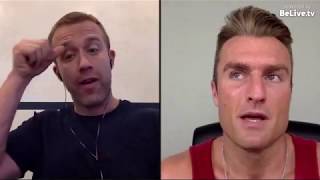
Live interview (Andy Hnilo with Tucker Max) covering Tucker Max’s early career (email-based stories in the early 2000s that became I Hope They Serve Beer in Hell), his difficult experience adapting the book to film (raised production financing, retained rights, creative-control tradeoffs, distribution/regret), and his later entrepreneur role founding Book in a Box — a service that interviews authors, transcribes and edits their spoken material into books. Key takeaways: why audience/utility matters for book success (be clear who will benefit and why), practical guidance on scoping memoirs (focus narrowly if needed), lessons from Hollywood (collaboration, humility), and Book in a Box business metrics and origin story.
Questions this video answers
August 1, 2014.
About 550 books.
Approximately 26–27 full-time employees and about 150 freelancers.
He said they had just broken $10 million in revenue.
Around $7 million raised for production.
All right.
Are we live? We good? It says live.
Okay, Here we go. So, hey, everyone out there, I'm here with Tucker Max. Tucker, thank you so much for joining me.
Thanks for having me, man.
Hey, the pleasure is definitely mine. As I was telling you, it's your book, you know, I Hope They Serve Beer in Hell was a New York Times bestseller. And that is where I got introduced to Tucker Max. I was. I mean, that's sitting right over there. Damn, I should have that with me right now. But it's just something that a bunch of buddies of mine can relate to, those hilarious stories. If you want to kind of just tell a little bit about that book and what inspired you to put pen to paper and get that going, that'd be first off.
Yeah.
Where are you from? Where'd you go to school? How'd you get started with that? I want to hear it all.
So the book started, basically. You gotta remember, it was. I think it was 0102 when I started sort of doing that. And that was before MySpace or Facebook or sort of anything that. I think that was a word before the word blog even existed. Like, back then, there was. The Internet was like 30 million people. Like, it was like, the only people who were on the Internet were creepy weirdos for the most part, or at least that was the idea. And so I was in a job I hated after law school, and so I would write emails to my friends, you know, I was mid-20s, and go out and get drunk and act stupid and do all the same stuff we all do in our 20s. And my friends, like, there was eight of us, and we all kind of wrote emails to each other about, like, I guess what people would do in group chat. Now, we did over email, right? And so, like, I really hated my job, and so I would do the dumbest things, and I would spend the most time writing emails about it. I didn't like what I was doing, and it turned out my emails were funny. My friend started forwarding those around to other people. Then I got fired from my job. I was actually working for my dad in the family business, and I got fired from the family business by my father. And some of my friends were like, yeah, you're not real good at business or law, but these emails you're writing, like, the funniest thing we've ever read. You should do that. And I was like, what are you talking about? Only, you know, only bitches and faggots are writers. That was my mindset at the time, obviously, which is funny, because that's literally what I am now. And so long. Long story short, I ended up like, they eventually convinced me to do this. And the reason was because they forwarded my stuff around and I ended up getting my emails forwarded back to me by like people I went to high school with or college where they were all my law school friends. And so I was like, man, if people are forwarding stuff to me that I know in other social circles, that must mean this is good because why the hell else would anyone sort of spread this, right? Again, this is back when email forwards existed. Probably like your 20 year old listeners are like, what the hell is he talking about? Who forwards emails? This is again before current forms of media. So I tried to get it published and I got rejected 100%. Every publisher, every agent, not one person was interested. In fact, a lot of people were like, this is the worst stuff we've ever read. You need to go find something else to do. You're never going to be a writer. And I was like, you people are idiots. You've never written anything. I know my stuff is good not because of anything I think, but because people are fording around to other people. That's the definition of good, right? Whether people want it. And so I put all my stuff up on a website for free. This is like back when geocities still existed, if you remember geocities. I think I put it on geocities and it like it took a few months, but it kind of blew up. Like college humor picked it up back when they were first starting.
I remember that.
Yeah, there's a couple sites bored at work. There were a few others that like, they kind of picked it up and then it kind of blew up. And then MTV came to film me because like that was back when it was like a weird thing to be on the Internet. And then there was a few other things and then this girl sued me and that's actually my second book. This girl I dated sued me and that became like a huge thing. And then it just went from there, man. But it was all. Because honestly what I did was I wrote stories about the same things that we all do. We all get drunk, we all act stupid, we all fall down, we hook up with girls or guys, whatever. And I was really the first one who wrote about it in a really honest, authentic way under my own name on the Internet for free in a way that was really funny and engaging. So.
And a lot of that. And so what I'm finding out, you know, a lot about relatability and some you know, things that so many people can relate to. Everything that you just mentioned, as far as, like, going out, having a great time, making some unfortunate decisions that you know, that putting them down on paper, it's hilarious. And I just know you make a very good point with group chat these days. And, you know, some things should be a little bit more contained with some things that just. I know friends and I have. Just as far as just sharing stories that are hilarious, I've always thought about that. Just printing out some of our discussions and just back and forth, our banter, seriously. And just putting it in a little coffee table book. Urban Outfitters has stuff like that.
It would suck, though. Do you know why not? Because you guys aren't funny. So many people have tried this. Everyone thinks their friends are funny, right? And even if they are, because I've definitely met people who are like, really funny and their friends are funny, and it requires too much context. You've got to really know the people, right? What made my stuff good was you didn't have to know me or my friends at all. I know people who have read all of everything I've ever written and they still don't actually know anything about me. They know the stories, but they'll meet me and they're like, oh, you're totally different than I expected. I'm like, right, because what you read was stuff, all true, all funny, whatever, but it's not about me. It is about entertainment. You know what I'm saying? And so most people can't make that distinction. That switch, like being funny among friends and being funny objectively to strangers are almost totally different things.
Ah, okay. Yeah, that makes sense.
I mean, how many people do you know are super funny? But like. Like, if they got up on stage and tried to tell a joke, they would bomb. And, you know, I've met a lot of comedians who actually aren't that funny in person. Again, being funny on stage and being funny with people, and you can do both, but they're not the exact same thing.
No, I hear you, I hear you. And even there's some comedians that I. Which just. There are a couple people that come to mind right now, which I'll just keep for myself, but they just aren't that funny on stage, period. So, yeah, no, it might not be.
Funny to you, but someone thinks they're funny. Obviously people are planning to watch them.
That's a good point. Yep, that's a good point. And their names too. And they're traveling, they have specials, so good for them. I brought You. My mouth, but. Yeah, no, I hear you. So can you tell us the process of what happened when you started to see that trickle of momentum towards Hollywood? People out there that don't know. I mean, they made a movie after your story, which, I mean, that had to be insane. I mean. So tell me about. Walk me through, if you can, the timeline of having those meetings with, I don't know, maybe a literary agent to. I'm sure you met with. I don't know who ended up doing your.
It was years. Like, there's. Okay, so, man, how do we go down that rabbit hole? So Hollywood was the worst. The worst there was. I almost would have rather gone to prison than Hollywood, because at least in prison, when they come to rape you, you know who the enemy is and you can fight. Hollywood is like, dude, it's the worst, man. I can't even, like, describe. I spent years out there, and I'm one of the success stories. I got my movie made. I still own the underlying rights. I mean, it wasn't like it was in Blow up the Box Office at all, but it ended up making money, like DVD and whatever. Like, it's just. It's a terrible, terrible system. I mean, we talk to everybody. Like, so here's what I hated about Hollywood. Aside from the fact that, for the most part, people. Everyone with power in Hollywood is a sociopath. Not literally everyone. Pretty much everyone. Oh, dude, it's the worst. It's because the system is designed that way. It's kind of like the morally evil you are, the better you do. Not as a creator, but as an executive. Right. Which is. That's where all the real power in Hollywood is. It's not with the names, you know, it's with the names. You don't know. And those people are pretty much all terrible people. And so, like, I didn't want to do business with any of them. So I ended up going independent, and I ended up raising the money myself from, like, a production company and all this sort of stuff. And I own the underlying rights, and I kept creative control. Like, I did all this sort of stuff that, like, is kind of impossible to do in Hollywood. I did. Now, it ended up screwing me in the movie because, like, we couldn't get widespread distribution even though we got it in theaters. It wasn't, like, a major release because we weren't with a major studio because I wouldn't give up the rights. And, yeah, dude, it's like a really long, complicated story that's probably super boring to most of your audience.
Yeah, I was going to ask who produced it. Lionsgate.
The people who produced it. It was the guys behind Donnie Darko were the producers and the financiers. They were kind of the main driving force.
But props to you on raising. I think it was 7 million, right?
For, for the production. Yeah. And then it was, I don't know what, we spent maybe 4, 5 on release, which is like just, it's just not enough. Like, we tried, like our strategy was screwed up and then, and then like the worst thing is like, pick the wrong director, which is my fault. Like, I'm not even blaming this on anyone else. Like, writing a book is a very solitary thing. I sit alone at my computer, I write. And either it's good or it's not. I own it. It's on me, right? A movie is this weird collaborative art where there's dozens of people who greatly impact it. And in my dumbass naive mind, I thought, like we wrote. I had a writing partner on the script and we wrote an amazing script. Like, we got offered two and a half million dollars from Fox Searchlight for the script. We turned down. Turned them down so that we could retain the rights and creative control. And in my dumb ass mind, I thought because the script was amazing, it would mean the movie would be amazing. It didn't matter what director we picked. That is wrong. That's totally wrong. Yeah, Just the wrong director, man. And he screwed up the entire movie. And you know what? Even, like, he's a bad person. He was just a bad director and he was the wrong fit for this movie. And I didn't even realize it. So it was like, it was like things were screwed before I even knew it, you know, before we could even get to the point where it was released or anything. There's so many, so many factors to Hollywood, dude. It's awful. It's the worst.
I hear you. And I don't know if I told you this. I act and I do. That's what got me into earning money to start my brand after the accident. But I mean, I'm involved with it on a different angle. But I do have friends that are on the. That I grew up with, that are on the management side. And I hear stories. That's why I'm right where I'm supposed to be with Alexer. I own a skincare line now. And I didn't love the entertainment industry. It was just something I did kind of fell into my lap, literally. But I hear what you're saying and I'm right where I'm Supposed to be. I'll just keep it at that. But I'm curious right now. First off, like, going from just. Right, not just writing, but from writing your book to writing a script and just back and forth dialogue, that's impressive. We all have ideas. But to have something that works and to get an offer like that, that's impressive. Especially when you, you know.
Yeah. I mean, that was like, if you read my. You read my book. So my books are very script. Like, the dialogue is very, very scriptish. So that was actually pretty easy for me. The hard part for me was translating the vision in my head and the dialogue to the screen. Like, I just didn't. If I were to do it all again, either I would pick a great director and just give them the screenplay and then go away and say, do your best and God willing, or I would go the other way around and I would learn to be a director and just direct it myself. Like, I would do one or the other. Because what I did, like, just didn't work. I kind of picked a dude I thought would just be our shot maker and do kind of translate my vision on the screen. So just didn't work. And I'm not sure it's worth it.
Was it. You know, because going into it, it had to be frustrating. But were you there every day?
I was there every day, man.
Were you just couldn't.
It was the worst. It was the worst experience of my life. It was the worst experience of my life. And I don't want to blame everything bad that happened on the movie on everyone else. Like, I was really responsible for probably almost all the bad stuff because, like, I. The director was terrible. I picked him. So it's my fault, right?
Yeah.
And like. And I was still very, I think, very emotionally immature. And so, like, I was just angry on the movie set all the time. I was pissed off. It's things that were screwing up. I was like, I made it all about me. And as bad as the director was, he didn't even have a shot, man, the way I acted on the set, I just screwed everything up and it just didn't work. You know, it's my fault.
Well, that's Accountability 101 right there, Respect for that. But, you know, you did it, though. It's badass. I mean, obviously taking something, taking an idea and bringing it, you know, to fruition is just.
It is funny. It's a total first world white person problem to be like, I had a movie made about my life before I was 35 and it didn't do, you know, 50 million at the box office. So I feel terrible myself. It is kind of funny to, like, complain about it from that angle. Like, when you look at it, like, the hell's wrong with you?
It's just. Dude, that's. To me, I'm like, man, that's a dream come true. And it did. I mean, it didn't do horrible. I know, I know.
I've looked at. I mean, it's sort of a dream come true. But what's really frustrating about it is that it could have been great, you know, and it wasn't. It wasn't great. And honestly, when I really step back and look at it, the main reason it wasn't great is because of my issues and what I did wrong. Even Hollywood is terrible and the director was wrong. None of those are the actual reason the movie didn't work. That's really on me. And so that's the frustrating thing, man, is to work so hard to write these great stories, to entertain so many people and then have the opportunity to turn it into a movie and then screw it up because of your own stuff. You didn't realize. It's frustrating, dude. I mean. I mean, it just. It is, you know?
I hear you. I can imagine. I'm doing my best, put myself in your shoes right there. Just curious. Did that develop into a flicker of a passion of. Is that something down the road? I'm sure you have a lot of material. I mean, even if it's not even your story. Did that. Did you. Every day on set, was it something that you fell in, like, in love with or did any passion or.
No, no, no. Movies are like. It's. Look, you can always tell your passion by. What do you do when nobody'. There's no money involved, whatever. Like, I love reading, learning, writing. Like, I've been doing that my whole life. I've never been a huge movie person. I don't. I can't remember the lot. It's been. I've been married, like, four years, and my wife and I have been to one movie together. Like, she's not a movie person either. And so it's like, no, it didn't. And so it's like, I don't mind video, and I don't mind that sort of transmission medium. It's just not. I would be a liar to say it's my passion or it created anything that might have been part of the problem then, honestly.
Okay, yeah. So let's, you know, segue into what you are passionate about and to the Audience out there, Tucker as a killer, just from start to finish Company, where you can bring your idea as an author, which I may do back and forth. Shoot, I forget his name. I had a call with Kevin. Kevin, and, you know, I definitely want to document my story from start to finish. And your company book in the box is a way for people to do that. I believe Khalil Rafati.
Khalil did, yeah. He wrote a book. He wrote the book called I Forgot to Die. It's done really well.
It's very well. And I just. Just a story of resilience coming back, bouncing back in such a very, you know, dealing with addiction and things like that. But that's. That's his story in. But you from start to finish. How did you get involved with booking a box?
So it's like the total opposite of my first phase of my career. I was at an entrepreneur dinner, and this woman came up to me, and she knew. She didn't really know who I was, but she knew I'd written books and had experience in publishing. And she's like, hey, people been asking me to write a book for 10 years about what I know. She's like, I tried. I didn't like it. I don't want to sit at a computer for a year. How do I get this book out of my head without having to do that? And so I kind of looked at her, and I was like, are you asking me how to write a book without writing it? And she's like, yeah, I kind of am. And I'm like, you know, so I'm like, what are you talking about? There's no way to do that. I start kind of making fun of her and, like, lecturing her about hard work and all this nonsense, which is ridiculous, because this woman's done way more in her life than I have. And so she, like, kind of rolls her eyes at me, and she stops me. She says, tucker, are you an entrepreneur? And I'm like, well, yeah, of course. She's like, I don't know. I'm not sure about that. Because an entrepreneur would help me solve my problem and not just lecture me about hard work. I was like, fuck you. But she was right. She was 100% right. And so I became obsessed with this idea. How does she get a book out of her head without having to sit at a computer for a year and type it out? And then eventually it took, like, two months, but eventually it hit me. Oh, of course. Like, there's lots of people who have done this. Jesus never wrote anything Down. We have the Bible. Socrates never wrote anything down, and we have all of his work. Buddha never wrote anything down. Malcolm X, you're on the list of all these great Western thinkers, all these classics in Western history. How did they get written? Scribes. So I was like, oh, of course. Well, Jesus can do it. Why can't Melissa? And so I wrote, like, on a whiteboard like this. I wrote down every step of writing a book, and it was really granular detail. And I realized I didn't need her for anything except the content. Like, she's utterly crucial for that because that was a big thing. She's like, look, I want this book to be my voice, my word. She's like, I don't want ghost writing. I want it to be a real book that's fully me, but I just can't sit there and type it out. So I basically just would call her up. I would go through every step of. When I needed her, I would call her. And then I figured out a way to interview her to get everything out of her, all of her ideas out of her head and her words and her voice. And then I record it. I would transcribe it, I'd get it transcribed, and then I would kind of edit it.
And.
And we did this back and forth for a while, and I wasn't sure if it was going to work. It ended up working great. And so her book is, like, gone on and done. Fantastic. I mean, it's like, tripled her business. And she's done millions of dollars. She's like a consultant in retail. Done millions of dollars of business off of this book. And, like, I'm so done, dude. I did this work with her, and I kind of did it because it was fun. And I was like, interesting. Let me see if I can do it. It didn't even occur to me this was a business until she, like, referred some of her friends to me, and they were like, hey, can you do this for me, too? And I was like, yeah, sure. And they're like, okay, you know what? You know, Melissa paid whatever, 10 grand or whatever it was. Here's a check. And I'm like, what? Like, they're like, yeah, here. Here's money. Let's go start. And then I talked about this on a podcast on Lewis Howes podcast. Like, three years ago, we were. He interviewed me about something totally different, and I talked about this. And we got, like, $200,000 of business, like, people just flooding my email. And the guy I was working with at the time, Zach, was like, Dude, I think this is a business. And I'm like, yeah, obviously it is. If people are hurling money at you to solve a problem for them, that's a business. So we just kind of kept going and going and going and we literally is today August 1st? No, July 31st business. Like our official start date was August 1st, 2014. So it's almost three years to the day of this inter. We've done I don't know how much now. 550 books. We've got 26, 27 full time people now. 150 freelancers. Like it's like a big business now.
And you just broke 10 million revenue.
10 million in revenue. Yeah.
Respect. That's awesome. And so I'm sorry, I didn't mean to cut you off there.
No, no, I said like we're growing. It's like, it's like kind of weird. It seems crazy. It seems like just yesterday like I was doing that work with Melissa, but then also it feels like 10 years ago too. There's been a lot of stuff going on the last three years.
I mean in smaller level I can relate to that exact statement. It does seem like yesterday in my business. But at the same time every day it's just when you're on, there's no off button. I mean it's 24 7. I don't. It's all I think about really in my business. It's a little obsessive, but I just, I love, you know, it's like you said, it's the things you would do regardless. When I walk around my house, I don't stop whether it's nutrition, health, wellness, skincare, it's. It's all I do. So that's why I found, you know, my purpose and right where I'm supposed to be. So that's. I can relate to that. It's awesome, man.
So.
And I definitely am considering using book in a box for my story. I mean I just. From top to bottom, I've something I think people can relate to. That's in your opinion, the stories that do the best. Would you say that's the biggest, you know, the biggest thing that makes a book successful or a story successful is being able to relate to someone or is it skills? Is it definitive?
I think it all boils down to what it said. There's one thing that all successful books have, it's that the person buying the book thinks they're gonna get something from it. Right? Something that they want. So that actually applies to fiction or nonfiction. Like every woman who buys a romance novel, right? Or, dude, who buys a fantasy novel or whatever, they want to get entertainment. They want to. They want to understand themselves better. Whatever things they read fiction for, right? Non, you know, prescriptive nonfiction is very much, I want to learn a skill, right? Memoir is very much. It's the type of thing where people are like, I want to learn more about myself, or, I want to be inspired, or there's an emotion I want to feel. And so, like, Khalil's book is a really good example. Like, Khalil's experience in life is very similar to a lot of people, and he's a little bit further on the journey than they are. And so I feel like that's probably why his book has done really well, is because it gives people something. It's not that no one cares about Khalil. It's that they're buying his book because they care about what his book will do for them. Right. And most. A lot of authors of people who want to write books don't actually think about that ahead of time. They'll be like, oh, I want to write a book. And a lot of them, like, oh, well, you know, like, they just want to tell their story, and that's cool. There's nothing wrong with that. If you just want to tell your story, then you don't need to publish it, man. It's called the diary. And, like, write up your story and keep it in a diary, and that can help. Like, written writing as therapy is extraordinarily valuable for a lot of people. If you want to publish it, the question you have to ask is, no, like, why does anyone else care? Right. Like, a lot of people want to publish, and they ultimately, to be honest, the reason they want to publish is because they want attention. And it's like, there's nothing wrong with wanting attention. That's totally fine. But if that's the only reason you're publishing, then you're never going to ask yourself the question. Like, it's not going to be popular because you're never going to ask yourself the question, why is anyone else going to care? Right. Right. If you're telling, and I don't mean to use specifically anybody, if you want to tell your story the question and you want to publish it, the question you need to answer for yourself, ask yourself, is, why is anyone else going to care? So if you think you have a story that is. A lot of people share that. A lot of people can take stuff from that they can improve their lives off of great Then that's a great reason to do a book. And so the next step then is to make sure you structure it properly, etc. And then be really vulnerable, right? Because a lot of people, we don't work with these people because it's a pain in the ass. But most of the memoirs I see, to be honest, are just self aggrandizing bullshit. It's just people want to. I want everyone to recognize how cool I am and how valid I am and I want my parents to think I'm important and shit like that. And it's like, you don't need to write a book to do that. You know, like, there's other ways. But a book should always be about the audience because like, paradoxically, if you make it about the audience, then you will, the book will be way more successful because people will want to read it, because that's why everyone buys books, is to get something out of it. So you need to understand very clearly what is someone going to take from this? And then how do I make sure that they provide, Provide that? Does that make sense?
It does. And so just from a personal development aspect, and I'm just kind of like, you know, throwing, I mean, after that phone call, I just was going over what I want to do. Just personal development, inspiration, things like that or I won't do it. I mean, I just, these are just things that I was thinking about and I still think about as far as. But that's really good as far as, like what I would do, what direction I would head personally if I were.
To write a book. I mean, the question for you is, who's my audience, right? Who do I expect to read this and why are they gonna care? Like, those are the two really specific questions you need to answer. Like with Khalil, the answer was his audience are current addicts and people trying to recover and people struggling with recovery, right? Why are they gonna care? Because they're gonna see themselves in him and they're gonna see not only what he did, but how he did it, that he can become an inspiration for them and also a roadmap for them to. And all that sort of stuff, right? So like, if you, if you have similar answers in a different space, that's potentially a great reason to write the book, you know, but, but we see this a lot, man. We turn down probably 20% of the people who come to us. And it's not because. It's not necessarily because they don't have a good book in them. It's because the book they want to write is not going to get them the ROI they want. Like, we'll get. People come to us all the time. It's like, oh, yeah, I want to write a book. I want to be Malcolm Gladwell and sell a million copies. And it's like, yeah, you don't want to work with us because that's just not going to happen. It's utterly unrealistic. And, like, your content's not going to do that. You know, Like Khalil, his book is really, really done really well and sold like 50,000 copies, which is a huge number for nonfiction. That's a big number. And he's been in the profile in the New York Times. Like, his book was profiled in the Times. Like, he's gotten all those things. Selling a million books is, like, utterly unrealistic. And so what those. But what that tells us is that those people don't care about their message. They care about attention, right? They care about the attention they get. And it's like, we don't work with them because we can do an amazing job. They're not going to care, like, or they're not going to be happy with the book. They. Because the book didn't get them this fantastical, unrealistic notion they had in their head. And then they're gonna be upset. Right? Like, we work with people who, like, understand, okay, I'm gonna do a book. It has this specific goal. I wanna reach these 10,000, 20,050, 100,000, maybe, maybe two, three, 400,000, 500,000 people. And that's over five or 10 years. You know, those are the people that we work with. Those are the people who do good books. Those are the people whose books really impact their life and the lives of others.
Now, that completely makes sense. That completely makes sense. Yeah. I remember sitting down with colonos, going over, you know, how he got into this and how that book really, really did. I mean, not only did very well, numbers wise, but really got him out there. I mean, he owns a, I think a Sun Life Organics.
It's like three or four juice bars. Organic. But the important thing with Khalil's book, like, is if you read it, man, that dude held nothing back. That dude was. I mean, the picture on the COVID Oh, yeah, Like a mug shot, he was like, it is. And he was just raw and authentic and, like, just. Which as an addict, you've got to be, right? That's the only way to face the truth. And so, like, that's why that book is so good, you know? There are other people out there who have stories just as crazy and amazing as him, and they don't have to. You don't have to have an extreme story for it to be good. What. What matters is that. Do you tell it with your whole self? Especially if it's sort of like a memoir, personal development type thing.
Right. And some people, you know, for. For many reasons hold back on that because they don't want.
It's hard. It's fucking hard, man. It's really hard to open your soul to the world and be vulnerable. It's really hard.
Scar tissue. Anthony Kiedis. One of my favorites.
Yeah, that's a great book.
Yeah. So I know. I know you have, you know, somewhere to be, and I just have a couple questions here. If you could tell your younger self anything, any advice, you know, it's just.
What would you.
What would you say?
Yeah, the problem is my younger self was a dumbass who wouldn't listen, so. All right, so if a younger version of myself that would listen, the thing I would say, it ties back to kind of why the movie failed and almost every mistake I made in my young life. I needed to be way, way more humble. I needed to stop thinking I knew everything and listen to people. Listen to people who have experience and really assess, sort of. It doesn't mean just take everyone's word for it, but I needed to listen to people besides myself. I needed to realize that I wasn't a genius who knew everything. Which, like, if you'd asked me at 28 if I thought that, I would have said no, but really I did, and it led to a lot of poor decisions on my part that culminated with. With everything around the movie.
Yeah, that makes it. And I can definitely relate to that. I don't even know if I'd like to. I'd like to meet myself when I was 22 and 23 and just you know, just kind of like I would.
Kick my own ass without a doubt.
You know, just exactly. Just a cocky. I'd look back, just certain things I did when I was. Yeah, life humbles you, and it definitely humbled me. And I'm. Yeah, I'm a sponge now, and I'm better from the mistakes that I've made, for sure. I'm sure you can relate to something similar. But, yeah, I really appreciate your time. This has been fun for me, and who knows, maybe we'll work together. It's something I definitely want to do. I just. I just want to make sure I can dedicate every single thing, ounce of my time and energy towards X. I want to make it excellent. And I do. Good thing is I. I'm doing it for just helping others. I mean, that's the only thing is.
Here'S the thing with that. The question I always like to ask people who are thinking about doing a book. The question is, why now? Right. And if you don't really have an answer for why now, then now probably isn't the right time. You know, we're going to be around for a long time. Dude, a book is not something you should rush into because it's like if you do a bad book, it's not like it hurts you, but it's like, look, you're a young dude. You can probably write 10 books in your life. You can start multiple companies. There's a lot of things you can do. So I don't want to make it seem like, oh, you got one shot, you got to get it right. That's not true. But you don't have unlimited shots and you don't want to kind of dive into things before you're ready, you know, which on the other side, there's some people who've been writing a long time and they wait too long, right? So here's the thing. You'll know it's right when you kind of feel like the message you have in you can't stay in you any longer. It's got to get out. That's kind of when you know it's right. If you're debating whether it's right, then go through. Have Kevin send you our North Star doc, which is the first step of the process. And answer the questions just yourself. Just look through them and answer them. If you have really clear answers to those and you're like, yeah, this is my exact audience. This is exactly what I'm going to say to them. This is exactly why they're going to benefit. This is exactly how their life is going to change. Then you're probably ready. If it's ambiguous or you're not sure, we'll be around six months, a year, two years, three years. And by then, think about how much smarter you're going to be in three years and how much wiser than you were three. You know, you are now thinking about now versus three years ago. With you think about now versus three years from now. If you wait three years, how much better will the book be? If you don't think it'll be any better, maybe now's a good time. If you think it's, man, it's gonna Be a lot better. I'm gonna know a lot more, probably. Wait, you know.
Yeah. There are two sides to that. You are right with, you know, just with envisioning where I see the company going, but on a personal aspect, the. The content is still pretty fresh from the accident, so I'd like to get that on paper, and maybe I can. And then when it's right to kind of add. To add more to that ending chapter of my story, then maybe we'll go forward. But basically, right now, I should probably start putting things down because it's so fresh. The accident's so fresh.
So then scope the book down. If you want this book to be about a certain. The big mistake I see a lot of authors make is they feel like unconsciously, oh, I've got to get everything I know into one book, which is. And then so they try and, like, you know, it's sort of like they try and fit everything together and doesn't fit. Sort of like a meatball sundae, right? Like, meatballs are delicious. Ice cream is delicious. They're not good together. Right. But most authors, what we do is they'll start here, and then we get them here. And this is not a great book from them, but this is a great book. And so when they get scoped down, they do a great, great book. And so, like, that might be the case for you, man. Is that, like, in your head, you're like, oh, I need to write this amazing book about personal development. But maybe you don't have that in you. But you maybe do have an amazing book about how to recover from. You know, I'm just spitballing how to recover from an acute injury and turn your life around. Right? Which is, like. Which would be the most amazing book ever about personal development. It would be a chapter. But if that's all you have, you can take that chapter and make it a full. And then now when someone goes to. I bet there aren't a lot of books about that specific thing. How do I go from a disaster to a full recovery in a new direction? Just that thing alone. And that way you don't have to worry about writing the final chapter, because the final chapter is not written, dude. But the final chapter on that is written. The final chapter in your life is not, but the final chapter on that chapter is written. So, like, that's another way to think about it, is, what's the specific thing I could teach someone, Somebody today in totality, that would change their life? And it won't be ever. There's nothing you can teach everybody, right? But, like, what's the thing I could teach? I could teach X. Okay, who are the people that have problem X? Oh, it's this group of people. Let me write a book for them. Make sense?
Oh, absolutely. Very specific with steps and. Yeah, yeah, you're right. That's a good point.
Very good point.
This is all good stuff. We're jotting this down right now. I appreciate your time. This is. This is a lot of fun for me just because of what I said. I'm a big fan and a lot of the. Lot of the stuff just from an entrepreneurial aspect, from just getting in and starting your new. Like starting something else, starting a business, whatever it may be. I'm sure my audience got a lot out of this. I'm looking at the quotes in questions right now and comments. I'll go through and answer that. You can go through and answer that if you want, but I just. I really appreciate your time, Tucker.
Cool, man.
You're ever out in la, give me a shout. If not, man, where are you located? You're in Austin, right?
Austin, yeah. Right on.
Well, thanks again for your time. Best of luck. And who knows, maybe we'll be working together down the road.
Awesome, man. Great talking to you and see you.
More from Andy
☀️ A quick message from Andy: One of our biggest sales of the year is happening NOW!