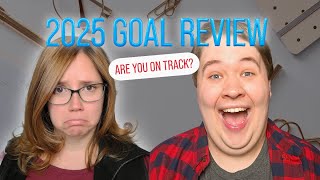
2025 in Review: Are you on track?
In this July 2025 episode of the Product Growth Lab podcast, hosts Melissa Pickle and Andrew George guide creative, product‑based entrepreneurs through a comprehensive mid‑year review. They start by urging listeners to pull up their financial data and walk through revenue, expenses, profit margins, tax obligations, and product performance, emphasizing the importance of automated tracking versus manual spreadsheets. The conversation then shifts to a goal audit: comparing the original January objectives with current reality, celebrating completed goals, and acknowledging missed ones. They introduce a pragmatic “reset plan” for the second half of the year, which includes (1) selecting only one or two high‑impact goals, (2) breaking each goal into concrete subtasks, (3) aligning offers with what’s currently working, (4) scheduling seasonal promos or launches, (5) building or cleaning up a single system (e.g., email, website, social content bank), and (6) defining three key performance indicators to monitor. Throughout, they stress the 80/20 rule for product sales, the need to prune under‑performing listings, and the value of aligning business actions with personal energy, values, and momentum. The episode ends with encouragement to share progress in their community, use a free “Flash Sale in a Snap” guide, and feel permission to drop activities that no longer serve the business.
Chapters
Hello and welcome to the Product Growth Lab podcast hosted by Andrew George and Melissa Pickle. This is the podcast for creative product-based business owners who want to grow their businesses without overwhelm or massive investment. Each episode, we explore actionable strategies, real-life stories, and insights from business owners and experts who know what it takes to succeed. Whether you're just starting out or looking to scale, we're here to help you grow your business on your own terms. Subscribe and join us each week as we dive into practical advice and inspiring stories to fuel your growth journey. This is the Product Growth Lab. Let's get started. So hello everyone and welcome back. Today's episode is so much— well, we think it's a lot of fun. I don't know if you'll think it's a lot of fun, but today is our mid-year check-in. It is officially July. It is time to determine, is your business thriving, surviving, or just vaguely existing? And how can you course correct if you need to? Sound pretty good, Andrew?
Yeah, I'm super excited. This is the kind of thing that I get excited by. I want a spreadsheet that makes you cry. That's basically my goal. If we don't look at your numbers and make you panic or proud, hopefully, then we're doing something wrong.
Alrighty, cool. So let's take a look today and walk through on what to check, how to know if you're on track or off the rails, and what to actually do with what you find in your official mid-year check-in. Let's go for it.
And we're going to start off with numbers, not that that's the only goal to have, but like, if you're in a business, we're going to have to start with the numbers, unfortunately, whether you like it or not. So if you haven't been keeping up with your numbers, now is the time. We're at that mid-year kind of point to go back and look and, okay, how have I done so far this year? And also, when I say looking at numbers, tax year and things. Like, the tax year for me starts in April, so I'm kind of like Q1 is what I'm looking at from this year's numbers. But I can also go back and like look at the past 6 months as well. So how are you looking at that first kind of period and be okay, what, how are we doing? How much money has come in compared to what you'd hoped for? Where is the money going out? Is the profit margin, if there is one, how is that doing? And like looking at the breakdown, like what is selling and what's taking up your time without getting much return on your investment.
Right. So is that something that you just like, are we going to go a little bit deeper into each of those?
Yeah, we're going to do it. Like, that's the kind of how I wrote it for you.
So this is your moment to perhaps pause or rewind the podcast, pull up your numbers, and let's go through them together. So as Andrew said, the first thing we're looking at here are your dollars coming in. Hopefully you've been tracking your dollars coming in. If not, today might be a good day to sit down with a good old spreadsheet and figure out what are you actually making? What are the sales dollars that are coming into your business? Depending on how many platforms you're on, this could be a very simple thing or a very convoluted thing.
Yeah, and having great systems in place to track all of that is a really important thing. I've finally taken the time to move platforms where I scheme and chart my money, and I definitely— big fan, big fan of the new platform because everything gets imported in automatically. All my sales are everywhere. Stripe connects to it. My bank connects to it, Amazon connects to it. The only thing I need to do is at the end of every month, take the CSV out of Etsy and put that in there. And then I have all my numbers and it's easy to look at them, which is very nice. I also will need to do Shopify. I need— I thought of that. No wonder I'm like, profits are a bit low. I'm missing a whole sales platform.
Yeah, so Andrew uses an automated system to take care of all that. I am much more simple. I do a spreadsheet mostly because I'm in New York State and New York State sales taxes are redonkulous and I travel all over the place. So it's not just like I'm reporting one county, I'm reporting 86 counties and I haven't found a system that tracks any of that easily for me. So I do my own, I built my own spreadsheets for this. And as Andrew's like automatically pulls in, I have the rule that when I am processing orders, I go and I put the sales into my tracker.
Manually. There's no way I would keep that track. Um, well, in the UK we're getting towards the Making Tax Digital rules coming in where you have to do it using some sort of platform anyways. Double check where you are and how you have to do all that, because I would have to do double work. Yeah, because when I did, like, I'm whole trained in finance at college, but it was on pieces of paper, and I'm like, I kind of, I wish you could do like my whole toilet to a kid. I can do that. The tech bit is the difficult part, which for everything else, I'm like tech all the way. But when you change them, wait, it's like, oh no, let me use my old-fashioned kind of ethics.
So know your money, what came in. Number 2, what went out? What were your expenses with your business? And are there places, I guess if we look at like assessing on there, are there places that you can make those numbers better? Sales are what they are, but you're, where you're spending your money, subscriptions, supplies, snacks, any of that kind of stuff. Are there places where you're like, I didn't realize I was doing that much in subscriptions? And then looking at also, are those places where you're spending money giving you a good return? Are they streamlining stuff for you? Are they making things? Are they bringing money in? A lot of them, like I look at my expenses, are a whole bunch of different social media schedulers. Is that worth it? Well, it is if I'm posting on social media. If I'm not posting, it's not.
Yeah, I took some time. I have, I have a really, I have a really good spreadsheet that kind of helps me to look at, okay, where, how are all the different platforms doing, what brings in things. And if I was to swap things around, raise prices and stuff, it will automatically calculate all that. But one part of it was looking at how much it costs to do things. So I spent the time, I was like, okay, buy— I can have multiple businesses, but how much am I spending on subscriptions in each, plus personal, and I add them up and I was like, whoa, this is, this is a decent amount. I'm like, this is how much you would pay someone to do stuff. Okay, how much of these am I not using and can cancel? And how much of them can I play around with? How, like, um, yeah, I was like, like, I have lots of things. Like, one is for creating like digital products that are, it's like printables and stuff. And I'm like, you know what, I don't want to do that. I'm better at like making things like spreadsheets, so I don't need that subscription, but I haven't taken the time to cancel it. So like, there's things like there is time. And also switching from QuickBooks, the new software I use is free through a bank account. So like, that is an expense that's gone. And looking at other things and saying, okay, where can I save money here? But being really kind of strict about, okay, where is smart to save money and where is it smart to just pay the amount this thing costs? Because definitely made mistakes in trying to save money where it was like a net negative. Like, even if it had a financial benefit, I lost features or things become more difficult or people don't like it. I've tried to change from Zoom to Google Meet. Clients are not big fans of that. As much as I'm like, why aren't you paying for Google Meet? It's in with the Google Workspace. Paying for this, please let me—
no, people, they need to make the change.
There was a mutiny in the membership and I couldn't— like, the losing members is definitely a hell of a lot more than the cost of Zoom is. So you need to look at those things.
That's expenses. Next thing to look at is your profit margins. Are you actually, when you look at what you made versus what you spent, are your— is your products priced to actually make you some money? Is there stuff left over after you pay the bills? Or if you're like me and follow the Profit First system, I pay myself profit first and then I pay the bills.
But really looking at what goes into creating your products, because honestly you might calculate your like here's how much it costs to make a necklace and here's how much I'm going to sell it for. There's profit there. But okay, once I factor in electricity and marketing and the cost of like QuickBooks and I'm trying to think, what are all the software things you use in e-commerce? Like Shopify, all of these things. And then I'm running a discount, like where, like what kind of profit margin do I actually have? So really looking into that and like breaking down.
If you're in the resale area, like you're buying wholesale from stuff, You really want to— one of the sweet spots is to look at like if you can get 30% profit margin on there, like you're doing all right because that gives you room for discounts and everything. When you're handmade, we typically don't charge or put into our calculations the labor that goes into it, typically. So our profit margins look really, really well.
Really look into that. And I think the other thing is that as your sales grow, a lot of times whole economies of scale. Like, you can get supplies cheaper. Like, things like, like, your Shopify solution is a fixed cost apart from the, the monthly versus annual. Yeah, but the— what's the word— the, like, the payment process, that's dependent on how much you make. But the actual cost of the solution itself, like, if you sell one product, what's that, $30 a month? If you sell 1,000, it's like pennies per harder. So like, obviously it's gonna depend. So you need to also kind of figure out, okay, how much am I going to be selling and how much does that make some of these costs? Because sometimes it's reducing costs and sometimes it's, okay, maybe I need to invest a little bit more, whether it's time or money, and make more sales to kind of drive down those costs.
And it's a really good thing to know, like, what is your monthly nut? What are What is the total cost of expenses you have going out every month? And then what do you need to do in sales to at least meet that? Or also include paying yourself in there. What do your sales need to be to meet your expenses plus pay yourself?
Yeah, really good exercise to do.
And that's your new goal if you're not there.
Sorry, but looking at the life, kind of like the life you live, and calculating that, like, how much do I need to survive? Then Totalling up, like, okay, how much do I— the kind of life I want to lead, how much would that cost? And we're gonna mean, okay. And sometimes that can be like a kind of harsh kick in the face. Like, oh, like I'm— well, one, just to live the life I need to, like, be able to pay your bills. It's like, oh, okay, charging $5 for this product, I'm gonna have to sell thousands of them. And also the, like, if you do have, like, I want to be able to take a trip every month and do this, like have the latest stuff and buy the designer gear, whatever it is. It's like, okay, this will actually cost me very much a month. And it's like, I'm dreaming of this, I know when I get there, but actually, do the numbers add up? Is there any chance of me getting there?
Like, just having that kind of blind hope without doing the numbers is another one that we didn't mention there with expenses is if you have to collect sales tax, are you holding that aside or are you just lumping that into all the stuff that you monthly pay or what you think you made in profit. Make sure you're setting sales tax aside and make sure that you are setting general tax money aside so at the end of the year you're not in panic mode. You have a nice wad, bundle, bank account, whatever it is, set aside to pay your taxes. And if your taxes come out less than that, you just got a bonus. Make tax day like your favorite day of the year, not the most dreaded day.
Yeah, and the last thing to look at is your product performance. Actually going deeper into the numbers, going into whatever sales platform you're using and being okay, which of these things are selling? And which of these are a waste of my time? Because quite often, you like, you tend to start off thinking, okay, I need more and more products. But actually having this giant collection of stuff that doesn't sell is really difficult. And sometimes paring things back and focusing on a smaller collection of successful stuff is what's going to get you more sales. I think every kind of big business, whether it's like services or products, whatever, they kind of reach a certain point and they're like, okay, we need to double down on what works and cut out a lot. Everyone tends to, you think, as you tend to think, as I get bigger, I'm going to need more, but it's actually quite often about having less and just doubling down on it.
And typically, if you look at it, most of your sales are probably coming from about 20% of your products. Figure out which 20% those are, and those are the ones that you stock. And that you keep going unless it's a seasonal thing. And the rest of your products, you can look at maybe those are the things you want to discount down. So you just get them out of your space, out of storage, cleared out so you can buy more of what does work.
Yeah, there's like the, the 90/10 rule. 90% of your income will come from 10% of what you do. If you can adjust your business so that you don't do the other 90%, that should get you more success. I think a lot of Algorithms and stuff. Like, I don't pretend to understand how Etsy works, but anecdotally, getting rid of the stuff that isn't making sales from your shop and just having listings that sell more often boosts your shop as a whole. Don't trust me on that. Don't— like, I don't pretend to know Etsy, but just from what I'm hearing of how things work lately with Etsy, like, it changes. Like, the recency thing is gone. That was the thing. Anyway, but the having a kind of smaller range of successful listings works really well there.
All right, step number 2, we're looking back at where do you think you'd be by now? So if you were good in January and you made a plan for the year, you made a goal list, you'd be like, I want to have this by the end of the year. This is the point to look at, are you on track with that goal list? Take a look in here, like, did I stick with the plan that I made, if I made a plan? Did I change that plan? Did I forget I even had a plan? What's going on here with the goals you set in January, because I know in January we all have like these big sparkles. I'm gonna do all this stuff because it's a new year and it feels amazing. And now we're in July and we're like, oh shit, the holidays are coming way faster than I can move. Am I where I want to be? Yeah, July is where reality hits the road here.
Yeah, I think it's okay for any of these to read it like, okay, I did stick with it and I did achieve it, I'm on the way there. But it's also okay to say I changed it if you had a good reason other than just like, oh, I don't want to I feel like that's even not the best reason. But you're like, okay, I genuinely don't have time for this, or it no longer serves me. I find that with some goals, it's like, beginning of year it makes sense, but as things move and things change, it doesn't make sense anymore. And the— did I forget I even had a plan? The amount of times we've done workshops and things, and I'm guilty of this as much as other people that we have are, but they pull up that goal list from January, or we'll have a copy of them, like, okay, how do you run this? And like, oh yeah, that was a goal.
That's right. I wanted to do that thing.
Yeah. Set that goal in January and then didn't keep track of the goals anywhere or have a list of the goals.
Didn't print it out. Doesn't have to post it anywhere.
Yeah. You have to be intentional about a goal for you to ever achieve it. They don't really come about by mistake.
I wrote my goals in my planner. So I'm a paper planner person and it's in the back because that's where the note section is. I actually have my goals list and I know that I can check off none of them.
The phone's like, "Oh yeah, that's right, I wanted to do that, huh?" And I have a whole space for goals in here, but I stopped using this because I kind of have my ChatGPT system, but it was all focused on the daily stuff and not so much the goals, which is totally worth it. I built a whole— I built a goal tracker and I kind of forgot these a little bit, but again, I think all of them. Well, maybe like a couple when I, it was more me giving up, but most of them, cause I, they were really clear, big goals. It's like I've either achieved them, changed them, or I'm on the way there. I'm like, should we go into these or should we keep that private?
Oh, we wanna talk about the things that we, we wanted to do this year? There are a couple of these I'm looking at and it's like, I know I can scratch these off. Like these are not happening this year kind of things. Yeah.
I think like I had like a kind of some health-related ones which I didn't stick to, but I've kind of gone a bit back onto this year— how about this year? This month? Last month, July. In June of 2020, I kind of got back on that. Um, I want to like traveling at least once a month. I haven't stuck to that, but I think part of it was the finding places to go to because I kind of tend to shoot just do this. I tend to only travel for business, and just finding good quality events that don't have a giant cost to them every month isn't that easy. So maybe it was more just adjusting the goal, like do it, I think, at least every second month. I've done something like, I've done, well, we're in the seventh month, I, two in February, one in April, one in June. It's like four out of six months, isn't it? Like four events in six months. They weren't all in different months though. So maybe just— so like maybe every second month, like at least like 6 in 12 months. I think I'll hit it over there, and I'll probably get a little bit above that even, maybe. So I think that's fairly good. Host a summit by the 30th of April— done, ticked, goal. Write and publish a non-fiction book by the 31st of December— I set a nice wide long deadline for that one.
That can happen.
I was actually going to start that straight after the summit, but I changed that a little bit because it's like, okay, that's a kind of a slower burn, and I wanted some more fast action kind of money makers. So I moved that, but I might go on that. Oh, this one I'm definitely not on track for: speak on at least 52 podcast summits or stages by the 31st of December. Where— where— that was like one a week. I thought that sounded good, but now I'm like, okay, maybe not. If we count this podcast, we should get there.
Yes. If you count this podcast, you will have done it.
But it wasn't supposed to count. Make 6 figures by December 31st. I don't think we're on track for that one either, but we'll see how the rest of the year goes. Launch the Labs membership and get 100 members by the 30th of June.
That didn't happen.
Yeah, well, need to adjust that one. Choose a regular bedtime and get 8 hours of sleep per night for the next 90 days beginning the 6th of January. That's very nice specific SMART goal, but did not, did not happen.
I didn't even know you had that one.
Wow. And the last one, because they're in Cat Years in here, the last one is set a community goal. So the goal is to set a goal. I didn't do that.
Yeah, we're going to be looking at this afterwards and going back through. We're going to be reassessing some goals ourselves.
I've done lots of stuff in here. I'm like, ooh, I have like to-do lists and things I was supposed to do.
I have lots of sales goals online for like what I want my monthly numbers to hit. I've knocked off one of them. I have about getting stockists on Faire. I haven't done anything for Faire. Wholesale is not even a blip right now on my radar. I have newsletter goals. I have HB Maker's YouTube channel. So I was going to redo my YouTube channel, which is currently The Handmade How, and like reset that one going— I haven't touched YouTube. And then chicken stuff, like that part's cool. That's— I'm getting chicken stuff done. That, that's working. Yeah. I have some summits on here. Monthly AI workshop for HB makers. Yep. Yeah.
Doing great. Definitely. I feel like, um, I didn't have YouTube as a goal, but having the podcast that I upload to my channel definitely helps me cheat on that one. It worked though. I got an email last week. This week, at some point, I hit 800,000 views on YouTube. So I'm like, we're gonna get that, we're gonna get that million.
Yes, million views! I was thinking like 100,000.
It's a long way to go till I can monetize the channel though. But speaking of Fear, I got a really weird ad on Facebook from them. I was like, what is that? Clicked on it and it took me to just— there's a page with no products on it, but it's got wholesale blood for your shop. And I'm like, I don't I don't want that.
Wholesale blood. What?
Yeah. They're, they're saying they sell that. I'm like, I think, I think there's an error somewhere.
Yeah.
Wow. I don't, I don't think that's legal. I'm also not sure how Facebook's letting them advertise that either.
Oh yeah, definitely. All right. So big things here. I know we're talking about all the stuff we didn't get done on our goal list, but celebrate what you did get done. Like Andrew's saying with the podcast. That YouTube— the views thing. Like, celebrate the wins that you have had and take a broader look at your year. It's like, okay, these are what I wrote down I wanted to do. What did I actually work on this year? And celebrate those things. And that's where it's like, you want to take a look and be like, okay, this is where we kind of want to adjust our goals. And you might be writing a new list of goals that is now from July to the end of the year. Or if you're really a glutton for punishment, or you're a really good planner, you might be like, what are my Q3 3 goals because we are officially starting Q3.
And also overall, it's all right, we don't have an airplane to talk about. But, uh, celebrating your wins, I kind of think it involves here, like comes in around here in our plan. Because I think you need to look at those, be okay, even if I didn't meet goals, where did I still have some wins? And also, can they feed into the goals you're gonna set? If this is working, I should do more of it. Like, I had my first in-person speaking gig, like, wasn't really specifically in one of those goals, but I'm like, okay, no, I should set a goal around that. Like, either what happens because of that, or I don't get more speaking gigs. Like, nominated for an award. I've— what else have I done this year? Like, I've done a bunch of other things, and it's like, okay, how can I use those wins to set goals? I was looking at affiliate, like, actually, and not even just your wins, even the things that are not wins. I was looking at my numbers and I noticed, um, affiliate income has dropped. I'm like, okay, I should— like, I want to set a goal to increase that again because that, like, affiliate income is nice to have as I just, uh, kind of passive income stream. But it's, it's like, I think I didn't, I haven't done a big affiliate push this year, which I did do last year for the 3-piece software. And I have a recurring one that's a membership. And also there's churn, people cancel and stuff. So it's, the number's gone down. It's like, okay, I need to do another push.
Grow that thing again.
Yeah. Sell my own thing. Cause that, I can also make more money than selling things as an affiliate. So I think even if I, that might have been the case, like if I was like, you know what, I make it, if I looked at the numbers and like affiliate income was really high for a specific thing, I might be like, okay, maybe I should create something in that space. Obviously not if it's a software. Sometimes I want someone else to learn something, it's like, okay, am I an expert in this? Or is it easier just to say, okay, I'm going to let someone else take care of that? Like, um, like at photography, I, I would never ever create any sort of thing around that ever. Like, I don't care how much it might make me, more like the best amount we're going to do is affiliate money in that space. But, uh, like AI stuff, I've sent people to other people. Well, like, you know what, I've kind of— I'm an expert in AI. I'm going to be a speaker on AI soon. Like, I'm excited. I have ideas for my own AI newsletter. Like I'd probably send someone to that instead of where I've previously been sending them. And that's a very cryptic here, but yeah, looking at your ins and lows, highs and lows, and, um, creating goals from there.
Next section looking in here is what's working in your business for you right this year and what's not. So this is not talking necessarily product-wise, so it could apply, but we're talking more along the lines of what are you doing that's actually bringing in money or that makes you happy and preferably both of those things at the same time. Not always happens, but preferably. And focus on that. If it's making you money and making you happy, you want to do more of that thing and less of the other thing. You can look at for what's working, what's not in the systems. What systems do you have that are helping you? Which ones are draining you? I know I was talking to a friend the other day who she had set up a system where she had time blocked everything in her Google Calendar, like down to naps and exercises and workouts and all that stuff. And she thought it would help her organize and get her stuff done, and instead it ended up stressing her out. She felt so overwhelmed until she took those things off the calendar. So that's like a system that's not helping, it's draining. But what are you doing that works, that doesn't work in there? Tools, platforms, marketing strategies, all of those kinds of things. Take a look at what's actually working and what's not working. And not working could mean it's not super effective, or it might mean you're not even doing it. That happens too, like my inconsistency on blogging. I'm gonna keep it up, but we're gonna adjust that one. And for what's working and what's not. You can go, Andrew.
Looking at those things and being like, okay, if it's not working, you are like, if one thing isn't working and something else is, that whole 90/10 rule kind of is again, you're allowed to drop it. And I think sometimes, like, Carb Bridge, for that, like, I've, I was listening to things and like, I can't remember what all they had. They had like the blog and like their emails and Instagram and YouTube and a podcast. And other stuff. I can't remember what the thing they kept was, but they dropped everything else because it's like this one thing was where life's going. Like, they kept their email, they kept some sort of lead system, but they dropped— I think they kept the blog maybe, but they dropped Instagram, they dropped YouTube, they dropped their podcast. Like, which sounds like scary and crazy, but it wasn't what got the results. And I think like if you start with something and you have like— social media is like a big one. If you have somewhere else you're getting your money from, it is okay to go, okay, give this a good shot. I would rather spend the extra time improving my emails because I already have lots of people. Or like, this one particular thing works, like being a guest on podcasts or doing in-person shows gets like, whatever it is, you have to go, okay, I'm going to double down on that and get rid of something else, even if that sounds bad. I think that's also people get stuck about like Etsy and Amazon and Shopify. It's like, if you've managed to build your own site into a success, you're allowed to go, okay, I'm going to drop Etsy and double down on my own shop. Maybe pour that time and money into ads or something. If you've built your website too, then it's the thing that's making 90% of your money, put in 100% of your time into your own shop and try and like, instead of splitting your time between two, Putting everything into one will probably get you more than the two. Like, if that, if that is the point you're at, it's okay to drop it. Also, if you really hate something, like if you're like, I just don't like doing YouTube videos, even though everyone's like, you have to be on YouTube, you have to be on TikTok, right? You don't have to go, no, I'm not going to.
And last one to look at here on what's working and what's not is your customers. Who is showing up? Who's ghosting you? Who's awesome? Like, you probably have a couple percentage of your list that's totally awesome and shops with you every single time you drop new stuff or old stuff or feature stuff. Like, well, I hope that you have those customers that are shopping all the time with you, but looking at your list and being like, eh, this is a better Andrew thing to talk about here, but it's like, look, they haven't engaged with my emails in 2 years. They haven't bought anything. Might be okay to cut them go, let them go.
Yeah. Putting your energy into the people who really enjoy what you do and say, okay, I'm gonna— you need to put them into like a little segment that you don't email as often. You can say, okay, I've got a pretty good idea that these people aren't going to shop with me and paying money for them, they're hurting deliverability. Like, it's okay to say bye to them. I think like you do need people on your list, obviously, and the more the better, but that like— there's a— you need good people, people who are going to open your emails and purchase. If you have 100 really engaged people, or you have 1,000 people who aren't that interested. It's probably the person with the people with 100 people on their list that's good. And then sometimes it can feel really horrible if like, if you've grown your list a lot, like maybe you got to 5,000, you're like, okay, but 1,000 of these people are actually interested because I've done all this stuff to grow it. People haven't opened. These people are the wrong type of customers. Maybe I've pivoted or something. Cutting 4,000 people from your list is going to be a really horrible thing to do, but it might get you better results in the end. There's a lot of vanity stuff, especially on— and all the platforms, especially ones where you can publicly see stuff like Instagram. If you click in your followers, there's like a button to get rid of all the profiles that don't exist or have been blocked or banned or something, and you don't have to get rid of them. And it's like, you probably should. It's probably not worth having them, but you might like— there's a lot of people in there. Your follower count is going to go down, and that might feel a bit crap, especially because Instagram doesn't, doesn't share your percentages.
But at the same time, seeing someone has 100,000 followers but only 5 comments on all of their top posts, it's like, there's something wrong here. All right, on to the final bit right here. Not really, second to last bit. The reset plan. So now that we looked at everything that's working and not working and the goals that you forgot about or didn't forget about on your list, it's time to focus in for the next 6 months. Let's finish out this year, finish out 2025 super strong here. To do that, we have really, really simple set of guidelines for you. Number 1, you're going to pick 1 to 2 goals max. I'm serious here. Andrew had a big list. I had a list of 20 goals right here. Moving forward to the end of the year, I'm dropping that. I'm overambitious. I'll probably put 5, but for you guys, 1 to 2 goals. You can have some goals in there, but 1 to 2 goals, because that's actually doable. When you get to the end of the year, when you're looking at these things again after Christmas, you'll be like, yes, I did the stuff I wanted to do. Plus, remember, it's e-com. We're going into the busiest time of the year here. We hit end of August, that's never— that Halloween to Christmas season is insanity. You're not going to have as much time at the second half of the year to work on new things or extra things or bonus things. This is the time to double down on the shit that works for you.
Generally, the Q4, people are like, oh, this is what I should really get on Etsy and Amazon and start my own site and start doing live sales and TikTok shop. And like, they try to do it all. It's like, well, I haven't had time all year, so I'm gonna do it. Do not do that.
If you haven't had time all year to do those things, you're not going to have that time in Q3 and Q4. Like, seriously, depending on your business, it's like, this month we got Under 30 days left. You got July, because I don't know about you, but August Halloween stuff picks up for me. And actually, I'm at 16 in-person events in the month of August. I'm gonna have no time to breathe. I'm gonna be happy to sleep.
I know it's my sales pick up, like, I don't do Halloween stuff. My sales pick up in September and it's all Christmas sales from then on out. And That's without me pushing any of that stuff. So like, imagine if I did, it could probably like in the next few weeks, like probably I could maybe shift that more towards August. Like it's getting to that point where it's like, okay, people are starting to think about it.
But the only thing with goals, one of these goals you're doing should be your holidays.
But break them down. That's the thing if you're on the video podcast. But I actually like when you start to take your goals and then go, okay, What do I need to do that? And then what are all of the different tasks?
A beautiful chart, Andrew, that's gorgeous. And if you didn't know, Andrew has the most gorgeous handwriting.
But actually looking at what goes into achieving a goal, it's like, okay, it might seem like, oh yeah, I just need to do this one thing, but there's actually 100 steps that go towards that. Break those down, get them in something like Asana, and work on those things. The reason I can't do 5 different goals is because it's not 5 goals. It's 500 goals. It's 500 subtasks. It's like, okay, if you were like, your goal is like, I need to finally set up my Shopify shop. It's not like that might just be on your to-do list, like build Shopify shop. There's how many different tasks it does. Like, I need to get all the products on, I need to design everything, I need to write all of the stuff for the homepage, I need to write an about page, I need to Should I have a phone?
Integrate an email system.
Into an email system. Maybe I don't have that, so I have to set up a whole email system. I need to, like, how many? I need to do—
Within a welcome, an abandoned cart, a post-purchase, all the flows in there.
Email authentication stuff. I need to have a contact page. I need to have a privacy policy. How many tasks is there actually goes into something like that? And you might just have in your planner Build Shopify shop.
We're not trying to overwhelm you. We're trying to give you a reality slap. So you're 1 to 2 goals max here because of all the sub-goals that go into that. And if you're not sure what sub-goals go into it, this is a great thing to log in and ask ChatGPT. And one of the big things ChatGPT would be like, make it simpler, make it simpler, make it simpler. Just keep going through. That's too complicated. Make it simpler. What is the like most minute sections in here? 'Cause I know it's gonna feel like I knocked 10 things off of my to-dos to get in this thing, one big project done. And maybe you don't feel like you moved forward, but you did 'cause all those things are done. Next thing is you wanna make sure that you're aligning your offers with what's working now. That's why we looked at, it's like, what is actually working in your business versus not working in your business? Because if it's something you wished was working, don't put more effort into it right now. Work with what's actually getting you traction. That's Andrew was talking before about like the different social media platforms. If one is like really ramping up for you, I mean, if you're taking the same content, creating them across all the social media platforms, I don't see why you would need to change that. But if you're trying to make unique content for different platforms and 2 are working and 3 are duds, go with the ones that are working. Like, this is the time to really narrow in, to really streamline your processes. That way, as we get more busier and busier and busier, you're not overwhelmed with things that aren't actually moving the needle. As you're setting your goals, work with what's actually working your biz now, not with what you wish was working in your business right now. Right.
Yeah. I was thinking about, for me, like with the products, there is, there's a product, there's a collection I have that sells well on Amazon. Like people will buy the, like the gift set of the whole thing was, it was like featured on Amazon Handmade. Like if you went in the section, like it was there once and I got a bunch of sales there. Like it sold a ton on there. I'm temporarily not on Amazon for silly reasons. But anyway, but like, I need to get back on there, double down on that. It's not there, but none of those items have ever sold a single time on Etsy. And it's like, I think I've changed the tags and like stuff. I need to just delete them. They don't sell there. Why am I wasting time on it when I could just have a shop full of stuff that gets sales all the time? But there's another collection that's on Etsy that has sold hundreds, maybe like a thousand times. I don't know if I've done a thousand sales on Etsy, That can't be true, but it sold hundreds of times, right? But like, yeah, double down on that there. Like, really looking at, okay, what works and what doesn't? And like, finally admit, okay, I could turn all this time trying new photos and descriptions and tags and stuff— like, I've done it, it's not gonna work. The Etsy people just don't care. Time to cut it loose.
There you go. All right, next in our reset plan is to plan a promo or a launch. It doesn't have to be fancy, it just has to get done. So you can gear these around holidays, you can gear these around— back— we have back to school, we have Halloween, we have Thanksgiving, we have Christmas, we have all the winter holidays coming up. Get your launches in order. If you do seasonal collections, get those dates on the calendar and know what needs to go into each of those things. And if you don't want to put new products up, just Relaunch current products. It's okay. Andrew does it every year.
Yeah, same stuff comes back out. If there's things like, like Father's Day and stuff, I will just take different products and lump them all into something that's called the Father's Day collection, and I'm just working hard on promoting those things, but they, they aren't new products. That's totally okay to do. You're just creating a kind of collection of stuff that that person or that there that's related to the holiday and calling it your collection. That is totally okay to do, is to curate existing products instead of going, okay, every single time there's a holiday I have to build a 10-piece. But like, no, just do what you can. There are times when that might make sense for certain people, but for the most part, totally okay. And you can do a mix of both.
If you are consistently getting people on your list, if you are consistently getting in front of new eyeballs, then this is going to be the biggest brain F that you have. See, Andrew, I tried to keep it clean. New, new launch, new products does not mean new to you. It means new to your customers. And if you have new customers, it is new to them. Okay, so when you think new, put it as new to them, not what's new to you. You're much better off going with stuff that's tried and true and sells.
Yeah, for you, a lot of times it doesn't matter if it's new. I might see something 9 months before Father's Day, but go, okay, that's the thing. And then it's like, great, Father's Day collection, Andrew's talking about this thing, I'm gonna go ahead and buy it. Like, and half the time, how many people pay attention to every product in your store?
No one does, only you.
So yeah, I really don't think it matters whether they've seen it before or not. It's just like, okay, like if, like, go in any shop, like how much of the stuff that they had done on Father's Day is brand new. Yeah, it's like, yeah, I've suddenly started stocking cards and stuff, but like they're trying to sell chocolates and stuff. They don't bring out new chocolate, like it's just the same stuff with a sticker on it, the new wrapper.
All right, last one on our reset plan here is to build or clean up one system. If you finish one, you have time for more afterwards, fine, but one, we're focusing on one. Our goals is one system. So this could be your email system that you have. You might look at it and be like, ah, my open rates are not where I want them to be. So I'm gonna reset stuff or I'm gonna clean it up, or I'm gonna add in the flows I'm supposed to have. Ding, ding, ding, ding. It could be cleaning up your website and making sure all of your navigation is super clear and your photos are clear and your descriptions are there. Maybe you're doing SEO. It could be a social content bank where you're like, okay, I'm gonna improve my Instagram, or I'm gonna improve my Facebook or my TikTok or whatever you're on. Build or clean up one system, okay? And that will change— the effects of that will be far beyond on your year.
And when you're creating a bank of social content, none of that has to be new either. You can reuse old posts, bring the best things out again and again. The best people who know the most about social media and have the most followers, the majority of them will talk about recycling content, and most of them will be on 90-day plans.
90-day circulations, right? You just add in some new stuff for the holidays.
They'll look at the things that performed well, things that didn't perform well, and just like take things out. Or like they'll go through their old content, like, okay, this post does really well, this one, and makes sense to every— like, obviously if you're hosting a sale, you can't ever do that. It's like, they'll look at the ones that evergreen and do that. And especially at Christmas, you can go back and look, okay, what did I do to launch last year? And I can take those posts and it seems to change a few dates. And do you use— like, that is totally fine and recommended. Like, we want data, we want to take what's working and use it to get better results. And if you're constantly putting out new content, you never really know, like, what stuff is going to perform really well every time you post it. Like, you're constantly going from nowhere. Use the data, use it to reuse stuff or to build like new versions of it. But how much do you have to say that's completely new? Unless you have a new product, like how much of it?
And if all of that is overwhelming, we're gonna give you simple review framework, just asking these questions and using them to guide your process right here. Number 1, money. Am I profitable? Am I profitable? Where can I improve? This is like 30-second decisions right here cuz we did all of that work earlier on looking at our numbers. Number 2, marketing. What's growing my audience? Where are they coming from? Kill everything else if you want to. Number 3, momentum. Do I feel energized? It's just July, people. Do I feel energized or exhausted? And maybe the answer is a weekend beach trip, and maybe not, I don't know. But do I feel energized or exhausted, especially looking at my plan for this? Does the plan for the rest of the year excite you? If it doesn't excite you, you're probably not gonna do it. Okay, look at that momentum.
Like, look at the things you're doing and whether they energize or exhaust you. There's a bunch of things that people tell you you should do. Oh, if you like write them down, then you're fine. And as soon as you look at them, you're like, no, please no. I had like YouTube, years and years of like, I need to get on YouTube. I keep doing it, I don't think I really want to, so I haven't.
When I'm doing videos, I'm really into videos, but once I fall off the bandwagon of doing videos, then I really fall off.
Yeah, like next one in here, these are all M's, I don't know why, but yeah, like, okay, I don't want to do YouTube, I have to go then and then double down on Instagram or whatever.
Yes. Right. Next one, mission. Is my business still aligned with my values? So if you are a value-driven person, I feel like I need to put that caveat in there. Or if you're a merciless capitalist, you're probably not listening to us if you're a merciless capitalist, but still, I think that's still— does your business align with your values?
Yeah, but I think that's still a value.
Still would align, wouldn't it?
Yeah, it's still a value, and you still have to be doing things in alignment. If you're like, if you're totally money over everything but you're, you're not putting that out there, or you're not saying what you want to say online, and like, if you're like, if you truly were caring about money and nothing else, you wouldn't do that. Like, are you still—
I need to have a promo every couple days.
Yeah. Are you still, you're still not in alignment with your values?
And the last one on here, metrics. We didn't really talk about this before specifically in so many words, but do you know your top 3 KPIs, which are key performance indicators? We talked before about sales, we talked about expenses, we talked about systems, all of that. We talked about your marketing and like what platforms are bringing stuff in. What are your top 3 things that you can look at to know you're doing well or you have a problem? Choose the top 3 KPIs that you're going to look at to know, am I doing well? Am I on track? Or do I have a problem and I need to correct?
Yeah. And depending on what your goals are, that will change. I mean, most people, it's probably going to be different for everyone. Like conversion rate and sales. Um, like I'm focused on email, so I'm probably going to be looking at like click-through rate and the amount of people who then make a purchase.
And join your list. That might be one too.
Yeah. I feel like that's a whole different site. Okay, gaining leads and selling to them is two different things. I'm better at selling to them than getting them. If you're— if your big thing is like, I need to get to 1 million Instagram followers, your KPIs can be around like number of followers and engagement rates. It's like, it totally depends on what—
how often you're posting. Yep.
All right, then track them. Andrea, I'll come to you in the street and go, okay, like, what's your click-through rate? You do not have to ask me. Have you ever watched— well, we call it Dragon's Den, it's Shark Tank in the US. The one thing that they will always ask and that no one ever seems to have is like, what's your numbers? What's your profit? What's your profit and loss? What's your profit margin? Like, they will ask you some sort of money question and you're expected to know it without having to look at a spreadsheet. And I think people don't do that. We need to do that. And in the UK, I feel like Deborah Meaden is one who would do that. She will ask you like, how much did you make this year? How much do you make? Like, she will quiz, she'll push you on those numbers. I want you to be able to answer that question if it comes to the street.
Know your numbers that well.
Yeah.
All right. Are we pretty good here, Andrew? I think we covered everything.
We covered everything. Hopefully, you know whether you're on track or not and you've got a better place to go. Share your goals with us in the Facebook group. Let us know. How you going? And let us know, kind of like if you took anything big away from that, like, okay, I didn't meet this goal, but I'm gonna let it go.
That's okay too. It can be very freeing to let a couple of goals go.
And if you need permission, I feel like that's a lot of things. People are just looking for permission. Feel free to ask us for it. If you're like, you are like, we're just waving a magic wand.
You have permission to stop.
Yeah. If you want permission to stop creating TikTok videos, cuz you don't like it and you have 3 followers. Who in the Facebook group? And we'll get you permission.
And remember on our list there, one of the things that you need to do is plan a launch or a promo. If you're not sure what to do there, go ahead. We have an answer for you and it is our Flash Sale in a Snap guide. Now this is for flash sales. This is stuff you're designed— designed for you guys to be able to get going by the weekend. Easy peasy lemon squeezy. But you can take that same process and expand it out a little bit for a launch and have a bigger process going on. So Either way, grab that. It's completely free and you can get it at theproductgrowthlab.com/flash. So thanks everyone for tuning into the Product Growth Lab podcast. We hope you found today's episode insightful and inspiring. If you enjoyed the show, leave a review. It helps us reach more creative entrepreneurs just like you. Stay connected and keep experimenting. Follow us on your favorite podcast platform and don't forget to join our community for more resources, tips, and support. Until next time, keep growing and creating. This is the Product Growth Lab signing off.
More from Andrew

Prune your email list #handmadeseller #emailmarketing #businesstipsforsmallbusinessowners

90% of your sales will come from 10% of your efforts #handmadeseller #podcast #marketingstrategy

Streamline your business expenses #etsyseller #handmadeseller #ecommercesuccess #marketingstrategy

It's time for your mid year business check-in #podcast #handmadeseller #marketingchannel #podcasts

Focus on what makes you happy and makes you money #ecommercebusiness #ecommercesuccess

Focus on your top performers #handmadeseller #handmadeclothingbrand #etsyseller #handmadeseller
What do you need to look at to review your goals for 2025? #handmadeseller #ecommercebusiness

You need to know your numbers #handmadeseller #etsyseller #handmadebusiness #handmadeclothingbrand