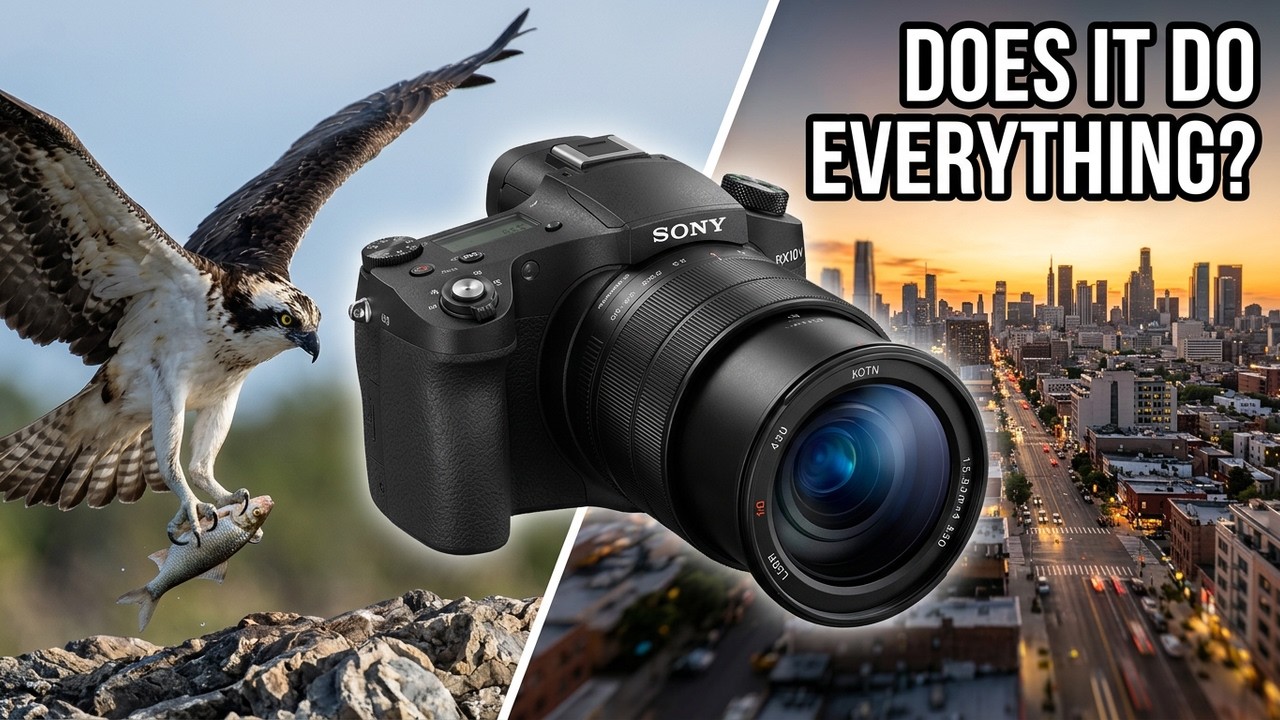
Angie Birmingham tests Sony's a6700 APS-C camera paired with the Sigma 60-600mm lens. The a6700 shoots 4K at 120 fps and has 5-axis stabilization, but costs $1,400 for the body alone. Real-world footage shows strong autofocus on wildlife and clean astrophotography at ISO 1250.
Chapters
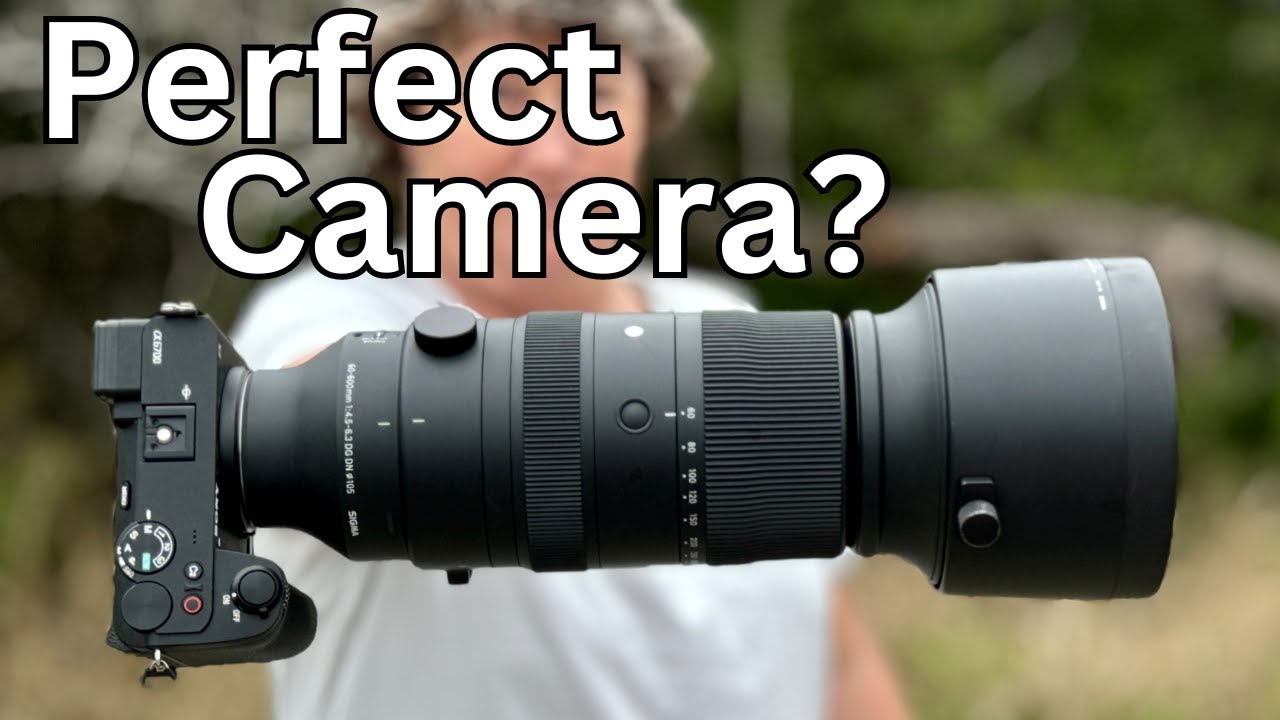
Alright, so today we are going to talk about the much-needed upgrade to Sony's crop sensor, also known as APC camera lineup. We have the Sony a6700 that we're gonna go into detail about this camera and all of its features. And I paired it with the Sigma 60-600mm because it's an all-in-one lens. So let's jump into that. Well, I've had this camera now for a month thanks to B&H Photo, and I paired it with my Sigma 60-600mm with the E-mount lens. And I took it out and did a variety of photography and videos, which I will share with you in this video. But just you wait and see the results from the astrophotography from this little compact APC camera from Sony. I think you will be shocked. Don't forget to like, subscribe, and ring my bell. Ding-a-ling-a-ling. All right, so let's go over some of the pros and cons of this little APC camera. Overall, I have to admit I really enjoyed shooting with this camera. Oh, by the way, I took the big lens off to make it a little easier to function around my desk. Anyhow, anyhow, so the biggest downfall that I found was The viewfinder location. Um, all of my cameras have it right here in the center of the lens. This one is off to the side, and I have been so used to shooting from the day I started photography on the center of my lens. So when I was shooting with this and I put my Eye up, it, it was a little odd looking off to the side, and I have to admit I had trouble tracking birds when I first started using this camera. And the other downfall is only one SD camera slot, or I'm sorry, SD card slot. Just makes to where I have to change it more often. Knock on wood, have never had a problem with card failure, so hopefully I never do. And one other thing that I didn't like, but I totally get that it needed to be small because it's a very compact camera, is that the HDMI is an HDMI mini. All my other cameras, the A1 and the A7 IV, they all have the full-size HDMI. So I had to get a special cord so that I could do video with my external monitor on this camera. So let's go ahead and jump into the highlights. There's a lot of those. So number 1 on my list is the focus The face tracking on this camera is amazing. You'll see later in one of the videos that I posted, or not posted, that I'm gonna play for you. I had my dog running at me and it did a really good job of tracking her. Another plus is that it takes the same batteries as the A1 series, the A7 series, the A7R series cameras. So if you have any of those and you decide to get this, Well, you've already got extra batteries. So, um, and plus this little camera right here runs $1,400, and paired with the Sigma 60-600, you can get that set up for just under $3,400. And if you use your Payboo card from B&H, they will pick up the sales tax, or they also offer other deals as well. And also on that Payboo card, that is my go-to because they pick up all the sales tax, and that's an 8% savings. But in order to save that kind of money, you got to make sure you got the money to pay it off before it goes to statement, otherwise you will get hit with that interest rate. But anyhow, back to the camera. This little jewel is 26 megapixels and it shoots 11 frames per second, and the sensor is back illuminated. It will shoot 4K video up to 120 frames per second. The faster the frames per second, you'll get a little bit of a crop, but it's not much of a crop. No overheating issues. I did lots of research on this and nobody has reported overheating issues that I could find. Oh, and it also has the smart hot shoe. So you can plug in microphones and all your other accessories. But when you're not using it, make sure you put this back because if you're out in the rain, it will short out and you'll end up having to send it in and hopefully get it repaired. And let's see, the camera has 5-axis in-body stabilization. Which is super handy for running and gunning. It has a flip-out screen so you can record yourself and see yourself. Great for vlogging. And one other thing— let me get this closed— Is that the grip is much bigger than the predecessors. It actually feels like you got something in your hand compared to the, the A6600 and so on. And another really nice thing is that it now has 3 knobs on it, or dials. So this one up here, I have it set to my aperture. This one here, I have it set to my shutter. And the little dial down here, it spins, I have that one set to my ISO. So it makes it real handy so you can have all 3 of your adjustments for your exposure right there at a fingertip, so you don't have to go back into the menu and change anything. And the camera itself with the battery and an SD card weighs in right at a pound, a pound and a tenth. It's super compact for traveling. Until you put that 60-600 on it, Then it weighs quite a bit more. With the camera and the lens, you're looking at right at 5.5 pounds for both. But that's still not bad. Not bad at all, considering that with that lens on this camera, your 60-600 just became 120mm to 900mm. At f/6.3. And one more thing, another bonus that I didn't make a note of is that this lens is very sharp at f/6.3 aperture wide open at 600mm. So it's a win-win for both of them. So let's go ahead and dive into some of those pictures. Alright, so So here we're gonna start off with my backyard squirrel. I gave him some pecans so he would come and participate in my video making. So the, the camera did very well keeping focus on him. I didn't do so well, but the camera did amazing as he ran back and forth getting his little pecans. And then he goes over here and he starts digging in the grass, and each time he brings his head up out the grass, it has focus on him. And then here's a couple pictures of him laying in the grass, eating his little pecan. And here's that video I was telling you about with Bailey. Watch how well it tracks her. Does a great job. Phenomenal job of it. Here's some of those pictures. I put them in here for you to take a look. I only played them for 1 second each on a little slideshow for you, but as you get towards the end, it'll slow down and it'll zoom in, and you'll see that the images are very sharp. See, look at that. Isn't that amazing? And that's little Bailey. She's quite the runner. And the birds— did well tracking the birds after I finally learned how to track birds with the viewfinder off to the left-hand side. Oh, and here's a couple images here. This is before noise reduction, and this is after noise reduction. Because the camera does get a little noisy. This one here is actually 6400 ISO before and after. This is just one of the little javelinas I had the pleasure of photographing. And then here I took a picture of a cow backlit to kind of give you an idea of how it handled backlight, and one of the little does. And now for the astrophotography. Check out these images. I did run them through denoise just to help clean up the images, but they were only taken at, uh, 1,250 ISO, so they turned out pretty good in my opinion. I hope y'all liked it. So what'd you think of those astrophotography shots? Leave me a message in the comment and let me know what you thought. But I know astrophotography is my number one favorite photography, and next to that would be blue hour and sunset with all the lights. I love all the lights. So anyways, I hope you enjoyed my little video, and don't forget to like and subscribe and ring my bell and do all that good stuff. And if you aren't sure about this camera, there's another camera right here on RX10 to watch. That's another really great little camera. Okay. I'll see you on the next video. Thanks.