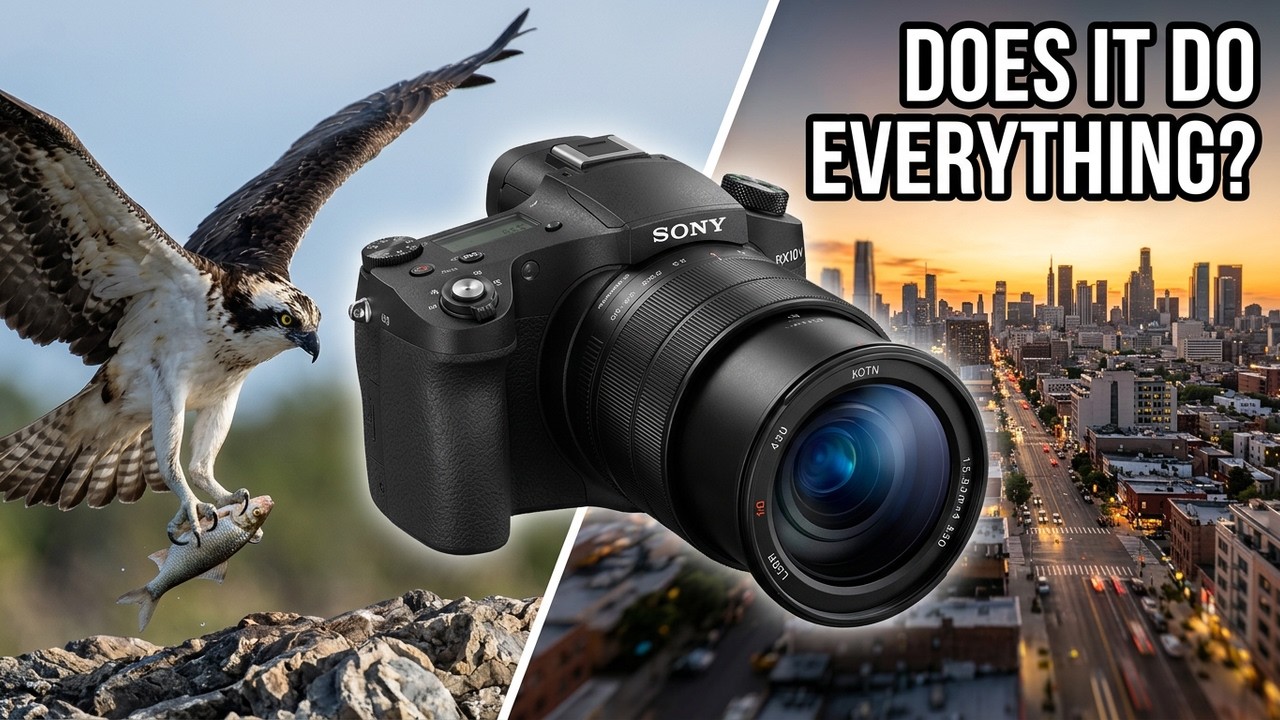
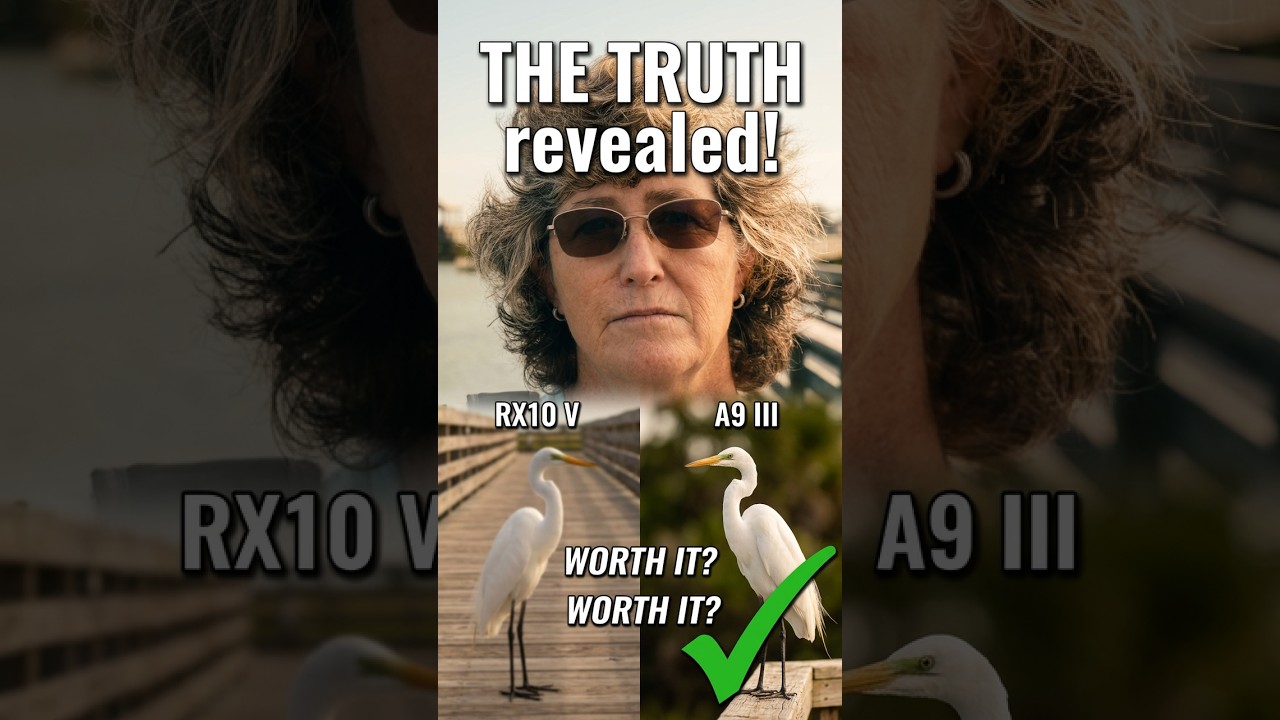
In this on‑location vlog, the creators walk viewers through their real‑time thought process for capturing high‑quality nature photographs across a variety of subjects and lighting conditions. The video begins with a plan to photograph wild turkeys, discussing lens selection (Sigma 16‑35mm, 60‑600), aperture (f/6.3), shutter speed (1/640 s) and ISO adjustments based on light. It then expands to broader bird photography advice, emphasizing the importance of sun direction to avoid backlighting and recommending fast shutter speeds (up to 1/2000 s) for small, moving subjects. The crew moves on to low‑light bear family shots, stressing quick setup, “insurance” frames, and settings (1/640 s, f/6.3, ISO ~4000). Later, they transition to night photography on a beach with a stranded ship, outlining a checklist (tripod, battery, SD card), fast lenses (f/1.8, f/2.8), longer exposures (starting at 5 s), ISO around 640, and camera‑specific considerations (Sony A9 III vs A1). Throughout, they interact with each other and the environment, adjusting composition, dealing with ambient light, and noting audience presence (dogs, kids). The video concludes with a call‑to‑action inviting viewers to watch another adventure in Grand Teton National Park. The overall narrative showcases practical, on‑the‑fly decision‑making for wildlife and astrophotography, blending technical instruction with enthusiastic field commentary.
Chapters
Hey, you ever wonder how to capture that perfect shot while traveling cross-country? Well, join me on a photo adventure where I'm going to take you behind the lens and reveal my thought process for nature photography. Basically, it's me thinking out loud. So let's go turn ordinary moments into extraordinary memories. Let's go make some together.
Alright, so this morning we are going to do, as we approach the scene, to photograph some wild turkeys. My thought process is, number one, they're very close, so I think I'll grab my Sigma 16-35mm.
What's that?
60-600 lens, and I'm going to set it at f/6.3 because there's very little light, and they are not fast moving, so my shutter will be— since I'm very steady hand— will be probably 1/640th of a second. And my ISO, I will adjust that to get the image to the brightness that I want it to be. All right, so let's get started.
Here we are.
We are down low. We are squatting. And there is our subject. And this is what I came up with. All right, so here we are again. We're going to get set up for some bird photography. Number one is you always want to pay attention to the direction of the light. As you can see here, the sun is in my face, so I do not want to shoot birds with sun in my face. Otherwise, they end up backlit like this. I want the sun to my back when shooting. Next is going to be the shutter speed. We're going to up the shutter speed. My minimum for birds, especially little ones, is 1/2000th of a second. My aperture, I'm still shooting my Sigma 60-600, so my aperture is going to be f/6.3. My ISO will probably be in the sunlight probably somewhere around 500, 640, and in the shade could go up as high as 5,000. So let's go find some birds.
So here's a little bunting. Notice that the light is behind him, so there's no detail in his face. Here's that same bird. I just changed up my direction, and now the sun is hitting him in the face instead of me. And this little turkey right here, the people in the Smokies referred to it as a Smokey. Turkey, and it's a—
it is a wild turkey, but she kind of had grayish-colored smoky feathers.
Kind of cool to see.
So here we are.
We are going to get set up to photograph some mama bear and her 3 cubs. My thought process for this is hurry up, grab your camera, And take some insurance shots so you make sure you've got the shot, and then take care of your shutter speed. Get it, um, so right now it's super dark in the trees, so I have mine at 1/640th of a second. My aperture is wide open at f/6.3, and my ISO is probably about 400. 4,000 right now. Um, here, I'm going to show you a little video of the cubs.
1, come on, cubbies! 2, where's your brother?
He's coming. It's always the brother. He's coming. He's bringing up the—
he's coming.
Oh, there he is. There he is.
Here I am sitting on top of the world looking at mountain goats.
So let's think about this shot. It's low light.
I have the Sigma 60-600, so I'm gonna be at f/6.3. Got my shutter down to 1/1000th.
My ISO is at 4000, so let's go ahead and take a few shots.
Into the wild, into the wild.
Here we are on the beach tonight, and today's approaching the scene is gonna be a little different. We have a ship that is on our beach. And we are here for sunset, which isn't really that great, but we're gonna be able to get some stars tonight above this ship. So we're gonna do a little night photography. We won't get the Milky Way very bright because we have a lot of ambient light, but we will get some stars. So let's, uh, let's think this shot out for stars. First, you're going to want a tripod. Number one, and a camera. You don't want to forget your camera. And, and don't forget your battery or your SD card or the bracket that goes on the bottom of the camera that holds it to the tripod. Okay, so after you have all that, we're gonna get it set up on the tripod, and you're gonna need a fast lens. which is f/2.8, f/2, f/1.4, f/1.8, something of that nature where you can gather a lot of light. So we're gonna go ahead and we're going to open that shutter up wide open. It's gonna be whatever your lens is. My lens tonight is a f/1.8, and Lisa— f/2.8. She has a 2.8 lens tonight, so when we get to stars, we're gonna be doing 2.8 on her lens and 1.8 on mine. The shutter, we don't want it to be too slow because our stars will blur. We want it— we want nice pinpoint sharp stars. So for the cameras we're using Uh, let's see, Lisa's gonna be using an A9 III and I will be using an A1, so my shutter will actually have to be a little faster than hers because I have twice the amount of megapixels. So my shutter, I'm gonna set my shutter at, um, I'm gonna start off at 5 seconds.
Okay.
My aperture is gonna be 1.8, and my ISO, because we have a lot of ambient light, I'm guessing maybe 640. So let's go ahead and take some shots and I'll show you what they are. Oh yeah, so let me show you our subject tonight. Not only are we on the beach, but we have a shrimp boat that has been on our beach now for about a week And I had to hurry up and get home from Yellowstone so I could come out and photograph it before they break loose. And the ship is called Second Chance, and hopefully they will break loose of this beach and have their second chance. All right, so let's, uh, let's get busy taking some photos.
Don't sit on the beach.
Well, here we are. We have quite the audience going on. We've got dogs, as you can hear, and kids. Everybody's having a great old time. With the ship that's stuck on our beach. The ship has not turned its lights off yet, so I'm not real sure how these are going to turn out other than the lights will be blown out, but we'll see what we end up with.
Like when we were 17. Back when nothing's ever out of reach. Oh, let's go dancing on the beach.
If you liked this video, why don't you go and check this video out right here and join me on an adventure in the Grand Teton National Park? Let's go on an adventure together. Click the video. Let's go.