Dublin Tech Summit | Global Invest Her
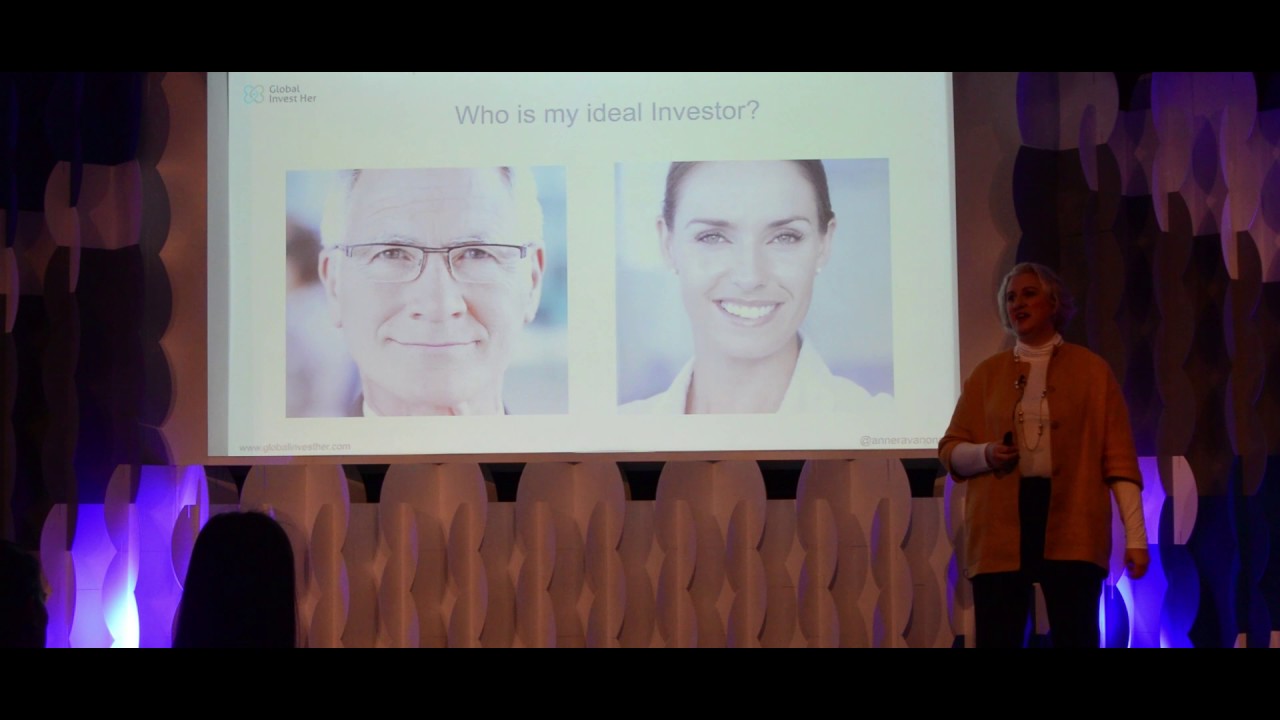
Anne Ravanona of Global InvestHer breaks down why women get only 10% of global venture capital and 3% in Ireland. Identical pitch decks are 70% more likely to get funded when a man presents them. She maps fundraising as three circles: mindset, process, and execution, with case studies from Julia Hartz and Leonora O'Brien.
Chapters
So welcome. I want to take you on a journey and I want us to work together on this because together we can smash this funding ceiling. All right? So I want to make sure that you're going to go away emboldened with lots of confidence, with good practical key tips and a new mindset when it comes to funding. So before I begin, let's take the temperature in the room. How many of you are women entrepreneurs already? Hands up. Hands up wide. High, high, high. Good. How many of you want to become women entrepreneurs? High, high, high. Yes. How many of you are investors? Only one? Colette? 2. 2. Yes. Fantastic. And how many of you want to become angel investors in the future thanks to what Colette has said? See? Yoo-hoo. Great. Okay. So we've got a lot of women entrepreneurs and women who want to be entrepreneurs. which is fantastic. And we can— we can make a difference. So I want to start off by saying this. Look, there is a funding ceiling. We're going to talk about that. But as I said, we're going to make it through. So the first thing to say is, when I was— well, let me go back here for a second. When I was 8 years old, my mother gave me a book about Joan of Arc. And I was absolutely captivated by her. It was the first time I had seen this woman leader. And I said, oh my God, how could this 17-year-old girl from medieval France raise an army and kick the British out of France? I thought that was pretty cool being Irish at the time, to be honest. That was really cool. But I was like, seriously, this poor uneducated girl from the countryside, she managed to do that, wear the armor, lead an army of men. And make change for history. And I became fascinated about women leaders. And I started to look in the history books for more women and I didn't see them. And I said, okay, one day I'm going to be a woman leader and I'm going to put the spotlight on other women leaders. So this passion is brewing in me for a long time. And so over 20 years, I worked in business, in global business and sales, and I did lots of pitches to big multinationals and got big multimillion-dollar deals. Great. And then one day I had an accident, I hurt my neck. And I couldn't work for about 6 months, so I got time to think. And I went to an event in London at the Cherie Blair Foundation. And there was a woman entrepreneur there. And she— I asked her from the public, I said, what has been your biggest challenge? And she said, access to funding. And this light bulb went off in my head. And do you know what happened? I got mad. And when I get mad, I do things. So what I did was I decided to focus and I decided to kind of research and see what's going on here. Is there really a problem for women when it comes to access to funding? And the more I researched, the more bad news I came across and the more angry I got. So I decided to set up GlobalInvestHer a couple of years ago to help demystify funding and the whole funding process for women entrepreneurs. And create a safe space for us to learn, to come together, to get investor ready and get out and get funded. Because get what— guess what? It's not about raising funding. That's a tool to fuel your business. It's about building a fantastic business. So we stand for bringing you quality content, creating that environment for you to feel safe, but we're also catalysts. So you will see me speaking on lots of stages around the world because I want to spread the word that, yes, it is harder for women. It is harder for women. But no, we're not crying about it. We have to make the change, right? So that's the first thing. Now, our vision, it's very linked to what Colette was saying earlier on. I really believe that what we need to do is we need to get more women entrepreneurs funded. They become angel investors and they invest in other women and other men, but they invest in others. We get more women into VC. And we get more men investing in women because, hey ladies, we can't do this by ourselves. So this is the bad news. This is the reality. The funding gap, the difference in money that goes to women and men, is $300 billion. It's not small. This is the International Finance corporations, their statistics. That's what made me mad. And so I said, no, this is not right. My biggest value is justice and respect for everybody. So I started to learn the research and to read the research. And this is the sad story until we get to the good stuff, all right? Because we have to know what's the situation. The key thing is that women We are underfunded around the world. Now, the bad, bad reality is that we only get 10% of venture capital globally. 10%! Excuse me, ladies, how many— what's the percentage of women in the world? 51. Sorry? 51. 51. We are 3.5 billion women in the world, and you're telling me we only get 10% of the VC pie? Excuse me. Is there something wrong with this picture? Yes, there is. Guess what? In here in Ireland, ladies, it's not much better. It's actually worse. It's only 3%. Women only get 3% of the venture capital pie. And when it comes to seed investment— that's the earlier stage when you're going to angel investment like what Colette was saying earlier— look, we're getting 15%. 15%. There's something wrong. But why? Why are we only getting that? Maybe there's a link here. The problem is there are not very many women investors. Look at the correlation. The percentage of women venture capitalists worldwide is 7%. Oh, we're only getting 10% of venture capital. Maybe that's an issue. Look at the number of women angel investors. 19%. Let's say 20%. Round it up. 15%. 20%. We're getting 15% of seed capital. So until we have more women investors, things are not going to change fast enough. But we also get— need to get the guys to invest in us too. And for that, we need to work on different things and unconscious bias and so on. And what's very important to say is, you know, there's a lot of research around this. I have a 15-year-old daughter and a 12-year-old son. And the hard truth is if both of them went to set up their business today, my son would be 70% more likely to get funded just because of his gender. Okay? Now, MIT Harvard did a study in 2014. What they did is they had a pitch deck, a deck of slides. They gave it to 2 groups of investors. So imagine this room is divided in 2. You get the deck. You get the deck. The only difference in the slide deck was that your slide deck was commentated by a woman's voice. Your slide deck was commentated by a male voice. The content was exactly the same. And after the investors heard the voices, you know, heard the deck, the pitches if you will, they were asked, okay, how likely are you? How likely are you to invest in this company? And how likely are you to invest in this company? And guess what? They were 70%— the guys, and in general, the investors were 70% more likely to invest in the man than the woman, when the content was exactly the same. So there's something coming in. There's something here around bias, unconscious bias, and conscious bias. Okay? So that's the sad story. I can see the faces dropping, saying, oh my God. She's gonna tell me to go on and on and on. Right, we get it, Anne. Right, so we get it. So what can we do to make a difference? First of all, the key thing to know about the funding game, I like to put into those 3 circles. Okay, it's about a perspective, it's a process, and it's a performance. Keep that in mind. It's those 3 things. That's what this funding game is about. And guess what? Because it's a process, Because it's a performance, you can learn it. You can learn it. Do you think all the guys who get those millions, the 85% of the funding and the 90% of the funding, they're born and they just know it all? No. And guess what? We're actually really great women at doing the preparation and the hard work. So, let's look at each of those individually. Perspective. What I mean by that, it's a mindset. When you're a woman entrepreneur looking for funding— and today my talk is all about us women, right? You can tell the girl power in me. When you're looking for funding, the most important thing to keep in mind is that you are equal with your investor. They're not up here. You're not up here. Do you think that the guys go in and go, Lord Jesus, oh my God, I don't think— They're going to go in gung-ho. They're going to go in, you know, with lots of energy. And I'm not saying that women don't do that. We do. But often— and I have personally interviewed over 40 very successful women entrepreneurs who've raised over $400 million, and I asked them their funding journeys. I wanted to find out what was going on because when I started to talk to women entrepreneurs around the world, I talked to about 250, and I said, okay, that's the sad story. What would— if you had a magic paintbrush and we could change things, what would be the solution that would help you? And what they said to me is, Anne, I want to learn from the women who did it. They got the t-shirt because they broke through those barriers. And number 2, I want to learn what do investors want? What are they looking for before they invest? Good news, you're going to hear from both of those things today. But the key thing is when I say it's about a mindset, It really is. You have to go in thinking win-win. And when you're looking for investors, you're looking for partners. You're looking for partners who are going to be part of the journey with you. So it's important not to go in thinking that they're on a pedestal because it does affect the negotiation. It does affect the dance. And funding— that's why I called it the funding game. I could have called it the funding dance. Okay? So mindset's very important, how we actually go in. So what I would usually say to women is, hey, guess what? We love our clients. When you build a business, you're focused on the clients and their needs. Aren't we? Yeah, we want to know what's going on and how can we best serve them. And a lot of people don't like selling, but actually if you put it into your head that when you're talking to investors, they are your clients. They're your partners. You want to find out about their needs. It just takes that edge off things. And sometimes you can feel a little bit less intimidated. So use those skills and the focus that you would have when you're focusing on the client. Use that and bring it to the mindset, to the funding game. The other thing is to say, I can learn this stuff. All right. Who is my ideal investor? This is the second part. We're coming into the process. So funding is a process, so there's different steps. But before we do that, you need to keep in mind what is the type of business that you want to become? What type of company do you want to become? And what are your goals? And depending on that, then you have a funding strategy and you look for different sources. That's the first thing. So you need to think about what type of company you want to become. before you look for funding and you may not need funding for the type of company you want to be. But the second thing is you need to think about your investors. So if you're looking for funding, it's who's gonna partner with you. And the key thing is when you are looking for those investors, you have to do your own persona of what it is you're— what's your ideal investor? Who is it you're looking for? What kind of expertise do they have? It's not just about the money. What's their expertise? What's their network? What's their technical expertise? But you have got to be very clear about that kind of thing. So the professional thing, you need to be kind of thinking about your homework. Like how long have they been investing? How many companies have they invested in? You know, you want an investor with a track record who's not doing this for the first time. And so you've got to be very clear so that when you're having those meetings, you can filter out the people that really are not going to be a good fit. But what's very important is when you're thinking about what is your ideal investor, you need to be saying to yourself, okay, how— what is it that— what I'm looking for? I'm looking for somebody who believes in me, who believes in my vision, and who wants to come on this journey with me. So there's a vision piece. that in your investor profile you want them to be with you, but at the same time you also want to make sure that they are— there is a values fit. Because guess what? When we're starting funding, we kind of say, oh my God, I have to look for money, I have to do all these different things, but we forget when you start having that partnership, when you do bring investors on board, they're with you for a specific amount of time. So when it's an angel investment, Colette, she'd be with you for 3 to 5 years at least. It's not a quick in-and-out thing, you know. If you're looking for VC money, that can go 7, 10 years or more. So you've got to make sure you like the people. And because they're mainly men, you like the guys. You get on with them. So it's really, really important. The other thing we said about is what are the different sources. So you know you now that you are a company who needs money. You know now what type of investor that you're looking for. But the third thing is, okay, now what kind of sources of funding? And these sources are the ones that I have pulled from the women who have raised those $400 million. I've looked at all their funding journeys and these are the different things they've used. And guess what? It's like a menu. When you go into the restaurant, you can choose what's worth— what what works for you and what's right at the stage you're at. There is no cookie-cutter approach when it comes to the right source of funding. It's not because you have got a funding mix that worked for you, that you got a bank loan, that you got friends and family, that you got an accelerator, that that's going to work for somebody else in their sector. So that's important. So you do need to look about the different sources of funding and do your homework. And see what's available to you. But the other thing that's very important, really important, don't reinvent the wheel. Because do you know what happens, particularly with women entrepreneurs? We go for 500 cups of coffee with the wrong people, and the guys go for 5 cups of coffee with the right people, and they get the funding. They get the 90%. So there's something that's not working. So success leaves clues. You would have heard that about other gurus, right? Success leaves clues. So you want to learn from those women who have made it. And on our funding platform, on Global InvestHer, we have a part that's called the Interview Hub. So these are interviews with real women entrepreneurs who've raised money. Now, when you look at them like that, you may not know who these are, but let's Let's have a look in. It's like through the keyhole. Through the keyhole, who's here? So this lady here, does anybody recognize this lady here? Huh? If you do, shout out her name. Who is she? Eventbrite. Eventbrite. Exactly. That's Julia Hartz from Eventbrite. Eventbrite is now worth over $1 billion, OK? It's a unicorn. Guess how much money they raised? In funding? $200 million. Don't you think you want to hear from her? So it's fantastic. But what I love about her story is when you come into the platform, you learn exactly how she did it. And guess what? Here's some freebie tips here. She didn't walk in and get 2 checks of $100 million. Okay? For the very first 2 years— So when she set up Eventbrite, she set it up with her husband and Renaud Visage, who's the techie guy, right? So there were 3 co-founders, and Renaud was based in France. And her husband Kevin, he had already successfully done a startup, and he'd already raised money. So he had some good connections with investors. But guess what? The first year they went looking for funding, they didn't get a penny. They went to all the VCs. Now, we're talking about her husband has a track record. But Eventbrite was pretty new. It was creating something new. People didn't know the space. And why am I using it as an example is because we could do it, okay? So the very first year— the first 2 years they didn't pay themselves a salary. They bootstrapped. And then they went looking for money. They knocked on all the doors in Silicon Valley and they said, listen, we're going to hit this, this, this, this milestone. And the investors said, very nice, Julia. Very nice. Very nice. But no checks. So they went home. They didn't get any money. They kind of raised a bit of money from their friends and family to keep going. Guess what? The year— one year later, they went back to those investors, said, hey guys, do you remember we gave you this checklist of all the things we're going to do? Well, we've done them all. And they walked away with a big fat check. It was about $4 or $5 million like that. Which is that success leaves clues. Even a billion-dollar company, you know what? They're 10 years old. So it's, you know, you also have to think it's a long journey. But also there's our wonderful Leonora O'Brien, homebred talent. Leonora O'Brien from PharmaPod. Leonora has raised €1.3 million so far and it's a mix. So she's done accelerators, she's won competitions, she won the Cartier Women Initiative Award. So it's a mix. She got some bank loans, she put her own money in, and that's very important because investors want to see skin in the game. They want to see that you are putting not just sweat equity or time and money, they want to see that you're investing, you know, financially in your company. So it's very important that when you are looking for funding, go and reach out to the women who have done it before. Reach out to the women who are speaking at events, come visit them on the platform. You can actually Read their full detailed funding journeys and learn in your own time. And we'll be doing webinars with them where you can ask their questions directly to them. So learn from them. Don't reinvent the wheel. So the other thing is we said in the process you have to learn from the— from what— how the women entrepreneurs did it. But then it's about what are those investors? Now, wouldn't it be fabulous if we knew what's in the heads of those investors? What is it that they're looking for? They want Super Bowl. They want you to do ads on Super Bowl and everybody's then watching your company. So let's talk about the investors. It's very important. Remember what we said in your mindset? You're going in win-win, okay? So the investors, what are they looking for? Okay, shout out to me. What do investors want? Track record. Track record. You know. You're an investor. That's not fair. Don't be telling them the answers. What else are they looking for? Track record. What does track record mean? No telling. Metrics. OK. What kind of— what's in metrics? Customers. What else? Revenue. Yeah. It's milestones, isn't it? It's all these things, right? OK. The KPIs. But why do they want a track record? Lower the risk. Lower the risk and trust. Absolutely. So they need to lower the risk. Very important. Because guess what? Investors also, they hunt like a pack. Okay, it's true. When you're raising those first, the seed round, you'll be looking— oh, that's me— you're looking for a So when you're looking for a seed round, often you're looking for this thing called a lead investor. Because guess what? It's kind of painful if you have to have 15 conversations with 15 different investors. So often the way to do it is you find one person who's going to be the lead. You have the conversations with the lead, and they will negotiate on behalf of all the other investors. Thank you so much. Yes. So doo doo doo doo doo. Yeah, this is where I wanted to show. So look at my wonderful investors. So I've also interviewed over 40 fantastic investors from all across the world. And I asked them— the good thing is, because you know what, I wasn't asking them for money, they told me everything. So you want to know, you come on the Interview Hub and look it up. No, but seriously, it was brilliant because that was my deal with them. I said, okay. Brian, he's here. If you don't know him, he's a VC. Now, that means Series B. He's looking for a much later stage, but he's walking around. He's around today. He'll kill me for saying that, but now you know he's on the wanted list. We also have, for example, Leslie Jump in the US. Here, Jenny Tooth. Jenny Tooth, this lady here with the lovely necklace. She's the head of the UK Business Angel Association. So what we've done is I've interviewed personally those investors to ask them the questions you would love to know. Because I want to— my wish would be to be able to download all their knowledge and disseminate it. It's not artificial intelligence, it's Anne intelligence. Disseminate it all over to— out to you so that you don't have to go through the pain of learning this. You can learn from other people and learn from the investors. So what do they want? Do you want to know? Sorry? Yes. If you don't say yes, I'm not going to show you. Right, let's see. Okay, so what investors want to know, the first thing is the who, and we put that in the center, okay? They want to know about— You. You. When I ask them, I say, what's more important to you, the entrepreneur or the idea? What do they say? Yes. So they want to know about you, who you are, what's your background, what's your track record, what's your passion, are you coachable, Are you going to listen to their advice? Who are you? What's your passion? So they really want to know who you are before they're going to give you money. And the most important thing, can I trust you? Can I trust you with my money? Can I trust you with introductions? If I am going to introduce you to a super prospect, to a super contract, give you visibility with the Huffington Post, Can I trust you? Okay? So the who piece is important. And that's very important for us women to be out there and to, you know, build our profile, build our brand personality. That's very important. They want to know what. They want to know what's the problem you want to solve. They want to know, you know, what's the size of the market opportunity, who are your competitors, and how are you different? And what's the solution that you are building to meet that problem? Okay? They also want to know why. Why you? Why now? Why this problem? This is— they want to paint a picture to get to know you and to see the size of the opportunity before they give you money. And they want to know how. How are you going to execute? How are you gonna get this stuff done? Who's on your team? Who's your customer? How are you going to do it? How are you going to measure it? The other thing they want to know is about the deal. This is the DNA of the deal. They want to know how much money that you want. How are you going to use that money? What are you going to use it for? They also want to know who else is part of the deal. Do you remember I said that they hunt in packs? They want to know who else is in the pack. Because if Colette's in the pack, I want to be in the pack with her. No, it's true. And you know why? I don't want to look stupid. I don't want to lose money and I don't want to look stupid because all the investors want to find the next Uber and so on. Okay. So this is really important to know what it is they're looking for. In the must-knows, imparting it to you, what is it you have to know when it comes to investors? The first thing, how to approach me. What's the best way to approach an investor? What's the best way? Reference. Reference, introduction, warm introduction. Find out somebody you know who they will trust. You'll learn about that afterwards, who they trust, but you need to get a warm introduction from somebody they know. That is the best way to get through to investors. The other way that they like is— so if you're going to send them your deck, please just send them 15, 20 slides. Slides through somebody who has introduced you and your executive summary. That's it. No more. And don't expect them to learn it all off by heart because guess what? They're seeing thousands, thousands of slides and thousands of deals every year. So they want to know— if you want to know how to approach them, get that warm introduction, find out what's their preferred communication style. Where are they on social media? Do they tweet? They love to tweet. And you can learn a lot about your investors. So go and do your homework and see if they use Twitter. Do they blog? An awful lot of investors blog. If you go onto our globalinvesther.com, there's a section called resources in the top menu, and we actually outline the best books you should read on funding and the best blogs. Male investor blogs and female investor blogs. You don't have to go looking. So that's very important. But the other good thing is here. Conferences. You can actually approach them. Go up to them when they're speaking. Don't be shy. You just want to go up, get the card, and then you can go after them. Just give them the one-liner and that's it. Now, what are they looking for at that first meeting? What's the objective of the first meeting? Introduce yourself. Introduce yourself so that? They remember you. So they remember you until you get a second meeting. That first meeting, the whole objective is to see, do I like you? Do you like me? Will we get on? Is this an interesting enough opportunity for me to give more time to this? That's all. As soon as you know that, you can be much more strategic in the information that you put forward. They also want to know about your team, your technology. It's good in that first meeting— you know what they hate is when you come in, open the laptop and walk through the slides. They are not kids, OK? They will have read your slides. You shouldn't say, what did you think of my slides? Have a conversation with them, all right? That's very, very important. So that first meeting is all about getting to the next meeting. They want to know about your team. If you're going several people into that pitch meeting or into a pitch competition, they want to see the dynamic. Between you guys on the team. They want to see how that is. So that's very, very important to them. Before I invest— what it is they're looking for before they invest, they're going to do their due diligence. They want to make sure that the size of the opportunity is big enough, that you're the right team to carry it off. And if not, if you don't have the team, that you know where to look for who you should be adding to that team. Well, what's very important is the major turnoffs. You've got to know what they hate. So what do investors hate? The worst thing they hate is arrogance. They hate it when you come in here and you brag and you say, I am the new Uber of Y and I'm going to rule the world. They hate arrogance. The good news is that women tend to not be too arrogant. We're actually the opposite, right? So they don't like arrogance. They do not like Dishonesty and lying. They hate that. So that you're kind of blowing up your figures too much. Which comes to the next thing that they hate is when you overestimate, when you kind of have these really high valuations that are out of the sky. They hate that. All right? So it's very, very important. Those are the key turn-offs they hate. And you can have more information on that on our platform. The most important thing to remember, they are not They're not checkbooks on legs. They are people. They're people you're building a relationship with. So you've got to do your homework about them, what it is they like. Learn about them. All right? So the last piece of nuggets— because we're nearly finished— is when you're pitching, you've got to own the moment. Own it. Don't be scared of it. Okay? So it's very important for us women to get pitch ready. But not pitch perfect because we tend to be perfectionists and we want to do everything perfectly. Does anybody relate to that? Yes. Yes. Okay. So some very quick key tips. Before you go on, before you do your pitch, do your homework on the investors. Really find out as much as you can. Ask other CEOs who they've invested in about them. What are they like as investors? Okay. Do your homework. Practice, practice, practice that pitch. Practice the Q&A. Write down the list of questions that you really don't want to get. Get somebody to practice with you and get them to ask you those tough questions. All right? That's really, really important. Make sure that you have your questions ready. So then, practice, practice, practice. Now, quick tip before you go onstage. I did this before my TED Talk. If you'd seen me backstage, you would have been, oh my God, she's a lunatic. So, have you heard of Amy Cuddy and the power poses? Yes. So I was backstage like this, and I was there for about 5 minutes. I was getting all the energy flowing in. It actually does boost your testosterone for us women and men. So get into the zone. Find a space. Go into the toilets before you do your pitch, even if it's a meeting or onstage, and do the power pose. It works. Or this one as well, the Wonder Woman. Thank you. She's doing Wonder Woman. Wonder Woman. I'll have to do that. So you do the power pose. It really does work. When you're in the moment, you're gonna own it. The 10-minute pitch doesn't work for women because of many, many reasons that we'll talk about a bit on the panel. But what's really important is when you're going in there, show your passion. Investors want to see the passion. And when you're answering questions, try not to give too many details. And there's reasons why we give more details than the men, which I'll share later, okay? Really important. But after the pitch, key advice, get feedback. Feedback. How many of you ask for feedback from the investors after a pitch? You'd be surprised. I ask investors and they tell me, Anne, they don't ask me. You— this is a business meeting. You have to be asking for feedback, what it is that you need to be doing differently, what they liked, what they retained in your pitch, because you need to know what works, what needs to change, and then you need to move on, which I need to do. So my last 3 slides is this. I'm not— it's really my late messages. I'm not going to ask you to do this. Think big. Don't be asking for $500,000. Much more. Believe in yourself. Okay? Not this. We're not here. And ask for more money.
More from Anne



🎙️ EP69: Get Off the Fence: Renate Crollini's Startup Blueprint | InvestHer Podcast

🎙️ EP68: Radical Truth: Robert Rubinstein Exposes the Impact Investing Illusion | InvestHer Podcast



🎙️ EP66: Global Sisterhood — Carine de Meyere on Trade Missions | InvestHer Podcast



🎙️ EP65: Capital With a Conscience: Pierre Norman Rolin on Investing in Women… | InvestHer Podcast

🎙️ EP64: Dream Bigger: Nikki Barua on Building an AI-Native Company Without… | InvestHer Podcast