🎙️ EP16: Ask an Angel — Fundraising Advice for Female Founders with Angela… | InvestHer Podcast
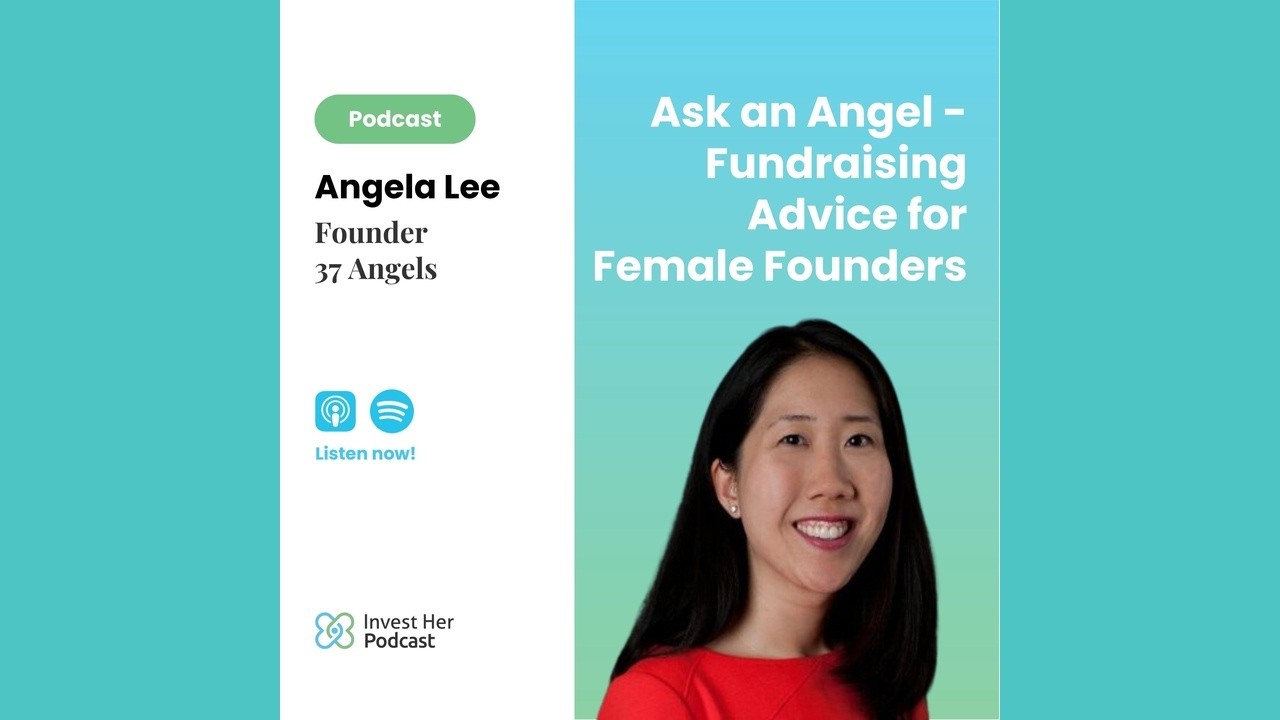
In this episode of the InvestHer Podcast, host Anne Ravanona sits down with Angela Lee, founder of 37 Angels and Columbia Business School professor, to give practical fundraising and angel‑investing guidance tailored for female founders. Angela explains the 37 Angels Bootcamp—a $4,500, open‑to‑anyone program that teaches the mechanics of angel investing and deal sourcing. She stresses that investors care less about raw traction numbers and more about a replicable customer‑acquisition engine, where clear CAC and LTV metrics signal readiness for fundraising. Angela’s team of investment associates handles initial screening, and she advises founders to pursue warm introductions rather than relocating headquarters solely to appease investors, especially for European startups. She shares four curated resources to help international founders raise capital and expand strategically. When asked about becoming an angel or VC, Angela outlines three core traits: genuine enjoyment of the work, comfort with saying no to many opportunities, and an awareness of the financial risk involved. The live Q&A segment fields audience questions about bootcamp pricing, enrollment, and practical fundraising tactics. Throughout the session, Anne encourages real‑time feedback, promises detailed show notes with links to 37 Angels, Global Investor, and related Twitter accounts, and teases the next episode featuring Vicki Saunders of SHEEO. The conversation blends conversational storytelling with actionable advice, offering a roadmap for women founders and aspiring angel investors.
Chapters
Welcome back to InvestHer Podcast. This one is episode 16, and we're delighted to have with us the incredible Angela Lee, who's the founder of 37 Angels, an angel network based in New York. If it's the first time joining us, welcome. If you're listening in to all our other episodes, great to have you back again. So on this episode, well, are you in for something really, really cool. We had such a dynamic session with Angela with loads and loads of questions live from our podcast audience, and she runs through why she set up 37 Angels, why they've also created a fantastic boot camp to help train more women to become angel investors, and she's also going to give you her take on funding during COVID what you need to do, those key dos and don'ts, and oh my goodness, Are you going to be ready for an incredible list of resources that she gave live over this podcast? So you won't want to miss any of them. So check the links in the show notes and let's get started. Investor Podcast is for you, the female founder who has a product, a service, or a message that you believe in and need to get funded, or for you, the investor who wants to learn more about the huge untapped investment opportunity that gives you a higher return— women entrepreneurs. My name is Anne Ravanona. I'm an entrepreneur, TEDx speaker, and women's advocate, and I'm passionate about helping women entrepreneurs get funded. In each episode, we'll take a behind-the-scenes look into real-world funding tactics and strategies to help you get the funding you need faster. Let's put the fun into funding. Thanks for spending some time with me today. Now let's get started. Great, so welcome everybody. This is episode 15 of InvestHer podcast, and today I'm absolutely delighted to welcome Angela Lee, who is the founder of 37 Angels. Welcome Angela, how are you doing?
Wonderful, thank you so much for having me.
Well, thank you so much for being here. This is an opportunity for us to kind of pick your brains as a Fantastic angel investor, somebody who is dedicated to helping female founders succeed and helping more people become angel investors to understand what this fabulous kind of underrepresented, underestimated group of fabulous founders are and, you know, the opportunity they represent when it comes to funding. So thank you for being with us.
Of course. Delighted to be here. And I'm really excited about this conversation.
Fantastic. So I want to say to our listeners who are joining us live, welcome. It's fabulous to have you with us. Just say hi again to Julie and to Tina, Yuki, Anoushka, Adriana, and many more who are joining. So Adriana's joining from Singapore. If you want to all just say hi in the chat box, both of us can see it. Make sure that you press to everyone so everybody can see, to all panelists and attendees.
And I'm jealous of Adriana's easy access to Singapore chili crab. It's delicious.
Oh, the black chili crab. I totally— oh yeah, that's to die for. I wish we had it. I was lucky to go with my husband when he was flying there long haul. So Tina's from Canada. See, we've got Margot, New York, Canada, Singapore. Cool. I know that Madeline's calling in from Berlin, so we're from all over. So let's get started. Angela, let's kick off by— can you tell everybody a little bit more about you, how you became an investor, and a bit about your background so people know a bit more about you?
Sure. So these days I wear 2 hats. The first is I'm a professor at Columbia Business School. I teach venture capital courses and leadership courses, and I'm also the faculty director of the Entrepreneurship Center. And then I'm also the founder of 37 Angels. So I became an angel investor about 12 years ago, and it was very accidental. My friend had a movie that she directed and filmed, and she wanted someone to invest in the distribution rights, and I did because it was a movie about mental health awareness, and I wanted more people to see it, and so I invested. I wrote a $5,000 check, subsequently lost all of my money, but it was a really good experience. And all of a sudden, I was a quote-unquote investor, and people started sending me deal flow, and I had no idea what I was doing. And I looked around for educational resources, and I also looked around for a network filled with people who looked like me, because at the time, I was kind of in my late 20s. I'm an Asian woman, and I was walking into rooms of investors, and I literally got asked the question, are you lost? Or whose money are you investing in? All these very fun questions. And so out of that came 37 Angels, which I started about 7 years ago.
Mm-hmm.
And 37 Angels invests in early-stage startups. Every year, we look at over 2,000 companies and invest in 10. We've invested in 71 so far. And we also teach women how to be angel investors. So we have an investment boot camp that teaches women how to source deal flow and value companies. And we're trying to get more women into angel investing and venture capital because, as you know, the numbers are abysmal there. And so we're trying to close that gender gap.
Oh, and I'm so glad that you're doing it. And I know that you do a fantastic job. I had the pleasure of being on one of your webinars recently, and it was just awesome. You have such knowledge. I mean, hey, everybody, you're so lucky. You have Angela's brains from an angel and a VC perspective. So we're going to pick your brains. And I know that when we were positioning this particular podcast episode, we were saying, you know, ask an angel, but like, you're an angel in disguise. So you're an angel and a venture leader. leader, let's just say. And sorry folks, for my— my son has decided to print something, or the printer's decided to say something as we're live. But hey, that's the— that shows that we're live.
The world we're all in right now.
This is the world we're all in. So I want you to share with us one cool fact about you, one fun fact that people won't know about you, Angela.
I guess a fun fact is that I applied to business school and culinary school at the same time, and that I had a vision board in my early 20s and To be the next Asian Martha Stewart. This is before she went to jail. Yeah, yeah, of course. And I cooked, you know, professionally for a couple of years, and I really thought that I would be a restaurateur and a chef and doing all these cool things. And that's not what I'm doing, but that's something that not that many people know about me.
That's amazing. And so what, what kind of cuisine? Because I'm curious now, you've got me going.
So I was in Northern California, so kind of Northern California fusion. But so I ran a series of experiments for a while. I played every role that I could in the food industry. I was a cater waiter, I was an accountant. I obviously was apprenticing under a chef and just realized that the glamour that you see on the Food Network is not what happens behind the scenes. And luckily, I spent 2 years doing it professionally and didn't end up going down a path that actually would have been very unhappy doing. I still cook a lot for at home, but not for me professionally. Wow.
So just bear with me, everybody, while I turn off my printer beside me because it's driving me crazy. I'm sure—
You know, I can't hear it. Good.
Can everybody else hear it? If you just tell me in the sound, because if that's not bothering you, that's super cool. This is how we know it's live. In the chat box, please just let us know. Um, that's awesome. Like, I think that's so cool. And who knows, you might always go back to it. Do you cook a lot at home?
I do. I cook a lot. And I tried desperately to do food plating, but I'm not good at it. So I have all of these photos of very ugly-looking plates of food, but they're delicious, which is what matters.
Oh, that's wonderful. So I'm just— our listeners are saying that's cool that they can't hear the printer. That's wonderful. I don't need to move so you can see me without jumping out of my chair. And I think that it's awesome as well, the fact that— how come you chose to help other women become angels? Now, I'm shocked that somebody said, are you lost? I mean, that's probably one of the most That's one of the most insulting things I've heard, and I've heard many things from female founders and other investors, but are you lost is probably right up there. I mean, so how come you chose to help more women?
Yeah, so, I mean, the numbers speak for themselves. So angel investing right now is somewhere between 15% and 20% women, depending on what data you look at. Venture capital is like 3% women partners. It's teeny tiny. So it's clear that we need diversity in both places. I think that's one. The other thing is, I think it's really important, you know, as a human, to just ask yourself, What are you good at? What you can be helpful doing? And I am, first and foremost, a teacher, right? I'm an educator, and I love doing it. And that's how I can help to close the gender gap, is to teach people and arm them with the skills they need to do this.
Mm-hmm.
And I think the last thing is that, you know, angel investing, venture capital investing, it's this thing that everyone is kind of under— we're all underqualified to be doing it.
Mm-hmm.
And there's a study that some of you might know that when a man sees a job description, and he fills 6 out of the 10 criteria, he'll apply. But for a woman, she needs to hold— she needs to check off all 10 of those boxes. And so women are less likely to do a job that they feel underqualified for. And by definition, we're all unqualified to be angel investors. And so it just seemed like the best way that I could help. I happen to love it. And so that's how 37 Angels was born, really out of like something that I wanted when I was starting it, which was, why won't someone explain to me what a liquidation preference is? And I do feel like venture capitalists It's this world where, like, if I say a bunch of words you don't understand, that makes me seem smarter. And it feels very cliquey and very niche, and I wanted to really kind of shine a light on that black box.
I love it. And, Anne, you're absolutely right in saying all of those things, because we, we have to let everybody know that this is for everybody, and we need more diverse angel investors. So more men investing in female founders, because I think that's the thing. There are, as you said, 15 to 20% of angels are women, so the vast majority are, again, men. And guess what? You know, women are coming more and more into the wealth that we either create or it's being inherited. So now there's no better time now than ever to become an angel investor. And I love the way you shared your story about how you started. But like, you know, as you say, you were an accidental investor with that opportunity that presented itself to you and you kind of jumped into it. And, you know, I love the way you share that. So tell us a little bit more about the process, like how you help women entrepreneurs particularly, first of all, how you— the process to help them get funded. And then let's put the spotlight on the bootcamp because I want our listeners to learn from both resources. I think it's fantastic.
Yeah.
And I do remember from when I interviewed you way back when, a few years ago, how you were saying that your process was super fast, that you gave feedback really, really quickly, which for me stood out among all the investors that I had interviewed up to that point. You know, even getting feedback was a big thing and the actual decision-making process took a long, long time, whereas yours, 37 Angels stood out as being super fast and efficient. So I just wanted to frame it that way and hand it over to you to kind of tell us a bit more.
Yeah. So in terms of helping female founders, number one, we're getting more women writing checks. And all of the data shows there's literally a one-to-one correlation between if you have women writing checks, more women will get funded. So that's the number one way that I'm helping female founders. The second is through a tremendous amount of education. We obviously educate female investors. But I also do a lot of— I did an AMA this morning, right, where I am doing workshops with female founders around customer acquisition, around fundraising, around all those topics that I know people have questions about. So I do a tremendous amount of time— I spend about 10% of my time doing mentorship. So that's a big bucket as well.
Mm-hmm.
And then the last thing is, like, collecting resources. So I'm just gonna share a link in the chat, which is 37angels.com/female. We have a list of about 40 different organizations that are specifically helping female founders, like Global InvestHer, and it's a great list to go to in terms of, I just, I need support and I need a network. So those are all the different things that we do to support. You mentioned process. The average angel network in New York City takes 187 days to get back to a founder. That is too long.
Wow.
So we guarantee that you get an investment decision 4 weeks from pitching. Which is much more in line with venture capital timelines, because, as we know, time is money, and founders have less time than anybody. And so then we think it's really important to be really efficient in our process. And 40% of our network is former founders. So we very much get it. We've been on the other side, myself included. 37 Angels is my 4th startup.
So do you only have women angels? I get that you train more women to become angels. Are they only exclusively women angels in 37 Angels, or do you have some male angel investors as well?
So we have 85 angels, and I think 4 of them are men. And so it's actually kind of the ratios that you normally see in the other way on venture. So we have a few men in the network. It is primarily women because most of the alumni— most of the members are alumni of the bootcamp.
Yeah.
And then you asked about the bootcamp. We teach women how to be angel investors. How do you source deal flow? How do you diligence startups? How do you value startups? What terms matter on the term sheet? And then how do you think about portfolio strategy and post-investment? So that's the boot camp, and you can go to 37angels.com/bootcamp if you want to learn more.
And when is the next one? You're doing this online. I know that you had a physical boot camp as well before, and now you've turned to virtual. So when— and I think you just did a boot camp, didn't you? I know in September.
Actually, it kicks off tomorrow. So we have one that kicks off tomorrow. We do 5 a year. We usually do 3 in person, 2 online, but obviously given what's happening right now, they are virtual. And we have a 2-day format, which is really interesting. And then we have an 8-week format, which is a little bit more spread out. But again, all the information is at 37angels.com/bootcamp if you want to learn more.
Absolutely awesome. So somebody's asking, they'd like to ask for the email address of someone who could help me in the process of applying for funding for my fintech startup. So I don't know who's— they've made themselves anonymous, but I think they're addressing that to you. So they kind of want to know who do they apply to, what's the email address. This is like, you know, And oh, look, Margo says she definitely wants to apply for the next bootcamp.
Yay!
Good, Margo. That's what we want to see. That's awesome.
So the question is specifically about female fintech. Okay, so from— so let me answer it more generally and then specifically to that person. So in general, if you want to apply for funding, you have to open up an Excel spreadsheet and create like a sales pipeline, right? So who are all the investors you want to reach out to? What funds fund fintech or or health tech, or ed tech, whatever you're doing.
Mm-hmm.
And then the columns across the top are, I reached out, did they respond, did they take a meeting, am I in diligence, are we negotiating term sheets? It's a sales funnel, just like with anything else. And unfortunately, you're probably gonna have to reach out to 100, maybe 200 investors to raise a round. It is a time-intensive process. It takes 3 to 6 months to raise a round. But I'll share a couple of resources. So for those of you who— so specifically for fintech, New York, which is unfortunately where I'm based, so my apologies if you're not based there. Empire Angels funds a lot of fintech. And there's another group which I'm not going to pronounce correctly called QUESNAYS. I don't know how to pronounce it, but they specifically fund female fintech startups. That's the perfect one for you to go to. It's a great one. And then I'm going to give you a more broad list as well. Some of you might be saying, you know, I'm Fairly early and I need some early-stage funding, in which case I am pulling up a link of pre-seed resources on Acceleraprise. So it's acceleraprise.vc/list-of-pre-seed-funds. And so for those of you who are very early stage, it's a really great list of who are the people who fund very early-stage startups. And then again, one last shout out to 37angels.com. We have a list of people who specifically support female founders, and there's an asterisk by them if they specifically help you get funding.
And that's also—
on Global InvestHER, I'm gonna give you all the link on our Academy website. We have a whole page of resources as well. If you put in your email, you get it all, like, free, the whole thing. We've basically gone from global From global directories down to local ones to your area. So we're gonna do that. Questions are flying in, which I absolutely love. We have Philip who wants to know, can men attend the bootcamp, Angela?
They can. I interview everybody, but yes, men can attend the bootcamp. Somebody asked about pre-seed edtech companies. So one trick that I will give all of you So if you— so AngelList is like LinkedIn for angels, right? So it's AngelList. So, but it's not the easiest website to navigate. So what I do is I go into Google. And so someone just asked me about edtech angels. Is Google AngelList edtech?
Yeah.
And if we all do that together right now, right, on our— so AngelList edtech. Just if you do that, you'll notice that the second link in Google is EdTech Angels. investors.
Mm-hmm.
And literally, there are 667 individual angels who have self-identified as edtech angels. And you can do this for any sector. Just Google AngelList fintech, AngelList proptech. And so that's a great way, and you can reach out to them directly over AngelList. So for sustainability and environmental investors, Investor Circle is a national— sorry, international Social Enterprise Investor, Investor Circle.
Yeah, you're writing it in.
Okay, and I'm gonna put in the GIH one as well. You see, I told you she's awesome. Look at you, Angela, we're flying through it. I absolutely love it. Um, tell us a minute, so this is, you see, I have a question. Do you have at 37 Angels, are you sector-specific? You said you're early stage, which is quite vast, but are you sector-specific and geography-specific? Is it only for New York startups?
Or not.
So from a sector perspective, our favorite sectors are digital health, future of work, logistics tech, and advertising tech. That said, those are our 4 biggest sectors, but we do invest across sector. From a geography perspective, about 2/3 of our portfolio is New York.
Yep.
And the other third is across the US, including Canada and the UK. And in general, most investors invest locally.
Yeah.
80%, 90% of angel investors invest in their backyard. Something like 75% of VCs invest in their backyard. And this is good for you as the founder. And the reason why is because if I invest in a New York company, I can help them hire, I can help them get acquired, I can help them get clients, get advisors. When we are helping— and we have a portfolio company who's based in Minneapolis, they're amazing, but I am less able to help them as an investor. Most investors invest in their backyard.
That's awesome. So Margo's saying she's a social enterprise. So what tips have you got for social enterprises?
Yeah, the biggest tip for social enterprise is I find that what happens is when a founder pitches who's a founder of a social enterprise, they will almost exclusively focus on the social benefit. And so you want that pitch to be balanced, right? You want to come in and say, okay, yes, there's an amazing social enterprise. We are saving puppies or kittens or turtles or energy whatever the case may be, but we're also going to make money. So having a balanced viewpoint of both the social impact that you're having, but also the financial impact in the business model. And I would argue percentage-wise, I would probably do 30% social impact and 70% financial impact. That's one. The other thing is to know your audience.
Yes.
Some investors are willing to take a concession on financial impact so that they can have a social impact, and some aren't. And so you should know kind of where they are along that spectrum, is what I would say.
And that's extremely good advice, I think, for anybody looking for funding. Certainly one of the things we always say at Global InvestHer is you've absolutely got to do your homework. The same way that Ansha's going to do her homework and her due diligence on any company that they're going to look at as a potential portfolio company, you've got to do your homework. And so I love the way you gave your advice as to, you know, the spreadsheet and how you kind of prioritise and manage the the investor funnel discussions. But on top of that, like, when we say do homework, what would be the key dos and don'ts that you would say to those female founders of what they need to do and not do when it comes to doing their homework on investors?
Yeah, so I think the kind of 2 biggest things that you should absolutely know about whoever you're pitching is sector and stage, right? So sector is what Anne was asking me, right? Like, what sectors do you— do we invest in? So you should know that. So we say on our website, we don't invest in clean energy. So when someone comes to me with a clean energy company, I'm like, you clearly didn't read our FAQs.
Yeah.
And then the second thing would be stage, right? So we write $100,000 to $200,000 checks. So when somebody comes to me and they only need $25,000, then they're gonna be too early for us. But if they're raising $50 million, it also doesn't make sense. So they haven't done their homework. I would say really just sector and stage. Those are the only things. Is it nice when the person emails me and says, oh, I saw your podcast, or I saw your TED Talk, whatever? Yes, that's nice. Not necessary. Sector and stage is really it.
I love it. So there's a— because I think one of the perceptions we have when it comes to investing is there's a lot of sucking up that needs to happen between, like, the dynamic between the founder and the investor. So can you put us all straight on that, particularly because female founders A lot of them feel uncomfortable with having to be salesy or having to be something that they're not. So put us straight on that.
Yeah, definitely no need to suck up. What I would say that female investors— sorry, female founders— need to be doing more of when approaching investors is to be very specific. This is both when asking for help but also asking for investors. So I literally get 5 emails a day from people saying, can I take you to coffee for 30 minutes? And most of those emails do come from women. And they think they're being nice and open and they don't want to be too direct.
Yeah.
A much better email is, Angela, I would love introductions to these 3 edtech investors who I know are in your LinkedIn because I see that you're connected to them. I've written 3 emails for you that can be helpful in introducing me. Are you open to doing that? Or if you want— if that feels too direct, you can just ask me first and then give me the emails. But being very direct with the ask saying, I really need help on specifically crowdfunding. And I can be like, you know what? I can give you 2 articles, but I'm not the right person to ask about crowdfunding, 'cause I'm not an expert in it, but here are 2 people who are.
Yeah.
Being really specific with your ask, I think, is so much better. I, all the time, people will reach out to me and be like, I wanna tell you about my startup. And I'm like, are you fundraising? Or do you genuinely just wanna tell me about your startup? Because we look at over 2,000 companies a year. I wish I could talk to every founder in that way, but I can't. And then I'll ask them, can you be more specific? They'll be like, oh, I'm fundraising. I'm like, why didn't you just say that up front?
Yeah.
So investors appreciate you being direct. Don't be rude, but being direct, people will appreciate that.
And that's something that I came across, like, I've interviewed hundreds of investors over the years, and when I asked about the key dos and don'ts, most of them say, do not be arrogant. Like, there's like, they hate it when, because they do come across a lot of arrogant founders, and some of them, I want to say gender-wise, are mainly men. I'm not saying all male founders are arrogant, but they can typically be from what the investors have said to me. So, I don't think that's an issue with most female founders, to come across as too arrogant. I think, if anything, as you say, is that we're too— you know, we can be too mild and, you know, afraid to be upfront. Because certainly what I found, like, we did a course on how to pitch to male investors and using gender awareness and actual neuroscience to understand how male and female brains are wired differently. And therefore, like, we women have a need to build a rapport before making an ask, whereas the men don't. They go straight to the point. Straight for the kill, if you will. And so I think in the funding game, we've got to apply that same methodology and not lose ourselves in it. So if you feel uncomfortable doing it, just practice it with, with everybody, not with the investors you want to talk to. Because like, I really want to say this, and you've made it clear in a very elegant way without saying it, but I want to say it clearly: do not waste their investors' time. Okay?
I was gonna say, if you feel like you're being aggressive, aggressive, think of it as you're doing them a favor by saving them time. When I get a well-written direct email, I go, ah, right? Like, I now know exactly how to help you. I don't have to waste my time and asking, be like, well, what is it that you really want from me? And as somebody who gets a gazillion emails a day, as I'm sure everybody on this podcast does, you are doing them a service by being direct. Thank you for pointing that out.
I think that's super important. So keep your questions coming, keep them coming in the chat box. So how would you say COVID-19 and this whole pandemic is impacting fundraising now at this moment in time from what you're noticing, Angela? Because you've got the finger on the pulse.
Yeah, a couple things. So one would be sector focus. So not surprisingly, people are increasingly focused on digital health, infrastructure and logistics tech, future of work. Now the great news is we were already invested in those sectors, and so it actually hasn't affected what we're doing very much from a sector perspective, but I have seen a shift. That's one. I think the second thing, which has been a shift, is an increased focus on revenue quality. And this was happening even pre-COVID because of all of the terrible things that we've heard about WeWork and Uber and Snap, how they're losing millions, if not billions of dollars while still having a very high valuation.
Mm-hmm.
So I think a real focus on revenue quality. So what does that mean? Your unit economics work. You have a profitable business model. Your company isn't profitable, but that you long-term have a path to profitability, recurring revenue models, all that kind of stuff. So I think revenue quality is certainly something that I think we've seen more and more of. And then the other thing that maybe is that if you think about a venture capital fund, the way it works is most venture capital funds have— actually, all venture capital funds have a reserve.
Yeah.
So I have a $100 million fund, and typically I will reserve somewhere between a third and two-thirds of it for follow-on funding. So I'm a Series A investor, but I will follow on and give you a Series B, Series C funding, so on and so forth, from my reserves. And so what we've seen is that the percentage of capital going into reserves has increased.
Mm-hmm.
Why? Because we all have to support our portfolio companies through a tough time. So that might mean there's slightly less capital for new companies to get funding. So that's another change.
Mm-hmm.
I will say one thing that hasn't changed, which has been very surprising, is valuation And this is so bizarre.
Which is insane.
Why not? I mean, it's kind of crazy. We're in the biggest economic crisis worldwide, global crisis since, you know, the 1920s, and yet it's— it's so funny.
You can't tell from the stock market.
Yeah, and it's ridiculous. And like, we're all— it's kind of like we are— we are all knowing, thanks to the internet, yes, Yet we're also in huge denial. I think from a global perspective, we're kind of going on, it's not so bad, da-da-da-da-da. But this is when you see investors starting to say, okay, I'm going to keep more of my reserve to feed into my portfolio, which means that I'll be seeing less new companies, which means that the path to capital is going to be tougher. You know, you're really going to have to hone in better, be better prepared, have more signs of traction to hook those investors. Tell us a bit more about that.
Yeah, so I think it's, it's the same things as before. It's having, you know, a really good, well-presented pitch. It is being targeted in who you go after for investors. And then I would say one specific thing that I would do if I were a founder who was fundraising, it's public information when someone last raised their fund, right? So you'll know that someone just raised a fund in 2018, or they haven't raised a fund since 2013.
Mm-hmm.
Most funds are 10 years, and most funds deploy most of their capital in the first third of that, so the first 3 years. So if somebody hasn't raised a fund in 5 years, they probably have little— very little cash to deploy, and you might not want to waste your time reaching out to them. I'm not saying don't, but it's just, to the degree that you want to be more efficient with your fundraising, you want to look for people who raised a fund in the last couple of years, because they have a lot of cash to deploy. So, um, do you want to take a couple— go ahead.
Take a couple of— I was gonna say take up questions, but I think that's super important because it means that when we're targeting investors, um, and some of the, some of the funds, you know, I think it's kind of weird from an event— from a VC point of view, they kind of look down on these new funds. They're like, oh, they're newbies on the block, and so on and so forth. And when they're raising funds for their, for their funds from the LPs, the LPs are like, no, but you're a first-time fund, so it's It's such a catch-22. It's like, you know—
Well, just to be clear, I don't mean first-time fund, 'cause, right, Sequoia's on fund, I don't know, 18, right? RRE's on fund 9. So it's not that it's a brand new fund. It's that, like, Greycroft, I think, is raising fund 4.
Yeah.
So it's when did an established fund last raise a batch of funding? That's what I mean by that. Thank you for that clarification.
Perfect. So go ahead and take some of the questions.
Yeah.
So the process of deciding to invest, the way it works with us, which is pretty similar to how it works for most angel networks, and frankly, most VCs, is I have a team of investment associates. They look at 2,500 companies. We meet with about 1 in 4 of them. I meet with all of them. So I meet with 600 companies a year.
Mm-hmm.
From the 600, we pick about 50 that we bring to our angels to pitch.
Mm-hmm.
So from 2,500 to 50, it's just me and my investment associates. From 50 to the 10 that we invest in, the angels vote on their favorites, the angels do diligence, the angels decide who they're gonna invest in. That's how most angel networks work. The way venture capitalists work is that you come in, the associates are doing the filtering, and then they all have a Monday partner meeting where they're pitching it to the partners. Then the partners decide which ones they want to diligence, and then they go forward. EdTech is such a broad term. Are we interested in short-term ROI or longer span? Definitely long-term.
Mm-hmm.
The average company from seed to exit is 8 years. These are very long-term investments. You'll often hear us called patient capital.
Mm-hmm.
Some very long-term investments.
Mm-hmm.
How do you organize your research as an angel? What tools do you use? One tool that I love is Bessemer Atlas. Bessemer is obviously a very well-known venture capital firm. They have a resource called Atlas where they write the roadmap for fintech, the roadmap for active aging, and it's their perspective on industries. And so I do a lot of reading on people's perspectives on different sectors. And those are the questions.
Excellent.
And I'm just typing that in for the other person.
Thank you.
Okay, so what about the temperature in New York? And what— how are angels reacting to— like, what's the fundraising scene in New York given the current temperature? And also because there's, you know, elections down the road, etc. I won't go there, but I won't speak about that.
But yeah, so there's a group in New York called the New York Angel Alliance It's about the 20 angel networks in New York, and we all meet once a month. We were in a meeting a couple of months ago, and I took a poll because I like data, and 70% of the groups, business as usual. So we're gonna keep investing as we're going to invest.
Wow.
20% of the groups were gonna slow down. They were gonna invest maybe half as much as they did last year. And then only 10% of the groups were like, until this thing blows over, we're gonna kind of put our heads down and just focus on our portfolio companies. So the good news is, Most of us are investing as normal. And I will say, you know, personally, 37 Angels, we are on pace to invest in 10 companies this year, just like we did the last 7 years. So very little has changed.
I love it. You can see all the comments. Everybody's saying thank you for the information, that it's excellent. I told you she's fabulous. We only have fabulous people on this podcast. How are you surprised, everybody?
You're not. I know you're not.
Okay, so now what, what surprises you about this current funding scene, and what doesn't surprise you? Because we kind of could expect like with a big pandemic, with the big bubble bursting, or not going forward with IPOs, that, you know, that would really impact things. So what's surprising and not surprising about the current climate?
Yeah, I mean, what's surprising is the fact that valuations have not gone down, right? That is just really surprising that valuations haven't gone down. I think what's not surprising is the resilience of founders, right? And so I think there is data to show that a lot of excellent companies are started during downturns. And, you know, entrepreneurs are gritty. And I think you don't see that more than right now. And so it's actually been lovely in that way, right? To see entrepreneurs band together, to see people supporting each other. You know, we have 71 portfolio companies. We have them meet, and they were just really helping each other with fundraising, with customs shipments from China, like everything. And people are opening up their factories to make masks. And so I think, as I'm sure some of you might know, Mr. Rogers, who was quite famous in the '70s, he was an American kids' show host, and he always talked about looking for the helpers.
Mm-hmm.
And there are a lot of helpers out there right now, and I think that in a lot of ways we've seen the good in people come out over the last 6 months.
Do you think that the changes we're seeing, like, with the helpers, and because there's a lot more humanity, I think that that's good, and I think particularly for New York, which can be a very brutal city, and Paris too, by the way, do you think that's gonna stick? I mean, we talk about the future of work and so on, but what's happening now, do you think some of those good behaviors are gonna stick or not?
I am hopeful. I think one of the good news is, like, for those of you who've ever been through, like, a personal crisis, you know, you kind of know who your friends are, right? And you know who's, like, who's there for you, who doesn't come to the hospital maybe the first time, but the fourth time, you know, who checks in with you 3 months after something traumatic happened, not the first week.
Yeah.
And so I think it is— people do show their true colors right now. And I think that the only thing we have in this world is our reputation. Certainly in the investing ecosystem, it's a very small ecosystem, I would say, within each city. Everyone knows everybody, and like, you know who the jerks are, because there are people who are like, oh, I can now take advantage of founders because they're maybe a little bit more desperate for funding. People remember that. And again, these are long, long timeline relationships, and we're gonna remember both who the jerks were, but also who the helpers were.
Are you seeing more people Like, target 37Angels because they know you're not jerks? Are you seeing that there's more people coming to you because you're very vocal and, you know, you're out there supporting the ecosystem? So are you seeing more flow coming towards you?
Not in terms of just overall volume. We're seeing more referred deal flow, which is a very good indicator that our network likes us.
Yes.
You know, I think, you know, financially, the network has done very well in terms of our investments. We've had 8 acquisitions. Things are going very well. But the statistic I'm the most proud of is that we have a bunch of founder quotes and testimonials on our website.
Hmm.
75% of those testimonials came from founders that we turned down. So we said, we're not gonna give you any money. And they turned around and they're like, you know what? I'm still gonna write you a positive testimonial because, A, you were efficient about it. You weren't a jerk about the no. And you did it in a quick manner. Like, I can't— I mean, again, this is— there's a lot of women listening, right? Right now. It's like that guy who strings you along for 6 months and he was never interested in you. Wouldn't it be better if he had just told you day one, I'm just not that into you? And so I think— and that's also advice for the founders. If an investor continually tells you, you're too early, maybe, come back to us in 3 months, ask them, what would it take to turn this into a yes? And if they can't give you a reason, walk away. They just don't like saying no.
I love it. So what needs to change in the funding ecosystem? Like, you've been in this now for quite some time, both influencing and educating the future VCs of the world, which we're so lucky to have. Oh, Julie says she loves that analogy, and I do, too. Me too. So what needs to change, Angela?
Yeah, so my kind of non-fun answer is transparency of data, which I know is not a fun answer, but it is my honest answer, which is these are privately traded companies, privately invested companies, so nobody has any idea what's going on. And people only talk about their successes. And so, A, that's very lonely for a founder because you're like, everyone else is making a gajillion dollars. Why aren't I? And that's not true, I promise you. So just transparency of data. wish it were more regulated, and it's not. This might surprise you. It only started in the 1970s that publicly traded companies had to report earnings, which I only learned that recently, right? It feels like, gosh, why wouldn't they? But it's still a relatively recent trend. So number one, transparency of data. I think on a more kind of qualitative perspective, I mean, obviously we need more women on both sides of the table starting amazing companies and investing in them.
Yeah.
But I do think that Right now, because everything's so kind of private and closed rooms, you have— people can be jerks for a little bit longer than I wish they could be, right? And kind of get away with it. And so I do wish that the feedback loop reputationally was quicker.
Yeah, and that was one of the questions I was going to kind of ask you, because when you were saying about the whole transparency piece, One of the things that I think is a good thing is, you know, with the MeToo and people opening up. I mean, there was a whole backlash earlier, like late last year and so on. It seems to have calmed down because COVID. I think just people can't move.
Other things.
Can't have bad behavior. What advice would you give to female founders who have to deal with any nasty— you know, they call us nasty women, we're going to call them nasty investors. So any nasty investors, whether they be male or female, what would be your advice on how A couple things.
So one is that the data shows— and the data comes out of Columbia Business School, so I like quoting it— that regardless of the gender of the investor, when they are asking questions of a female founder, they ask them prevention-based questions. How are you gonna prevent Google from stealing your market share? And they ask male founders promotion-based questions. How are you going to be a billion-dollar company? So first advice is, when a founder asks— when an investor asks asks you a prevention-based question, answer it, but then also answer the promotion-based question they didn't ask you. So that's one.
Mm-hmm.
The second thing is, you know, there's a lot of talk about how women pitch and all that kind of stuff. I break it down into the 3 Vs: verbal, vocal, and visual. Verbal is what are the words you're using. Vocal is do you sound confident. And then visual is do you look, you know, confident, all those things.
Mm-hmm.
Give your pitch to 10 people who you know well, male and female, and then ask them along each of those 3 dimensions, Do I sound confident? Am I— have I crossed over the line into arrogant? Do I sound unsure of myself? Do I sound defensive? And is there one thing I can do to dial up my power when I'm pitching?
Mm-hmm.
So that's kind of number 2. And then the last thing I'll say, as somebody who was a founder for many, many years, is my rule is I don't— the only thing, because people always go to drinks and all that kind of stuff, and my rule is always I will have tea With you, because there's nothing sexy about tea, right? And tea tends to happen at 3 in the afternoon. And so I will not be alone in that case, you know, when I was a founder and they were investors, with somebody getting a drink at a bar, right? Because I just don't want to put myself in that situation. And it might mean that I've lost out on the occasional networking opportunity, but I'm okay with that.
Mm-hmm.
And so that was a rule that I followed for myself, and it worked very well for myself. I also really like tea.
So keep your questions coming, everybody, because we, we have Angela for a few more minutes and we want to make sure we get all your burning questions answered. So please do keep them coming. What are your favorite fundraising resources for founders? Now, you've, you've mentioned the ones that you've, you've highlighted on your website on the page, so guys and ladies, go and scroll back up. I will be linking all of the fabulous resources that Angela has mentioned in the show notes when this podcast goes up, which will be going up very, very soon. So Yeah, favorite resources. Where should they go to learn all this stuff?
Yeah, so I just shared one, which is a startup deck that I put together, which I think is a good template for what a good pitch deck looks like. Another one is Andreessen Horowitz wrote a really good article about the 16 startup metrics that every founder should know about, so I just linked that one. And then the last one is tractionbook.com. Tractionbook.com outlines the 19 different customer acquisition channels Yeah. And it's a great resource. So those are some of them.
Okay, I have to say, guys, isn't she incredible? Look how speedy it's like, boom, boom, boom. You can tell that Angela does this in her sleep. She does it so fantastically. You know, she's also like associate dean at Columbia Business School, is that correct?
Yes.
No, I mean, talk about a fantastic all-over, all-rounder woman.
That's amazing. Thank you.
Margo's saying she loves this session, and I love this session too. Who are your favorite angel investors? They don't have to be from your network, but people who have inspired you in this space.
That's a great question. So one that I'll give a shout out to is Joanne Wilson, who I'm assuming a lot of you know. She's @GothamGal on Twitter. She only funds female founders. She's smart, she is insightful, and she's no-nonsense, which I really like about her, right? Like, you know where you stand with Joanne, and I appreciate people who have that candor. That's one. Another woman is Daphne Kiss. She is one of the first angel investors. She was partners with Esther Dyson, who a lot of you know, 'cause she's a very well-known angel investor. And she's been angel investing since the '90s. And they're both very quiet about their success. And they are both deeply intelligent and really, really know their stuff. And again, no nonsense and kind, right? And so I think there's something about That, and then the last person I'll mention is Fran Hauser. She wrote a book called Nice Girls. Let me make sure I get this right, 'cause I don't wanna—
Oh no.
I don't wanna get it wrong. Fran Hauser, and her book was called The Myth of the Nice Girl. See, I got it wrong. So Fran Hauser, Myth of the Nice Girl, which is a great read for everybody, but she's both an angel investor. She's also like a lovely human being and talks about how You know, you can be nice and incredibly effective in this workplace. She was president at Time Warner, right? She is a force of nature, but the loveliest human being at the same time. So those are 4 women that I really respect.
And if I may say so myself, I would apply those adjectives to you, Angela.
I think you're a force of nature.
Let's hang out every day, Anne. I feel so good.
And you're generous and you are nice and you genuinely care.
And I'm like, I got that.
It came through When I interviewed you way back when, but also anytime I've asked you anything and said, Angela, can you do this to help our members?
Can you do this to help more female founders? You're like, yeah, sure, boom, boom, boom, whatever you want, whatever you need. And, you know—
Back at you, Anne. You are very much one of the good ones as well.
Okay, guys, come on, give me more questions because this— like, I'm—
I think there was one up top. So any investor funding— oh, so people who are for equality Yeah. So, I actually have spent a lot of time working with fund leaders around diversity and equality. I actually was at the White House— unfortunately, I was at the White House in September of 2016— and helping them figure out how do you increase diversity entrepreneurship. I've worked with Justin Trudeau on the same topic. Canada is doing a phenomenal job at supporting diverse founders.
Mm-hmm.
And there are a couple things that I think every single investor should do. The 2 things that I think nobody has an excuse not to do, the first thing is to have pipeline metrics.
Yeah.
I think that it is very hard to give investing metrics to say your portfolio has to be X% Black, X% women, X% whatever. But you have no excuse not to say you look at 1,000 companies a year, 20% have to be whatever, whatever, whatever. You have no excuse not to do that. So that's kind of one thing. And then the second thing is once you invest in a company, we give our companies kind of a diversity pledge, and they commit to hiring inclusively. We give them a bunch of resources around how to hire inclusively. So 2 that I'll show, one is called text.io. What you do is you take your, you take your job description and you run it through, and it tells you, is there bias in your language? Because if you put the word, I'm looking for a data science guru, rock star, ninja, Women and people of color are less likely to apply for that job. But if you're saying looking for three years of experience in data scientist, everybody will apply to that. So they'll tell you if there's bias in your job description. Blendor is a great Blendor. Almost thought that's how you spell it. They she's she's amazing, right? They remove they basically take your resume and make it so you can't tell the demographic information. with the person who's applying. So you're applying people based off of their skill set, not because their name happens to be male, female, or suggests a certain race.
Yes.
So that is—
So we have a question from Adriana. I'm very curious about how do you organize the information from the moment startups send you an email and get your interest? Do you have a spreadsheet that you start to fill in, or use a platform that can share information with other angels? Very good question, Adriana.
Yeah, great question. So Gust is the most probably well-known platform that we all use to share information. So Gust, G-U-S-T, is definitely one that we all use to share information. That's one. And then we put everything into— so we have basically every 2 months we have a cycle and we just put everything into a giant Google Doc, right?
Mm-hmm.
So I wish I had a more exciting answer for you. That's, that's what we look at.
And I would suggest if, if you haven't been using Airtable, use it. It is absolutely awesome. I absolutely love it.
We're starting to use Airtable.
Yeah, because you can do— it's like a souped-up Google Sheet that you can slice and dice the data. You love data, Angela. You will love Airtable. I didn't know it and use it until 2 months ago. And now we've built our investor directory on it. It's just, it's awesome, you know.
So our membership directory is on Airtable, same thing. But you're right, we need to use it more.
Yeah, so it's Airtable, Tina. Yeah, she's, um, you said we were cutting out, so sorry about that. So Airtable, airtable.com, it's a free, uh, resource like Google Docs and so on, um, but it's absolutely fantastic. And if you want to see what it looks like, go on to our directory. I'm going to— and I want to tell you all a little bit about this because we are launching, um, it's already live, so instead we're launching, we're going to be kind of telling the whole world about Um, the InvestHer Directory, which is the first global directory for— of businesses founded by women that is targeting both consumers and investors at the same time. So the female founders are going to get visibility to consumers because when I was kind of thinking through that, like all of us, when I was thinking through the pandemic and locked in, I said, how can we help more women get funded and get money and stay alive during this period? So I said they need both customer revenue and they also need funding.
Oh, I love that.
They want funding.
Thank you for building that, Anne.
Thank you. And I wanted to share it with everyone. There's a place for you to register, 37 Angels. You can go in and just say, hey, we— I'll send you the link on the investor— on the investor page.
Absolutely.
But it really is because we need to have visibility. So we need consumers to know the products and services that you, that you have. And I am such an evangelist. I'm like building this directory with Madeleine, who's on the call as well. It's just fantastic. And Tracy, who's also working with me on it. Um, like, we love discovering more incredible female-founded companies across 75 sectors in 30 countries. So this is not pink, okay? This is not just going to be only in cosmetic retail, things that are more known by investors to be more feminine and female. Um, this is, is much more vast, and we need more and more people to, to, to get on it. So check it out. And really, it's for customers to find great and services for investors. And you can slice them. We've already sliced the data by sector, by type of diversity, by, by, um, funding stage. So we've, we've basically got an offer for the associates in the funds, or, you know, so that you could just sign up. And it's a subscription model. So we want to be like the Crunchbase of female founders, like just only female across the board. That's where it's going. Um, so do check it out. And, um, Thank you again for the answer. We're helping investors build their equal opportunity deal pipeline. I think that is so, so important. I totally agree with you because that's also one of the trends I see is changing, is that founders are becoming more discerning. And they're like, if you're an A, you know, a not nice person, and B, you do not already invest in diverse founders, we're not going to actually take your money. You know, we want to—
Yeah.
So I think, what do you What are you seeing with that? Are you seeing— are you getting more questions from the founders who are writing, you know, talking to you about diversity or not?
So I've seen less of a change from the founders because I think the founders have always wanted that. I think the change is coming from the LPs, right? So the LPs are the investors in the funds, and the great news is, is that the LPs are finally starting to demand that from the fund managers. They're saying, we're only going to give you our money to invest if this happens. And that's fantastic because why? And that's why millennials are working in family offices and they're raising the ranks. And as they put their money into venture funds to invest, they're demanding that from investment managers. And I think that is where the change is going to happen, where unfortunately money is influential in that way and they can demand things of the fund managers.
Yeah.
So how can our listeners best connect with you? Where are the best places to connect with you, Angela, and with 37a?
Yeah, so Twitter for sure. My Twitter is Angela W. Lee, and the 37 Angels Twitter is 37 Angels NY. That's one. And then we have a bunch of resources on our website. So I shared the female one, I shared the accelerators list. We have a glossary, we have a list of just tools for like marketing and building wireframes, but there's just a ton of stuff up there. Again, I'm an educator first and foremost, and I really love Collecting resources and making lists. I know that sounds weird, but it's fun for me. And that's what I do.
I do.
And you know what, it's funny because when you say that, it's like I— like when I was a child, I would— I loved organizing information. If you asked me what superpower, like if I was Wonder Woman, I could have a superpower, I would love to be able to gather all the information in the world and be able to digest and give it out to people in the way they can get it. Like be a super internet But give you the target information you need to do whatever. And when I was a child, I would literally create libraries, like my books I would create into a library. Oh my gosh. And I would loan them out to people, and I was already organizing information. Of course, in college and everything, all my stuff was super organized, and I'm just laughing at myself now because it's always been there from very, very young.
It's just so funny. I love that.
So coming down to the final question, so if you've any last questions, guys, Get them in here because Angela is such a super fast whippersnapper. We're flying through all our questions that I had for her. She's like, boom, boom, boom, it's all done. I'm looking at her, okay.
I do talk quickly, my apologies.
No, it's awesome, it's awesome. So how would we— how can we put more fun into funding? Angela, you're a fun person and you're already making this a lot of fun, but how can we get others to put more fun into funding?
Yeah, I mean, I think there is that, the idea of just like bringing your authentic self to the table. You know, again, I Worked in financial services. I was at McKinsey where I was the only woman in a class of 18 new associates. And for a long time I hid who I was, right? I was like, I can't bring my authentic self to work. I had what I called my pantsuits and pearls phase where for whatever reason I was like, the pearls will make me look older and the pantsuits will somehow make people not realize that I'm a woman, which is like insane. But I, for a good period of time. Oh my God. And I was very serious and I was very composed. I had to have a lot of gravitas and I just didn't bring my authentic self. And I think that, first of all, investors are gonna connect with you if they see that versus that, like, really buttoned-up kind of fake thing.
Mm-hmm.
But also, right, so much of investing and fundraising is about networking. And I know people hate the term networking, but if you turn that into just, like, truly connecting people in an authentic way, it makes it more fun for you. Right, so one of the things I love doing, so Anne, I love that like we're, we just need to talk and geek out about like making lists and organizing stuff. You know, I use this tool called Diigo, which is a, it's not, I actually don't really recommend the tool, but it is a bookmark organizer. So I have about 4,000 bookmarks all tagged by different topics. And so you mentioned neuroscience, so I have like 80 articles on neuroscience. Neuroplasticity scene because I like them. And my job as a professor is to curate and distill knowledge. And when I meet someone who I'm like, oh, Anne's interested in neuroscience, I can send her an article. And I was doing this for years because I like reading articles and I like sharing knowledge. And a decade later, I realized, you know what, it's actually been very good for me networking because every year I bug them with an article. I like to play poker, right? And so I play poker with people and it's been a great source of deal flow. Quite frankly, and a great way for me to get connected with a mostly male investor base.
Yeah.
But I do it because it's fun for me, not because I'm trying to network with them. So I think finding ways to network, like asking yourself, what are the things I love doing where I'm already interacting with people, and how do I do that to get to know people? Because unfortunately, for those of you who are introverts— and I don't know if you can tell, I'm actually a very strong introvert— finding ways to connect with people that's authentic to you, that's fun for you, that's comfortable for you, It's better for you professionally in all aspects, in addition to fundraising.
Totally agree with you. We had a guest on, our first male guest we had a few weeks ago, Ed Zimmerman.
I love Ed.
I love Ed, and he's fantastic. And Ed is—
Talk about the best connector in the world.
He's incredible. Ed, if you're listening, your ears are gonna be burning. Ed is incredible. You know, he's founded— he's a venture lawyer He has invested in over 100 companies as an angel investor. He's invested as an LP in different funds. He's incredible. He does the VentureCrush series of events. And apart from all of that, Ed is a wine nut. He is crazy about wine. He knows so much about wine, about French wine. And I live in France, and I don't know an awful lot about wine.
He knows everything.
And at VentureCrush Paris, he came to— he did a session in Paris. And of course I went to it, and he's so cool. So talk about bringing your authentic self. He will have the main thing. He will always have cool music and cool wine. He will always bring wine that is his from his own personal collection, and he will share it with us. And so he was explaining us the La La, you know, the different La La La La Land, all the famous wines that get the highest ratings in the world who are French. And I had never tried those wines before, and then I'll never forget he gave me one of the Lalonde, and I was like, oh my god, it's like when you have caviar or something that's exquisite, like the black pepper crab in Singapore, which is one of the things if you haven't done before you die, you have to try that. It's just incredibly good. And like, you, you know food and stuff. I'm just saying, why am I bringing up Ed? And that is because he's totally authentic. He's an incredible guy. He knows so much, and he's an incredible connector. But he brings that to whatever he does as well. And it sounds like— Angela, when are you going to organize something around food? I mean, you're an incredible foodie. Like, I'm waiting for this. What?
Whoa.
It'll happen. But, you know, there's a question in the chat like, well, how do you do this in a kind of COVID world? So I really, really highly recommend 10-person Zoom calls where it's a facilitated conversation. So what do we do? So with our portfolio companies, we will talk about a specific topic, right? Growth hacking or customer acquisition, whatever the case may be. With our angels, I will have like one quick topic, maybe 10 minutes. It's a little bit educational. And then we do what's called everyone has an ask and a give, right?
Yeah.
So an ask is, you know, my name is Angela, I'm asking for help in this area, and then here's what I have to give. And what I find is it's a super small thing, but it makes the hour go by so quickly, and you have a really conversation, and I highly recommend that you do that. So maybe it's 10 people who are also fundraising, maybe it's 5 founders and 5 investors who are all in the edtech space, maybe it's, you know, 8 of you who all live in Paris who are passionate about Bitcoin. I don't know what it is, but I found this to be incredibly effective. Again, 8 to 10 people, I would say, is kind of the max, and you have to have a strong facilitator who's gonna manage that conversation.
And that—
it's funny you say that because that's what we have in the investor community. Every week we have a weekly chat, and that's exactly how it goes. We end up being, you know, anything from 5 to 10 people.
Yeah.
Each of us, like, I do facilitate the call. I make sure that everybody gets to say, okay, what's your win for the week? What are you working on? What help do you need? And it's incredible, once you get specific in the ask, everybody has something to share. And the magic that is made— and we have some of the members who are, who are live on the call with us today. And they can tell you it's magical. And so that is a fantastic formula you've just given everybody. So if you don't have it, build it. Create your own mastermind. Go and find other founders who, who do it. Like, you don't need to spend money. If you want to join the investor community, check us out. We have it very reasonable. But we also, as part of the community, we have the weekly chats and stuff. But we give you all— like you, because I'm an information nerd and I love sharing that I basically curate all the best resources that I could possibly find with events, articles, etc., on fundraising across the world in the community. So it's all organized, so it's not a big scroll of Facebook that you just get lost in. It's— you can go by topic. But I love the way you do that in such a, such a very well-curated way. And I must say, my go-to newsletter, if you've not If you're not subscribed to 37 Angels newsletter, you need to do it because it is incredible. Angela and her team always have the best events that are coming up over several, several weeks that she will tell you when the next boot camp is. She tells you great stuff. It is my—
what if my—
it's one of my sources. You're one of my sources to go and find fabulous events, and I'm always putting in your stuff into our events. So there you go. She's shared the thing. Okay, so we're coming up to the last message. Any last message that you want to share with our listeners who are with us live and just who are listening afterwards? Any last messages to keep us going?
Yeah. The last thing I would just say to people is just to be, you know, really honest about your ask, right? So we've talked about being specific in your ask, but I think just also being honest with people about the state of things. You know, I talk to a lot of founders, and I think because I'm an investor, whenever I ask people how they are, the response is always, I'm crushing it, right? Like, everything's amazing. Things aren't, right? Like, it's kind of a crappy time in the world, and being a founder is hard. I don't care how much revenue you're making or how many customers you have.
Yeah.
And I just find that in that moment where you're just honest and you're like, things are really great, I'm so lucky to have this, you know, opportunity, but, you know, I'm really struggling. Like, I just had to fire somebody last week, or, you know, I can't, you know, figure out, you know, this one thing. And, and A, like, it's that human-to-human connection, which we're also craving right now. But also then people have the opportunity to help you. So just being that like authentic and honest self with people and being direct about your asks and being transparent about where you are. If just everyone did that, it would just be a better place for the world.
It's fantastic. And I'm looking, the people have put some questions in the Q&A box. I was wondering why it was everybody's gone quiet. They've just been very— and they put in the Q&A. So Yuki wants to know, how much is the boot camp and can anyone outside Yes, it's $4,500, but anybody can join.
How much traction do people like to see? It's not about how much traction, it's about a replicable customer acquisition engine. So once you know your customer acquisition cost and your customer lifetime value, that's when you're ready to fundraise.
Mm-hmm.
My team of investment associates does the screening. Yes, it's much better to— I would not— move your headquarters to pursue an investor. I would not. But I would pursue warm leads to get a warm introduction over to them.
Now hold on, hold on to that one for a second, because a lot of European companies, because they can't access enough capital for a Series B round and so on, they have to go to the US. And therefore the, the US investors say you have to have, you know, your headquarters, you have to move it, move it from Europe over to the US, like Stripe and so on. and so forth. They're all European companies that have had to do that. So what would you kind of say to, to those type of companies who may get pressure from investors to, you know, if they're given big money, why not wander over in the States?
So it's one thing to expand because that's where the market is, and if it makes sense for you, but I wouldn't move specifically for an— it's a more nuanced conversation that I unfortunately, like, I don't want to give you the wrong advice But I did share 4 resources that are all about helping international companies fundraise and expand. So I wanted to share some of those. It's unfortunately more— a more nuanced—
You're incredible. And I know Endeavor are fabulous.
They are all over the world and great in the Latina areas.
So besides your bootcamp, what would you say is the most important thing to do when deciding to become an angel investor or venture capitalist?
I think, A, that you enjoy it, B, that you're okay saying no to a lot of people, and C, that you're comfortable with the financial risk. I think people just think about the fun and they don't realize that it is, it is quite a bit of financial risk to do this.
Perfect. So on that note, we're 2 minutes over and I want to release you because I know you've got the rest of your day ahead of you and you're such a busy and fabulous woman. And thank you so much.
Thank you for convening this great group.
Angela, can everybody put in the chat box, tell you how she— tell you your feedback to her, because she's always so gracious in giving feedback live. So in the chat box, give her your feedback now, quickly, quickly, so she can see it live, because I want you to see— people have been telling you throughout this whole session how fabulous you are. You are. Thank you so much for being so generous, for giving us these great, great pieces of advice and being so authentic. And everybody's like, really good, amazing. You know, and we knew that, but I want to make sure that you get that great feedback afterwards. So for those of you who are listening back, you will see— go to the show notes. This is live now, but for those who'll be listening back afterwards, you'll have all the links that Angela has so graciously shared. I'm gonna make sure they're in the show notes. You'll have links, of course, to 37 Angels, to all the great stuff she said there. Follow her on Twitter. Follow Global Investor on Twitter. Follow 37 Angels on Twitter. Tell everybody about boot camp. If you, you yourself want to sign up, there's a couple of people here want to sign up, get in there now because she's got more ones coming up. You don't want to miss it. And if you know other people who want to be part of that boot camp, get them in there. So thank you. Now everybody's learned, they've learned so much great information. And it's, you know, that you're always wonderful. And I agree. So thank you so much, Angela. Thank you to everybody who's with us live. You had great questions and you really peppered up that— put some spice in. So having said that, thanks to everybody. Don't miss next week. We're gonna have another great guest. We're gonna have Vicki Saunders from SHEEO.
Oh, she's awesome.
She's awesome.
So radical general, fabulous person. So she's gonna be on. And then after that, we're gonna have Jan Ameri from Arctic 15, which is a fantastic event. It's going virtual this year, and it's all about connecting investors with startups, and we're partnering with them. So you want to— don't want to miss the next one's coming up. Thank you, everybody. Take care. Thank you so much, Angela. Big, big hearts to you. You're fabulous. Love you all, and take care, and we'll see you soon. Thanks a million. Bye, everybody. Have a great rest of the day. Thank you for listening to InvestHer Podcast. Don't miss more great Great funding tips and insights by subscribing to the podcast on Apple or your favorite podcast host. And while you're there, I'd love you to rate and review the show. We'd love to hear from you. So if you'd like to send in some questions, interact with our guests, or suggest other great people we should feature, join our community on the Flick Invest Her group or send us a message on investherpodcast.com. Want more great resources? female founders about funding, check out our InvestHer Academy at academy.globalinvesther.com. I'm Anne Ravanona and look forward to having you with us again for our next episode. Let's put the fun into funding and get more women entrepreneurs funded.
More from Anne



🎙️ EP69: Get Off the Fence: Renate Crollini's Startup Blueprint | InvestHer Podcast

🎙️ EP68: Radical Truth: Robert Rubinstein Exposes the Impact Investing Illusion | InvestHer Podcast



🎙️ EP66: Global Sisterhood — Carine de Meyere on Trade Missions | InvestHer Podcast



🎙️ EP65: Capital With a Conscience: Pierre Norman Rolin on Investing in Women… | InvestHer Podcast

🎙️ EP64: Dream Bigger: Nikki Barua on Building an AI-Native Company Without… | InvestHer Podcast