🎙️ EP31: How to Raise Funding in Israel + Inside the Innovative Startup… | InvestHer Podcast
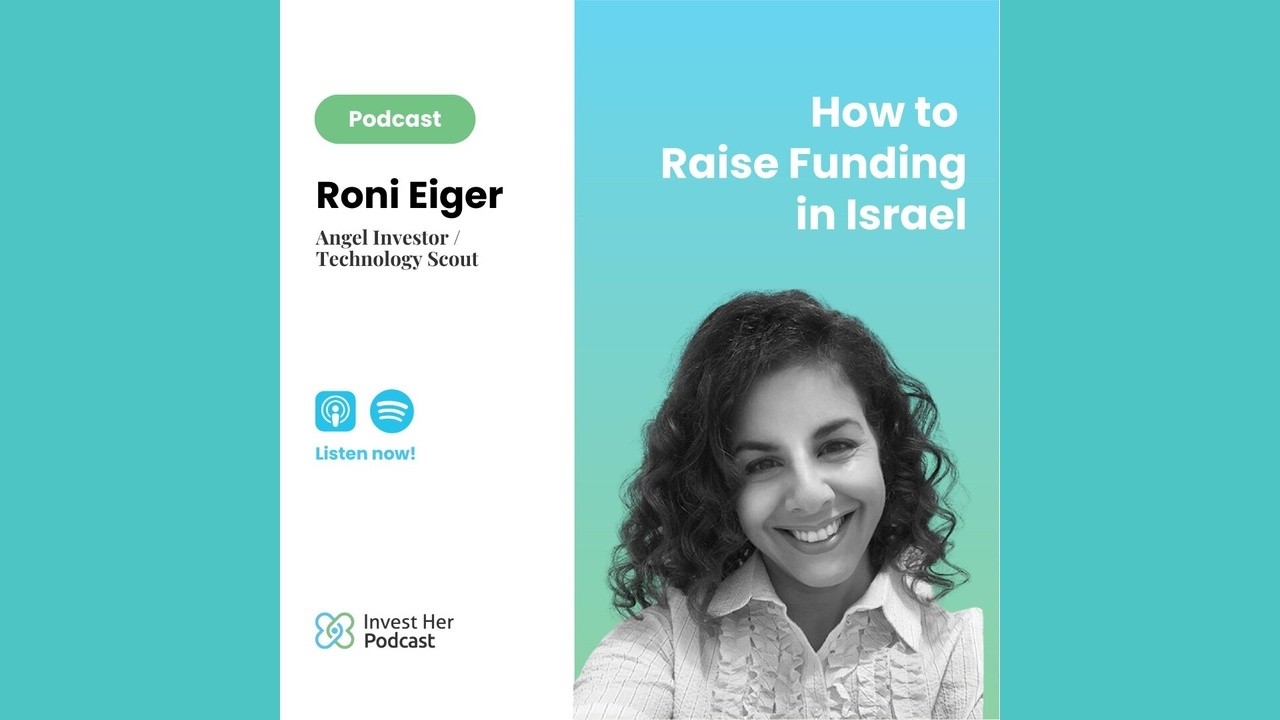
In this episode of the InvestHer Podcast, host Anne Ravanona interviews Israeli angel investor Roni Eiger. Roni shares her personal journey—from growing up in Israel’s high‑tech sector, studying computer science and economics, living in Madrid, and managing her family’s single‑family office—to becoming a hands‑on angel investor focused on agri‑food and agri‑tech. She explains why she chose to invest her own money rather than through the family office, describes the women‑only Naomi Investment Club and the Spanish Fute Club, and details how she leverages cross‑border networks to source and evaluate deals. The conversation delves into the unique Israeli startup culture shaped by mandatory military service, a “global‑first” mindset, and strong government support such as Innovation Authority grants and incubator match‑funding. Roni outlines the current Israeli funding landscape, the role of angels versus venture capital, and the fragmented nature of angel groups. She offers concrete advice for women founders—emphasising mixed‑gender teams, playing to one’s strengths, and navigating bias—while also reflecting on broader systemic changes she’d like to see, such as more open information sharing and AI‑driven due‑diligence platforms. The episode ends with a call to focus on delivering value to build reputation and attract capital.
Chapters
Welcome to this week's episode of Investor Podcast, where you will get to hear from Roni Eiger, who is an angel investor based in Israel and who works very closely with the Spanish ecosystem as well. Now, she's super interesting because she's going to tell you everything about why you should become an angel and her own background on that story. And most importantly, today's episode is all featured and focused on Israel. So she's going to give you the insights into the Israeli culture. And then we're going to dig deeper into the Israeli funding ecosystem. What makes it so unique? What can other systems learn from it? And why you should care. So sit back, relax, enjoy this really insightful episode with Ronnie. Investor Podcast is for you, the female founder who has a product, a service, or a message that you believe in and need to get funded. Or for you, the investor who wants to learn more about the huge untapped investment opportunity that gives you a higher return— women entrepreneurs. My name is Anne Ravanona. I'm an entrepreneur, TEDx speaker, and women's advocate, and I'm passionate about helping women entrepreneurs get funded. In each episode, we'll take a behind-the-scenes look into real-world funding tactics and strategies to help you get the funding you need faster. Let's put the fun into funding. Thanks for spending some time with me today. Now let's get started. Thank you so much for joining us this morning, Ronny. I'm delighted to have you with us. Thank you for being our first guest of the new year of 2023 on our podcast.
Thank you. Thank you, Anne. I'm very excited to be here. Very excited.
Well, I'm, I'm really excited because you're such an interesting woman, you're such an interesting person, and you have like all these positive split personality sides, let's just say, in the sense that you have a vast side of vast areas of expertise, but also experiences and cultural difference and where you're working and all that. So we're going to dive straight into there, but before we start, I want to give every— all our listeners a a heads up that this podcast is going to be very interesting, this conversation we're going to have with Roni, because you're going to learn a lot about the Israeli startup funding ecosystem. And she knows a lot about it. We'll dive into agrifood, agritech as well, which is also a big area of her expertise. And you're going to learn about what's going on in the Spanish funding ecosystem as well. We're gonna get some key tips. So that's why I said this is a really cool one. It's not a one-sided conversation, which is really nice. Um, so let's get started, Ronnie. How about if you could tell us a little bit about yourself? Like, who are you and what do you do? Let's start there. Give us a bit of context.
Okay, so yes, I'm Ronnie. I'm Israeli. Uh, I currently came back to live in Israel, um, after having lived 4 years in Madrid, last 4 years. I have 4 children, 4 kids. And I came back to Israel partly because my eldest daughter, who is now 19, she, you know, she came to Spain when she was 14 and she stayed very Israeli. Um, so she said, uh, after her 12th grade and IB, um, um, you know, program that she did there, she said, no, Mom, I'm going to Israel, I'm going to the army, I'm going to do it, you know, the Israeli way, which basically means you don't have to think about your college or anything like that when you're 18 or even 16 like you do it in Europe. Um, you just go to the army and then you go to work and then you travel, and then when you're like 22, 23, 24, whatever, you start thinking, what do I want to do? So it's a very different kind of, uh, uh, path, I think. Um, so, so she basically brought us back. So I don't know what would have happened. We probably would have gone back at some point, but, but that kind of made us all go back. So as I said, I'm Israeli, but I've lived in Madrid for the last 4 years, and I have a BA in computer science and in economics and an MA in economics. Very kind of theoretical. I've always loved math. That's like what— that was my, my hobby as a child. And, and an MBA also in finance and strategy.
Woo-hoo!
So basically all of my kind of like my career, except for my more academic years, I've always been in the high-tech industry in Israel. So I grew up in the high-tech industry from coding to kind of doing everything, you know, product management, product marketing. A lot of business development. That's what I love. Um, I was an entrepreneur. I sold a company. I sold my— our family business, which was also in IT.
Mm-hmm.
So all around that. Uh, but also last 15 years or so, I've been managing a single-family office. So basically my, my parents or my family's, um, funds.
Yeah.
Um, and what I do there is always kind of like more like allocating and understanding, you know, the different risks factors and, and, and risk reward in general, you know, and kind of like stabilizing, uh, what you want for when you want it and who is it for. Um, so kind of that, um, that kind of more kind of long-term thought. Whereas in my own kind of world and my own money, I, I'm much more of a gambler. So I, I want to invest in venture and I'm, I want to take more risks. And I'm, I'm an entrepreneur in the, like, in, in spirit. So whatever I do, mostly it's not, it wouldn't have been like kind of like a corporate job or something very secure and very— It has its pluses and it has its downsides for sure.
I mean, oh my gosh, just listening to you, the entrepreneurialism, entrepreneurship oozes out of you, Ronnie. It just comes out of you. I can hear it so, so loud and clear. And I mean, what a fascinating background. And like, you're a dream come true for investors if you like, when you were having your— running your own, uh, company, uh, than the family business. But now let me just say, because before we dive in a bit more into what you do now, um, I just want to say that I love your eldest daughter. I think she's badass. I love that she knows so early, uh, what she wants to do and that she's got, you know, clear, clear-minded what she wants to do and is loving and embracing her culture. I love that because I've got bicultural children. My children are, um, Irish and French. And yeah, so I just, I just want to tell you, tell you she's a badass and she's got a great mom. So obviously you're doing something right. You thought you guys are doing something really right. So I just wanted to get that in there.
Yeah, thank you. Thank you. I'm very, yeah, very proud of them and her specifically. She's very smart, smart beyond her years, really. She's like very smart.
Well, the apple doesn't fall far from the tree. And I say the same for your other children as well. Of course, I'm happy for them as well. I don't leave them out.
We leave nobody behind. They're No, no, no, of course not.
So now, Ronnie, so you've taken us through your kind of journey, your personal journey. So you've been managing your family's family office for 15 years, as you say, more long-term. Of course, that's a very different type of investing than the short-term venture side of investing, what you do as a business angel. So tell us a little bit more about how you actually got into it. Like, when did you start becoming a business angel? And how did you start finding your feet? Why am I asking you that? It's because we need more women business angels. It is extremely important. So I think it's great for you to share your experience, your story, just of how you got into it. And then we're going to dive more deeply into, into, uh, the different funding seeds. So yeah, tell us, what, what's your story?
So actually, it is quite interesting because when I, um, so I've, on the one hand, I've always grown up in high tech and around startups, had my own or was in startups. So it was always there, right? And everyone around me and everything. And on the other hand, I was managing money and at some very early point, I understood that I basically cannot do any kind of venture investments through the family office. For 2 main reasons. One is that, um, most of those years we are, we had our own, um, family business from which the money came, let's say. And some of the years I was also working there and, and the last few years it was, you know, it was a lot of gambling over there. So a lot of very kind of high-risk investments over there. So I kind of felt that, you know, as, as, you know, the oldest daughter in the family, the one managing the funds, I need to be extra careful and, and conventional and in doing the, uh, so it was very clear to me that, and on the other side also, you know, I was always pitched with different startups.
Yeah.
And since I'm an entrepreneur myself and, and I, and I love this field, I, I felt like, okay, I cannot, first of all, I cannot due diligence each and every kind of like opportunity like that. And I, and I, you know, if, if they, if I don't just make a decision that I'm not doing this, I, I, I'm just gonna basically lose all my money because I, I want to be in everything. And so I just made a very clear decision that I'm not investing in venture capital. So most of the years, that was, that was it, you know, investing in whatever, in hedge funds, private equity, and allocating funds through different managers. I was doing real estate, you know, direct, indirect, whatever. You learn the trade, you learn that you work with people and it's you know, you learn from, from doing everything, but I didn't do any venture. Um, and then, uh, well, I—
Sorry, sorry, Ronnie. I meant to ask you this question. Sorry to interrupt you. But I think it's important because for some people who are listening to the podcast and may not really understand the difference between venture and kind of that longer-term investing that you're talking about, what's your definition of, well, the definition of venture?
It's not, it's not, it's not more It's not only about venture in long term, and it's not that venture could be very long term. It's more about the risk reward, right? So it's more about taking less risks and also less reward in that aspect, but more conservative, right? If you do real estate investments, it's not like putting your money in a seed startup.
Yes.
And, and I, I felt that my responsibility— and it's very funny because I've always been very, very responsible on the, like, family side of things, never, like, losing any money, that very kind of very long-term thoughts also about, you know, the family and my, my sister and brother and how we don't— how we build everything, that everything is safe also in terms of relationships. I was very kind of straighten. But on my kind of other side, my personal side, my own money, my own family's money, I like to play a lot more. So I also lost a lot more and I also made more, you know, it's like a very different kind of like, you know, split personality in that term. But mostly what I think about your question in the family office, Also, now we've started investing. Now my brother is also with me. Most of the years I did this alone, but in venture, but we do it through funds. We don't make specific investments in seed or whatever startups. It's a very different kind of thing, and you allocate whatever percent of your funds to venture or to whatever. So you kind of— it's more about allocation of risks. So also real estate is more, more, let's say, risky than whatever else, bonds, whatever. When your money is not with you, when you actually give it away, you transfer it to someone else to do a project, whatever, it's by definition more risky than anything that is, you know, that by a push of a button you can sell, you know, and it's, and it's, and it's there for you. So it's different kinds of, let's say, of thought process.
And so you decided therefore to be— I love, because I mean, given your background, and I mean, I think it's an interesting decision that you made to become a business angel to invest your own money. Let's put aside the family office experience that, and there, you know, you're so lucky. I think any entrepreneur to have you as an investor are very lucky because you bring so much understanding to the table and experience. experience and expertise.
But why?
I'm really curious, why did you choose to be a business angel and invest your own money versus go to a venture fund? Like, you could if you said, okay, I wonder, because venture—
Because that's exactly it, you know. I love startups, I love technology, I love doing business development for new technologies, and I always wanted to be close to that, and I was always part of that. So at some point after many years of kind of being in the industry in different ways, I, well, it was a funny story. I did one kind of investment in the COVID years from the family office and through that I met, well, actually it was one investment that brought me to 2 of the clubs that I'm actually investing in. Right now. So I did this connection between a Spanish group of people that I knew at the time. So one of them was my friend, and they just asked me about, you know, if I know this and this company. And I said no, but I can check it for you. So I just made the introduction. You know, I never like made any money off of it or anything like that. I just made the introduction between this food tech startup in Israel and these Spanish guys. I didn't even know they were going to invest at the time, but I just did the introduction.
Yeah.
And a few months later, this guy, my friend who I trust, is a very bright guy. He told me, listen, we have due diligence this company, we're going to invest in this company, really love it. So I mean, thank you. I can offer you to also invest because I think it's a really cool company. So I said, okay, yeah, just, um, sometimes you have to kind of, you have a rule, but sometimes you get out of the rule, right? So I said, okay, I'm gonna put some money, the family's money, right in this startup because it had nothing to do with me. It was just like a, like a good recommendation I got in those years. I had the, let's say the, I gave myself the pass to do this one investment.
Hmm.
And I, and I called the, the Israeli guy, the, the startup, and I told him, listen, I want to put money, but it doesn't make sense for me to put it through this Spanish vehicle, right? I'm an Israeli company.
Might as well get tax return.
Um, and he told me, okay, listen, I really like you. And, and it wasn't even a small ticket size or that small, but still too small to put directly into the company. So he matched me with women investment group that he said, you know, you should meet them. They're investing in us in an Israeli vehicle. So you could do the investment through there. And there I started getting to know this, well, investment club run by Orit, who later became a very good friend of mine.
What's the name of the club, Ronnie?
It's called Naomi, Naomi Investment Club. And basically it's a club of women investing and their initial, well, challenge or the reason that this club was made was to actually get women to do more investments. Yeah. Yeah. So Um, Orit and, uh, her partner at the time in Baal, um, said, okay, we— they, they go— both came from financial worlds and they said, okay, we, we see that even women that have exits or, or are in the financial markets or are part of the, you know, banks or whatever, when it comes to their own money, when it comes to investment, they, they like 99% of them give, give it to the, to the husband to do the investment, to do the financials, even if they come from this field.
Yeah.
Or especially, especially if it's, uh, around investments in, in, you know, more like venture or alternative investments or stuff like that. So it's kind of like they don't trust it, uh, themselves, or they just, it's just like the, the natural thing, or I don't know. So they They created this club where women are— it's an only women club, and they started looking at investments. And actually, it's a very— it became very kind of known club in Israel, and we're getting a much better deal flow all the time and becoming very well known. So sometimes it's like women entrepreneurs, of course, we We prefer to invest in women-led startups or co-founded startups, but it's not a must. It's not like we say we invest in the best startups we can invest in. So the idea is to have women, well, learn and due diligence and invest by themselves and not necessarily invest in women. So it's a very, it's a different goal, right? But of Of course, being a women club and, you know, being part of this is, is, of course, we, we prefer to have, you know, women in the, in the founding team. We think it's also a better, you know, it makes it better.
But yeah, yeah.
So it's, I mean, we can talk about that, of course, but, but that's, that's the goal, you know. So. Just sorry, something came. Yeah. Yeah. So, so I, I, I, you know, I joined the club and then at some point I— Anne?
Yeah, I'm here.
You're here? No, because my, my screen kind of jumps and so I'm, I'm not, I'm not sure what happens. I, I was sure we were So at some point I became also part of the investment team, and I started, you know, doing due diligences on startups. So I, first of all, I started investing again my own money, because at that point, as I said, I'm kind of— I have a very strict rule. So once it's also part of my own, let's say, work, if I'm due diligencing a company for the club, and then maybe I get some carry off of whatever investment I put in, what you know, so I cannot have the family money go into that. So I have a very strict line of never being kind of conflicted with interest. That's like the most important thing for me. So I started kind of working there and looking at investments. And one investment that I was due diligencing, it was also in food tech. And And I brought it to the same Spanish group that, uh, that made the other investment because, uh, and, and it turned out that I was on the one hand due diligencing it for the Naomi Club, the Israeli club, and I was also in, in, in contact with the Span, like with the, with helping, let's say, the startup reach that, uh, startup group. And, and, and this is a very important point, which you know, if, if we get— I mean, we can talk about it always, but for me it's all about information. The more information you have. So at that point, you know, I, I— it was very fun because I was part of the due diligence team on the Israeli women's side, but then I was also kind of part of all of the Zooms, all of the talks as a finder, kind of, um, to— with a Spanish, uh, group. And it gave me even more kind of context because every Everyone has their own angle, their own way to due diligence, their own things that bother them, their own view. And the more you get to know the startup, the more you due diligence it, the more people around due diligence it, and you hear the different views, the more at the end information and convictions that you can have. And this is also very true for everything else I'm doing right now. So I will Talk about that because lots of synergies in that.
I like it because I want to compare it to— you might laugh at me, but I would compare how you, how you describe what you naturally did. It's a bit like AI machine learning because it's like I'm learning on this side and then I'm learning on this side, and both sides are feeding into my overall understanding of the startup or the doodles that I'm doing and, you know, enhancing My, the data that I have and my decision-making process. So that's why I just like, as you're describing, that's, I could kind of see the mechanism going on.
It's exactly like that. And, um, and it's some, after that, um, the, this Spanish group, um, it's built differently. It's also like a club, but it's now they're, I mean, It's going to also be fun. But at that time, it was just a club where they had their own partners, but they had their network, you know, of, of course, all Spanish men. And, and then they, they kind of offered me to join, to be a partner.
Yeah.
Um, so I, so I joined. I joined the, the, like, about a year ago or a year and a half ago. I joined the Spanish, uh, they're called the Fute Club. And they're doing only agri-food investments. So unlike Naomi, so basically also in Naomi, I started as part of the investment committee to only due diligence agri-food to kind of again have that synergy, right? Because it's at the end, you have to have focused on something. I can always put some money on another startup that is coming through the club that has nothing to do with agri-food because in Naomi, there are like 60 women. coming from very different backgrounds. So it's easy or comparatively easy to kind of form due diligence teams to due diligence education tech, to due diligence, I don't know, food tech, whatever. So we have women coming from different sectors.
Yeah.
The Spanish Food Tech Lab, which is a very interesting, you know, partnership because it's all people coming from the industry, or most of them coming from the industry. So owning very big companies in the food industry, or having been working in very big companies in the food or agriculture industry with lots of connections in Spain and Portugal and Italy to the, let's say, agri-food world. So, um, as I always say, you know, and, and this is, I think, one of the biggest themes we can talk about, and I'm sure that, you know, it's all about the value that you bring outside of your— of the finances that you bring because, and that's true as an investor. To me, it's true also as an investor, but it's certainly true as a startup.
Yeah.
And of course, the better the startup that you are or the better the, let's call it the the ecosystem slash the economics of the world is. So 2021, for example, people were lining up to join any startups at whatever valuation in Israel at least. And of course, most everywhere, but compared to anything else. So it was kind of like a seller's market or buyer's market, whatever you, depending where you look at it. But the entrepreneur could basically shoes. And I always told whether the Israeli startups or, you know, the Spanish investors later on, they became my partners, but also other investors I'm in touch with there is that, you know, money is money. But what you have here is, you know, the ability to connect the Israeli ecosystem with what it really needs later on, which is, you know, the joint. the joint ventures, the strategic connections, the clients, the distributors, the everything. And since Spain is a very important, maybe the most important country in Europe in terms of food and agriculture, in terms of just being number 1 or 2 in basically anything that has to do with food and agriculture. And since, you know, you have so many companies there that are global coming from this sector, and, and very— a lot of influence also in LATAM and other important places. That's what the Israeli company needs. So you are an investor that can bring these connections and can help in, in, in whatever way it is, the cultural aspect of going into the market, everything.
Yeah.
Because Of course, Israel, as I think maybe everyone knows, it's a, it's a crazy tech hub. Yeah, I mean, it's, it's a very innovative place. Again, we can talk about why it is like that.
Do that, because I want us to dive into that. And in my—
yeah, why Israel is, is like that.
Israel is tech nation. Why is startup nation? Why is it a tech nation? And then let's, and then let's go into dive, because I really want us to learn Teach us about the Australian ecosystem. The fun—
I will tell you my, you know, my own whatever 5 cents about that, but I'll just like close this parenthesis before just saying that for Israel, that is a small market. The market is never in Israel, right? It's always a global market. Yeah, it's nothing like— you cannot be a successful anything if you're just looking at the local market. So by definition, you're going outside. So by definition, you want and you need different investors from Europe, from the States, from this, from that. And, and, you know, that's what I do. So what I do is these connections. I help startups with their business development in Spain, also in LATAM. And, and at the end, we should go back to how it helps investments again. Because all this information, kind of like the AI machine you said, it's all about value on the one hand, on, and on the other hand, kind of like I call it an information game. The more you work with the startup, the more you help them out, or you work with them on different aspects, the more you know if it's the right startup to invest and when it's the right time, the real problems inside, or the, you know, you don't just get the, the, the the look of that, you know, I'm an investor. Okay, let's have our talks and ask you questions. And let me ask you about your Excel and your plan because I'm actually helping you out here. I'm helping you connect. I'm helping you get to these strategic, you know, partnerships, everything. I see you in action with those potential clients, whatever, dealing with cultural differences, dealing with everything. Of course, I'm there to help, but it doesn't matter. I get all kind of more deep information about startups. So I get a better kind of conviction. So the Israeli tech, I will tell you.
Yeah, no, let's pause there because I really want to capture what you've just said there. So if we summarize, like you are, I loved what you said, you are a finder, you are a connector, You are a master of the information game and you go deep. So you don't just do superficial connections, superficial due diligence, superficial, um, yeah, just superficial information seeking. You really go at a very deep level, which means that it helps in the process of you working with that startup. You're actually helping them grow and add value just by all the interactions that you're having. That's why I compared it to like AI machine learning, because, you know, it's getting more intelligent every single round of data that it gets. So, and that's why I want people to hear this, because if you are— and this is my shout out— if you are an Israeli startup or a Spanish startup and you want to, or any kind of startup, but you're interested in Israel or Spain and you're in food tech, agri-tech, you need to talk to Ronny. That's basically—
Thank you.
I'm making a big ad for you because I know how brilliant you are. I've seen you in action, and I'm so glad that you're bringing some of that wisdom and brilliance to all of our listeners on the podcast here. So yeah, I wanted to close that parenthesis to say that's why your profile is so interesting, Ronnie. It's that you have that bicultural piece, um, and wider cultural piece. So yeah, uh, everybody who's, who's interested, you know, you might have a flurry of people go, you might have loads of new business, which is what I wish for you. And I'm sure you'll find great startups that will flock to you in the food tech and the agrotech sector that go to you. So I want to—
First of all, thank you. So thank you about that. And just to add that, because it's not that I do, I do my, I do some things very deep, because that's what I love, connecting and business development and joining. And I'm, and I'm good at that. So I I can astonish myself in, in the, in the level of connections that I can make. But on the other hand, I also know what I don't love, which is like very, like, for example, I will never be the one doing legal due diligence, which we should do. And it's very important. And, and I will never be the one doing till the end all the financial due diligence. So That's why I also said I didn't want to invest in venture before. But as part of these kinds of partnerships, I can do that because I have partners that I depend on in the due diligence team, whether the Spanish one, whether the Israeli one, doesn't matter. And I don't need to be everything. I can say my own kind of like, I have a feeling about that and that, and I see the market here and I see how they do here and I ask the questions where I'm coming from. I can connect a lot of dots, but I also can rely on other people to do jobs that they do far better than I do and that have, have to be done, right? And at the end, we make a decision as a team. So, and I think that's one of—
Thank you for, for explaining that. And I think that's a really good explanation for all of the women, in particular the women who are sitting on the fence and saying, well, I I start becoming an angel? That's the whole point, is that you don't have to be an absolute— because we can hold ourselves back. You don't have to be an absolute expert on everything, or even in one vertical, an absolute expert. There will be people in your angel network or in the network around it who will fill in some of those gaps. I think what I would encourage women to do is to understand and know your area of excellence and your area of brilliance and focus, double down on that part. And that part will be super valuable in the due diligence process to the startup as well, because that's where the fun will be. It's like, yes, you need to check and see, is this a good investment? And then it's afterwards, that's where you're gonna have the fun. Exactly like you just— you light up when you talk about connecting, when you talk about the biz dev. I mean, look at the smile. And people can't see you now, but I'm seeing a big smile on Ronnie's face. And she lights up when she talks about it. So I think just for those women who are thinking, why, well, maybe I'll try to be an angel investor and just start. Um, I think that's a really good way of saying that you don't have to have it all figured out. You will learn alongside other people who are more experienced, and you will build up your experience. And there are other people who have areas of expertise to fill in the gaps that you don't have. So don't hold yourself back. I really want to say that.
Totally. Yeah, no, totally. And, and women do hold themselves back. I mean, all know that, um, that women have that inside them in, in terms that they will always feel like they're not good enough, whereas the same man in the same position will feel like he's good enough.
100%.
And this is something we have to kind of learn. It's not their, uh, fault, it's our fault. Like, it's, it's how we have to learn how to kind of say yes, because you can always feel— everyone can feel like, oh no, I'm not you know, good enough in that and that. I'm not 100%. But this is, this is just part of being alive. No one is perfect at anything. No one is the best at anything. And it's just kind of, and I do believe that kind of like what you said about lighting up at the end of the day, whether you're an investor, you want to be an investor, you want to be an entrepreneur, you want to be— whatever you want to be, uh, and this is, you know, it's a known thing, but it's like it gets more and more clear the older you are.
Yeah.
That the more you are in the right place, the more it's like you're in high energy. So it's like you can be good at something, you can be really good at something, and you can be like extremely brilliant, excellent at some other thing, and at that thing You will have— I mean, you will feel it in your body when you're doing that. You will feel like such high energy when you're doing whatever it is you really like doing, where you're really brilliant at. Whereas in the other things, I mean, you can do them, you can do them well, you can do them maybe better than most people, but you, you're like, okay, I'll do it. But it doesn't give you the same rush. It doesn't give you the same— Yeah.
So in exactly, and in the, in the spirit of Marie Kondo and her tidying and so on and blah blah, what she says is it has to— does it spark joy? And that is exactly that, that energy feeling. So whatever you do, make sure it sparks joy. But as an angel as well, become an angel in the area that sparks joy and, and go to the angel club or network that sparks joy. And I'll talk more about that afterwards because I want to grab your knowledge, give us a download into—
Please, really.
Israeli. So tell us, okay, tell us about the, like, Israeli startup, like startup tech nation, startup. Start there. Let's give us a bit of context and then your insights into the state of funding in Israel today because you've both done it.
So I think that, well, Israelis is very, you know, they're in many ways kind of different people, I would say, sometimes very controversial, kind of like Israel itself. Um, so there are many things that I can say about Israelis as a, you know, very general kind of thing, and it comes from education, it comes from our genes, it comes from our background and history. And, you know, the Jewish people coming through whatever and being All survival and whatever. But it, but it ends up that we are very kind of all a little bit of smartass. Like, uh, we don't like authority. We will always be like, no, no, you told me I can't do this. There's no way I can't do this. I will show you that I can do this because I, you know.
Yeah.
Um, so someone just told me, like, I heard someone saying that you, you get 2 Israelis in the room, you get 11, uh, yeah. opinions, you know. So it's like, and everyone's kind of loud, everyone is kind of outspoken. And, and, and, and, and I think that, um, that everyone— and I think that it's, it's funny, I'm gonna say something that again can sound a little bit controversial, but, you know, uh, Jews are considered for their Uh, I, you're a Jew. You, you, people have actually said this to me many times. Oh, you're Jewish. It's like you guys are good with money. You're very, you like money.
Stereotype.
And it's, and it's not just, but I have, what I've learned is that Israelis, I mean, it comes at the end with money, but everyone needs to succeed. Everyone kind of needs, and, and this is a, a good and a bad thing because, uh, there's no tranquility here. You know, everyone kind of needs, but it's more about the success and about the making it not on the financial, not on the, and it just, you have to, you have to do something really like exciting and different. That's the thing. So for example, unlike Europe, and if I'm just trying to, to compare, very like, you will not find any person opening a sandwich bar. Not even in Tel Aviv, but just like far away. It will never look like any other sandwich bar. The sandwich itself will have like a different something you've not tasted before. Like, I'll put some honey in the cheese and I'll add some whatever, and I'm having a different sandwich.
Mm-hmm.
Whereas for good and bad, and this is, I'm always stressing this, for good and bad Israelis, it's kind of like we don't have like a Like hundreds of years of like, you know, the same culture. You'll go with your wine, with your whatever jamón and whatever. You will expect that it's a very— everyone's like, no, I'm gonna open another thing. It's gonna be very different, very, you know, and I'm gonna say, oh, this is like a— it's a different sandwich bar because he's in it to have another coffee. So we are very kind of innovation and adopting innovation and kind of wanting to, I think, make a difference in a way. That's the way I see it. Of course, a lot of technology is coming from the army.
Yeah.
So of course the army plays a lot of this role. First of all, it's like the biggest HR manager, you know, basically taking people and their talents and kind of Putting them in different positions where at 18—
Well, that's it, because I was going to say, remind people, because what happens for every Israeli man or woman, that's exactly—
Everyone goes to the army. Right there.
So tell, explain that to people.
Yeah. So, yeah. So Israeli, when they're 18, after 12th grade, everyone goes to the army. So 2 years for women and 3 years for men. And now women also do combat, whereas in my days hardly. So women can be combat pilots, women can be basically anything, mostly.
Mm-hmm.
Um, and, um, since, uh, the army is the, the Israeli army, I mean, we are a small country and we are surrounded by, uh, you know, like, uh, well, enemies or like, uh, you know, countries with which we are in conflict, which with which we, we have wars every now and then. Um, so we kind of understood from the very beginning that we have to be a smart army. Now, we can never be the biggest army because we'll always be the smallest ones. We're not— we'll never have enough people.
Yeah.
So, so, so the intelligence and technology back in the day already, not even like technology as we call it now, but before, You know, it was very big. It was like one of the biggest, most important things that, that were developed in the army. And, uh, of course in the last 20 years where also the high tech developed, uh, very much in the entire world, um, it was very obvious because you come from the intelligence. So think about an 18-year-old that goes into one of these units. He gets like incredible training, just like you do for combat, but you do for whatever it is. cyber or, or whatever it is that you build it, or IT or, or programming or whatever. And in a way, it's kind of like a very quick and dirty but very deep and, and, and real college of, of that profession. So these people come out, they— sometimes it, it also helps you a lot in kind of understanding what you want to do or what you don't want to do. So unlike Europeans and Americans and everyone else that Kind of have to decide or do decide what they will study or what they will be when they're kind of teenagers, right?
Mm-hmm.
Uh, we, we decide that much later in life and after having kind of at least one type of experience, uh, whereas it is an experience where, where it is a bit professional, so you can be an instructor. You can be a pilot, you can be an intelligence, uh, you know, officer or engineer or whatever. Of course, there are many special units, many special things, but in general, you kind of have some understanding about yourself, uh, when you go out and make these decisions. And of course, a lot of these kind of training, actual training in technology, let's call it like as a general aspect.
Mm-hmm.
you get, or a lot of people get. So there are a lot of technologies that were and are developed in the army.
Yeah.
Have been taken out. So people have come out of the army and said, oh, you know what we've done in the army here and there and that, let's take it to whatever telecommunications and do disruption with that kind of technology and let's take it out to mobility. And so a lot of the technology is not necessarily in what we, you would think like cyber or whatever that has been like more, say, like the last 10 days and 10 years, but just taking it and applying it into other fields. Mm-hmm. The idea. And, and I think in general, if you, if you ask me, Israelis are very creative in solving things and solving problems. They're not very good at, and I think at planning. And when you see Israel, I always say to people, Israel to me, and I've traveled everywhere. I love traveling, you know, taking my, my entire family, uh, um, very long kind of, uh, mochilera trips all around the world. And, and, and it's kind of my hobby. But if you ask me, Israel, and, and people might not like what I, or not agree with me, but Israel is somewhere in between Manhattan and and like New York or whatever, and India. Like you have the the craziness of like a third world, kind of like everyone doing whatever, da da da, and also the energy and kind of Middle Eastern and and very kind of like everyone's like not in line, but on the other hand it's very sophisticated. and tech-oriented and innovative and, and very high kind of finances. And you have Israelis all over the world also, which is also part of kind of the network that helps Israeli startups or helps Israelis maybe. Or so you have lots of Israelis going abroad and living abroad. It's just part of— and, and, and innovation is even in those little things like And I'm telling you this really for good and bad. When I lived in Spain and I saw so many families, and it's— and I envy that in a way that they, they lived, you know, they have this like, uh, house on, on the— Like their summer beach house or whatever. And they've gone to these, to this summer beach house for the last 50 years. You know, they were there as small children. Now they're taking their small children. They have the same And it's incredible. And we are all very neurotic people. We never go to the same place once. Israel is like every year, and you will look in it now, people are all going to Uzbekistan and Jordan. This is like the new place now. Everyone's going to Seychelles and it's like, and once some people start going and flights open and everyone now is going to Seychelles on their end, and next few years something else will be. And Israelis will never go to the same— okay, fine, if I really like London, I'll go to London more than once. I'll go to Madrid or to Paris more than once. But in general, Israelis, you will find them kind of going to different places. And this is a very big generalization, of course. Some people love India and just always go back to India. But in general, you will see lots of families traveling the world. You will see lots of these kind of like looking for yourself. And I always say it's part of not being calm. So in a way, it's like a curse and also a blessing. I don't know, this— it's the way I see it, and I'm part of it, so I can see the, the, the curse in that, and I can also see the blessing in that. So I don't know.
Love it. And, and I think it's, it's wonderful to— thank you for giving us this overview and insight into, you know, Israeli difference and culture, because it's very good to give us the context. So now we have the backdrop of this highly innovative, forward-thinking, fast-moving type of culture. How does that translate then into the funding industry? So what is it like to raise money in Israel? Or just in general, what's the funding ecosystem like?
So of course it became more and more known to the entire world to be like this tech hub. By the way, I didn't talk about it, but a lot of things came out of need, like the army, for example, agritech, of course. I mean, we are a very small land, no water, mostly desert.
Mm-hmm.
And, uh, and we cannot like import from our neighbors or whatever. So of course all things that people don't— some people don't know. It's Israeli, you know, technology from the '70s that is all around the world, you know, drip, uh, irrigation, all these things is Israeli because of, of all these necessities, right? Um, so I think little by little, and it has to do with universities, I think Israelis and Jews have a whole thing about learning.
Mm-hmm.
Um, and it's very much in, in the, I don't know, in the background and the history, and his— and the universities are, are very good. And, and since it's a very small market, it's a very small world, it's easier to, to get out of university to, to the industry. It's easier to kind of melt everything together, I think. Um, so lots of things came out of the universities and, and everything. Um, so I think little by little in the last probably 30 years I mean, it became more and more known that technologies arise here and entrepreneurs are good here. And these entrepreneurs are able to, to go to foreign markets, which I think it's also being part of our tradition of being not very traditional.
Hmm.
And basically coming from everywhere in the world and being able to kind of, I don't know, it's kind of that nature that enables us to also sell all around the world or kind of adopt ourselves or know how to, I don't know, work with the right local partners. Or we understand that we're very little. Yeah. We don't have a market. We need partnerships. We need connections, whether it being an Israeli or someone you know there or just in general. So it's things that have developed over the last, you know, a few dozens of years. By the way, the Israeli government helped a lot in developing the tech system. It has a very— it formed like in the '80s, I think, the incubation system, whereas the Israeli government gives like tenders of incubators in different areas. So food tech, agri-tech, whatever. And these incubators are basically— they're giving to investors from the area. So investors in, in the, let's say, in food tech. So one incubator is the, the most known one is from Strauss, one of the biggest food in, one of the 2 biggest food companies in Israel. So they're managing the incubator. And what does that mean? It means that they're an investor in food tech and innovation, and they— Okay, they have facilities, they have this and that, but on every, you know, 15 cents that they put in in a pre-seed round, the government puts in 85 cents.
Hmm.
So that, I think that if you look at like 10, probably the last 10 years, right? It might not have been that important because compared to the amount of money raised here in different rounds, not just pre-seed and seed, whatever. And, and, and since all of the biggest funds in the world have offices here, and so much money has been coming here, this is very little kind of— this government leveraging is not that a big deal. By the way, the, the Innovation Authority in Israel also helps in funding and grants to many startups that have high technology. So it's also part of it. But it certainly was part of the beginning of the whole kind of, you know, ecosystem in the '80s and '90s to kind of push that, to give investors these kinds of venture invest— investors where you and I know what it is and everyone knows what it is now. But like 40 years ago, people are not talking about venture investments. So they gave all these kind of potential investors these tenders to invest in technology companies coming to them with ideas or whatever, putting their, you know, $150,000 and having the government match another $850,000. That was part of what has happened there.
Well, that, and that in itself is very innovative because I know like there's a lot of parallels between how you describe Israel and Ireland. Actually, I think there's a lot of parallels, like we're an island nation. nation. I know we're closer to Europe, but small population, huge diaspora around the world, very much like Israel. Innovation, you know, innovation, adaptation, all that stuff. Um, agriculture too, big one, but not as, you know, it's in a different way. You've mastered that, that kind of at a higher level. Um, and we've gotten really good in Ireland at attracting all the big companies as well. So there's a lot of similarities culturally.
I know, I know.
But however, also just pulling, pulling in on that, what you just said about the government innovation and impact with the match funding, because that was also a big reason why things have kicked off. Ireland has also been working on the ecosystem for the last 30, 40 years. It's the things that we've been doing 40 years ago that mean that we are where we are now, very similar to Israel, and also in the tender thing. So we have the match funding, but it's not as generous as So in Ireland, I know it's less. I think it's 50/50. It tends to be 50/50 match funding, and depending on the size of the rounds, I think it's capped at €250,000 or something. So, you know, but still a big boost, and it's very tough due diligence, blah, blah, blah, to get it. And some entrepreneurs need to go through 3, 4, 5 rounds before they get it. It's like, I think that's a bit overworked. But anyway. But this tender thing about the match funding, I think it's great just to call it out. Okay, so keep going. So there's all of this, this means that it's created this ecosystem. And now—
Exactly. So, so there is this ecosystem where you have innovation in health, innovation coming from the universities and everything. You have innovation in agriculture, you have innovation in so many things. Food, for example, is a new thing because And just the last few years, and it's Israel last year was number 2 after the United States getting funded in food tech, which is incredible. Like, if you think about it, we are like, what, 9, 10 million people?
Yeah.
So, um, wow. And, uh, and, and of course, there's another thing to consider where like, probably like 40% of the Israeli workforce is not really relevant in the labor, whether it being very Orthodox people. The Arab population is now becoming part of it, and also the Orthodox a little bit, but it's not like, you know, the general population. So we're even smaller when you consider like the people of potential. So it's a very big deal. And, and of course, the biggest funds, every multinational, every top, you know, tier 1, tier 2, tier 3 fund is in Israel with an office. So of course that enables a lot of cash going into that and a lot of money going into startups. And of course the bigger the bubble, or like at least in 2021, you know, is a bubble in the entire world because of the whole, you know, low interest, because of the COVID because of everything. The bigger the maybe the fall. So it is harder, very harder, very much harder now to get funded than it was a year or a year and a half ago. But still, I think good companies are getting funded. And actually, I think it's a good thing in general because it was a little bit too much. It was a little bit too much on the kind of like, you know, it has to be better balanced so that only, you know, the better ideas, the better technologies get funded, you know. And so I think in general, as a process, it's a good thing, but it is hard on the way. And it is, and sometimes it is very hard because, for example, agritech was never funded as much as cyber, like not even close. It's very much harder to make an exit in that, to, you know, to grow an agritech company too. So it's— so when you see funding going down on these things much more than they are on cyber or whatever, so that's also depressing in a way. Um, that's what we are here to kind of help. I mean, at least I think that the good thing about now in, in the sense of the climate change and everything is that more and more investments are going into ESG and into impact, and agriculture and food are part of that. And, and so, um, so there are funds available and there will be an impact in these areas, even if it's harder to, to create, to create revenue and to you know, to disrupt these industries, it's much harder.
So what are the key sources of funding then for a startup in Israel? So you've mentioned, so there are like, what's the state of angel investing in general versus venture? Is it really venture heavy? Can you kind of give us the lay of the land of the different sort? You've mentioned the government funding, right? So there's government match funding. What else? So what are the different sources that—
So the government match funding is the incubators where it's very kind of pre-seed. Right? There's also government grants. The IIA, the Israeli Innovation Authority, also gives grants where you have like a high level and they due diligence the level. They have expertise in everything and they do due diligence like the technology, the patents, everything, and they do give you non-diluted grants. So most startups that I work with will, will have gotten some kind because, because at least for me, you know, the technology is very important. We haven't talked about it, but most Israeli companies are very high technology in terms of like more B2B, less B2C, less kind of like an application that maybe many users will need or want. More like enablers of actual technology because it's— there are many reasons for that, but mostly successful B2B companies versus B2C because also B2C, again, you have to be closer to your consumers, your customers, and mostly Israel is like, okay, so we will develop like an engine that at the end will be used by the different markets with different businesses more easily than we will actually. So Waze, for example, is, is a, is, is not the right, like, it's a very B2C Israeli success. Wix in a way is also kind of like, um, more like a B2C, I would say, and actually getting all these like end consumers and customers. But most Israeli companies, most exits, most unicorns will be B2B companies with a very high level of technology. So that will be funded, that by itself will be funded in the beginning if you have like a, uh, an interesting technology. Um, but in general, so angels, of course there are many angels. So part of what has also come out of this ecosystem, I think, um, is that Uh, a lot of people have made exits over the years.
Mm-hmm.
And those people, a lot of them, I think most of them, especially men, but most of them, um, in, in one way or another became angel investors because they came from the, from the trade. You know, they like it. They have succeeded in taking company from whatever, from idea or from this, to that. They have the money, um, and most of them will take at least part of this money to put into startups because it's, it's what they know, it's what they understand. It's because they want to be close to, uh, entrepreneurs. They want to be part of the, of the, of, of another company and its success and, and helping them. And they, they live this industry in a very kind of— it's not like a banker or a financial investor saying, okay, I'll put some of this money into venture and this thing. It's part of them. So I think that's a very big part of the angel network here. Yeah.
So that's my question. So how are the angel networks organized? Is there one big Israeli business angel network and then several other ones, or are there lots of ones by sector?
It's a jungle. It's a jungle. I mean, you have many angel investors, some of them in different angel groups. Some of these angel groups are more specialized in specific things that they've, you know, at some point gotten together. Some friends became angels, started doing whatever help they can, investments from because of whatever network that they had. And then at some point they became more specialized in that and they do only that. And some do, it's like very, and of course lots of, a lot of these angels that first became angels or are still angels, some of them have gotten onto more, more like being, uh, fund managers, right? So, okay, I'm not only doing my own, um, angel investment, let's, you know, partner up or have a fund. Because of course, if you're considered an angel investor, if you've had your portfolio and you've had successes, then it's much easier for you to raise a fund and to have that. So I mean, and then you can have funding come from anyone, and whether in the United States, in Europe, and in whatever, because you're this person that has made their own exit, you've had your own portfolio, you know how to take companies, to advise them again, to give value, which is very important, uh, because at the end of the day, and this is very important for both, um, investors and entrepreneurs, this is a partnership. This is not a loan.
Yes.
Um, so it can be a very bad partnership, kind of like a marriage.
Yeah.
And you can be like, oh God, I gave these investors the, you know, you know, they invested in me like 3 years ago when I needed the money and now I can't stand them. Like, you know, the, the first thing I would want to do is get them out of my company because they're just, uh— And you can have the opposite. You can have these like whatever angels or investors that have put some money, doesn't have to be even a lot of money, but have helped you throughout the way. It could be psychological help, Like with everything, you know, it could be, uh, of course, value in, in connections, in, in helping, in everything. And it's very, very, uh, crucial to, to do this right. I think for a long-term success as an investor, you have to bring, you have to walk the walk and not just talk the talk because everyone is talking value.
Yeah.
I don't think everyone is giving And I think that most angels or networks or funds will have that possibility, but some will do it better than others. So all are coming from the— they will be able to bring that. And when they talk it, they do mean to do it, but not everyone will actually do it in to the maximum of their potential. Of actually helping, which is, you know, we're all human and, and, and, and all of us humans, like the only resource we really don't have enough of is of course time. It's nothing else.
Exactly.
So at the end, you could have done a lot more if you're— so of course the startup that will, uh, you know, have us have, uh, like 10 lives and every day I could wake up in the morning and have 10 days instead of 1 day and I could do so much more. That would be incredible.
What's it like then for on the VC funding? So there are lots of Israeli funds, lots of global funds based in Israel. And it's like, there is plenty of opportunity for funding, basically. Is that what you're saying at the VC level?
Yeah, I think so. There is plenty. Doesn't, doesn't necessarily mean it's easy. It's never easy to raise funds. And when I'm on the other side, sometimes I'm You know, I'm, um, you know, I'm, I'm always very kind of sensitive to— I mean, these guys, they have to do these pitches all the time. They have to go on a round and another round. And we just finished a round last year. Now we have to go on another round. And of course, when it's easier to raise, everything is easier, but it's never easy to raise. Even in 2020, 2021 or 2020, if you're not like a whiz kid coming out of the army from cyber doing like the next step, maybe that would be very easy. But in general, nothing is easy. And it's a lot of work and a lot of bureaucracy and a lot of negotiation, a lot of everything. And I think that a lot of entrepreneurs, I think entrepreneurs are different in the, in the terms that some of them are very good at it and like it, the fundraising, and some are like, you know, you have to do it, but, uh, it really, you wouldn't, but I don't think anyone really loves it in the sense that you have to kind of, you wanna do your work, whatever your work is, being the CEO of the company, looking at the entire, you have being the, the, whatever the technology, the, You, you mostly, you want to do your work. You would be happily fundraising.
It's part of the game, but you just want to—
at the end of the day, yeah, I think so. I think so. I mean, some are really good at it and, and they're the experts at it and they probably love it, going back to what we discussed before. But in general, it's something you have to do, right?
It is. And so, okay, I want to do a quickfire round because we're, we're— we've gone a little bit over time, but it's It's great because it's so interesting what you're sharing. Um, so what would be your key funding tips to women entrepreneurs in particular, Ronnie, in, in general?
So we didn't kind of— yeah, we didn't kind of go into what— first of all, I, I'll tell you what I see. I see that, um, and I'm saying that's I think in a very objective matter. In general, I see a lot of these women founders to be on average much better than their men counterparts for a very kind of very easy reason, right? It's not because in general we are better, it's because we are much less. So The women that actually make it to these kind of like level of technology, of entrepreneurship, of actually doing it, like in this competing in that level, they most in general they are just in the most incredible women. And I can tell you that all of the companies that I have invested in or some of the companies that I'm in contact with. I mean, the women there are just outstanding. And it's not a coincidence. It's just that to get there, you have to be very outstanding because, I mean, Israel is also a very, in that sense, a very kind of not backward society, but I wanted to say like very like family and having children, all these things very important. And it's that no woman here will ever— mostly will not tell you this. So you— they have the, the, the, their 2 little babies and they're doing this and they're doing that and, and that. And, and, and some of them are like closing deals like 24 hours after birth and like with Walmart or whatever. And I'm like, how do you do this? And so, so like unbelievable. So really superwomen. So I always like to have these women because I, I think that in, in general, they are just incredible. Um, and I think that, and, and if I, if, and, and, and, and I think that women in general, like they're, if I could say one generalistic thing, because being smart, whatever you're— where they're, they tend to be better. or they are better in general is they're just, they have a higher sensitivity towards everything. And what does that mean when you're a founder, when you're an entrepreneur, you kind of have so many stakeholders here, the investors and the business and the workers, and you have to motivate, you have to do everything. It's like the most difficult job in the world, right? And the more sensitive in terms of people you are. At the end of the day, it's all about people. Everything that you do is about people. If you're the technical person, you know, doing only code, whatever, you will not also be the, the founder, probably, or you, you will be in the lab or whatever. But a founder has to be also like a team leader or whatever. So women have that kind of possibility to understand and to be sensitive to the needs around them. And I think it's all about fulfilling needs, to fulfill the needs of the investors, and then this investor and that one, and the business and this market and that market, kind of understand. So this is where they're good at in general. What they're good— not good at sometimes is, and myself included, is that, uh, we tend to kind of, uh, be around a lot of men. And when you're in a conver— in a male conversation, sometimes it's very hard to To get your point of view. I don't know, to, to, to put yourself out there in a very kind of precise way. And sometimes we're too nice and sometimes we don't say exactly what we need the way we need to say it. So in that sense, we're sometimes too soft. Um, and, and that is not, that, that, that is not the, like, it, it can go both ways, but I'm just right now saying it's like the weakness, right? So the strength and the weakness of this thing.
Yeah.
So as a woman entrepreneur or a woman founder, first of all, I like to see teams of men and women founders. Usually they're not one. There's not one founder of a startup. Usually it's 2 or 3. So I like to see mixed teams. I think it's better than all women or all men. For, for the obvious reasons, right? For the obvious diversity reasons. So if you see all these men investors, which there are, who are more chauvinistic and are looking for like, okay, so first of all, don't go to VCs or to funding angels who have never invested in a woman and will never, you know, so you should just, because again, there are so many and And time is, is never on your side or whatever. But then sometimes you will see, um, investors, sometimes they, they are very— so, so have your male counterpart bring his thing that maybe they wanna see also, or maybe he needs to say like the more strict things and maybe you are not that good at that. So you need to kind of look at the whole game.
Yes.
What are they looking for? Uh, it's not that women will necessarily prefer women.
Hmm.
You know, sometimes women are too aware of the problems of being women, so they actually prefer men, or, and sometimes it's the opposite. So you kind of need to understand who you're dealing with, what they wanna see, what are their biases in a way, and kind of use what you have, uh, on your side.
Yeah.
You know, and, and the more sensitive you are and the more the, the better you will be at getting people to work for you and your investors to work for you and your investors to actually listen to you and to want to invest in you because they, you know, the— so I guess that's true for every entrepreneur, nothing different about me. But when you speak your mind where you're quite transparent, where you're very, you know, Be be strong where you're strong and definite, and and where you you have a definite opinion. But be very humble where where you don't know everything, and where you're not very sure of, and where things are still open and you don't know the answer to. It's fine. Investors are smart people usually. They don't want to see like a perfect like no I you know just. just be yourself, and if you're good enough and your idea and your technology is good enough, I believe you'll get funded.
I love it. And so why— okay, so last thing I think I really, really want to hear from you is what needs to change in funding moving forward? If you had a magic wand, what would you change in the whole funding game, Ronny?
I would have that AI machine. I would have— I would, I would, and I don't know how to do that, but there's— there should be an offer there. Like, ideally, I don't know if this answers your question, right? Because I'm not gonna give you like a, okay, let's do that or that. It's just like, ideally, if we could share information. If I could know more and more about the startups, things that I don't know from people that work with them, their suppliers, maybe their potential clients. So some of them I will due diligence, some of them I won't be able to because I will not have access to, some of them I will not do because I don't have the time or I don't think it's necessary. But at the end of the day, it's all an information game. So that if I could know about every, each and every founder. And by the way, this is a, also a very strong thing in Israel because every, it's such a small place.
Yeah.
And everyone kind of, so it's very easy to know, do you know this guy? He's the co-founder. What do you know about him? Whatever. But you don't always do this about everything. So if I could just have like this machine where I could get all of the information out there in a, like a ChatGPT kind of nice, like, outlay, like, uh, about the founders, about everything, about their mistakes, about what people say, what people don't say, what the technology— if I can just have more and more and more information about the technology, about the people, about the team, about everything, that would make me so much smarter.
Yeah.
Um, yeah, so I think collaboration, and investors do that, they collaborate. So more collaboration and more kind of open because, you know, investors always on one hand they collaborate, on the other hand they compete.
Yeah.
Not compete, but they have to kind of, okay, what I do for myself, so I will get you on that if it makes sense for me to get you on that. But if it doesn't, then there's not, I won't. So, yeah, so it's, if there was some kind of platform where you could truly share a lot of information of basically due diligence and people and their level of, of thought and, and, you know, the trust that you can put in whatever thought they have or information they give you, that would be, wow, 100 steps forward. But I don't know if that's, that could answer your question. And no, you did give me ideas.
You're, you're feeding me for, for something that, something that I have in mind as well. So that's cool.
Yeah.
Okay. Any last message that you want to share on this podcast and to our listeners, Ronnie?
Um, well, just, I just want to maybe say that, uh, you have to concentrate on giving value, whether you're an investor, whether you're creating a technology, whether you're connecting people, finding whatever If you really truly do what you're good at and bring value to people in, in your thoughts, in your, in whatever it is that you do and you're good at, then things will happen in, in the way that they should happen, in the way that, that, that your career should, you know, uh, uh, unravel itself. How do you say that? You know?
Yeah, it should have. Yeah.
But you just have to Be good at, at, at being good. You just have to, to, to help out in my case, right? Just give value to whatever, to the investors, to, to my community. The more value I give, not necessarily, and not everything I will get paid for, not everything, but things just basically put you in the right place where you should be and where you have the highest value to give. And where, um, you will get more and where you will be known for your, your reputation will be more the best and the most correct, the most precise. So just concentrate on giving value. I love it.
I love that. That's a great parting message. Thank you so much. Well, it's been an absolute pleasure having you with us today, Ronnie.
Thank you for sharing your Your insights, so fascinating.
I've been on a wonderful journey with you this morning, and I think our listeners have too. So thank you so, so much for investing the time in us and in sharing what you know so that other people know more about Israel and everything. So thank you so much.
Thank you. Thank you very much.
Thank you for listening to InvestHer Podcast. Don't miss more great funding tips and insights by subscribing to the podcast on Apple or your favorite podcast host. And while you're there, I'd love you to rate and review the show. We'd love to hear from you. So if you'd like to send in some questions, interact with our guests, or suggest other great people we should feature, join our community on the Flick InvestHer group or send us a message on investherpodcast.com. Want more great resources for female founders about funding? Check out our InvestHer Academy at academy.globalinvesther.com. I'm Anne Ravanona and look forward to having you with us again for our next episode. Let's put the fun into funding and get more women entrepreneurs funded.
More from Anne



🎙️ EP69: Get Off the Fence: Renate Crollini's Startup Blueprint | InvestHer Podcast

🎙️ EP68: Radical Truth: Robert Rubinstein Exposes the Impact Investing Illusion | InvestHer Podcast



🎙️ EP66: Global Sisterhood — Carine de Meyere on Trade Missions | InvestHer Podcast



🎙️ EP65: Capital With a Conscience: Pierre Norman Rolin on Investing in Women… | InvestHer Podcast

🎙️ EP64: Dream Bigger: Nikki Barua on Building an AI-Native Company Without… | InvestHer Podcast