🎙️ EP33 How Telling Our Stories Differently Can Change Funding, with Tara… | InvestHer Podcast
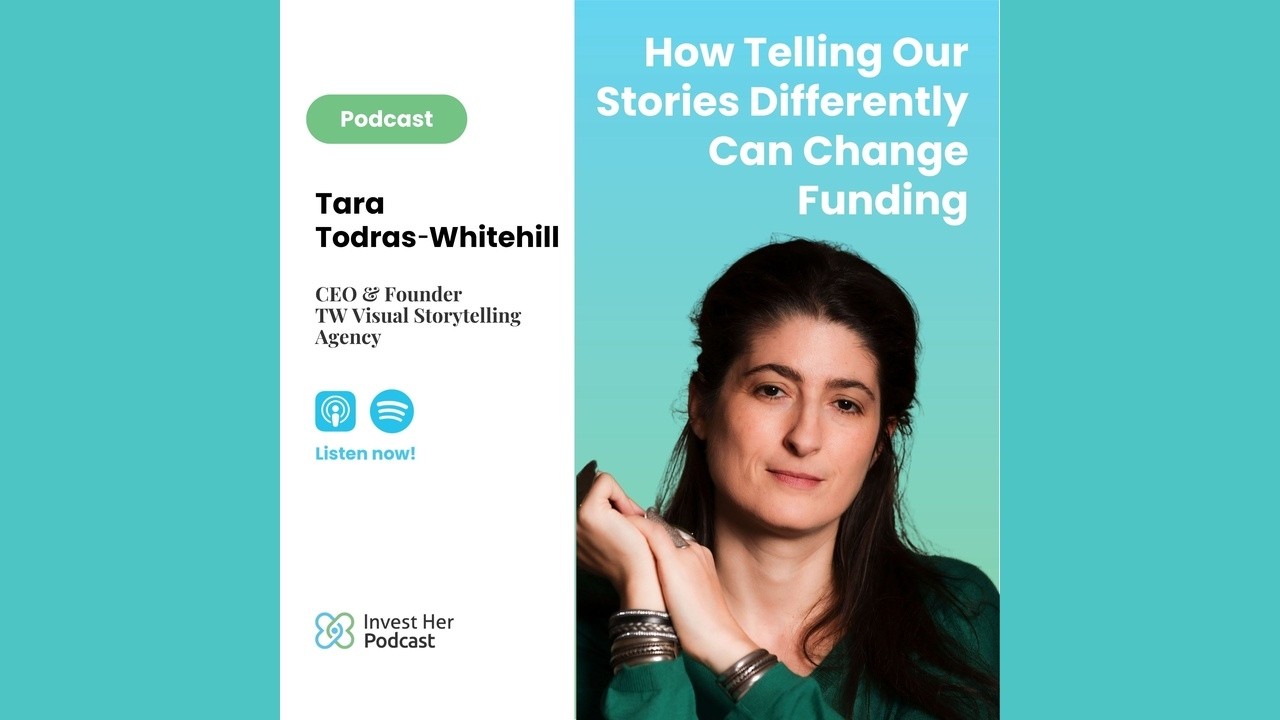
In this InvestHer Podcast episode, host Anne Ravanona interviews award‑winning photojournalist and visual storytelling expert Tara Todras‑Whitehill. The conversation defines visual storytelling, explains why it matters for investors and founders, and delves into how authentic, first‑person narratives can reshape perceptions that drive funding decisions. Tara shares principles such as using the most impactful moment to hook an audience, embracing vulnerability as a strength, and framing stories ethically with consent and participant‑centered language. The duo critiques real funder websites (SupplyChainChange.fund, First Round Capital, Lolita Taub’s fund, Sogal Ventures), highlighting what works (personal tone, visual portraits) and where they can improve (adding bios, first‑person quotes, internalizing stories). They distill three take‑aways for funders (more first‑person stories, authentic connection, ethical framing) and three for founders (start with the hook, show obstacles and grit, tell stories ethically). The episode also promotes the upcoming InvestHer Summit in Paris, aimed at mobilising a global coalition to fund one million women entrepreneurs by 2030, with workshops on visual storytelling, gender‑responsive procurement, and sector‑specific gaps. Throughout, the hosts emphasize that better, fairer storytelling can shift bias, attract the right partners, and ultimately close the gender funding gap.
Chapters
Welcome to this week's episode of InvestHer Podcast. If it's your first time, we are so happy to have you. If you keep coming back, you're gonna love this one. This week you're gonna hear from Tara Todras Whitehill. Now, she is an award-winning photographer and her work has appeared on more than 20 front pages of the New York Times. So what's this conversation about? You're going to learn all about visual storytelling, the power of visual storytelling, what it is, and how it can shape perceptions. And this is super important in the funding industry because we are humans. Humans are programmed to tell stories, and we do it visually in our heads and visually to captivate the audience and to grab attention. In this episode, Tara is going to tell you and share with you how to use the power of visual storytelling to tell more effective stories as investors. If you want to attract more diverse women founders to to your fund or to your source of funding. And as founders, if you want to have a better, more impactful way of getting your opportunity and business across to potential investors, I think you're going to absolutely love it because in this episode, you're going to— we're going to walk through some actual examples of investor websites. She's going to go through them and say what they're doing well and what they can do even better to elevate the story and have a better impact. I truly believe in the power of storytelling and visual storytelling, and I'm so excited that you're going to learn from her on this episode. And stay tuned because Tara is going to be a speaker at our very first InvestHer Summit in Paris on the 29th and 30th of June next. So listen in to this episode to learn all about all of this. I can't wait to hear what you think, so do tell us in the comments in the show notes. Enjoy! InvestHer Podcast is for you, the female founder who has a product, a service, or a message that you believe in and need to get funded. Or for you, the investor who wants to learn more about the huge untapped investment opportunity that gives you a higher return— women entrepreneurs. My name is Anne Ravanona. I'm an entrepreneur, TEDx speaker, and women's advocate, and I'm passionate about helping women entrepreneurs get In each episode, we'll take a behind-the-scenes look into real-world funding tactics and strategies to help you get the funding you need faster. Let's put the fun into funding. Thanks for spending some time with me today. Now let's get started. Welcome everybody to our latest podcast episode from Investor Podcast, and I am thrilled beyond I don't know how to say it, is how to introduce our next guest. I want to welcome you to the world of Tara Tadros Whitehill. Tara is an award-winning storyteller, visual storyteller. Her photojournalism has been on the COVID of Time magazine and many more. And I want her to tell you more about her work because she's awesome. Listen into this podcast because we're going to shake you up. We're going to shake you up in this podcast. I know you're going to get some incredible knowledge bombs and know-how. So welcome, Tara.
How are you? I'm great. I'm so excited to be here with you today. This is awesome.
Oh, so, so awesome. And you know, I want to tell our listeners and our viewers that we are here thanks to networks, thanks to stories, because we had a common connection who introduced us. And I'm so glad that he did. So thank you. He knows who he is. We will shout out to him afterwards. Fabuloso. Okay. So let us kick this off by a brief introduction. Can you tell us a bit more about you, Tara? Who are you? And tell us a bit about your work.
Sure, I'd be happy to. So I haven't been actually on the front of Time magazine, but I have been on the covers of more than 20 New York Times newspapers. So my background is that I'm a photojournalist, and I have been working actively as that for over 20 years, and I still work for places like the New York Times and also for nonprofits and NGOs. And people that are doing social impact. So that's my background. But I realized while I was doing that, that what I really wanted to do was work on women's issues and women's empowerment. And I couldn't do that while I was just doing only photojournalism in depth in the same way. I wanted to add more pieces to this. So I started my first agency where we did a lot of work with nonprofits to help them tell their stories better. So it wasn't just photo and video, because we did that, but we also did animation, data visualization, all the things that come under storytelling. And we did some wonderful interactive projects for UNICEF, Bill and Melinda Gates Foundation, lots of awesome things, World Bank. And after 6 years of that, we moved on because my founder left and I wanted to do those things. But I was thinking, I had a pause and I thought, I can't just do this because it's not enough. I also am not leaving people with the skills that they need to do this themselves. So now we also do, in addition to those things, consulting and workshops. And our motto is, don't just hire a visual storyteller, become one. Because we all need these days to do our stories better, and they all include visuals. So that's my background. And now we're working with lots of amazing organizations. American Academy of Dermatology, International Rescue Committee, and Sesame. Lots of great organizations that are doing good work in the world.
I love it. And apologies for my little blip at the beginning, but I think what I'm doing is I am projecting that one day you will be on the COVID yourself of Time Magazine for your work. And that's what I am envisioning for you, Tara.
So let's take it— That would be amazing. Let's do that. I like it.
And I sincerely mean that because I know that your work is extremely extremely impactful. It changes lives because it changes perceptions. Yeah, it changes the way we tell stories, the way we perceive stories, the way we perceive people. And that's going to be pivotal to our conversation today on this podcast. So can you tell us a little bit about what is— let's lay the scenes before we go any further.
Sure.
Because in this podcast, you're going to learn about what is visual storytelling. why should you care? And then we're going to go deeper into how this is important in the VC funding world, because you and I are joined by this joint passion to help give women a voice, help them to be seen, heard, have their own voice. And that's very important. So tell us a little bit more about what is visual storytelling. Let's start there. And then why should we care? But let's start, what is it?
That's a great question because it's seems obvious. Like, when I ask people, a lot of people will say photos and video, and that is true. But there is so much more these days that go into visual storytelling. UX design is storytelling. Newsletters is storytelling. Our social media is all storytelling. Everything we think of when we think of the internet, for the most part, is partially visual storytelling. So, as I like to say, what did you click on today that wasn't visual? Probably nothing. So, you know, you always have to have your story there and be able to have the attention of people almost instantly. So, you know, you need to do this better. We all need to do it better. And so telling, you know, women how they can do this better so that they're amplifying their own voices is really— it gives me chills still every day. So if I could do that, then that's the most important thing. And women are inherently good storytellers. We just have to harness And be able to understand how to give it to everyone else.
I love it. And when you tell a story, when you shape a story, you shape the narrative. And that's why it's so important, the tools that you're going to— the awareness you're going to give to our listeners and viewers and the tools you're going to give them to empower them to tell better stories, better outcomes. So that's what this is about. So now, why should people care? I've kind of hinted at that, but why should people care about storytelling in general? And then Why should investors and funders care and founders care?
Right. So the first thing is that when we tell a story or we see a visual that has that story element, it comes into our body. And it's not just our eyes that see it, but our whole senses are engaged. If we connect with it, it reminds us of something. You know, we smell it, we taste it, it's just there and we become part of it and we feel connected as a result. And when we feel Connected, we want to share. It's not a mistake that the most valuable button on Facebook is the share button, right? Like, you can spend a lot of money on Facebook ads with the share, trying to get people to share, because if you are sharing, that means you're connected. It means you want to show someone else what's happening and that that's important to you in some way. So that's why, you know, we're always doing that. And So it comes from our internal basic desire, but on the internet, obviously, it's being amplified very quickly. So we have to do that. And for founders and for funders, it's really important because you want to draw in— for the funders, you really want to bring the right people to the fund. You really want them to understand you and diverse voices and people that you really want to bring in. So if you're telling your story and the story of the people who you're working with correctly, then more people will just come to you that you want. And from the funding side— sorry, from the founder side, then it's also about how you're presenting yourself. You want to get to the right funders. You want people that are going to be in your corner and are going to understand you. If you tell your story the right way and make sure that you're doing it authentically, then you will get that and people will understand it immediately. And that's so much of the battle.
You said exactly the word that I was gonna say, 'cause it's not just about telling the story. You've framed that beautifully. It is about being authentic. And I think that one part of the challenge for founders looking for funding is sometimes they feel they have to morph, change themselves, Put on a show, a mask of bravado, in order to impress the investors. And certainly, I know that from a male perspective, they do it naturally. Guys do it naturally. They will come on and preen and they will tell the big, big story. And women founders will do it differently. We will be more realistic. So we will be telling the story the way it is and maybe not bloating it out to be, well, you're going to make these gazillions with us. We're much more realistic. And this is what, you know, investors also report back to me. So I like that. I want us to help people reframe how we tell stories and better understand the impact of it. And as you say, why is this important today? Because today the funding gap between male and female entrepreneurs— so those funders before COVID it was estimated to be $1.7 trillion. Now, that was before COVID That moved from $300 billion. The IFC did these estimates. $300 billion in 2013. That's the number that got me motivated to want to work in this space. $1.7 trillion before COVID We don't even have the figures for what it is now. So, there's money in the world and women are not getting enough of it because they're only getting— women-only teams are only accessing 1.9% of venture capital worldwide. Mixed teams around 18%. there is something radically wrong in here. And part of that is due to bias, unconscious bias and conscious bias, pattern recognition. And the stories we tell, how we look, how we present ourselves, how we come across impacts that perception because investors can be— are making decisions on facts, but a lot of it's on perception and intuition.
Right.
So if we shape how we tell those stories, we can also hopefully break the mold. That's what I really want us to do during this, this, during this podcast and during this video. Heavy, heavy responsibility, Tara, and I know you're the woman for the job. So tell us now a little bit about what are the principles about telling your story. I want us to dive in, like, and how people should do that very effectively.
Mm-hmm.
Let's start there and then we'll go into some practical examples.
Sure. So like we were talking about, it has to be authentic, but you don't have to be like, you know, these huge grandiose things. Your connection is the authentic thing, the ability to connect with someone else. So what we're— the first thing that's most important, what we were talking about before, is the authentic connection, like being authentic, creates the connection. So when we are telling our stories in that way, that's really important. And authenticity means a lot of different things, but I think a lot of people sometimes shy away from the struggle, which actually helps to tell your authentic story. Because if I tell you a story about how I made $1 million yesterday and it was so easy and I didn't do anything, you're not going to believe me because there was no struggle. There was nothing there. It's not the human condition. We struggle. So we have to include that. And it's not something that should be seen as a weakness. It should be seen as a strength because we can overcome that. And how we deal with that is really important to our story. So thinking about how we can do this, and there's something called the Western narrative arc, which is like you set up your story, then something happens, and then all these events happen, then you get to the climax and—
The climax.
Then everything changes and then you get to the conclusion and everything's happier or whatever it is. The hero story.
The hero story.
That's a good example.
Think Star Wars, guys. Luke Skywalker. Everybody's universal, I think, knows it. So that's— yeah.
Okay. Any of the Disney movies, essentially. So yeah, exactly. But what you don't think about in terms of that and what gets lost a lot now is that we don't have to start at the beginning. Because that sometimes isn't the most impactful part. So we're not saying make things up, but think about what your most impactful part of your story is, both when you're talking about it and what you have visually, because that way you can start in the middle. You can start at the end and then go back because you've gotten people's attention. You've made that connection. So now you have more of their time. So that's really important in terms of thinking about it.
I like to get—
I'm not obviously in the same realm of the VC, but as a photojournalist, I have a story about how during the Egyptian Revolution, I was almost trampled in Tahrir Square. But the beginning of the day, I was just doing some photos, following a protest. So my question is, should I start where The moment of intrigue? Did— am I gonna get away with, you know, without bodily harm or cameras being ruined? Or should I tell you a really long story about how I got there? No, I should start where my most impactful photo was. And there is a photo of me almost being trampled. And, you know, where that is. And then everyone's like, what happened? Where did it go? And then I can tell you, let me tell you about what happened, how I got there. And you're like, Yes, I want to know everything. But if I wait 2 to 3 minutes to get there, I've lost you. And that's both text and visual.
So that's exactly what I— in the realm of startups, people, founders are taught that we need to, in our pitch deck, that we have to kind of start with the problem. What is the problem we're trying to solve and share a story of maybe our ideal user or our ideal client or our own story that Pushed us to do it. So I love that. And I think what you're saying is even more nuanced. It's like, take the most impactful part of that story, hook them in first with that. Then you've got their attention. Then they're gonna sit up and listen to you in a different way.
Exactly. That's exactly it. And, you know, I think we've done the old model for a very long time, especially when we've been in the room with people and we can make eye contact. But these days, a lot of times we're not. So we have to compete with, like, you know, 20 different dings and bings and whatever is going on on our computer. And I don't know about you, but I have like 50 tabs open, right?
Yeah.
So like all those things that are happening, we need that immediate attention. And that doesn't mean that we have to make it more than it is. We just have to find that connection. Not everyone's been trampled in the Egyptian Revolution in Tahrir, but we all can find something in our story that's going Okay.
So that is like absolutely key. And I think the other thing that what you're saying is, I like the part where you're saying being authentic, because it's very hard to do. That's a nice big word. And I always like to refer back to Brené Brown, who's the master of vulnerability, right? She's incredible. And research— her research is phenomenal on this topic and how being vulnerable is actually a key to building trust. opens you up to connecting more. Yeah. So, and then how do people be careful? So I'm— if, if I've understood correctly, you're saying, okay, find the most impactful part of your story, hook them in with that. But we don't want to go into pathos and into the, oh my God, it's like knock me down, this is such a heavy, sad story, or I am a victim here. And I don't want particularly for Women to fall into that trap of going too far on the vulnerability piece too? Because we have a tendency, and it's not everybody, we may have a tendency sometimes to overshare because we're nervous. And so that's where it can come out. So yes, vulnerability and fine line.
How—
what would be your tips around that?
That's a really good question. So I think that you're absolutely right that sometimes we have a tendency to overshare and make ourselves we show more vulnerability than we want. The idea is not to— to give it also the empowered and the hope of it, because we're not one-dimensional. Just as the pictures that you used to see of kids in Africa, and sometimes unfortunately still do, of them starving, that's not a 3-dimensional picture. When you see a full picture of someone, even if they're dealing with a hardship, they still have that inner power and you want to show that. So when you're talking about the vulnerability, also you want to talk about how you're dealing with that and then going forward, how it's going to make you better. What is the future going to hold? Because you've learned these lessons from this. That is going to be the part that people can hold onto. And they love that. Because people love the, you know, moving forward, the looking into the future, something that they can see as a call to action for themselves, you know, being able to be a part of.
I love it. And you see me bowing down because I'm taking notes what you're saying, because it's extremely important. I love the way you're talking of describing moving from using your— an example of vulnerability to step into your power and to then do the forward projection piece. It's like, okay, This may have happened to me, or this situation occurred. This is how I handled it, and this is how it's— I'm using it to propel me moving forward. So your past is not your future. What happened to you does not define you. It's how you own your own story and tell it to the world that matters.
Exactly.
So perfect. Okay, so do you want to give us a few more examples of how people can And particularly, let's say, funders and founders, how do we want to break this down? Because you will have kind of the format. Do you want to do that first and then we go into examples? What's the best way to help our listeners and viewers to go further now?
Yeah, I can give a couple more things about format and stuff. And then we can go and talk about how that applies to the examples that we've discussed. So I think something else that's really important in terms of this from both sides is to talk in the first person. When you have a third-person voice that kind of booms from above and gives you statistics and shows you an overview— I've done my own personal, like, just studies of where I show one third-person video and one first-person video, and I ask people who do they connect with more, what do they feel? And it's almost entirely that the first person is that because you're talking to someone. Someone is literally talking to the camera and you're feeling that connection. And I think that gets lost very quickly because you're like, well, I have to tell everything. I have to show everything about our company, or I have to show everything about our fund. So you don't get the personal stories.
Mm-hmm.
There are ways to interweave that, and it's not just a photo or a video. It's Presentations, like it's our, you know, our decks, all of that can include it, but it should be in the best case, always trying to include a first-person account in there, because that is how we as one— there's been studies that show that we connect one-to-one. Even if you put 2 people up and you're talking about 2 people, the level of connection goes down. We are meant for one-to-one connections.
Amazing. Okay. What else? So we take it in the first person, make sure that we're talking in the first person, tell a personal story, not someone else's story. It's ours, or that person is speaking for themselves. Yeah.
And another thing is about telling their stories ethically, about how we make sure to do this. And, you know, if we're talking about from the founder's perspective, right? If we're How we're telling the story of us is one thing, but usually it includes other people. So we want to make sure that their story is being told the way that they want to tell it, and they don't feel compelled to tell it, to help you just because you're helping them or something like that, or they're getting feedback. So just thinking about how we can also make sure that our stories are included, but just as important is that if we're talking about other people, that it's not just a one-dimensional way that we're talking about them, that we see a whole picture of who they are and things like this. And that it also goes similarly from the funder side, where you want to make sure that you're— the people that you're featuring, hopefully, feel like this is something that they want to do, that they are— That they— because if they do want to do it and they feel it, then they will also help amplify it. Whereas, so when I talk about stories, I don't talk about subjects. I say participants, because the participants, they should be a full participant in the story. They should want to do it and be like, feel like, wow, this is my story, as much as you are the person that's telling it.
I love that. So, and we're going to get into how the concrete examples of how to do that more ethically. I think that when I had heard you speaking on another podcast on this ethics side, it's so important. Can you please unravel that a little bit more? Because this is crucial to how we do proper— I don't want to use the word representation, but it is. It's like, but it really is. For me, it's most important to give person the space to be themselves and to tell their own stories, not to tell your version of the story, your perception of the story. So can you kind of unravel a little bit more about what you mean about ethical? That's so important.
Yeah, well, it also goes back to first person, right? Because if that person is talking instead of you talking for them, then it's more their story than yours. So you're getting their point of view. So that's really important to ethical storytelling. And that's a lot of what we work on with our clients too, is helping them to integrate that into their visual voices to make sure that they're really considering that. You know, also just thinking about even like lighting and camera angles and things like this. This can also affect how people see, you know, your work and who you're talking about. It's the tone of the picture, right?
Yes.
So just thinking about those kind of things as well. And then also, you just have to be aware of the power dynamic, because whenever you're doing that and taking someone's story, there is an inherent power dynamic where you are being— you're asking something of them. And so they're kind of— they can feel like they have to do that, and you have to address that and be aware of it. And sometimes They may not even be aware of it, being like, no, no, no, it's fine. But internally, you also just need to keep questioning whether what you're doing makes sense ethically for this situation, even if they're, like, you know, telling you it is. So there's, like, 2 different things, as well as consent.
Yes.
Consent is a whole other important issue, because consent— I mean, just in terms of consent forms, I don't know if you've ever signed one, but They're scary. They're really scary. It sounds like you're signing your whole life away with a consent form. And I advocate for a more ethical consent form where you have the person say, okay, I'm gonna let you use my story, but I also get the chance to say I don't want it being used anymore. Maybe my circumstances have changed.
Yeah.
Maybe it's not the right time for me to be talking about this us anymore. And obviously, there's only so much we can do to not have it on the internet, right? We can't take off things that have gone viral or whatever. But typically, if something's been out for a while and then we reuse it, that's when people start seeing it again. Like, if someone reuses one of my pictures, I start getting a lot of hits to my website, right? Because they're—
Yeah.
They see it again. So, you know, so like the things that we're making sure that we always check back in and make sure that it's okay. And that's hard. I know it's hard because it's also costly. We've spent the time to do these stories and now we may not be able to use them. But at the end of the day, that's an old way of thinking about things because we are using someone's story. And that is, that's like the most valuable thing. So if we can, if we're allowed to do that, we also need to keep asking about it.
So this is coming back to your earlier point about moving from subject to participant. It's theirs, right? And they're agreeing to share it with you. And I had that situation. a few years ago where I had interviewed many founders and funders and women leaders for The Huffington Post. I had a series on trailblazing women where I wanted to showcase them and to tell their leadership story, their stories of women as a leader. And one woman founder, I had interviewed her and published it when she was very early in building her company. And a few years later, when she was raising money and so on, she said, Anne, look, I really don't want that up anymore. Would you mind taking it off? Because it's no longer You know, it's no longer right. To your point, where she was at that point was no longer where she is now, and it wasn't reflecting what she needed it to reflect. So of course I said no problem, and I took it off. So you have— for me, but you're right, this is the ethical piece. Not every journalist or not every person is ethical about that, and they will kind of use the other person's story for their personal gain or self-aggrandizement or the organization's self-aggrandizement or To get donors or etc., etc. No. So this ethical piece is extremely important. Thank you for bringing it to the attention of everybody in our audience because it's crucial. So anything else we need to cover before we dive into the examples?
Yeah, one more thing just on that. I would say that if you're always gonna— if you have any questions and you're thinking to yourself, is this right or is this not? The most key thing you can say is, would I want this for myself? Is this something that I would want if I felt like I was in the shoes of this person? Is this something I would want? And that a lot of times will give you a very clear answer very quickly if this is appropriate or not.
I love it.
That's—
and I think that's, you know, a byproduct of our world today. We are selfish. I think the human being has become very selfish. We only think of ourselves and we think of the image we want to project because we're talking about the visual on our TikTok, on our Insta, on whatever. And we have to move away from that and stop trying to perpetuate this perfectionism, this unreal surreal image. It also permeates in the VC world. That's because it is also in the funding world where, as I said, it's like acts of bravado. It's like, look how shiny and brilliant I am versus the other people. And I look like somebody that you invested in before, and I told the same type of story as that person, or they, you know, so, you know, you already have a predisposition to, you should definitely invest in me. Now, if I come to you and I look different to you, I sound different to you, I have a different background, maybe the story doesn't resonate with you in the same way because you've been preconditioned, predispositioned into that previous pattern. Mm-hmm. This is where I love what you just said about, you know, would I want this for myself? Trying to put yourself in the other person's shoes, in the participant's shoes, in the founder's shoes, in the funder's shoes. And I say for the founders as well, you know, often founders— some people are angry and they say, look, there's all this bias in funding. We're getting so little funding. It's not changing. It hasn't changed in 30, 40, 50, 60 years. It's getting worse. And people can moan and groan and give out about it and put it all on the head of a certain number, a small number of people. But really, that doesn't help. We have to kind of say, okay, because if you have a mob of angry, screaming, frustrated women founders saying, that's certainly not going to help the cause, you know. So it's okay. The cause meaning equal access to opportunity. That's what we're talking about. It's not investing in women because they're women. It's equal access to opportunity. That's it. funding the projects and the programs and the solutions to importance of others that are being overlooked as well.
Yeah.
So yeah, it's— that's why this is all very important. I'm so excited. Okay, so Tara, thank you. Like, recap what you just said. Talk in the first person, make it personal, tell your own story, or let the person tell their story. You're not telling them for— telling it for them. Make sure that the we tell the story ethically so that we see the whole picture of who they are, that they are a participant, not a subject. That even when it comes to how you are framing it, like from the lighting, the camera angle, beware of the power position that is implicit in how you frame and tell that story. Be mindful of consent, very important ethical one. And just as a little fact-checker for yourself, as a little question, would I want this for myself? I love that. So now we have all those tools, those value bombs. Let us get into some practical examples. So you asked me when we were preparing this really exciting episode to send you some examples of websites of funders, of— and I use the term funder for any type of investor. So they happen to be venture funds, but they're not all. They can be banks, it can be accelerators. Anybody who funds a woman entrepreneur is a funder. That's what I call them. So I sent you some examples and I'm really excited to see what you thought of them. So I wanted to show you the ones that I thought were doing a good job. So tell us more. What did you pull out of those and maybe walk through who— and then say which funds and so on. This is not to do— I want to frame this by saying this is not a— we're not going to take them apart in a negative way. It's like, okay, what are they doing effectively and what could be done even better knowing Taking the knowledge and the tools that Tara is sharing with you. That's the objective of this exercise. So Tara, over to you.
Right, exactly. And like, nothing is to say that there are these— all of these funds looked amazing. And if we're just talking about how we can improve our voice and how we're attracting people, that's the only thing. So, you know, even that they continue forward on this, they're doing an amazing job. And I loved all the examples you showed me. So The supplychainchange.fund.
Yeah.
Oh, sorry. Yeah, that one was great. It had lovely visuals, and they have, you know, the pictures of the people on their pages. So I thought that was really great as well. So they showed the, you know, the name, and then they showed the person. But when I went click on it, it just went directly to their website.
Hmm.
And I kind of just wanted even just a small bio or something about why they were there or what was important to them or something like that. So it doesn't always have to be a full story, but because it was such a nice format in terms of how you would click and like look at the person and then go to their website, but it could just be in like kind of an added text even for that, about, you know, something that they're— why they're passionate about this, or, you know, just a quote about them. So it doesn't always have to even be a full story to have it in their voice and do something like that. So, um, yeah, I thought that that was a, um, a great website because it gave you the information about the company. But I also want to know about the people behind the company. And these days it's all about that too, right? Like, when we invest in companies We care about their message. We care about why they're doing it. So everyone has, like, you know, the social impact brands that they're investing in. So it's in the same vein, and it's very timely to do this as well. Then there was a first round.
Yes.
First round was amazing. I love this website so much. I love that they had kind of this big text at the beginning. And it drew you in immediately because they were talking to you. It wasn't a, you know, here's what we do. They were saying, you know, why are we doing this? Who are we? And like they, you know, they said, they just were very, very clear and raw and not beating around the bush about—
Yeah.
you know, why they've done what they've done, that they started at the beginning, and, you know, why they're so different than other ones out there. I loved it, like really loved it. But the thing that I would have loved a little more is that they also said, you know, you can talk to so-and-so and they'll tell you this about why we're important. Well, I'm like, but why are you telling me that?
I know.
I want the person that is That person to come on at that moment and give me their voice, because that's even more impactful. It's not third person, it's first person saying, hey, yeah, I'm here, I'm showing up because this is really important. So I thought that that was like something that just could like alter even slightly, because again, you don't have the full story. You could just have like their quotes in there and have that as well. So I thought that that was like a really great website. but just like small changes to that could really be important.
So, and I want to pull that up because first-round capital are pivotal in, you know, changing the narrative and the statistics around the financial impact of women entrepreneurs. I'll come back to that in a minute. And I really, I like what I, every single day I am curating myself and the team, we are curating funders to put on our funder directory. And so I see 20, 30 investor websites, not every single day because I can't spend all day doing that, but this one really stood out. The tone was incredible— not was, is incredible. That first person, that one-to-one, you feel that you're sitting across, like we are sitting across from each other, and I feel that connection. You can tell that they have really taken care to be authentic and in their voice. It is really well thought out and it is authentic. And as I said, I'm so glad that you've given the tips on how they can just up the ante to be ace, ace, ace up there because they're nearly there. So, First Round Capital, we love you. We love what you're doing and how you're telling that story. So, there's Tara's tip to just—
Because everyone should do something like that, honestly. Like, if everyone had that kind of authentic voice, you would get a real sense of who they want to attract and who would be a good fit. Like, I like them, I want to be their friend, you know? And so I think that they're cool people just by reading that, you know?
Yeah.
So I think that that's kind of the sense that you want to know more about someone, and you get that immediately. And if you're spending so much time and money attracting the right people, spend it on this. Do this, because this is going to give you that information. They could also go farther about their own stories in that, you know, and give a little bit more, you know, it is text and it's fine. It's very visual text in a way because you get into it so quickly and there's an emotional connection. But they could also put in some about their own personal stories in that as well. If they, you know, give that as well, I think it would just add even a little bit more, but it's phenomenal. Like, by far and away was so different So I thought it was it was a great example. Then there was also Ganes. Is that? Yeah, Ganes.
So that's oh Lolita Taub. Lolita Taub. I was forgetting her name. Lolita Taub, Latina and underrepresented founders fund from America. Yes. Tell us more about Ganes.
So I thought it was fantastic because she has this reverse pitch deck, right? where she's really talking about the people and giving it, like, saying, you should— this is why you should come to me, and, like, really turning the tables on it, right? But, and again, there wasn't a personal story in there of someone who came to her. I want to know that. I want to know how that happens. I want to see that as a different story because it's so unique, right?
Right.
So show me the story of someone that that happened. And I know that there were people and there were quotes and said, you know, I can't imagine like working with anyone else. But give me your origin story in that. Like, tell me more about it, not just like how it's affecting you now at the end, but the whole part of it and how you came to work together. Um, I think that that would be incredibly impactful because it's so unique.
That's really interesting what you're saying, Tara, because one of the tips and one of the facets of raising money is that you need to build relationships with investors well in advance of actually sealing the deal. Sometimes it can be several years before they actually will invest. So what you're saying is super interesting, like telling that little origin story about how we first connected, how we met. So we first met at this conference. We've been meeting at different things over many years. Then we had a coffee or we went out for drinks together and we got to know each other better. And then You know, I was ready to to to pitch like our business was at the right point. We had enough traction to talk to you, and so yada yada yada. So actually, I love that idea because Lolita does an incredible. She does an incredible job because what I love, for example, in her Twitter, she always starts any tweet if you look on her feed with asking for a founder. She's always advocating from the founder. So the question she's asking, of course, she's getting information for her bit fund and. But she is asking for founders. She is extremely founder-focused, which a lot of other funds are too. It's in the voice, it's in how she does it that's different.
Totally.
And that's what I— and like, as again, I look at loads and loads of hundreds, like we're near over 1,000 as we're going live, there'll be over 1,000 funders on the funder directory. So I'm looking at like thousands of funders' websites. And she does. Her tone stands out in everything she does, and even the way the information they go further in the FAQs. Like she is trying to give the founder as much as she can. So I love the way Lolita, if you're listening, and I will send you the link to this. Here's a tip from Tara to just elevate it a little bit more. You're doing an awesome job. Keep doing it. This is the little one.
Exactly, exactly. Yeah, I mean because that's different right than anyone, and you can even compare like not compare but say like this is how it typically happens, and this is. This is what happened to this person. So show the side-by-side comparison, not to put anything else down, but just say, like, in general, like, this is how it happens, but this is not how we do it. And for example, you know, so-and-so. So, like, I think that that's also great because when you see the side-by-side comparison, sometimes that is a very— gives a lot more impact to your story because you understand what is different just in that moment, even if you understand it internally. So it makes a bigger impact. And then I hope I'm saying this name right. Sogal Ventures.
Yeah, Sogal. Sogal. Like a gal. Oh, I'm such a gal.
Sogal. Okay, got it. Yeah. You know, it was great because they boldly, they really displayed their companies and they do link to the people about their companies. Like there's some where they have like, you know, oh, this and then they link to something about Forbes, and that's a story about that person. But I say take it a step farther. Why do you have to link out to something else? Why don't you internalize that?
Mm-hmm.
Get that story and do it for you so that people come to your website to learn about those people, and then it becomes part of your story. And when the, you know, Forbes founders come to you, they're like, wow, they've spent the time to really care and understand about me in a different way. So, you know, kind of just thinking about that and how you can, you know, add value to your website and to the people and just really give that, 'cause it's there, they're doing it, but it's like, it's an outside thing, you know?
So just showing that that's important So making it a little bit more personal. Again, it's like bringing it back to the one-to-one and not in the third person, even if they're linking out and they're doing a great job. It's like they want to put the spotlight on the founder, which is awesome. This is how you can elevate it even more. And I know the wonderful women at SoCal. So Elizabeth was one of the founders I first interviewed on HuffPo many, many years ago. People are going to say, no, I don't know you. No, I don't know you. still write for HubSpot. That was just a passion project, just so we get that clear. Um, brillianto. So anything else we need to cover on these examples?
Uh, no, I think that's, that's it. Um, but like, I really loved them. They were all just great and I felt really empowered just listening to them. So these, I mean, I know that these are the, the group, those are good examples and this stuff. So, uh, they did a good job. Like I got it, but I've just, uh, you know, wanted to add to that. And I feel like it's like, for me personally, when I say these things, I feel like I'm repeating myself because it all comes down to the personal story. But I think it's just really hard for people to understand how to integrate that.
Yeah.
I think that's where it becomes the issue is like, how do I do this organically and make sure that it like fits? And I think that it gets lost because it's just easy to do the rest of it, the business part, because that you need that. And then you know, do we really need this? But you do, because if you're trying to attract these types of women founders and, you know, getting this out there, that is important.
I love it. So let's recap on the key things that you've shared and why it's important. I think that the reason why— let's talk about why should funders use visual storytelling, like improve how they tell stories of founders, how they tell stories of themselves to be able to attract more targeted companies to the right people to go to them? Because, you know, they're just putting something up there and just saying, people, my door's open, they're not coming. So what are the key things that they need to do to make that better? Let's summarize for them first, and then we're going to do what the founders—
Yeah. So, you know, when you don't understand something and you say, can you give me an example? Right? That's because you're telling a story.
Mm-hmm.
And so people don't understand things until you give them real stories, for the most part. Like, that's what sticks. They'll be able to tell that story of the first person way more than any statistics that are on your website in the future. So we have to have more of that connection, and that's why it's important. So all of it comes down to first-person stories That make more connection.
Okay. I'm writing it down because I'm a prolific right-ticker. I can't— I wanted to just look at you, Tara, because we're recording this visually too, but no, I can't. It's stronger than me.
Okay.
And what about for founders? So what should they be thinking of from what you've said?
Yeah. So for founders, in the same way that you're looking for people that are going to be a right fit for you, when you tell your stories, they're going to find you in a better way. Like, you're going to make that connection. But you also want to think about how you're telling your story and making sure that you're doing it, as we talked about, authentically and ethically. And also where you start your story.
Yes.
So making sure that you do it at the point that starts something where It's the most interesting part that you have. And that doesn't— like, it has, you know, it could be just the connection moment. It could be something. So it's not, like I said, doesn't have to be like, you're like, I don't have a good visual. Okay, but you have a good story. Like, where's that story moment that, you know, makes the difference? Start there and then go back and tell them the rest.
See, I love that. And that's something that I do Myself, when I'm telling the story of how I started the company, and I'm like, I say, I was in an audience and I asked a question to a founder who was speaking. I put my hand up and I asked her what was her biggest challenge, and she said access to capital. And the light bulb went off in my head and I said, what, is it harder for women to get money? And then I got curious and I started reading the research, and then I found this statistic that changed everything for me. And I said, okay, this is what I need to dedicate the rest of my life to. But it was truly, truly a light bulb moment. It was as if, like in a cartoon, I was like, Huh, really? And that was like, whoa, I need to go down this path. And I tell that story, it is truly what I lived. And it's like I was in a moment of transition in my career, things had happened in my life, and I'm like questioning where's the path I want to take. And I said, wow, this— it just— the heavens opened and the path showed itself to me. But those— I think it's telling that story is super important.
And you wouldn't start at all of that stuff at the beginning where you're not sure. You start at the lightbulb moment, right?
That's it.
And then you go back and you tell them all the other things, and then you go forward and you tell them where you are and what's going to happen in the future. So you don't have to follow the hero story or whatever the Western narrative arc is meant to know it and then to break it.
Figure out where you can use it effectively and then And I love the way you say change because that is the whole point of this episode. It is the whole point of what we are— work, both of us work. We are changemakers, we are catalysts for change, and we want to use storytelling and visual storytelling. I've kind of been doing it without realizing it for many years, but it really is. And now I have my master guru teacher here who's giving— helping all of us to, to elevate our storytelling. How we do this. And this is all about change. I want us all to realize what Tara is telling us. You are giving us the tools. Thank you for sharing your wisdom because you're giving us the tools to be able to do this better, to change the funding industry. I think how we tell— if we tell better stories, fairer stories, real stories that connect and have a more authentic conversation We can change the funding game and realize that someone who looks different sounds different to me. You know what? We're all humans, and we're all trying to find solve problems for other humans and get resources for to solve those problems. So let's have a conversation. Let's find that values match. But you have to do that by being open and opening your mindset, opening your heart to that other person and to possibilities, and not. staying in your lane of pattern recognition. So what's very important, I think, is as we wrap up here, is to say a couple of things. Number one, what would be your kind of top 3 takeaways? And then I'm going to tell people how they can connect with you, what's coming up.
Okay. So we said, I love the way you structure this because we've kind of already said it and we repeat them, but like, I will say it till I'm blue in the face. Like more first-person stories. Always think about how you can do that. Okay. Just always think, how can you insert someone's words instead of my words in this? And how can I use their visuals to help you, you know, them and myself promote? So that's the first one. Also thinking about the authentic connection.
Mm-hmm.
Don't worry about being vulnerable. Don't worry about that. Tell your obstacles, show your obstacles, but show what you've learned from that and how you're getting about it, because that is actually the most powerful thing about being human, is how we get over the things that are problems.
Yes.
So when we do that, we show our grit, we show how we're perseverant and how we can think on the fly and change things, right? That is so valuable to being a founder, because obviously things change all the time. So we all have it. So we just have to make sure that we're showing it and showing it in the right way. And the third part is about remembering to do it ethically. And I'll just leave it with, think about, at the very, very least, is this something that I would want to see for myself? Thinking about how you do this and storytelling, that if you can just keep that in your head, You're, you're very far ahead. So I'll leave you with that very simple last—
That gives me goosebumps. It really does, because I think that is so important. So, so important, Tara. So everybody, we are excited to tell you about what's coming next. So, Prit, of course, I will link in the show notes. You're going to have links to Tara's website, to her agency, so you can go and contact her. You can hire her. You can see how amazing she is. She can help you elevate your stories and take you to the next level, whether you are a corporate, a fund, a founder, a nonprofit, a social enterprise. Tara is an incredible person. I cannot speak more highly of you, Tara, really.
Thank you.
So how can we get more Tara? This is how. So I'm so excited to tell you, this is the first podcast episode, and probably by the time it goes out, I'll have talked about it, but we are doing our inaugural summit, InvestHer Summit in Paris this summer.
Yoo-hoo!
On the 29th and 30th of June. Who wants to come to Paris in the summer? Hello! So this is a really important thing because we are creating the inaugural action summit to bring together women founders, investors, so funders, people who source fund women, policymakers, and corporates to come together to build a global action coalition to help get 1 million women entrepreneurs funded by 2030. We are launching our global movement in Paris this summer. So we're going to do this differently and have different ways of having those conversations, Tara, and you framed this very beautifully, being really authentic, having the important conversations, doing the work, sitting down together to figure out how we can make commitments to each other be accountable to each other in the year coming up for the next summit and the following and the follow-on years to get to that million women entrepreneurs funded, because we can do it if we're together. And if we fund a million women entrepreneurs, we will unleash incredible economic growth, social growth. It's only 1 million, guys. There are so many millions and millions, hundreds of millions of women entrepreneurs around the world. So And what makes it different is that we are going to bring together the policymakers. You're going to learn about public procurement, how to access government tenders. We don't know enough about that. So we will tell you about the countries, give you best practices of the countries who have national strategies on gender equality, who are working on women's entrepreneurship policy frameworks. We need to know this. And I want this knowledge that I'm learning and shaping in the W20 and the work I do on that advocacy, I want to bring this to the whole ecosystem because it's so important, right? So we need those policymakers to come together to share what they're doing, best practices, so that other governments and countries can learn from it. We don't need to reinvent the wheel. Let's take some examples from their stories, what's working, and apply it to our own country in our own context. So that's one thing on gender-responsive public procurement. Then we'll talk about access to markets. So corporate procurement, how do we get more women into the supply chain? Did you know that only 1% of procurement goes to women-owned businesses, whether it's in public contracts or corporate contracts worldwide?
Crazy.
This is like my— it's ridiculous. I'm like, we have to get away from this 1%, like 1.9% of venture capital, 1%. No, no, no, no, no, no, no. We're starting from 1 and we're going up there, right? So this is the place we want to come together and get commitments. And then of course, showcase the funders who believe and walk the walk when it comes to gender diversity, showcase the incredible founders from— we're going to showcase the sectors that there are where there are not enough women. So AI, deep tech, clean tech, green and blue economies, agri-food, agri-tech, medtech, healthtech, femtech, all of those ones, edtech, all those, those sectors where there are not enough women, that we need more women. We're going to showcase, you're going to learn. So come, we will have incredible things. But most importantly, Tara will be giving a workshop.
Yay!
So at the summit, you can experience live Tara workshopping with you, going through some of the examples of funders and founders, and let's work on it together and say, okay, how can we make it better? So what you're learning here is just the tip of the iceberg. You will get the opportunity to work with Tara there. And then there will be some special offers then to be able to continue to work with her afterwards. And you only get that if you come to the summit. Exactly.
I'm so excited. I think it's going to be an amazing event and I cannot wait. And this is just giving me so much energy to do this again and talk to people in person and roundtable and give them feedback. Because this is what we do. We do this all the time. And it's amazing to apply this for women who are changing the world. So. I love it.
And men, because there are some great men too.
And men.
And men too.
There are lots of men too, but it's like, we got to get everyone in there, right?
We got to get everyone in there. Thank you so much, Tara. This has been such a pleasure. I love doing this with you. As I said, I think this is the beginning of a beautiful friendship. Just the beginning of making sure that we help more incredible women tell their stories more effectively, more incredible funders tell their stories and the stories of the people that they fund more effectively to, to effect change, to create some change and catalyze change in the funding game. So thank you so much for being with us today. Thank you.
It's my honor. It's really been amazing. I think this is going to make me be walking on cloud nine for the rest of the day. It's been a lovely conversation. Thank you so much.
Right back at you. Thank you, Tara. Thank you for listening to InvestHer Podcast. Don't miss more great funding tips and insights by subscribing to the podcast on Apple or your favorite podcast host. And while you're there, I'd love you to rate and review the show. We'd love to hear from you. So if you'd like to send in some If you have questions, interact with our guests, or suggest other great people we should feature, join our community on the Flick InvestHer group or send us a message on investherpodcast.com. Want more great resources for female founders about funding? Check out our InvestHer Academy at academy.globalinvesther.com. I'm Anne Ravanona and look forward to having you with us again for our next episode. Let's put the fun into funding and get more women entrepreneurs funded.
More from Anne



🎙️ EP69: Get Off the Fence: Renate Crollini's Startup Blueprint | InvestHer Podcast

🎙️ EP68: Radical Truth: Robert Rubinstein Exposes the Impact Investing Illusion | InvestHer Podcast



🎙️ EP66: Global Sisterhood — Carine de Meyere on Trade Missions | InvestHer Podcast



🎙️ EP65: Capital With a Conscience: Pierre Norman Rolin on Investing in Women… | InvestHer Podcast

🎙️ EP64: Dream Bigger: Nikki Barua on Building an AI-Native Company Without… | InvestHer Podcast