🎙️ EP49: Building Confidence and Inspiring Entrepreneurs into the… | InvestHer Podcast
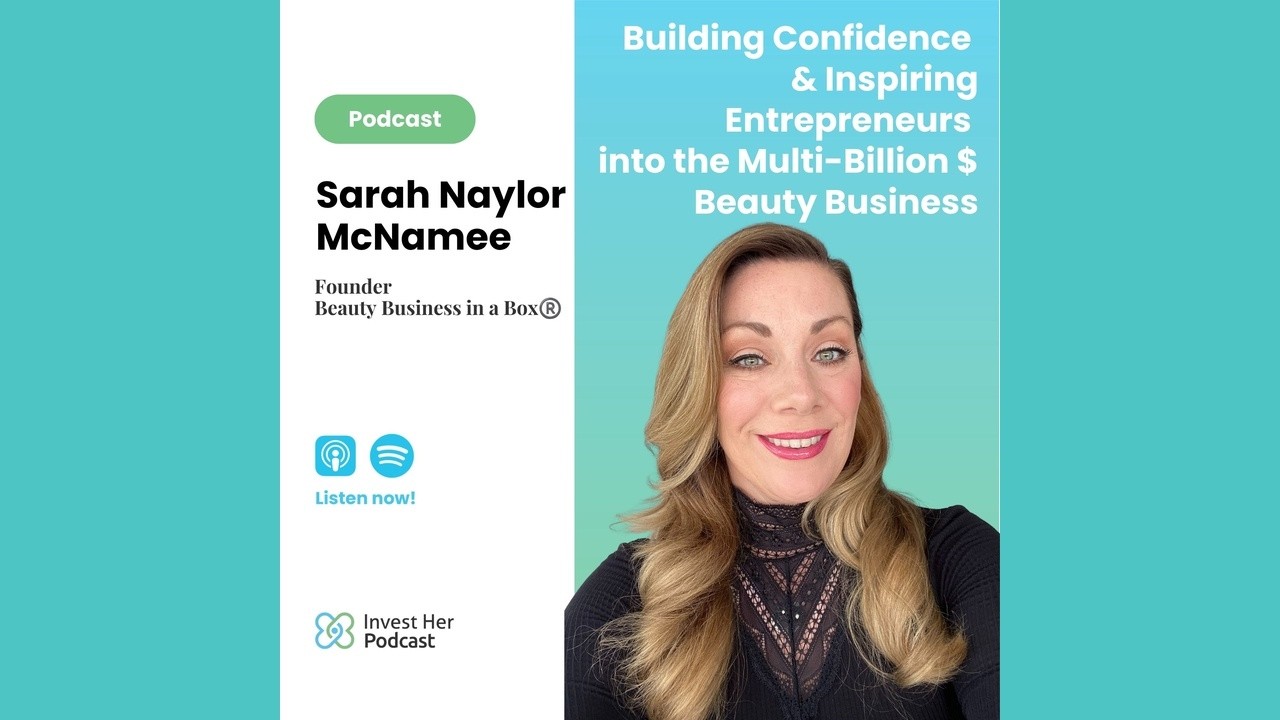
In this InvestHer Podcast episode, host Anne Ravanona interviews Sarah Naylor, founder of the Sarah Naylor Academy, a social‑enterprise beauty training business. Sarah explains how her personal experience – caring for her daughter’s mental‑health struggles and growing up in a low‑income Dublin flat – inspired her to teach practical beauty skills (nails, lashes, brows, tanning) to ‘bored, broke’ teenagers and adults from marginalized groups, including people with learning difficulties, former prisoners, immigrants, and those with disabilities. She describes the ‘Beauty Business in a Box’ programme: a four‑week, hands‑on course delivered in‑person or online, complete with a kit, an online learning platform, quizzes, and a community space. The curriculum blends technical skills with business training (social‑media, client acquisition, customer service, insurance). Sarah emphasizes the importance of confidence‑building, mental‑health benefits, and community formation. She runs the academy as a limited company, proudly paying herself a wage and reinvesting profits, while remaining bootstrapped. She outlines funding pathways she knows (FETAS, local enterprise office, Intreo, innovation vouchers) and her role as a corporate‑sponsorship lead for Network Ireland, where she shares networking tips such as “if you don’t ask, you don’t get.” The conversation highlights her impact on SDGs, her vision to expand globally, and invites listeners to connect via LinkedIn, Instagram, TikTok, and the academy’s website.
Chapters
So welcome everybody to this latest episode of InvestHer Podcast. And if you are new to the podcast, welcome to the InvestHer Podcast family. This is your funding friend, Anne, your host. And if you are a regular, welcome back. It's always great to have you here. And thank you for spending the time with us today. So if you have clicked on this episode, it's because you want to learn more about the beauty business, but how can you get into it in a very special way? In today's episode, you're going to learn from Sarah Naylor about how she helps people from difficult backgrounds, underprivileged backgrounds, and/or people who've had a tough time to create a new life for themselves, a legacy, to become a guiding light in their community through building a beauty business. Now, Sarah is a woman with a heart of gold, and when you hear her story, it's going to really impact you as well. So I can't wait for you to hear this episode. It is so uplifting, so So enlightening. Sarah is fantastic. And please, please, please do take a listen and share it with anybody you think wants to hear it today. If you want to be inspired and hear somebody building an incredible social business to help people in the community lift themselves up, this is the one for you.
Enjoy. Welcome everybody to our latest episode of InvestHer Podcast. And I'm Thrilled, thrilled, thrilled, thrilled to have a fellow Dubliner, a fellow Irish woman on our podcast today. Welcome, very, very, very huge welcome to you, Sarah Naylor. How are you, Sarah?
I'm brilliant, Anne. Thanks so much. I'm delighted to be here.
Listen, we're really honored, and I wanted to give a shout out to Louise Hyland who connected us. She's awesome, super connector, and it's thanks to her we're talking today. So Sarah, before we get started, I want to ask you one question. What's one fun fact about you that people don't know about you? One thing that maybe would surprise people.
I'm super bendy, so I'm, I'm hypermobile. So I literally can bend and touch my toes and do lots of things. So I do Pilates, but yeah, I'm hypermobile.
So they should be basing the new, uh, what, what was the name? You know that Disney movie with the, with the mom who could stretch and all that?
Oh yeah, yeah, I'll be one of them.
So you're one of those. That's brilliant. Okay. So let's get started. Sarah, tell us, first of all, tell us about your company. What is it that you do? Well, how did you get started? Why did you choose to set up your academy, and who do you serve?
Okay, so it's— I've been teaching since 2010, and I've been always teaching marginalized groups. So people from marginalized backgrounds, women and girls that are from traveler communities or have been to prison and on probation from prison, that's something that I've been doing for government agencies since 2010. But during the pandemic, my own daughter had, uh, massive issues with her own mental health. And when she was in primary school, and it was like, it was really, really difficult time for us as a family and for her. And unfortunately for my daughter, the system couldn't help her because she was too young. She wasn't 12 yet. And so I had to figure out ways and means to help her and inspire her and show her that there is light at the end of the tunnel. And one of the things was, um, We taught her how to do nails, and she was then inviting her friends when we were allowed to open the doors up again and allow her bring in 1 or 2 friends at a time, and she was doing their nails in her bedroom. And slowly but surely, I could see her confidence grow, and the interaction with other people and opening the bedroom door and actually coming out and having something to talk about at the end of it. It was just fantastic. It was just such an amazing transformation for her. And, and for us as a family as well. And what I realized was there's nobody doing that for kids. So we're, we're really great at academically pushing kids down a certain route, but we're not great at telling them that there's other ways practically so that they can use their hands. And it's kind of shunned upon to be a hairdresser or a beautician. It's like, it's seen as the easy option or the easy way out, or if you wanted to leave school early, that's where you would go. But it's not the case. Like in, in this case, it gave her a way of communicating with her friends in a, in an environment that she knew she was good at doing what she was doing. And so it built her confidence. And like, she wants to be an engineer when she leaves school, but it gave her a way of having fun with her friends, gaining a few bob extra for herself, whether it was €15 or €20 or whatever the case it was, and just really enjoying what she was doing. So Like, that's progressed on. She now knows how to do lashes and she now knows how to do brows, and all of her friends are like, oh my God, your mom is so cool. So like, there is a bit of an ego bit to it as well. But yeah, so I, I realized that there is a gap in the market there, and so I started targeting bored, broke teenagers. And I did one TikTok video and it literally— my, my phone hasn't stopped ever since.
Wow. Yeah, amazing. So, okay, so it sounds though, from your work with, with your academy, so you're serving the bored broke teenagers as one part, but also the people, as you said, the underserved from different communities who are adults as well, correct? So do you do men and women, or is it just the women and girls? So I—
it's not just women and girls. I have had, like, this year I've had 6 boys through the doors, um, ranging in age from— ranging ranging in age from 14 to 21.
Yeah.
Um, and I've also taught in the community, so, um, I've done a— it's called STEPS. It's a program to teach people with learning difficulties how to become self-sufficient and independent, um, so that they can transition into living an independent life. So they would have been men in their 30s, 40s, 50s where their parents are becoming older and are no longer— and are trying to prep for the time when they're no longer there to help their children. Um, and in that case, it would be something as simple as teaching them how to groom, brush their teeth, apply deodorant, put the cleanest clothes onto their body, next to their body, and stuff like that. So I would work with, like, um, the John of Gods or the ETB, uh, adult education through the ETBs, and those courses are run for free out in the community. And then with the South County Partnership, they run courses out in the community, and I go in and I teach them. So recently we had 14 girls come through— well, women come through the program, um, again ranging in age from 19 to 50.
Wow.
And it was to give them— it was a confidence builder, but it was to give them the practical skills to initiate either back to education or back to employment in some way, shape, or form. So one of those girls was on probation from prison, and like, it's so difficult for them to shed that label and gain employment. So like, there's no rule here that says that someone that's been to prison can't start their own business, you know. And recently I was in Mountjoy doing a talk for the women in Mountjoy as part of a group with Spirinua. We're spearheading it, um, basically to show them that your label doesn't have to stay with you forever. Like, you, you have— there is a way. You just need to want it and you just need to go for it. And I'm here to support them in any way I can. So it's like all ages come through my path, and there's all different agencies involved to, to bring me in front of them and to inspire them and help them in any way that I can. And that's what I do. I reach out to all of these agencies to tell them what I do and ask them, can I help in any way? And it's not about money, because like the courses that, um, South County Partnership runs, they're free for the community. You know, I get an early rate from them, and it's not a huge amount of money, but it's like, it's me giving back to the community at the same time. Like, so I'm not ashamed to say that I do make a wage from it either, because I think everybody's entitled to make money from their skills. But it is accessible to everybody.
Like, amazing. I mean, and this is why you really are a social entrepreneur, aren't you? So you are, you are a company, so it's not a nonprofit. Tell us a little bit more about that and why you chose to set up that way.
Yeah, so it's a limited company, and I market myself as a social enterprise because the impact that my business has on the communities is absolutely invaluable, and it transcends past the communities. But I'm not not-for-profit because I believe in profit. I believe that everybody should make a profit. Like, I don't want to be labeled as a charity or anything like that because I'm not a charity. Like, I do need to make a wage, and I need to leave a legacy for my children, and And that's what I'm teaching my students. I'm teaching them to have a legacy for their families coming behind them, and I'm teaching them to be the guiding lights within their community. So if they're successful, their peers can— the people within their communities can look to them and go, wow, look, she's making money, you know. And now they don't no longer need to rely on the state to fund them because they're making enough money to support themselves. And so that's, that's why I'm so adamant that I'm not Not-for-profit.
As you're speaking, I'm literally getting goosebumps listening to you because it's, it's so important what you're doing and it's so impressive. Um, and that, like, what— So you spoke about how your daughter inspired that part of the business of what you're doing, and what got you into working with these underserved communities and overlooked communities and people who basically Maybe have made mistakes or have had hard, hard lives, need a new fresh start, and that's what you're doing. And as you say, it's so important, like you're taking away, helping to take away some of the stigma and re— Really inject that self-belief and the self-confidence that they can, they have a right to create their own mean, you know, gainful employment to themselves and to build businesses themselves. And if they have paid their duty back to society, if they have done their time or whatever it is, really, they've done it. And then it's time for them to move on and have a fresh start. And everybody deserves a chance to a fresh start, really, if they show that they want to and they're serious about it. So what was it that— how did you come to kind of choosing this path for yourself? And maybe take us backwards. What was your background. You said you're a teacher. Let's go, Ruwan. Tell us a bit more about your journey and how you chose this path, because it's so inspiring, Sarah. And you really are— I'm ranting on a little bit, but it's because I'm very impressed by you. And I'm— I just think you've got such a huge heart and huge integrity, and what you're doing is so important and impacting so many lives, and probably through generations. And I bet you don't even realize it will be through generations. You know, so let me pause and hand the mic back to you. Rewind for us, tell us a bit more about your story.
It's just, it's very simple, and it's, it's my life story.
It is who I—
my students are who I am and who I was. And like, every day I wake up, I'm different to what I was the day before. But it's true growth, and it's true finding myself with people who are my guiding lights. And like, I grew up in the flats in town. I come from O'Devaney Gardens, and it, it was a tough place to grow up, you know. And we had— and somebody said to me recently, I'm so desensitized to that way of life, like to the fighting, to the drugs, to the prostitution, all of that, because it was my normal. It was what I saw. It was the girls I went to school with. Like, I had to walk by a girl that was in my class in school who was put to prostitution by her father, and we all knew that that was the case. Like, and like, the girls that I went to school with, like, if they didn't have 6 or 7 kids in their early 20s, some of them are dead from heroin. And, you know, like, it was our path. It was what was mapped out for me. It was just I had a really, really strict mother who wouldn't let me stray from the path. And she had her own business. It was a greasy spoon restaurant in Parkgate Street. It was 24 hours a day, and we literally went there after school every day, and we worked. From the age of 6, I was serving tables and washing delph. And, you know, it's only now that I have my own children and that I actually thank her for that, because I really didn't enjoy it. I thought she was like— I, I can't even tell you what that I would have said about her in my 20s, like Yeah. And it's like, through learning and listening to other people's stories, I can see the hardship that my mom had with us. At the time, I didn't see it and I didn't appreciate it, but now I am so grateful that that woman did what she did for us. Like, she— my dad left when I was 6, so my mom had 3 children under the age of 27, was running a business, had her father and her brother around the corner to help her, but only for them she would have been lost. Like, they brought us to school, they collected us from school, we went straight to work then after school, and she paid us a wage. Like, she didn't give us any money, but we worked and she paid us a wage. It was 50 pence an hour, and we used that money to buy our own uniforms, our own school books, our own clothes. And it really instilled the, the value of money. Like, because We couldn't just go and waste it on frivolous things, you know. And so like, I'd be telling my students what to do with their money, and it's like they're trying to attract the clientele within their area. And the reason that the people within their area come and spend money on nails and lashes and tan and hair extensions is because they don't have the value for money. Like, people that come from affluent areas they have a purpose for their money, whereas the people in the lower-class areas, they don't have a purpose for their money. And I've spoken to women all over the world— Brazil, Chile, like all South American countries— and they all say that the poorest of the poor will always set aside money to do— get their hair done or get their nails done, because that's what's important to them, you know, and that's what their purpose for their money is. So, you know, my purpose was my mother made us buy everything that we needed that was essential for our lives. And that was how we planned our money. And, you know, if it wasn't for her, I don't know where I would be. And I want to be that same guiding light to my children, and I want to be that same guiding light to my students. Because if they can see what I had to go through to get to here— because it is a life of trauma, like, there is so many things that happened along the way that I had to heal from. I had to figure out a way to heal from, and I had to probably, like, be grateful for the learnings. They're not necessarily learnings that anyone should have to go through, but I've learned from them, and I've learned to heal from them, and I've learned to channel them into doing some good in the world. And that's, that's literally what I'm doing, is basically using my learnings, my life, to try and show other people that it doesn't have to be that way.
It's amazing, honestly, Sarah. I mean, thank you to your mother for being such an incredible strong woman and role model to all of you, to all of you and your siblings, and for keeping you safe. Because it's, it's true, when we're looking at things in traumatic backgrounds or, or not, but certainly in traumatic backgrounds or dysfunctional backgrounds, it can be different types of trauma, right? And it's like when we're looking at it, we're in it, we don't realize how tough it is for the parents who are actually trying to deal with it. And it's only when we become a parent and we're an adult that we suddenly start to understand things a bit better. It doesn't wash away all the things that maybe are not right. However, we understand the struggle a lot more. Um, and I love the way you describe how it's a work ethic that your mother instilled, and it's like she was scrappy. She's an incredible woman entrepreneur, like such an amazing woman. But what also shines through your story is the power of community and how your uncles also, um, and friends also banded around, grouped around her to help, to give the support that she needed as well. But also, it's what I'm learning from what you said is also understanding the power of money and making you independent very early. So understanding, okay, you know, when I do a good day's work, a decent day's work, I get money, and with that money I can do XYZ, and that gives me options, that gives me independence, that gives me purpose. And that's the thing, is because when we're in the middle of such horrible trauma, sometimes we can't see through the, the purpose and so on. And I love what you said, that, um, every day I'm different than the day before. And that is so empowering because it really is. It's like every day you're different from the day— that's for all of us. We all have the power of the day and use the power of the day no matter what happens. in the day before, it's gone. Tomorrow isn't here, and we use today as a present because we can do something with today. But I love also the way you describe your mother and yourself also being guiding lights. I think that's a beautiful metaphor and a very apt metaphor because you are a guide and you are putting a light— you're shining the light on the path that the people that you serve and the people you help can go down, but also putting a shining light on themselves to say, hey, you're worth it.
Mhm.
You have value, and you have a right to a decent life. And this is the path that you— you have options. Sometimes when we're in the dark, when we are going through traumatic periods or traumatic backgrounds, um, as you say, nobody asks to go through those traumas, and we all prefer not to go through the traumas. And we also know— and I agree, I've been through different traumas in my life, as many of us have as well. It's that those things are the things that actually make you— tend to make you stronger. And people kind of say, you know, there's, there's PTSD, the post-traumatic stress disorder, but there's also post-PTG, which is a term I learned recently, which is called post-traumatic growth.
I'm writing that down.
Post-traumatic growth. And I learned that from a podcast that I listened to, melrobbins.com. If you don't know her, listen to her podcast. She's phenomenal. But she did one, um, recently. And so one of the experts on her thing was talking about post-traumatic growth. And I think that's, that's it. It's like, we all have a right to make mistakes. And sometimes things happen to us through no fault of our own. And it's a lottery where we're born. It's a lottery where we are in it. And even to your, to your point, Sarah, sometimes people with privilege don't know the privilege that they have, and they have different levels of problems.
Yes.
You know, they still have similar— can have very similar problems, but with money.
Yeah, all pain is the same. And I try to say that when I'm like— it's really hard to be empathetic for some people, but I always have to find empathy in, in them and in their story and not take it personally. But all pain is the same. Like the other day, there was somebody comparing her dog having surgery against another person who was physically having surgery, and I was trying to say to the person that had physically had the surgery, her pain is still the same. Her dog is like her child, you know. And the other girl is looking at me going, I don't get it. And I'm going, you need to listen to the words. All pain is the same. It— like, if you're feeling pain and you're in the pain, that's all you feel and that's all you know. And it's really hard to be empathetic for others when you're in that pain. So like, it's to rise above the pain and see the way and find a way and to look to the people who have already done it. It's It's what I tell my students to do all the time. Look to somebody that's doing what you're doing. Look to somebody that's 5 steps ahead of you, 10 steps ahead of you, and see how they've done it. Don't try to be them. You can emulate them. You can change it and make it your voice. There's nobody in this world doing anything different. The only thing different that we've seen recently is AI. Everything else is just a repetition of what's already here. So there's no harm in repeating or learning from what's already there. And just making it your own.
So tell us, I want you to, I want you to— thank you for sharing that. My God, there's such important lessons that you've just shared, such important lessons. Because success leaves clues, right?
It does.
There's no point in reinventing the wheel if you can learn from somebody else. And I love the way you say emulate them. It's not copy paste. It'll be your way of doing things. But there's certain things that work to say, oh, well, let me try that. That worked. And that could work for me. So tell us more about what— why you chose the beauty industry as the tool, as the, as the path that you could offer to people on the road to rehabilitation and growth, just basically as a path, as you say, for people who maybe the academic world was not made for them. It's not made for everybody, okay? And we all have different skills. And so learning that, that, that have— creating your business in the beauty industry can be a stepping stone, or it could be the the path, and you could have a very great life out of that. So, and we know a lot of people who do extremely well, and more power to them. So tell us more about your program and why you kind of centered in on, on, on the beauty industry as the tool to bring people back to their path and as an entrepreneurship engine, basically, because you are creating and growing entrepreneurs.
Oh, without a doubt. Like, the, the industry in Ireland is worth nearly €2 billion annually. You know, like it's a huge industry here and there is a lot of money to be made in it regardless of whether you're a girl working from your shed in your backyard or creating a global brand. Like I work with— I was working with a girl earlier on who's like creating a global brand around the tanning industry and we see by South Sumi like she's like $250 million or something her company is valued at. Like it's, it's a massive industry here. But the reason why I focused in on it is when I was working before I had children, I was doing nails and makeup on the side as a side hustle to, to supplement my income. And I had a good income at the time, like I was earning enough money. But as I've told you, my mother has made me hungry for money, so it was never enough. I always wanted more and I always strived to have more. Like, I— like when I was 24, I was saving for my own house, you know. So like, we— I got my own house when I was 25 and Wow. Yeah, you know, so I had my own car and, and things like that. It was something I always strived for. So I always wanted an additional way to make money, because when you're working for somebody else, you're limited to whatever they, they're willing to pay you. And I was always knocking on that door, and I was always the last one to leave the office, but I was never getting the money that I need to support the life that I wanted. So I did a makeup course, I did a nail course, I did a tan course, and I just kept adding on, and it was an easy way to add on. So you could do a 6-month course or a 6-week course or a 4-week course, and it was allowing you to gain a skill so that you could have a side hustle. And then I had my second child, and I unfortunately got postnatal depression, and unfortunately I had to be hospitalized, and my work wasn't as easy to go back to anymore because of some of the, the episodes that I'd had and the fears I had around going back. And listen, they made me redundant, um, as an easy way of getting rid of me. And, um, listen, I just had to take it on the chin, but I wasn't going to sit still. So I started Googling and I found that there was a full-time beauty course available through FETOS. And because I'd been made redundant, I was allowed to go on the intro payment. which opened a huge amount of doors for me. Like, so FETAS paid for my crash fees, it paid for all of my kits, all of my books, all of my, uh, course fees. It paid me a meal allowance and a travel allowance. Like, it was crazy, absolutely crazy. I was like, this is mad. How, how, like, is this even available? So I went back to college for 2 full years, and while I was in college, I was still doing what I was doing in the background all along. So I was forging this makeup artist and, and hair career in the background, working on photo shoots and doing films and all that kind of stuff, and was always hungry. And then when I became qualified, I literally hadn't even left Sallynoggin and they'd given me a job to teach. And the principal there really liked me because I literally made myself available for everything. So if they wanted someone for a photo shoot, I was there. If they wanted somebody to take a class, I did it. And so then she recommended me to the head of the Adult Education Center, Barbara Hammond, in the ETB. And that's how I started working with marginalized people. So the first job there with them was Acquired Brain Injury Unit in, um, Dun Laoghaire. So I went in there and I just saw the impact of the power of touch and the power of showing people how to do things. Then I went to the homeless shelter, and again it was men and women in there, and it was all showing, showing, showing, showing. Monkey see, monkey do. Anybody can replicate what you show them how to do if you take the time to show them how to do it properly, and if you don't get frustrated because they can't do it at the pace that you're doing it. And it transcends language, it transcends learning capabilities. I've taught I have been lucky enough to teach people from all levels of society. One of my students went on, and she has Down syndrome, and she got a job in Petermark.
You know, the hairdresser in Ireland, for those of you who are not from Ireland, because you would—
I'm sorry.
Yeah, okay, go on.
Yeah, and then I had another lady, Bobby was her name, and she's an incredible girl. She was knocked down when she was 12 on the way home from school and is now quadriplegic and can't even speak. And like, I was teaching her on how to groom for herself, and she did an SNA and stuff like that. But I did a facial on her, and, and I probably get emotional, but I touched her and she started to cry. And her machine speaks for her, and she just explained to me that I'd been the first person to touch her in years. And I just couldn't— I couldn't fathom that. Like, I couldn't fathom that. Somebody can't be touched. Like, yeah, sorry.
No, no, no, that's so powerful. And I hear, I hear, and, and, and you're making me emotional just listening to that because, you know, often in, in her situation, she was probably just seen as a patient hooked to a machine, not to a person with feelings. And as you say, the power of touch. And honestly, you are So impressive, Sarah. I don't know how— I don't think you know how amazing you are, and I want to tell you, you are incredible, and the work you're doing is amazing. Like, seriously, you keep giving me goosebumps, so I'll need to have— I don't know what to stop the goosebumps every time you talk. But it's like, through rehabilitating people, through— you, you have such a generous heart, and you see people, and your empathy is so strong. That, that's what I think.
It's so important to see people as human. Like, at the end of the day, it doesn't matter if you're the richest person in the world or the poorest person in the world. Everybody wants to be valued, everybody wants to be seen, and everybody wants to be heard. Like, this last few weeks I've been teaching a group in Clondalkin, and it's a mix, 50% Irish and 50% immigrants. And some of them do not have English. They just don't have it. They don't understand it. But they understand if I show them how to do something, they can replicate it. And it's about taking the time to repeat it. Again and again and again, and to repeat it in a caring way. And then they, they get it. And everybody has the ability to learn. Everybody. It doesn't matter if they're quadriplegic and the machine is talking for them, or if they've just come off the, the boat from Senegal, or if they've just come off the plane from Ukraine and they don't have the language. They can learn a practical skill. It's just about seeing them as a human. and understanding their struggles. And like, all of these women that I've, I've been teaching, whether they're migrants or Irish, the amount of confidence that they— that builds in them week on week because they're doing something they love to do. You know, who doesn't like to do their eyebrows? Who doesn't like to get their eyelashes done or their nails done or their hair done? And they do it on each other in the class. So like, they're sitting there, they're doing each other's eyebrows, or they're doing each other's nails. It's absolutely phenomenal. Like, it's brilliant. They hate going home. And the chats that they have, like, it's so funny. Like, they come into class and the very first day they're so awkward and nobody's saying anything. And if I have to leave the room, I have to say to Mano, I don't want anyone to be like talking while I'm not here. Like, because they don't talk, you know, I'm trying to break the ice with them.
Yeah.
And then by the end of the class, they're all bestie mates and they're like sharing each other's Instagram handles and they're staying in contact with each other. And that's what I want to forge is the community. So I have a membership area and I want to keep them there that they can support each other and ask questions of each other, because, you know, whatever they've learned, they're going to have struggles, and somebody might have come across that struggle and found a way around it and be able to share that back. And that's what I— why I want them to lead the way for each other and be each other's guiding lights.
I love it. I love it. Oh my God, you're so inspirational. Like, I'm writing notes if you're not watching on the YouTube, and I have the, I have the, the Zoom on Sarah as it should be, so I'm small. You just see me put my head down because I'm writing notes as we speak. Um, so tell us more about your program. So are you— I'm— if I've understood correctly, so you do different types of program with different types of, of groups of people and for different types of end clients.
Yeah.
So if there was a red thread, what is it? Do you have like a certain number of weeks program on different skills that you teach them. Walk us through what you offer in your academy so that people can better understand that. And yeah, yeah, tell us more.
So it's called Beauty Business in a Box, and essentially what will happen is they will come to a class, they'll be given a box, and the box will contain all of the physical tools that they need to be able to carry out the practical skills. And so if they're doing a nail course, for instance, Um, they will do it over 4 weeks, 4 evenings a week. So that's more tailored to the teenagers. So they'll be anything from 12 to 20, and they'll come from 6 PM till 9 PM in Real Red in Tallaght. Or I do it online as well, and they'll do it over 4 weeks. And over that 4 weeks, they'll learn all of the practical skills in carrying out the treatments, and then they'll practice at home and show me the photographs. And then they get to keep their kits and all that kind of stuff. And then they get put into an online training platform that has bite-sized videos of everything that we've covered in the classes, plus manuals and quizzes to keep them active and just keep their brain ticking over. And to, you know, sometimes when you learn something and you go home and you forget, this is the step. So it's all laid out, easy-to-follow steps. And then there's a group there, community, where they can ask me questions, or they can ask each other questions, and they can share advice. And then I also teach them the business tools. So I teach them how to create their social media, how to find that first client, how to find the models, and then how to like use the low-hanging fruit to become customers and to become lifelong customers, and how to treat their customers, and how to, you know, like one of the things— and again, it's probably stereotypical of the beauty industry, the bitchiness and the moaning and all that kind of stuff, and they're talking about each other behind their backs. I try to like get rid of that from day one and explain that if that's the kind of therapist that you are, you'll be known for that and you won't have customers. So try to build on their self-esteem so that they don't have to become that bitchy beautician, you know. And so that'd be the nail course. And then the other, like the lash course and the brow course, is exactly the same. It's the same amount of time, only it's probably in a condensed full day, um, where we, we start from early morning, we finish in the evening time, and then they partner up. So they'll learn, start learning on a doll head, and then they'll partner up with each other, and that's where the alliances and the friendships forge. You know, it's absolutely, it's beautiful to see. And again, they get put into the, the platform where they, they follow the training and step by step, and they they answer quizzes at the end, and then they get their certificate. And, you know, their certificate allows them to seek their professional insurance because that's what they need in order to be able to carry out these treatments on people. They need to protect themselves and protect their clients. And so I really heavily focus on the, the business aspect and the, the customer because, you know, regardless of all the practical skills, they're always going to continue to get better the more they do it. But I really need to hone in on that customer service and the customer journey and the, the business acumen because that's the one thing that I've noticed over the years is— and it was probably the same as my mother— like, she was a worker, she was a grafter, she was able to do all of the practical stuff, but she hadn't got a clue about the business acumen. And that's when she got done over, like, because it's when people stole from her, when they like really took advantage from her. And where if she'd had more of that information, or even access to that information, or known someone that could put her in, in touch with that information, it would have been the difference of her being working 24 hours a day to working maybe 8 hours a day and having a month off, you know, and spending time with her kids. But she didn't have that access, and nobody was willing to give it to her, and nobody was willing to show her that there was something outside of that. Like, I spoke to a girl earlier on, she's 25 years in her beauty business, and I literally told her about 2 different funding options that were available to her, and she had never heard of them before, and she was amazed. And Like, it would— it was some— something as simple as €2,500, the difference it would make to her company, or an innovation voucher for €5,000 for her to create her own product from scratch, because she has all of the ideas, but she didn't even know what was available to her. And that's the difference. I know what they're— what's available to them because of my work with the local enterprise office and, and, uh, the ETBs. So I know all of the different access back to education or access springboard for more education or access back to work, like through the Intreo with the Back to Work Enterprise Allowance or this funding and support that's available through the local enterprise office. So I suppose that's my USP, is that I know that information, and if I don't, I surround myself with people like you and Louise that I can access that information and pass it back to them.
Amazing, amazing. And so how did you fund your social enterprise so far, Sarah? What's like It's— have you got funding or is it more bootstrapped?
Oh, it's all bootstrapped. Yeah, it's— and again, that's another thing, like, that's what I won't— I won't be embarrassed to tell you that it's profitable and I use the profits to put back into my business. Like, I pay myself a wage and I'm so proud that I can do that, you know? Like, and, and I tell people that that's what I do. Like, I'm so proud that I pay myself a wage and I pay myself as an employee. You know, and I use the profits within the company to reinvest into the company and to make it bigger and better and, and to go global. Because that's my overarching goal, is to be able to reach out to the women in South America and teach them a way that they can have a practical skill, that they can earn their own money. And it doesn't matter if it's €20 extra a week or €1,000 extra a week that they need. I can work with them. I can work from what they need on a financial standpoint and work back so we can create the prices that's amenable to their clients and allows them work the amount of hours that they need to work to earn the money that they need to earn to live the life that they want to live.
Sarah, and so, okay, I'm gonna— I'll circle back to that at the end of the— of our conversation because I want to be able for you to share how people can contact you and support you on that. But I want now to switch hats because of course you are a woman of many hats. You're also a leader in Network Ireland, that network for women entrepreneurs and just women leaders in Ireland. Can you tell us more about Network Ireland and your role there?
Yeah, it's phenomenal. Like, honestly, again, it's part of my learning and my growth is understanding the power of networking. And so I came to networking during the— I came to Network Ireland during the pandemic. Um, because it had been recommended to me by a friend. I didn't understand, like, you know, it's not what you know, it's who you know. It's one of my favorite sayings. It's something I've said for a long, long time. And the women that I've met in that network have been instrumental in me being who I am now today and probably who I will be tomorrow from whatever learnings I take from them today. But I was lucky enough to be the president of Network Dublin last year, and the year before I was vice president, and this year I'm, um, in charge of corporate, uh, sponsorship and corporate membership for the national network. And it's just a phenomenal place. It's women from all walks of business, so they're employees in the business, they're female founders, they're just starting out, they're big corporate leaders, and we come together once a month to support each other, to educate each other, to guide each other. And so every month across the whole of Ireland, every network— there's 17 branches in total— every network will have different events, and they're all based around education and entertainment. So teaching the women in the network different things, whether it be from well-being to business to funding to whatever supports are available for women in business, and We're just one big community. I think there's about 2,000 of us now, and we like— literally, I can pick up the phone to the girls in Mayo or Galway or Cork and ask them anything, and they will give it to me at the drop of a hat. And that is the power of the network. And they literally only know me from network meetings, and I might only meet them once or twice a year, but they know me for me. Like, they know me as Sarah. They don't know me as Sarah the mommy or Sarah the teacher or Sarah the daughter or the sister or whatever. They know me as Sarah Naylor. They know what my business is, and they talk about me in rooms when I'm not there with a positive attitude. And that's, that's the power of network.
That— oh my gosh, you've just given a masterclass in the power of network. And what would be your key tips on networking, Sarah? Because you're like really a networking queen. I really— for all the work that you're doing and everything that you've learned and that you pass on and transmit to everybody that you help and serve. What would be your key tips to women entrepreneurs who need to network better?
Oh, just, um, one of my favorite sayings is, if you don't ask, you don't get.
Yeah.
And that they need to— they need to come. And if they're afraid to come by themselves, to reach out to the committee, and somebody will meet them at the door, take them by the arm, and be their buddy for the night. Like, you know, it is so overwhelming sometimes to walk into a room all by yourself. And and just bring your bring a friend if you don't want to meet a stranger and make them your buddy for for the evening. Bring a friend because you know there's no closed doors anywhere in Ireland. Yeah, and like that if you don't ask you don't get. Like I was able to reach out to Nora Casey last year and ask her to do something for me, and she went to the same school as me. And the first thing I said to her on LinkedIn was, "Hi, Nora, I'm a standard girl too." Da da da. And she was like, oh my God, for a sanna girl, yes. Like, she just said yes. She didn't even know what she was saying yes to. And that is the power of networking. It's just asking, asking for help, asking for guidance, and reaching up. Hannah Rickson said to me once, you need to reach down your hand down the ladder and guide other women up the ladder beside— pull them up to you.
Yeah.
And so that's what I try to do. I try to pull people along. Sometimes they will come kicking and screaming, but they'll come and they'll enjoy it and they'll find their crab, you know, like, and we all have our crabs because when we, we, we kind of guide towards the same group of people all the time, and I try to tell people not to do that. It's okay to come in, but to work the room, come with a purpose, whatever it is that you're looking for, come with the purpose and ask for it because no one's going to say no to you. If they don't know the answer to the question, they'll find out. And they'll come back to you.
Do you know you have a very masculine way of networking, which is really good? That's a positive thing. It's not like it just— they're different, masculine, feminine, in the sense that very often men will be very direct in what their ask is. And that's— I love the way you— how direct you are. And you're totally right, this is a skill we need to do better at and learn more as women, because often women, we're very relational, so we like to build a relationship first before we think we can ask. But you're like, no, go straight for the ask. Like, go, yes, of course, be relational in the sense of build rapport with somebody, but you don't need to wait for the 5th meeting to ask for something you need. Ask straight away.
We're such creatures of habit. I was at a mastermind group the other day and we all went to the same seat as we'd been the first month, the month before. And Carol says to me, we're creatures of habit. I said, Carol, I do the same at the gym. I go to the same treadmill or I go to the, the same cross trainer and people get very territorial over that. And it happens in network as well. They get territorial over their contacts or their friends within the network. Networking is about networking. It's about elevating your personal growth and your professional growth. So if you're there to just figure out communication skills, you still need to go and meet somebody else because the same conversation is going to keep coming around to you unless you meet somebody else. But if you're there for professional development, you need to get to know who's in that room and how they can help you and how you can help them. It's circular.
Sarah, you're like so inspirational. I just have a huge banana smile on my face, everybody. Like, seriously, just listening to you, I wish we could just copy paste you and just— well, that's what we're doing thanks to the podcast. It's like we disseminate this. So as soon as this goes live, you can share it to all the Santa Cruz, you can share it to all— you said to all the Network Ireland groups, you'll share it to everybody. You know, it's like, it's amazing. You are an incredible woman. And I knew that Louise, she told me, she's, Anne, you're gonna love Sarah, you need to know Sarah. So Louise Hyland from EY, we love you, love you so much. Thank you so much.
Brilliant.
Connecting us because you're amazing. Um, so what would you say to somebody who— now let's, so let's finish up on Network Ireland. Somebody who hasn't yet joined and say, well, why should you be part of our community? What would you tell them?
Oh, listen, if, if it's only for the education that you'll get around business, come, because The speakers that come and give their, their light and their guidance on what they've done within their business to get to where they are, like, that's phenomenal. Like, I'm looking at Michelle Obama behind you in, in on the book, right? So I love her. There's so many phenomenal women in Ireland that have similar stories, that have done— they've walked the walk and now they're, they're giving back. So come to a meeting because that's what you're going to see. You're going to be there with women who have already walked the walk.
Yeah, I love it.
And learn from them.
That, that's it. I love it. Like, you're so quotable. I like work the room, come with a purpose, ask for it. We're creatures of habit, so don't do that. You have to get out of it. You're there to elevate your personal professional growth. Walk the walk and give back. Learn. Have a buddy. Go with a buddy. I thought that was a really good tip as well. Okay, so that's amazing on Network Ireland and why people should jump. I want to circle back now To your organization, to Sarah Naylor Academy. So what would you say to people who are, are so inspired listening to you? So to people who you would like them to connect with you, what would you say to them?
Okay, come find me on, on LinkedIn. I'm Sarah Naylor McNamara there because I had to give the old husband a shout out, because everywhere else I'm Sarah Naylor, because Sarah Naylor helps you nail it in your beauty business.
I love it.
So that's my tagline on Instagram and TikTok. Um, I would love for corporates who need to hit their SDG goals, because I'm hitting about 11 of them with my business, and if you want to align with me in order to hit your SDG goals, I'm more than willing to work with you so that I can give back to these communities. Like, there's a myriad of people across Ireland Uh, quite recently I worked with a young girl in Tipperary. She's 14, she's left school due to high anxiety. And as I was teaching her, she was saying like, this is like— I can't, I can't describe it, it's like calming my brain down. Because she was doing something that she likes, you know. And I think that there's a massive epidemic amongst all— everybody, not just our young people— of anxiety in today's world. And what I'm doing helps to alleviate that anxiety. And I think if anybody wants to get involved with me, or if anybody wants to pass my number on to their daughters or their cousins or their nieces, it's Sarah Naylor Academy on all social media platforms apart from LinkedIn. I'm Sarah Naylor McNamee there.
Wonderful. And we will put the links to all the resources you had. Also, Sarah, I would love you to send us the links to the supports that you mentioned from Leo and from the other organizations, just to some of the other ones, so those who are not from Ireland and those who are in Ireland can learn more about it. Um, and of course we'll be sharing about your website. Sarah, I just want to say a huge thank you from, from one heart to another heart. You are, you are a guiding light. You are walking the walk. You are so inspirational. Thank you for sharing your heart, your story, for spreading the light, for showing the for many others to go, and also for putting that ask out and that open invitation for both corporates and individuals to come to, to you for what you do in your work and also for Network Ireland. You are an amazing lady, and I'm so honored to have interviewed you today. So thank you so much for being with us today.
It's absolutely my honor. Thank you, Anne. I really appreciate it.
More from Anne



🎙️ EP69: Get Off the Fence: Renate Crollini's Startup Blueprint | InvestHer Podcast

🎙️ EP68: Radical Truth: Robert Rubinstein Exposes the Impact Investing Illusion | InvestHer Podcast



🎙️ EP66: Global Sisterhood — Carine de Meyere on Trade Missions | InvestHer Podcast



🎙️ EP65: Capital With a Conscience: Pierre Norman Rolin on Investing in Women… | InvestHer Podcast

🎙️ EP64: Dream Bigger: Nikki Barua on Building an AI-Native Company Without… | InvestHer Podcast