🎙️ EP52: How To Get Non Dilutive Grants to Fund your Business with Vanessa Del… | InvestHer Podcast
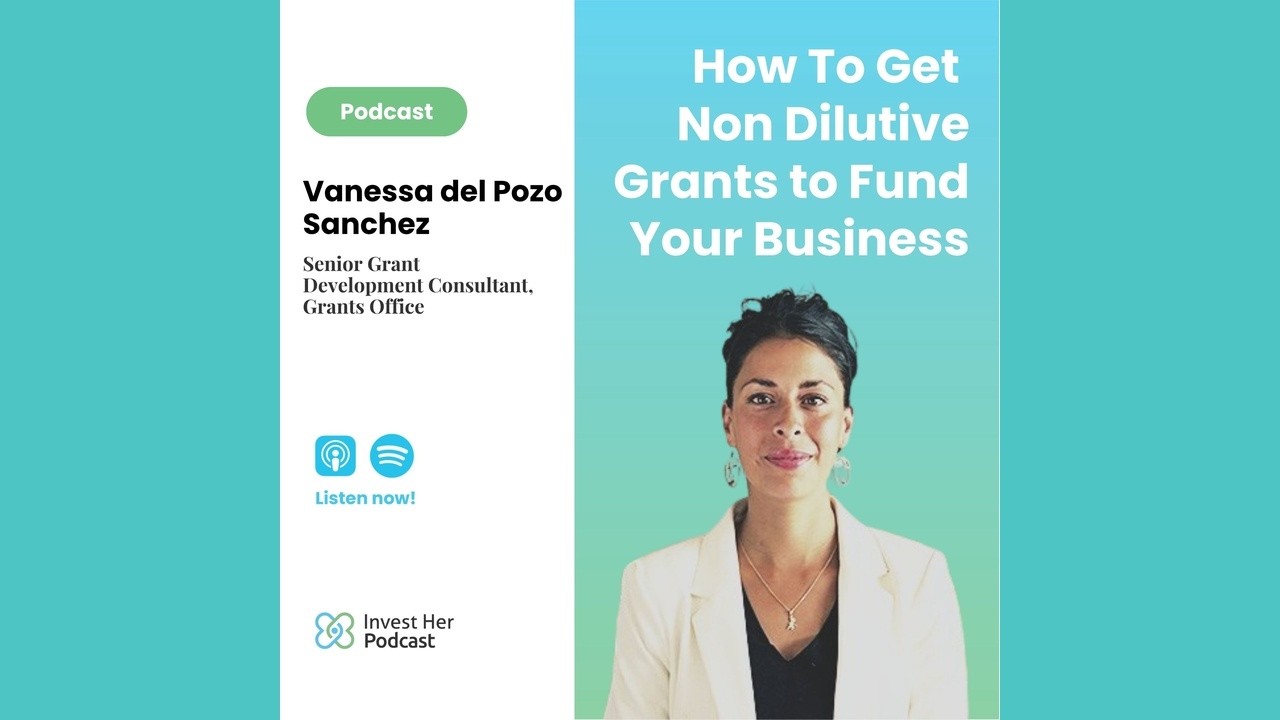
In this episode of the InvestHer Podcast, host Anne Ravanona interviews Vanessa Sanchez del Pozo, Senior Grants Development Consultant at the Grants Office and partner of Dell Technologies’ Dell Women Entrepreneur Network (DWIN). The conversation introduces the Grants Office’s 24‑year history, its global‑local structure (US, Canada, Europe, Australia, Latin America) and its role in matching entrepreneurs with public, competitive, direct‑allocation, in‑kind and tax‑related grant programmes. Vanessa explains the hierarchy of grant sources—from global and European programmes down to national, regional and municipal funds—and clarifies that grants fund projects, not finished products. She outlines the strategic steps founders should take before applying: define a clear project narrative, assess novelty, map partners, estimate a realistic budget, and consider where the work will be carried out. The episode walks through the grant‑application workflow, emphasizing thorough reading of calls, eligibility checks, realistic timelines (3 weeks for short calls, up to 6 months for complex ones), iterative drafting, peer review, and the importance of matching the funder’s criteria. Vanessa shares a comprehensive list of dos (research databases, subscribe to newsletters, allocate sufficient time, be concise, split large projects, seek partners, show passion) and don’ts (last‑minute submissions, assuming full funding, applying alone, ignoring eligibility, over‑questioning grant makers, using jargon or typos). She also discusses how to handle feedback and rejection, encouraging founders to request clarification and reuse polished drafts for future calls. The conversation highlights the special focus on women entrepreneurs, noting the growing pool of EU and global grants aimed at diverse founders, and provides practical resources: Google searches, national portals, the DWIN platform, and direct contact via Vanessa’s email (vsanchez@grantsoffice.com). The episode concludes with an uplifting call to action for founders, investors, and ecosystem players to leverage non‑dilutive funding as a strategic tool.
Chapters
Welcome, welcome to this latest episode of InvestHer Podcast. I'm Anne, your funding friend and host, and if this is your first time joining us, huge welcome, the doors are open. And if you are a regular listener, welcome back, delighted to have you here, and thank you for spending this time with us today. So if you've clicked on this episode, it's because you are curious, you want to learn how to get grants. to fund your business. Now, grants are a fantastic source of funding because they are non-dilutive, meaning you don't give up equity. So they definitely should be part of any entrepreneur's arsenal when looking for funding. So in this episode, you're going to learn about the Grants Office and how they can help you to find the right grants for your company. And also Vanessa Sanchez del Pozo, she's going to give you lots of practical key tips on how to be strategic when looking for grants, where, where to look for them, how to go about it, the key dos and don'ts. You're going to save so much time by listening to her advice. She's a total expert, so dive in. Now, at the time of the recording of this episode, Dell Women Entrepreneurs Network that is mentioned in this episode has now moved into Dell Technologies Dell for Startups. So we are sharing that link in the show notes. Anyway, this is a fantastic, fantastic episode. Dive in and really go for those grants. Enjoy. So welcome everybody to our latest episode of Investor Podcast. I am delighted to have with us today Vanessa del Pozo Sanchez, who is Senior Grants Development Consultant at the Grants Office in collaboration with Dell Technologies. Very, very good welcome to you, Vanessa. How are you?
Hello, Anne. Thank you so much for having me. I'm really good. I'm excited to be here and also share a little bit of like what we do and how then maybe like people Well, I'm delighted to have you with us because grants is a very important source of funding for any entrepreneur.
And specifically here, we want to kind of touch base on how it's important for women entrepreneurs. But before we get into that, I want to kind of touch base a little bit about you. Tell us a little bit about yourself and how did you be, you know, become a grants officer? How did you get into this field?
Well, I think that this is a really— everybody asks me that, like, hey, how did you be like— if they knew my background, I'm a neuroscientist. scientist. So then this is what I did before. So I continued in academia, but then after a while, I decided to branch out of academia. And exactly the type of research that I was doing, it was really, let's say, not something that you can bring to the market. So then I had to use other skills that I developed during my years in academia, that it was to apply for grants for myself and for my research. So this is also where it came out to then like that maybe the consultancy that I could do, I can benefit from also Learning new things, because then I will be more involved into like also like maybe the funding opportunities and look where the money is and then look for the budget of each country. So then that was something that it was new and nice for me to then learn. But still I use my analytical point of view and also the research skills that I developed during my years in academia. So this is how I end up. And to be honest, I'm really happy because also it felt like I wanted to do something that it could have an impact. immediately and not just like I was feeling that science is something that maybe I will see the results of my— yeah, or of what I did like in 20 years. Right. And in here for me, it's important like how I can support other things or how I can make stronger or really tell a story, a full story, but that I can see it after like a couple of years and not have to wait like 20 or 30 years.
I love it. I mean, how cool is that to go from being a neuroscientist doing like really important research and strong academic research into this new field. And I love how you talk about building on your transferable skills because that's a path that many people take. And as we know now in the 21st century, all of us were going to have to have different careers in the course of our career. And the children being born today, apparently the researchers say that they're going to have an average of 18 different types of jobs. And in those 18 different roles over the course of their career, they will also go dip their toe in and out of entrepreneurship. So that's why it's— it's— I just like to pull that link in because it's important. Because as you say, looking for grants is extremely important when you are in research, in pure research and science-based and tech-heavy, tech-based, um, fields. And it's also a very important source of funding for, for entrepreneurs basically around the world. So I think it's great that you bring it in. But I just love your background, and that's why I wanted people to hear it, because it's not a typical one and it's really cool. So I love that. And where are you from originally, Vanessa? Because that's Also very cool.
I'm originally from Mexico City, so I was born and raised in the big city, and now I'm based in the Netherlands. But if there's something that I miss, it's the chaos of the city and the food and the people and the weather. But still, we make it here in the Netherlands. I love it.
I hear you. So, okay, now let's kind of go a little bit deeper. I want us to learn a bit more about The Grants Office. So tell us about the Grants Office. When was it set up and why? Why did it— does it exist?
Yes. So this started like 24 years ago, Grants Office, and it started in the US with the idea of Michael Paddock, the CEO of Grants Office, and he was also a grant writer at some point. And then at some point he said, you know what, I'm going to then establish the office by myself. And they established in Rochester, New York, and this is how they start. for 20 years in the US and in some in Canada. But then little by little, they said like, it's time to expand. It's like time to also then to get to know how these funding opportunities work across the globe. And this is where also then they, they started in Europe. And this is where I joined the team. And to be honest, it has been really nice experience in terms of how different it can be, because even though that we are talking about public funds, it's always maybe different given the, the diversity of the countries. And even here in Europe, we see that Yes, even sometimes it's like the European Commission or like, or the member states that they are supposed to be regulated like closely. We still see a lot of difference between the funding opportunities in there. So it's really nice to then start learning. Grants Office, it's, it's a company that we say like local because it's really global. And then we have also like our offices in Australia. Now we are also branching out to Latin America, but because of the teams that we have a lot of communication also, we get to know everything locally speaking, but also we communicate across the globe to then maybe something when there are like opportunities from, let's say, the UK that are going to be used in Brazil or the other way around. So then this is also something really important for us to keep the communication. And this, I think, that is what it makes a success of our grants office.
Love it. And I think actually it's so interesting the way you describe how you are organized and how you work very much reflects the way that grants work. And we're going to dive deep into that because it's important. Like, I want us to help for the listeners, whether they're the founder or investors, VCs or other angels who also kind of want to brush up and say, oh yeah, you know, for the portfolio, the companies in my portfolio, I should kind of, kind of also get them to get some non-dilutive funding, which is also very useful. So I think that what you're saying is important for, for everybody to know that there are some specificities when it comes to grants, and we're going to break that down now in, in more detail. Um, tell us a little bit more about, like, what— first of all, what types of grants do you offer? Like, as you're talking about, there's global, there's national, regional, local. And I like the glocal approach because that's also from a strategy point of view, from the founders who are listening, they should be thinking glocal when it comes to grants and not just local. So can you maybe break down that kind of how grants work in general from a global to a local. And then I want us to come back and talk about the relationship that you have with Dell as well.
So in that case, for example, we see that there are like different levels, right, of like from where a grant is going to come, as you said, like global, then like more like, for example, also we talk about like a European level if we refer to Europe, then to a like national level, and then like super specific to a different state, a community, autonomous community, or even like at a city hall level, right? So in that case, there are different levels. And then there are like, let's say, like different type of public funds. So then we can see grants that is the money that you are— they are going to give it to you and you don't have to give it back. Then instead of like also part of the public fund is considered the loans that they give in these old cases. And also there are some tax exceptions that you are going to then be able to apply for. And in that case also, for example, when we refer to grants, then there are like 2 type of things. And one is when we are going to see that is a direct allocation, that is something that is going to be allocated to a country or to a specific entity. And then later they are going to redistribute or use that money that they have been granted. Or the other one are the competitive grants, right? Where you are like, as the word says, you are going to compete for that money against some other people that is also applying for it. In this case, what we see, and it's not the rule, but it's almost the case, is that there's a correlation between the complexity of the grant And how much money you are going to get, and also from like which entities giving it. We see that, for example, global or national grants, they are going to get more money, or the European ones, they are going to give you more money. But of course they are going to be more competitive because then you are going to be fighting with all around the world, like if it's a global one, or if it's a national one with all the country instead of like maybe with some other smaller groups. So then you get more money, but it's more competitive. So then the chances are lower, and also the time that you need to invest, it might be higher. Why? Because also the applications are going to be like more difficult, let's say, or then you will have to write an application that is going to be 40 pages instead of 10.
Yeah.
So then this is what it's important to mention. And then you see that usually when you go to more specific grant, at a state level or at a really, really small level, local level, you are going to see that there are going to be less money. The application is easier, but of course the money maybe is going to be less. So this is how usually what we see is not the rule all the time. But I think that what is also important for everyone to notice is that when they see about grants, and this is what I want to then address this, they think, ah, it's free money. So grants are not free money, right? Exactly what I'm saying in terms of the application process and the time that you are going to invest on that application is going to be reflected in the money that you are going to get, right? So this is usually how they work.
I think, and thank you for saying that upfront, France— sorry, grants are not free money because it's not free the time and, you know, the time and effort you need to put in. to applying for the grant, and then we'll talk afterwards about how grants are released and how you need to, you know, submit expense claims, etc., etc. We'll talk about that in a minute. It is— it's not free.
So you—
I think for the founders sometimes to say, yeah, it's great, let's go for all the grants, but you cannot underestimate the time and effort that's necessary. Again, depending on the grant level that you go for, as you say, whether it's local, state, or if you're talking about national, international, or global. So that's really clear. Tell us a little bit before we kind of go more into details here. Tell us about your partnership with Dell Technologies and specifically with DWIN, the Dell Women Entrepreneur Network. How is that? What is that partnership? And tell us a bit more.
Yes. So for example, Dell has 2 different types of initiatives for entrepreneurs, one that is Dell for Startups, and then what is focusing women entrepreneur network, right? And in that case, for example, we have been working on and off with Dell since like 9 years. They started in the US, and then since we started in Europe, it has been for 4 years. And in this case, what they are offering is that, for example, sometimes they have certain kind of challenges, and then the winners of the challenges, they have full access to our services. That is going to be that we are going to create a research report where we are going to track We are going to help them in the application process. We are going to be able to be the extra pair of eyes for their application and help them out all the way until they submit their application. But the good thing about this program of Duane is that it also has different type of programs that they have 3 different main themes that is like to connect, to inspire, and to transform. Right? So in this case, for example, Dwayne is not just about like us helping them out also to find the public funding available for them, but also in terms of Connect, they let them to get access to like a global community of women entrepreneurs, investors, and advisors that can be in person or online. So they do it through like mentor programs, events, or like Specific programs where you are going to get invited, right? Then the other part that is about inspire is that they are going to then be able to share their stories, and also you can learn from others, right? And in this state, in this case, you are going to be able to take advantage of the opportunities that are spotlight in global platforms. So then they have different kind of programs. That is, one is called Business We Love, another one that is Women in the Rise, and then also Member Voices. And then when we talk about transform, then they are going to then be able to give you tailored content and technology resources that are going to help you to accelerate your business and also, well, to help to reach its maximum potential. So that's where like the technology comes, let's say. But as you see, it's a really like full program where it's not just about like, hey, we are helping you with the tech solutions that you are, you might require, but also we are helping you to create a network, a network, and also get access to investors, um, or also then just to inspire some other people and like spread the voice of what you do and have access to Grants Office. That is what we do in terms of bringing the funding opportunities available for them.
Amazing. And so just so we clarify, so the Grants Office, do you only work with them for the kind of tech competitions and that specific for the winners and the scale-ups, or do you also work with some of the DWIN members who just want general information if they're looking for grants? How does it work?
So they can contact us in different ways. Like Dwayne has a specific platform where they literally can book somebody that is interested in like getting to know what kind of maybe grants will be available for them. They can book a half an hour meeting with us directly from the platform. And from there, we can have an inter— like a first meeting to understand what are their necessities, what type of project are they developing, and then for us then to then start looking for the grants that are available. Then on the side, it was this challenge where it was like the top winners, they also got some money from Dell in terms like to invest, like so Dell invested in them, but also then they had full access to our services. So it's always, we are always extra there to then help out, to then make it more attractive, the winner, the prize.
Absolutely. And I think that's a really That's a great prize for the, the DWIN members who actually win in those tech competitions, because, as you say, it takes a lot of time and effort to put in a really, really stellar grant application if you're going for the big money. And having you guys on, like, having you working with them side by side to identify the right grants, to help them through the application, to double-check everything before it goes in, is really priceless. So that's a really, really solid offering. And I think even What you said for the kind of lighter touch one, the 30-minute call and the first level of screening, that's super helpful for founders who are, who really don't know how to navigate the grant landscape. So I just think it's great for those of our listeners who are DWIN members who maybe didn't even realize these resources existed. I wanted to highlight that on our conversation as well today. Okay, so now let us go deeper into the process. Vanessa, when you work with a founder, so say you have, um, a tech founder, a very deep tech or a high, you know, a founder who is looking for grants, what would be the first things you would say to a founder before they even start looking for grants? What would be your key tips to them on what they need to do?
Well, I think that first of all, it would be like to have really clear that a grant is not going to support a product, it's going to support a project. So that they really need to then have it really clear what it— what they are doing. Secondly, and in this case, I'm going to say everybody comes with an idea and then they are going to think that is a unique idea. And I— it's not to discourage them. Yes, it can be. But have you studied what is outside already? Right? Because a lot of times what they are trying also to support is something that is unique, that is— that is— that has a lot of novelty, that maybe it has some innovation. And innovation, it means by like something that it breaks down like the The the system that is already there, right? So just think about what do you have. Get to know your like your your network. Get to know also what you are developing. See if there's somebody already working on that, and then what it makes it different, right? It's like that. Then secondly, well thirdly, I think that is like to always share it with the passion, but then also have your clear what you are doing, who you are going to be collaborating with. This is also really important. Take a look to I want to develop this. Which tools do I have? But also which tools I am missing? Do I need to partner up with somebody else? So those are the first questions that you need. And if so, with whom? Who's going to provide that? Let's think about it a little bit like that. So these will be the first steps before. Then little by little, it's always— it has come to me sometimes, people that is, you know what, I have an idea, but I'm not really clear about the idea. So then study your case. Bring me the idea that you really want to develop, and then later on we can help you out. It can happen, for example, that somebody says, like, you know what, I don't know what is more convenient for me, if I should establish in this country or in this country based on the maybe funding opportunity. That's okay. Like, that's a valid question to have.
Mm-hmm.
But you also have to think that it's not just about where you are going to get the funds, but where the project is going to then happen. Right. So I think that this is one of the major first points that I would suggest to everyone. Estimate a budget. This is also really important. I know that we— it's not necessarily that I want for you to break down already a budget, but have an estimation. So when—
When you're talking about budgets, what are you talking about? Is this for the grant application or in general? Just let's clarify that.
In general, because people sometimes come and they say, hey, I have this idea. And then when we even take— because it's even connected, because then sometimes when we take a look today, okay, but what, how much money you are looking for? I don't know. Then it can be, I am looking for €5,000, I'm looking for €2,000, or I'm looking for €1 million. So depending on that, it's also like the kind of funding opportunities that we later are going to look. But from the beginning, also, you have to have a clear statement. It can be that the grant is not going to cover all the expenses. And that's why also maybe you are looking for investors, but at the same time for a loan, and then at the same time for a grant. That's totally understandable. But that's why you need to have the big picture of, of how much you are going to be thinking, uh, like in terms of the budget.
I love it. And what, what's really important, I think, in what you said— I want to come back on what you said. You said be clear. The first thing you said, there's a lot around the clarity, but you, you, you gave us good nuances on that. The very first thing that you said is about that the grant is going to support a project, not a product. Now that is really important, that distinction. Can you tell us a little bit more how to help like an early-stage founder or someone who's like maybe a seed stage, so who's already started, has got an MVP, how to help them to realize, okay, because a lot of founders fall in love with their products and they're not seeing it in the context of a project. So can you help them get some clarity on that? What advice would you give to someone who's not really clear? What do you mean between a product and a project? Come on, I've built this super cool thing. What do you mean you don't want, you don't want my cool thing and I have to be thinking in a project basis?
Yes. So in that case, you have to think about the story that you want to tell, right? And so that's why it's like how you are going to create a project around that. You have to think about like, first of all, even like, why did this come out to you? Like, why did you start thinking about that you wanted to develop this? Who is going to benefit out of this? this. This is also something really important, like, to then, like, tell the story. I can tell you, you know what, this pen is amazing and this is what you need, but then you have to create a necessity. You have to create the story behind, I created this pen because, you know what, I'm, uh, I, I'm left and then I cannot write properly with that pen. So then I start thinking about all the lefties in this world that they needed maybe this pen. I mean, it's a really absurd example, but it just came to my mind. So then this is how you are going to create the story. You just have to think about the impact that it's going to have also in the communities. You have to think about like the reason why you did— you do it and who is going to benefit and justify it like that.
Brilliant. Okay, so imagine one important question that I wanted to, to, to ask you as well about the grants office. You mentioned each time that you're talking about public grants. Do you not have any information on foundations, on private foundations and the grants that they also provide? Just— I just wanted to clarify that because I To someone who's listening to say, she's talking about the big grants. What about the private foundations? There's loads of grants out there. Do you also share that information?
Yes. So to be honest, we also do that. I mean, we always try to focus on public funds, but then we also take a look to all the opportunities that are outside. So then you can find like banks or private foundations or corporate foundations, or even, for example, embassies. Embassies, sometimes they give also money to strengthen the relationship between 2 countries. So then if you are feasible, then we are also going to take a look. Depends on the kind of project. If we see that is, for example, more entrepreneurs, but in terms of cultural engagement or something like that, that's when we say, okay, let's try to take a look to also to the embassies that they are also providing grants. Then maybe you are going to be a good fit. So it's not that we just take a look to public funds. We also incorporate private, everything that is outside.
Lovely. Thank you for that clarification because it came to mind when you were describing your services earlier and I wanted to do that. Okay, so now the founder says, okay, I have developed the project around this, I know my budget, so I know that I need to develop the next stage of my product and the project, I need XYZ in budget. Now they come to you. What are the key dos and don'ts about what, let's say, starting to work With the grants office. Let's talk about that, working with you, and then the actual nitty-gritty of the grant process. But if before they come working with you, how are they gonna get the most out of that relationship?
That conversation. So to be honest, first, just is literally be kind. No, but no, but what is really important is that that for us, they come with a clear idea that also they are open to suggestions.
Yeah.
And it's not necessarily that they have to take it, but they are open to suggestions in terms of like, hey, you know what, I am seeing this project, but then maybe it doesn't seem that fundable just because of this little part. What if you switch this to then maybe like, maybe try to attract other type of people or like to benefit other groups? So this is one of the things that like just just come with an open mind in terms of that. Like, we cannot create grants or funds that are not there. We can just help you out then to shape then your project towards something that is more fundable.
Yeah.
So this is, this is the first thing that I will say, like, try to come with an open idea and be a good listener, and also to explain your, um, your, your project. In that case, also what I will say Really share what you all the things that you have to say. Uh huh. I know that sometimes people is really scared about sharing their ideas because they are going to think, oh, we haven't signed an NDA, so I'm not going to come out and spill all all the things that I have to say about my project. But in this case, we are just looking for something beneficial for them. So that will be also something that come. Bring us all the ideas that you have. Don't be afraid also asking questions. Don't be afraid of like, how do we work? And also how we could work with, with them. Those also another thing that we have, let's say, at grants office, that we always say yes. So that means that maybe this is going to be a new way to work with somebody else, but that doesn't mean that we, just because we haven't done it before, we are not going to do it.
Right.
So this is, I think, like the main things. Just then explain that your, your project. It's okay, for example, even if you say, you know what, I have this idea, but I still don't know how to develop it. Because there are even grants that are like more training programs that are going to help them out to then like to say, hey, I have an idea, but I don't even know what I have to do after me having that idea. So that's totally okay. And then we can help to find those grants that are going to be, I don't know, for example, 12 weeks. Weeks of training that is help them out to then like, hey, how you create a business? How do you start? How do you create a network? How do you create your marketing campaign? So all this is already something that is happening in the grants itself. So even if you say, I have an idea, I'm sorry, but I still don't know what else I need to do. I have done this research. Maybe there is a grant outside for you that is going to help you out through all that process. So it's not It's not even necessary that it's going to be with money, but it's in-kind grant, and that way they are going to provide you this training.
Oh, now that's a really interesting aspect because people, when they think of grants, they're automatically— and I would say people including me, Vanessa, you've just completely opened it in my mind— go, oh, the in-kind grants. Also, people like we, we can automatically think about that when, if you apply for an accelerator program and you're expecting there will be in-kind support. And yes, it's always nice to have the cherry on top if there's funding at the end of it, but you are expecting in-kind support. Super interesting that you're also saying there are grants that support you on the in-kind part. And I'm really glad that you're saying that you don't have to have it all figured out because there are feasibility grants. As you say, there's stuff for you to test the market, to do the market research and so on. What would you say to founders who are self-opting out because they say, oh my God, I need to have 5, 10 years of positive accounts. I need to always be making profit. I need to have it all figured out. Help. And I know I'm asking this question because a lot of women want to be perfect and they want to have the perfect file before even talking to you. So I want us to dispel those myths straight away. What, like, what would you say to someone who says, yeah, but I don't have, um, 5 years of absolute perfect line profits and I don't have this and that? What would you say to those founders?
I will say that even if you had Specifications, everything can change. So it's okay. I mean, I think that it's really good that you have already like you have tried to figure out certain kind of points. But even for example, when we think about like the grant application and the grant writing, you are going to start noticing that maybe you are lacking certain kind of things. And that's why it's really good that maybe like we always encourage the entrepreneurs to then write their own proposals and for us to help them out to then just shape it in a better way because that way they can also take a look to what they. are missing.
Yeah.
Right. So, and, or even like solve certain kind of issues thanks to that. Or maybe things that they never mentioned, like they never thought about that before. And maybe with the grant, it comes out that, oh, well, wait, I also need like the feasibility studies. Oh, I didn't think about that. Okay. So then let me take a look at how I'm going to do it. So it's okay if you don't have everything figured out. It's a process at the end also, right? Like that you are going to be learning where you are going to then be changing and you never know Oh, maybe one of these things that stop you or that you say like, hey, I didn't know that I had to do that, that is going to revolutionize your project even more.
Yeah.
Like amazing things can happen by learning from our mistakes, right?
Yeah. Yeah. I love, I love that. That's a super lesson. Yeah. So I think that's great. So for all of us listening and saying, okay, I'm self-opting out because this is something that women do. They say, well, I'm not good enough or I'm not ready enough. And so they won't even go and look and see what the opportunities are, or because they want everything to be perfect. But as you say, nothing will be perfect. And even if it is, the market could change, things could change, your customers could change, demand could change. And so that doesn't even mean that it's going to be successful, you know, even if you have that straight line so far.
Totally. I mean, I think it's good that you make informed decisions, no? And then everything that you're going to make has to be informed. But that's why also we were saying, like, there are certain kinds of strategies that are also going to help you out. To then get out of like these problems.
Okay, so let's, let's dive down into this. So what are the key dos and don'ts for a successful grant application? You've mentioned a couple of things, but let's do all the dos and the don'ts in whichever order you like, because I want, I want to download— this is the whole opportunity that I said we have super smart Vanessa who knows all of this information, and I This podcast is to be able to download all that amazing information in your head and that amazing advice and make it into actionable steps and key tips so that our listeners can actually take action. And so that even if they move forward 1 or 2 steps, that's going to move them in the right direction instead of staying stuck in their corner. And that's really what we want this podcast to help and say, hey, grants are an amazing opportunity and tool. You need to have a strategy. You need to have a plan. You need to know how to apply. how to do them. So tell us a bit more about your key tips on the dos and don'ts.
So to begin with, I will be— let's start like by where should I look at, right? So in that case, they can start looking for different, like every national, like depending on where you are, like all the countries, they have a national database, they have it like in a different way. So then just look for that database or even at your municipality, and then you start Like then subscribing to their newsletter. If you didn't find anything at that moment, then subscribe to the newsletter, then maybe to get some more information. So then this would be like just to start like searching, right? And then secondly, always take time. Do not rush the application. Let's say sometimes we see a perfect grant and it's like, oh my God, no, this feels like a perfect fit. But then you notice that you just have 1 week to write that application. I'm going to say, do not invest that time because you are going to waste it. A grant application needs some time. Firstly, you need to read— yeah.
Yeah, like, what would— sorry, I didn't mean to interrupt you, but it is like, on that time aspect, on average, like, how much time should you spend on a grant application? And granted, it probably depends on the complexity of the grant and the size of the grant and all of that stuff. stuff. So, but in general, so that people don't fall into, oh, it's the night before or a week before, even like people, some founders say, oh, it's a week before, I have all this information on my computer, I can just copy paste. So you're saying no, tell us a bit more.
Exactly. That's exactly what a lot of people think that like I already have because everybody has already written something about their, their idea, right? So then, then they say, okay, so then I have it. No, no, no. First, also because you need to then let the idea rest. Like, once that you have written the application, let's say, then you have to let it rest, then maybe come back next week and then take a look at it and then say, does this make sense? Am I really answering? It's like when you read, like, maybe your thesis from your bachelor, bachelor, you are going to notice that you were saying, what I was talking about? Why did I do such a bad job?
Yeah.
How did I even get my— got my degree? Yeah, so then this is also something you have to let rest, or either to have some other people to take a look at your application. So this is something that is going to take time more than just like write the application itself. Then secondly, also it happens like, so usually in times I will say like depending if it's a really short application, let's imagine that they are asking you to answer 10 questions briefly, then I would say okay, 3 weeks, it might sound like a good way depending on how fast and also how much time per day you are investing on it, right? And also how much you have had worked before on that. But just take it slow. Also, for example, all the grants, you are going to notice, like, if they tell you when they open and when it closes.
Yeah.
So if they are giving, let's say, the grant itself is just giving 3 weeks for you to apply, then that means that it's going to be an application that is or brief, and it's like simpler because then they are considering that everybody's going to have the same time.
Yeah.
If it's a grant that is open for 6 months, then that means that you will have to work really hard on that application, then let it rest again, then take a look at it, like, then maybe send it to somebody else to read it. And what it's really important to do the match with not just your project. Are you really answering their questions? Are you also fitting into what they are looking to fund? Are you justifying that? Because sometimes we are like so immersed into whatever we want to do and like our passion of what we are developing this project that we are no longer taking a look to the eligibility criteria or what the funder is looking for. Yes. So it's really important also to get out of your head.
That's so important because like in the past life, I responded to many RFPs and global tenders and international ones and won international tenders for big international organizations like the OECD and the Council of Europe. So I've been through this process many times in my past life. And I remember just what you said about the eligibility. Sometimes, like, honestly, we kind of look and say, oh no, I want that grant. And then you don't look at the proper eligibility. And when they have, when they have a criteria and they say, we want you to meet these 5 criteria, they say, oh, well, I meet 4 of them. So then it's okay. What would you say to someone who's looking at that? Because, you know, that's a dangerous slope, because they can get in this kind of blinkers, this blindside to say, I really want this grant, I need this money, so I'm going to apply even though I'm probably not exactly a right fit. So tell us a bit more about the eligibility criteria. That's so important.
Yes, I will say that in that case, it's much, much better to really like look for something that is more suitable for you rather than you see, oh, But there's a chance, or how you are going to then move everything around that grant, right, in terms of the eligibility criteria.
Yeah.
Just because then otherwise the problem is that for a lot of people, what it can cause is that you spend some time writing this application, then they just tell you no immediately, and you just get frustrated and you say, you know what, never again I'm going to apply for any grant because this doesn't work.
Yeah.
Right. So then in that case, yes, it's really important. I think that eligibility is one of the first It's like, for example, when you see the description of a job and then you say, I could do that, but it's not my strength, right? And then you can see another, another job and then you say, yes, yes, yes, yes, yes, tick on everything. This is the, maybe the feeling that you should have whenever you are seeing a grant and seeing if it's a good match for you.
Very good advice. Brilliant. Okay.
So in that case, yes. Yes. Okay. And another thing I think that is important when you are writing writing to be concise. So then what is really important, you need to understand that the grantmaker, for example, they don't know the deep understanding of what you are going to do, right? And especially if they are asking you to briefly describe your project, if you go really specific to, I'm going to develop this, this small thing, the reader, the grantmaker doesn't know all those things.
Yeah.
So then it's like when you tell a story, how you are going to tell that story, to simplify it, to be concise, to be clear, and then concrete in the strategies and how you are going to address all the issues that are like raised in the call. So this is what you need to really focus on. This would be like my other point in terms of the dos.
Yeah.
Then it's also totally understand that maybe your project will need to be split in 2, let's say, right? So then be okay, be aware of that. And also, even when you are looking for the grants, think about that. Okay, not all my project is going to be maybe awarded with a single grant. Is there a way where I can like break my project into 3 different parts?
Mm-hmm.
If so, then I'm going to look for the first part, maybe the feasibility studies, and then one that is more like ready to the market. Right? It's okay. That's totally okay. Also, I'm going to give you a tip in here. In certain countries, and also there's some European calls, they have round for the round, different rounds for the same grant.
Mm-hmm.
So what does that mean is that like every year they're going to get that the same grant. So then that it can already give you an idea. If you found it before, maybe next year is going to be there. So just wait, make the other one that is just for the feasibility study. And then when it's ready to the market, you already like have, uh, found the grant that is going to help you out. about for to send it like right to the market. So those are the kind of things that you should do instead of like trying to grab everything at the same time with no time, be super stressed, and then more frustrated if you don't get it.
And that's so important. Oh my gosh, that's such, such good advice, really. And I think particularly what you're saying also about the frustration, because if you're like not taking the right to see, do you match the proper criteria? You haven't thought about actually, am I applying at the right phase? Am I at the right phase of this? Maybe it's a good match, but I'm maybe not right for it now, but I could be next year. So this whole point of view of, of having a really concrete strategy is so important. So that's really, really good advice that you're saying. And then the next part, okay, tell us about dealing with feedback. And disappointment. So because that's so important, so that you don't get disgusted by the process, because you should go for this again, right? So how, how, what tips would you give to people who've been through it, who've been disappointed with feedback or haven't gotten feedback and say, oh, they don't even bloody well give me feedback, so I'm never going for that again. So how, what tips would you give to founders on managing themselves through the process?
So in that case, also, first, I'm just going to say, if they do not give you feedback, feedback, you are on your right to ask for feedback. So even if you don't get it, you can then just send a letter and say, hey, you know what, can you just clarify why I didn't score enough or like what happened? And that way you can use it. And that feedback is also going to help you out to see, as I said before, we learn from our mistakes, right?
Yeah.
So then that gives you a lot of like to change your vision and then just to be thinking, okay, it's not just maybe what I need to focus, it's just not about like the product that I'm developing, then maybe I just also take— I have to think about the context of how I'm going to use it. Or so this is like, it's valuable feedback that even you can apply it not just for that same grant, right? Because they are already giving you a perspective from a grant funder.
Yes.
So that's what also you need. So then don't let a no then stop you and say, okay, you know what, I'm never going to do it. And also the good thing is that most of the times, if you already developed the your first application, then it's just about like polish that application and shape it to the new call that it's going to have a different, like maybe scope. Yes. But then you already have something that you have written. So then maybe you are not going to invest the same amount of time the second time. You are also going to use the feedback, and then that increases your chances to get funded in for the, in the second time. Brilliant. Okay.
So what other tips then in the dos? So you've mentioned being clear that you're going for the right grant at the right time, that you meet the eligibility, that when you're writing, be concise, be clear, simplify, concrete statements, and be aware that maybe you need to split your project in 2 and manage yourself through the process by asking for feedback as well. What else are the dos that you should add?
Don't be afraid to partner up. So in that case, as I said, like sometimes while you are developing the project, you might see that, oh, I need some other tools. So then don't be afraid. The right thing is, of course, to find the right partner to work it, right, to do so, because then it's not just about like the grant application, is that you are going to be working with that person for a long time, right? Just get to know the other person also, like what kind of things that they can help you out with that, or also consider that you can subcontract maybe those services, right? So then study which case it works better for you, if it should be like a subcontract service or if you really need to partner up, and then it's something that is going to help you out more. Good. Okay.
And what else? So what else would be any other on the dos? And let me get into the don'ts. What are the absolute you should never do at a In the application and the feedback or whatever.
I will say that the last thing for, for do, try to then like the same passion that you have for what you're doing, put it on those words. The reader wants to really see like how do you describe your project with that passion because then they are saying, you know what, they are committed to whatever they are working on. So then probably also they are going to be committed all the way until the project finishes. So it's somebody that we can rely to give them the Yes, I love it.
Yeah, that's very important. I don't think people realize that because sometimes if they're trying to be too perfect in their, in the answer to a question, they remove some of the passion and say, oh, well, that's too emotional and so on. But you're— what you're saying is the opposite. No, you need to show that passion. You need to have really good, clear storytelling, but show the passion and the why to show your commitment and say you're in this for the long haul and you're not going to stop Just because you're going to come up against some challenges. That's really, really—
And I think that like, that's why also you became an entrepreneur, right? Like, because you really believe in what you are doing and then, hey, it's not— this solution is not ready outside, so I want to create it. And this is what you really need to share.
Yeah, I love that. Okay, brilliant. So now let's go down into the don't lands. These are please, please, please, Vanessa, you say, okay, whatever you do, do not do this.
This Well, I think that, like, I'll just repeat in the previous step, do not try to make a last-minute application. That will be a no for sure. Yeah. Also, do not, like, try to think that maybe the grant is going to cover all your expenses. This is also something that is really important to notice, especially the grants that are going to give you a different percentage of your eligible cost of your project, depending on the size and scope and everything, right? So in this case, for entrepreneurs, they are always supporting maybe with a bigger percentage compared to a medium business or even a small business, right? But just be aware that they are expecting for you to also invest on that project.
Yeah.
So you cannot come thinking they are going to give me 100% of what I'm asking for. And I'm like, and with that, I'm going to run run everything. They're expecting for you to also invest. So you cannot come with the idea that everything's going to come out from there. So please bring also some investment to it.
Really good advice.
That will be like, please do not think that everything is going to come from the grant. And what else do you— you are not supposed to do? For me, it would be a big don't, especially in the application, is like, don't do it Don't do it alone in terms of literally you need somebody to read it for you, to take a look to what you— it doesn't necessarily have to be like a consultancy firm or like a specialist. Even like you can give it to a friend and come and say, hey, can you read? Does it make sense?
Yeah.
Is there any comment? It could be whomever you want. Like, is it really like saying what I try to portray about my project? Hey, can you also take a look to the call and to see if this matches? So, and then you can ask that favor to anyone, but please, please do it. Don't do it alone.
Mm-hmm.
And then another one, another don't. We always try to focus more on the positive things. So that's why it's more difficult for me to think about the don'ts. But it would be, do not engage Like the similar thing that I said, like, if you need somebody as a partner, then look for that partner, or like to subcontract. But then do not engage with somebody that at the beginning you feel that there's not a match.
Hmm.
Just because you need it, or because you're in an urgent state of like, hey, I just need somebody right now because I have like 2 weeks to write this application. So it's okay, I'm just going to go and then join with somebody. this other person. No, no, no, no. If it's not a good match, just follow your instinct and say, no, I prefer to skip this grant rather than to then have to suffer with that person for a very long time if we create this partnership.
Yeah, very good.
Yeah, I would say also, well, don't be afraid to apply. Don't be afraid. You are always going to learn. It's nice. It's something that also with time you are going to develop, and this is also going to help you out to clarify a lot of things about your project. So don't be afraid. And also don't be afraid to then ask questions. It can be that the call, you read it 7 times, and still there are certain kind of things that are not clear for you. Don't be afraid to ask questions. So always contact the grantmaker. Like, they always have a contact point. So then everything that it needs to be done, then ask. Just be aware that it takes them like sometimes like 5 working days to answer to your question. So please take the time, but do not— like, you should not be afraid to ask questions.
That's really good. And then what about typos and jargon in your answers? Because like, what would you say to that?
I mean, this is a way to correlate with the detail, with attention to Right?
Yeah.
So this is what you want to make sure. Yeah, yeah, it's not major if you have like some typos. Yeah, if it's like maybe not totally correct, but just please make sure to take a look at that because this just talks about attention to detail, and it can be that one grantmaker is reading it, and just because of that it says, you know what, wait. If they didn't have time to then recheck this, then Yeah, absolutely. So it's like how they extrapolate that, the interpretation of you having typos and not caring about that into like, hey, like, is this a person reliable to do so?
And I think just coming circling back to your, to your point about asking questions, it was really good advice you gave about be aware that, you know, it takes at least 5 working days For people to be able to get back to you, allow a minimum. And you're right, a minimum, because the thing is, when you're writing that tender or when you're writing that response, you really want the answer now because you want to close it, you want to finish it, but you're not on the same timescale as those people. So what would you say to people who tend to harass the grantmaker? Because that's not good either. If you're asking, bombarding them with 50 million questions every single day and say, why haven't you responded? you written back to me? I need an answer now. That is a big no-no too, isn't it?
Definitely. So what I would suggest in this case is that please make sure that you have all— even it's a benefit, it's also beneficial for you, because if it's going to take at least 5 days for them to answer, you don't want to then give another question and then for them ask for like wait another 5 days. So then collect all the questions that you have and send them. It can be that you have Like 25 questions. That's totally okay.
Yeah.
And then they are going to answer to all those 25, but then that means that also you already collect all your ideas, then you put it in there, and then you send it over, right? Yeah. It's okay that something after that they answer to those questions is not clear. Yeah. And then you, you answer with one more thing, but not to bombard them like, because also even at some point you are not going to get any answers.
No.
Yes, just make sure that you collect all of them all at the same time. You send it, and it's okay to reciprocate on that, but then that should be all that you need to ask. Brilliant.
Okay, so coming down to kind of closing off our conversation here, what specific advice would you give to any women entrepreneurs who are looking for funding and specifically looking for grants? Anything specific to women entrepreneurs you would say?
So I am just going to say that at the moment it's really important. Like, I just have to say that outside there's a lot of funding nowadays for women entrepreneurs.
Why?
Because the European Commission, they noticed that the only way that we can, at least in Europe, for example, how we can really fight against United States and China, that they have much more startups or more unicorn startups. The only way is like to support minorities and support the diversity of projects and empower women, because they have seen that indeed, the results are much, much better when you do this. So I just going to say there's a lot of grants outside for women entrepreneurs in all the flavors, in all the sectors, in like, so whatever you really want to, then just be aware that there's a solution for you. There's a grant outside for you, and you should not be afraid of doing it. Let's use that to empower ourselves, like, right? Like, as women, we were not allowed to enter to these markets for a really long time. So now we should take the opportunities that we have when we are seeing funding opportunities.
I love it.
So just don't be afraid.
I love it. And I think for those who are maybe in a non-EU context as well, that also sounds like there are more grants for diverse founders, there are more grants for specific sectors. So you need to know what's out there and just kind of go for it. I love that. Um, what other favorite resources would you have for women entrepreneurs looking for funding? Where else should they be looking?
Where else they should be looking? So as I said, like literally national and, and regional funds, there's a lot. So even they can just start by Googling, hey, um, grants, uh, If they are, for example, in Spain, guys in Spain for women entrepreneurs, and then they are going to start like filtering it. They are going to be able to find. They also have to know that not just because they are in Spain, they are going to deserve to have a prize from Spain, right? So they can also get from Europe. They can also get even from Germany. They can get from Australia. They can get from the US. So it's more about like what kind of project you are developing that is going to help us. Right? You can even be in the, uh, like, um, you can even own a restaurant, and that would be even fundable depending on like who are you, what is your background, and what is also, for example, that maybe restaurant is creating to the community.
Yeah.
So it could be really diverse, literally.
I love it.
It's just about like where, where to look. I would say like just either they can also contact us like using the Dwayne platform. But then otherwise, they can look for the resources, just start Googling, think about how they describe themselves, what they are like doing, and then start like the Google search by that. And as I say, like maybe just join to the newsletter if they do not find at that moment the correct grant for them. And even they can see, oh, this was in '22. Just connect to that newsletter and you are going to find that maybe some other Opportunities are going to come later.
I love it. And I think it's super important what you just said, because sometimes entrepreneurs think that there's only grants in certain sectors or certain stages. But you're saying no, all sectors. You need to really have an open mind. It goes back to your earlier point— have an open mind and really, like, do your homework and use partners to do the homework with you. But, and have an open mind, like, there's more out there than you know. So you need to look, but give yourself time so that can be answering within the timeframe that's necessary. So what is the best way to contact the Grants Office and the Dell Grants Office so that we can share that in the, in the show notes?
Okay, so if you want, you can contact me directly. So then my email is vsanchez@grantsoffice.com. Yeah, and like that also you can communicate directly with the Dwayne program. Because also you are going to see my profile in there, that for the women entrepreneurs.
Yep.
And then they can even already, like, with the signature link, they can already, like, get a half an hour meeting with me directly, and then we can get to discuss how we can support them and what is the kind of project they are developing.
Amazing. Any last message to our listeners, Vanessa? Now, if you were, if you were sitting here on the stage And you said, this is the last parting message I want to give to your audience and people are listening, what would it be?
I will say that do not be afraid of applying for grants. Do not be afraid to fall also, like not to get it, but then just learn from that. And I am sure, like also something that I have been seeing a lot is like when it's about women entrepreneurs, we create projects that are more related to how we can help help others, right? Like, we really believe in, like, how to make the world better.
Yes.
I feel that, I mean, it's not that I want to make it a gender thing, but I have seen, like, more, like, men topics that is just about, like, I want to get rich now, or I want to then create something like Facebook that is, like, your social media. And when I talk about women, they are just, like, about, like, hey, let's talk about education. Let's talk about health. Let's talk about robotics. And I just feel like, you know what? is exactly what is fundable.
Yes.
Right. And then that's the money outside. You just— they got the idea. We have been so resilient as a society that we have had like to build up ourselves all the time that I'm sure that whatever they are running is fundable. And also they want to— they can make it.
I love it.
Yay!
Such an uplifting message. Thank you so much, Vanessa. It has been such a joy to have you with I know that everybody can hear the depth of your experience and expertise. Thank you for sharing those really practical key tips on strategies before going for grants, when you're looking for grants, going through the process, your key dos and don'ts, and other resources. You've been extremely broad and really helpful in all of your key tips. Thank you for being with us today, and we're really excited to be sharing this. So if you are listening, Make sure you share this episode with other entrepreneurs. Even if you are a venture capitalist, an angel, or investing in a startup, you want to share this episode so they can learn about other sources of funding that are non-dilutive, that could be very useful on their funding journey for the next phases. And if you're a founder, share this episode with other founders who need to know about it. Thank you so much for being with us today, Vanessa. It's been an absolute joy.
Thank you, Anne. It has been lovely. So it's always a pleasure to talk to you and to see you. And thank you for everybody listening. So then if you have any questions, just contact us and I am really happy to then support and then grow this, empower more women. I love it.
Thank you so much.
More from Anne



🎙️ EP69: Get Off the Fence: Renate Crollini's Startup Blueprint | InvestHer Podcast

🎙️ EP68: Radical Truth: Robert Rubinstein Exposes the Impact Investing Illusion | InvestHer Podcast



🎙️ EP66: Global Sisterhood — Carine de Meyere on Trade Missions | InvestHer Podcast



🎙️ EP65: Capital With a Conscience: Pierre Norman Rolin on Investing in Women… | InvestHer Podcast

🎙️ EP64: Dream Bigger: Nikki Barua on Building an AI-Native Company Without… | InvestHer Podcast