How to Decode Men & Attract Male Investors in the Pitch
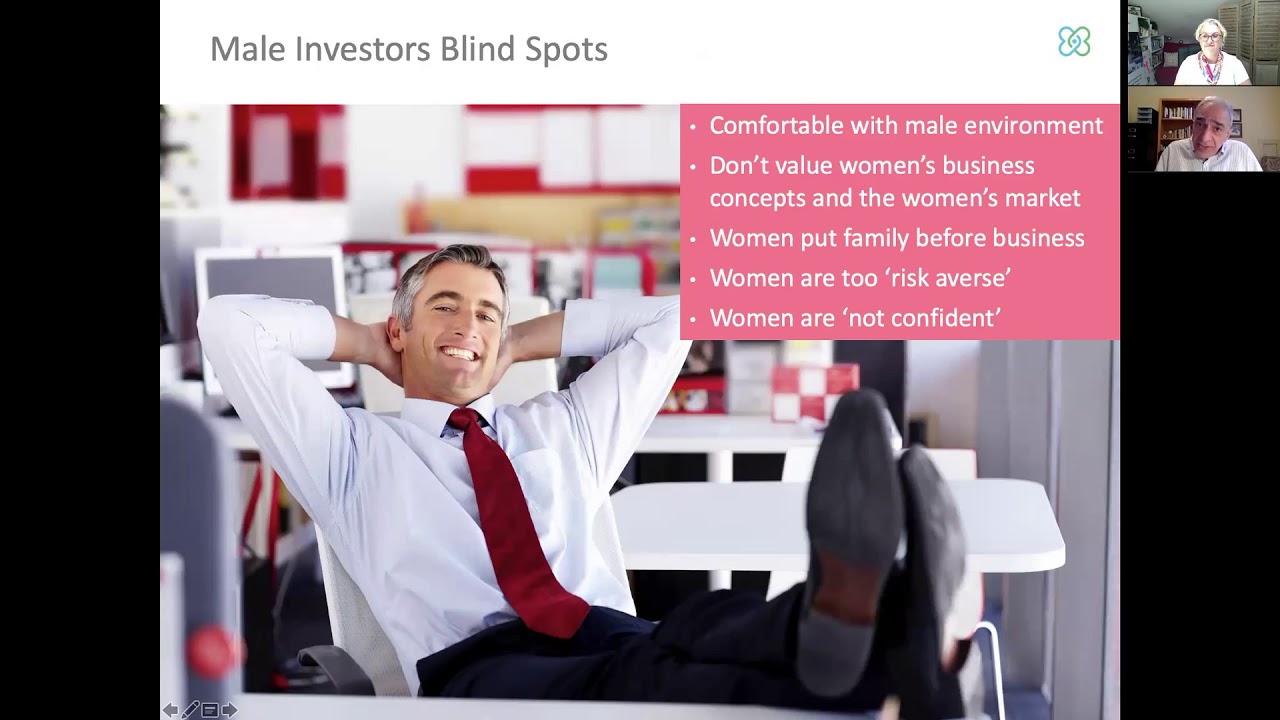
In this live webinar, Anne Ravanona (Founder & CEO of Global InvestHer) and gender‑relations expert John Fayyad guide women entrepreneurs on how to understand male investors and adapt their pitches to secure funding. The session begins with introductions and a statement of purpose: to share "insider secrets" that decode how men think and reveal unconscious biases that affect investment decisions. The presenters explain that gender differences are rooted in both biology (neuroscience findings on brain structure, hemispheric connectivity, and limbic system) and cultural influences, emphasizing tendencies rather than stereotypes. They outline common male investor blind spots—comfort with a male‑dominated business environment, focus on risk over potential, limited eye contact, and preference for concise, convergent thinking. Correspondingly, they identify female pitch pitfalls such as over‑sharing, modest funding asks, indirect language, and voice inflection that can be misread as uncertainty. Practical strategies are offered: reframe content to highlight potential, tighten narratives for the 10‑minute pitch, adjust body language (balanced eye contact, confident tone), and manage Q&A by avoiding over‑explanation. Throughout, audience interaction via chat is encouraged, with participants sharing experiences that illustrate the discussed dynamics. The webinar culminates in a detailed promotion of the "Own the Moment" online course on the InvestHer Academy, describing its six modules, worksheets, short videos, additional resources, a private Facebook community, live Zoom support, pricing (€497/ $497) and a 20 % discount code. A future course aimed at male investors is announced. The overall message is that understanding gender‑based communication patterns and applying targeted pitch techniques can help women entrepreneurs overcome bias and secure investment.
Chapters
So, welcome everybody. Good morning, good afternoon, from wherever you are calling in from. We're delighted to have you live with us today. So, this is gonna be an exciting session because we're here to give you some insider secrets into how to decode men and how to attract the attention, attention of male investors when you are pitching to them. And I'm It's going to be an exciting session today. I would like it to be as interactive as possible, so if you have questions, please shoot them into the chat box so that we can answer them. We'd love to hear from you. So, I'd like to move on to explain who we are, who we are today, and what we're going to talk about. So, John, would you like to introduce yourself to everybody here?
Certainly. Hello, everyone. My name is John Fayyad, and I do a lot of work in gender relations. Written a number of books, collaborated on a number of books, and conduct— facilitate gender relations workshops around the globe. And that sort of led me to meeting Anne and seeing how we can focus that into this world of funding, because there is definitely an imbalance that we'll share during the course of this session and ways to resolve that. Thanks, Anne.
Thank you.
Thanks, John. So I'm Anne Ravanona. I'm founder and CEO of Global InvestHer, and we are a global platform and a community to help close the funding gap for women entrepreneurs. We want to help demystify the whole funding process so that you can learn how to get funded faster and get back to your business. And we do that through several ways, notably through our InvestHer Academy, which is an online academy of courses and masterclasses. We have some webinars, and we do have some face-to-face events in certain cities. So, I'm an absolute passionate women's advocate. I have your backs, as John does. We really do believe that we can make a difference and get more women to be able to ask for what they need for in the pitch, and to understand a bit better how men think, and how those gender differences show up in the pitch. And that's what we're going to be doing today. So why are we sharing this? We want this knowledge— like, John and I, we're the guardians of a secret, aren't we, John?
Yes.
It's as if we are. We really want this knowledge to get out to the world because we want more women entrepreneurs to get funded, and we want more male investors to see and hear those women entrepreneurs in a different light, to take away some of those shields of biases that are mainly unconscious, and, you know, To help give— we want to give the secret sauce, don't we, John, to help women entrepreneurs navigate that pitch situation when it comes to looking for funding?
Absolutely, Anne. This is unique information. I mean, we tend to approach this from the same perspective year on year, but there is a difference here. A lot of it's driven by understanding the nature of our differences, not just cultural influence, and that gives us, I think, a deepened perspective. It dimensionalizes the way we see this. So you're absolutely right, Anne.
Exactly. And so what we want to do is make sure that we will answer your questions as we go through this presentation. And it really is— we want to make sure that you ask them as much as you can. Send them in the chat box or in the comments box, and we will get to them. So please do feel free, whether you're on Zoom or whether you're on Facebook, feel free to ask your questions to John and I because we're going to get to them. And basically what we want to do today is to give you some insights, some sneak preview into what is inside the Own the Moment course that we have made available to you on the Investor Academy. Now, John and I, we've— John, we've been working on this for a couple of years, honing it and, and, you know, making it even more pertinent to the— to women entrepreneurs, especially after the MeToo situation. And I wanted to give you a piece of feedback, John, because last night I was at a women entrepreneurs event in Paris at the Family Accelerator, and there was Emily Bellette, who was one of the very first women to go through the Own the Moment course with us, John, many years back. And she said to me, Anne, I remember that course very, very well. She says, I was pregnant with my first child, and I remember asking John some questions as to how could I handle that in the pitch.
I don't know if you remember.
I remember. Yeah, and so she was there last night and she was like, you know what, John's answers and the whole webinar, like the webinar that it was a format at that point, it gave me so much more confidence. It really did make a difference to me when I was going into those meetings afterwards. And that just warmed my heart and I wanted to tell you that straight away, John, and tell everybody because that's, that's the joy of what we can help you to do. So So what we're going to do is we're going to walk you through some of the things that we share on this course. So we're going to give you some of those golden nuggets today and answer some of your questions, just to start to, to show you how powerful this knowledge is and how powerful, you know, what you can do with the knowledge. It'll help you to understand men in your daily lives as well, won't it, John?
Absolutely. Oh yes, it's not just I mean, we are the same person whether we're at work or in our personal life. So no question about it. Good point, Anne.
Yeah, so I want to make that clear to everybody. And so we're going to go into how can you decode how men think, because I think, come on, everybody, let's face it, we all kind of know that men and women, we think differently. We know that, but we don't understand the subtlety of those differences and where they come from. And that's where John and I, we want to share some of those differences with you today and You'll notice that we've been very careful in how we've built this course and how we share this information with you. When it's talking about gender differences, John is the absolute expert on it, and he's going to share you some insights from neuroscience, some cool stuff you wouldn't have heard before. And when it comes to, like, talking about insights from the male perspective, you get that from John. And when it talks to getting— when we talk about getting insights from the female perspective, you get that from me. So we really make it as complementary as possible. So let's, let's go in here.
So what would you—
what will you learn if you join us on this course? This is what you're going to learn. We're going to give, give you some tidbits today. Um, you're going to learn that there are differences in the pitch, okay? And they do— those gender differences do exist.
It's not all in your head.
Sure it isn't, John, because that was one of the key things we wanted to really share.
Right, that it's not in your head. Absolutely. There are, and you're right about our perspectives, Anne, my bringing the male and you're the female. Something to also point out though is that we speak of tendencies, but these tendencies are so important because it's the predominant tendencies that really that we can learn the most from. So there are patterns of behavior, and that's what we'll be sharing today, exposing some of those patterns and where they source from, and then how to work with it really. How to frame your conversation and your presentation of yourself so that you're best understood and you, you get what you want, really.
Exactly. And the key word there, John, that you've used is tendency. It's not stereotype. It's not the same. How would you define the difference between tendencies and stereotypes so we get that clear from the beginning?
It's an acknowledgement that not everyone behaves one way or the other. But there are patterns of behavior. And if those patterns are observed frequently, almost consistently, and you— and, and what makes it also non-stereotypic is because we get to the heart of, or the nature of our differences. And it's not just to say that it's only nature. We're also influenced by culture, by family upbringing, even by birth order.
Hmm.
So all of this is taken into account, and we see these patterns over the decades. Over the generations. So I think it's understanding it better, Anne, that makes it, uh, people more, um, uh, aware of their situation. Uh, I call it active consciousness, and, and that's what makes the difference for people.
Yeah, and I think it's super important because we don't want to get caught up in this nurture versus nature debate because that's not what we're here about. We're here to give you some really practical insights to understand those tendencies and where the gender differences come from and show up in the pitch situation. So that you can then use that knowledge to better prepare for your pitch, both before, during, and after the pitch. And so what you learn, if you come on this journey with John and myself, is you— we will first take you through what is the world of funding today, what does it mean for women entrepreneurs, so that you can understand where you're putting your foot, you know, into what ocean you're standing. And then, John, you take us through what is it then we do next?
Well, then we go through the, uh, uh, the male, uh, male and female, uh, biases and blind spots. And as you said at the onset of this, uh, uh, webinar, uh, a lot of them are unconscious. A lot of our behavior is. We don't realize what we do. We do it out of pattern. So we'll go into that, and then we'll go into the science of it, um, and, uh, just enough to give you an under— an idea of And you'll probably notice a lot of it in your lives as well. That's something I've realized, Anne, all over the world when I've presented the science of gender differences. People sit forward in their seats. They come up to me afterwards and say, I never knew this. In fact, for many, it's cathartic because they realize, for instance, women are constantly thinking, constantly active.
Right.
In a sense, and that's, uh, it's a very natural thing. So we get into that, we get into the science then, and then what, Anne?
So, and then we help you to understand what are your own biases and blind spots, because we look at the science, we look at the biases and blind spots of the male investors. It's important to understand what we have as female entrepreneurs. What are those glasses that we wear ourselves? And then what we do is we wrap it all up together for you in a very clear way, um, you know, practically, with lots of practical tips as to how you, how you can adapt your content, your delivery style when you're in the pitch situation, how you can prepare before, during, and afterwards in the relationship building with male investors with this new knowledge. So this is the package that we want to share with you, which is like Really gold dust, isn't it, John?
I think so. I'm so tempted to start sharing some of those tips and observations, but I don't want to get ahead of us.
We're going into it now. So will you kind of walk us through— we thought it'd be interesting to give you some little sneak peeks and some tidbits as to what you can learn. So the first part we're going to go on to is the biases of male investors, and I'm going to invite John to kind of walk us through what are these key blind spots that we have identified and that are actually generally identified across the world that male investors have?
Yeah, I guess the first is that men are comfortable in this environment. Uh, men are comfortable in the business environment. We think about it, go back to the Industrial Revolution, um, the male business— the business world today is very influenced, and still very much so, by men. It's almost like wallpaper, and we've all defaulted to it. It's not that it hasn't been successful, but there's so many definitions of success today. So men are comfortable in this environment because it's basically built around them. They don't value women's business concepts and the women's market. They don't understand it all that well.
Hmm.
Yet when you look at the success of women's businesses, it's just amazing. It's almost as if they're really missing something here because all the data shows that women-owned businesses are very successful, in many ways far more successful than men's, even in terms of the return on investment for investors. Women— and another is that women put family first. Women are able to multi-think, actually, because of brain structure, a little better than men can. So women can do both. It's difficult for men to see that sometimes, that women can have these— can juggle 2 worlds. at once. They don't understand that. It's important for them to. And it's not that women are risk-averse. Women do take less risk than men, but women tend to be more risk-calculating. That's very different from being averse to risk. And also, there's something else I just— I've been thinking about recently, Anne, and done some research on this. The risk— the definition of risk is different. The kinds of risk that men take— women take risks But it's not part of that general definition of what risk is. And then this point about women are not confident. A lot of this is in how women show up to pitch. Um, it could be tone of voice, their delivery. Uh, they don't boast or brag as often as men do. They may see it as deceitful, but men see it as self-belief.
Um.
Um, very interesting dynamics there. Women are confident, but they don't express that or frame it in a way to show their confidence.
Or they don't express it in the way that male— that men are used to seeing it, so they don't read it as confidence. And I think that's a really, really important difference, you know, because we know that there are lots of— now the research shows that women get different questions in the pitch than men, you know, and they will get— women will get questions that are around Okay, how can you manage the operations? They're around the problems, if you will, versus male entrepreneurs will get questions around the potential. And that's something you talk about a lot on our course. Talk to your potential.
That's a huge difference. Men do get questions on potential. Women tend to get questions on, well, you know, this seems to be risky, or uncertainty, or how do you offset these challenges? It's not from where would the growth be. Those are— and those are— now you talk about stereotyping, that's stereotyping.
Exactly, exactly. And that's why it's super important for us to identify, you know, what are these key biases that, that male investors have. Because once we know them, once you have that knowledge, then, then you can work with it and get around it. And, and that's where, you know, now that this knowledge has come out about this research, Now people are saying, okay, so you just need to go in and talk to your potentials, but how do you do that? And that's something that we share on this course, don't we, John?
We do. And something to add to this, this is not male bashing. No, we don't do— the way men think and the way women think are both brilliant. We think differently. Now the guy sitting there looks awfully relaxed, and it's not to say that all men are that comfortable in the working environment. It just seems to, you know, we have fun with photos.
We have fun with photos because the photos tell a thousand words, and that is kind of how the men are comfortable in their male world of business. So we also talk about in this course, you know, what are our women entrepreneurs' blind spots? And I think the first one that's really important, and you can see here in the photo, if you look at her, she's kind of looking over her shoulder and she's kind of The guys are in the background, and she feels excluded. And she feels— and often women feel that men intentionally exclude us. And honestly, it's not intentional. With the insights that you learn from the neuroscience from John— and we're going to give you some of those now in the next section— when we get those— sorry, when we get those questions, it's— It's not intentional. You know, the thing is that women tend to think that they exclude us, and it's just not the case. A lot of it is based on unconscious bias, and we are misreading the same way that men will— you know, the male investors can misread us in the pitch through our body language and our tone, the same way we misread them. And that's how we share some of our tips on that in the course. So, for example, One of the things that John mentioned is that we are, you know, women don't like to brag. And in the pitch situation, you're there to sell an opportunity to invest in your company. So you've got to be showing the big vision, how big is the opportunity, and how is that investor going to make their money back. That's what they want to hear. And yet, what we often see women entrepreneurs do is very professionally present, here are the milestones, here's what we've hit. So they'll talk about past milestones. And they won't claim their expertise. So if they have, you know, fantastic intellectual baggage, lots of degrees, or a lot of experience and stuff, they won't talk about it. They just move on to talk about the team and what's happened versus, you know, making a big deal out of it. And that's what the guys would tend to do. Like, we show in the course, we have a photo with the guy with the megaphone, don't we, John?
We do. You know, just an example of unintentionalness is men don't maintain eye contact as long or as often as women do.
Hmm.
And that's not a learned behavior. That's something we see all over the world. So if she's saying he's not looking at me while I'm talking or he's not maintaining eye contact, she thinks that's intentional when he's not thinking that way at all. So that's an example of an unintentionality that is often misread. by women. Now there's a lot of things, so many things that men misread about women, but this is one of the things that women misread about men.
Absolutely. And I think it's a key thing, and I've noticed it even now. Um, you know, I notice it a lot more in meetings and speaking with investors and with women entrepreneurs, just noticing who's talking, and that the women, we want to, we want that eye, and we need that eye contact to feel that there's, we're building a relationship. And that's also one of the things that we share in, in, in the course. And one of the other key things that I've seen around the world, John, is that, you know, women, we don't ask for enough money. So this again is about talking to our potential. It's around not claiming the space that we need to claim. And so we, you know, what I often see are women entrepreneurs asking for $500,000 or euros or whatever it tends to be, whereas the guy is asking for $1.5 million, right? And so that can harm women entrepreneurs because you know, we can spend all this time and energy to raise the $500 million, and it's the same amount of time and energy you'd need to get that $1.5 million. So you might as well get the million. And the problem is you're going to give up some of your equity and go through another round, go through all that stress again sooner, because you won't have enough money. So that's one of the things that we notice a lot that comes through, that women don't ask for enough money. And again, it's through, you know, Self-belief. Oh, I couldn't ask for that, you know, and these are the things that we need to understand. Where does it come from? And one of the things that you share as well, John, is how, you know, women can doubt ourselves, and you explain that, and I can't wait till you're going to tell us a bit more about that, where that comes from. And we can tend to overshare our weaknesses. So we say, oh, well, we did this and we tried that, and, you know, it didn't work this well. So the woman may go overshare. And give too many different details. And we explain why, uh, in the course, why that happens.
But it hurts her in the pitch situation because it can come across— how can that come across to, to a male investor, John, if she's oversharing?
Well, yeah, because they don't see men doing this, uh, and, uh, and that's what they're basing everything on. So that's like the standard. So she's, she's not behaving as I typically see. What, what we share in our, in our, in our course here is something that men tend to do even as boys. We develop a tunnel to our intentions and we put obstacles and doubts outside that tunnel. And the greater the stress, the thicker the tunnel walls in a sense.
Hmm.
So we don't share. We make mistakes, but we— it rolls off our shoulders. We try to forget that sometimes to our detriment because we repeat the same mistakes. But, but this is— women tend to be honest about that. They want to be forthcoming in all ways, and you still can be, but you have to recognize what the male investor's expectation is based on patterns of behavior that he has seen in many other male entrepreneurs. So that's where you want to frame— we'll get into the framing of conversations and such, Anne, but that's a big one.
Yes.
I think it's beautiful that women are honest that way. But maybe in the pitch environment, um, it may not be as productive for you as possible.
And again, it's not about being dishonest in the pitch. It's just about don't talk about those things that don't need to be talked about at that moment. I mean, those are things you can talk during due diligence and other times of the negotiation phase. Just keep it— put that tunnel around yourself. And that's something that we're gonna— we'll talk about. And the last, I would say, the last blind spot for us women is that we find it hard to ask from our networks. You know, how many of you ladies who are here on this with us would you say that's true? If you should say that's true, please say hi or say yes in the chat box because I think that is really true. It's so hard for us to ask for what we need and we need to build that relationship. So we say that like we are— we can be more relational than men who are more transactional. Isn't that right, John?
That's absolutely right. And women, all the women I know, have always— have all known that they tend to give before asking for themselves first.
Yeah.
It's just, it's a— is it a nurturing thing? Possibly. There's nothing wrong with that. I think it's a beautiful thing, but women would rather give than ask. And the thing is, yeah, so it's something— another dynamic here though, quickly, is that Women tend to negotiate for others better than they do for themselves. That's something maybe to establish that frame of reference that in doing so, in negotiating and asking for and tapping on my networks, I'm really helping my team.
Exactly.
Or the people who buy this product or service from me.
Exactly. And I'm asking for the money I need, the resources I need to bring the solution that we have to the problem, and that's going to serve all those people who have the problem. So when we reframe it and Take the stress off, I need to raise money. No, no, no. Reframe it and say, I need to get the resources that I deserve and that I need in order to serve those people. So now let's get into the heart of the matter. John, can you kind of walk us through some of these gender differences and, and where they come from? I'm going to show the slide with the different brain sections, but I think it'd be just great if you just give us an overview of where some of these gender differences come from.
Okay. So, you're sharing the next— oh, there we are. There we go. So, there are several areas of the brain that show the most significant difference, and there have been over— and these studies have gone really since the 1990s. Technology has enabled us to peer deeper into the human brain and to watch blood flow. So, MRI scans, magnetic resonance imaging, is really advanced neuroscience. So when you look at the major areas of the brain— context, problem-solving, decision-making— that's the newest part of the brain over the past couple of million years, the neocortex. And for instance, the prefrontal cortex is twice as large in females by the age of 13. But this is like the executive center of the brain, and there we see some significant differences between how men and women rationalize, their critical thinking skills. In all of this, folks, there is no— one way is not better than the other. The way we think is brilliant, each of us, males and females. It's just that we need this counterpoint in a sense to— if we didn't have it, we wouldn't be where we are after 6 million years.
Hmm.
The other is thought connections. Women's hemispheres, for instance, the right and left hemisphere is better connected. Through an area called the corpus callosum that enables women to be both logical and emotional at the same time. Men have a difficult time with emotion. They say this all over the world. I don't know how to handle emotion. And sometimes they'll pull back feedback for fear of an emotional response. But there are ways that men can deal with emotion, and we help men with that as well in working with it. But Women's perception is also far more attuned. And this goes— it does go back to prehistory, to deep history around the cave or in the field. For instance, men are 17 times more likely to be colorblind than women. That's still with us from our days of hunting, because you can distinguish movement in the field better without having to work with so many colors and hues. Now, here's something else: emotions, deep memory, and drive. That's in the center of the brain, the limbic system, and that's been with us for the longest time. And so women have better memory. It's proven from the age of 33 to the age of 95, even during the fog of menopause, women have superior memory to men, far more detailed.
Hmm.
Now, all of this is necessary. Now, you're saying this is all— it's not just driven by nature. There are then those, you might say, the veneers that's put on it as a result of culture and upbringing. A significant difference in this, then we'll move on, Anne, is coordination, action, and timing.
Mm-hmm.
Men's, that little dot there you see is the cerebellum, that part of the brain. This is one of the reasons that men don't necessarily need to maintain eye contact as often as women do. Think of it. I know I love to go back into deep history. I know anthropologists who speak to this as well. In the field, you're quiet, you know the location of the men around you. Here's how you can notice it. Men can stand shoulder to shoulder and maybe have a— drinking a beer or whatever, staring out over a lake and have a perfectly fine conversation without even hardly looking at each other. Women will tend to— Anne, tell me if I'm wrong— they tend to circle in.
Right.
each other's eyes, make sure a connection is made. Very different.
And, and it's so funny because I was at an event, uh, with investors a couple of weeks ago, and we were a majority of women, a lot of women investors, and there were 2 male— no, 1 male investor. And all the women, we literally went into a circle and we started— we were looking at each other and I was explaining some of these differences. And I said, see, I said, look at him, he doesn't need— he's standing beside me, he's perfectly fine to have that conversation. but all of us need to look at each other. And they really noticed it there. So it was, it was fascinating. So like in the course, John goes into each of these sections into a lot more detail. And what's super interesting is to, to understand like how the fact that we problem-solve differently, the fact that we remember more, the fact that our 2 hemispheres are working all the time together, How those things can, can impact the pitch. Anything you want to say, John, before we move on?
Yeah, you mentioned problem solving, and I'm curious if people have noticed some of these things like eye contact. Women tend to bring far more information. They— you might say they're divergent thinkers. Present a problem to a woman, on average, the tendency is to seek out as many causes for that problem as possible. Men are somewhat of the opposite. We tend to be convergent thinkers. We tend to eliminate the problems to zero in on those one or two things. Both are brilliant ways of thinking, but can you imagine when we think together how far more advanced we can be?
Exactly, and that's what the whole point of this is to say, is that we need to share with everybody that it's together that we can, we can make much more of a difference because we can join the forces of those different strengths. together and create more value. And that's why we should have male investors investing in the female founders and mixed teams. So, John, can— let's give them a tidbit into this part, which is super interesting. So why does the 10-minute pitch work for men and not so well for women? Tell us why.
Well, men tend not to engage in conversation too long. We're better in short spurts, and it's very focused that way, that tunnel to the intention, as I told you. The fact that men are convergent thinkers, that they zero in on an issue, they bring in less perspective, you might say. So all that, the short time, the serial thinking. Women tend to be whole brain thinkers because they're using their entire brain. Men tend to be sequential. We're not so web-like in our thinking.
One or the other. Right.
So it's A, is A equals B, which is the result of C. So it's very linear, very straightforward. 10 minutes is perfect to get the point across.
And so what happens with women entrepreneurs is kind of like the opposite. We are opposites, opposites attract. So why the 10-minute pitch doesn't work for us is because we need some more time. We're more relational, so we want to build a relationship with the person that we're talking to. And you just don't have that time in the pitch. And what tends to happen, as John mentioned earlier, is we don't have that tunnel way of thinking. We have a web-wide, web-like way of thinking, which means that in the pitch, if we're asked a question or presenting a point, very often we don't do 1, 2 leads to 3. We'll do 1, 2, 3, 4, 5, 6, 7, because we have that bigger, deeper memory bank and we have loads of examples. We We'll go and add all those examples, and so suddenly it's longer and we don't get to tell all the things we want to because we have all this information and it just— we just don't have enough time in those 10 minutes to share it. And so there, how can that be perceived by men, John, if we do it this 1, 2, 3, 4, 5, 6, 7 instead of the 1, 2, 3?
Well, it comes across as uncertain, possibly, or too many questions. Qualifiers, you're making too many concessions. They don't— now, they don't sense it as, as, as, as, as confidence.
Hmm.
Straightforwardness or assuredness. Now, it's very frustrating for women if they can't express themselves too, because stress levels go up. But once— but, but if you're more aware of how you're being received, you can manage that stress. And, and get your point across. So that's where the preparation should be on how to be more focused so you can make the 10-minute pitch work for you.
And that's, that's why we give you all these key tips, because one of the things, isn't it, John, through hormones and so on, is when women are stressed, we tend to talk. I wonder, does that resonate with many of you who are live with us? You know, we will talk and talk and talk, and whereas men will tend to close off Wouldn't they, John?
Actually, and I'd like to see some hands on this in the chat, men can shut down 3 to 4 times during the course of a day, even as boys. And the reason is to replenish testosterone. We'll even shut down in the middle of a meeting. When I say shut down, I mean your mind goes elsewhere.
Hmm.
When you think back to middle school or tertiary school, it was young boys staring out the window. You know, it's not that they're not listening, and that's something else that's fascinating. Fascinating here too. They're still listening but not maintaining that eye contact in a sense. So there's so many fascinating dynamics that go down that are present here that really are wonderful to understand. Fascinating, really.
And so say it in the chat box, say yes if you agree, because I think that's a very important point. And the fact that, you know, when sometimes we ask a man or a husband or whatever, um, you know, what are you thinking? And he says nothing, believe him, he's shut down. Does that resonate for some of you? Please do share, say yes in the, in the chat box, because I think that does.
Ira's saying, uh, Abraham is saying, I, I've seen that, but I thought it was that I was boring.
Oh, you see, Charlene, she agrees as well. Karen says yes.
Yeah.
And these are things we didn't know, John. And so Christine says, I find this very interesting, but I must be very male because I sit down or look out the windows. I can look out the window as well. So, John, answer that.
Christine, that's excellent that you should say that. I know many women who come home after a long day, or even in the office after a critical meeting, they just want to sit in their office or cube and just turn off the world for a little bit. Absolutely. This is not black and white. There are many men who are social and love to communicate, but the preponderance of the tendency is what we're getting at, is that on average, men tend to not engage in conversation as long, tend to shut down. But it's not so much the shutdown in the pitch. It's not engaging in long conversation, not wanting to hear long explanations. Men have to learn to be patient for that. It's difficult for them too, because what's stressful for women is not stressful for men in some instances. Like talking. Women like to talk. They talk through their stress. Men tend not to. What's stressful for men, which is too much talking sometimes, not all men, cannot— is not necessarily stressful for women. So it's fascinating how we're not the same, but we're equal.
That's very important. And that's where, again, the misperceptions can come up. And that's where, like, on this course, what we do is, is John and I, we help you to kind of harness this information because you say, oh, that's really nice, it's cool to know. But the important point is to say, what can you do? How can you adapt your pitch? How can you adapt your actions with what you know, what you learn on this course, in order to have a better result, in order to get through to men and grab their attention? You know, get their attention and hold it for longer when you're in that pitch situation. And that's what we do.
You know, some— if I can add to that, Anne, something we're working on right now is a similar kind of course for male investors. And really, so the instructions are different for them, the tips are different. Maintain eye contact, help the woman entrepreneur get the best out of her pitch. And, and that's a So, so it's not just women have to change or adapt or reframe themselves. It's also that men need to do the same thing as well.
Exactly. And I think that is very— that's a very important— let me just go back to this slide here. It's a very important message that we give on this course. This is never about turning women into men or making you have more male-like behaviors and become men. in order to get through to the men. Sure it isn't, Don. It's really about— it's about learning their language so that you can communicate and get through to them better. That's what it's about. And, you know, breaking through some of the biases. So there's a question, or there's a point here from Barbara, and she says, how is it possible to change the conversation to focus on the potential and the growth if male investors are accustomed to seeing only the risks and challenges Won't they see a woman that presents confidently her challenges as brash and obnoxious?
What do you think, Don?
Yeah, let me— well, as some may interpret it that way, but I need a better understanding of that though, the question though, that in presenting— here, let me see, here we are.
So how can you change the conversation? So to talk more about potential and growth And will it be misperceived by the males if suddenly, you know, she's talking about potential and growth? How do you do that?
Well, it's in the delivery, you see. Now, even Barbara, even in your saying that, you feel that you're— you would be coming across as brash and obnoxious. How do— ask yourself, how do men do that? You know, so it's really— it's how you deliver it. There's an acknowledgement of issues and such, but I think with— as any investor, they want— they want to know that you can Push through that, that you, that you were, um, that you're resourceful, you know, that you acknowledge but you move on, you know, that you can deal with it. So it's, it's how it's, it's in the delivery, really. It's in your body language, how you present that. And now something else too is, uh, don't maintain, don't insist on eye contact by, as example, by seeking out their eyes and trying to hold on. It's sort of because that makes men stressful. So that's something we have to recognize as well, is how to play that looking, not looking kind of game, in a sense, not demanding eye contact, but realizing that they don't maintain eye contact as often, and it can become stressful if they're asked to.
And it just makes me think of a scene, John, in that funny movie with Robert De Niro, and he's like going You know, and he's like, literally, I'm watching you, and he's like devouring the other guy, the poor son-in-law, with his eyes going, I'm watching you, I've got eyes on you. And that's like, it's a bit like with, uh, with, uh, with animals, that it's, it's, it's difficult to, um, you know, if you want to intimidate an animal, you, you look them in the face, that they will see that as aggression. You look them in the eyes. So—
And Barbara, I'm looking more at your, uh, the point is that studies show that women who use the same behavior as men, asking for a raise or promotion, are perceived as being pushy, or as the kind of behaviors that's— Barbie, it's very true. This is where we've been so conditioned, uh, over, over the years to see that. Not all do. Uh, I think male investors have to start recognizing this. And yet even then, there's still ways of doing it that you don't have to— I'm not asking you to lose your authenticity as a woman. Uh, because we want authenticity and, um, because the way women think is brilliant. And I think that's being short shrift in business and in government. We don't have enough of that.
Hmm.
So even if you can't be sure if that's how you're coming across, but there are ways of doing it without being male, acting as a male would, but acting as a woman would with that same confidence. Because Women can be and can exude confidence without being perceived as being male-like. So it's a fine line. It's a challenge. Uh, there are challenges for men too, but there seem to be more for women because the business world is built around how men think and act. But it's changing, and we're here to make it change faster.
Exactly. And we do share more tips on how you can adapt, um, to that thought process Barbara, in the course. And like, one of the things that, from having spoken and watched so many women entrepreneurs pitch around the world, many a time you're saying to me, oh my God, when I walked into that room and I start talking about my business, I can see the eyes, you know, I could see the shutters come down and I can feel that the guys are not taking me seriously. Or, you know, when the investors started looking up at the ceiling, I started to lose confidence. So that's again to John's point, it's just because they're not looking for, it doesn't mean that, you know, that they're not listening to you and they're not with you. So Dr. Doro is saying women might have to stop worrying too much what others think about them.
You just borrowed my mouth.
Yeah, and go for it well prepared, get your numbers straight, financial literacy. Absolutely, Dr. Doro. Show investors what's in it for those investors, adding value with their idea, and The investors we— women seek investors for. Absolutely. So that's the point about showing— John, the fact about, um, that Dr. Doro mentions about showing figures, we bring that up quite a bit in the course. Could you want to tell us a bit more?
Well, men like to deal with facts. Uh, the good doctor is very correct here. Uh, the whole part about worrying too much— sometimes women, you can be your own worst enemy because you take into consideration. You're paying very close attention to the investors, the judges on the other side of the table. You're looking at their body language. You're reading every nuance of movement. You're absorbing all this information, which is brilliant because women are far better at doing that.
Mm-hmm.
I mean, reading meta-messages around the eyes and mouth, little nuances of change. It's high sensitivity to that environment. Men are not as tuned in. So sometimes that intensity can work against you. So blow past it. Don't worry so much about it, how you're being perceived. You've got the facts. You have a great business plan, a great product that's going to be successful. So stick with that. It's don't be your own worst enemy in these environments.
So Barbara says, thank you. For what it's worth, I've been extremely successful I've been successful in business and in government at senior levels. I've been taken seriously by very serious men— people, including men— including men. But the startup investment environment is a dramatically different and more skeptical arena than I have ever experienced. I have the impression that guys get the benefit of the doubt. Thank you for these helpful tips and good ideas. You are presenting perspectives and ideas that I have not heard before. That's what we want to do. I know what I meant. Exaggerating, but it comes from the heart because, you know, John and I, we really want to arm you with information that you won't have had before, and that's what makes this course unique.
Thank you.
And to move on, because we want to keep this short and sweet, so what else are you going to learn on the Own the Moment course? What we do with John is we fill it full of practical tips like we've been sharing with you here to make sure that you can actually go and change some things, you know, you can actually make a difference straight away. And we want to, we want to hear from you. And in the course, we do talk about how to handle the Q&A section, in particular with investors, because that's where we deal with the potential versus problem questions. How do you navigate that section? How do you prepare for those difficult questions? Even body language, some signs. So John goes into quite a good piece of into that, into the Q&A with investors, don't we, John?
Absolutely. You know, as you're speaking, Anne, I'm thinking men have a difficult time with the Q&A too, male entrepreneurs. Uh, you know, that the, the feeling of uncertainty or intimidation, it's not just with, you know, one gender or one sex that has the, uh, the market cornered on that. But there are ways to get through the Q&A, um, without over-explaining. I think that's a big one, Anne. You know, that a question is asked, we tend to over-explain. Not just women, men tend to as well. But women in this environment, if you feel you're already one down when you're walking into it, you know, it's— you've got to rise above that.
Yes.
And that's it. And so what we do is we also share some vocal tips and body language tips to make it very— so in the delivery piece that John was saying, And we go into that in detail so that you can, you can make the nuances, you know, that's, that's very important. And then we wrap it all up with what are the major turn-offs, what are the major things that investors hate, and that you should not do, and what are the things you should really avoid to do when you're pitching. So we cover all of that. And there's a couple of questions coming through.
Before we go, Anne, it's not so much the major turn-off, but I'll give you an example of Something that women tend to do more than men, and it's— and turn up the inflection of their voice at the end of a sentence.
Mm-hmm.
Sometimes even if you're stating a fact, you'll turn— now, not all women do this, but many do. And you're doing— the reason women tend to do this is, is so as not to be as declarative, to maybe create dialogue.
Mm.
I just don't want to make the statement. I want to, you know, it's an open discussion. Well, men don't read it necessarily, read it that way. They can read it as doubtful, as uncertainty. So watch the inflection of your voice at the end of your sentences, that you state it in more declarative tones and not turn the ends of your sentences up.
That's super, super important. So what value is it for you? What will you get when you join us on the Own the Well, I think we've given you an overview and a taste of the things. So what you hear and the way we talk on the course is very conversational. It's exactly like this. We have built it in a way to be with you and to have a conversation with you and to share practical tips from both the male and the female perspective throughout the course. So we will help you to recognize what are the things that you need to change in the content, the delivery of your pitch. So to avoid those misunderstandings and to make sure that we can significantly expand your toolset so that you're going in with new tools that will help you not only in the pitch situation but also when in your private life with men, because you will learn the things you learn, as I said, it's going to help you in your private life. And a lot of this, John, that we're talking about, it's about reframing the conversations and looking at it from a different angle with this gender lens that we're bringing in. We're showing you how it can be perceived. Isn't that right, John?
Absolutely. It's, it's, uh, and again, not to lose your authenticity as an individual, as a woman or a man. We never ask that of anyone, uh, but, uh, how to frame your conversations, as you said, so that you're better understood. Uh, and the best way to do that is to know how and why men think the way they do. And it's not that you're not going to know it all. It's like asking, would men love to know the way women think? Absolutely.
You can never be sure, but a few tips can help tremendously.
Now, when I speak with women, I maintain eye contact. You know, that's something I've learned over the years, and that's something we coach men to do. So it's just because I'm coaching men to do that doesn't mean I'm asking them to lose their authenticity. The same thing with women. How you can change your pitch style so that you're not acting as a male, but, but you're in that frame of reference for the investor. So you're not doing things that sort of knock you off that, uh, off that rail.
Exactly. And that's, that's the, that's the, the potency, the strength of this, of this course. So, and if you are a— an accelerator or a mentor or an advisor to a female founder, this course can also help you because You can, if you're an accelerator, can help build the confidence of your female founders in the presentation when they're presenting to male investors and get them better ready for the demo day, you know, improve their chances of getting funding because we help them to get into this tunnel of thought that John mentioned. And of course, it shows that you're walking the talk, that you're supporting diversity. And if you're the mentor and the advisor, it really— again, these insights will help you to to help that woman debrief certain interactions with investors where they may be misunderstanding things because you'll have— you'll be seeing it from this type of perspective. Isn't that right, John?
Absolutely. Very good, Anne.
So we're coming to the end of this section, and I want to— of this session. And where can you find this amazing course? So John and I, we have, we have made it available to you on the InvestHer Academy, and I'm going to be sharing the address with you now. So what's included in it? You're going to get all of these exclusive insights. As you saw, Barbara, these are things that you cannot get anywhere else. And so they're exclusive insights specifically tailored to female entrepreneurs who are looking for money in that pitch situation. So it's very focused, and we think it's going to arm you with incredible tools, um, and insights to reframe the conversation. And when you are interacting with those male investors, It's online, it's available 24/7, so once you buy it, you have access to it for one full year. So it's not as if, oh, I buy it and it disappears. You have it for one full year and you can, um, you can check it out and see, you know, if you just before pitches, after pitches, to kind of remind yourself. And what's very important is each of the modules, we break it down into 6 different modules, and each module has worksheets you to take notes, to capture your learning. It's not just to take notes, it's to make you think about what you've just learned. What are those key tips? We have short impactful videos, so the longest video on the course is 26 minutes, so you can watch it on a train, you know, when you're traveling. You can listen when you're running because obviously you can just listen to it. And then we also give you lots of extra resources, books, blogs, YouTube videos on unconscious bias, more information on where to read about the brain science, and finally the other thing that we have which is exclusive to this signature course is we have a special Facebook group only for the members of Own the Moment where you can interact with John and myself and get those questions. And the great thing is, you know what, in most courses when you buy the course you can't interact with the instructors and you can with us. You get our personal emails and you have access to our Facebook group. So what we would do is, you know, encourage you to, in that group, to ask those questions, and then we would have some closed Zoom conversations with you to answer all your questions. You could debrief how your pitch went and so on. So you've got some ongoing support with us. So that's what's included. So we're going to cover your question It's basically how much does this cost? What's important is to understand. So this course costs $497.
The good news is that you can get it now for $497.
There is a special voucher. So we have 20% off today. If you use the GIH20 code, you can get 20% off the whole website, including Own the Moment. And we'll actually keep it open for a little bit more, but really get in there to have access to the Academy and to be on the moment. So really what it will do is give you access to the information you need. So it's €497. The good news is you can also pay in 6 easy payments. Okay, it's— we want to make this easy for you. We want to make this accessible to as many women entrepreneurs as possible. So we really do encourage you to check it out. Go for it. Read the testimonials from the women who have done it. So we had a question here that was asking, how long does it take to complete the course? So we estimate it will take probably about 5 hours in total if you really take time with each of the modules, listen to the— watch the videos, you know, work on the worksheets, and check out all the other resources. So it's not like weeks and weeks and weeks of stuff. This is something that's totally doable. And if you want to binge it and do it all in one go, you can absolutely do it and come back to it. So it's not drip. We don't drip-feed it to you over a number of weeks. We wanted you to have access to this information all at once so that, you know, we know you're busy. We know you're busy and you need to have access to when it suits you. And you may just need to have the tips on the Q&A section. So you want to, you want to look at it there. So I'm going to stop here and, um, just again share. You've got the link here. If you go to academy.globalinvestor.com, you can check, you can check all our courses and so on. You have the exact address here, /courses/OTM for Own the Moment with 20% off. Um, John, I'm going to go to look onto the Facebook just to see, um, in the last few minutes if we've got any extra questions there. And bear with Facebook friends, Facebook Live friends. Dr. Doro has said, thank you very much, Anne, John, and everyone for sharing your insights, much appreciated. So that's great. Would you like— I'd love you to share here in the chat box, tell us what you've thought so far. How have you found these tips today? And, you know, tell us more about that because I want to hear from you. So while I'm just going on to Facebook, do tell us in the chat box.
Absolutely. And, you know, and in all of this, it's— it takes courage really to put a business together and ask for funding. It takes courage out of anyone. But in this, I mean, you can own the moment. Don't be denied. And it could be these small things that can make such a significant difference for you. Let's see. Here's a question. A comment from Karen.
Yeah, go for it, Tom.
Very helpful. I look forward to hearing more. I have 2 meetings with investors coming up at the end of this month, and I have only pitched once. Well, I hope some of these, Karen, some of these tips will help you. I really wish you a lot of luck. Best wishes, and I hope you pick up something here even from today that just might give you that extra edge. Really, that you may not have had before.
Exactly. So I'm checking here to see if we have any more comments. So please go ahead. I'm just checking.
Okay.
So apparently it didn't get through. She says— Karen said she's gonna buy the course. Yay! Fantastic, Karen! Use your code. Enjoy it. So it's GIH20. We love to see you there. And, you know, anybody else, what would be your feedback to us today? I'd love to hear. So Keith, hi Keith. Keith is saying greetings from New England. As an investor and advisor, I can validate what you both are saying.
Well done.
Thank you. Can we get an extension on the cord? Yes, Charlene.
Yes.
Thank you, very helpful. John, how do you say if we give them the code until the end of the month? That gives them time to to have access. Would you be on for that?
That sounds great.
All right, so, uh, Kleena says— so, Era says, thank you, very helpful. Um, Kleena says, I found it so true on how women usually overshare their setbacks when pitching. I have seen that so many times. Why do you think women do this?
You know, that's not— that's a good question. Uh, uh, it's Fiona. I'm sorry if I mispronounced it.
Yeah, it's an Irish name.
Good question. That's not That's not a learned behavior. I mean, that's not a— that's a learned behavior to hold yourself back, to self-doubt. That's something in upbringing. That's not a natural thing. That's not instinctual. It's instinctual for women to be more nurturing, which is fine, which is perfect, and men to be less so. But nevertheless, a lot of it is upbringing. A lot of it is the culture, the media, the cinema.
Mm-hmm.
Music, all those things, books that you've read, the protagonists, which are seldom ever females, you know. So it's a lot of those things that you can— once you're aware of it, it's like cataracts fall from your eyes in a sense. You start to see the world differently.
Thank you. So Charlene is asking to get a copy of the slides. Charlene, we'll be sharing this on YouTube afterwards. We're recording it. It's to go onto YouTube so that other people can see it and get the goodness of what's available here. But we really encourage you to go and check out the course. So you will have heard all the key tips here. You can have a chance to listen to them again on YouTube. And see there what— you know, sign up, get this, invest in yourself. And the other thing I want to say is, you know, by investing in this, we want to make sure, like, When you invest in a course or a masterclass on the Investor Academy, the proceeds of that goes back into Global InvestHER for us to be able to offer more courses and more masterclasses. So you're actually investing in yourselves and in the greater, the greater world of women entrepreneurs. And, you know, John and I, we're very excited because we're working on the next course, which is all around how to help male investors to better read female founders when they're pitching to them. And that's going to come in the fall, isn't it, John? We're going to work hard to get it out.
That's going to be a great course too, yes.
And Charlene says, great stuff, I know other female entrepreneurs who could benefit from this. Thank you, Charlene. Please feel free. You have the link here. I've just left it on the screen so everybody can see. You've got the code and you also have the link, but it's very easy if you go to— even if you go to globalinvesther.com, you'll see Academy. You can go in there, look in courses, and you will find Own the moment. It is our signature course. This is the magic dust that we want to share with the world. Any last questions? So Christine is saying, I like this, I have many thoughts, I hope to come back. I particularly like to know how to handle when you actually stand out as a woman.
Hmm. I'm not sure what that means, but I'm curious.
Yeah, Christine, tell us a bit more what you mean by that, and that'll be the last question for today because we do need to wrap it up.
I'd like to know how to handle when you actually stand out as a woman, um, how to handle the, um, the reception of, uh, acknowledgement of male investors or others. Um, I'm not quite sure, but, uh, maybe—
Well—
Christine is typing, so I don't know.
Typing. But I would say thank you so much, Don. Thank you for being with me today, and thank you for working with me on this. And like, together we really, we really do believe that the knowledge and the tips and the insights we share can give you an edge so that you own the moment instead of dreading that pitch. You own the moment. So thank you, Don, for being with us today.
Best wishes to everyone.
Best wishes to everyone. Thank you to everybody who's still with us, to Kleena, Christine, Aera, Keith, Charlene, and many, many more. Rhonda, Nicole, Sway, Survi, Vasiliki, loads of people. Any last comments, please do put it in the chat box because we love your feedback. It helps us. So tell us how you did. So Christine says, I like this. She says she's going to email us. Ground. She's going to email us, which is fine.
And we'll respond to that email. Thank you, Christine.
So thank you very much, everybody. We're going to close this off for today. If you like what you saw, check us out on the InvestHer Academy. We've got your back. John and I, we've got your back. We want to help you get funded. So check it out and love to hear from you soon. Take care, everybody. Bye.
More from Anne



🎙️ EP69: Get Off the Fence: Renate Crollini's Startup Blueprint | InvestHer Podcast

🎙️ EP68: Radical Truth: Robert Rubinstein Exposes the Impact Investing Illusion | InvestHer Podcast



🎙️ EP66: Global Sisterhood — Carine de Meyere on Trade Missions | InvestHer Podcast



🎙️ EP65: Capital With a Conscience: Pierre Norman Rolin on Investing in Women… | InvestHer Podcast

🎙️ EP64: Dream Bigger: Nikki Barua on Building an AI-Native Company Without… | InvestHer Podcast