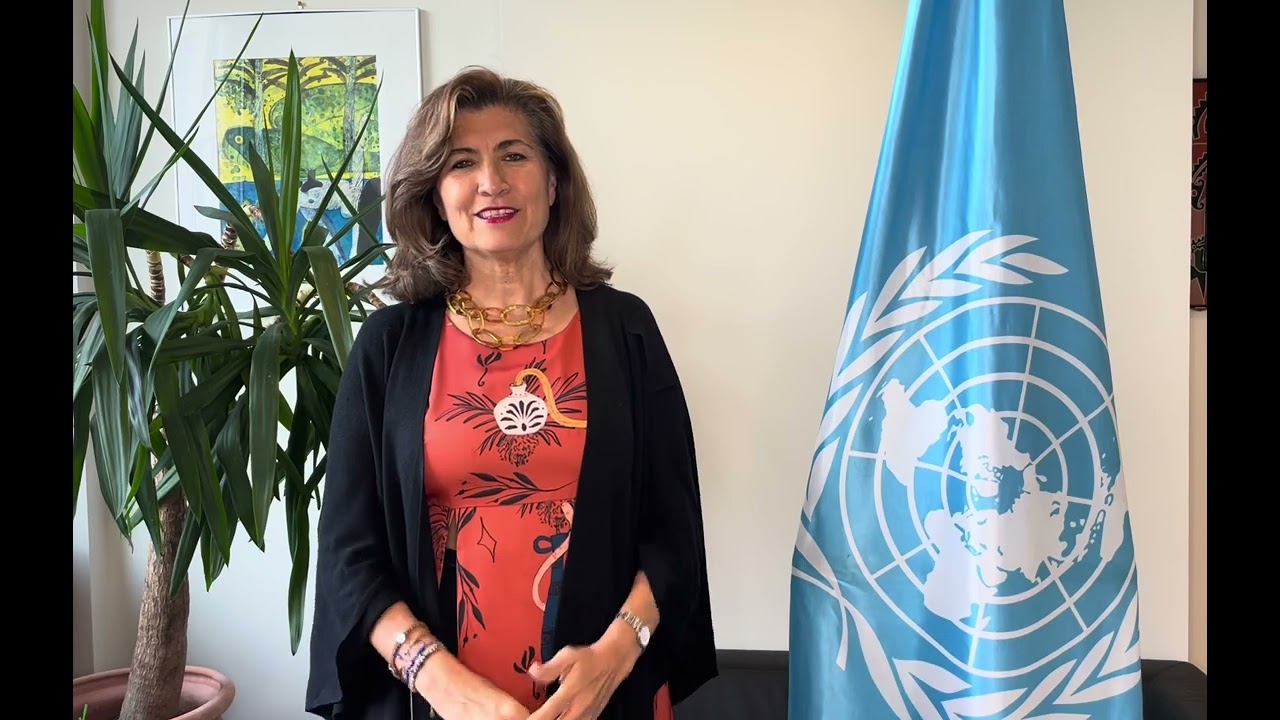
In her keynote at the inaugural InvestHER Summit, Gabriela Ramos, UNESCO’s Assistant Director‑General for Social & Human Sciences, examined the dual nature of large‑scale generative AI for women. She highlighted promising uses such as AI‑driven chatbots that help victims report workplace harassment, while warning that AI can also amplify existing gender biases, citing the well‑known Amazon resume‑screening incident and noting that women comprise only 32% of data and AI professionals. Ramos explained UNESCO’s 2021 Recommendation on the Ethics of Artificial Intelligence, adopted by 193 member states, which embeds human rights, gender equality, fairness and non‑discrimination. She described concrete policy tools UNESCO has created—the Ethical Impact Assessment and the Readiness Methodology—to help governments and procurers audit algorithms, ensure non‑discrimination, and engage multiple stakeholders. Concluding with a call to action, she urged participants to champion effective governance frameworks, promote intersectional workplaces and datasets, and stay informed so AI can be harnessed as an ethical, gender‑equal force for good.
Chapters
Ladies and gentlemen, it's such an honor to be here speaking with you at the inaugural InvestHER Summit. This has been an exciting time for artificial intelligence, most recently with the release of large-scale generative AI platforms and with the reflections of what does it mean for women, as we have done with many other developments on artificial intelligence, because these recent tools offer transformational potential as a force for good. For example, AI chatbots have been utilized by companies to assist people coming forward to report workplace harassment experiences. And there are many other examples. But these opportunities don't come without downsides. AI has the propensity to replicate real-world biases, exacerbating inequalities and begetting discriminatory outcomes. In an unfortunate case that is well known, Amazon's resume screening algorithm inadvertently discriminated against female applicants during the hiring process. These outcomes are self-reinforcing. A lack of diversity in teams and data that develop the technologies inevitably leads to the reproduction of existing societal biases. Women make only 32% of data and AI professionals, and they risk being left further behind as men continue to be the main creators of algorithms. The risk of amplifying biases is just one of many threats, including privacy infringement and system manipulation, that this system also poses if we left it unregulated. And that's why UNESCO delivered a recommendation on the ethics of artificial intelligence that was adopted by 193 member states in 2021. It's premised on the respect of human rights, human dignity, gender equality, sustainable and fair outcomes, and it serves as a framework for the ethical design and use of artificial intelligence through espousing this set of values and principles, as I said, including fairness and non-discrimination. The Recommendation also provides actionable guidance for governments in 11 policy areas, including gender. In this chapter, particularly, policymakers are urged to ensure that the potential of AI systems to advance the achievement of gender equality is realized. And this includes through promoting participation in academia and industry by women, preventing gender stereotyping and discriminatory outcomes, and protecting the safety of women and girls throughout the AI system lifecycle. We believe that regulatory frameworks are necessary to mitigate risk and for artificial intelligence to be used as a force for good. And that's why we have been working to implement the recommendation in various countries, including through the tools that we developed for that purpose, the ethical impact assessment or the readiness methodology. And these 2 tools can serve policymakers or, for example, procurers to evaluate the provisions of non-discrimination, including algorithm audits and multi-stakeholder engagement with the, with the tools that they are using. These are only your first steps. I also want to call upon all of you to push for effective governance frameworks, advocate for intersectional workplaces and datasets, and stay informed. Together, we can capitalize on this exciting moment to shape the future of artificial intelligence as one that is equal and ethical for all.