From Diagnosis to Design: Kip & Lora's Journey of Resilience and Purpose
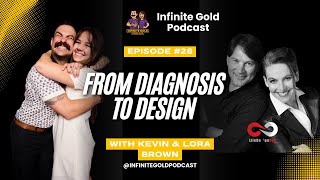
Kip and Laura share their story: a decade of misdiagnosis, a brain tumor discovered April 2, 2018, and the $15K surgery bill that followed. After the operation, Laura faced cognitive side effects but found new purpose through design work and mentorship, learning to build a life worth living through humor and family support.
Chapters
All right, welcome back to the Infinite Gold Podcast. Today you have the hosts Bree and Anthony Goldner and two amazing people where you guys We're gonna have laughter in this one. This one is gonna be— it's gonna be full of laughter, fun. It's gonna be very weird. So if you don't like weird, just get off right now.
You know what, it's weird that people would think that it's weird.
I agree, but you know, some people, they're different. So we've got, again, two amazing divisions. We're gonna talk about the best one first. Obviously we know who that one is, uh, Laura. Oh, um, she's the interesting one. Kip is just— he's IT. Like, this—
you should always let me fill in at the end because he gets to the point and I tend to, you know, do other things.
A little bit?
I can't.
Meta Reports.
Oh, Meta Reports. Wow, coming from the queen of Meta Reports, just saying.
Well, that's why Lauren and I plank and listen to them at all times.
Kids, you and I, man, we're just— that one's right, we are, we are very much so. So we've got Laura, born and raised on a farm, which is where we're trying to die on. So we're kind of opposite, um, but we're, you know, we're trying to get there.
Yeah, you could die too, you know.
Yeah, exactly. Um, but she's been connected to service her entire life. She's all about serving others. It's awesome. It's how we met, and we continue to just connect on that side of things. Um, she's always been about training people. She's always been about public speaking. She's part of, you know, livestock 4-H. Um, she actually got a minor in wildlife conservatory And a lot of people are like, wait, what? So I think that's pretty cool. Cause you know, can I handle dogs? I love the wildlife and animals. So it works out again. We'll see. We're just connecting on so many more things.
There you go. My dad wanted to buy me a tiger, you know, when I was graduating from high school. And I decided that probably in Montana, a tiger wouldn't go over, but maybe a mountain lion. I, you know, I was considered that as a possibility.
What?
And then she found one.
There you go. Hey, you find it one way or another. You find it one way or another, just saying. Tiger. Yeah, it's a Kip Tiger. Exactly. A tiger. I was like, yeah, that's pretty—
actually, that actually fits pretty well.
It does.
You know, she's— if you know anything about like the robotics, robots, kids, all of it, uh, they are the king and queens of it. It's awesome. I knew absolutely nothing about it until they brought it up, and I think it's like the coolest thing, um, because I couldn't do any of that. So I'm like, if the kids could do it, that's really cool.
And I've only ever seen it in movies, so if you guys are living it and doing it with your kids and doing it with other kids, that's awesome.
Yeah, it's, it's pretty amazing that, that FIRST Robotics program is— I don't think there's a better thing you could put your kids in. Like, I we love to laugh and joke and do all those things, but that one gets pretty serious. It's incredible. Here's what kids should be. They provide so much hope and joy and just inspiration out there. I'm just in awe at what these kids can do all the time. It's an amazing program.
I mean, it's amazing. I can't even fathom how I would start, and yet they're 20 years younger than me and they're like, oh yeah, you just do this, this, and this and this. And you're like, You're like, yeah, yeah, can we backtrack like 30 steps because you lost me already?
Yeah, don't ask them about their CAD programs or you'll get lost. Oh yes, you know, it gets all sorts of foreign language, foreign language for sure, even to us, and we're mentors. We can, we can appreciate it, we can appreciate it. We don't have to know everything, and that, uh, because we bring something different to the table for them.
The deer in the headlights look has finally left our faces after like 9 years of this, so I understand the lightning lingo that they use all the time now. That doesn't mean I can do it.
Yes, that's true. I can mentor you, but not, you know, it makes sense.
It's helping you get to think about things, you know. It's concepts. Have you thought about this? Have you thought about this? Maybe this thing, you know, great at those types of scenarios. The minutia about, you know, how many milliseconds of, you know, monitoring needs to be here and here, you know, that's, that's their job to kind of work through.
So agreed.
Yeah.
Oh my God. And then, uh, that faithful day, April 2nd, 2018, brain tumor surgery. And look where we are now. Like, it's so cool. Oh yeah. And the last but not least, most important thing— super mom, super warrior. Like, we can go with a lot of different names that correspond to it.
She definitely didn't let that tumor get her down.
No, not even a little bit. If anything, I think she was charged.
I didn't know her before, but she got her supercharged.
Oh yes, I agree.
And then it allowed me come back out. You know, as Kip always said, um, people are like, she's so different. And they're like, are you okay with this? And he's like, I finally get my wife back.
Yeah, literally what happened. I got my wife back, the one that I married. And that, that people don't understand that. But, you know, we, we've been married more than a day.
I mean, Yeah. Yeah, exposing him. Yeah. We'll talk about that. And when we'll obviously dive more into it, your guys's coaching, a lot of it has to do with the movement, has to do with dancing. And I love that concept of things just because honestly, like, really, if you just start moving, you start dancing, like, it doesn't matter what mood you were in prior, you're just now in a good mood. Like, you Yeah, he's just so much happier. And then we have Kip IT. Oh, elaborate.
Oh, I mean, full stop.
And explain so much. Well, basically, he's only, you know, herded cats that he likes to call his subordinates. No, I added that in there. No big deal.
I just lift you up with all of this and this is what you give me?
Yeah, which is a concept we just heard about and Bree loves already, and she's spilling all over the place because it's, it's that good. It's that good. There was like a company that like a fruit, right? Like nobody really knows. Yeah, yeah. Yeah, it's weird. You helped, you helped, you know, design some concept that we all have in our pockets, probably every single one of us. So very interesting. Most people can't say they've done that. Yeah. I think, I think that's legit, just saying. Well, then you don't even have to worry about anything because just his demeanor, everybody's like, you know what, I'm not going that way, no thanks. You know, there's the guy with the machine gun, and maybe I could get through him, maybe I could fight him. The dog, I No, don't even think so. Not even gonna try.
It's funny how people really try their hand with, with the, with the guns versus with the dog.
They see the dog and they're like, oh well, we have a running joke like, screw that, you can miss shooting, the dog's not gonna miss. No, like he just doesn't. So I mean Exactly. Which one do you want to— which one are you going to fight? I don't know. Another guy might not make it. The dog is going to make it. I like it.
Agreed.
So there's so much we could talk about today, and honestly, we were like going back and forth on having you guys on separate, having you guys on together. So my guess is we're probably just gonna have to do this twice because we're not gonna get through everything. Laura, you mentioned going last. We can't go last because then it's going to go on for 2 or 3 sessions. So we're gonna, we're gonna start with you because it's awesome. And yeah, and, or like, he's just IT again. We've talked about that. It's just like, whatever. Then again, like, everything we do right now is all IT. This podcasting, the editing, the this, that all has to do with IT. But again, who cares about that stuff? So Laura, um, you were a dance instructor.
Tell us more about that.
Yep. Mm-hmm. Yes, that's a win. Oh hey, I have a question real quick before we go for further. Wow, I can't even talk. Um, you mentioned that he was in a lot of the same classes and he did IT. Hmm, just trying to— oh, okay. Different person. Gotcha. I was like, did you put two and two together? Oh, gotcha. Okay. Yeah, again. So is it a Hallmark movie?
Oh, okay. Get it, Kip! Go, Kip!
So it's kind of like a Hallmark movie. So she was talking to this other person, you were coming in during the bar scene. Yeah. No, definitely, definitely Hallmark for sure. Yeah, we, we all are, just, just throwing it out there. Okay. Okay, it's Kip. Yeah.
Hip went for his dominant thought. His dominant thought was you.
Just the wrong time. No big deal. It's what, it's what us guys do. While you're there, stop. This is gonna be awesome. Oh shit. No, what? Okay, you did not, dude.
This is like some shit from a movie.
You have a good night.
No, you didn't, Kip.
So what did he— what did he— yeah, so did he ask you like who that was? Oh, that is awesome.
I mean, dude, that's great. I mean, I'm gonna high-five you the second I see you. You're just gonna know now.
I'm gonna have you and you'll be like, yeah, all right, so we're just making more of this into a Hallmark movie. Perfect. Solid. I like it. Yeah, that is true. So in essence, you should have thanked him, not hit him.
I think, I think at that moment— oh my gosh, at that moment, I think Kip knew that, uh, he was good. No, not Kip. I'm sorry, your date knew he was friend-zoned. Oh, you know what, he was trying to— he was being optimistic. Good for him.
Wow. Okay, that's yes. Yeah, Kip knew before it even happened. Like, that is hilarious.
That's so good. Oh my gosh.
I mean, I don't even know where we go from here, but that, that was pretty awesome. So long story short, you guys eventually started dating, guys got married, have amazing kids, and just a lot of really cool things. And, uh, Kip was going through his stretch of IT and building some really cool stuff and Laura went for the ride. And then next thing you know, Laura's designing real estate. Again, we talked about there's gonna be a lot of weird things. She enjoys it and it's her hobby. I mean, I don't see too many people doing it. Like I think Kip and I are more of like, hey, just go build it, go fix it. And we'll, we'll sell it once it's ready type of thing. So Yeah, right. So Laura, explain this concept because prior to us jumping on here, you said your daughter thinks you're even weird doing this, that it's a hobby. But let's talk about it. That's cool. Mhm. So cool. That is. Yeah, that's so cool. Yeah. Yeah. That's cool. Yes. Okay. Yes. There's a reason why we all connect so well on these. Yes, it's so cool. Yeah, that is awesome. Yeah. 44 is a pretty good number too.
A fun conversation.
So the best part was, is, um, we talked about, you know, Kip is IT and that's his name and brand, and just everybody knows his computer died, not ours. No, the IT guy's died, but he fixed it because he's IT.
So yeah, it didn't even take that long. No, it just, you know, we had, we had to adjust a thing or two.
There were reasons I married him.
Exactly right.
She tells me that all the time. I, I'd be like, 'Can I just show you how to do this?' She's like, 'Well, if I start doing that, then I really don't need you.' I like that.
My mother always told my dad— my, my dad always was like, 'Can't I just show you how to change a tire and so you could just do it?' And she's like, 'Honey, there was a reason why I married you, and if you really want to have me learn some of those things, then, you know, there's just some things that then I don't need you for.
I like that. Funny. I gotta keep you around for—
there's things. No, I have seen my mother change a tire, so I knew she could do it.
That's great.
I like that. So you, Lori, you're talking about designing and houses, and you guys are on your 44th, um, rendition of the house and that just designing homes and it being like a passion of yours.
Yeah, so, you know, it was— it's something that I do in my happy— it's my happy time, right? To sit down and because I can see in pictures and because I can literally walk through a 2D design and in my head and, and feel the flow of it, feel how the energy flows in the house and those types of things. It is something that I actually really enjoy and have found a lot of enjoyment with, but also being able to do something that not everybody can do.
Yeah, it's the weirdest thing ever to see. Like, I literally can't. I'm just like, where do you want me to put it? I can hammer something. Give me a saw. But she can literally see it before it's done. She has a vision. She has a picture. In her mind of what she wants it to look like and then can tell me what to go do or tell the people around, go set this up, build this, paint, like do all the things, and then it just turns out amazing.
So yes, shopping and all those types of things are— I, I'm looking for the thing that either inspires me because I have an idea of what I want, um, or— and then I, I formulate around that. If I have this, then I want this and this and this, and I have the picture in my mind of what it will look like choosing paint colors and all of those types of things then kind of flow into that. And it, it just kind of all flows, right? And it's that energy sense that I never verbalized before. It just was always something that I felt. And with having children that have various levels of special needs, designing the interiors of our home was something that was actually a crucial aspect because we had very different profiles in our children. We had some that were sensory, the extreme of sensory defensive, and we had sensory seekers. And because of that, you know, they would set each other off. It was like fire and gasoline mixed together created the bomb of the century. You know, the nuclear war happened all the time at our house. So being able to create environments where he wasn't being set off, my children weren't being set off, I could have the space that I needed to be able to have peace in some areas and energy in other areas in the right way and give everybody a little bit of what they needed and wanted in their own personal spaces really became kind of that thing that I realized that people are scared to do. Like they, they're nervous, they don't know how to put it all together and Helping people walk through that for themselves is something that I can do and, and be able to put people together. Like, he would have an idea of what he wanted was not what I wanted, per se, you know. But, but we work together because it's like, I know that he isn't going to be happy with exactly what I want, and, you know, and stuff. But we figured out how to blend. I could always figure out how to blend it so that ultimately we would accomplish the overall concept, right? The way that we wanted it. And, and not everybody gets creative like that. And sometimes you have to think outside the box, and I don't think inside the box ever. So it's a, it's a rarity. And so being able to put all of that together has just always been something that I absolutely enjoy. And then seeing that on a personal level, on a professional level, being able to put the pieces together to design a process, design a course of action or a pathway, kind of falls right in line with that same thing. I can see what it's going to look like type of thing. Now, the path may change. It goes in different directions at different times. But you have to pick a path to go. And if you can see where you're going, then you can create the way to go there.
And then what she's done that I think is even more incredible is when you walk into a space, whether you really think about it or not, you have a feeling that comes from it. You're energized when you walk into a place that has bright colors. So you take like a Mexican restaurant as a great example of this. They're always red, yellow, and oranges because that inspires a healthy appetite and makes you happy and feel good. That kind of stuff. They—
what? That's why I want to eat all the chips and all the food when I walk in.
It plays on the psychology. Uh, you go to a place that has cool blues, darker colors, and you feel calm and you want to come down. It's that feeling that it— that you get when you come into a space. Laura's become a pretty good of an expert in that because of the needs that we had with our children and all the various different things, being able to incorporate both her ability to see a design but then create an energy or a mood within a space is incredible.
And what's interesting is, is that designing really is about the 5 senses, and we forget a lot of the other senses when we design. And with children that have special needs, and then realizing that we had our own sensory profiles that we lived with that have never been— I don't know, it We didn't think about it, but when we started, you know, having to really start understanding how our children functioned and how they did that, we realized that we had our own very distinct sensory profiles. And in doing that, we also realized that there was a lot of things that affected, you know, our children. There's tastes that will help you focus. If you have something in your mouth at school, they will give you a mint, you know, like a peppermint. It actually increases your focus when you're taking tests and things like that. The smell of mint will increase your— Right, exactly. A lot of us could have used a lot of these types of things. There's textures, you know, kids that have tags. My kids, if they had tags in their clothes, they absolutely They couldn't concentrate on anything.
That's me right now. The second I, yeah, Jackson too. The second I get clothes that I know I'm gonna keep, the tag is one of the first thing that is coming off every single time. I cannot stand it.
So it's the smell, it's the taste, it's the feeling, it's the visual, but it's also the hearing. And there's a lot of incorporating different types of surfaces in a room so that you can deaden sound. If you have a room that tends to be a hard surface, like you've got hard floors, you've got hard walls, you don't have curtains, you know, there's ways to help deaden sound so that it isn't big and echoey and it isn't causing more dissonance in your environment than what you would necessarily have. So there's a lot of pieces and elements that we could all feel, but we don't necessarily recognize when we're putting things together. We're just thinking, oh, we have to put this in here because somebody said that it needed to look like this and not necessarily the reasons behind why you're doing that so that you're matching the visual with all of the other elements that go with it. And that is the, the challenge that people say, I love this, it looked great, and now I can't stand to be in this space. Why? And they don't necessarily why.
So I'm pretty sure we just blew the mind of a lot of people listening because even myself, you know, I've done a couple of flips and our most recent one was luxury and like thinking back and looking back on it, literally, I want to say 70%, it might even be higher of what we thought of and what we ended up doing all had to do with looks, all aesthetically pleasing. It very rarely like, yeah, we made sure like the floors, we got really good floors so that way it didn't have the creaks and stuff like that. So yeah, we were taking into account some of the sounds, but that was it. It all had to do with visual.
Yeah, it was more visual than anything, than everything. And Laura, you're like an interior designer on steroids.
Yeah, it's just taking all the pieces together, right? It's— design has so many elements, but a lot of it is, you know, how does it look, how, you know, how, you know, all the sizes, the scope, the, the comfort. All of that is taken into consideration, but is it taken into consideration the somebody that has a sensory impact with the material that they're sitting on. You know, there's some people that love soft and cozy more than other people want to have the leathers and those types of things because that is— it's got a feeling that's associated with it that they want to have. And a lot of people do. They, they design for show. And then they forget that they might have to live in that space. And is that space livable for them? Yeah, it could totally be livable for somebody. It may not always be livable for them. That— and that's balancing those types of things.
The other thing that actually people don't really think about too often, where you're located in the world makes a difference because light, sunlight specifically, has a different color or tint to it. So if you're living up here in Seattle area versus LA, The lack of sunlight that you guys have. Everything here has a real gray-blue tint to it. And a lot of it is—
the light has a lot more blue. So your blues are going to be more blue. But your reds are going to also be blued out. So you might actually get a little bit more of a purple undertone coming through on a color. And what's interesting is, is that, you know, greige gray was like the color to paint the walls if you were, you know, selling your house. Because it's a nice neutral. And literally different homes in the same neighborhood, gray will look different in them depending on the amount of trees that are around, depending about the light.
Green accent can come in, you know.
So some day, some rooms, the gray will look blue, and in others it will wash out and almost look white, you know. So it, it really can vary. And so you literally have to be in the space to see the color that you want to do.
Yeah, it doesn't work to just go to Home Depot and pick out the color. It's not going to look the same when you get home.
It doesn't sound as easy as picking out a color swatch off the wall.
I mean, you can. It just might not— you might not like it when you get there. You might say, oh, why does it look purple?
Yeah, we learned that lesson the hard way. We designed that house, the one that we were home number 44 for plans. In Montana and had this absolutely stunning red color. It was— I don't know what you would do— crimson. I don't know what you would call it.
It was like chili pepper red.
It was—
it was— it had a little bit of an orange.
Yeah, yeah, a little more orange than that in there. And then we had this cream offset. It was beautiful in our house in Montana.
Loved it.
Yeah, loved it.
Very warm colors in Montana. The light is a lot warmer, if you will.
Liked it so much we brought it to the home in Seattle when we built that one.
Hated it.
Hated it. It was terrible.
I put it in my dining room. I put it in my bedroom. Did all the things because those were my favorite places that I spent time in. And it caused so much dissidence that it was like, I, when we painted it to sell the house, it was like, oh, I should have done that so much sooner.
Oh my gosh.
But, but, you know, when I repainted things and, you know, I started doing things and Kip would be like, Why are you choosing that color? He's like, you are not a blue person. And I'm like, yeah, but blue's the right color for this particular space. And, and he's like, are you sure? Because I'm putting up paint samples and he's like, are you sure? And I'm like, would you quit asking me if I'm sure? Like, this is the right color. It may not look like it on a 2x2 inch. Yeah, but it's— and then of course I painted the wall and he was like, I love this space.
It was the best room.
It was the best room in the house. And he wanted to hang out in it all the time. And he's like, but you don't do blue. And I'm like, I know I don't prefer blue, but blue is the right color for what we were doing. It coordinated with the kitchen. I had done it all in black walnut. And, you know, there was just coordinations that we did and it all flowed really well. It made things that were dated, look expensive again.
Got, got $60 grand over asking price for that house when we sold it. So you did good.
Yeah, so the right visual design.
Yeah, exactly.
I like it. So then we fast forward to, uh, we talked about the intro, the fateful day. Um, let's talk about a little bit before that though. What kind of stirred the moment of maybe getting things checked out, or Um, Kip, you kind of talked about how things were kind of changing within life, relationships, stuff like that. So like, yeah, for sure, we all go through that. Um, her uncle, uh, passed away from cancer, so it's pretty heavily in a lot of people's families these days. So what, what kind of spurred the moment from that? And obviously we're on the other side doing great.
Yes. Yeah, no, thankfully. Yeah, all turned out really, really well. We're so thankful that, that we were actually located here in Seattle. We have one of the best neurosurgeons on the planet. Neurosurgeons come to him for training. And so, we were really lucky with that. You know, God put us in the right space at the right time for what happened. But yeah, leading up to it, we didn't really notice it right away. Like, it just sort of crept up over time. We were less and less happy. We were arguing a little bit more.
I love how you're saying we.
It was we. I mean, you were moody and I got moody and I don't know who we were. We were not—
we feed off of each other.
We feed off each other. And yeah, so, so life got— Laura was in a lot of pain, so, uh, body aches all the time. The sleep was getting really bad, and it would just get worse and worse and worse and worse. And we thought, oh, you know, we're, we're just getting older, midlife crisis, out of shape, because we had gained a bunch of weight, like a bunch of weight. And, and neither of us were feeling good. And then Laura had an accident. She was roller— was it roller skating, right?
Yeah, I was roller skating with my daughter at a birthday party that she had when she was in first grade.
Um, this was the '80s or '70s, the roller skating?
No, that was my era.
It was, it was a throwback to that.
It was in the 2000s, believe it or not.
Yeah, when she sees you.
Oh boy.
Anyway, she fell and broke her wrist.
Yep, only bone that I knew I had ever gone to the doctor for that would have been broken. And I knew I broke it immediately when I landed, and I had to drive to the doctor.
She drove herself to the hospital. I mean, who does that?
I had to breathe like I was having children.
She was like—
she calls me and she's like, just so you know, I'm on the way to the hospital. If I don't make it, I'm like What? You're like, no problem, I'm pretty sure I broke my wrist and I'll let you know when I get there. I'm like, what?
What? There's this thing called have somebody else drive.
Like, call a friend. Like, what are you doing?
No, I think I can make it.
Yes, that's what he said. No, I think I can make it.
I'm just driving one-handed, but it was my right hand that I broke, so I had to shift and drive with my left. Which, you know, my—
jeez.
So, you know, it was, it was interesting, but I made it.
So, you know, you'd make it.
So anyway, that resulted in tremors in the hand. So in the right hand, it was kind of shaking, kind of like this. And we thought maybe rehab didn't go very well, so we started going through a neurologist to kind of see what, um, what we can go through and start a big battery of tests and You know, one thing led to another on that one.
Interestingly enough, though, there was a lot of symptoms that were happening that nobody could explain for years. I had heart attack-like symptoms years before that where pain would go up my arm and up into my head. Typical classic, what they would say would be the symptoms of women, which are very unusual. They're different than men. Quite oftentimes when you're having heart attacks, and which is why women oftentimes don't go in and die of heart attacks as much or more often than men, because they don't realize that the symptoms— indigestion and things like that— can be cause— can be a symptom of signs of heart attack in women. And so I had all sorts of things like that, and of course he was gone, he was traveling, and And so I'd wake up in the middle of the night with doom, you know, doom day, like, oh my gosh. And I had enough training in wilderness first responder because of my recreation training that I knew that the signs weren't good. They were not. But I also had 3 little babies. They were under the age, you know, all younger than first grade. And we lived 5 miles from the hospital in the middle of winter.
Yeah. But on dirt roads, like on dirt roads.
And if I had packed them all up in, in the middle of the night in a blizzard, which it was snowing at the time, and I did have a heart attack on the way, I would just strand 3 babies locked into a car in the middle of the snow and nobody would know anything about it, you know, because there was nobody there to call and talk to. He was in Germany at the time. So I was like, well, I'll go back to sleep.
That's not happening.
Well, I'll go back to sleep. If I wake up in the morning, then I'll go into the gym, which I would typically do. And if I was going to have a heart attack, it would be better if I had it there because then somebody would be able to do it and my children would be taken care of. One would be in school and the other two would be in daycare at the gym with me. And my sister would be there and somebody would get me to the hospital and my children would be taken care of.. And so these were decisions that we played with. I had immunity issues that were popping up. There was just a lot of little things. I had vertigo every year for 3 years for 3 and a half months, exactly right before Christmas until March. And it's like clockwork every time, every, every, you know, because of strain and stress that came along with the holidays and those types of things. Did not know that, you know, people say it's all in your head, it's all in your head, it's all in your head.
And it literally was.
Yeah, it actually is.
Yes, it literally was. Yeah.
And so sort of fast forwarding this, so all these symptoms led up, then the accident, then the tremors, and then the tremors went to the other hand. So the other hand started shaking and then the legs started shaking. So we're like, oh no, we—
she kind of was like, hey, her dad, my father, had been diagnosed, um, with Parkinson's 3 and a half years before that.
Here we go. Michael J. Fox in the house.
I was 42, so it wasn't good. The signs were not good. I started researching Parkinson's and trying to figure out if the signs— and they all the signs—
they matched almost perfectly. And we're like, oh, this is it. There's no actual test for Parkinson's. The only way they know is they rule out everything. And then when they finally rule out everything, they give you the medicine because the medicine isn't good for you at all. But if you have Parkinson's, it's kind of your last resort. So they're like, we're going to rule everything out and then we will give you some medicine and see if you get better. And if you get better, then you must have Parkinson's. The only way to really diagnose is to cut your brain open to actually see. And that's not really a thing. So, yeah. And so we were going through all those tests and get kind of all the way down to the end and we're at one of Laura's final appointments.
This was the final one because I basically— they had diagnosed me with Parkinson's. Yeah, at this, because we had cleared every—
everything else.
Yeah, every test, 24 different tests from Wilson's disease to heavy metals to all of the different things. I had, you know, given samples of everything, lots of blood tests, lots of different things. Nothing came up. And it was typical. It was typical. I had gone into doctors for all of these different weird things that were happening And the only thing that they ever told me was that I was an overstressed-out mom and that I need to be put on antidepressants. And I refused for years. Every— you know, I refused to go on antidepressants because I'm like, I'm not depressed. Yeah, I don't know why you keep wanting to put me on antidepressants. I'm not depressed. I'm not going to change my brain chemistry for you. I— there's something else going on.
So As we're getting up to leave, Laura asks, so are headaches the symptoms of Parkinson's?
Because believe it or not, when you have a brain tumor, you forget things. Headaches, I had forgotten because I lived my entire life with headaches.
Yeah.
And I forgot because you don't have a headache when you go to the hospital. You take a shower, you get up early in the morning.
That was the best time.
You know, you just go to the doctor and you deal with that moment. And so yeah, I didn't Forgot to tell her that I was having headaches.
She's like, headaches? Sit, sit back down here and tell me about these headaches.
Wow.
And so Laura's describing these things. You get like leather gloves with spikes on it pressing into your head and like all kinds of descriptors about how these headaches—
I was good at telling stories.
Oh my gosh, you know, pain like somebody driving a nail through your eye, like all kinds of cool descriptions about these headaches she's having. And The look on the doctor's face. So Laura's like, uh, hey, so, so like, that's normal, right? And she's like, um, I think we're gonna, you know, get you in for an MRI. And Laura's like, great, we're going to a real estate convention in like 5 days, can we get in before then?
And Jennifer, the doctor, is like, I'm a terrible waiter, just, just so we're clear, I don't wait.
Well, I think we can, I think we can arrange that. And so we schedule the appointment for the morning of when we're leaving for the real estate convention. And so we're walking out, we get into the elevator, I turn, I'm like, she thinks you have a brain tumor.
And that's when I did hit him. I did.
She actually totally—
like, hold on. I'm like, that's not funny. Yeah, that's not funny. Don't you— don't you— yeah, go crazy right now on me and freak out. Like, you can't sit and tell me that.
That's not But this, this is actually a really good example of what the brain tumor was doing to her. Like, I saw it in the doctor's face. You cannot hide terror like that. There is no faking the human body. She turned ghost white, eyes got about this big. Now she got her game face back on really quick and became a doctor again, but she was a human right when the headache came out. Like, and it took, you know, 2-3 seconds for her to compose herself. But you could see the terror. She knew before the MRI, like she knew, oh, oops, we've been misdiagnosing this from the beginning. And of course we got into the MRI and, and Laura's like, talks to the tech.
She's like, hey, do you think you see, can you see anything?
And the tech's like, well, we got to talk to the neurologist. We'll get back to you. Usually takes 4 to 5 days. And we're like, okay, well, we're going to take a wedge in. We'll be back in 4 days.
I love— I do not act like that. I have never acted like that. And he always does that. And I'm like, I do. I know you were going to a real estate.
I was, I was going. And so we get to the airport and we're hanging out at our favorite place, the Delta Sky Club.
Yep.
That's, that's our second home. And we're, we're there and we're just getting packed up to go get on the plane and we get a call from the neurologist and Laura's like, hi Jennifer, you must have found something. I didn't expect to hear from you. And she's like, yes.
Yeah, so we found a sizable tumor in your right frontal lobe. We have a surgery date scheduled for 15 days from that day going forward. And then as she— I'm like, we need to get Kip on the phone because I'm not going to be able to remember all of this. I still realize that I couldn't remember all of the things that, you know, transpired in conversations, you know. So he gets on the phone as well and we go through the 20 minutes of all the different stages that the tumor could be. They still thought that I had Parkinson's at that— on top of all this— on that and a brain tumor. So, I'm going into a real estate conference type of thing thinking that I'm going to have a tumor removed and then I'm going to be left with Parkinson's, a debilitating disease that's going to debilitate from that point on. And so, there's not— I mean, there's a lot that goes through your head, but all of it just kind of gets sandwiched down to, you know, the, the basics. And we get on the airplane, and I look at Kip, and I said, um, did she ever say what sizable meant?
And I'm thinking like, you know, size your pinky, maybe.
Like, I'm like, anything in my brain that's not supposed to be there is sizable.
Are we the size of small grape? Like, what size of—
so I went through the stages. It was like, is it the size of a pea? Is it the size of a grape? Is it the size of a golf ball? Is it the size— and here's the big one— I was like, or is it the size of an orange?
And I'm thinking cutie oranges.
That was bigger than I could even imagine, because brain tumors, when we were growing up, were death sentences. I mean, if people said that you had a brain tumor, you were dead within months. Like it, it just wasn't something you lived with, and it was always a traumatic, you know, type of thing.
So we found out what sizable meant when we got back home, and it was literally the size of a navel orange. Like, um, like make, make a little fist like this with your hand.
Yeah, and that, that's the size it was, basically, roughly speaking, a softball and a little bit more of an oblong size. Yeah, so, you know, And so we went to this real estate conference because, you know, we're already on the fight. We can't tell our kids until we get home because we're not going to do that over the phone. They were, they were young still. Um, I think the oldest was in 5th grade. Um, you know, something of that sort. And it was basically like, there's nothing that anybody is going to be able to do because if you sit and tell somebody that you have a brain tumor and that you just found out, everybody It kills the conversation. Like, you're not going to have a conversation with people. People are going to start acting weird. They're— you're, you know, all of a sudden you want to have fun because you—
we—
I was like, let's party it up like it's 1999, right? You know, because I might be dead in 15 days, but, you know, I might as well enjoy it right now. Um, you know, we're here, we, we might as well take everything that we can and figure it out. So it wasn't something that we told a lot of people. We told the people that we got on the plane with that were from our real estate community here in the Seattle area, but we didn't tell a lot of other people. And we laugh about it still because people are like, well, did you tell, you know, who, you know, did you tell people? And it was like, no, because what am I supposed to do? I'm supposed to walk up, hi, I'm Laura, nice to meet you. I'm going to be dead possibly in 15 days, but you know, it's sure good to meet you anyway. What do you do with that? Like, it's not something you do anything with. So we didn't tell people, and then people, when we got back, of course, then it came out that, that this was happening very quickly. Um, and they were like, oh my gosh, we were just there with you and we didn't know.
And we were like, we were right there with you.
We did.
Literally, we found out like 24 hours before you did.
Yeah. So it was, it was, and it was 15 days, you know, and in 15 days you don't have a whole lot of time to really sit down and dwell on it, which is awesome.
Um, you did end up picking up my next wife.
I did. I did. Uh, you know, I didn't sleep because the moment that I got to the real estate conference, they had, they put me on, um, steroid medication to reduce the swelling in my brain. And then they had these 5 pages of all these symptoms that if I had any of these symptoms, I was supposed to call and they would life flight me back to Seattle for emergency surgery. They didn't explain that the size of the tumor was, you know, dictating that in their mindset. They were just giving me all this information. And so I got on and I took it exactly like I was supposed to. Late at night because they were like, well, it could cause some disruption in your sleep.
Could cause some disruption in the sleep. She didn't sleep for like 40 days. Like, I'm not joking. Like maybe 15 minutes a couple different times throughout the day, maybe.
So, yeah, 24. And then he's like, when he comes in at like 1 or 2 o'clock in the morning, because he stayed out, I went to bed at 11 and took the medication, and then I, it was interesting. I had progressed through the symptoms of Parkinson's to have Parkinson's psychosis. I could hear people in the room with me.
Lots of voices in her head, literally.
No, it wasn't. It wasn't even that. It's like I could hear footsteps. I could hear people physically feeling like they were in the room with me. And so when he showed up, I had lots of things to say. And evidently, I'm very sensitive to medication to begin with. And then they put me on a steroid and I was just like, Kip's like, are they, are you on meth? Did they give you meth? He's like, you have never talked so fast and all without taking a breath.
Can you just go to sleep, please?
I tried, I tried really hard.
Just bouncing in bed and the priest is like, honey, honey, honey.
So, you know, my mind was doing lots of things. And so yes, I chose his I, I found a wife for him because I'm like, it's not fair that, you know, I, um—
I'm listening.
Yeah, that I, uh, basically, what if, if I die, that I would think that he couldn't remarry? I mean, like, that, that I got small children and stuff. And I basically told him, I said, well, um, if I die and you marry a young bimbo who's mean to my children, I will haunt you for the rest of your life.
Oh, she meant it too.
It was 100% seriousness. Like, this was disruptive for me in my brain.
She's so kind. She's like, well, I waited. I'm dead asleep, and all of a sudden she's like banging me on the chest, and I'm like, what?
What?
I waited for hours. I had waited for hours to try to give him a chance.
I'm literally thinking she's dying or something like really bad has happened. So I'm like, I, I'm so disoriented, and she's beating on my chest. It like probably wasn't that hard, but it felt like it.
And then I was like, come on, honey, I, I gotta tell you something.
Right away, she's like, I, I found your next wife.
I'm like, no, I didn't say that. I just said I found— I know who you— and I said, and you're charming, and you're charming, so I expect you to get your charm on and get this one.
Shut up, that is hilarious. Yeah, it was pretty cool.
And I went through and I said, I think I did pretty good.
It was a very weird discussion.
And Kim's like, um, okay, yes, but— good choice, but— we're not going there, Laura. Like, that's not where we're gonna focus.
And I'm like, you're not going anywhere.
But for me, I needed that. I needed to be able to feel like my family was going to be taken care of. And that all was going to be done. And then it put me in a very good headspace to be able to move forward and to deal with all of that other stuff. But it, it, it's just one of those things. And when, you know, you're thinking about lots of things and, and you're up 24/7 and, you know, there's not much else to do besides think in the middle of the night, you know, when everybody else is sleeping and you're supposed to— I, I learned Facebook for the very first time When after surgery, I literally had never been on Facebook before. I literally started doing Facebook as a way to communicate with people. And I could do that at 2 o'clock in the morning because then people could check Facebook at any time, you know. And so I literally would do— and I couldn't— my connection between my brain and my mouth were not connecting.
You needed to be rewired.
So Spelling, grammar, all of those things were really interesting, um, that, that kind of came from all of that. But what's interesting about it was, is the process of going through all of that, there was a lot of development, if you will, personal development, that came from having to go through that experience, having to feel like you, you might not be here, you know, where, what is your life up to that point and what What have you been leaving behind? Was that not— was that what you wanted? And what happens after? Because there's nothing that says that you wake up fully functional, you know, that—
because we didn't really know what it was.
We saw the pictures, and you look at the pictures and you say, how is that going to not just leave a massive deficit? Deficit. Things and knowing no idea what those deficits might be. They don't exactly go into a lot of that. We had 15 days, as I said. So part of it was connecting with our children and making sure that they were understanding. They don't know what's going on. They called it Stephen. They did. Stephen was— and they wanted Stephen in a jar to put on the mantle. Doctor said no. My scientific children love that whole concept. But I had to connect all of a sudden because the tumor had repressed so much that my kids didn't know a lot about my history, my background, much about mom at all.
Well, you shut off.
I had shut off, like literally, you know, he was traveling all over. I was a stay-at-home mom with kids that had special needs and literally nothing was the focus but them. And to make sure that they were, you know, functioning, being able to get through school, getting through, being able to get through therapies on the things that we needed to do therapies for, creating the environment that gave them the best opportunity to succeed. I was definitely the last priority in that particular thing. But going into this, all of a sudden I needed to connect with them. So I tried to make special time with every single one of them to have their own mommy time so that we just got to talk and they connected in that time frame. Um, so, and then I had my morbid day where I realized that, you know, if I don't come back, yeah, our bedroom was a disaster and he doesn't do well in disaster zones to begin with. And I was like, he can't come home dealing with 3 small kids that that don't have a mom and, and have had mom do everything for them to make sure that everything was set up exactly right. He had been traveling and was still traveling a lot, um, at that point in time still. And he comes home, he's got his family, he's got my family, he's got a household, he's working still. And he comes home to a disastrous mess, and he is not going to need that. So I literally spent like days returning clothes that still had tags on them because I'm like, well, if I'm not around, I might as well return all these clothes and, and do all of this so that he doesn't have to deal with my clothes. Um, I folding loose socks, trying to figure out— sorts through a loose sock, like everything, like literally through the entire room. Trying to make it as organized as possible so that he had one sanctuary where he could come to that he wouldn't be losing, losing everything in that particular process. But it's through all of those things, what we found was, is that one, I was open to taking whatever great mojo came from anybody. It didn't matter if you were Muslim, it didn't matter if you're a Christian. I had people give me their saint, um, their saint medals that they had had in the military and that got them home.
You know, yeah, it was pretty amazing.
Everything. There was an outpouring of people that were like, I don't even know what to say, but I'm just— and I'm like, I'll just take good vibes. Like, just send whatever it is. Um, I accept it all. I have no judgment whether you're Hebrew or, or— yeah, it didn't matter. It didn't matter. It didn't matter if you were an atheist and you were just like, I'm just sending everything that I can your direction. I was going to accept it all and, and move on from there. Interestingly enough, I actually had some very, um, spiritual experiences, um, before surgery. As I say, I see in pictures, um, God speaks to you in the way that you would like to be spoken to, if you will. Um, and there was a lot of time where I really was relying on my relationship with God, which at that time I had felt like had been hindered over the years and I didn't know why. And, you know, brain tumors do weird things in that particular regard. Decreasing confidence and understanding and your relationships. You know, I got connected with the concept of dementia a lot earlier in life than what I— People? Yeah, than most people. It— now I can appreciate and understand people that are having dementia and how that robs them of, of that sense that they had at one point. So it was those types of things coming together and those experiences. I went into surgery really good.
And luckily came out good.
And it came out good. You know, and the doctors like— what really set us up, we had been starting to design because we were looking to get him out of IT and be able to do what he wanted to do, not necessarily what somebody else was dictating his schedule. And it was always a design process. We didn't put those words together to it at that point in time because we didn't really put all of those pieces together, but we had been designing our finances to set ourselves up to be able to retire him And in doing that, it set us up for being able to absorb this type of experience, if you will, and take on this type of medical emergency. And also what it also did, because, you know, they expect you to pay for your surgery and do all that by the time before you go in.
So something about not guaranteeing results.
So, you know, we had, you know, what's gonna happen, but hey, savings, and it would have been gone. Yeah. The— before I even went into surgery. And for most people, they would have been left with that, and then they would have been left with all the bills that came afterwards.
It doesn't really matter that you have good insurance. We had good enough insurance that covered a lot of the bill, but you still have the copay. Your, your out-of-pocket medical expenses was $15K in most cases. And so we had to come up with that $15K right there and then.
That's crazy.
And most people— I mean, this, this is a really sad thing. We live in the wealthiest country in the world. It has so many opportunities for everybody, but we don't plan, we don't think about it, we don't have the savings. Most people don't have $15,000 sitting in their checking or savings account or in any liquid form at all.
No, nope. So we had set up some banking strategies that allowed us to have the resources to be able to to make the best options. Because if you pay in cash ahead of time, you get a discount. Nice. We took every little bit that we could, right? Type of scenario. And then you don't know what the outcome is. You have no idea whether I'm going to need a lot of support, whether Kip needs to have in-home care for me afterwards, whether I even am out of the hospital or am I a vegetable that gets to stay in the hospital for the rest of my life. Um, you know, those types of things. And so going into it, we had set up a lot of things. We felt like we were in a really as good a spot as we were going to be, and we were, you know, I was ready for it in whatever happened. You know, I get to go to sleep. I don't know what ends up happening at the end.
You know, you had the easy part.
I did. I had the easy part.
Um, I was just thinking that the exact same thing. I'm like, you know what, since we're coming to an end, we're definitely gonna have to do part 2 of this and really tap into the other side of things, AKA the Kip side of like the mindset, what's going through it. And we're definitely going to tap into what mindset you guys have come out of this. Like, you guys just went through this huge ordeal, like not knowing what's gonna happen, this and that, and like coming out of it like you're a completely different person. Mindset-wise, like strong and what have you. And I know some people will go into stuff like this and they come out weak, or they come out like devastated, like they come out on the complete opposite side just because so much. But you guys, obviously, because we interact a lot, you guys came out on the other side. So just tapping into things like that is going to be tremendous. But we are going to close out real quick, and because of this short two topics that we kind of talked about, What I would like is we ask every single person, what is your 3 golden nuggets that you guys have taken from your guys' journey up leading up until that, that moment in that surgery day?
Well, that's a fantastic one. I think I'm going to kick this off by saying, does we, it's actually our tagline. We say design a life worth dying for. And we all are going to end up in that, that spot. There's no way around that, at least not. According to current modern science. So, you better be living a life of purpose, one that you enjoy, one that you are excited about, one that you get out of bed for, one that makes it worth living for the time that you've got. So, I'd say that's first and foremost, design a life worth dying for.
For me, a nugget out of all of that was you have to know where you're going. If you don't have a sense of where you're going, when life throws you curveballs, they can take you out. Or softball in your brain. It doesn't matter what it throws at you, it'll throw, you know, all sorts of round stuff too that hits the fan. Um, you know, all of those types of things. But if you have an, you know, if you really are like, I know where I would like to go, and you have that, you can create a path in which to do it. And it's the— that is good— steps that you take along the way. It might not be— the vision at the end may not be the vision you had at the beginning, but you have to have a direction in which to go. And I think that a lot of times the lack of direction or the lack of idea of where there is a direction, um, leaves you floundering and doesn't give you purpose to get through. And then I'm gonna hit the, the next one.
Okay, then we're gonna have to do 4 because I got one less.
Oh, okay.
Anyway, it's a bonus. Is humor— is it? Yes. Will get through so much.
Actually, we only do 3.
Okay, good. So it's almost like you guys are married.
I think a lot. Yeah, we've been married long enough.
Yes. Yeah, I love that.
Yeah, humor will get you through everything. More things than you can imagine. And if you can't find the hilarity in the absolute chaos of your life, sometimes it will take you down a dark hole.
And that ties right back into the first one. Again, it's a nice perfect circle here. To design a life worth dying for means that you're having fun.
Yes.
Fun means you're enjoying your life. Fun means that you find the humor in everything around you. And as Laura said, that will get you through the hardest of times if you can just find a way to see positive, find the humor, and enjoy, have fun.
So good.
Yeah.
I just love you guys.
Yeah, you guys are awesome. Thank you so much for having us.
Of course. So as you've listened to an amazing story, there's going to be a part 2. So you're going to want to listen to all of this one and stand by for number 2. And please, please, please follow Kip and Laura on Instagram. They've got their own business. They're actually another mastermind like ours. Check them out, the links are going to be in there. And you can hear more about their stories and more about the reason why they do what they do in more of a face-to-face interaction. They're going to have an event here in August in Seattle. We're going to post that, and what we're going to do is we'll do another episode that's going to tie into all of this. So we'll talk more about the business side of things with you guys and Um, just want to say again, like Bree said, we love you guys. Um, we appreciate you guys being on, and this was, this was a lot of fun.
Yes, thank you for joining us today.
For sure, can confirm. Awesome, take care. You guys can stay on real quick.










