From Military Ranks to Entrepreneurial Trails: Chris Weichman's Journey of Resilience
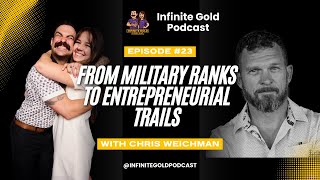
In this episode of the Infinite Goal Podcast, host Anthony Goldner interviews former Army National Guard and Air Force Special Operations Master Sergeant Chris Weichman. Chris recounts his 17‑plus years of service, including four tours in Afghanistan, a partial tour in Iraq, and a stint at the Joint Personnel Recovery Agency where he uncovered significant corruption. He explains why he left the military—family health concerns and disillusionment with the agency— and describes the pivotal moment that led him to walk away. Chris shares three core mindsets he learned in the military: respect the rank but not necessarily the person, persist up the chain of command when you know you’re right, and outwork everyone through relentless hard work. He then details his transition to civilian life, launching fitness studios, joining a 7‑figure mastermind, and building a business coaching network. From these experiences emerged "Eternal Warriors," a series of survival‑and‑travel experiences that combine outdoor adventure with community healing. Chris emphasizes the importance of men’s groups and mastermind communities (Final Percent, Gamma Group) for mental health, accountability, and navigating life’s crises. He offers actionable advice: take decisive action (inspired by Mel Robbins), serve yourself first, and adopt a "one more" mindset—always push for one more rep, call, or step. The conversation blends personal anecdotes, practical tips for entrepreneurs, and philosophical reflections on resilience, leadership, and purpose.
Chapters
All right, welcome back to the Infinite Goal Podcast. Today we have an amazing individual and his life story so far is, it's pretty incredible., and we're going to dive into a little bit of it. Um, but today we've got Chris. Thank you for joining us today. Uh, we love you, brother. And the life that you've lived already is just— it's incredible. And what you've continued to do to help and to serve not only obviously your country but everybody that surrounds you, it's, it's awesome. It's good to see. So welcome. Thank you.
Thank you for your service, Chris.
So Chris, Army National Guard, started there, moved on to the Air Force Special Operations, did 17+ years through that, uh, all the way up to the rank of Master Sergeant. I did 4 tours in Afghanistan, did a partial tour in Iraq. He visited 33 countries in his short period of time in the military, and you said you're up to about 37 countries now, um, outside. Um, if you seen movies, if you could think of stuff that people have done, this man has done it. Um, he's, he's awesome. Obviously we're not gonna be able to talk about too much today, but we'll talk about some of it. He's a survival expert. Um, we went to an event where, uh, we got duct taped, we got handcuffed, and he showed us how to get out of it, which is kind of cool because usually I'm on the other side of things. I'm handcuffing people, and now I've learned— now I'm, now I'm getting handcuffed, but I'm learning how to get out of it. So it's, it's kind of cool. Uh, so we're going to talk about a lot of stuff today, so you're definitely going to want to stay tuned, listen through this, and you're going to get a lot of insightful tips on being a survival expert and just being a great individual. So thanks again, Chris, for joining us.
No, thank you. I appreciate it. That was a very humbling intro.
So yeah, of course, Chris, you did 17+ years in the military, so you didn't quite reach that 20 to 25 year mark or that 30 year mark.
Why, why did you get out? Uh, wildly enough, I, uh, When I was in, uh, I was stationed in New Mexico with Air Force Special Operations, and, um, two of my deployments, uh, to Afghanistan were with, uh, SOCOM support and missions and Joint Special Operations. And, uh, one year I was gone 296 days, and the next year was 229.
Basically the whole year?
Pretty much the whole year, but like back to back. And then, um, it— my— so I have 3 kids previously from previous marriage, and, uh, my kids started developing stomach ulcers and having high stress and all this stuff. And, um, I went to my leadership, I was like, look, you guys gotta, you gotta cut it. You gotta— he's like, I need— I have to stay home. Family life sacrificing, relationship sacrificing, children all this. And, uh, so that was the first real, like, big hit. And then, um, shortly thereafter that, within about a year, I got picked up by, um, what's called the Joint Personnel Recovery Agency, which is in charge of all personal recovery, um, in the United States, whether it's military, um, agency, it's doctors on board. It doesn't matter if there's a U.S. citizen that's taken captive hostage, any of that stuff around the world. They're in charge of helping facilitate their recovery as well as they write the policy and doctrine on how every agency is supposed to work and how the US government is supposed to work to affect that recovery. So that was a— it was actually a really cool mission and a really cool place to work. It was a 4-year tour. Um, so I went into that, and the uniqueness of it though is there's really less than 25 military out of 189 people in this agency. And what— but the, the upper senior leadership, which I was fortunate enough to be a part of, is in charge of everybody. Okay. Um, regrettably, we had uncovered some major corruption in things that were going on that kind of put a bad taste in my mouth. But it exposed to me the corporate side of the military and the political side of the military because the agency was, uh, 4 steps removed from the president. We worked directly for the Joint Staff and then Chairman of Joint Staff, Secretary of Defense, and then straight to the president, um, with what we did. So, um, Yeah, inside the agency we uncovered a lot of bad things, uh, to the tune of, I don't know, well over 25, uh, Office of Personnel Management files or cases that were filed. I think close to 9 total congressionals that were filed against people all the way up to 3-star level. So, you know, it was a lot and it just really put a bad taste in my mouth. And the other part of it too was, um, I'd always decided, knew I wanted to do business or kind of when I got out of the military, kind of exploring what I wanted to do. Now, don't get me wrong. I wanted to do 30+ years. I was on the fast track. I had an amazing career and I had leadership that was extremely supportive and encouraging to keep going. But I went to one business conference and I met somebody that really encouraged me and I got to talk to somebody who had gotten out of the military early. Who was thriving in their business. And they just were like, look, at that point I was just at 16 years in service towards retirement. And, um, they're like, look, in the next 4 years, you're going to wait to get to 20. Like, this is the amount of money I'm going to make. This is how far ahead I'm going to get. And this is based off of what I'm, what I know I'm doing. He goes, I walked away at 14 years and this is, you know, what I'm on the track to do. And it hit me. I'm like, well, I was with my ex-wife. It hit me. And I was like, I turned to her while we were sitting at lunch. I said, hey, how cool would it be to go home and tell our kids at the time that were, I don't know, my girls were probably 12, maybe 14. I don't know. They were younger. Um, but to go home and tell the kids that mom and dad is never going to deploy again. We're never going to move again. Weren't, you know, they get to stay in the same school. Um, it was, we were back here in Spokane, Washington. Their grand, their, her parents, her grand, their grandparents live here. Um, they've, my first tour I was here for 7 years. So we had, we had a pretty strong community. Yeah. You know, like, what if we just go home and say it's it? The irony of that though was this was a Saturday, Sunday conference down in California we went to. Friday prior, I had just told my leadership in the Pentagon that, hey, I've convinced my family, sign me up for a 3-year tour in South Korea, and we're all in. And they're like, okay, we'll submit the paperwork on Monday. Wow. Monday comes and I call them like, hey, by the way, I say that like, like, I'm not, I'm not doing North Korea. They're like, okay, well, what changed? What do you want to do now? I'm like, Actually, I'm just walking away from the military. And they were like— it was like somebody dropped— someone dropped a grenade. So yeah, I bet. Yeah, so that was, uh, that was the whole deal. It was like, yeah, I'm done. I'm ready to make this. And it was, it was literally one of those moments. It was like flipping a switch because as soon as I said that to my ex-wife, she looked at me because she knew how important the military was to me and how successful I've been in my career. And, um, but she welled up in her eyes and she was like, are you serious? You would do that? And I'm like, yeah, I'm done. And that was, that was the exact words I said. Yeah, I'm done. And she's like, what? I'm like, I'm done. And I never once regretted it, never once turned back. What's crazy is I retired in, um, I was medically retired in July of 2018. And since then, I've only been out or been on a military base maybe 5, 6 times. Wow. I'm like, close the book. I'm done. Yeah.
So life's going on.
We've got new plans. Yeah. That's awesome. So obviously you did a lot in 17 years and you did a lot more than what the majority of people do. What is, from your military side of things, and again, uh, we like to have our 3 golden nuggets, uh, usually throughout it. I think with you we're going to have a couple, and I wanted to know, like, what are the 3 biggest mindset stuff that you learned, uh, in the military throughout your times that is something that you teach on a regular basis, um, to your clients? What are like the 3 most important? Obviously I know there's a ton, But let's go with 3.
Yeah. Um, okay. One of my first supervisors in the military, um, he saw me basically butt heads or run ram heads with, uh, senior leadership when I was trying to do the right thing, trying to get shit done, and they were stonewalling me. And he pulled me aside and he's like, hey, look, he goes, if there's anything I can tell you is one is You have to respect the rank. You don't have to respect the person that wears it. That's really good. So position of authority, somebody is there, you respect the authority of the position. You know, it's no different than now, whether people like Trump or not, or whether they like Biden or not. Everybody's like, well, don't you hate Biden? I'm like, I respect him because he's the president of the United States. He's in the seat. Like, that's my core because he is the country, period. And we'd also be there. I may not agree with him or his thoughts or his health, well-being, whatever. I have my own thoughts on that shit. But it's like, he still maintains the office and that's it. And so that was very valuable and it served me because it was one of those things that you're going to run into personalities through life, whether it's business, whether it's military or whatever, that they have their own isms. They have their own agenda or, you know, they feel threatened or any of this stuff. And it's just a matter of, okay, take a mental note. But then that tied right into the next one that I would say is extremely important too, is be willing to go the distance if, if you, if it, if you know you're right and you know it's the right thing to do, no matter how many people tell you no. Keep working your way up the chain of command until if you find somebody that's going to say yes and they're going to help you or they're going to allow you to do the right thing. Many times I take it to my immediate leadership and say, hey, this needs to be done. This is an issue to bring it to you. Here's a solution. Like, well, we don't have time for that. We don't have money for that. Like, Okay, when will we? Wherever. Okay, just so you know, I'm going to the next level of leadership. I'm going to present this to— oh no, you're not. I'm like, you can't tell me I can't, first off. Yep. Secondly, and that's part of it too, is knowing and have the confidence that what's— what are they really going to do to you? They can't fire you because you're trying to fix something, you're trying to make something better, you're trying to do— and if they do, you're not in the right place.
Correct.
More push-ups? Maybe not working with the right people. Yeah. So, um, but yeah, do whatever you gotta do to get to make the mission happen is basically what it came down to. And then the other one was, um, I would say through military career is, you know, uh, hard work. Yeah. You know, I was, I was very successful in my career and sometimes I look back and I'm like, man, I lucked out and I'm like, no, you didn't. Um, like there was a lot of work and there was a lot of time, like saying yes to all this shit. And then not just doing the job, but exceeding everybody's standards and blowing it out of the water. And then even if they gave you 50 jobs, you did all 50 jobs better than they ever expected because 51 is probably gonna be the one that you're like, Aha, now I got my opportunity. And when you have your opportunity and you've put in the hard work and you've excelled at the jobs, you're just basically fine-tuning yourself to be able to do the one job that's fucking meant— what you're meant to do. And then you just, you run and you go with it hard. And, um, you know, whether it was going to parachuting jump school, um, it was dive school, jumpmaster school, I went to counter sniper school, I did all these fun things. To me are fun. Um, yeah, crazy enough, most people don't get those opportunities because they're hard to get course spots and they're very selective based off the mission you get when you're assigned to a unit. They're, um, not just, you know, hey, everybody goes and does this. And, uh, especially being Air Force Special Operations, you know, um, that's part— everybody thinks Air Force is just fly a plane, do whatever, you know. And it's like, no, there's a, there's a whole ground special operations that's pararescue, combat control, SERE specialists. Um, you've got combat weather, which is basically reconnaissance teams, tactical air patrol, uh, which is, um, air traffic controllers on the ground for Army and Marines and all that stuff. So, you know, um, but all those guys, and I would say is it's all volunteer. Like military's volunteer, but anybody who goes to special operations, thankfully in all branches of service, they have to volunteer to go above and beyond. As Goggins says, the 1% of the 1%, right? Which is good. Even inside those communities, there's still, you know, the half a percent of even the elite. That was also, you know, I tied quickly early on. It was like the harder I work, the farther ahead I am of everybody else. And it quickly. People will come to me and if they weren't, they, they would ask me if I wanted the opportunity or they would trust who I would suggest.
Oof.
That's good.
Okay.
Yeah.
So basically by you going the final percent, that puts you steps ahead of everybody else. And then that puts you in more of a leadership role where like, hey, I don't want that assignment anymore. And you're not being forced to do stuff, but hey, there's this individual that I trust and then they trust you now so much based off of all the hard work that you do that they're going to trust whoever you believe in to take that spot.
So correct, because they knew that, you know, um, this is the lesson I learned from my father early on was you go do a job, you understand that your performance, your work, and the final product is basically you've signed your name on it.
Yes.
And if your name's going to ever be worth anything to any— and for anything then you better do the job right. And the one thing which I passed on to my son is do the job right the first time or you'll end up doing it 10 times.
Yep. And you'll have— you'll actually work harder to fix something because you didn't work hard enough at the beginning. Yeah. Yeah, that's so good. So you've got this military, you've got this mindset, you're, you're kicking ass, taking names. You've realized that the family life wasn't the life that you once dreamed of and you moved out of it now. Um, but prior to that, military was everything. So what would you— what were some tips that you'd give somebody that is thinking about joining the military, um, but they've got all of these sayings, everybody's talking this and that about either the military, first responders, um, what, what is something that you would give somebody who would still be interested in joining?
When I was starting out, like I said, it was Army National Guard out of Ohio. I started out because they were going to pay 100% tuition for me to go to college. Yeah. Right. And I was going to get to walk on at Ohio State University and wrestle. I was like, fuck yeah, let's go do this.
Right.
Yeah.
Nice.
Little did I know that when I went through basic training, that I would fall in love with the structure, the discipline, and just what happened. But what I quickly learned was to not be afraid to ask for advice or the wisdom from those who've already walked the path. So good. Right after 9/11, I was called up as a National Guardsman, as a military police officer, and sent to Fort Bragg to close the base down because of terrorist attacks. And if people don't know, back then, All-American Freeway cut straight through the base, Fort Bragg. And it was an open installation. So people literally all day long were just driving through the installation and then they would peel off to go do different things. Well, we had to close down a freeway and put up checkpoints and all this stuff. And Fort Bragg is a huge installation, just massive. Um, it's home of, uh, several special operations units, and then Pope Air Force Base at the time was attached to it. So that compounded the amount of people in the military in one area. Because I got put on orders there to help close down the base. I was there for almost a year doing that, right? And, um, during that time, I was smart enough to realize I have access to some of the most elite people in the world here with their military experience, and I'm really itching to go active duty, to go full-time military. So I was like, who— why wouldn't I ask these people what their experience was or like, you know, what do you love about your career? What don't you? And I got to ask Army Special Operations, Naval Special Operations, Air Force Special Operations, you name it. So I had access to all of them. Hands down, they would all, you know, I say, okay, and the one question I always ask them, I said, had you do it all over again, which branch of the military would you go in and which, which job and why? You know, I would say better than 90%, regardless of what job they had— Special Operations, uh, even, even Special Operations community— well, all said Air Force Special Operations, just because two things: they took care of the family better, and they gave you all the training up front before they ever set you out on a mission. Wow. Whereas the others, they give you bits and pieces as you progress through your career. And I was like, okay, well, this makes sense, but if I was telling somebody to come in, it's like, find people that you trust to ask them what their experience was, or go to different events and, um, arenas. And most guys that have been special operations that are worth a damn are more than happy to sit down and talk to you, mentor you, guide you, because they understand the value of getting the right people in. And it's not an easy path. It's not for everybody, but they, they want to encourage if you've got the right, you got the right, uh, the right stuff, we're gonna, we're gonna encourage you to come in, you know, um, and do it. And, but they'll also be honest and tell you too if like, hey, you need to go get some life experience, or you need to, you need to get harder, or you need to, you know, toughen up, or whatever it's going to be. They're not going to hold back. So that's where go, go find people who've actually walked the path already and ask what's their experience. You know, don't, I don't know, don't go ask somebody from World War I, World War II. I mean, that's still valuable knowledge. It's different. We're not storming the beaches anymore. We're not, you know, the, the unique thing about anybody going in the military right now is we literally have the most experienced veteran force and/or military that the world has ever seen because of how we did over 25 years in combat.
It's insane because prior to that there was like nothing going on for the longest time. Nobody even knew what war was, what a military was. But right now you guys do, correct?
Well, and it's just the duration, like literally 25 years.
It's crazy.
I had guys that had done 8 and 9 tours in Afghanistan.
That's insane. Like the amount of experience. And I love how you, you mentioned that where it's like, talk to the people that are in that field. That doesn't even matter if that's military or whatever business you're trying to get into. Talk to the people that are there. Talk to the people that are in the trenches of that business or that field, and they're going to tell you. And again, if they don't, well, don't, don't go that route with them. Go find the people. There are people out there that are going to tell you how it is. They're going to lead you in the right direction. And you can either jump on board or not, and it can almost save you from making a mistake if you weren't sure leading up to it. Like people who just jump into whatever business, 'cause like, oh, this is what I wanna do. It's like, why don't you just ask somebody? Like there's people out there that are gonna answer these questions for you and help you out.
Yeah. Talk to the vet.
Yeah. No, man. One of the, one of the things that thankfully learning that in the military, when I transitioned outta the military, even before I did, I was still on active duty when I opened up my first fitness studio. But I had no idea that I was going to open up a fitness studio. The first thing I did after that business conference I went to was hire— I joined a mastermind. I joined a 7-figure mastermind. And I basically hired a business coach to teach me how to do business before I knew what I needed to do. Within the first meeting at that mastermind, I had my stepping orders on how to procure my facility, how to buy my, get my license, how to file, like do all the things. And then I had that coach every week to help me do check-in and progress and move through and grow it quickly. Like, you know, the value of a mastermind is that community. It is that experience when you get into the business world. And, you know, there are too many people like, oh, you know, I've done these masterminds, I've done this. They're like, get a mastermind where you're actually being coached. And that's the value of a mastermind is you join a mastermind to be a part of a group that isn't going to allow you to make the same mistakes that they did. And they're also going to be open to share how to navigate the world because you may go to school and get a business degree, but that doesn't apply across the board, all 50 states. It doesn't apply. To what happens when COVID hits or any of that. It's like, yeah, they were out of jobs too. So, you know, it's like anybody teaching business in college had to figure out how to pivot and go online and make it to where it was interesting and how it was applicable. And oh, but guess what? You, you don't think that they were scrambling to try to figure out how do I coach and teach business to these kids that are afraid now to go out and start a business or be a part of a business that's just got shut down and I got to teach them online how to do this, you better be adapting, improvising, overcome quick, real quick. That's— masterminds are amazing for that.
It'll be time collapse.
Yes, hugely.
So you might be spending, you might be spending money to get into it, to get that help and to get that coaching and the mentorship, but it's worth it because it helps you time collapse. You get things done a lot quicker. It helps you I don't want to say, I mean, I guess you could agree, cut corners in a way and kind of get, uh, get through things quicker and learn what to do and what not to do. And it kind of helps you almost like skip steps in a way so that way you wouldn't have— it would be less work on you if you were doing it alone without having the mentorship or without having the coaching.
I love that. And that's kind of what led you guys into starting a couple different masterminds that you're part of now. I mean, you're part of others, you're part of The Final Percent, but you also started your own within Final Percent and off to the side. You have the Eternal Warriors. You started that with Carly. Can you talk a little bit about that?
Yeah, absolutely. Eternal Warriors was, basically grew out of the idea that I had when I was starting to go to these business conferences and networking with people. Everybody talked about dealing with stress, anxiety of being a business owner, dealing with the day-to-day, not having ever gone on a vacation or don't know how to go on a vacation, don't know where to go on a vacation, don't have the time to plan it, don't have the time to look into doing these things and/or time to decompress. And then I had some people that were really interested in what I did in the military and they're like, I'd love to learn from you. You know, if you ever take a group and go out into the woods and do a survival course, that would be awesome.
And I'm like, huh, light bulb, light bulb.
All right. I was like, well, you want to go out and do this? Like, yeah, let's do it. So, um, transpired my first course I did January right before COVID Hey, you got it out of the way before COVID I had, uh, 3 people sign up for that. It was a success. And I was like, okay, well then COVID hit and I had to dive back into my fitness studios and that pulled me away for about a good 2 and a half, almost 3 years. And then I finally got to a position where I had more people asking and I had the availability to do it. So then I held 2 more and I just did one-on-ones like over the summer of 2023. And then during that summer, that's when I met Carly. And through another mastermind experience, men's group that I was coaching or instructing at. And we just kind of hit it off. We both had the same love for the outdoors and passion for getting outside and both were going through some shit. I was going through divorce at the time and figuring out how to navigate that in life and really, like, really, really deciding whether or not I want to continue with my fitness studios or close them down. And if I was ready to make that transition too. And, um, we both went on a trip together for our first day. We climbed Mount Whitney, and then, um, we were like, hey, what if we did this? We let it out, let a group to do it, you know, because we had again people asking like, hey man, I'd go do that with you. I was like, all right. We had a group of 5 that said that hell yeah, we'll do it, willing to pay the money for it. So yeah, um, we outfitted them, and this is where Basically Eternal Warriors came into the idea of it's a— there's travel agents out there that help you get set you up and do all this stuff. But take a travel agent, take a tour guide, and then take an all-inclusive vacation, put them all together, and that's what we do.
I love it.
And then even more on top of that, because— Yeah.
But that was our intent in the beginning. We didn't know that we were it was going to be so transformative to people, especially the group dynamic. Like I said, I've been doing individuals and once we got the group dynamic, it was like, holy shit, you know, people are having great experiences from this and they're like things that they were building core memories, golden memories with them. And we're helping people move past things and heal and basically hit the reset button, right? Yeah. So that was, that was cool. So then, uh, she's from Tanzania and the next natural thing we threw out there was, well, actually we went to Alaska. We went and did, um, shoot, uh, a couple other trips and then we went to Tanzania with a small group. I mean, from here forward, we just were taking off. We're already set this year. We did Kilimanjaro and safari already. We're going to be going to what's called the Enchantments here soon in May, June.
Uh, real quick, if you're, if, if you're in the Washington area and you're listening to this, you definitely need to hit them up for the Enchantments. Uh, from what they said, and he can correct me, but I'm pretty sure I got it on point, is you cannot get a permit unless you know somebody that knows somebody that knows somebody to go there. And there's only a certain amount of people that can go at a time.. So if you want to go there, if you've heard about it, you need to reach out to them because it's going to be an amazing experience.
Yeah, they only let about, they only let 16 new people into the zone every day. That's crazy. I got a permit to take 8 for 3 days.
That's amazing. So again, if you want to go, you better reach out to them now because they're going to sell out for sure.
Yeah. No, so thank you. Um, but yeah, so the Enchantments, June, we're going to climb Mount Rainier again. We're going to take 9 to 10 people on that. We're going to go Portugal in July and end of July, we're going to Tanzania again in August. We'll be out there for safari and then we'll do Greece at the end of September.
Yeah. So that September one, we, we, we, we just heard about that from a birdie as well. And we're pretty sure we're going to have to jump on board on that one.
Um, because who doesn't want to climb Mount Olympus, right?
Well, we have to.
We have Zeus. We have Zeus. My home dog is Zeus, and then my work dog is Thor.
Like, it's— he's not great. He's not good, but still. But it sounds—
it still sounds like— yes, powerful. And that's where we want to do our honeymoon, is we were going to go to Greece, and then we chose Italy, which again was still amazing, and loved it.
Go back, and we want to go back to Italy at some point in time too.
To you. So we're gonna plan a quad trip.
Yeah, we're gonna plan that. We, we planned that earlier in the day. Yeah, in case you're wondering. Um, we also plan— we're gonna get vacation houses right next to each other out there.
Um, in our private jets.
In our private jets.
So, uh, needless to say, I'm down.
Well, I'm— yes, here, pack your bags. Yeah, awesome. So again, your life and just so much has gone on. And again, in the last like 2, 3 years, things have just skyrocketed for you. We've got military, we've left the military, uh, we've got— wait, actually, let me backtrack. Did you watch the wrestling match, the NCAA Championship?
Oh yeah, I got—
oh my gosh, that was amazing. I mean, we're talking about you wanting— you're in the military wanting to do that. That had to have been the best, like Rocky finish. I'm just throwing that out there because—
no, it was actually really cool to see, um, Granted, part of me is like, out of respect to the gold medal winner, it's like, yes. Yeah. You know, it's like, if I were to lose, that's probably the best way I'd want to lose.
Yes.
But it was definitely, it was, it was pretty cool. Pretty cool to see. And, you know, the, the guy had a good heart. He was, wasn't cocky about it. It wasn't arrogant. It wasn't, it was the best case scenario. So, and it did help that he was a second lieutenant in the United States Air Force.
Yes, that's incredible.
It makes it awesome, makes it even cooler, just saying. Yeah. Okay, so we'll go forward again, uh, but crazy military experiences, all these mastermind groups, now you've got the Eternal Warriors, and now you've joined this, uh, crazy group that we're also part of, the Final Percent, and now you have the Gamma Group. Tell me, why should whether or not they're at the top of their game or not the top of their game, why does a man need a community like the Gamma Group or just any community in general?
Okay, I'm gonna pause. Hey, my phone keeps yelling at me, low device storage. I don't know why.
So, um, yeah, I mean, if we have to redo it, um, the ending, we can. Um, it could be what's the problem is, is your internet is probably so low that, uh, because like right now uploaded, you get— you're at like 9% uploaded. So that might be what the issue is, is it's trying— it's, is it— it's probably trying to save the video before it gets uploaded because it can't upload, is my guess.
Yeah. So let me see if I can quickly free up some space here that way.
But I mean, we're at 33. Usually we go to anywhere between 30 and 45. Yeah, so we're almost there.
That's not what I want. That's not what I want. Let's go here.
There. And, and we have good editing tools.
Yeah, so the best part about Riverside is I just edit this entire part.
Yep. Good. Uh, iPhone storage.
And then while you're doing that, I'm gonna handle something else.
Can you bring my water in too when you come back? Nope, you forgot it. All good, babe.
Thank you, honey.
No, he's not figuring some stuff out.
He's still on. I'm still here. Okay, let's see if that helps.
Cool.
Yeah, lock that door. Do we know if we don't lock the door, we'll have one of the kids come running in? Chances are they might be butt naked. They're like, oh, take it up with your dad.
Hey, at least this— at least this one, like, we With Carly's, she was in the middle of talking. So at least this one, we already know where you're going to start off.
So it'll be easy to put it together. Why the value of a men's group mastermind connectivity? Right after I got out of the military, there was, as you can imagine, my job was what most people would call an adrenaline junkie, jumping on a plane, just deploying. A badass. Go do all this stuff. One would like to say or consider, but it's, uh, to go from living a life where you're stomping the gas pedal down and doing it in such a way and are surrounded by people who are just the, you know, the top tier every day you walk into your office and that's who you stack up against and you're measuring up with, um, to go to nothing. Was a pretty harsh adjustment. Um, now I won't say that I found necessarily the same level outside of the military, but I quickly understood that the value of connection and/or not the— and community, um, beyond what I could get at home. And it's nothing to downplay our spouses or our relationships. That's a different type of love, different type of relationship, and it needs to be separate because men, forever and a day, we're primal. That is just— we're primal instincts, and we cannot— we should not ignore nor discredit those primal needs that we need. We communicate with each other a certain way. We support each other in a certain way, um, whether it's tough love, it's thick skin, it's You know, but then it's also understanding too that like, as men, we go through some shit and we carry a heavy burden and we carry it without, we carry it in silence or suffer in silence. And through my experience as an entrepreneur and being more around more and more people, I understood is like, this is, this is shitty. Like this is really, really fucking hard. Wait, being woke up in the middle of the night at 1 o'clock with having an anxiety attack and like, holy fuck, I don't know how to make payroll tomorrow. Or, um, I had 10 members quit out of my gym yesterday. Fucking 10 members is $2,000 worth of monthly revenue. It's like, yeah, like, why did they quit? What did I do wrong? Are we not doing something right? Did one of the coaches screw something up? Like, all these things that you just quickly spiral and But then you take on— because I wasn't going to go to my ex-wife and say, this is all the shit that's going on, because then they, women, take that on out of support, and they want to be their concern and try to, you know. But then when they take it on, no matter how much they try, they will feel less secure, less safe. 100%. Right? No matter how much you try not to, they absolutely will. So as a man, we will not, or we don't talk about those things, or we won't come home in the pillow talk, or it takes a lot for us to do that. Now, if you have a good team member, it is easier. It is a lot, a lot more fluid because you guys are on the same level. If you guys both understand and you're working even with business or anything, there's a whole like don't be in a relationship and in your business. It's like, I don't know that I believe that. I mean, my first marriage, no, it didn't work, but she had completely different— what we find out, found out was she had completely different views, values, beliefs, ideas of the future, was very risk-averse, wanted basically me to go get a job, work till I'm 65, retire and collect pension. And I'm like, I'm not doing it. I can't do that. It's just not in me. And whereas, you know, with Carly, she's right there in the thick with me and, you know, we're still learning and growing together, but she understands that like, this is really, this really sucks. This is really fucking hard. She sees it first, right? And she understands. And it's a little bit easier to communicate that with her to, to an extent. Uh, but there's still the necessary, uh, communications that need to happen with another man. And, um, having a community that you can have a relationship with another man to be able to lean on, to talk to, and rely on, that you can trust. Um, you know, it's— there's something to be said about being able to trust another man to protect the most valuable asset in the world to you and know without a shadow of a doubt they're going to do what? Anything and everything to include diet for, you know, for you, for your kids, for your spouse, whatever, without question. That's a very hard thing to find and/or do, but it can be built. It can, it can come through the relationships we build and the connections we build. And then one of the best ways to do it is to find a group of like-minded men or individuals that, you know, are in sync moving forward. They may not be in the same business, but they understand that, like, we're out to make people better, we're out to do good, we have strong values, strong beliefs, and they want to do nothing but live a life of integrity. Yes. Authenticity. And then, uh, you know, you have those— I mean, when, when we run into things like cancer, loss of life, um, another COVID incident, um, lawsuit, uh, God forbid a divorce actually happens, um, God forbid, you know, somebody's kids get kidnapped or taken you know, human trafficking or a family member for that matter, or like anything you could think of that you're like, holy shit, these are major events in life. When one of those happens, because it's going to, you're better prepared because the community is going to flex and move with you rather than you having to do it alone or bear the burden. We never know exactly what everybody's going through or what somebody might be going through. But there's a problem with that. It's just, it's not how we should be walking through life. So, you know, um, yeah, and I have found through experience being connected in a men's group that you can express yourself, open up and talk about these things, whether it's past trauma as well, and get that off your chest and learn how to work through that, um, allows you to show up as a better father, husband, leader. And overall person.
So that's so good, and that's exactly what the meaning of being part of a men's group is, a men's community, is being able to lean on each other, being able to be vulnerable with each other. That way we can still be that protector at home, and we can still be the man that needs to be, but we can also express our feelings. Um, so we're not trying to do the burden, we're not trying to do everything on ourselves, because that's where you get the burnout. That's where unfortunately certain things happen, um, and that's why men are more susceptible, uh, to doing certain things that we don't want to talk about, but it happens. And when you've got— yeah, mental health. When you've got men that you can lean on, that you could talk to, that have been in the same position that you may be going through right now, it's— it makes life a lot easier. It makes it worthwhile. It makes it— it allows you to be able to push through it. And Again, me being part of that Gamma group that, that you're leading is, it's, it, it's necessary. It's needed. It's amazing to be part of. And we're just getting started with it. And if anybody's got any questions about going on adventures, going on trips, Eternal Warriors, it's there. Any, if there's any men out there that, um, kind of maybe feel lost or confused or not sure what is going on, definitely reach out to, Chris or myself or anybody else that's part of the Gamma Group. And, um, it's, it's a necessary thing and it's, it's amazing to be part of. And I appreciate you starting that and leading that. And it's, it's, it's good.
It's awesome. Yeah. Um, uh, as you know, we're, I'm having a blast and it's again, having the right relationship, right team member, right? Um, you know, I've got Carly at home and I've got Greg and the other, uh, the other, he's my other wife. Yeah, exactly. He's gonna laugh when he hears this one. Yeah. So he knows it. I've already told him I'm married to him too. So that's so good. Yeah. But it's, you know, you don't know what you don't know and you're never going to find your other wife, um, or your other, the other person because, you know, and it's one of those things too is men telling each other that they love each other, how important that actually is. Very. And understanding what they love each other for and why. Like, I love that, I love you for showing up. I love you for caring. I love you for being the best person you possibly can because it's a, regrettably, it's a rare thing in this world.
Very.
And it's unfortunate. Right. So, you know, having somebody close to you that you know is, you know, I related it back to, it's like, How many times in an adult, or how many relationships do you get to have as an adult that emulate what you had as a kid? When you went outside and you played with the kids in the neighborhood and you just had fun and you joked around and laughed uncontrollably and you had no care in the world. You just run out and you were outside until the sun went down.
Yeah, you're hugging each other. You're playing with each other.
Right. And you were excited the next morning to finish off what you started the other day before, whether it was riding bikes, jumping bikes, building forts, doing all that shit. It's like, take that feeling, find somebody that you can have that with as an adult. Yeah. And be excited about creating and, you know, just building forts. Like, All we're doing in Gamma Group is we're building a really cool fort and really cool club.
We do it, we do it in the snow, we do it, you know, not in the snow, and we go on, you know, mile hikes, you know, straight up. And it's, it's awesome. It's amazing. It's— you're doing stuff that you did when as an adult what you were doing as a kid, and you're bringing back that mentality. You're bringing back the vulnerability, the, the love for life, and If that's what you're missing, uh, then you gotta check us out. It's, it's mandatory. I'm just saying.
Yeah.
Yeah. Love it.
So quick question. Owen and I have a, a fun event we're gonna do at the next one that's gonna be, yes.
It's gonna be hilarious. The, the one in May or the one in June?
One in June.
Oh, okay. It's gonna be hilarious.
It's gonna be frustrating. It's gonna be awesome.
But it's, I can't help it. Which, which, which, which one? The, the 33-hour one or the one right after?
Probably in both. Nice. Let's go. That good. It's going to be that good.
We're going to do it in both. It's going to be amazing. So if you want to go to any of those events or Maine in the Arena coming up, uh, you got to reach out to us. It's awesome. Uh, but let's finish this off with a 3 golden nuggets, um, about everything that we've talked about. What do you think the most important thing is, um, for knowing what your passion is for your job, knowing when to leave the job if you need to, a, someone that needs to be part of a community, someone that should, is thinking about joining a business. Let's get 3 golden nuggets as to any of those topics that we've kind of discussed today that you think is the most important for someone to hear. We already talked about the mindset. So if you want to touch on that, you can, but I would say the 3 biggest things that you think someone should hear right now.
You know, there's two things that resonate in my head that help me a lot with it is one of them, well, two of them are from Mel Robbins. And I've read Mel Robbins a long time ago and I've listened to her podcast, listened to all of her stuff. She's amazing. Yeah. Well before this most recent book she came out, but I've always been somebody who takes action. But never underscore the value of just take action. Just do it.
Right?
I have it on my chest. I have Catch-22 tattooed. So it's damned if you do, damned if you don't. So just do it. You're going to learn a lesson or you're going to come out on the other side and you're going to keep going forward, right? You know, just do it. If it's on your heart, it's on your mind, you feel passionate about it, And there's this, the whole thing about like, uh, you're about to make a huge financial decision, you're about to make this big decision and you're scared, then that means you need to do it. If you're not scared about doing it and you're not like, you're not like, um, like hesitant or like, oh, I wanna do this so bad, but it's so, yeah, then you probably, you need to do a little more research. You need to consult with other people who've actually. Done it and then you need to really, really evaluate, is this in alignment with where you ultimately want to be and what you want to do? And that is, you know, what is— know what your passion is and you're not going to know it right off the bat and it's going to do this pinball thing back and forth. But as long as it's continuing to move forward, eventually that pinball starts vectoring you in, starts to narrow down as you get going. And you find the right people that are in alignment and they're on the same path. And when you do that, that's where you have to do the work in the beginning, say yes, keep moving forward towards down the direction of your passion. You might do this, you might take some hits, but once you get to the point where it starts to narrow, and you're in the right group of people and you're working with the right group of people where they're wanting to go in the same direction and you're holding hands, you stop walking, you stop running, you get on a rocket ship and the damn thing takes off. And if you're not ready for it, you're fucked. Because once a rocket ship takes off, there's no turning back. Nope.
Right?
The burners are going. You better figure out the out on the way because, you know, it's no different than jumping off a cliff without a parachute. Build on the way down and figure it out. But you've got to be willing to go all in on yourself, take action, and pursue your passion. Like for me, I was doing the gyms for 7 years and it was ultimately, it was a call to serve and help people. And I just got frustrated with it because people's discipline and self, personal integrity is shit.
Yeah.
They'll say that they'll do things for others, they'll do it on time, they'll show up, but they won't show up for themselves when they say, oh, I'll start my diet on Monday, or I can do this for the next 8 weeks, I can do this for the next 12 weeks. They just fucking won't show up. Yeah, that's not good. In this day and age, if you don't take care of yourself first or do the right things for yourself first, you're doing a disservice to everybody else. And as soon as you can make that shift to being a business owner or doing it is understand that you, even through business, even in a, in a business of service, the first person you have to serve is yourself.
So true.
So true. If you don't serve yourself, you don't serve your spouse, you don't serve your kids. And you don't serve your customers the best way you possibly can. Serving yourself is going to a therapist and talking to them if that's what you need to do. Joining a men's mastermind, doing that. It's going on a vacation with your family if you haven't done it in fucking 2 years and— To Tanzania. Wherever, Tanzania, Portugal, Greece. I'm all for it. Let's do it. But it's identifying that the need to do that and that's still in alignment with you're passionate in pursuing this. It's like you have to do it.
Yes.
You just have to do it. And I would say the last thing is you always, no matter how hard it may seem, no matter how hard it might get, and I'm talking about whether you're being tortured, you're held against your will, some other capacity, You're down and out. You've been knocked the fuck down. Doesn't matter what it is. Somebody always has it worse than you in this world. Right now, right where we sit, no matter what I would be going through, somebody has it worse than me. And I will always maintain the capacity to find it in me to do one more. Yes. No matter what it is, whether it's one more step, one more breath, to break it down to the most absolute basic needs. It's one more heartbeat. It's like, okay, and then we take it from there. I need to get up and eat one more meal. I need to get up and drink. I need to go get some water. Just one more drink of water before I go to bed. It's one more wake up. It's get out and do one more rep. Make one more sales call. Make one more podcast. Make one more opportunity to meet somebody. Every time you go to If you go to a business conference and you don't make one more new friend or one more new contact, you're screwing yourself. Like, yep, you go to the gym, one more rep, you know, whatever it is, you always maintain the capacity to do one more.
I love it. So good, Chris. You always have so much good information to share and knowledge and just so much life experience to share with everybody and the stories you get to tell. They're going to impact so many people. I'm so happy we got to have you on.
Thank you. No, thank you. Thank you for the opportunity to talk about it, tell it. I don't do it that often just because that's not who I am. I'm an eagle. Yeah. I know what that is. Go join the final percent. But, you know, when I have my deep relationships, I go deep and then we go wide with those people.
Yes.
I'll talk about a lot of stuff, but until I'm have that relationship, it ain't happening.
Yeah, it's so true. So if you do want to learn and get to know Chris a lot more, you should probably come to one of our Gamma events and/or, uh, Final Percent event, um, and reach out to him. If you have any questions about the military, about Eternal Warriors Gamma Group, definitely reach out to him on Instagram. We're going to post his, uh, his link in there. Um, he'd be happy to discuss things with you. His life he's all about serving. He served his government, he served his country, and he's continuing to do so. So, um, he will answer your questions, he will help you out. Um, if you come in like a slug, well, he's going to tell you that. So be prepared to, to hear the truth, um, that you maybe weren't expecting. But reach out to him. Um, thanks again, Chris, for being on here, and we're probably gonna have to have you on again because I know we didn't touch into everything. And then maybe we'll just do a all four of us again with you and, uh, Carly. So thanks again for being on here. Yeah, we appreciate it. Thanks, take care everybody.










