From Victim to Victor: How Fitness, Faith, and Freedom Transformed Noel Arevalo
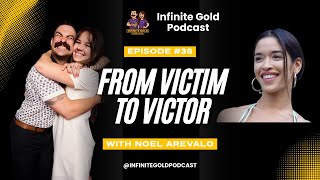
In this episode of the Infinite Gold Podcast, hosts Bree and Anthony Goldner interview Noel Arevalo, a fitness and nutrition coach who turned a turbulent past into a purpose‑driven career. Noel shares how a rough upbringing led her to discover fitness as a healthy outlet, eventually competing in bodybuilding and powerlifting. She explains that the true value of training lies in mindset, confidence, and discipline rather than aesthetics. Community and faith are presented as essential accountability structures that reinforce personal growth. Noel details her macro‑based, flexible nutrition philosophy, emphasizing a moderation mindset to break the all‑or‑nothing habit that many women, especially high‑achieving moms, struggle with. She discusses how she helps clients with disordered eating by reframing food choices as habits to be reconditioned, drawing parallels to her own sobriety from alcohol. The conversation shifts to her entrepreneurial venture, HerFit, a sports‑bra line born from her personal frustration with inadequate support garments, and her vision to expand the brand while giving back to women’s shelters and addiction recovery programs. Noel also outlines her holistic coaching style that blends weightlifting, bodyweight work, and muscle‑building science for longevity. Finally, she offers three “golden nuggets” for listeners: cultivate a relationship with God, surround yourself with the right community, and recognize that you can rewrite your story regardless of past hardships. The episode weaves together personal testimony, practical coaching tactics, faith‑based motivation, and entrepreneurial purpose.
Chapters
Push higher, go deeper, love longer, be stronger.
We'll keep climbing up the mountain.
It's deeper than you know it.
All right, everybody, welcome back to the Infinite Gold Podcast. It's your show hosts, Bree and Anthony Goldner. And today we have another special guest that we were so blessed to meet at our California Totality this July, Noel Avarello. Noelle is a fitness and nutrition coach since 2016. She also owns her own sports bra line called Her Fit, which she launched in 2021. Welcome to the show, Noelle. How are you? Tell us about yourself.
Hi guys, thank you so much for having me, and, um, I'm so grateful that I was able to meet you guys and you're just beautiful family and everybody. It was such an amazing event, and it was definitely totally God-ordained. So a little bit about myself. Hello everybody listening. So my name is Noelle Revolo. I'm 33 years old, originally from the Bay Area, but I've been in Southern California for the past 8 years, particularly OC, not LA. They're very different, you guys.
They're very different.
And I have been coaching— I've been blessed to coach women for you know, since 2016, like you were saying. I got into fitness around, I wanna say, I started actually taking my fitness journey seriously in 2013 or '14. And I got into fitness because I had a pretty rough upbringing growing up and it's all come full circle now. God has definitely worked everything for my good and he placed fitness in my life and it was a, a healthy outlet for me. And, um, and so I just pursued it full-time, and it really pushed me and showed me what I was capable of. And then I started like competing, bodybuilding, powerlifting, things like that. And, um, I shared my journey with people, and that's how I built my platform. You know, people live very vicariously, so that's how I built my platforms, like Instagram, YouTube mainly. And then, uh, that led me into, uh, coaching other women and showing them how I did that because I used fitness as a, um, healthy outlet, you know, fitness and faith mostly. And so then now that's what led me into coaching women, and that's why I do what I do, and I, I love doing what I do. And, um, It just really transforms people from the inside out. And, and that's how I ended up here.
That's amazing. I love it. I love how you, you change what, like, where you came from and how fitness played such a huge role and how now you're getting to change other women's lives by teaching them to do the same. That is awesome. I love that.
So as we have discussed on various podcasts, if this is your first one, we I teach based off what's called an infinity model. So talk about your personal, your professional, your vitality, and the community and how the community supercharges everything. For you being in that vitality sector, you talked about, you know, changing your, your inside out and now helping women do the same. Can you tell us a little bit about how community and maybe your mindset has to do with your vitality side of things?
So How do I even like start? Do you want me to start with mindset?
Yeah, let's do it.
So mindset, um, gosh, so when people start their fitness journeys, and this is something that I learned, is that you don't really— it goes a lot deeper than the aesthetics and the appearance than people realize, and they're desiring something a lot deeper than just having nice glutes, or, you know what I mean, losing the last 10 pounds. Like, it, it goes so much deeper than that. And for me, um, when I started my fitness journey, it— and then I, and then I did competing, it really pushed me to my limits, and it showed me what I was capable of. Um, it really built a lot on my discipline, um, and so it it started really instilling confidence in me because it— which all follows back to the mindset, confidence, um, what I was, what I was really capable of, how far I could push myself. And then, uh, it built a lot of my discipline, right? So like, um, especially now, you know, doing it for as long as I have, it, it, it adds so much to your confidence, to your your self-esteem, to your discipline, to realizing the things that you're capable of. So I don't know if that's like going off on a tangent on that, but like, that's great where the mindset part of it is. And also, you know, just the confidence and keeping those promises to yourself as well and taking care of yourself.
So good right there.
It goes so much deeper than just the physical part that people realize, and that's how it really transfers over. It really more so honestly is mental than physical. And I feel like we don't realize that until we get into our own journeys and start, you know, being consistent with it and stuff like that. And then the community aspect, this is something that I'm actually, you know, even though I have been a coach for a while and I've done, you know, the community aspect of things and then just like the individual one-on-one coaching with the women that I work with, community is so important and it's something that I have been being better about prioritizing because community, it helps you. Like, not only is like the— it's the support factor that you have, but when you're in community with people that are like-minded, it really, it really, it really— it reminds me of like my relationship with God, you know? And it's like our community within ourselves with like our personal relationship with the Lord. It's like you are called to be higher. You're called to— you're held accountable in ways because you're surrounded around community of people who are actually walking their talk. Um, and it, it, it calls you to be a better person in so many other ways just by the people that you surround yourself with, by their example, not even necessarily having conversations like how we're having right now, but It's so powerful because it, it just, it holds you accountable to continue growing, and it calls you higher to that version that God wants us to be and who he created us to be. And it grounds you and reminds you of that. So that's even something for me, because it's always evolving, right? Like, nobody has it all figured out. And that's something that even more so has been setting in for me of how important community is and what you guys just by being around you once has reminded me of is that that's why it's so important because you really are who you surround yourself around. So yeah, so that would be like the mindset and the community part.
No, that's perfect. I mean, they say it's cliché that, you know, you're as good— you're only as good as the 5 closest friends or family to you, but it's 100% true. It's like, I love how you said that. I mean, just going to back to our LA event where we met you. When we're around like-minded individuals that are pushing each other to get further along, to get us to those dreams and goals we have, we're more likely to do the same. If we're surrounded by people who are negative or have bad self-talk or have beliefs that you can't get there, well, you're probably going to follow suit. So I love how you're tapping into that more and more and being around the people and then building up the community of your own and your community is now gonna be held accountable and everybody else is gonna look at each other like, oh my gosh, she's growing, she's doing this. I, I wanna do the same thing. And it's really that connectedness, that community kind of supercharges everything.
Yep, exactly.
That's awesome. That, and you're helping build on people's discipline cuz not, not everybody's disciplined and everybody thinks, oh, I, I don't have the motivation to do this or motivation to do that. And you're like, the thing about motivation is it's short-term. It doesn't last long. You might be motivated for this one thing, but then when you go to do it again, you're like, oh, I'm not motivated to do it. But building up each time that you go and do that thing that you are not so-called motivated to do, you're building that discipline. So now you do it anyway, whether you want to or not.
Yeah.
And I think the community piece where you're talking about how they're being like-minded is helping build them up. So you're building up their discipline as well. And I like that. I think that's especially important with you in the fitness industry.
Well, let's tap into your, your coaching. One of the biggest things that you talk about is, you know, macros and counting, but not, but not like, you know, full-on in-depth on it, but having a lifestyle that you can actually live and not these whole like fads of, you know, oh, I need to go on another diet, I need to do another this, another that. And you've talked about, you know, the last diet concept. Can you kind of elaborate more on that?
Yeah, so I— so when I first did a bikini competition, bodybuilding competition, um, they tried to put me on like the bro diet, right, which we've all heard of, which is literally like the chicken, broccoli,. And intuitively, um, I was like, there's no way. I did it, I think, for a couple weeks, and I was like, if I have to do this, like, I'm just not going to do it. This isn't sustainable. And this is when counting your macros, flexible dieting, was really becoming a thing in the fitness industry. But there was a lot of old schoolers who were trying to, like, challenge it. Um, and so I, I learned— I had a— I was very fortunate which is another thing that's like mentors and coaches are so, so important because they're going to excel your journey a lot faster than you can. And so, um, I had a really, really good coach who coached me in all of my shows, and he pushed macros. So I learned macros, and I'm like, this is like amazing. Like, you literally can have balance. This is so sustainable. Something that I've learned with my clients now is, you know, people who have suffered from, you know, eating disorders and stuff. It builds a better relationship with food because nothing's like restrictive and anything too restrictive is going to just catapult you into bad habits, yo-yo dieting cycles, stuff like that. And so I really have shifted my coaching, coaching into talking about how, how macros and balance is so important for that because you can have it all, obviously within means, right? And so Um, with macros, you— like, I, I do definitely help them focus. Like, hey, you need to be like focusing on a percentage kind of a thing, like an 80/20 or 70/30. But I explained to them like, it's not always going to be perfect. And something that I learned myself after I was done competing, um, because I was stuck in this mindset because I was doing things so like extreme to an extent, even though I was counting macros, was the all-or-nothing mindset where a lot of times I'll have women who come to me who have been past athletes. They've been in the gym for 10+ years and they're like, I have all this figured out, but the nutrition part, I just don't know how to navigate the weekends, all this stuff. And I'm like, it's because you're stuck in this all-or-nothing mindset to where it's like they'll go to dinner and they're like, well, since I'm gonna have the burger and fries, I'm just gonna throw everything out the window and I'm just gonna go overindulge. But those are all those little small decisions that you make that people don't realize those compound over a month, 3 months, 6 months, a year. And then that's going to reflect how healthy you are, how much weight you've gained or lost type of a deal, right? And so what I teach them with macros is like, it's, it's literally you're relearning things of how your mind has been conditioned for so long. And a lot of people are stuck in that. And so I teach them like, you know, I encourage like, go out to eat once a week, or like, you know, with your families and things like that. And but I teach them moderation mindset, which is where I'm like, when you're, when you're, when you're practicing macros, you're going to still mentally— because these like, you know, neuron— what are they called? Like neurons are so ingrained in like, oh, I have to feel guilty if I eat this, oh, I'm going to lose progress, like all these things. But it's like, no, you have to be in those settings and actually practice balance You know, and I'll teach them things like, you can have these things, but maybe like instead of the fries, choose a salad. Maybe instead of, you know, the full soda, choose the diet soda, right? And also picking our poisons because everything is super bad for us, right? Like we're, we're reforming even just all the stuff, you know, in the United States and things like that. And it's going to be, it's going to be a long change, right? And so, but you can't think that you're just going to be eating healthy all the time. And you're going to be on these all restrictive diets because that is not sustainable. And you can have both, but it— you have to literally— it's learning new habits of breaking the all-or-nothing mindset and starting to practice like the moderation mindset of what I teach them. Um, and of course I push like you need to be focusing on nutrient-dense food because literally you are what you eat. We're learning a lot of things with how the gut is related. It's like the, um, the brain of the body and stuff like that, and how it correlates to our mental health, our energy levels, all that stuff. It's so foundational, nutrition. Um, but it's getting in those settings and actually practicing that to break the all-or-nothing mindset that a lot of people are stuck in. And so Macros is that pathway to teach them how to do that. But there's, there's ways of doing it, you know, like when you go on vacation or the holiday stuff like that, it's going to be 80/20 the other way. But it all is about— and I'll, I'll close that part of it like with this— it's all about— and this is what I tell my clients— it's all about the bigger picture. And this could really be applied to anything. It's all about the bigger picture and what, um, all those little decisions that you make within the 6 months, the year, that compound and are going to reflect how you feel, how you look, how you feel and how you look, and just everything your whole life, you know. So hopefully that was— that answered that, didn't it?
No, that's great. Sorry, you covered a lot. And I like your method of, uh, the moderation mindset because I don't, I don't think, at least to my knowledge, I don't think it's talked about enough when it comes to our dieting and, and our nutrition, um, and pairing that appropriately with our, our workout regimen.
Yeah, definitely.
You talk about habits and changing people's habits. What's one of the biggest habits when people come to you that they need to change in order to get the goals that they have?
Honestly, it goes back to the nutrition part, that habit, because they are stuck in the all-or-nothing. And so You know, and most of the women that come to me, they are high achievers. They're high achievers and they're moms. So like I was saying, I'm like, they're superheroes. Um, and so they don't know how to apply the all-or-nothing. That's all they know how to do, right? And so, um, it's— it stems back to the habit is with the nutrition of the all-or-nothing and Mostly it goes to like the weekends and them trying to learn how to balance the weekends and the family things and the work events and stuff like that. And so it really all stems back to having them actually be in those settings and practice the stuff that I teach them with, like, you know, how to navigate eating out and enjoying yourself and not feeling guilty. But it's so conditioned in their mind that I'm like, give yourself grace through this process with relearning and reconditioning your mindset around nutrition, because this is a habit for you, right? You crush it during the week and then the weekends you overindulge. And then that's where the starting over every Monday comes from. Yeah. And so, yeah. And so really it's helping them really unlearn and relearn and recondition their mindset around food because it's so reinforced all around us. And people don't even notice that, right? Like, um, I'm sure there's other coaches that have had this realization like me, but I hope that it gets pushed more of like what I'm talking about. Because that's why when, you know, I, I get on calls with potential clients, I'm like, trust me, like, I, I'm like, I don't know anyone else that does it like this, like I do. Like, I, I want more coaches to do it this way because sadly there still are coaches that, you know, do it in the extreme ways, and then that just— it, it, it, it, it catapults you into yo-yo cycling and then the guilt thing with food. And yeah, so that would be the biggest thing is really shifting, um, and literally reconditioning their mindset around nutrition and their relationship with food and knowing that they can have balance and all of that stuff.
So yeah, a question for you now that kind of like leads into that with the nutrition pieces. Have you ever had clients that have come in with food disorder? Yeah, eating disorders. And how have you helped them? How did you kind of help transition them and help shift their mindset?
So, so yeah, that's a good question. And So I got into fitness because, you know, everybody has their testimonies. I got into fitness because I was going down a really bad path with partying and alcohol, and it was like my saving grace. But being a coach, I've realized how untalked about and how vast, like, bad relationships with food and emotional eating and, you know, like eating disorders and stuff like that is. And so, and it's a, it's a thin line because food is a necessity, right? It's, you know, and so it's when you struggle with that, like, I just have so much compassion for it because it's, that's very challenging, right? And it's a big vice. And so for me, really, really How do, how do I even like explain it? Because it all comes back to like the mindset and reconditioning it. And so, okay, so this is, this is actually very powerful. So, um, because I, I gave up alcohol a year and a half ago and I— nice, thank you guys.
Yeah, congrats, that's awesome.
God is good. Um, and that was like kind of a vice for me, right? Like how we all, um, have vices and So I don't really necessarily like saying, um, oh, I've been sober because— and so I— this is what I say to the women that I've worked with that deal with, um, eating disorders or just more so like emotional eating and stuff like that. I say, yeah, this is just a bad habit that needs to be broken. This is a bad habit. Don't give it any more power than it's already had over your life. So good.
That is—
so that's why I say like Or for me with alcohol, I just say I've— because we, we know that language is very powerful. So I just say I have eliminated alcohol out of my life. And so I tell them, I said, this is a bad habit that has been sabotaging you in ways, and it's just a bad habit that needs to be broken. And right. And I say like, of course, like, I'm not a doctor, like disclaimer, all these things. But like, I just know the power of language and what we tell ourselves in our subconscious. So I tell them that. I say, stop feeding into these thoughts and this—
these—
the language that you're using of like, oh, emotional eating and all this stuff. It's like, no, this is just a bad habit that needs to be broken. Stop giving it more power over you than it's already had in your life and the sabotaging that it's already done. Um, because I take the experience that I've had with alcohol into that because that's their vice, right? Like, we all have our vices. Like, um, we're not perfect. We're not Jesus. Only he was perfect. And so, um, Um, but so that, and then really teaching them macros and just really leaning into telling them to like be kind to themselves and give themselves grace while they are going through that process, because you're literally reconditioning your, your brain and just this mindset of what you've been repeating and habit for years and years and years. You know, so, um, and then obviously being there for them and comforting them and, and, and just trying to support them as much as I possibly can. But I— that's the first thing that I say to them, um, because these conversations that I have with them, um, they're very vulnerable and they, they open up to me. And, um, I'm grateful for that, that they, they are that vulnerable, because then I'm able to see how exactly I need to support them and help them. But that's like the first thing I say, and then Once I know that, you know, reminding them to give themselves grace through the process and then really teaching them macros, that's what you have. You can't just like wake up and you woke up like this, like Beyoncé. Like I tell them, like, it's like this is going to be repetition like anything else, and your mind is so conditioned, so it takes time, you know, it takes time. Once I teach you the ins and outs of macros, then you're going to start understanding, but you have to get in those settings and you actually have to start practicing eating the fry, eating the piece of pizza, to start like unlearning. I don't know if that would be the correct word of saying that, but being okay with that and seeing that you're not gonna lose progress, you're not gonna, all those things, you know? So that's how I approach that, 'cause I know it's very sensitive.
Feel like it's okay to have it because we've got to live life and enjoy some of those things, but in moderation.
Yeah, exactly.
I love how you mentioned also like the lifestyle that they've been living, and I always equate it to where we can't flip your 5 years of bad health or 10 or 15 years of bad health in 30 days. It's just not going to happen. There is no quick fix on any of these. Anybody that says that it is, or that they have the program for it, it's, it's not true. So we love how you take that holistic approach to it. Um, one of the things that we talk a lot about on the podcast and just in general is legacy. And a question that we have for you on the nutrition side of things is, if you, if you helped coach, you know, thousands and thousands of women and change their societal shift of the way they thinking about food How would that impact you or how does that make, how would that make you feel?
It makes me like, I don't know how to describe it, fulfilled because they're not just learning something that's gonna first and foremost change their life and then obviously transform their bodies. But they also are experiencing a new level of freedom and peace. That's the deeper underlying thing that they don't even realize, um, because nobody talks about it either. No. So this is something that I was even, you know, learning as I— for myself, and really as I coached these women, I'm like, dang, Because until you learn how to have freedom within your nutrition and then shifting your mindset, it's always this lingering thing in your mind of, oh, the holidays, oh, these work events, oh, the kids' friends' birthdays. Like, all these things you don't realize that it hangs over your head, you know? Like, and it's this just like, it dims it. Dims that, you know, like, um, and so that's, that's the biggest thing I would say is like it, it's fulfilling because I, I know that it's not just transforming their life, their mindset, and their bodies, but it's literally giving them this level of freedom and peace that they— once that, that like, like switch flips, then they experience it. And I explain that to them. I'm like, that's— it's gonna flip. And then you're gonna be like, oh, this is what she was talking about that most people don't even realize because you don't— it's so— once again, that part, the lingering hanging over your head of, oh, this, that, oh, guilt, um, you don't realize it, but it's there, but it's just so conditioned in your repetitive thoughts and thinking. And then once you learn macros and the ins and outs of it and how to really optimize it for your lifestyle, your health, you experience freedom and peace that is just priceless, you know?
Yeah, that's so good. Oh my gosh.
It's deeper than we think.
Oh, it's so much is. And that's why, again, we always talk about the interconnectedness of everything and how your personal mindset and your health, they literally go hand in hand. And one of the things I talk about is like, it doesn't matter how far you push your body, or your body can only go so far as what your mind can. So like, if your mind keeps going back to your old ways and the old habits you have, you're not going to be able to grow. But once you start creating new habits and new thought patterns, that's when you're going to grow. That's when you're going to reach those goals and dreams that you have. So I'd love how you tap into both sides of that with coaching, because I agree with you, a lot of fitness coaches, nutrition coaches out there, they just talk about the fitness side of it. They just talk about the nutrition. They don't also talk about the mindset that actually has to all grow with you for you to get to where you want to go.
Yeah, definitely. Now with your coaching, do you, as on the fitness side of it, do you strictly kind of coach on weightlifting or do you do body weight? Do you do a combination? Like, tell us about that.
So I do, I would say the approach is like, um, like health and wellness and just like balance and day-to-day life. Um, so, but it's, it's a combination, like I would say. Um, I actually surprisingly work with a lot of moms, um, even though I don't have any kids on my own, but it's such a blessing. Um, and so they, majority of them will lift in the gym And then I have, you know, clients that will also just do bodyweight stuff as well. But I tell them, like, I'm very transparent and real with them, and I don't blow smoke at all. And I say, you know, eventually you are going to have to get in the gym if you really want to sculpt and shape your body in the way that you're telling me that you want to, because you need that resistance training. And overall, it's just really good, you know, like, to at least have 3 days a week in the gym, um, no matter what your regimen is looking like and switching up as, because it's just good for so many things like bone density and just— it's, it's, um, it's necessary, you know?
Yeah, no, 100%. And I talk about, um, the importance of muscle building with your, um, with your coaching.
Muscle building, um, I mean, building muscle there's— and there's just more studies with all the stuff that we have coming out. It's so important just for overall, like, optimal health. So overall, um, optimal health, and just as we're getting older, like bone density, like I was saying. Um, and I forget what study it was. There's, there's so many things that I'm always, like, consuming every day, but, um, they talked about how, like, the more muscle that you have, the longer life that you'll live. And I forgot exactly what the breakdown of it was, um, but it was talking about that. And they were talking about how they were comparing, you know, a man like in his 60s compared to a man that was, you know, a young boy really, that was like in his, like, you know, early 20s or something like that. Um, and just the difference of the longevity of life and muscle. Like, muscle is— it's, it's so important. But also, it stems back to you have to be, um, meeting your nutrition needs, especially your protein intake, because that's what recovers and, and fuels all of that when it comes to, to building muscle.
Yeah, so true.
I'm like, louder for the people in the back.
Exactly. It just don't—
like, I don't want I've heard so many chicks like say like, I don't want to go to the gym, I'm going to get bulky and look like a man. Be like, girl, you— if you only knew, it takes so much more work than just lifting weights. It's tying in your diet to go with it and the consistency. And you can preach on this too, but like, I don't want to lift weights, I don't want to get bulky. And you're like, no, but muscle is good for you. It's a longevity muscle, it's a longevity organ.
Yeah, absolutely. And I tell people too, I'm like, not that I'm knocking it at all, I've, you know, I've been a natural athlete, I always will be, and that's what I preach. Um, and but majority of the time when you see women that, you know, they hold muscle mass like men, more than likely they are, they're, they're supplementing things like, you know, um, steroids. Like, you know, so I was trying to find like a more, more graceful word to say, but that's, that's what's happening. Growth hormones. Yeah, yeah. It's hard for women to actually put on muscle like men. Like, we have to be so consistent, um, and even then it's just, you know, it's, it's a little more challenging for us, but That's, that's, that's what's usually going on when, when you see that.
So yeah, true.
So now steering a little bit into the professional pillar of things, obviously you're a coach, that's the, that's the business side of it, but you started this bra company and it's called HerFit. Why did you do it and what kind of spurred that moment for that to start up?
Um, okay, so I definitely want to make a point to say say this, I did not— like, first of all, I didn't want to get into fashion. I never wanted to get into athletic wear. I was very fortunate and blessed to work with a lot of different companies, one of them being Gymshark. I was sponsored with Gymshark for like 4 years. And so I got to, you know, try all of their new things first, like all of that. And I am somebody who the Lord blessed me with, you know, bigger breasts. And so I, and I've always like, before I had muscle, I was just like a little stick and it was like, whoop, like these, just these melons out of nowhere. Um, but anyways, so, so I struggled, you know, for so long working with such a, a massive like trendsetter, you know, brand like Gymshark, and then working with multiple different companies that would send me things, and it was just impossible to find a sports bra that had enough comfort, coverage, and support, you know. And so, you know, even like high— like Lululemon, Alo, all those things, like it was just— I could never find that combination. So I'm like, okay, well, I'm just going to solve my own problem. So, so I created Her Fit, and it took me, it took me a long time to source the right fabric, um, and just all those things. And so, um, and then so that's literally what birthed Her Fit Bra was, um, my own issue and my own problem. I'm like, okay, well I'll do this because I know that this is a universal thing and it's going to be solving a problem for a lot of women because there's always going to be, you know, girls that are born with just naturally big boobs like me. And so, um, so then that's what birthed HerFit. And, um, yeah, so it's, you know, I used to be that girl in high school that had to wear like 2 sports bras. I ran cross country all of high school, and I'm not even kidding, I would have to wear like 2 2, sometimes 3 sports bras. It's like a thing. It's still a thing. Yeah, it's still a thing.
I ran cross country too and I remember some of my teammates also doubling up on their bras. I was like, shoot.
I'm like, how do you do it? Yeah, see, it's a thing. It's literally a thing and it's still a thing too because I have a really close friend that she runs marathons and she's like, oh yeah, I still have to wear like 2 sports bras. And I'm like, I'm gonna just give you one of mine.
Um, the problem—
heck yeah, literally, literally. And so, so yeah, so that's, that's what birthed Her Fit, and, um, and I had to solve my own problem, so here we are. Nice, that's awesome, that's so good.
So, and so when you take into account starting this, this, um the bra side of things and the whole, uh, fashion side of it. And it wasn't something that you wanted to jump into, but you were solving a need. And that's a lot of times that you see with entrepreneurs is they're going through life or they're feeling something like, I have this issue, I need to solve it. And when you do it, you're now helping thousands and thousands of people for it. Do you see like an ultimate vision or something further past this? Like, we again, we talked about legacy. Do you see something with both the fitness and the fashion side of things, or how do you kind of see where you're going with it?
With HerFit or in general?
In general, with kind of with it all encompassing.
Um, so yeah, so I've always had a really big vision for HerFit, and I know that in time it will definitely get there because this will always be an issue. Um, and I, you know I want to help in that area because I'm literally the direct consumer of it and I know the struggle, I know the frustration. And so definitely taking HerFit and growing it into something even more massive to help women in that way, but also utilizing it for, I really would love to give back as well. As well. Um, I growing up actually, um, I was in— I had to stay in a shelter with my mom and, and one of my brothers at one point. And so doing stuff that's like close to my heart with like— and then also, you know, just overcoming, um, eliminating alcohol out of my life, like really utilizing— I, I know it will be extremely successful because it's just— there's no way that it can't be, especially if I have God in my corner. And so, um, I really want to give back to like, like addiction type things with it. And then also, um, to like women's shelters, just because these are things that have affected me directly, um, and, and my family. Um, but then as far as like the fitness coaching as well, um, I love it because I genuinely am changing women's lives. Like I'm changing families' lives. Um, but I know that all of the things that I've overcome in my life and, um, all the things that I'm currently learning that are just really coming full circle, um, at 33, um, and I, I, I, I just, I have— it's interesting, even when I was like 18, I remember thinking I really want to help people. That really struggle with like depression and anxiety. Like God put that on my heart like very early, and I just know that there's so much more impact that God wants me to do, and I know he's just been refining my character so that my intentions and my motives are for the right reason when I'm getting into that. And so, but like my vision really for myself is to— I don't know what that's going to look like exactly yet because I'm really trying to hear from God and be aligned in his will for myself. Um, but I, I really want to change people's lives and impact people on such a deeper level because I didn't have to go through the things that I had to go through growing up. I didn't have to overcome the things that I had, obviously with God in my corner, to not share it with the world and glorify him. And I know that that's that's what I am going to be doing.
Um, you're already doing it. You're already doing it, Noel. So proud of you.
Holy smokes.
Thanks, guys.
So that's my vision with it. We love it. I mean, that's what, that's what connected us so well with you, um, at the event was, is we have the same vision. Our vision is always to empower. It's always to help others. And then by taking obviously the money we make from that and putting it to good, and, and it's helping people even further than just on the baseline of things. And again, that's how we connected. We love you for it and appreciate everything that you're, you're doing for others.
Thank you, guys.
You guys, thank you. All right, and the last thing that we want to add to close up our episode with you we always ask, what are the 3 golden nuggets that you think our listeners need to hear from you?
Just think for a second about that. The first thing I would say is to, to pursue a relationship with God. That's the first thing. If I can, like, um, that it makes me emotional just thinking about it, um, because trying to do life without him is I just can't even fathom it. We live in such a broken world. I don't understand. I would not have gotten this far if it wasn't for him. And so, go to church, go to that thing your friend's been telling you about, like, because that isn't just somebody, or you're not hearing that by accident. That's God pursuing your heart. And I am who I am because of him. He has been my saving grace through my entire life. Everything I've been through, overcoming, you know, eliminating alcohol out of my life, all those things, pursue a relationship with God and have a relationship with him. I feel like that's enough. And then the second thing would be, the second thing would be definitely like even more so, I'm learning this now, is getting into the right communities. Um, you know, getting into fellowship at church if you already have a relationship with God, getting around people who are like-minded and people who are going to call you to be a higher version of yourself, which God created us to be. Like, getting in community with the right people will absolutely change your life. Um, and then the third thing I say is— what is the third thing I would say? I know what I would say, but I'm just trying to think of how I can piece it into words. Um, um, that you can really do anything that you, you put your mind to, and it does not matter the things that you have been through and, um, what your life looks like. Um, you— it doesn't matter, like, the, the hand that you're dealt in life. You can choose to create such a beautiful life for yourself. And that's what I have done, because I've, I've, I've been through a lot in my life. I've seen a lot. And, um, and this is what stems back to the first one of, like, really having a relationship with God, because he literally will use everything for your good, even no matter what you've been through in your life, no matter where you're at currently. He will use the worst of the worst for your good to create a beautiful life for yourself, a, an inner peace that surpasses anything that we can understand. Um, and you can choose that today for yourself and give yourself grace while you are transforming. But you, you can choose to change your life. Like, you don't have to stay in this victim mentality that sadly I feel has been very normalized in our society now, unfortunately. Yeah, sadly. And so that you, you can transform your life to, to be and have it be whatever you want, and you don't have to stay a victim. You don't have to, you know, like— and that's like, I don't know how to piece that into words, but like, you, like, you're— you don't have to— your identity doesn't have to be what you've come from, because I am not what I've come from. I've come from addiction, I've come from abuse, I've come from, um, a lot of things that I have done everything possible, and it's going to be a forever evolving journey until God takes me home. Like, there's no— you're never like reaching it because it's— we're made— he made us to constantly be evolving and constantly growing. Yes. Um, and so is just, you can, you can transform your life. Like, you can, you can make it be whatever you want it to be, and you don't have to identify with the stuff that you've come from and stay in that mindset. Like, you could choose to change today. But again, it's getting into a community of people that can help show you that and lead by example. And then also, um, even just, you know, starting with a relationship with God will change you in the most incredible ways. And it's not easy. I will say walking with God, but it's so worth it. I've done the world thing, you know, I've gone back and forth and it's like every time I end up back at the altar, you know.
So yeah, those are so good. The beauty of us asking the golden nuggets at the end of every episode is they're all different from every single guest we've ever had. Yeah, so good. Thank you for sharing that with us, Noel.
Well, Noel, again, thank you for everything. We appreciate what you're doing for the world, for women, for moms, for everybody that's coming to you for fitness mindset, the works. We appreciate it. Thanks again for being part of our community, being part of everything that we're doing. Um, looking forward to seeing you soon. Um, and if you guys like the show, like, comment. If you have any questions, feel free to reach out to us.
Also in the—
describe— yeah, also in the description is going to be all of Noelle's information, her Instagram. Follow along, she's got a bunch of tips and tricks that she's providing to you that are free. Also, we'll have her website for her bra, as well as if you want to get coaching from her. She's amazing, highly recommend it. Um, don't steer away and go somewhere else, just go to her. She'll be able to help you out, we promise.
Thank you so much, guys.
No problem, have a great one.










