Recharge to Rise: The Essential Role of Rest in Sustainable Success
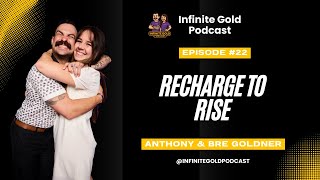
In this episode of the Infinite Gold Podcast, host Anthony Goldner and co‑host Bree discuss how intentional rest and recharge are critical for sustainable personal and professional success. They begin by trying to define "rest" and "recharge," noting that busy parents and entrepreneurs often mistake constant activity for productivity. The conversation moves into the concept of burnout, emphasizing that even low‑level burnout can impair memory, relationships, and work performance. Bree shares her personal morning routine—sauna with infrared light, delayed coffee, hydration, protein‑rich breakfast, and movement—as a concrete example of a recharge ritual. They explain how caffeine spikes cortisol and why drinking water and waiting before coffee can stabilize mood and energy. The hosts then explore evening habits: reducing blue‑light exposure by switching phone screens to red, avoiding screens before bed, using a bedside notebook instead of a phone, and establishing a wind‑down routine. Practical tips for busy parents include active rest days, grounding, short intentional breaks, and setting non‑negotiable self‑care items (exercise, nutrition, water, sauna, meditation). They address common mindset blocks—guilt about not working, the "go‑go‑go" mentality—and suggest reframing rest as a performance enhancer. Finally, they outline warning signs of insufficient rest (thin patience, neglecting self‑care checklists, feeling "mushy"), and recommend immediate actions such as reinstating non‑negotiables, adding electrolytes after sauna, and prioritizing sleep. The episode closes with a call to listeners to experiment with personalized rest strategies and to share the show.
Chapters
Welcome back to the Infinite Gold Podcast. Today you've got both Bree and I. How's it going, babe?
Hi, babe.
So today we're going to talk about cultivating sustainable success through intentional rest and recharge.
We need that.
So let's just start off. What is rest and what is recharge? Because I'll be honest, I have no idea.
I was just gonna say you're an example of what rest and recharge is absolutely not.
Yeah, agreed.
I think you forget to do that, let alone, um learn to like make time for it. And when you do, you— when the free little free time that you do have because of all the overtime that you work, you usually spend your free time recording like this.
Yep.
Spending time with the family, spending time with me.
Yep.
And once in a while you get some time to yourself.
Every once in a while.
Once in a while. Maybe you get to shower alone. Sometimes you get more showers alone than I do.
That's true. Well, I don't know, lately I've been—
lately you have been taking both of the kids. Yeah, it's team shower.
Yeah.
And, or no, community shower.
There you go.
Is that the word? Community shower. We're saving water, but really you end up taking up more water because you're then washing everybody.
Yep. I don't think we're saving water.
No, it's not like we thought we would.
Nope.
Well, rest and recharge. I think it's those— part of it's those little times where you get to kind of sit and quiet your mind, um, when it's running a million miles an hour. Buffalo brain.
Yep. Uh, thinker.
Yeah, part of that, uh, for like mental rest, um, mental recharge. And meditation, that was one of the other things I was just thinking about. Meditation, kind of to help quiet all like the other noise in your brain, um, to kind of get more relaxed, more zen, if you will. Um, you can quote me on that. The other thing I like, cuz I, you know, I feel like I'm struggling with describing what rest and recharge is because I don't really rest and recharge and we really need to. It's, it's very important because we can't be our best selves if we don't rest and recharge. We're not going to be operating at the same level as we would if we had got a good night's rest, uninterrupted rest. I mean, when you've got kids, it's a little bit different. Uh, all the parents out there can confirm with us, especially parents that have kids that don't necessarily like to sleep like ours. I feel like we've gotten pretty dang lucky. God bless. God gave us some pretty good children.
Yes.
Um, but getting a good night rest, uh, sometimes it might be taking a break or taking a rest from working out, but we call those our active rest days. So going for a nice walk, getting some fresh air, what have you. Um, that's kind of like a rest I feel like we end up getting. We don't really do a lot of sitting around unless we're sitting here recording, like right now.
Yeah.
Um, that's about it. Or if we're in our bed asleep at night.
Yeah.
And even then you struggle with your sleep. So I know you're resting and you're recharging is a little bit more challenging.
Yeah.
Tell me about how you, how long you've been struggling with that. I feel like as long as we've been together.
Yeah. I mean, it's, the problem is, is when you've got, and a lot of people are going to understand this, when you have like an entrepreneurial brain or you've got this idea and this vision that you have, or what you don't actually have, and you're trying to strive to get it. A lot of times is you get into this rollercoaster ride of just going, going, going, and then you fall flat on your face. And then you go, go, go, and then you fall flat on your face. And everybody's gonna know this term, it's called burnout. And that's the problem when you don't rest and you don't recharge. Um, and a lot of people think that burnout or falling flat on your face is like when, like you're just completely done. That's not the case. Like you can have low levels of burnout and when you have low levels of burnout, it's going to affect everything. It's going to affect your job. It's going to affect your memory. It's going to affect your family, your relationships, even the slight amount of burnout. And that's where, like you said, you got to take that time to rest. Yeah, take that time to recharge, whatever it is for you.
Yeah, just because it's different for everybody.
Yeah, just because one thing works for me or works for you doesn't mean it's going to work for another person. Yeah, you mentioned a lot of good ones so far. It's you time, it's meditation, it's relaxing, just being one with yourself, um, sleep, the sauna. Like, you, you jumped in the sauna this morning, and how was that?
Oh, so good, honestly. Like, I, after I started my morning with the sauna, and I only did 10 to 15 minutes because I'm just getting started back to going in the sauna because you have to get acclimated and adjust your body so you're not like in complete shock. I felt super energized, like, while I was in there. Obviously I felt like relaxed. I closed my eyes, I was like, shit, I'm gonna go back to sleep. But then I— but then I like opened my eyes and I kind of was just like, you know, sitting up trying to get my posture straight and like, you know, prepared for the day and, you know, practicing practicing better posture. Wow, I can't even freaking talk right now. Um, practicing better posture while I'm sitting in there. I'm stretching a little bit. I'm kind of like rolling my shoulders forward and back and kind of just kind of getting my body to like wake up and get the blood flowing. I had the red light infrared therapy going because I've heard that's really beneficial. Stuff that I learned in esthetician school too, so it's like good for your skin, good for blood flow. Circulation, etc. Um, but it really kickstarted my day, and I think that's something that I, I'm gonna do my best to implement and getting done first thing in the morning before the kids wake up, so that way I can have that time. Because then it, it was even better after that. I got to make breakfast, I got to eat it hot, and I got to drink my coffee hot before the kids woke up.
You actually made breakfast and ate breakfast?
I had a whole ass breakfast.
Now let's ask, how did you feel after that?
Amazing.
So what do I need to do more of?
Yeah, sauna, breakfast, and then my coffee. And I've been doing really good. I've been doing really good about waiting, um, and delaying my coffee in the morning. Before, I used to go straight to it. I mean, I, I would be lying if I said that coffee wasn't the first thing I was thinking about when I wake up in the morning. It's not Oh God, I didn't get enough sleep. That's actually, that's not even a thought that crosses my mind. It's more so like, I feel really tired, but it's just because I'm still laying here. And once I get up and I start moving, then I'm, you know, more awake.
That's huge right there. What you just said, huh? Is too many people continue to lay there and they end up falling back asleep or they end up feeling so tired. You got to move. That's one of the biggest things, especially with our morning routines. And the one that we have coming out is you have to just move. It doesn't matter what it is, whether or not you're walking to the cold shower, whether or not you're walking to the bathroom, throw some cold water on your face, whether or not you're walking down the stairs. If you have stairs, you need to just move and go do something.
Yeah.
You got to get the blood flowing. What is one of the benefits, or why are you now prolonging coffee and not drinking it the second that you roll out of bed?
Uh, the caffeine spikes your cortisol levels. Yeah, goes through the roof.
And what do we not want right now, especially when you wake up in the morning?
Spiked cortisol levels, because then you're immediately like stressed and like on edge, and then it just— it in essence, it fucks up the rest of your day. Yeah, your mood, like little things will start to annoy the shit out of you. Like for me with the kids, and I know a lot of other moms will probably feel the same way, like, my God, It was little things that they were doing, noises that they were making, or because they're like, Mom, Mom, Mom, I need this, I need that, I need you. And you're like, can I just have a minute of peace? And you don't— like, when, when you're having the coffee first thing before you take in your protein, you're going to be more stressed out and you're going to react a lot, a lot quicker and a lot more strongly than you would if you didn't, you know, have the coffee right away. So my thing I've been doing is I've been making sure to drink at least 12 ounces of water before I drink my coffee.
Perfect.
And I start to make my breakfast. I've been actually getting up with more of an appetite in the morning after I get up than I used to. And the goal is to have 30 grams of protein. Right now, I haven't been counting my macros and weighing things and all that stuff. So I've kind of just been eyeballing things and doing my best to gauge. And usually, like, if I have eggs, I'll do 3 eggs, and then I'll do a piece of sourdough toast. And if I've got avocado, I'd make avocado toast and I add that to it. Lately, my jam, jam has been the scrambled eggs and then a bagel with the cream cheese. But then I've been slicing thin, slicing strawberries and topping that on top of the cream cheese, and it's been super good. So like, now you get your, like, natural sugars from that.
Yeah.
My other hack was Dave's Killer Bread.
So good.
With the organic peanut butter that we've been buying.
Yep.
From Costco and thin slicing strawberries. And now you've got like basically a PB&J, but a healthy, a healthier one than doing jelly. Even if you go organic, like, yeah, that's better. But doing the fruit.
Fresh is always the best way to go.
Fresh is always the best. But yeah, long story short, having that kind of, way to like kickstart your day, and delaying the coffee really helps. Um, I actually feel— you feel more energized before you even get your coffee. And there's been mornings I've actually delayed my coffee by like 2 hours. Yeah, maybe even 3, because I just get going. I start drinking water in the— the drinking the water first thing in the morning along with your breakfast, you get more energized that way from the water than you do from the coffee, just because you're You're rehydrating after you've slept your 8 hours, whatever, a night, 5 hours, or— yeah, or I feel like Anthony, 5 hours, um, from your night's sleep. You're rehydrating because, you know, all your body soaked all of that up. You're replenishing, and now it's like an internal awakening. So you wait, you wake up a little bit more. Now, am I saying you're bright-eyed bushy-tailed? No, no, no. And I'm not saying that I am either, but I Once in a while I do get those mornings. Like today felt like one of those mornings. I drank some, I drank some water. That was one thing before the sauna. If you go in the sauna first thing in the morning, you make sure that you drink enough water. Um, I think it said probably about the 12 ounces that I was talking about, 12 to 16 ounces. Drink some water before you go in there and then make sure to replenish afterwards and bring it in while you're— yeah, you can bring it in. I didn't just because I don't know. Well, you're only in there for that short amount of time, but if you're gonna make it an extended period of time, yeah, if you're gonna go for like 30, 30 to 40 minutes, then yeah, you do want to bring a water.
If you're also going for that extended period of time, also think about adding in electrolytes or something after your— this sauna, especially if you haven't had any food, you haven't had any sodium inside you since you woke up, get that in you because you will feel lethargic if you don't have the electrolytes, you don't have the sodium, you don't have the water inside you. So that's the last thing we want to do. But these are, again, these are different ways of kickstarting your day. Getting in a body workout, getting a body workout in, that's going to recharge you for the day. Yeah. That cortisol level thing is huge though. And that also correlates also at night. So for rest and recharge, a lot of people, a lot of entrepreneurs, a lot of business people, they're going nonstop even when they get home. So they, they're not turning it off. They're not turning their phone off. They're not turning the TV off. They're not turning the computer off and, or they're consuming all of this blue light. And then when they go to lay down, they can't, or they can, but they can't, they can't quiet their mind. They can't quiet their brain because their brain is still going. So that's one thing that you really need to do when you're trying to think of a rest and recharge is that evening routine. Again, we have an evening routine coming out. Take a look at it, but not every routine is going to work for everybody, but find out what works for you. And make it a habit of turning your brain off before you're trying to turn it off to go to bed, because it's not going to happen then. Trust me, I've been there multiple times.
So the key, key with— I think part of the, like, the bedtime routine or the nighttime routine is don't do any kind of work an hour to 2 hours before your bedtime, because once you do, if you're sitting in front of the computer or you're on screen in general, you're, you're going to keep— your brain's going to keep on going. Yeah, your brain's not going to know when to shut off because you, you've like, you've kind of cut into that time. That 1 to 2 hours before bed should be like your recharge time before you kind of go to get to lay down and get rested. Because then in that 1 to 2 hours, it's allowing your brain to kind of slow down.
Yes.
And, and be like, okay, it's time to rest, we're getting ready to go to sleep. Like, it's— you have to tell it, it's like, hey, it's the circadian rhythm.
Yeah.
Yeah. You're like, shush, time to go to sleep.
On that phone thing.
Yeah.
Shout out to B. He told me and showed me is on your phone, you can change the color palette of the phone to all red. So there's a way where, again, if you want it, reach out to us, DM me. I'll be happy to show you and explain it. But basically you go into the color settings on your phone, you make it all red and you create a shortcut to that on the front page. So literally you can click on it and the entire screen is now red and it gets rid of the blue light and it gets rid of all the colors.
Okay. Now, and here's a question. Can you set it for a certain time for it to turn on?
That, uh, possibly there's like third-party apps. There's different, uh, stuff that you can add that you can probably do that. Yeah. But just the normal route, you just basically, you just from the home screen. Okay. You just swipe down and you click on the shortcut. You can create shortcuts and now widgets from that.
You're going to show me how to do that. Yeah.
Multiple tools, different ways. Personally, I don't, it screws up the thing and I just now make it a habit. Um, as you and I both now do is like from dinner time, like the phone, we're not messing with the phone. We're not even on it going to bed. The only thing I think I look at my phone is to make sure my alarm is set, but other than that, we're not looking at it and no research either. Yeah. No research. Cause that was my issue is I used to do a lot of research before bed because my brain would be going, and the next you know, I can't shut it off because I'm like, oh well, if I think about this, oh, then what about over here? And then, oh, that, that makes sense. And then if I do it here and then I circle back and then I got here, and next you know, I'm like hamsters. Yeah, I'm not going to sleep. And now an hour, 2 hours later. So I know entrepreneurs, there's other people out there that have that. You got to set it off to the side. On top of that, one thing that's helped me is, uh, having a notebook next to the bedside. I probably do it half the time, but at least I don't even grab my phone. I used to just grab my phone and then go to the notes on my phone to try to type something in that I think about. But next thing you know, I'm now holding that phone, got the blue light, my body, the brain in your body is now thinking, oh, maybe it's time to wake up now when it's not time to wake up. And, or you have that bad habit of, okay, you open up the phone to go to notes, but then you saw that you had some notifications. So the next thing you know, you're checking notifications, distractions. Exactly. Get rid of it. That's move it off to the side. Use a notepad or something by your bedside if you're that person that needs it. Mm-hmm. Because again, you need rest. There's a study that shows, and we talk about it within law enforcement, that if you've been up for 17 to 19 hours straight without sleep, basically your BAC level is a 0.05. You're almost at that legal limit of being drunk. Without being drunk because you've been up for so long. It's your brain is not necessarily turning to mush, but it's basically turning to mush. Like, it's in go mode. The—
how, how they know that and how you guys all know that, but yet you guys work 18-plus-hour shifts at times.
Shift work. That's nurses, doctors, 24 hours, firefighters.
Yeah, yeah. Like, that's absolutely insane because that's, that's not healthy.
We know the stats, but we still do it.
Right. Yeah. Well, it was like, okay, how, how are, how are all of you guys able to do your jobs safely?
And then that's your body.
Yeah.
I get it. It's basically what it comes down to is you start training your body and you knowing what you're capable of, but then unfortunately a lot of times is you start fixing it by consuming caffeine. So then you consume way too much caffeine to increase the stimulant in your body to keep you going. Which is a completely bad health side of things and also leads into the other part that we talked about on going to sleep. You do not wanna consume caffeine 4 to 6 hours before bedtime. They say the ideal and optimal timeframe is 8 hours before bed. Now a lot of people aren't gonna be able to pull that one off, especially myself and, you know, the mothers out there, entrepreneurs, but 4 to 6 hours at a minimum. You do not want to consume any caffeine.
Yeah, this isn't coffee this time, by the way.
This is—
we're drinking bedtime tea. Yeah, you know, I mean, because we like to record late at night when the kids are asleep. Yeah, when the kids don't have sitters, sometimes we just have to work with the schedules and the tools that we got. That's where we're at right now.
Here's a good one for this one, for the tea: let your thoughts give hope, guidance, and upliftment to all. Now the thing about this, it kind of ties into the next thing I want to talk about, is let your thoughts give hope. Let your thoughts— if you're always thinking about business, you're always thinking about the future, and you're not slowing down, you're not being mindful, and you're not doing one of those great things that you mentioned, meditate, your mind actually is not going to be as creative as it can be. Those creative thoughts and a lot of those like scientists and those people that we think are like above all and smart, one thing that they're very good at is just sitting down with themselves and just thinking about whatever, just being. That's where those creative thoughts pop in.
Yeah, no, that just like dropped a big truth bomb in my brain right now. Like, you're— when you allow yourself to just be and to not like be distracted by external things. And, you know, or you got your 3 hamsters running, running their wheels in their brain. You don't have 1 hamster wheel in your brain, you've got 3.
Yeah, at least.
Yeah, at least 3.
Maybe 33, who knows.
That's, that's a lot that's operating up there, bottom line. But yeah, allowing yourself to just be and kind of have your brain and your body like be at peace, then you're allowing your body to recharge and regenerate and allows for your creativity to really come out.
Yeah.
So, uh, and this just made me think about it, it's like with, um, when I was doing music stuff and doing songwriting, I couldn't just sit down and like force myself to like write lyrics on a, on a piece of paper. And I do it backwards. I did it backwards, but there were times where I could sit down and I could get like a little bit of an idea coming out, but then I'm okay, this is forced. I need to just let myself be and then feel whatever. And then my creativity would eventually come out. Like, I'm random, I'd be brushing my teeth. There was literally one day I was brushing my teeth and I had like a good melody and some lyrics that came to my brain. I was like, shit, that's good, I'm gonna write that down.
So did you start singing while brushing your teeth? That sounds a little hard.
I was humming. Okay, so, so I can't— you can't— yeah, singing and brushing teeth, that's a little challenging.
I want to see that video on that one. That one had to have been good.
No, I, I hummed. All right, but humming's good because you're still like whatever, you know, just getting it out. So I got it and I was like, okay, keep going, keep going, keep saying it so that way you like get it out and then remember to get it on paper. And my phone of course was downstairs, so I couldn't record it. So as soon as I got downstairs, I was able to do that. But anyways, we scrolled out. That was good.
Awesome. So we've got some questions on this topic to finish it up. The first one is, I feel guilty or unproductive when I'm not actively working. How can I shift my mindset to view rest as a necessary part of my success and not a hindrance?
Yeah, I think I've heard people say that before and they're like, oh my gosh, I can't sit still. I need to get this done. I need to get that done. I think my dad is a perfect example of that because he is just go, go, go, go, go. The man doesn't know how to sit down. He doesn't know how to rest. He's like, I got to get this done. But it's like, you're getting older. Your rest and your recharge is like even more important now than ever.
Yeah.
If you want to be able to keep up with X, Y, and Z and/or your grandkids. I think he always thinks that he's— that if it doesn't get done now, it's not ever going to get done. Okay, and I don't have time to rest, makes that kind of excuse. I guess he— I want to say, and then he doesn't really feel guilty about it, but it just like— I feel like it just, it still ties in with it because he feels like he's not being productive if he's not up and moving. Okay, I had something else to tag in with.
So how do you shift that mindset that it's okay to rest?
You have to remind yourself, like, if I want to be able to get X, Y, and Z done, I have to rest and recharge or that it's not, or, or it's not going to get done the best way that I can, you know, complete that task. That finished product isn't gonna be, uh, you know, grade A kind of product. If I didn't get my, my rest and recharge, if I'm now going in exhausted, my brain's mush, I go to try to complete something and be like, well, that's a, that's graded at D. You know what I mean?
That's the biggest thing right there. Is if you're just in go, go, go mode, then you're not gonna have that creative side of you. You're, you're, you're gonna go into your work, you're gonna go into that hobby, you're gonna go into that side, uh, gig that you're trying to do. And if you're not at full potential, then you're, you're gonna, you're gonna half-ass it. You're not gonna get the ultimate goal that you want, or it's gonna take you a lot longer.
Right. Well, too, and if you're gonna, if you force it, you're just gonna get frustrated.
Yeah.
And then you're gonna give up altogether.
Yeah. That's the thing actually that literally came to mind as I was saying it is a lot of people, and I've had the same issue, is that I need to get this done now because this is where I'm going. So I'm just going to go full board. But the problem is, is you haven't set in your mind that I have to go so fast to get it done quicker that it ends up taking longer because basically what you said is it didn't get done the way it needed to get done. So in essence, instead of it taking 3 months to 6 months because you pushed it too hard and it didn't get done properly, it's now going to take you 9 months, 12 months, depending on the project. So it's going to end up taking longer because you have to fix things. You have to change things. You're not going to have that creative mind that you need to accomplish that goal.
Mm-hmm. Yeah, no, I could see that.
So here's another one, and this one actually helps for the mothers out there and/or entrepreneurs is with a demanding schedule, what are some small, realistic ways that you can incorporate more intentional rest and recharge into your daily routine without feeling like it's another to-do item? That's the big one right there is I know you've changed your mindset on it, which is how is, how do you change it where it's not a to-do item?
Realizing that it's, it's a part of my self-care, and it's something that I, I need to be my best self and to have more patience. I feel like with the kids, with you—
well, you've elaborated it— is for you to take care of other people, you got to take care of yourself first.
Exactly. So not, not adding it on a to-do list because then you, you dread it.
You feel guilty.
You feel— yeah, this mom guilt. Yeah, it's a huge thing. A lot of moms are like, well, I can't do this, I gotta go be with my kids. No, go take, go take time for yourself. You'll feel so much better, even if it's just an hour away. Yeah, you know, I, I mean, I get it. There's, there's days where like sometimes an hour does not feel like enough, and I'm like, I could do a whole entire day to myself. But I don't, you know, at times we don't get that luxury all the time.
Yep.
Not, not a lot of moms do. So it's like, we got to get, you know, take what we can get and really just embrace and be present in that time that we do have to ourselves. So that way we can show up as our best self for our families, for our kids, and just for our individual self.
Oh yeah.
Like, you know, because it affects your— it affects your mindset because then you start going down deep, dark rabbit holes, you know, when just because you have a bad day and you say it's one of those days that you don't get time to yourself. And then you, you know, start maybe going down the dark rabbit hole of saying negative things to yourself and then it, you know, it'll, you down, downward spiral.
Yeah.
Um, I think I've gotten pretty good about backing myself out of the dark hole as soon as I start to feel myself going in or negative thoughts start to creep in. Whereas before I used to let it take over me.
Yeah.
And it was just something I was thinking about today is just, you know, when you learn how to control your mindset, you have control over your life. You have more control over your life. You have more control over your, your thoughts, um, your, the things that you say and your actions. It's all, it all ties in together. And you know, when control your brain, control your mindset so your mindset doesn't control you.
That's beautiful. Love it. Well, I've got nothing to add to that one because that, that solidified that one. So the last one, what are some telltale signs that I'm not getting enough rest and I'm heading towards burnout? And what are the first steps I should take If I recognize these signs in myself, uh, when your patience is very thin. I, that was pretty much, that was pretty much one of the things I was thinking of in the top of my mind is when my patience is thin.
But I also know like, uh, if you're, you're not doing— again, this kind of ties back into this, the second question that you asked is if you're not taking care of yourself properly, you know, the doing the checklist, have I eaten today? Have I hydrated enough today? Did I get enough sleep? Have I worked out? Did I get some sunshine? You know, if I didn't get really any of those things as part of kind of like my recharge, honestly, like, because going out and grounding, um, that I got to do today too. I did a lot of things that really, really helped boost my day, um, but if not getting any of those things also kind of lets me know that I didn't recharge properly.
It's when you start neglecting yourself. So when you start looking at your schedule and you start looking at what did I do today for myself? And you start realizing that you did absolutely nothing for yourself, you're leaning towards burnout because what you're doing now is, is you're, instead of doing the things that you know you need to do for yourself, you're now doing other things. That means it's being taken away from that, and eventually you will hit that burnout phase where you're like, holy moly, I haven't been in the sauna, I haven't been able to do grounding, I haven't been able to be working out.
So you try to pour from an empty cup, and then that's where patience is just like, nope, very, very thin or none at all.
One of the big things that I know, um, that has helped me is having those non-negotiables.
Yes.
On a daily basis, you have to have non-negotiables that are going to help you rest, help you recharge, help you be the best man, woman, person possible to get that job done of whatever you need to do for that given day. Those goals, those motivations, things, those visions that you have, you got to be able to have non-negotiables to get that done. A lot of those for me, a lot of those for you, is they're working out. It's getting our nutrition. It's getting our water intake. It's having that time either for the sauna or for grounding, doing meditation, doing this stuff that are going to help us be the best version of ourselves so we can help other people a lot more.
Yes. Couldn't have said it better myself.
Perfect. Well, again, thank you all for listening. And today we talked about rest and recharge. Make sure you're doing that. Make sure you're Feeling and fueling whatever it is that you need to for yourself, whatever helps you rest and recharge. It's different for everybody, so don't just take our advice. Go out and do what's going to work for you.
Go online, look up some ideas. There's plenty of influencers out there that can give you some other suggestions too for resting and recharging. And, you know, I think, um Eileen, Vital Vitality. Yeah, she would have some good recommendations to help you rest and recharge, because when a lot of people think about vitality, they don't really think about the rest and recharge part, which is the most important. That's the most important. That's the top of the totem pole. It's not just about what you're putting into your body and working out, but it's the rest and recharge. Definitely don't forget to rest and recharge.
Follow us on Instagram, follow us on Apple, Spotify, YouTube. For all the fun growth and greatness tips and tricks.
Tips and tricks.
All the tips and tricks. 5 stars, leave a review. We love you guys.
Take care. Like the show? Share the show.
I like it.










