Unlocking Peak Performance: Sleep, Mindset, & Entrepreneurial Gold with Dr. Rad
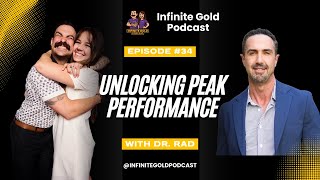
Dr. Radfar, a dentist and sleep-apnea specialist, discusses how untreated sleep apnea raises cancer risk and cuts life expectancy, plus the difference between CPAP and oral-appliance therapy. He created Rad ZZZ and Rad Jaw supplements after his own car crash and sleep struggles, and shares why sunlight exposure and blackout curtains matter for your circadian rhythm.
Chapters
All right, all right, everybody, welcome back to the Infinite Gold Podcast. We are here today with my co-host husband Anthony Goldner and a very special guest, someone special to me. Uh, my dentist that has been my dentist for probably like my whole life. Uh, this is Dr. Radfar. Welcome to the show. He has been a dentist in the dentistry industry for 23 years, 15 years in the field of sleep apnea. He also owns his own business at Rad Health, health, uh, health products for sleep, cleaning supplies for teeth, night guards, and all the works. They even have a couple of NFL teams that are cleaning their mouthpieces with his product. That's pretty frigging cool. Welcome, Dr. Radvar.
Thanks for having me on. And, you know, I've been your dentist for your whole entire life. I'm not that old.
I mean, geez, I'm not that old either, but you still, you still look as young as the day that you took over.
You're doing a great job so far. I like you as a host.
Thank you.
You know, in this, in this journey together of like being your dentist for almost 21 years now, and also your family and now your hubby, It's been great to see your guys' growth and, and thanks for having me on. I really wanna dive into a lot of sleep, how to help your listeners sleep better, how to assess their sleep. And, and of course our big passion is personal development and, and all the fun things that make us smile at the end of the night and wake up with gratitude. Right? So I'm ready to dive in with you all.
Yes, 100%. Let's do it.
So the first question I had, and obviously you already alluded to it, was we were going into the sleep side of things. And for me, it's a very big thing because, you know, working nights and then training during the day and then having our business, I've— I'm kind of like all over the place. So what's one of the biggest, uh, downfalls that you see with people when they're not able to get the right amount of sleep? Or let's just say the quality of sleep, because obviously I know quantity is one thing, but quality is more important than actual quantity.
Yeah, you know, for you that you do more of a graveyard shift kind of thing, you're losing your circadian rhythm. You know, in the morning today when I woke up at 5:00 AM, I went out for a little brisk walk and I try to get some sunlight in my eyes. That's one of the tips that I always recommend, about 15 minutes or so, 10 to 15 minutes of sun in your eyes that increases your natural melatonin production so that by the time nighttime happens, 12 to 14 hours later, you're able to fall asleep a little easier. So unfortunately, your, your, your cycle gets a little switched. And that's why it's really important to like have blackout curtains when you're trying to fall asleep or stay asleep. And then artificial light when you wake up to really bright light when you wake up to make sure you get that circadian rhythm, even if it's a fake one, so that you can sleep well and get that quality of sleep because a natural production of melatonin does allow for that.
Gotcha. And then what's like your biggest tool for entrepreneurs? Because we have a lot of entrepreneurs on our— that are listening that when they're trying to go to sleep at, you know, that 8, 9 o'clock so that way they can get up at 5 o'clock and their mind is just going crazy. They're like, well, I got this to do, and then I want to do this, and then if I do this, and then I've got this. How do we slow that down?
You know, let me talk a little about myself here. Yeah, you know, I'm not just a dentist. I'm also— I got a bunch of products and a brand, and I teach other dentists on how to treat sleep apnea and snoring with a mouthpiece. My journey began back in 2009. I fell asleep at the wheel. I crashed my car going about 35, 40 miles an hour into a tree, not knowing I had sleep apnea. I was having that, those issues, tired throughout the day, trying to grow my dental practice. And, you know, I got tested with a home sleep study, which is now what I do for my patients. And boom, I have mild sleep apnea. They gave me that mask to wear called the CPAP machine. And everyone here who's listening knows how sexy those CPAP machines are. I mean, imagine putting it on, you know, right after you're intimate, be like, goodnight, baby. And, you know, or Or if you're single and, you know, you're dating someone and, you know, you put that on and they're looking at you like, wow, what's going on there? Well, it helps to prevent me from snoring and having maybe a heart attack in the middle of the night or falling asleep at the wheel. But it isn't as, you know, as nice as putting a mouthpiece in. And majority of patients can wear that mouthpiece. So I was patient zero at my practice and I started getting better quality sleep. And, you know, as you mentioned earlier, it's not just about the number of hours, it's the, the quality, meaning you're actually breathing oxygen that you can get into the REM and deep sleep that can be monitored typically by an Oura Ring or a wristwatch that has that kind of Fitbit mentality, right? So that's the first thing is we got to make sure you're sleeping well, no matter what hours of the night or day you're sleeping. And that can be done through a home sleep study. Now, going back to the entrepreneurship, my product line, Rad Health Inc., started— I started that during COVID because my sleep patients would walk in and be like, yeah, my mouthpiece is great. My wife loves you. I'm not snoring. And I've heard that a lot, by the way, Anthony. My wife loves you, which is a really weird thing to hear every day.
That's weird.
I've got a lot of wives out there that love me, which is a very cute thing to hear. And husbands, of course. But they're like, I can't shut my mind off. I got my mind racing because of COVID So I'm taking Tylenol PM, Advil PM, Xanax, Ambien, half a bottle of wine, Benadryl. And as we all know, Benadryl.
Yeah, I was on that one.
It knocks you out, but it doesn't allow you to have great deep sleep. And so you wake up a little more groggy, right? And also it's liver and kidney toxic, these medications and supplements that we take in excess. And so I dove into the supplement business. I was also having a little bit of trouble. I mean, you guys were coming in, I'm working in your mouth during COVID and I'm like, there's saliva bubbles and everything spraying up in the air. I don't know where you've been, you know?
Yeah, sure.
I was more afraid of you all than you guys were afraid of me. And, and so, you know, so I dove into this, you know, my mind was— I dove into the supplement business and created Rad ZZZ. Rad ZZZ was my first supplement. And it came just out of the need that I saw my industry or my humans around me that needed it. And then people were clenching and grinding their teeth a lot due to anxiety and stress. Again, during COVID there was— yeah, there you go. You guys are pointing at each other. Oh, yeah. I think everyone nowadays, especially if you're in your 30s and you're ramping up your life, you have like 2.2 kids, a dog, all that, right? And a career that you're trying to— you're going to clench and grind your teeth a little more. Fight or flight response, or your mind is going to continuously kind of race. And so I created Rad Jaw, which is a supplement for the jaw that helps alleviate the tightness of the muscles using magnesium glycinate and fish oil and some other things like chondroitin sulfate and glucosamine to help with the, the popping, clicking, and the cartilage. And so these kinds of ideas came about based on need, and it really just takes the courage to get out of your fear mindset. You know, when we talk about David Hawkins energy, scale. We talk about how you live in fear. Your limiting beliefs are pushing you in this fear of failure. And what if it doesn't work? What if I lose money? Well, you have to have that courage and certainty that there's a need for your skill set, right? Or for something you're providing. And when you get that courage, you're able to take those risks and take those ideas now and implement them and hopefully make a difference and make an impact. And so, that's how my journey started in and my product line. And I would tell you that to calm your mind, a lot of stuff that I've learned recently, uh, guys, it's been the, uh, journaling and meditation techniques to get the work— the thoughts on paper, right? And, and, and kind of be like, okay, like, today was really a crappy day because X, Y, and Z happened, but I also was able to like get up and walk and, yes, and kiss my kids and, and, and help humans and be able to have this home and my car and running water. Did you guys know around 850 million people in this world, it's about a 9th of the population, has no running water to brush their teeth, to flush a toilet? And we forget that, right? And so that mindset of journaling and gratitude at the end of the night and also writing out what I need to do tomorrow, as opposed to just like thinking it. That helped me put my mind a little bit more at ease so that I can have a little bit better quality sleep just by those, those little techniques.
Yeah, he's speaking our language.
Oh yeah, I love that. That's literally what I had to switch with myself was that journaling and that nighttime stuff. And then the part where you added in the appreciation and the gratitude, it makes a world of difference. Because like you said, yeah, we're gonna have bad days. We're never gonna have just good days. So when you have that bad day, cool, acknowledge it. And then what actually went well that day too? What do you still have because of that day? It's been a great flip for me on relaxing from a hard day that I might've had.
The problem is, and I don't know, maybe you guys can help me on this as well. Um, you know, I've dove into Tony Robbins's events. I've been to Dr. Jordan Peterson, Joe Dispenza. Peter Crone, the Kabbalah Center, you know, all these— Danny Morel, all these guys and some gals that, you know, that I've been following and going to their retreats and events is the consistency. So we sit there at night, we look at our journal right next to us with a pen right there, and we kind of go, mm, kind of lazy to do it right now.
Yeah.
Is it really working? Right. Does it really work? And it's almost like saying, oh, well, there's the gym. I see some weights and I'm thinking about how it's going to make me healthy and make me look good and attract people and get strong and support my muscles and my mind and all that. But I'm going to go, right? Eventually we want to go, right? We go to the gym and you guys are in great shape and we go to the gym and, and we do 3 days a week, maybe, right? We push it. We do 3, maybe 4 days a week. And we're like, so happy we did that. And after 4 days in a week of doing that, we feel somewhat better. Yeah, we don't look ripped. We haven't lost 12 to 15 pounds, but we've maybe gotten a half a pound down. Maybe we've gotten some veins popping for the guys and some, you know, toneness for the gals. And that is just from 4 days, right? And then we slack off for another 4 or 5 days and we lose it all.
Yep, there it goes.
And it's the same concept in journaling and in meditation. It's like, does it really work? Well, if you do it 4 to 5 times a week and you're doing it for 3 to 4 months, man, the synchronicities and the breadcrumbs that get thrown at you to be able to have everything that you've ever wanted tipping the scale, that doesn't still mean you're not going to get the negatives, right? But it tips the scale. And the universe keeps telling you, hey, you're doing— and then you're addicted. Then you're in, right? And you're a believer because you see the flex, you see the weight loss mentally, emotionally. And I think that's the key, is pushing yourself, having that inner conversation, that inner dialogue, like, I haven't done it in 2 nights because it really doesn't work. It makes me— I'm like fooling myself maybe. And I don't know. And that inner dialogue needs to stop. You got to just be like, you know what? That's just, again, my limiting belief, the story we tell ourselves. And we need to stop thinking that way and push ourselves to hit the gym mentally and take the 5, 10, 15 minutes to listen to a YouTube for— you don't even have to do anything. Just listen. If you don't want to sit there and actually take the time to write 5 to 10 things that you're having such a hard time having gratitude for night after night.
Which there's so much stuff around us to literally— you could pick thousands of things that'll last you a long time on what you can be gratitude for or have gratitude for. I love that concept because I literally just, uh, I think it was on Instagram, maybe yesterday, the day before, David Meltzer posted it, and he talked about that exact concept where basically you do something one day, all right, X to the 1. You do something the next day, X to the 2. You do something the next day, X to the 3. And then you skip that day Well, it doesn't just stay at x to the 3. You just got— you're now x to the 0. You just went all the way back. So at the end of the month, I love how you put it, at the end of the month, if you went to the gym, let's just say 16 times, or you journaled 16 times, well, those other 20, those other 14 times, 15 times wiped everything out. You literally have done absolutely nothing for that month. That's why at the end of the month you look and feel the exact same way you did at the beginning of the month, even though you think Oh, but I journaled 16 times, or I went to the gym. Well, what did you do those other days? Like, you're— it didn't help. So I love that concept that you brought in.
Yes, and inconsistency that broke it up.
Yeah, yeah.
And, and, you know, um, it's better to do something, but you have to start believing in the consistency. You have to literally, even if it's for 5 minutes, you think it's not that much, it's better to go for a 5-minute walk than sit on your couch, right?
It's true.
And You know, it's crazy when you look at, um, animals, like, I don't know if you've ever seen these videos on YouTube or whatnot that you see these animals being born, right? Like a horse being born. Yeah. Right. And what, what happens to this animal? It comes out and it like stumbles a little bit and within minutes they start walking. Right. How long did it take your kid to walk?
15 months. Yeah. Laney was a little quicker. She might've been like 12, but Jackson, yeah, he was almost 18 when he was full on walking. Yeah.
Exactly. So it takes a human, even though we're the most advanced species on this planet, it takes us so long to walk.
Yeah, it's crazy.
Then talk, then emotional regulation. By the time you're in at least 7 or 8 to even understand what an emotion is. Yet we expect a retreat, 2 meditation sessions to have this epiphany of this abundance and love and finances to fall on our plate. It's like, where do you get that? How are you going to be rich going and clocking in on Monday at work from 9 to 5? No, it takes—
that would be nice. I'm not going to lie.
That would be nice, right? It takes even the ones who make this idea like Facebook or an idea that makes you billions of dollars. It took years to develop something like that. And 12 to 14 hours a day of developing your business and your product, you spend 12 to 14 hours a day understanding mindset, meditation, you know, all that, man, you literally, you'd walk on water. You'd probably touch somebody and they would, you come into my office, I just touch your tooth and it would heal.
Heal.
Yep.
It's so true. I mean, if you look at all big businesses that everybody are like, oh, I want to be the next Apple. I want to be the next, I want to be the next Amazon. Well, Amazon didn't make a single dollar for 10 to 15 years. Yeah, we talked about it the other, the other day. Disney went through 300 nos before he even became an amusement park, and then he didn't make any money for the longest time. It's like you got to change our mindset. Like you said, we got to change our limiting beliefs that something's just going to happen overnight. It's not going to. You have to put in the work.
Yep.
That's what you talk about all the time. Put in the work.
And at the end of the day, it also just makes you feel better. I always end my talks that the reason why we do this work of mindset, energy check, awareness, compassion, instead of leading with guilt and anger and jealousy and anxiety and rage, is so we ourselves can just have a little bit more peace in our world, just a little more calm, a little less anxiety. And so at the end of the day, when we're falling asleep, which is we're entering that unknown, or when we take our last breath, we're more at peace. There's the concept of rest in peace. I believe rest in peace should happen every night, being a sleep dentist.
Right?
And to do that, it requires Throughout your day, not just that journaling at the end of the night or a meditation for focusing on your breath for 5 minutes, which is the most hardest thing to do, is just focus on inhalation, exhalation for 5 minutes when you have 17 things a minute. All my packages. Oh, my kid. Oh, my email. Oh, I didn't do this. Did I close the fridge all the way? I don't go back to my breath, right? All those things that we're doing. And that just shows to you even more that we need to do even more of that, right? And sometimes I sprinkle during the day at lunchtime, I'll just sit there for 5 minutes and I'll just do my breathing so I can have that peace, not just when I'm resting at night or resting at the end of the life, the journey that we have here on this planet, but actually even throughout the day. And honestly, man, I tell you, dentists have the highest suicide rate, top 3. Of any profession. And I get it, but I also don't get it because it's like, I'm a happy-go-lucky dude. And it's not because, you know, it's not because I'm anything different. I've had the struggle, you know, I've escaped my country when I was 6 years old. I, you know, I don't play victim to the struggles to come to this country and all the stuff that, you know, we all go through, through our childhood traumas. Buzzword that we've all experienced. And at the end of the day, this is the type of work, the Dispenza meditations, the breathing meditations that you learn through the Buddha, which is just focusing on your breath. These are the types of things. Prayer, if you're into religion, that's a meditation, and that's a way of keeping your peace.
Wow.
And it's because you choose to better your life, better your health, and choose to see and do good. Whereas other people are like, no, poor me, poor me, I came from this, I have no opportunity, there's no opportunities for me to become this successful, like that's impossible. Well, that's because they've got a shit mindset. They've got limiting beliefs.
Yeah. And, and, you know, Anthony, when you walked into the operator the first time I met you, Right? How did we, how do we hit it off? Like, did I come, hello, welcome to the office. Uh, how can I help you today? No, you'd be like, like, what was the energy like for you?
The energy was up. I mean, I walked in with energy. You matched my energy and that's, and that's, and that's how you connect with people. That's how you bring energy into a place that maybe, like you said, maybe there's not normally energy. And that's what the flip was for me is because normally you just go to the dentist. It's like, okay, well, for starters, I don't even want to go. Number 2, I think when I went to you, I probably hadn't even gone, to be honest, for like a year and a half because I hate going to the dentist. It's like the doctors. We don't like going. So it's like if you walk into that place and you already have that mindset going in and then they match that mindset, well, it's a loss right there. But if you bring up the energy, it forces me to bring up the energy. And it's more of a livelihood in a place where it's not normally, to be honest.
Yeah, negativity is contagious, but so is positivity. And, you know, it's— I'll be honest with you, man, when I get 30 people coming in every day, the energy could be— it fills my cup, to be honest with you. When I come in and I go, hey, what's up, man? How are you? How are the kids? How's work? Are you getting enough sleep? You know, and you're like, yeah, man, it's because it's almost like it's a conversation, right? And we can do this with our colleagues, with our coworkers, even the coworker that you hate the most. Hate is a strong word, but you, let's say you can't get along well. You know, I learned this technique in one of my leadership courses, rapid-fire multiple questions to the person that you're somewhat not connected to without answering or trying to mirror or do anything, just rapid-fire for at least 2 minutes. Hey, how are you doing? How's your family? Fine. Oh, good. You know, have you guys been planning on any trips? Just follow up after follow up. You'll notice whether it's someone you like or don't like, all of a sudden their energy, they open up more. Their walls come down. They show that they see that you're interested in them. You're not trying to be about yourself. You're doing a little bit more of a listen. Everyone wants to be heard.
Seen.
Yep, right. And I don't care how strong you are, how wealthy you are, how independent you are, you want to be heard and you want to be seen. And at the end of the day, that's a great mindset to have when we go to work, when we come home and say, hey babe, how was your day? Follow up 15 more questions and see the night you have with your partner that night.
Oh, it's huge. I mean, that's one of the things that we've been actually focusing on most recently is at the dinner table. There's like, there's no phones, we're talking to each other. Every now and again we're trying to get Jackson involved. He's only 3 and a half, and there's squirrel, doesn't want to eat something.
Squirrel.
So like we asked, hey buddy, how was your day? And he just stares. And then he's sometimes like, did you have a good day? Yeah. Okay, so sometimes you gotta, you know, preface how the questions to him. But it's, it's cool to also see them realizing like like asking, answering questions and kind of thinking. And then Laney's in the back just eating all the food and she just smiling and she's like, I don't know what we're talking about, but this is fun. But like, just that, like you said, it lightens the mood. It makes the night and everything just that much better by communicating like that.
Yeah. And I love that you guys do that. There's a lot of talk about as your kids get older, they're like, oh my God, he's totally like me or she's totally like me. We have to realize that even though they're just like some— when people are scrolling on your stuff and they don't like your stuff, right, on Instagram, they're still paying attention to where you are, what you're doing. And your kids are doing the same thing. That's why between each other, it's so important to be like, when you ask each other, so how was your day? Be like, oh my God, I had the craziest day. All of a sudden you'll see your boy say the same thing when you ask him how was his day, because he wants to be like dad, right? It's this mirroring that you don't know yet. That you're building these memories of them on how to respond. And it's important for us to be able to do that in front of our kids to make sure that they see the interactions between each other or amongst, you know, when you do it with your daughter or your son, and they'll pick up on that very, very easily.
Yeah, it's so true.
They're little sponges.
Oh yeah.
And it's not just them listening to what we say, but they're watching our every move. Is there some stuff that Jackson does and I'm like, what? Where'd you learn that? But who taught— wait, what? I literally, I'm dumbfounded sometimes and I just get completely amazed to see like what he picks up on from him, from me, from our other family members, or, you know, when they're, uh, you know, babysitting them while, you know, we're getting work done and stuff. And I'm like, what? Who are you?
You guys, you guys are segmenting and I see your, the stars and the hearts coming out of you. If there was like little bubbles of, right, for our children. Right. And, and it brings me back to how sensitive it is for our kids when they're growing up and, and the environment for them. And I remember a few months after my accident, my son, who's right, he's 16, almost 17 now, at the age of 2 and a half, he was a little shit, grumpy in the morning. He was waking up kind of like not the most happy-go-lucky 2.5-year-old. He was a little aggressive sometimes at school, at preschool. And I noticed during his sleep, let's go back to my favorite topic. Yeah, he was snoring a little bit and sometimes getting intermittent oxygen where he was like, you know, doing that kind of thing. And that was a red flag for me because kids should never snore. Tip number 1, if you're, if you're younger than teenager, even a teenager snores, you got to go to a pediatric ENT. You got to have their tonsils and adenoids evaluated with a CT scan. And then eventually when they're 5 to 12 years old, an orthodontist should look at their jaw to make sure it's not too narrow or the lower jaw is not too retruded or further back, because that can make the tongue not able to sit in a place where they can breathe well. Because if the jaws are too narrow in width, when you look, the jaw is too not as wide, the tongue can't go against the roof of the mouth. It'll fall back more, causing snoring and apnea. And in a child that's growing, where we need to get deep sleep and REM, where growth hormone and testosterone and all the regulations are happening, you can really affect and see ADHD symptoms, bedwetting, grinding of their teeth because they're struggling for air. They're in a fight or flight response, more anxiety, and ultimately lower in growth spurts. So Dylan, at 2 and a half years old, he was at the 30th percentile. And his sister, who's 20 months older, was at the 90th percentile in growth. So I knew something was up, right? The red flag was there. We took him to a pediatric ENT and she recommended surgery. Tonsils and adenoids were out of control at that time. It was— his jaw was too narrow, or he's too young for us to do any appliances to expand the jaw or fix the lower jaw being so far back. And so, man, literally different kid. It's like we traded him in for another one. Yeah. His energy, his mood, he went from 30th to 70th percentile in one year in growth.
Wow.
And you know, that's the biggest, you know, the passion that we have for our nieces, our nephews, you know, when they sleep over, we take care of them or our own kids or grandkids. If any of you are listening and you see snoring or you hear grinding of the teeth, Pediatric ENT, orthodontist for phase 1, which is adolescent orthodontics for expanders, possibly to get that airway open.
That's very good to know. Now, question on that, because I don't think Jackson and Lainey do it all the time, but they do it every now and again. Is there a difference where, like, if they've had, like, a long day and they're just overly exhausted and they're snoring, uh, versus snoring every day type of thing?
Yeah. And even the mild, I call it on and off snoring, should still be evaluated by the pediatric ENT. You know, you, you throw them in the pool You, they've got, they went to Sky Zone jumping like crazy and they stayed up about an hour extra, you know, and ate a bunch of pizza and all that fun stuff. And they're like, oh, that sounds like dad.
Sounds like a great night.
You and I were out a little too late. We had a little too many pizzas and too much apple juice or beer.
Apple juice, right?
And then now we're passed out and we're like, you know, it's for a child. They should never snore. I mean, I have other kids that we've purposely tried to tire out as much as possible and they don't make a sound. And so even the mildest form, at least it should be evaluated. You did your job, you looked at it. Pediatric ENTs are not surgery happy. They're not trigger happy to like have surgery all the time. It's a very, has to be a specific size and obstruction that they know medically this is going to affect them, or they'll just tell you, yeah, it's not going to be that affecting their growth because it's so mild that he or she will grow out of it as they get a little older.
Hmm. Is that something that— because I don't know how many kids you have in the office right now, but I know Jackson's due to come in for his first checkup. But is there— are there things that you notice when you go in and check them out? Oh, perfect.
Yeah.
Okay.
Yeah. For example, it's if we notice that there's grinding of the teeth, We're starting to see the baby teeth wear down a little faster. As I said, the jaw, the lower jaw looks a little further back compared to the upper jaw. We call that retruded lower jaw. That's the tongue being further back. So whenever I see these red flags along with the jaw being a little narrow, so it's grinding of the teeth, narrow jaw compared to what the average is, and the retruded jaw. I usually ask the parents, you know, how well does Jackson sleep at night? And, you know, oh yeah, he sleeps great. He snores like dad. Here's the pediatric ENT referral at 3 years old. See you next time. You know?
Yeah.
And that's the song and dance that I do in my practice. And I teach other dentists on how to look for these kinds of red flags within the pediatric world.
Solid. Well, I'm gonna have to have you take a look at Jackson because he does snore from time to time and he does, sleep with his mouth open like I do.
And then that's the other thing. Yeah. And that's the other thing, you know, nasal breathing, as we know, and a mouth tape, it's great. It is tape. It is great. By the way, mouth taping is phenomenal. Um, it gives you deeper sleep, but, but if you have a deviated septum, if you have turbinates and adenoids that are inflamed, you'll feel like you're suffocating. Now, now you, now you, Anthony, you may want to put on your wife some mouth tape just for the fun of it, you know, because, uh, Or vice versa.
It's your voice.
It's your voice.
You know, he loves to talk as well. So, you know, put the mouth tape on at night and be like, now I can rest in peace, right?
It's definitely vice versa. I mean, you'll be working on my teeth and I'm still trying to talk to you even though I can't. I'm like, hey, Doc, what are you doing up there?
If I could put mouth tape and still work on you, I would do it. I would be perfect. Mouth taping is a great thing for adults. And even children, but if they can't breathe through their nose, because as you know, in meditation, yoga, and all these types of breathing techniques, we inhale mostly through our nose and exhale through our mouth. That inhalation through the nose causes a vibration of the cilia in the back of the nose, which is these fine hairs that sends a signal to the hypothalamus to produce nitric oxide. And that relaxes you. It vasodilates or opens up your blood flow. To the extremities. So it's a healing thing, and it also relaxes and lowers blood pressure. That's why you feel more rested when you do those kinds of— or more relaxed when you do those types of breathing techniques. But again, adults too, um, you can't breathe through your nose, you know, you gotta go talk to a pediatric ENT, uh, just to have them do a CT scan. And it sucks. You may need to get those turbinates cleaned out. They need to go in there, and like, they're in the back of your brain. Somewhere. And, but, you know, the alternative is you're going into disease, which is disease and inflammation when we don't have these nitric oxide vasodilation kind of characteristics happening because we're mouth breathing so much.
I don't like that. I don't like to hear that.
And a lot of listeners don't like to hear that.
I've done nose strips. Strips before, and that has helped. Um, the Branden's hostage strips that we've gotten, uh, and the nose strips work. I've tried the, the mouth tape before, and it was all right. I didn't love it, but I know there was at some point in the middle of the night, maybe early, early morning, I ended up ripping it off because I was like, screw this. I'm like, I feel like I can't breathe now, and I just, I want to open my mouth. So That— well, that, and then maybe the adhesive was a little extra strong because I was just like, dude, I feel like I'm getting a wax job now, like a full wax around my lips. I'm like, I could do that myself without the strip.
But yeah, and, uh, you know, the adult version of, of sleep, uh, how to look for it at night if you're having issues is if you're getting up to go to the restroom to go pee, that's an indication typically of a fight-or-flight response. You know, it's when you're— that kid gets excited and pees in his pants kind of thing. So there's a tell sign there. If you look at your lower front teeth as an adult and you see grinding patterns, like they're starting to wear down, that's another indication. We talked about snoring, but if you don't have a bed partner and you don't know if you snore, there's apps now out there that can— one's called SnoreLab. It's a free app that you can download to record your snoring. It'll give you a snore score. If you have dry mouth a lot because you're a mouth breather, that's another indication to get a home sleep study. And a pediatric and a regular ENT referral as an adult. Medical stuff like high blood pressure, acid reflux, arrhythmias, all these things can also be indications and the result is, could be from sleep apnea. The newest studies show cancer, a 5 times higher risk of cancer of any kind if you have sleep apnea and it's left untreated. And, you know, pisses me off when the oncologists don't do sleep studies for every single patient when we have this study, right? And or the gastro docs that are treating acid reflux with Nexium and Prilosec OTC or medications like 60%, it's estimated, of acid reflux patients is because of that, that kind of deep breathing when you have an apneatic event that pushes the diaphragm stomach up The acid comes up, destroys that little esophageal sphincter, and then you get more reflux. Right. And so unfortunately, when I speak to physicians, you know, they say, well, I'm staying in my lane most of the time. You know, I do GI, I do cancer, I do cardiology. But unless a patient says, yeah, I'm tired throughout the day, I— or any of these other, you know, my, my, my bed partner says that, you know, I I guess, or anything like that, they don't bring it up to their physicians. So it's really up to us. 90% of sleep apnea patients are undiagnosed, and so it takes some sort of, you know, diagnosis of something else that usually is associated with it. So again, those telltale signs that we talked about, especially if you have any gasping of air, you wake up, your heart's racing, that's not you're having a bad dream. That's an apneatic event.
Wow.
Hmm.
What?
What?
Hopefully this podcast will save some lives. You know, when I was on stage, I think it's great. Yeah. You know, I was talking to a group of over 350 doctors at the California Dental Association a few weeks ago. I did something different. I said, you know what, everyone break out your phone and I want you to Google sleep apnea life expectancy. And I said, I said, what do you guys see? 1 year off your life if you're not treated? 6 months? 5 years? 10 years? And, and the overwhelming response— I had 5 people raise their hand— was 10 to 15 years off your life if you're not being treated for sleep apnea. And, and, and that's a bad— that's scary when you look at those numbers.
10 years.
Wow.
So if I did— so if I have sleep apnea and you can give me 10 more years to my life by putting me through it, giving me a mouthpiece or a CPAP machine.
Wow.
How valuable is that?
A lot.
A lot. Explain one other thing that you can do that can add 10 years to your life, let alone cancer, 5 times higher risk, let alone better relationships, mindset, positive thinking. Everything. Everything. It's wild. The more I talk about it, this is the 500th time that I've probably brought it up on a podcast, the more it, like, my energy level just goes like, whoa, like there's so many things involved. And sleep divorce is a thing, right? So Anthony, you snore, she sleeps in another room. That's called sleep divorce.
That's hilarious.
That's interesting. And if you think about it, the way we are made and the way we are quote unquote bred, we are made and bred to be together. Yeah, so the more that we're separated, we're going down that road of separation. So like you just said, that makes so much sense. Like, if you're starting to now sleep in separate rooms, you're no longer connected. Like, you're, you're breaking that connection, and that's gonna lead to worse things down the road. Now, yes, some people can go the rest of their marriage/lives that way, but it's not ideal. And the majority, my guess is, ends in divorce. I don't know any stats, that's just— that's, that's my guess.
Well, then, like, people probably like, oh yeah, no, we're good, he's been sleeping in the in the room for X amount of years, be like, does that mean you think that your marriage is still going good just because you're still together?
Yeah, let alone he's sleeping in the other room losing years off his life, possibly. Yeah, you know, and, and, and, and that's the thing. It's like, so what is the action plan? The action plan is get a home sleep study. If you see you have sleep apnea, get an oral appliance or a CPAP machine. If it's weight-related, Hopefully that'll give you the extra push to, you know, join a program, stay on top of it, go walking. I love walking after every meal, after everything I eat. I go for a walk. You just don't let it sit there. Even if it's pouring rain outside, like a madman, I'll just do like 50 laps around my kitchen island, or I'll just go up and down the stairs, even though it sucks at 8:00 PM, like 10 times. And I go, okay, You know, I had that, that, that steak, but at least I didn't sit on the couch right after, you know, and then those things help so that you can, you know, hopefully have a better night's sleep and a better quality of life.
So you've got all these tools in your office. Do you also do sleep apnea tests or do you do stuff like that as well in your office? For example? Yes.
So let's say you told me, hey, doc, yeah, I'm not sleeping well. I actually have a home sleep testing company that'll send the home sleep test to You, um, I've done it remotely for patients. Patients have contacted me through social media or whatnot, and, uh, I— we do a teleconference. And then, uh, with medical insurance being billed and all that, uh, we, we have a home sleep test sent to the patient, to you at home. You put it on your hand, you wear it for a couple nights, you put it back in the box, you send it back.
Wait, it's just a hand?
Super. Yeah, it's on your hand. It's super easy. It's not this whole contraption for a home sleep study. Yeah. And, and A week later, I get the results signed off by a board-certified sleep physician, and I call you and I'd be like, hey, yeah, your wife's right, you're dying. Come on in. Or I've had patients from Mississippi, from New Mexico, from New York, all over the country, all over the state of California. And I'm now, because I've trained a few thousand dentists across the country on how to do the oral appliance along with the network of MDs and And I can direct you to someone local to you if I'm not local enough to get the treatment and ultimately to get the benefit of that more energy and just feeling good and having more energy for your kids and sleeping back in the bedroom with your partner or sleeping with a new partner and not having that fear that they may hear you.
And everything and snoring. Yeah. I love that. We're definitely going to tag that, put that in the Notes, and honestly, if we could jump on that, that would be awesome as well. Yeah, just because I'd be interested with somebody.
Oh yes, I snore. You do it sometimes.
I do. The grinding of the teeth is what I do.
The grinding of the teeth. I literally, I'm like, I, I can't just shake you because you wake up freaking out and reach for your piece.
That's, that's, that's something else, right?
Yeah, I'm like doing one of these and I'm like, hey, I was like, babe, babe, you're grinding your teeth because I just hear him.
He's So I'm like, oh my God, usually, so usually that, and again, it could be sleep apnea, but usually those are from the rough days at work for sure.
And look, we carry it with us into, into our sleep. And no matter how much you journal and no matter how much you, you know, crisscross applesauce, you know, you sit there and you're, you know, doing this thing like that, like you're on top of a mountain. It's hard to turn down the cortisol, right? And, and so But it's better if you do that than nothing and you just try to fall asleep, right? So, and a lot of times, you know, I have to help patients at the minimum put a night guard in there so you're not cracking your pearly whities, you know, or sometimes we do Botox in the masseter, the cheek muscle, and the temporalis to soften the intensity that lasts about 3 months. And, you know, I have some people taking some sedatives But as long as your airway is kept open, because if you take Benadryl, melatonin, Xanax, any of these prescription medications, or Tylenol PM, Advil PM, and you have apnea, you're going to make your apnea worse. Wow. So because your mind is now shut off and your jaw is falling back, your tongue's falling back, and you get into this apneatic state and you stay there longer. Because this guy, your brain, isn't pushing you to jolt you to kind of move and wake up. And unless your wife or a bed partner is there to elbow you, punch you in the face.
Yeah, right.
Save your life.
Yes, exactly.
And you know what, guys? I thought of something really different. The person who snores next to a bed partner and wakes up their bed partner out of their REM and deep sleep you're actually ultimately affecting the health of a perfectly good sleeper that has no apnea, let's say. And so that could be a big problem as well. And, and there haven't been real studies to show what the, you know, decreased life expectancy is of sleeping next to someone that snores so loud that they wake you up. But I think it's, it's something that can definitely affect their, not only their mood, but their overall health and, uh, the next day.
Definitely. So as we come to a close, we like to ask all of our guests this amazing question. So based off of our talk today or just life in general, what are the 3 golden nuggets you think our listeners should know? Wow.
So, you know, the 3 golden nuggets that I live by is anytime I get triggered now, I pause for a minute and try to figure out I want to react. My ego kicks in. I want to answer. I want to stand up for myself. I want to tell you that you're wrong because you are wrong and crazy.
Because I'm always right.
Because, yeah, because I'm always right and I know better than you. But I pause and I go, hmm, why is this triggering me? Number one, why am I still being affected by this human being that says something that's making me feel something less about me?
That's so good.
A, that takes a few seconds right there. Right? B, what is this person telling me that it's maybe allowing the universe to prevent something worse for me? What is it protecting me from? And when I do that, I'm less reactive towards the situation, whether it's a partner, a stranger. And some of you all listening and be like, ah, what happens if the guy's flipping me off and honking and it was his fault or her fault? Yeah, but that's still on you. It's your reaction towards it, right? The second thing is leading a lot more with, you know, Anthony, you come in and you waited 30 minutes to see me, right? Now you have a little bit of a, let's call it, not a happy-go-lucky mood, right? So when I go in the operatory, I have to have compassion towards your mindset of maybe you're a little upset. And it could be not just because you were waiting for 30 minutes. It could be because you had a fight with your wife earlier, right? It could be because you just got fired. So not taking things as personal and understanding the negative energy that you feel could be because of something that that person's been experiencing from previously. So having a little bit more compassion. And the third thing, man, is when you look in the mirror, you put your makeup on, depending on who— Anthony, you may be putting your makeup on too. Or you're shaving your face, right? Having a little bit more grace and compassion for yourself, having a little bit more kindness to yourself. Because if you can't have that compassion and kindness for the most— we are the most critical of ourselves. It's going to be challenging to have that compassion and kindness for others. And practicing it, like, you're good enough, man. You're strong enough. You provide enough. I know what you could do better. But you're there, you're doing the best that you can. That kind of mindset will ultimately lead to having the same energy when somebody else comes into your life and you provide that kind of compassion and kindness.
I love that.
Those are all so—
those are 3 great ones. Yeah. I, we love doing that because literally I don't think we've ever gotten the same answers.
No, they've all been different.
They've all been different. They're great. Well, Dr. Adfar, we appreciate you being on the show. We know there's— you have so much more to offer, so we're definitely gonna have to have you on the show later on and talk more about everything else that you have going on in your life. You've got a lot going on. We appreciate you. Check out the listen notes. Everything is gonna be in there about Dr. Radfara, the sleep study, his dentistry. If you live in Ventura County, you got to check it out. That's where we go, where our kids are gonna be going.
I trust this man with my— with my teeth. Yeah, my mouth, my teeth, my life. Now, for the sleep Study, you know, I don't know who I'm going to go see when you retire.
We're going to find him. We're going to go. We already talked about this before we got on. We're just going to go find where he's at and then his practice might be done, but we're going to still go to him like, hey, I know you can still clean teeth, so we're still going to have you do it, by the way.
As long as my body can move and my hands can move, we'll figure it out. I'll come to your place. We'll figure it out.
I know you're 80 years old, but we're still going to make this happen because he's going to live longer because of all the studies and everything.
Dr. Radfarr is is not allowed to age. He's not allowed to get old.
Thanks again for being on, guys. Thank you. Thank you for having me on, providing the platform with your podcast. I've been listening to it. You guys are doing great things, uh, husband and wife, you know, uh, you guys are leading by giving, and then that just means so much to me. So I appreciate you all for having me on today.
Thank you so much and have a great day.
Bye, guys.










