Bad Medicine: Why Standard Cholesterol Tests Aren’t Enough
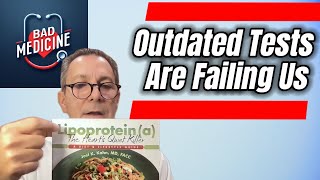
Dr. Kahn argues standard cholesterol tests miss dangerous particles like Lp(a), present in 20-25% of people and linked to premature heart disease. Statins can raise Lp(a) by 50-60%, and new injectable drugs targeting it arrive around end of 2025. He recommends advanced lipid testing for roughly 70% of Americans, especially postmenopausal women and South Asians.
Questions this video answers
1963.
About 20–25%.
300 nanomole per liter.
About 70%.
About 7% (implying ~93% are not).
Chapters
But it's bad medicine right now, I think, not to check your patients. In Europe, it's recommended everybody get checked for lipoprotein little A. And even though we don't have a great approach to them, there are some approaches. After controlling for ldl, people who have high lipoprotein A are at much more risk than people that don't. They're good doctors. But I think it's bad medicine to order the same lab panel you ordered 30 years ago or 35 years ago when I started practice. And it is the same particularly overweight pre diabetic diabetic people. 70% of America ought to get the more advanced lipid panel. The number one cause of death during service as a police officer is a heart attack and, you know, sudden cardiac death on the job.
Wow.
They're considering making it uniform to do a coronary artery calcium score on every police officer. So the bottom line is, as we know, the standard lipid panel, total cholesterol, triglycerides, HDL and LDL is calculated. LDL is not directly measured. The most important kind of guideline, bullseye. Nowadays, LDL cholesterol that internists and family doctors are obtaining and most cardiologists are obtaining. You know, you go up to Ann Arbor, University of Michigan cardiology department, they're going to poke your finger and do a point of care cholesterol panel with a calculated ldl. And, you know, we know that with all the metabolic disease out there, the fact that maybe 7% of Americans are metabolically healthy and 93% are s. Wow. That the LDL cholesterol hides a lot of pathology. And, you know, you have to go a little further and maybe get the NMR lipoprofile. And now you're looking at the LDL particle number, the LDL P. And two people with an LDL of 100 may have dramatically different LDL particle numbers based on the size and accumulation of cholesterol in their LDL overall. And so particularly overweight pre diabetic diabetic people, 70% of America, how to get the more advanced lipid panel and look at their LDLP as a way to really identify their risk. And it's surprising sometimes how it doesn't really fit my expectations, but it's valid. And then nowadays. And again, circle around and finish in a minute. We know that this little particle in the blood that was discovered in 1963 called lipoprotein little A. And I will be slightly commercial for one second because everybody needs to know how to spell lipoprotein little A, because when you write it on a lab slip, a lot of people write it wrong and write apolipoprotein capital A, which is a lab done by Quest and LabCorp and all the others, but that's a totally different particle. This is what you want to write on your lab slip, and I'll tell you why in a minute. It happens to be the title of one of the books I've written and the only book on this topic at the present time. Anybody can read. Wow. 1963, a scientist in Europe identified this particle, and over the last 62 years or so, we now know it's very atherosclerotic, it's very pro inflammatory, it's very pro thrombotic. It causes your aortic valve to get calcified and causes aortic stenosis. We know it's completely genetic. And 20 to 25% of people inherit the ability in their liver to make that cholesterol. And 75% or so of people have no ability to make it. And so we should be weeding out and separating those that make it and work with them versus those that don't make it and congratulate them for having better parents than the other group giving it to them. But if you really want to track a diet therapy, a fitness therapy, a supplement therapy, or a prescription therapy in somebody, 25% of your patients that have LDL cholesterol and lipoprotein cholesterol, APOB is a great way to track it because APOB tracks all the atherogenic components of LDL cholesterol and of lipoprotein. So if I were to start somebody on a statin who has lipoprotein, I'll tell you why I bring that up as the example. I will track apob hoping it falls, because statins lower cholesterol, but they raise lipoprotein little A, and sometimes they raise it a lot. I mean, 50%, 60%. So eight weeks later, I want to ask the question, and that's my own unique approach, but did I benefit the patient? And if their APOB goes down, that means I've reduced in their total burden of atherogenic particles. I've reduced it and lowered their risk. Even if lipoprotein A went up a little bit, I've brought LDL down so much that I've benefited them. But sometimes I see that's not the case, really. LDL goes down, but the APOB actually went up some. It's not very common, but it can happen. And there's a whole new generation of drugs that are about a year away from being approved by the fda, hopefully. Because since statins do not work at all for lipoprotein, we need special drugs, injectable drugs, antibodies to lipoprotein and their production. And they're in phase three trials with huge numbers of people. Like just recently there was, this is why it's so important, a major analysis that after controlling for ldl, people who have high lipoprotein A are at much more risk than people that don't. So we can do all that. We want to control lipoprotein, but it's bad medicine right now, I think, not to check your patients. In Europe, it's recommended everybody get checked for lipoprotein little A. And even though we don't have a great approach to them, there are some approaches we don't have a great approach. When these drugs come out, the high risk people should know, you know, they should be waiting in line. I've had bypass. I had a heart attack. My lipoprotein little A is 300 nanomole per liter. I should be lining up to get that drug when it comes out, hopefully at the end of 2025, so we, we can get people prepared. The last thing I'll say, talk about bad medicine. This is just a comment. Every statin trial in primary prevention failed to do two things. In retrospect. They didn't do calcium scores. So we were judging their risk based on risk calculators to get in the study. But we were treating people with statins and placebo that didn't have heart disease. There had to be a fair number of them had a calcium score of 0, but they were still in the study. Nobody checked. And you're not going to expect people with a calcium score zero to benefit from primary prevention with a statin. So, you know, if the study had 28,000 people, then about 7,000 of them, actually, no, maybe about half of them had a calcium score of 0 and just diluted the potential to ever show a benefit. And we didn't check lipoprotein A in those. So we're actually treating people with lipoprotein A with statins. It may actually not benefit as much. That's pretty well shown. But they're all mixed together and it's like we almost have to go back. If I can think about it, we need to do primary prevention for people with lipoprotein A and a high calcium score, primary for people with lipoprotein A and a low calcium score People with a high calcium score but no lipoprotein A. And of course, why would we put people in that have no calcification and no lipoprotein A? They should just go to the salad bar that I started eating at 40.
Yeah, there you go.
So it's sort of confusing medicine, bad medicine. When you think about how hard we try in the clinic, you do too make the best judgment for patients. But the foundation of the science is sometimes pretty shaky in retrospect.
Dr. Kahn, does your book lipoprotein A, does it talk about women, postmenopausal women and lipoprotein A? Because there seems to be some studies suggesting that, yeah, I'm a big, big.
Fan of, you know, at menopause women considering hormone replacement therapy. I always recommend that book. What's it called? The Estrogen Myth, I think it's called, by Dr. Blooming, Avram Blooming, written in 2018. It's a great book. And I just finished a book by our next head of the FDA, Marty McCary, MD. The book is called Blind Spots Where Medicine Got It Wrong. And he has a really nice quick chapter on why the Woman's Health Initiative and hormone replacement therapy was a complete debacle and maybe a manufactured crisis that didn't need to be manufactured. And we wasted 20 years of women being denied a good therapy for bone health, brain health, cardiovascular health, and as you said, the potential to lower lipoprotein A with hormone replacement therapy and appropriate women. That's finally, it's coming around, I can.
Tell you, just seeing, you know, other primary care and specialists. It's, it's moving a little late, but it's, it's turning around. So it's, it's nice to see the trend is finally coming back to do the, to the appropriate HRT.
I'm working with a 400,000 organization called Fraternal Order of Police. The number one cause of death during service as a police officer is a heart attack and sudden cardiac death on the job. They're considering making it uniform to do a coronary artery calcium score on every police officer. And I would say about age 40 to 45. And we just turned off a teams call the other day while they're working through their committee and a lot of bureaucracy, though I give them credit for all this. And I said, but don't wait too long because every 39 seconds somebody has a heart attack. So if we meet in two weeks. And that's the same urgency to, you know, to your audience. Yeah, you know, it may be coming around that we're talking about hormone replacement therapy more honestly. But don't wait too long for all those women in your clinic. Certainly don't wait about its cardiac. Order a more advanced cardiac screening panel, even if it's out of pocket. And fortunately, as I say, these few extra labs and this heart CT scan are not completely cost prohibitive. So good news.
And you're so right about women. But also, even South Asians like being South Asian. I see a lot of our men just dropping dead, you know. And do you see? Do you. Are there any good studies based on this particular population? And maybe lipoprotein A and apob and diet.
Right. I don't think I. Number one, there's a lot of good data about South Asians having a metabolic profile that raises the risk of heart disease and, you know, pre diabetes, particularly, and low HDL cholesterols and sometimes high triglycerides. And I'm sure some of it's genetics, some of it is the diet, the standard diet with a lot of oils and ghee, even though it tends to be vegetarian. I wouldn't call it very healthy vegetarian diet. And they need to be assessed. I have many, many South Asian individuals in my practice and I'm going to screen them just like everybody else. And not all of them have disease, but they are at risk. Whether there's been a study, I don't recall seeing a specific study about South Asians and lipoprotein A being a unique problem in. It's clearly a problem. It's a worldwide problem. Given the marvels of the Internet. I quickly just looked up. There's a nice review article in March 2021, elevated lipoprotein A in South Asians and the associated risk of coronary disease. And in fact, apparently they found 72 articles on the topic. So there's no doubt it's important they concluded, like every other population, elevated lipoprotein little A is associated with an increased risk of premature coronary disease and premature death from coronary disease in South Asians. But you'd say that about almost every other ethnic group too.
More from Anu




The Bad Medicine of Travel: Why Airplane Food and Jet Lag Are Ruining Your Gut


We’ve been waging war on the microbial 0.1% and carpet-bombing the 99.9% that keeps us alive


Picky kids + mac & cheese: here’s one low-friction idea to expand their palate