Can Probiotics Boost Muscle Mass? Here's What You Need to Know
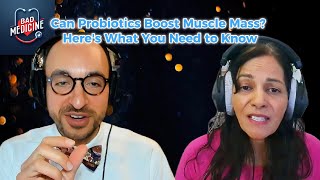
This is a conversational YouTube video (Anu Simh with a co-speaker) about whether probiotics can increase muscle mass in older adults. They discuss a meta-analysis of seven randomized controlled trials (about 733 older adults across multiple countries) that tested probiotics (Lactobacillus plantarum, Lactobacillus reuteri and multi-strain mixes including Bifidobacterium) over 8 weeks to 6 months, reporting a sizeable effect on muscle mass and strength though with heterogeneity across trials. The hosts emphasize caution: variability in strains, dosing, host response, and study designs; they favor a food-first / experimental approach with individual tracking and discussion of prebiotic/probiotic foods, dosing, and patient autonomy.
Questions this video answers
Seven RCTs.
About 733 older adults.
Between eight weeks and six months.
Lactobacillus plantarum; Lactobacillus reuteri; multi-strain mixes including Bifidobacterium and Lactobacillus species.
Yes — two studies also prescribed resistance training and physical activity to participants.
Chapters
Just the knowledge about your own microbes and the importance that diet can change things very drastically with your microbiome. I think that is a good starting point for anyone to know. So let's start with an interesting study that I came across. It was about, you know, me and my passion for anything related to the microbiome. So I came across a study about probiotics. And generally when we're looking at studies, it's connected to certain things, you know, like gut health or, you know, blood sugar or things like that. But this particular study was, you know, was with muscle mass and the elderly. So it really caught my eye. So I started looking into that.
Those are hot topics right now. Muscle mass, strength, aging gracefully. I mean they've tried probiotics with some success, I think depression. So I mean you could type in probiotics and any disease process and you're going to have the study. So it's certainly interesting. Yeah. What did this one find?
Yeah, this one. And, and the thing, the reason I, it caught my eye is because sarcopenia is like a real thing. And yeah, you know, so many so called experts talking about healthy longevity and they talk about muscle and protein. So I thought, wow, what if we did take a probiotic for muscle mass and you know, just frailty, a lot.
Of money if you had something like that.
I know, right. So this one was a study out of China, Italy, Sweden, Japan, all these countries and about 733 older studies. Adults studied.
Okay.
And they studied them for muscle mass, sarcopenia. And we don't know the age group, we just know that they were elderly, you know.
Okay, should we explain sarcopenia?
Yes, I think sarcopenia. Yes.
Yeah, it's basically not having enough muscle. I think you could probably leave it at that. The skeletal muscle system has, you know, you know, not always been as respected as the heart or the brains and all of these other really important organs. But we are increasingly, I'd say last five years talking more about the skeletal muscle system and how it's critical for the well being of all the other organs and healthy aging, not falling hip fractures. I mean it's critical. So it's a hot topic, sarcopenia.
Yeah. So in fact, I had a friend come over the other day and he said, well, he's in his 80s and he says, I walk twice a day. And I said, are you doing any strength training? He said, no, I found that very boring. So I said, you know what, sarcopenia is real. Let's find you a trainer. Let's get you started. So this going back to the study, it was a meta analysis of seven RCTs and it was about eight, from eight weeks to six months, the study. And they studied probiotics like L. Plantarum, Lactobacillus reuteri and some mixtures multi strains of probiotics. And that also included Bifidobacterium and Lactobacillus. And so there were two studies, and of course, the control group was placebo.
And RCT is randomized. Controlled trial should correct the gold standard of evidence. So when we hear rct, we perk our ears up.
Yeah. Something you and I look at when we are defining bad medicine sometimes.
Yeah. Well said. Yeah. If it's not an rct, so many.
Yeah, yeah. It's like you're like, okay, how many people in the study, you know.
Yeah.
So the two studies also prescribed resistant straining and physical activity to these groups. There was a large effect size on muscle mass increase and strength in the study group compared to the placebo. So that was very interesting. Right. But shocked. But there was a lot of variation in the study. So that was like. I don't know. I mean, that's the whole thing about studies. Right. Especially in meta analysis. You know, there was a variation in these studies, but still, if this really had such a good increase in muscle mass, I'm wondering, you know, if I should be even suggesting this to my clients in their 70s and 80s. What are your thoughts on that?
So I've learned to hold my skepticism for probiotic studies because I think that the microbiome is wondrous, mysterious and, you know, I'm humbled by what it can do.
Yeah.
So I'm generally open to this being real. I certainly see this entering my practice because I have patients who are working to build muscle because sarcopenia is so hot right now.
Yeah.
And they do complain that it's not working. Yeah. And like, buy a couple bottles of probiotics, two months and let me know if your smart scale says, you know, it's not perfect, but smart scale says you gained muscle mass or do like a, you know, a DEXA type thing and look, and we can just do a. We call it an n of 1. A person. A 1 person study, you know, before and after and see if it works. So it sounds a little bit.
Yeah, yeah.
Practice changing for me.
Yeah.
At least give it a shot. Yeah.
Yeah. In my world, I call it an experimental goal, you know, because if you are. If a client is on a supplement and without really seeing, is it beneficial? What's the point? We track it, we see what's happening and not change anything else, but just add that supplement and see what happens in a month or two months. If there's a change, then that's a keeper for some time. And then add other things to the protocol.
The other thing that would come up with patients, this example patient who's difficulty adding muscle, they're really working at it. As I try this, there's some study, seven studies is then what. Because are we now adding on a lifelong supplement that they'll have to by, you know, forever cost? Of course the supplements are going to change because companies get sold and formulations change. And what's the long term looking like? Because my understanding, correct me if I'm wrong, these probiotics are generally ineffective at changing the microbiome long term. They provide the short term adjustment and now there are ways to do the long term. Poop pills and fecal transplants, but these are not very appetizing.
We'll say, yeah, and besides with the probiotics there's so many things that you need to. For the efficacy of the probiotic, there's so many things that you need to think about, you know, that and most people are just lured in by marketing, you know, like, oh, that looks like a nice shiny bottle. I'll buy it. But what is the strain? You know, is it just a microbe or is it there to stay? How do we make it populate in your colon? You know, what other things can you do to help like food and you know, like supplemental food. That becomes more of a conversation, I think, than just a supplement.
That's the other really hard part that I would have with this conversation with a patient is they would say, okay, which one? And well, in a busy clinic I'll say, yeah, I'll send you something, you know, I'll get it to you. You know, I'm not gonna. Because that's a mess. There's thousands with as you say, different doses, colony forming units, quality things to factor in refrigeration, different brands. Can you trust the brands? And so, you know, people just throw their hands up and they say, you know, this is bother with, with any of this. I can't even get a solid answer. I guess this is one advantage of having a supplement company as the sponsor of a study is that like you have if it's a big enough study, like you actually know the one to do for me. But here it sounds like they were all over the place. And so the patient's obviously gonna Want to take the best one. So I have studies, all these different mixtures. I mean, it's a little bit messy.
So I mean, if I'm looking at bifidobacterium, lactobacillus, reutery and all of these other things, I would probably say let's start with food. Maybe we increase certain foods and then maybe, you know, and. Because across the board, like you said, they could be expensive. They could, you know, I mean, is it. And. But again, we're looking at it as an experiment, so. Yeah, but interesting, interesting study.
The other thing is you have all of the variation that we just talked about with the, the supplement itself, but then you have the variation in the host, in the person taking it, and you have the interaction. So a certain brand dose might work perfectly in person A and not at all in person B, because the host's microbiome doesn't accept it or it doesn't gel well. I mean, I've had people get like significant side effects from probiotics, presumably because it doesn't gel well. So, you know, this is a bit of a blind, you know, close your eyes, throw a dart, hope it at least gets on the board and, you know, doesn't poke anyone's eye out. And that's.
Yeah. And the dosage can never be what the bottle says. You have to really go slow with probiotics. I mean, it all depends on who's taking it. Because I had that experience with someone with Akkermansia and it's all over the news, everybody is talking about it and how it's helps with weight loss, blood sugar, you name it. Seems like the magic pill. Right. Hasn't been the case for all my clients. Some it's fabulous, it really helps them with blood sugar balance. Others, it does do just the opposite.
Pendulum. Yeah.
Yeah.
I had the same thing happen to a patient. She's.
Yeah.
Like kind of still not back to normal. Yeah, that's a little bit of a scary tale of, you know, getting into these probiotics, which are promising. I mean, this is very promising. But as our conversation goes, I think we're both coming to the point of prebiotic foods or probiotic.
Yeah, probiotic.
Maybe this is more of a proof of concept and then we focus more on diet and laying down the foundation for our own microbiome to shift toward a more healthy pattern.
Yeah, Just the knowledge about your own microbes and the importance that diet can change things very drastically with your microbiome. I think that is a good starting point for anyone to know I mean, because it's not like anything else where it takes months, even a simple thing as your blood sugar takes three months to, you know, to see certain changes. But with your microbiome it's immediate, you know, it starts responding to certain kinds of food, especially plant based diversity. Things start changing very quickly because then your sacralytic fermentation, your carbohydrate fermentation increases.
Big words.
Yeah, well, carbohydrates, simple words. Carbohydrate fermentation. You know, I see that in a lot of my, my clients. As soon as you start increasing these foods and I retest them, admitted this is all not diagnostic. You know, the stuff, the tests right now are more just a functional. But I see a difference in the diversity, in the alpha diversity, the but you know, the microbes that are helping them starts.
Yeah, well, maybe we should shift the discussion to what are very realistic ways to incorporate. Maybe we'll start with probiotic foods. You know, I mean I've given patients lists and told them like here, you know, five probiotic foods. But I think that might not be enough. At least it seems to me I'm not giving the best advice I can give. Just like with exercise it's not enough to say like, oh, you got to do all these exercises. You have to tell them like, or work with them. How can you fit this in to your life? What food do you already cook and enjoy? Ah, okay, that one. You can add this probiotic. Right. So do you have specific. I mean I have a bottle of kimchi and bubbies pickles in my fridge, which I honestly just, I don't even eat with meals usually. And that's kind of, I guess just really simple. But cooking with probiotics and adding them to common dishes that do have stuff that you know.
But the thing is, again, it's very bio individual. So I usually start with what the client wants. Like yesterday I had a client who said, you know, my LDL is so high, I've heard all these stories about different kinds of soluble fibers. What would your suggestion be? So it's coming from the client, which means that there's always already a buy in, you know, I'm not giving her a list and say, you better do all of this if you want to see this result. That's never going to work because it's just then it's just a list, you know, I mean they're not paying attention to it exactly. But then I said, well, you really, you seem to be very interested in fibers. You know, is there Anything in particular that caught your eye? And she said, well, I saw on Reddit that psyllium husk is a game changer. I said, it's fantastic. Then I gave her information about psyllium husk. I gave her the options of you can take it as a powder, ground, or as a pill, how to take it, when to take it, and let's try this as a two week experiment, see what happens.
You see where they're at first? Yeah, you're like, you're, you know, you're already thinking about this. Perfect. Okay. Yeah, that's always good, good way to people.
But let's say they come in and they're saying that and they have Sibo, for example. I know that it's too much of a fodmap for food. I would say, what about guar gum? You know, and I'd give them an option and I would say studies suggest that this is easier on someone with Sibo. So. And then I send them information, says read up on it and then we'll talk about it next week. And then if they're okay with it, then we start with that blow.
In my mind, I don't. I definitely have never recommended guar gum. So I'm, you know, captive audience here. I have to hear more. What is, what are. I know it's like a food additive. It's pretty safe. That kind of where my knowledge it's safe.
And there are other things like mastic gum and things like that. But I have seen there are certain brands that have, are specifically for Sibo clients, you know, because they're already on a low fodmap diet and psyllium husk just doesn't do it for them. So guar gum is another.
How do you ingest it?
I. I start very slow.
Like, is it a. What are we talking about?
It's a powder. And you either they add it into the smoothie or they take it the last thing at night and you will know pretty soon if it's working, you know.
How do you know?
Well, because.
Yeah, Diarrhea or something.
Yeah, it's diarrhea, sibo, constipation. And if your bowel movements become a little bit more stable, you know, then they are, you know, like, yeah, I think this is working.
Did something.
Yeah, yeah. And sometimes it's a placebo thing. I'm never sure 100%, you know, but if the client is feeling happy with it and they're getting some benefit, better.
The placebo be safe than the placebo have potential side effects. Someone wise, I'm sure.
And I think that's where our responsibility is, to kind of guide and empower them with education, and then they make the choice.
You ever come across patients, clients? It's a small number, but they just want to be told what to do, so they're not giving you much. How do you address that?
All the time, you know, say kasha. No, I don't have the time for this. You just tell me what to do, I'll do it. I just have to tell them my experience, it doesn't work. It's not going to be a habit. You know, you're going to do what I ask you to do, and then you're not always going to have me in your life. And then when that's this relationship is done, you're just going to just say, what the heck? What did I learn? What am I supposed to do now? You know, that. That kind of hand holding is not very. Yeah, yeah.
So from the beginning, you're fostering independence, really?
Autonomy, you know, they just.
Autonomy.
Make the decision. Yeah, yeah. Saying, what do you think? What would you like in your life? You know, so I'm preparing them for the day when they don't have me in their life, you know, from day one, so. Because that's what I want for them. I want them to be independent, learn how to manage their weight or the LDL or whatever, you know, so, yeah, we did it.
We did a thing.
Yeah.
All right, cool. Well, we love our listeners. Let us know what you want to hear. And we will be doing reels, shorts, like, subscribe.
More from Anu


The Bad Medicine of Travel: Why Airplane Food and Jet Lag Are Ruining Your Gut

We’ve been waging war on the microbial 0.1% and carpet-bombing the 99.9% that keeps us alive

Picky kids + mac & cheese: here’s one low-friction idea to expand their palate