From Bleeding Gums to Brain Fog: Why Oral Health Is More Than Just Teeth
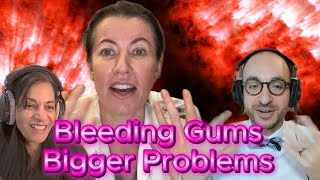
Dr. Sandhya, a periodontist and nutritionist, explains how bleeding gums and oral bacteria can spread throughout your body. She covers practical care like water-flossing and chewable probiotics, biological dentistry alternatives, and why starchy foods and dried fruit drive tooth decay.
Chapters
Foreign.
Dr. Maldivant, thank you so much for joining us. Phad Medicine. We wanted to start off and just tell you a bit about what the podcast is all about. So as hopefully you can tell from the title, we are hoping to illuminate practices which we might consider less than optimal or bad in medical practice. And I would include dentistry, of course, as a critical part of the medical practice in this country. So not everything everyone does is good. And hopefully by shedding some light, we can help a lot of people. So thank you so much for coming on the show.
Yeah, my pleasure, Nick. Yeah. Unfortunately with dentistry, there's a lot of procedures that have been stuck in the dark ages. You know, there's time for an upgrade in a lot of the dental offices and I'm hoping to bring some light on that topic.
Yes. So, yeah, I'd love to hear your journey from, from. From Romania to, to where you are now. Yeah. With a podcast and a book. We'll talk about that.
Yeah. I'm a double board certified periodontist and nutritionist. So what a periodontist is. We deal with the foundation of the mouth. Peri means the round. Dantes means the tooth. So we're dealing with the structures around the mouth. But I never understood why I did a certain procedure on two different patients. One patient healed great and the second patient didn't heal well at all.
You were saying you never understood why there was this kind of two.
Yeah. So how come somebody heals great and another person doesn't heal well at all? It's really because something to do with nutrition. So I started to dive into nutrition to see why. So what we can do in the dental office in order to help patients heal better. And in exploring that topic, I realized that certain nutritional therapeutics are so beneficial, you know, for the dental office. And also I started learning about the microbiome, which, you know, we're very much into in our practice. Over here is looking at the microbiome, fingerprint and everybody's mouth and see how it influences their longevity. So, you know, fast forward now. We have three locations in Beverly Hills, Encino and Newport Beach. And my mission is really to educate millions of people on the importance of oral health when it comes to overall health. I think it's just really not talked about enough. And for dentistry in general in dental school is more like, okay, we have a tooth, it's got a hole in it, let's fill it. But there's just so much more to it than that. It could be so much more rewarding. And you Know, I've been an educator in the dental community now for 20 years. So my mission is really to get dentistry to the next level of practice and help as many people as possible.
I love it.
Gosh, that's so wonderful to hear because, like, on my intake form with my clients, I just have an entire, you know, part of the forum is about. About the mouth, you know, about mercury mouthens, you know, how often do you go to the dentist? What happens, you know, gums and, you know, receding gum line. So many questions that I ask. And my clients always say, my gosh, there's so many questions about the mouth. And that's what I really hope is just educating them to ask the right questions of the dentist, you know, like. Because sometimes it's like you go to a routine checkup, you know, and there's nothing more. I mean, if you're either a perio patient or you stay with your dentist. Could you explain to our listeners why it is so important to look at your mouth as a gateway to hulk?
Well, number one, the mouth is the opening of the GI tract, and a lot of people have gum bleeding. So what happens when you have gum bleeding is the trillions of little bacteria that are present in the mouth have an opportunity to enter the bloodstream and travel. They hike a ride on the blood vessels and they end up in the joints and, uh, you know, the heart, the brain, unborn baby, the lungs, all kinds of areas that. Where they shouldn't be, and they form a home there. So that's why it is so important to understand that the mouth shouldn't be bleeding just like your hand shouldn't be bleeding. A lot of people think, yeah, my. Yeah, my gums are bleeding. What's the big deal? You know, but it is. It is because of the little bacteria that can get inside the bloodstream. And I think that's. That's the missing piece, why people don't connect, you know, because when gums actually bleed, there's an interaction between the microbiome and the inside of our body.
Right, right. They do teach that in medical school. Endocarditis is a heart infection. And. Yeah, oh, yeah, there's. That is very well taught, actually.
Absolutely. And, you know, at the va, they've done a VA study at the VA hospital, and they've actually shown that after dental cleaning, there is a transient increase in bacteremia with intense.
It's about cleaning. Yep, yep.
Yeah. So. So the healthier your gums are, the less of a chance that that increase in bacteria in the bloodstream during a cleaning will happen. So super, super important to keep healthy gums.
So healthy gums is the, is the mantra here for someone who is new to this. They go to their dentist every six to 12 months and they have bleeding from time to time. Don't think it's a huge deal. Where, where do they start? What's kind of the, maybe an good entry point for a patient to, to start.
I always say start with home care because it's the easiest thing. Right. A lot of people try to avoid the dentist. So my three steps to optimum oral health are, number one, brushing. And it doesn't matter if it's electric or manual. I find that some people do a great job with the manual brush. Second step would be water flossing, string flossing. Most people don't do correctly. The studies that we have today is that water flossing is a great alternative to string floss. It actually does a better job. It gets rid of a lot of the bleeding when we use a water flosser. So using a water flosser twice a day, every day is hugely important to get rid of the bacteria that's in between the teeth as well as the outer part of the teeth. And third step is using a chewable probiotic. The research on chewable probiotics has been tremendous. We use it a lot in order to decrease flak formation for cavity prevention and really in our oral microbiome reset protocol that we do here at the practice. But anybody can do these three simple steps at home.
Is there a strain that you recommend like Lactobacillus lutarre or.
Full disclosure. I have natural oral care product called Orasana. I've done a lot of studies, a lot of research in the world of oral microbiome. So I have a product, chewable probiotic Mint. And how this product came about is that I was using a oral probiotic from the market about 10 years ago after our deep clean Kleenex and our patients hated the flavor. So nobody would take it. Like, do you have anything better? It was kind of chalky, you know, it was like in some I vegan patients. Oh, no, it's got dairy. I'm not doing this. So I'm like, okay. I, I worked with a chemist here in the United States and we came up with a pretty good formula. As a matter of fact, a patient the other day said, why did you make them so tasty? I just want to eat them like a candy. I said, okay, I know I got a good formula. Yeah, because that's the point. You know, we want to have that. So there's a multiple strains that we look at today. A few of the Lactobacillus species have been shown to decrease cavities, decrease inflammation when it comes to the cytokine levels in the saliva. There was actually one study that showed increase in bone density in one year use of oral probiotic. We don't know exactly why that happens, uh, but we definitely know there is an association there with. With just healthier tissues in general. Also not only teeth, but when it comes to dental implants, certain strains of the oral probiotics have been shown to decrease inflammation around dental implants without doing anything else. Just taking that one Lactoi species.
That's wonderful. I mean, I always recommend curcumin or like a polyphenol rich diet. Have you seen that being useful to your patients as well? You know, something that is kind of helps with systemic inflammation that also shows up in the mouth.
So yeah, curcumin is a great product. We use it also for mercury detoxification when we use remove mercury from the mouth because curcumin also helps with the detoxification process.
I just remember as a child, you know, my mom used to make a turmeric paste along with clove, which is so high in antioxidants and polyphenols. I mean, we didn't know all that. It was just something that they use turmeric for everything. Like you get hurt, they stop the bleeding, you know, just in the mouth. And so now it's like taken off and everybody uses turmeric, you know, for.
Yeah, yeah, very true.
Shall we get into some bad medicine? I'd love to hear your take on what are some medical dental practices that you think are better left in the history books that could be improved upon?
Well, since we're on the microbiome topic, what I would say is the deep cleanings, to me, it's such an archaic way of treating gum disease and oral inflammation. I like to have a holistic, with a w. Holistic approach to oral health problems. So basically when somebody has bleeding gums, the dentist, they said, oh, you need a deep cleaning, but we're only gonna do it around the two back teeth that have the, you know, the deeper pockets. But what about the rest of the mouth? So that's why in my practice we do an oral microbiome reset technique where we actually clean the entire microbiome that's on the roof of the mouth, that's on the tongue, that's on the cheeks. And the adjacent gingiva, not just under the gum, because then you're really not affecting anything if you're just doing the deep cleaning that way. So that's, that's one area where I think we could do so much about it.
I have lots of my patients telling me about their scheduled deep cleanings. It's pretty common.
Yeah, exactly. Yeah.
So, Dr. Sandhya. Yeah, go ahead.
When it comes to like other things like mercury removals. Right. A lot of people have the silver fillings. Well, the silver fillings actually are about 50% mercury. And the bad medicine is that dentists remove them with no protection. And when you cut into a mercury filling, actually there is so many vapors coming off that filling that are odorless and they get basically inhaled by the patient, the dentist and the assistant sitting there. And that's how a lot of dentists and patients become toxic with high levels of inquiry.
So your practice is more holistic. Right. Can you just tell us what the difference is between a holistic dentist and just a regular dentist? I get asked this question a lot and I'm not quite sure where the holistic part just kind of starts. And is it the, the procedures. Are the, are the procedures different? Are the, the products that you use very holistic? So give us an idea of what holistic dentistry means.
There's many names of holistic dentistry. There's holistic dentistry, there's biological dentistry, there's integrative dentistry. There's a lot of different names and different dentists interpret it in different ways. The IAOMT actually has a certification process in order to certify biological dentists. And that involves safe mercury removal of filling. So we have a certain technique that we use in that process. However, some holistic dentists, for example, don't you eat, don't use X rays. And I don't agree with that. I think X rays are super important in order to diagnose early and diagnose things that are important. So not all holistic dentistry is created equal for sure. Some holistic dentists just do cleanings and like little cavities formation, things like that. In our practice, we have a multi specialty practice. We have lot of technology, but at a high level integrative dentist. To me, it means diagnosing the hole, not just the hole. And what do we mean by the hole is the entire jawbone and the structures such as the sinuses, the submandibular space. So in our office it's common for patients to get a CT scan and it's common in many Integrative or biological dental practices. The only way to truly diagnose holistically is with a cone beam CT scan. So in order to find a good holistic integrative dentist, one of the questions should be, are you using a cone beam CT scan to diagnose the mouth? If they're not, they're not at the level they should be, in my opinion. The second question would be, are you using ozone in your practice? If they're not, find another practice that does use ozone. Ozone is hugely important in the treatment of microbiome, in the treatment of cavities and cavity prevention.
How, I'm curious, what do you do with the ozone? I didn't know this.
Yeah, we use ozone in the form of water in all of our units. So whenever our hygienists do cleanings, they use ozonated water. We use it as a mouthwash. We use it in order to stop the transmission of the oral bacteria into the body whenever we do treatment.
Fascinating. Thank you.
So it really works on the biofilm?
Yes. So studies have shown that the moment you blow a certain concentration of ozone, oxygen as a gas onto the biofilm, basically it disrupts the cellular membrane of the bacteria, of the parasite, of the fungus. Because we know the biofilm is not just bacteria. So that's what it does. And it kills them on an instant without the damage to the person or to any of the cells that are surrounding that biofilm.
Got it.
Yeah. I recently had a biofilm guided biofilm therapy cleaning which is very different from my regular cleaning. Is that something that you use in your practice?
We do, we do use guided biofilm therapy as part of our protocol for sure.
It's called EMS or something, right? Yeah.
EMS is the name of the company.
Company. Yeah. Okay.
But airflow is the actual name of the device. And we go an extra step. Step. They actually use a small particles of erythritol at 50 microns basically to spray around the teeth and the gums and the tongue and the cheeks to eliminate the biofilm in a very efficient manner. And also the other thing I like about erythritol is that it's anti cavity. So you're actually having a therapy for your teeth. It's not just a cleaning with scrapers. I think the scraper is, you know, that we dentists use are so archaic and they don't really clean well. Anyway, so using the guided biofilm therapy is such a much better way for us. That's the way we do all of our cleanings as well.
I'VE just started was pretty neat.
I just started using the little erythritol in here. I happen to have this on my desk. The. Have you seen one of these before? These are the Neil Med nasal irrigation and they have. This is the plain one, but they have one that contains erythritol and you put it in your nose. Obviously this is. All of these things are connected. So it got me thinking, is there a. I assume this microbiome, oral microbiome, I mean this is shared in the nasal sinus. I'm sure this is all one.
Yeah, yeah, exactly. So definitely. Also what we know about the chewable probiotics is they affect. Affect actually the breathing. And we have reports saying that they've cleared their sinuses just by changing the oral microbiome. So that's nice.
There we go. Yeah, I think we, we cut you off. You were saying that was number two. Number three. But if you want to go on, we can move on.
Yeah. So another question to ask is are you, are they using fluoride in the practice? A true integrative biological practice, holistic practice does not use fluoride in their office. That's really not necessary. There's other things that we could be doing such as calcium hydroxyapatite in order to help to mineralize the tooth surface. It's something that's mimicking natural biology instead of just placing fluoride.
Yeah, yeah.
So looking for toothpastes that have that.
Yeah, yeah. Calcium hydroxy oxide. Absolutely.
We were going to ask you about fluoride. It was on the list. Yeah. What would you say? Like it's the simplest way to explain why fluoride is suboptimal. Maybe it could be, you know, left in, left in the past.
Well, left an impression for me was. Was the fluoride gate documentary which explained how fluoride ended up in the water and as an agricultural byproduct. So it's really unnecessary to use fluoride. Luckily my association had a battle now for years trying to get the fluoride out of the water. So finally we won in a statement from the FDA saying, you know, fluoride is really not, not safe at any level to be ingested.
Wow.
But so we, that just happened a couple of months ago. So we were super excited that we finally got that statement them to agree to that. Now when fluoride will come out of the water. Right. That's still a process.
I'm sure it takes a while. Unless you're filtering. Filtering your water. Right?
Yeah, exactly.
Yeah. Fascinating.
But yeah. The attorneys did a great job in interviewing, you know, the FDA saying, why, you know, all the research shows that no ingested fluoride is safe.
Yeah.
So we were very happy that we.
Not to toot my own horn, but I haven't used fluoride in like almost 20 years. So no cavities.
Awesome.
I don't use it exactly.
Not necessary.
Lovely.
How did you come about writing your book? Really curious about that.
Yeah. Yeah. So in my. I learned so much going to different conferences and a lot of dentists don't have the luxury, you know, to go to different, like IFN Institute of Functional Medicine conference, KRISHNA conferences, and even, you know, patients would always ask me, oh, you know, I have gum disease, is there a pill that I can take to help me heal? Well, no, it's really a holistic approach. It's a lifestyle. So my book Heal up is basically seven ways to heal it from anything. Not necessarily just oral, but, you know, it involves eating an anti inflammatory diet, staying hydrated with the right kind of water, breathing, you know, meditation and relaxation. Sleep is super important. The right kind of supplements. These are all things that I talk about in the book. They're all helpful. Like if somebody has the best diet but they don't get enough sleep.
Yeah, yeah.
You know, it's not enough.
Is there something, I'm curious what happens when you sleep? In the oral microbiome, I would say morning breath is usually not considered a positive. So. So I'm so curious.
Yeah, well, you know, it's not considered positive, but it actually is because the, the sulfur forming bacteria actually is good to produce nitric oxide.
So I'll tell my wife that. So.
You'Re just working out of your nitric oxide formation?
Yeah, I actually take a supplement in the morning before brushing my teeth, you know, which is like a beet supplement supplement that converts the, you know, into nitrites. So I don't know.
Oh my goodness.
I, I just find it exciting that that could happen because it's all happening in the mouth cavity anyway. So it's like.
Yeah, yeah, exactly. Now, I'm not a big proponent of mouthwashes for that reason. You know, mouthwashes just basically kill more of the microbiome, especially some of the Listerine products. You know, they're so harsh. They have a lot of alcohol, a low pH, and very, very strong essential oils. I think as long as we regulate the thickness of the microbiome through brushing and water flossing is better. But all these antibacterials kill the good bacteria Because a lot of people go, right. The first thing they do if they have bad breath. Oh, let me use a mouthwash.
Mouthwash.
But then you're decreasing that production of nitric oxide.
How about hydrogen peroxide?
I like hydrogen peroxide, especially for people with periodontal disease that are bleeding gums. Either we have them use ozonated water at home in their water fluster, or I have them put a teaspoon of hydrogen peroxide in the water reservoir of the water flosser to help to control the inflammation.
Gotcha.
Gotcha. That is so cool.
And then I have to ask about sugar. Sugar is such a big part of our practice. We talk about CGMs, we use continuous glucose monitors. And of course, you know, I. I grew up hearing, you know, the sugar's gonna rot your teeth. Um, I have to admit, in all of my counseling about limiting, you know, sugar, refined carbohydrates, I don't think I talk about the mouth. And so maybe you're gonna give me something else in my arsenal when I'm counseling patients about their. Their oral health.
Yeah. And you know what's interesting with sugar? Dark chocolate. Let's say if you're gonna have a piece of dark chocolate, it doesn't really stick to the teeth. So it's not as bad as crackers. Let's say, you know, like somebody has saltine crackers, you know, those really stick to the teeth. Those are so much worse than a piece of dark chocolate, even though they're less sweet. Because it's the starchy carbohydrates that stick to the teeth that actually become a problem when it comes to cavities. Because what happens when we get these carbohydrates, you know, bacteria from the biofilm, especially the streptococcus species, they take this on and they release an acid. That acid release actually causes the enamel to dissolve. So when the ph is 55 or around there, then the. The enamel starts to dissolve and a cavity forms. So the. The whole goal is to eliminate any kind of. Let's say bananas also are cariogenic, we say, because they also can stick to the teeth. Dry fruits, if they actually str. Even though they're fruits and people say, oh, you know, they're healthy.
Not really.
If they actually stick to the teeth, they can cause cavities.
We see big glucose spikes from dried fruit. Actually, it's one of the common ones for the volume.
There's a lot of sugar in it.
Yeah.
So, Dr. Sandhar, how. What do you think about dry mouth and what's causes it? Do you feel like there's a connection with the oral microbiome? Give us a little bit of. Because I do have a lot of clients who come in talking about dry mouths. You know, so is anything specific?
Dry mouth happens for a few reasons. Sometimes it could be medication induced. Especially. Especially people with ADHD medication. And even kids. Right. Who are taking hhd, they can have dry mouth. It also can happen due to autoimmune issues like Sjogren's disease, where we actually have diminished function of the salivary glands. And also then we have women menopause who actually will also experience dry mouth. So we have a lot of different reasons why dry mouth happens. Saliva is so important in tooth mineralization, keeping the microbiome levels healthy. So what we're seeing is when there's a decrease in saliva flow, we actually have an increase in plaque and not necessarily the good plaque. Yeah. So that increase in plaque now can actually cause more inflammation. And we see gum recession starting to happen and also increase in cavities. Also people that are undergoing any kind of radiation or chemotherapy that is actually drying the mouth that also. We see a tremendous increase in cavities because of the lack of saliva. So what do we do for this? Number one thing, I think is trying to stimulate salivary flow. And how do we do this? Via chewable probiotics with zone xylitol. The other O xylitol I also like for oral health because it actually thins out the plaque, it prevents plaque formation, which happens in people with dry mouths. And also having a lozenge in the mouth stimulates the saliva flow. The second thing that's super important in people with dry mouth is to protect their teeth from breaking down. As we don't have so much saliva in the mouth, we have to now introduce the minerals on the teeth surface themselves to be able to mineralize. And why mineralize is because our diet can be acidic. Let's say. You know, a lot of health benefits from drinking lemon water. Now you get somebody with dry mouth drinking lemon water, it's really a big problem for the enamel. It's going to erode the enamel pretty fast. Especially I have women that are like, oh, yeah, I just sipped my lemon water all day long. I'm like, oh, my God. That's like the worst thing you can do. If you're gonna drink lemon water, just use a straw and drink it, you know, in the hour. I sip it all day long.
And apple cider vinegar too. Right. I mean, that's another thing it's very hot right now.
Another one?
Yes.
Yeah. Great for health.
But just drinking coffee, my beloved coffee as well.
Yeah, coffee is actually fine, especially now there's more alkaline type coffees, especially mushroom coffee. So, yeah, we don't see a problem with coffee. It's mostly the, you know, like you mentioned vinegar, lemon juice, orange juice, of course, you know, Diet coke, things like that, that can definitely dissolve the enamel. But what my recommendation is for that. Again, the calcium hydroxyapatite that I mentioned earlier, to really leave it on the teeth, even overnight. As part of the Orasana line, we actually have a mineralizing tooth powder. And what we do, we actually have people just apply it on their teeth, leave it on overnight as a treatment in order, especially in people with dry mouth. So. So those minerals can actually soak in.
I love that. Amazing.
So do you see a connection between mouth breathing and the health of the mouth?
We do, we do see a connection. What happens is mouth breathers actually have an increase in inflammation and I think mostly has to do with that dryness that they experience, especially at night. You know, the gingiva actually gets dry, so we have a growth of the disease type causing bacteria. So we do see a lot of gingivitis in people with dry mouth. I mean, with the. Basically like open mouth at night.
Yeah, yeah. Interesting.
That is so interesting.
Did I hear you right? Good plaque?
Yeah, there's good plaque and bad plaque.
Now you're blowing. Now you're blowing my mind. All right, you gotta tell me about the good plaque.
We got all plaques. Plaque was bad.
You must have misspoke.
Yeah, not all plaque is back. So how do we test for that? We actually use salivary diagnostics. In my office, I use a company called Oral DNA. It's a simple swish. You swish for 30 seconds, spit in a test tube. And we do that test here for people that come in and say, you know what? I have brain fog. And we do see gum bleeding. We do tests for that. Why? Because certain plaque, we call it bad plaque because some bacteria in that plaque has been linked to gum bleeding and also brain inflammation. That particular microbe is called P. Gingivalis. So if somebody has this, we want to do a full mouth detoxification and reset the microbiome. It. It is one of the more resilient type of microbes. So it does require a little bit more thorough type of detoxification of the microbiome.
Yeah.
So do you offer like an oral microbiome test? You know, they are so super interesting. You know, like as, as far as. Yeah, but I've not been convinced, you know, because there's certain times like certain companies will say, oh, you have a lot of fusobacterium or. And then there's this whole study about is that good, bad, you know, is that normal? So it's, talk to us a little bit about oral microbiome tests and should everyone be doing something like this as part of their practice to have healthy mouths.
So what we know about certain species in the oral microbiome is they can cause different types of chronic issues such as brain inflammation, Alzheimer's, dementia, affect the unborn baby. Fusobacterium species have been linked to tumors in the gastrointestinal tract. However, you know, we, we classify the oral microbiome the 11 types of species that are. Right now I'm looking at into four of the aggressive types. And why we call them aggressive is because we know that if your gums bleed, those already will be traveling elsewhere in the body and they will cause other issues. So, so the four aggressive types of bacteria has been linked to irregular heartbeats, heart murmurs, brain inflammation, even oral cancers. One of them being a spirochete. A spirochete is a corkscrew type bacteria that can easily penetrate into the tissues. So it's very fascinating in the last few years we can actually understand the behavior of the different types of species, species of bacteria, and today easily test for it. So if my patients come with bleeding gums, I'm not just going to start, oh, let me just start doing a deep cleaning. I think that's the worst time to do something because now you're introducing bacteria that you know nothing about deeper in the tissues and in someone's body. So for us we always test for the oral microbiome, 11 different species and what I'm interested in in the four most aggressive ones. And typically if somebody has no plaque but bleeding, which can happen, then for sure they have some of those aggressive type of bacteria that we need to minimize for them. And we do that non surgically via the oral microbiome reset technique.
I'd love to hear about the reset because I came across a product, I won't name the company but you know, it was a very aggressive antimicrobial toothpaste mouthwash. To me it almost sounds like using broad spectrum antibiotic, which I mean, I know that's not necessarily gonna help. You might kill the bad, but you'll also kill the good. I'm guessing your reset factors that in and replenishes the good, makes sure the good take hold and the bad are gone.
Yeah, so true. Yeah. I mean, the first step in the oral microbiome reset is to wipe off everything, start with a clean state. Unfortunately, there's no way for us to separate. Oh, you're good. We're going to let you stay and you're about. And we're going to take out. We don't have that technology yet to just take out the bad. But what we do know is that the biofilm likes to grow within the hour of getting a cleaning. So if you've gone to the dentist within the hour, bacteria is back. So we're not so concerned about them not being able to, you know, regenerate, but it's super important to eliminate and wipe off the entire microbiome and then help it populate in a good way. And also, of course, diet is a huge part of that and instructing people. What are some prebiotic foods, you know, that are important to take?
Yeah. During this process, Some of those gut micro, you know, the mouth bacteria, if they're traveling into your colon, which is not very conducive to aerobic bacteria, that kind of gets you thinking about how do they travel all the way down here and what's happening in the entire gut. Right. You know, it's just very interesting how.
Exactly I think we're still understanding so much of the microbiome. There's still a lot of species that haven't been identified. But, you know, when I went to school 20 years ago in my periodontal program, we just started talking about the different bacteria, but we treated everybody like the same way. They have gum disease. You know, occasionally we would culture. Yeah. But the problem with culturing at that point 20 years ago is that a lot of the bacteria died in transit. But luckily we have PCR testing today, so it's so easy to get inacular ready of what type of bacterial species we have in the site.
I have patients who very proudly tell me that they brush after every meal. Is this good practice? Twice a day, I believe, is the standard. So the frequency of toothbrushing, I think this is what the listeners want to know. Yeah. What's your stand on this?
Yeah, the general recommendation is brush and floss twice a day, every day. Some people will build more plaque than others. So for those people, brushing like a third time is important, but if somebody's gonna brush like six times a day after every snack, that might be a little bit excessive. And why would that be excessive? I think brushing in general, especially let's say they have something acidic, like, you know, they're gonna have a nice salad with, like, you know, like vinegar, apple cider vinegar, which is very acidic. We have to allow the mouth to neutralize in the pH. So let's say if somebody drinks wine, that's a pH of around 3. You have to wait 30 minutes before going to brush your teeth, because if you brush right away now, that enamel is already dissolved from the acid. It will recover with the salivary proteins and the minerals. But if you brush it right away now, you can actually damage the teeth. Wow.
Wow.
You just blew my mind. Amazing. Now I have an answer.
New York Times. Yeah, yeah, I know the New York Times has an article almost every week about, should we brush first thing in the morning as soon as you wake up, or give it some time? It's like, I don't think we really have an answer, but I'd love to ask your opinion about is there an advantage to waking up and brushing your teeth versus waiting a few hours and then maybe after your cup of coffee and then brushing your teeth?
I actually like to brush my teeth after breakfast, not before. But it depends, right? It really depends on somebody's comfort. Like, if you have a significant other that doesn't want to have breakfast with you because, you know, you have bad breath, maybe you want to brush. But again, you know, the. The sulfur type of bacteria is not necessarily bad. Um, so I don't. I. I'm not. I don't. I'm not a believer that we have to get up quickly and go brush our teeth, especially. You know, one of the things we're noticing, people that are taking regular chewable probiotics, especially at night, even if they have a dental appliance such as an iard, they don't build as much plaque at night. We actually see a thinning of the plaque. So, Nick, one of the things you might want to try is popping in a chobo probiotic at night. You might be surprised, you know, in the morning, what we're actually seeing when people wake up and, you know, they stick out their tongue and they have a white coating on the tongue. When people use a trobo probiotic, that coating doesn't form. So the people that are listening and have this white coating on the tongue try a triple probiotic at night. I think they'll make a big difference in that level of coping.
I love it, Nick.
I can vouch for that. Huge difference with the probiotic at night.
Yeah, I have my.
I mean, I went in with a lot of trepidation. Like, is this for real? You know, I was looking at all the research I could find about it before taking another probiotic. Right. Yes, Definitely does make a difference. So.
Well, yeah, I'm sold. I'm sold.
Awesome.
We have a little rapid fire round. Shall we move to it?
Yeah. I just have one question for Dr. Sandow before we move to rapid fire root canals. You know, I hear my clients constantly saying, oh, I went to my holistic dentist and she or he recommended no root canals. Better to take the root, can the tooth out. Is there an advantage to. How do you approach it? And what would I tell someone, a client who's kind of weighing the options and deciding which one is better for them?
If we look at the studies of root canals, even in the journal of endodontics, which is a specialty that does root canals, they have the science to show that a root canal treated tooth has 50 times more bacteria inside of it than a healthy tooth. So do we want that much bacteria inside a tooth? No, because what happens, you know, when. When a root canal is performed, the tooth is killed, the nerve is removed, and it's being basically stuffed with some kind of gutta percha. It's basically the bark of a tree to help to stop bacteria from going through the tooth and reaching the bone. Unfortunately, that plug doesn't hold very well. So I end up taking a lot of blackened roots that have been root canal, and people, you know, people have gotten sick from them. So I am not a big fan of root canals. I had one myself, which I no longer have. It was affecting my digestion. It was actually on the meridian of digestion. And it started bothering me because any time I flossed on around it, it started to smell. And I'm like, why is it smell? My gums were always bleeding around it. So I finally made decision, you know what? I'm. This. It doesn't have bone loss, but I'm gonna just take it out because I don't think it's healthy. Just my intuition. So I felt so much better after I had this tooth removed. And me for myself, I would never get another root canal.
Speaking of things starting to smell. Tonsilloliths.
Yes.
Feeling.
Absolutely. They can cause bad breath. You see them in patients for sure? Yeah, yeah, I. I see them on the CT scans, actually, when I take CT scans, I can actually see tonsilloliths.
Yeah. Any. Any great advice for someone dealing with these? I. I have them, irrigate them as kind of a traumatic thing, and then maybe a chlorhexidine mouthwash. But that's just kind of what I've done in the past.
Yeah, yeah. So there is a way to get them out. There's a dentist that developed the procedure called tonsilase. We use it a lot more for kids, but one of the things we do with a laser, it's a laser type procedure to help shrink the tonsils. And before we shrink them, we actually take out the tonsil less. So we can take them out to just like, put a little topic on us that I can just pop them out if they're, you know, more superficial, but essentially. And then we do a laser disinfection to help to shrink the tonsils instead of removing the tonsils. So. Yeah.
All right.
That's amazing.
I love it. I love it. That comes up a lot, actually.
Yeah, yeah. I myself had tonsillitis, so I've actually treated my own throat with a laser. And I was so amazed of, like, how well it works in terms of disinfection. Yeah.
Shrinking up those tonsils.
Amazing.
Yeah.
Well, I'm looking at our rapid fire and I'm like, I think we kind of hit all these questions, but we could still. I think we have, like, two left.
Well, it's almost like summarizing the whole episode.
Yeah, exactly, exactly.
All right, you ready? Like, just quick answers, yes or no. Food that everyone should eat for good oral health.
Fibrous food, I would say. Okay.
Okay. You have to pick. Electric toothbrush or manual.
Manual.
Oh, what tip flosses must have or overhyped.
A must for everybody.
Do you recommend oil pulling?
It depends. Yes, sometimes.
Okay, okay, we'll take. We'll take that. That's acceptable.
And if you do have to use a mouthwash, a date or a special occasion and you need a mouthwash, what would be the brand that you recommend?
The only time we use a mouthwash is for people with bleeding gums, and it'll be triology.
Okay. You heard it here first. Love it.
So, Dr. Sander, tell us a little bit about your product. You know, that you are a sana just. And how we can have our listeners maybe purchase it or, you know, make it a part of your oral hygiene routine.
Yeah, it's a brand that started because I was tired of all the, you know, killing bacteria type of products that are on the market. So this, this, the Orasana brand is a brand that nourishes the mouth and protects the microbiome. So it's really involves the three steps to optimum oral health that I talked about. Brushing with A mineralizing tooth powder that I created. Secondly, using a water flosser. And thirdly, using a chewable probiotic. That's kind of our base of optimum oral health. And then we have inside of the Orasana brand different bundles for different conditions. Let's say somebody suffering from tmj. What can we do in order to relax the joint and give it the nourishing collagen peptides that a joint needs to regenerate? If somebody has dry mouth, we actually have bundles for that to help them with a dry mouth and to keep their teeth strong. And then we have people with bleeding gums or cavities and we have different programs for them as well.
So, sorry, I have one question I have to ask you, which is microplastics in toothbrushes. Do we need to be thinking about this? I know it's very hot right now.
You know, they were actually right. So I think that the microplastic can be in the tubes of toothpaste. And there was actually a problem with one of the Crest brands. They actually had little beads of plastic in there to help to remove the plaque. That that product is no longer on the market. But I think we see probably more microplastics. And actually there was a study recently that found mold in a toothpaste tube. Wow. Tom's domain was the brand and it was actually a natural brand. But Tom's domain was purchased by Colgate. Exactly. So they actually found mold. They. Upon an inspection, they actually got got. Find over this. So, yeah, I'm more of a fan of a tooth powder. But we can give your listeners like a special link below, a special. Some savings.
But in terms of the bristles, are we thinking plastic? There's plastic bristles. I assume those are plastic. Right.
He's switching.
He's.
I don't need. Do I have to switch? I feel committed to my brand. But.
Yeah. So, you know, it's interesting with the bristles because you can find like natural boar bristles brushes, but unfortunately the boar bristles are too harsh. They're too hard for the gums. So. Sounds like it right now, really, the brass bristles that we have are still plastic. However, we don't see necessarily like, you know, inflammation from the mic because I do feel like the plastic, if it's embedded in the gums, will cause inflammation.
Good. So I can.
I think we should go back to what my grandfather used to do. You know, he used to use these neem sticks. His neem is an antimicro and he would actually brush his teeth with a neem. Neem branch.
Oh, yeah, that's right.
Yeah.
Well, one day. One day when there's an update on the bristle problem, we'll have to come back.
You've just come to my garden. Pick a neem. You know.
Thank you so much, Dr. Sandha. This was amazing.
Thank you so much.
More from Anu


The Bad Medicine of Travel: Why Airplane Food and Jet Lag Are Ruining Your Gut

We’ve been waging war on the microbial 0.1% and carpet-bombing the 99.9% that keeps us alive

Picky kids + mac & cheese: here’s one low-friction idea to expand their palate