Motherhood Shouldn’t Feel This Hard—Here’s Why
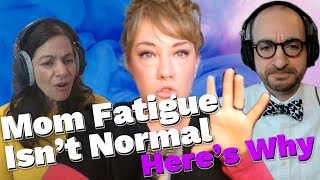
Anu Simh talks with Brandy and Dr. Nicholas Cano about why motherhood feels overwhelming: gaps in maternal care, postpartum autoimmunity like Hashimoto's, mold and mycotoxin exposure that standard tests miss, and environmental toxins like BPA and glyphosate. They cover nervous system regulation, sleep, and low-cost fixes like morning light, grounding, and breathwork.
Questions this video answers
Seven-day event launching February 28 through March 6 (year not restated in chunk).
ERMI test (described as more sensitive/accurate than consumer Home Depot kits).
Biotoxin binder from Cellcore.
Chapters
You know, and I tried to make an appointment with my doctor and they were like, that's great. Come back when you're 12 weeks along. And I was like, 12 weeks along? Like, what do you mean? Like, there's nothing we can do until 12 weeks along. I just couldn't believe it. This is what happens. A mom goes to their doctor. Oh, my gosh, I'm so tired. I'm so fatigued. I am anxious. My hair is falling out, you know, and the answer is just like, yeah, like that's just part of motherhood. Like you're a mom now, you know?
Welcome to Bad Medicine. Healing Medicine. One episode at a time.
I'm Anu Sim, born to the certified, certified functional health coach.
And this is Dr. Nicholas Cano, board certified family medicine physician.
We believe in the importance of lifestyle factors, evidence based medicine, and moving beyond symptomatic treatment to true healing.
Our mission is to empower you on your journey to optimal health by demystifying healthcare and guiding you through the vast sea of wellness information.
We help you ask the right questions, become more knowledgeable about medicine, and build a good relationship with your medical team.
The Bad Medicine podcast is for informational purposes only and should not be considered as professional medical advice. The views expressed are solely those of the hosts and guests. Enjoy. All right, I think we've done it. All right. Well, doctor, can I call you Brandy?
Yes, please. Yes.
I wanted to start off by hearing a bit about your background. What's this about being a blackjack dealer? As a. As an occasional gambler myself, I'm fascinated how one ends up going from blackjack dealer to doctor of clinical nutrition.
What a journey, right? So thanks for having me. I'm so happy to be here. I. When I graduated high school, my. My father worked in the casino and so I moved up to Washington to live with him. And he's the one that kind of got me into that. That field because I could work on the weekends and because in Washington you only have to be 18, you don't have to be 21 and you can work on the. I could work on the weekends and still go to school. I had just started college, actually. Funny for pre pharmacy, which also. What a shift. So I was going. I was working on my undergrad and working at the casino on the weekends, and it really, it really fit a need at the moment.
Yeah, amazing. Amazing. Well, I love blackjack. It's the one that you can, you can win if you know the statistics, which, you know, for a nerd like me, I think that's a cool. That's a cool one.
Brandy, tell us a little bit about. I love how passionate you are about helping moms. So from blackjack to when did that transition happen? And how did you. How did you identify that this is the population or this is the niche, this is who I want to serve. How did that come about?
So I had an initial interest in nutrition. And so I decided after I had completed my undergrad, which ended up being in business management and not pharmacy. But after I had completed that, I really had a strong interest in health and nutrition. So I went back to school to get a nutrition certificate. And at that point, I was very much just focused on, I would call, like, application based nutrition. I was doing a lot of farmer's market tours and, you know, kind of kitchen audits and basic meal planning. And then I went through my own really debilitating story with mold and mycotoxin illness. I suffered a miscarriage. And once I kind of came through that, at this point, I was working on my master's degree in human nutrition and functional medicine, and I kind of came out the other side of that. And that's when I got pregnant with my first daughter. And after coming out of such a traumatic experience with my own health and having a miscarriage, I. I just remember feeling like, hyper alert, like, okay, I'm pregnant again. I want to do all the things right? Like, you know, and I tried to make an appointment with my doctor, and they were like, that's great. Come back when you're 12 weeks along. And I was like, 12 weeks along? Like, what do you mean? Like, there's nothing we can do until 12 weeks along. I just couldn't believe it. And so I really started to identify these gaps in support through this entire reproductive process, from preconception to postpartum and beyond. And so after I finished my master's degree, I completely pivoted my practice. And at that point I was only focused on fertility and preconception prep. And then fast forward, I was now back in school working on my doctorate degree and pregnant again. I don't know what it is about, like, degrees and having babies that go together with me, but after going through that process, then I really, I pivoted from focusing just on fertility to really focusing on moms. In my opinion, if mom isn't healthy, nobody's healthy, right? Like, it really starts with mom. They're just the chief medical officers of their family. And the sentence I kept hearing was, things were never the same ever since I had kids. And I wanted to Provide a container and a situation for moms where they could really experience the motherhood that they had envisioned for themselves, where they weren't having that in that moment where they were having to plan their days around how they felt, feel and kind of be on the sidelines and have guilt and feel like they were missing their kids childhood. And that is just not okay with me, not on my watch. And so I really pivoted to really focus on supporting moms in that stage of life.
So do your clients come to you when. As soon as they hear they're pregnant and they feel like, oh, this is when I need the support or is it postpartum? Or when do they recognize that something is amiss, there's something going on and I need support?
Usually it's after the fact. You know, again, it's like that sentence of like, things were never the same ever since I had kids. Like, something is wrong here. Something's not going on. And the reason is multifactorial. I mean, obviously we all understand that there's a giant hormone shift that happens in that time of life. And also your sleep patterns change literally overnight. And we don't have a village and a support system like we're meant to. Depending on how your birth went, there could be birth trauma or, you know, ramifications from that experience that you're still working on healing and recovering from. And then also from a thinking more of like a toxin, pathogen standpoint, sometimes what can happen is we can have, we can have microbes inside of us that don't cause any problems and we're resilient too. And we have this kind of symbiotic relationship with. But what can happen when we have a triggering event or high stress or new exposures? They can, those bugs can undergo something called polymorphism, where they're literally changing shape and now becoming more problematic, now causing more symptoms. So we just have this big trickle down effect. And I also find that postpartum autoimmunity is a big issue that a lot of women are not being properly screened for, especially if there was a C section birth. Because during C section there can be more microchimerism, which is like this mixing of blood between mom and baby. And, and that can result to higher increase of launching an immune response. And so there's just all these, it's this perfect, I don't like to use the word storm because that has a negative connotation, but it's just this huge event in a woman's life where they're now having these downstream symptoms. But nobody is zooming out and putting these pieces together and really figuring out how we're going to, you know, get back to the place where we want to be.
Well said. Do you think it should be standard of care to run thyroid antibodies for Hashimoto's?
Oh, yes, absolutely. Hashimoto's is the most common postpartum autoimmune condition that we see. And this is what happens. A mom goes to their doctor, oh, my gosh, I'm so tired, I'm so fatigued, I'm anxious, my hair is falling out, you know, and the answer is just like, yeah, like that's just part of motherhood. Like you're a mom now, you know, like, wow.
Well, I've never said that, but I've heard those complaints. And iron deficiency is another one we see quite a bit of for the hair loss, too.
So follow up on next question about should that be standard of care. Would you go as far as to say it's bad medicine not to screen moms who, who have these symptoms, but the doctors aren't. Haven't quite thought about autoimmunity? You know, would. Would it be.
I think so. I would say that. And because this is not something that I'm pulling out of a hat here. This is. We see this in the literature, you know, about postpartum autoimmunity. We see this. There's literature around microchimerism, there's literature around, you know, increase of autoantibodies after giving birth. And so, you know, it's there, the L is there. We just need to be aware that it's there and then implement it into our practice accordingly.
I think, I think some doctors might get close. You know, they'll check the TSH blood test using the lab's reference ranges, but if they looked a little closer into maybe age normal reference ranges compared to the person's previous tsh, there might be something there. But those antibodies are usually, you know, my go to because they can really illuminate, you know, positive, negative, whether there's something autoimmune.
Oh, a hundred percent. And even, you know, sometimes I'll see women having a T4 being ran, but not T4 and T3. And thinking about childbirth, there's a lot of burden put on the liver because, you know, the liver is how we're metabolizing all of those extra hormones. And the liver is also prime conversion site from T4 to T3. And so how do we know where the defect is in that cascade and in that cycle? And if we don't have all the data. You know, it could be a conversion issue, not an issue upstream, you know.
In the pituitary of the hypothalamus and also the microbiome. You know, I mean, just really, it gives you a really good insight on what's happening as far as the conversion. So, I mean, I think what we do is we really think about them as just separate systems instead of looking at it like this is a whole, you know, I mean, really thinking about the woman and thinking about all the systems and looking at it as a. Where could it be and just being. Thinking outside the box. I think that needs to happen more and more in. In regular medicine as well.
You know, I want to ask you about mold. Maybe kind of the telltale signs when we should be thinking mold and then testing for mold. You know, it's challenging. Are we getting any insurance coverage here? Do you have to seek out cash pay testing on your own? Which tests? You know, everyone's trying to sell their tests. Love to hear your thoughts.
Yeah, I see mold being a big issue. I have a personal story with mold, as I mentioned. And so the, the challenge with mold and mycotoxin is that it can cause symptoms that are very broad, sweeping, and nonspecific. So for me, I was having really extreme vertigo, really intense fatigue, and brain fog. And then I also had a kind of a unique symptom, which I honestly haven't heard others having. But I had erythema nodosum on my shins, which is, you know, like hot, heavy, hard nodules. On your. On your shins. And I. When that happened, I had had that before as a reaction to some birth control that I had been prescribed many years prior. And so when that happened, I knew something was up with my hormones because I. It wasn't my first time having that symptom and just really feeling like I was very much out of my body and not present. Other symptoms would include vision issues, GI pain and discomfort, bloating, joint pa, skin rashes, ice pick type of headaches can be another one that I see a lot. And, you know, again, it could be that we were exposed before pregnancy and we were, we were managing okay. We weren't having any outward symptoms or our detoxification and drainage pathways were open and we were handling it okay. And now maybe after pregnancy and motherhood, that's no longer the case. And I see this a lot, especially in women who got pregnant, no problem with baby number one. Now they're trying to have baby number two. And all of a sudden, there's an issue. They're miscarrying. They're not able to get pregnant. It's taking a long time, and nobody's talking to them about looking into this toxicity issue. So for testing, it is cash pay testing. So you can run IgG tests or IgE tests to different molds. That is looking for an allergy. Right. Like, that's not looking for. For an immune response to the mycotoxin. So it's a different type of testing. We can still get information from, you know what, like a LabCorp can run that can be ran through our insurance. But I just think it's important to know that that's a different type of testing than what you can find in private labs that run mycotoxin testing. And then I think it's also important to test your home, doing, like an ERMI test, looking at where that exposure might be. For me, it was at my job, thankfully. I mean, I'm glad it wasn't in my home. But being able to identify where that exposure is is an important part of testing as well. Urmi.
What's ermi?
Ermi. Erm. I. Yeah, it's a type of testing in the home that is more sensitive and more accurate than what you might find. Like if you just went to Home Depot and picked up like a mold testing kit.
Okay.
And it may be lurking anywhere. I know in my home, it was in the dark places in my closet in a way. You know, I mean, and even just kind of treating that just made such a big difference.
You know, I think there's. You mentioned a really potential pitfall for patients is they have these concerns. The doctor goes on, the computer types in mold. Boom. There's a. There's a test at LabCorp. I can order the mold test for you. And then test comes back negative. Patient sees this as, oh, it's not mold, moves on, and they're left like, it's not mold. I've been tested, which is a potentially major flaw in. In, you know, in their understanding because it is a limited test. While it can be valuable if positive, can maybe be a hint. Negative does not rule it out.
So, Brandi, besides mold, are there any other toxins that could show up? Just wondering what our listeners should be really thinking about when it comes to toxins and postpartum, you know, what really affects the mom in her. In her condition and the stress of having a new baby, all of that.
Yeah, totally. So other toxins that, you know, mold and Lyme tend to be kind of bedmates. You Know, they often kind of run together. And so while that's not necessarily a toxin or toxicant, I think it's important to also work with somebody who understands, understands that and is also assessing and looking at immune function and looking at any kind of underlying infections or co infections that may be there. Because this can happen a lot in moms too. Like they might have a reactivation of viral issues, especially if there's thyroid. Thyroid and EBV like to run together. And so somebody who's looking at those underlying infections and then for toxins, I'm really thinking about things like bpa. I'm looking at things like glyphosate and atrazine, which is another herbicide that is used or pesticide that is used. I'm looking at things like plasticizers, VOCs, all of these things in the environment that again may not have been causing issues before, but now your internal environment is different. And so now they may be causing issues. And so we may need to be a little bit more mindful about where we're getting exposed. Reducing exposure, supporting our body's natural drainage and detoxification pathways. And then also a big component, you know, a lot of people like to just jump to a fancy sexy detox protocol or a parasite cleanse and that usually is not, is not the place to start, especially in moms. What I find is so needed is nervous system regulation and for me that's a non negotiable. That nervous system piece has to be on board so that we're sending messages of safety to the body and to the nervous system so that it can close that healing loop so it's not stuck in that cell danger response so that the mitochondria can be actively producing energy and ATP versus you know, being more in like battleship mode where they're trying to fight and deal with whatever you have going on.
That is well said. I think we all, you know, we see that, you know, this. Oh, you know, we need to just make sure your detoxification pathways are spot on. Let's just do this cleanse or this. But you're right, the nervous system holds the key. So what, what are some things that you would tell your patients about how to take care of the nervous system?
Gosh, there's so many different ways and just like detoxing, there's usually kind of a, an order of operation. Some things work better in the beginning versus versus later on. I think the first thing is just to start having an awareness. Start notice what you're noticing, be aware of the Language you're using. And you know, a test that I give my clients is like, what, what's your knee jerk response when somebody asks you how you're doing? When somebody asks you how you do and what do you say do? You're like, oh, I'm hanging in there, you know, doing okay, you know, getting by. All of those are messages that your nervous system is listening to, your subconscious is listening to and you're sending those messages to your body. And language is so, so powerful. You know, I was just talking, I was just at lunch with somebody and she's working on this big project. I said, how's it going? She's like, oh, it's killing me. No, no, no, no, no, no, no. We're not going to use language like that. You know, we're going to first have an awareness of how we're speaking to and about ourselves because that's the first step. Then the second step, I think this is an easy kind of next layup step that's relatively easy for people to do is to start slowing down around meal time. You know, before, when you sit down to eat, first of all, get out a placemat, put it on the table, sit down at the table, don't sit down with your phone. Chew your food to applesauce consistently. Consistency. Take a few deep breaths before you start eating. Express gratitude, actually taste your food. Especially as a mom, like, let's have a meal. Let's not just have the crust from our kids sandwich and call it a day. You know, like sit down and have that meal and just. And sending those messages of safety and gratitude to our nervous system. Gratitude for this meal that we're having, for these nutrients that are now coming down our digestive tract. And that's such a good place to start. And of course from there, you know, we can talk about things like grounding and breath work and meditation and somatic work. There's things we can do to support our limbic system and our vagal nerve system. I mean, there's so much in this, but for moms especially, it's like, let's just meet us where we are and let's just start here. And that's a great way to start.
Yeah, I love it.
Randy, I was so sure you would say sleep because that's something most moms, young moms, are really struggling with.
It's hard to get that.
That's so hard. Yeah, it is.
And so important. You're right. I mean, talking about detoxification, the glymphatic system is how our Brain, you know, detoxes and cleans up. And the glymphatic system is activated almost exclusively while we're sleeping. Right. So if we're not sleeping, imagine what kind of downstream symptoms we're going to have and fatigue and brain fog. So you're right. That should have been, that should have been in there for sure.
What we'll edit if, yeah, don't worry.
Oh, no, no, no. But I, I, I hear why you didn't say sleep. Because it is difficult as a young mother, you know, because they're, they have to sleep. When the baby's asleep, there's so many things that come up, you know, and all those things that you were saying about concern and worries, they all come to just kind of trick you at night, you know, into like, let's have a conversation right now about it. So it's more fun.
I have to admit, when I have a new parent who's not sleeping, I don't really have an answer for them. I don't know if there is one out there to get them more sleep. I just sort of accept and work around it. I don't know if you guys have any better strategy than me.
I think that the best thing to do to help sleep is to support your circadian rhythm in the morning. You know, a lot of people, when they go to their provider and they're like, oh, I can't sleep. Usually the conversation is like, make sure you have a consistent bedtime. Like, turn off the lights, you have a good bed, you know, bedtime routine. Make sure you have time to wind down. But I want to know what are you doing when you first wake up? Because that's going to impact your sleep the most. And so are you when you wake up. Are you just grabbing your phone and that's your first light exposure? Is that blue light from your phone? Or can we get up, walk outside, get that message from the sun about what time it is, which is then going to signal, you know, melatonin to be produced 14 hours later. If we, if that first message of lighting we're getting is from that artificial blue light from our phone, or we're turning on the, the kitchen light or opening the fridge and looking at that light, all of those things interfere with that messaging of time. It is. And every cell in our body has a physiological response to what time it is. We're constantly wanting to know what time of day it is. That's why we have photoreceptors in our eyes and on our skin, and we have clock genes and all of this to tell us what time of day it is. And so for me, for, especially for moms, that helps the most and you do it with your kids and it helps them the most. And you can get outside during the day as often as you can, but especially in the morning when you're getting that, that good infrared light and again at sunset, infrared light is high again at sunset. And the whole family will benefit. And it doesn't take any extra money. You know, you don't need a fancy biohacking tool. It's available to you every day.
Just a good reminder that we are diurnal and it's more than just the vitamin D. And especially women hear all these mixed signals. Oh spf, you know, wrinkles. So really getting past that and just getting that morning sunlight. And also that's very depends on the, your race as well, you know, if you're African American or Indian. Like, I mean I need way more of that sunlight in the morning than someone else. So all of those becomes like important conversations I think you know, about circadian rhythm, you know, just.
Yeah, it's pretty, pretty amazing. You mentioned clock genes. You know, reminds me of. My dog has a food dispenser. It goes at 6:30pm every evening. Six, 6:15. She's, she's there ready. And I have patients, they wake up at 6am every day. They don't need an alarm clock. You know, we, I believe have this ability in our, in our DNA to have a rhythm and, but most of us, you know, we, we, we're not entrained and we don't have that, that body clock for whatever reason. Maybe it's the five day work week and then the two days are totally different and we're never really entrained. We're always kind bedtimes, our awake times, the artificial light.
Huge. Huge.
Yeah, yeah, Fascinating.
I really wanted to ask Randy about the resilient motherhood summit. Yeah, let's hear about it. And just explain your own words what people will get out of the, the summit and why they need to listen and tune in and. Yeah, yeah.
So you know, my whole motivation behind putting on this summit was because I don't. Our kids are little for what feels like five seconds and I don't want moms to miss it because of how they feel, because they're not able to find answers. They're not able to connect the dots because they're having to plan their day around how they feel and not being able to make those memories that they thought that they were going to be able to before they started having kids. And so what I have done, I've pulled together 40 experts that brought their expertise to the table. And. And they all have a different area of expertise that I want moms to be aware of. You know, all 40 talks are probably not applicable to all moms, but I wanted to get us all in one room, so to speak, so that moms can identify what that very next best step for them is. Because I don't want you to miss it. I don't want you to miss your child's, you know, childhood. And I don't want you to look back feeling like, oh, man, I w. That really went differently. So it's a seven day event launching February 28th through March 6th. Anew is a speaker on the summit. She's talking all about gut microbiome as well as vaginal microbiome and the impact on health. And so, yeah, I just encourage everybody to come.
The ego, right? There's no room for yourself. It's all about the kid. It's about the baby. And so you're so caught up in that, that reconnecting with your true n and your true self really takes a backseat. So even just kind of reminding yourself like, this is my true nature. This is what makes me thrive. This is my ikigai, you know, and putting a positive spin, Brandy, like you said, you know, because there's no room for negativity, especially as a new mom, you know, you are just putting that energy out to your child as well. Yeah, I think that's just a fabulous word. Yeah.
Goes back into the mindfulness and mindset that you were talking about. And reminds me, you know why moms sometimes say they don't get colds? Right? They ain't got time to get colds. That's why I don't get colds. Because there's so much the mind can control through the nervous system. As you said. Beautiful. Rapid.
Yes, Rapid. Let's do rapid. Yeah.
Anu, I think you're up first.
Okay.
Rapid fire.
Your three favorite ways to reduce toxin exposure at home. Home budget friendly.
First and foremost, air circulation, especially if you're living in a newer home. They build those homes to be airtight. Open up the windows, get fresh air in. That takes no time and no money. Secondly, there are several apps that you can do this, but go through your house and scan all your products that you come in contact with. Your cleaning products, your laundry detergent, your toothpaste, your deodorant, your. Your makeup, all of your products that you Come in contact with, get a notebook and take note of the ones that score the worst as far as, you know, what ingredients they have and what literature is available for how they could have negative impact on the body. And then as that runs out, replace it with something better. So it's just one by one. This is not an overwhelming thing. Then you don't need to throw out everything. But now you have an awareness. You're noticing what is in your environment and that's a great way to start. And then third, if you drive on a daily basis, especially if you're driving in a city where you have high exposure to like, vehicular exhaust, push the button in your car that, that recirculates the air versus pulling air in from the outside, and that will greatly reduce the amount of that exhaust that's getting pulled into your car.
Busy mom. 2:00pm Energy slum. What is your best. Best go to snack.
Go to as a snack. I don't. This is a hard one for me because I feel like there are other things that will increase your energy at 2pm instead of a snack. There's a, there's a, there's a type of breath work called the bellows breath that you can do. You could do this like 10 to 20 times. It involves like, you can, you could YouTube it, but it's, it has to do with like moving your arms up and down in sync with your, your breath. There is a contraindication for hypertension, so, you know, proceed with caution, talk to your doctor, but that when you get done with that, you will be amazed at how just like awake and alert you feel. Also, get outside. Let your body know where the position of the sun is. Let your body take in those messages and get outside. If it's warm enough, take off your shoes, get some good electrons coming up from the earth that then support your mitochondria, which of course then you know, creates ATP and cellular energy for us. And I think all of those are better than like any snack you could grab.
All right. We love it. Name one common product or habit you believe every new mom should avoid to protect her health.
There's so many products full of junk that are marketed to new moms. Like, you don't need to buy these lactation cookies that are sitting on the shelf in the diaper aisle of Target. No, gross. You don't need to buy, you know, bath products for your baby that are full of scents or any even natural things like, even lavender. You know, there's, there's. Everyone thinks lavender is so benign. There is research around lavender impacting, like hormones in young boys. And so just, you just don't have to. You just. You don't need it. And really, like, if you're thinking about what to put on your registry, the. The baby doesn't need anything. The baby just needs a well cared for mom. Put on the registry that you need like, you know, mesh underwear and like ISA instant icicle pads and, you know, things that you need for you. A recipe. Make me some real good lactation cookies. Just put stuff on there that supports you. The baby is fine.
Anything that. Do you have clients coming in and saying, can you just give me a simple hack for detox? Also detoxing my body? Is that something. Because that seems to be something that the Internet is full of, you know, just like, what is a quick fix for detoxification?
It doesn't. A quick fix doesn't exist. But being mindful of exposure, you know, that's quick relatively, you know, and then lowering exposure wherever you can. I am, you know, as a big fan of utilizing binders in practice. You know, we have phase one and phase two detoxification. We also have phase three, which is how we excrete and get those things out. And so, um, I find that binders can be really helpful in doing that. There's lots of different types. Some are better than others, some work better than others for different compounds. But I mean, if you're asking me for like a quick fix and you want me to actually give you an answer, I'd probably say binders. I really like the biotoxin binder from Cellcore. It tends to be pretty well tolerated. It also has, you know, it has active carbon in it and selective binding. So you don't have to be as careful around not taking it when you're eating or supplements. I still recommend not taking it around medication, but that's a pretty good kind of gateway binder.
I love it. Yeah, well, I think my last question is redundant, but I'm still going to ask it. What is one simple way to reset a hectic day? Reconnect yourself. Maybe one you haven't mentioned.
I would get out your phone and I would look for three people in your phone that you. That are. That's in your contact list. This. And send them a message of gratitude. Reach out to them, tell them what about them. You're grateful for what they do, what you love about them. That shifting into a state of gratitude will sink you into a different frequency. You know, when we're focused on what is lacking in our Life. When we're focused on the energy that we don't have, the money that we don't have, we wish things were that way. Way. That is a different frequency than when we're focused on what we can give to others, how we can forgive others, what we're grateful for about others. And just do that. Open up your phone and send those messages and then you'll be amazed at how that energy quickly gets reciprocated back on you.
I've never heard of using that for gratitude mindset, but I think it's great. Not just the once a year at the holidays, but to reach out more, more spontaneously. So everyone listening, please send those three texts. Your body will thank you.
So, Brandy, where can our listeners find you online? What is the best way to connect with you? And especially as a mom going through all of this?
You know, my website is resilientmotherhood Health, and that's also my Instagram handle, resilientmotherhood Health, which is the. The social that I'm most active on. I'm also on Facebook and TikTok, but just not as much as on Instagram.
Cool. Great. Thank you.
Thank you so much.
Well, this was amazing. I loved how you. You broke it down, you kept it simple, you kept things low cost, which we love. Although we did force you to recommend one supplement. So there we go. We got one in there.
I loved your advice, which is really, like Nick said, low cost because we have to be mindful that not everyone can afford these fancy tests. And so a lot of the things that you said were so practical and something that young mothers can start using, like right away, you know, just so. That's wonderful.
I think we have a theme for the episode.
Yeah, exactly.
Thanks for joining us for today's episode of Bad Medicine. We hope that today's conversation empowers you to take a more. A more informed role in your health journey.
Remember, your path to optimal health is unique and into integrating medical insights along with lifestyle changes can make all the difference.
Don't forget to subscribe to Bad Medicine on your favorite platforms so you never miss an episode.
And we love hearing from you. If you have questions a topic that you'd like for us to explore, please.
Reach out to us on Instagram admedicinepower.
More from Anu


The Bad Medicine of Travel: Why Airplane Food and Jet Lag Are Ruining Your Gut

We’ve been waging war on the microbial 0.1% and carpet-bombing the 99.9% that keeps us alive

Picky kids + mac & cheese: here’s one low-friction idea to expand their palate