Rethinking Medicine: What Doctors Can Learn from Acupuncture
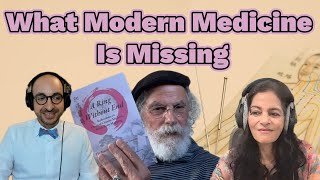
Acupuncturist Zev Rosenberg, licensed since the early 1980s, explains how Chinese medicine emphasizes patient participation, lifestyle, and time in healing, contrasting with modern medicine's insurance pressures. He covers gut health connections, medicinal mushrooms, and clinical outcomes from pain relief to childbirth support.
Questions this video answers
A Ring Without End
Amazon
zevrosenberg.com
Early 1980s
Cordyceps, reishi, lion's mane
Chapters
You know, the patient really wants to get well. They have to participate. They're participants. They're not like passive receivers of treatment. Do something to me so I don't feel this pain kind of many ways. Much of biomedicine is like that. Sometimes of course it's necessary, but even there, there is a role for the patient to play in establishing their own health and maximizing the treatment. So you can interfere with the vital force of the person, whether it's prana chi, as little as possible. So it's very important that people live a good lifestyle and minimize, you know, destructive elements in their life.
Well, Zev, thrilled to have you. Acupuncture is a long standing interest of mine, so I can't wait for our conversation. We talk about, well, bad medicine here. We like to highlight those things that we think should be a bit improved, whether it's conventional or alternative medicine. So having an experienced practitioner as yourselves, you're in a great position to illuminate those things for us. So thanks for, thanks for being here.
So honored to be here. Thank you.
Zach, welcome. I've known you for long, long time.
Yes.
And my acupuncturist and I don't think I've ever asked you how you got into Chinese medicine and acupuncture. So that's probably where we'd like to start.
I'll probably take the whole half hour. So I'll give you the short version. Basically. You know, Bob Dylan once said when he was asked about the 1960s, because that's when he really took off as we could see that new movie, a Complete Unknown, which is like a history of that era. I said, he said the 60s weren't about, you know, you know, free love or drugs. It was really is about cultural exchange. The west had opened up specifically to the Asian cultures. India, Tibet, China. And many different influences came over to the West. And that's when a whole spiritual movement started with people like Alan Watts, Ram Dass, people like that, Ravi Shankar in terms of music, etc. Etc. So there was a journey to the east that occurred at that time. So I was very much influenced by people like George Harrison, who was, you know, introducing meditation and yoga, which I started as a teenager. Vegetarian diet, which I also started. And then I discovered macrobiotics, which was a Japanese teaching based on yin yang and in five phases, wuxing in my teens. So since macrobiotic was more or less derived from teachings of what's known in Japan as shojin ryori, like the temple cuisine of Japan, which was based on rice Vegetables, fish, seaweed, seasonal foods and so forth. I adopted that diet in my late teens and my health improved so much when I kind of a sickly kid living in New York, polluted to New York with lung issues all the time, bronchitis, colds, et cetera, et cetera. And it really helped me establish my health along with going to yoga classes. I remember there was a yogi Gupta in Manhattan. I used to take classes with backup as I when I was a teenager. And it wasn't too long before I found a book by George Asawa, who began the macrobiotic movement in the pan called Macrobiotics and the Medicine of the Far east, where he talks about acupuncture and herbal medicine. So when I was 20, I moved out to Colorado and got to the natural food business. But I was a horrible businessman, so I didn't do so as soon as I had a chance. I was 22. I already had training in shiatsu under my belt and moved to New Mexico, ran a macrobiotic center, but also went to naturopathic school first and learned naturopathy, learn the herbal medicines of the Southwest, studied with various teachers until I finally could get into a Chinese medicine school because I didn't want to move to either New England or California at that point. So a school opened in Santa Fe in the late 70s. So I went there and studied Chinese medicine and got a license in the early 1980s. As soon as I had a chance, I moved back to Denver, Boulder, Colorado and opened a clinic there. It was not licensed at the time. Word of mouth got me up within a year to 100 patients a week because it was such a demand for the medicine. And it worked. Even in my early years, it worked so well. But we only had 30 practitioners in the entire state of Colorado. So that's how I got. By the time I was 20, I knew that.
That's lovely.
I think that's really interesting how you make that connection so early in life. And I mean, even today, I think food, nutrition, lifestyle are huge for you, right? I mean, has that changed? I mean, over the years? Like, I mean, even our understanding of Chinese medicine, acupuncture and nutrition, I know in Ayurveda and we've talked about this a lot, we have seasonal foods and the climate matters, you know, when you eat, how you eat, all of that matches. How is it with Chinese medicine? Can you give us some insight into that? And how do you talk to your patients about nutrition? And when you see something's off, you know something's off when you're doing a treatment. How do you approach a patient with that?
There's a lot of questions in that one question. So I would like to add that George Asawa also wrote a book called, again, actually, it's the same book, Macrobiotics in the Medicine of the Far East. And he says that Ayurveda is the mother of macrobiotics. So I also had an early exposure to Ayurvedic medicine as well. And two of my earliest inspirations were were talking before the broadcast about the podcast about pulse diagnosis, where Dr. Vasant Ladd was one of the teachers in the acupuncture school. And he said, you know, when you feel the pulse, you feel the life of the patient. I was very inspired by that. Even while I was still in school, I would feel everyone's pulses in my family, on buses, everywhere. I went to start getting the pulse rhythm down because I knew I wanted to master. And then I met another great pulse master, who was Dr. Yeshay Dunda. My first week of practice in Colorado at a seminar he was giving in Boulder. And everything he did was based on pulse diagnosis of the time. But like Ayurveda and like Tibetan medicine, Chinese medicine really is a complete system which involves living a specific lifestyle. As you mentioned, seasonal dietetics, qigong, yoga, you know, the patient really wants to get well. They have to participate. They're participants. They're not like passive receivers of treatment. Do something to me so I don't feel this pain kind of many ways. Much of biomedicine is like that. Sometimes, of course it's necessary, but even there, there is a role for the patient play in establishing their own health and maximizing the treatment. So you can interfere with the vital force of the person, whether it's prana chi, as little as possible. So it's very important that people live a good lifestyle and minimize, you know, destructive elements in their life, treatments, etc. Etc.
Thank you for starting to touch on the theme of bad medicine because, yeah, you're referencing really this paternalistic medicine where we would do things to people. And yeah, you're absolutely right. It comes from the culture in medicine. We learn from the attending, we learn from the attending, we learn from the attending. It also comes from patients, interestingly enough.
And process and time. It's a medicine of timing and time. You know, I always tell students and other practitioners that don't take on the pressure that you have to cure them and they have to get immediate results to show that acupuncture works. You know, it. I said, it's a process and you. And they're participating in a process. It's, you know, position and patient is a relationship and there's a shared qi life force between the two and that's what brings the results. And you know, you feel, and especially when you're doing acupuncture, you feel it because the patients, for want of a better term, energy, body changes and there's a feeling of change in the room and they feel it, I feel it. And the other secret of all that is that the practitioner doesn't get drained. That's how I'm able to still be doing this full time 45 years later.
Right, right. Do you think that's a common issue among acupuncturists, Chinese medicine?
Well, since we're in the, in the west and we're dealing with a failing model of biomedicine, again, I'm not saying that there aren't aspects of biomedicine that aren't essential important to me. People make the mistake that technology is somehow the medicine. It's not needles, Moxas, herbs are the technology of Chorini's medicine. But what's important are the teachings that are in the classical text, such as the Beijing Yellow versus internal classic, just as an Ayurvedic Karaka Samhita, etc. Etc. So it's the, they're like active expressions of the philosophy of the medicine, but that can also include anything else. And you can conclude the scalpel, it can include supplements, vitamins, specific food, medicines, kitchen medicine. All these things can be tools if you have an underlying unifying theory to practice it by.
So that's what's missing, that unifying theme. And we see that right in practice too. I'm always looking for a team kind of approach to, to the health of a client or patient, but it's pretty divided. The cardiologist does not speak to the internist, internist doesn't speak to the coach. And they're just pretty separated. And so the problem is, and the client does not know what is the end thing that they need. What do they need? I had a recent client who had an accident, like really bad car accident. Four years, I said four years after the accident, she's still in pain. She said her pain from an 8 or 9 out of 10 to 6 right now, she said, is thanks to her acupuncturist because all the other doctors were just giving her painkillers, you know, and she couldn't handle it, her body couldn't handle it. So I think that's because becomes very important. He's the first person who even told her her diet needs to be fixed, she needs to eat right for her body and her systemic inflammation was high. She needs to keep an eye on that. So that's that unifying message that I think doctors.
Yeah, very well said.
Yeah, yeah, I agree, I agree.
Yeah.
It's so much of the time pressure of doctors has led all of these such critical things to be left by the wayside in place of the easier, you know, there's a nail, I got a hammer mentality.
You know, we could speak for a minute about it. I don't blame the doctors as so much. I blame the, the insurance, the whole system. Like every, you know, doctor, I rarely go to western doctors. Of course if I needed a, I would know, check up dermatology, things like that. But they're always looking at a screen because they have to be accountable for every procedure. Everything they say back to the insurance, the bean counter is always looking over their shoulder. They have to see too many patients at a time in order to make ends meet with the insurances, everything else. And it's, it's very difficult to have a person to person model in that kind of format. And I think people in my field, the schools are struggling, practitioners are struggling because they're trying to find a place in that model and it's simply working and not going to work. And I've been telling people this for decades. To me, look, I've worked in and out of hospitals when I first started with doctors and so forth. No problem with chiropractors willing to work with anyone in any health field. But you're not going to get me in that model because it doesn't work with the kind of medicine I practice. This is where our revolution needs to happen in health care, where we personalize it, bring it one on one and then have inpatient facilities, of course, when necessary. But right now we're seeing a wholesale failure in terms of, you know, the system costing too much and being, you know, cost of medicine going higher and higher and higher all the time.
Yeah, yeah.
I have patients paying over $1,000 a month in premiums. And if I recommend they see productions. Yeah, right, exactly. If I recommend that they see an alternative practitioner or try something that's 1, 200 bucks, they feel like, well, what am I spending all this money on my insurance? Can we do something in network? And so it sort of further promotes the insurance based model and creates this unfortunate. There's this divide. There's people who are willing to look at their health as, you know, pay for it up front. And there's those who aren't.
Yeah, I'm 100% cash model. I give super bills to patients. But I do know some concierge doctors, especially in the realm of neurology. You pay a fee, certain amount, and you can contact them at any time. I remember one physician that a patient had to contact and they saw the person once. They said, okay, we're done here, out. Never spoke to the patient. And then when they needed instructions on their medication and so forth, they didn't even get to speak to a nurse in the office. They had to speak to an office assistant to get the information. That was the only contact they had back with the physician.
This is a concierge. You say no regular medicine. Okay, hospital. I think most people have heard about acupuncture, but, Seth, in simple terms, could you tell the listener what is acupuncture? How do you connect it with Chinese medicine? Do all acupuncturists connect the two? Just a gist of what acupuncture is?
Well, first we started, of course, with the technology, which is the very fine needles that we and. But there are all kinds of gauges and lengths, thicknesses and stimuli. And there are also branches within the medicine. There's what's known as Y co or external medicine, where you're basically treating musculoskeletal. But originally acupuncture and its associated methyl oxibustion were internal episode. And that's what I practice mostly. And. And basically what you're doing is you're tuning the body and the mind. As one great Chinese philosopher doctor said, the purpose of acupuncture is to awaken the source qi of the body, the healing power that is innate, and work with that. And that's what heals. Nothing from the outside heals. The best you could do is to awaken that force. And it's also working with the memory of the mind and body. Ah, this is what it feels like to feel healthy. And once the body and the mind have a memory of that, it can now use that as a metaphor to move in that direction. It could be further acupuncture treatments or it could be qigong, yoga, meditation, dietetics, going outside in the garden, walk, forest healing, as they call it in Japan. You know, walking in the forest, all these things can be part of your entire healing response and part of the patient. That's what we tried to do barefoot. Barefoot. Although the barefoot doctor is kind of like in terms in China, was A scary chapter in the medicine.
Oh, really?
You know, they didn't have enough Western doctors during the Cultural Revolution. And I actually, one of my early textbooks I got was a Barefoot Doctor's Magnet, it's called. And basically they stuck thick spike needles into people's spines because didn't take much training, but I think some. Some of the patients have gotten paralyzed for putting these thick spikes right into the spinal cord. So that method quickly disappeared, and we.
Came back to the bad medicine quickly there. Yeah, yeah, I'm sure, you know, historically, you know, there's lots of chapters that we leave unwritten, unread, things like that. You know, cool.
Chinese medicine connects a lot with gut health. And now, of course, you know, with the microbiome being such a. Such a hot topic everyone's talking about, the microbiome is the. Does traditional Chinese medicine view the microbiome in a certain way? Do you.
It's always been. There was a great Chinese doctor by name Li Dongyuan, who lived a thousand years ago during the Jinson Yuan Dynasty period, and he said that the central element of the five elements was earth, and the earth is connected with splay and stomach, and that the entire qi mechanism metabolism is based on the spleen qi raising the clear qi that comes from food into, to nourish the tissues and the descending of the turbid, which are the waste products, down and outwards. So. And Chinese medicine very clearly saw where the metabolites would form what we call jing essences, which are hormones and vital fluids of the body, different tissues such as bone, tendon, muscle, skin, flesh, nourishing sense organs and so forth. It's very profound as an Ayurvedic in Tibetan medicine as well. But the microbiome, I think, actually is a very good expression of that for Westerners because it understands its connection, first of all, with immunity. Now, in Chinese medicine, we have this theory of the San Jiao, the triple burners, the three metabolisms, hyperpar, middle part, lower part of the body that goes back 2000 years to the Nanjing, one of the medical classics. And the upper burner includes the mucosa of the throat, ear, nose, throat, mouth, and there's a microbiome in the upper body. And then we have the microbiome in the middle body, which is the spleen, stomach, realm, we call that the zone, the center. And there's also a microbiome of the genital urinary tract as well, which has its own microfloor and so forth that has to be balanced and nurtured. So all Those definitely come into play. Play. And there are herbal formulas for that. But there's also the emphasis, as in modern microbiome theory, of fermented foods and prebiotics, probiotics, so forth. It's best to get it from food. But certainly one can also have supplements that aid in doing that in herbal formulas, et cetera. I think it's.
So that predicted the whole thing back then.
Yeah, I think all traditional cultures have. But I think maybe they took it more for granted. Like, I read a book, have it here on my shelves. I could find. I have so many books. Oh, my God. An Epidemic of Abstinence, this one. But. And this is a guy who researched autoimmune disorders and went to India and found that people who work the land, because they're constantly exposed to different microbiomes in different soil bacteria, et cetera, et cetera, tended to have less autoimmune disorder and cancer, for that matter. And number two, if they were exposed to things like worms, parasites, so forth, that the body had a commensal relationship with those and those also inhibited the production of these chronic illnesses.
Yeah.
So now there are supplements based on soil based bacteria. That one. Can I take one called imi. Immy every day. Which. Which is a prebiotic soil bacteria that keeps me grounded in a sense. Yeah, I haven't heard of that one. Yeah, interesting.
Yeah, we've talked about that. Yeah.
Good stuff.
Very cool. Very cool. I want to hear about the book.
Yeah. This is not your first book, Zach. Tell us about that. This is what?
Number four, this is actually a cooperative book and it came out of a necessity where it's called a ring without end. So a couple of things led up to this book. Number one, my previous publisher decided not to publish any more of my books because they were bought out by a bigger company and they need more sales. And for me, 500 copies sold of a book in my profession is pretty good, which is what I was selling, but to them, I guess it wasn't. So we had to come up with our own imprint, our own press. And what we did is all the people involved. Forward was written by a colleague of mine in Australia, a guy who I buy all my tea from, Brian Kirbis from Teosophy, wrote an afterword. And our editor, who edited my first three books and one of my student colleagues up in Berkeley contributed chapters of their own. One on Chinese astrology astronomy and another on Taoist views of health, contributed to the book. So we call it the Ring Collective Occasions. So it's a Collective endeavor. The other co author of mine, Stephen Cowan, I met him at a conference here in San Diego about a year or two before COVID And immediately we hit it off because we started dialoguing with each other. And during COVID dialoguing on Zoom was and FaceTime. So he helped me write my third book, Afterglow, which is about the ministerial fire, the important fire that spurs the metabolism that's rooted in the kidney. Now, warmth is life. Cold as death in Chinese path.
Like Agni, right?
Yeah, it's Agni, exactly. The digestive fire that Dr. Ladd has written so beautifully about. And so he wrote a chapter and an introduction to my third book. So we decided we would collaborate on a book on the theme of something that turns up over and over again in the Chinese medical books, which is a ring without end, which means that the channel system, the acupuncture channels, constantly are circulating, moving things around without end. And that disease is considered to be blockages of those channels. And when those blockages are relieved, then the chi and the blood and the fluids and all the, you could say, anatomical physiological impulses we know in the west, neurologically speaking, digestively, et cetera, et cetera, start flowing and functioning properly. So we wrote a book about it and we use the classics. We take chapters out of the classical text and then we dialogue about it. The reason we decide to do this, and it came out, in my opinion, beautifully, is it's like an open table for the reader to enter the discussion, so to speak, because people attention spans. I'm not, you know, I don't think we can write like a Dostoevsky War and Peace anymore, getting soundbites so people can open the book, choose a chapter, and then engage with the authors as they dialogue about this material and try to bring it into the 21st century and make it available to modern people. Because we need these teachers teachings. Not to say we're not cheapening it, we're not reducing it in any way, but we are making it available to people who live now at a time when these teachings are needed more than ever. And I call it ecological Chinese medicine. I do now because if you want an argument, why should I do Chinese medicine? Why should I do Ayurveda, Tibetan medicine, these traditional medical systems, it's because the environment, climate change, plastics, pollution forever chemicals is destroying the human race and nowhere more than in the United States, because we're now 39th in the developed countries in terms of health. The health is declining because of the quality of the food and the additives and the air we're breathing and you know, it's just. So we need to say this is an alternative to all that we can learn from the traditional medicines. How to live with all the other sentient beings on this planet. And we also consider minerals to be sentient. It's like everything is living and we interact with those living beings rather than everything being just human centric, all the time in which it's destroying us.
I think we are ready for the rapid fire. Have you heard about this? The famous, oh, we're going to spring it on, you know. I'm kidding. One example of bad medicine you see.
All the time over medicating.
Good one. Yep.
Over treating, where you're treating the patient, they come in with a condition. It turns out it's a side effect of the medicine that they're taking. And then you send them back to the doctor saying can you talk to your doctor about adjusting the dosage or trying something else? Because that's why you have a skin rash or that's why you're constipated or.
You know, I didn't know it caused that side effect. I get that a lot. Yeah, yeah.
Or that they've been on a medication too long.
Yeah. Without the follow up on it, you know, that's something I see a lot.
Follow up all day long.
Number two, the Chinese herb. You swear by one Chinese herb, you say? Oh, you have to have a favorite.
Well, the medicinal mushrooms, Cordyceps races, lion's mane, all of them, which originated in China. Yeah.
In fact it was Zeb who introduced me to. I think it's dragon herbs. Right. I love the herb. Yeah.
Great extraction. So I take those every day and recommend them all the time. So those are something that are safe, that can be used by almost anyone at any time. Yeah.
I just in fact took some lion's made before this.
Yeah, yeah.
I'm a big Paul Stamets fan. This one's, I love this question. Alcohol swab with acupuncture. Yes or no? I know it's a very.
This way, if someone has a bleeding spot there, I will wipe it with alcohol, of course. But I've never in 45 years of practice, thousands and thousands of patients and maybe over a hundred thousand treatments and saw a point get infected.
Anyway, and follow up here. When I see like the MD acupuncture programs and I see, you know, people go through, go through those, they're all swabbing with the alcohol.
In my experience, that's what's expected, that pluralization. Yeah. Also, there's only. There's legal aspects of it. You know, it's like what we call needle technique in my profession, too. I mean, it got to the point where it got ridiculous. They were saying that acupuncturists need to wear, like, rubber gloves when they put needles in, wipe the spot, hold it there with a cotton ball, put the needle in, then take it out and then wipe it again. It's like you can't practice. I mean, you have to. The course, reasonable. I mean, I use disposable needles and, you know, very clean. And of course, if it's dirty, of course I swab it. It's common sense. But to go to that degree, I mean, it's like, my God, what do we cut their gallbladders?
I've had needles put. Put in me through my clothes.
Oh, sure. I mean, I don't do it as a matter of course, but in emergencies where I had to do that. Not in my clinic, by the way, where I was on the road or with a family member where I had to penetrate clothing.
Yeah, exactly.
Okay. I think you like this question. Your favorite cuisine?
Well, I was telling somebody this morning about the great meal I had at your home just a couple of years ago that your mom helped prepare, served on banana leaves. So really conscious Ayurvedic cuisine I also love. Well, my wife is incredible cook. They say a way to a man's heart is through his stomach. And definitely in my case, it was a good part of it. You know, simple, you know, whole grains, vegetables from the farmer's market, local fish as necessary, seaweed, fermented vegetables, pickled vegetables. And the miso soup is one of my favorite.
You're making me hungry.
Yeah, sounds great.
Most surprising benefit of acupuncture you've seen.
I could give you two quick case histories.
Yeah.
One, when I was first starting, I kind of bought the thing of performance anxiety. So because there were so few of us at the time, in the early 1980s, people used to come to me from, like, western Kansas and drive 180 miles into Denver or fly in from Dallas, Texas. And there's one where we used to fly from Dallas with the lower back pain and so forth. And she'd fly in, I'd treat her back points at standard points listed in the books, and nothing worked. I felt so bad. So I happened to open one of my textbooks, and I found a quote from the L. Lamper Santonia classic, the NEI chain. And it said, all pain arises from the heart. So the next time she came, I treated two points on the heart channel, heart six with kidney six on the foot because they're connected on the same channel called Xiaoyun. All the pain went off. Wow. Whoa. This is really amazing. Okay. To quickly do two.
That's great.
Was a young woman in her 20s and she had horrible, painful, clotty periods, heavy. And the doctors were recommending hysterectomy in those days, they used to recommend them a lot more than. Yeah, yeah. And so the one time she came and I did decide to do some back points, I did one point on her lower back called pang guang shu bladder 28. And she let out this blood curdling scream and said, take them out. She got dressed and said, I want to talk to you. And she gave me her half hour story. I was living with my boyfriend in Maine and I got pregnant and without telling him, I got an abortion. Got packed my things, got my car and ran to Colorado. And she said, I never spoke to anyone about this before, but after I did that, my periods went haywire and I started getting all this cramping pain. So she confided that in me. Then after that, her periods went back to normal. And then she had a baby with a new man within the year. One, the other case, the final case was there was a couple living in the Jewish community, San Diego, and the husband had lost his wife a year or so previously, married again very quickly and she was pregnant, but they were living in the house with her two kids and with pictures of her all over the place, all her things still there. And she obviously had some anger and resentment about it. So she came. We were working. I was working with the midwife back then for the good part of my, the first half of my career, I was always working with midwives, working in obstetrics. And the baby wasn't coming and she didn't want to have to go and get induced in the hospital. So she came over with her midwife and I felt her pulses and the gallbladder. Liver pulse was very tight, constrained and excessive. And the Chinese medicine, it connects with this, what we call the belt channel. And it was holding the baby back from coming out because of this vanguard and resentment. So I just needled three points. Gallbladder 41 on the foot, triple burner five on the wrist, and gallbladder 34 on the leg, which opens up all tendons, the muscles of the body. And all of a sudden she said, after like 10, 15, take the needles out and I want to go home and try again about 20 minutes after she got home, the midwife called and says a boy.
Wow.
She wasn't. They were both in disbelief.
So Amazing.
Yeah, there's, there's certain points you, you, you're like not supposed to do when they're pregnant.
Right.
Because you can.
Right. You can do them definitely during childbirth to open everything up.
Right, right. Fascinating.
So logical.
So Z, I tell everyone about you.
You were really kind to everyone about you as well. Get you some referrals.
Yeah. Tell our listeners how they can find you, where they can find your book and how can one stop working with you.
Okay, so A Ring Without End is available on Amazon and we got them to publish is a technical book but there you have to kind of. There is definitely material that would appeal to the layman, but it's definitely also a technical. This was designed for the profession. I still need to write a public book but even though the language is simpler, it's actually much more difficult to write for a general public that for a professional audience. As far as you can go to my website, Zev rosenberg.com and all the information my practice is there. Address, phone number, texting, everything else that a creation give me. I must warn I'm very selective with my patients because have a, a small home clinic and I see one patient at a time. I like to not work under pressure and there's certain people that I know I can help and there's certain people that should go elsewhere, even if it's to another Chinese medicine practitioner.
That's great.
Yeah, yeah, that's great.
That has very good guidelines of when to work. You know, I, I really like that about.
And also it's patient guided. I mean they also me what they need. I mean I let them know what I think they should do. But in the end if you get people strong enough, they're able to be self determined. Yes.
Yeah.
And that's freedom. And that's freedom for the doctors. Yeah, absolutely.
Good answers. Zev, it's been lovely to meet you.
All right, well thank you so much.
Thank you Zev. It was a pleasure.
Beautiful.
Thank you.
More from Anu


The Bad Medicine of Travel: Why Airplane Food and Jet Lag Are Ruining Your Gut
We’ve been waging war on the microbial 0.1% and carpet-bombing the 99.9% that keeps us alive
Picky kids + mac & cheese: here’s one low-friction idea to expand their palate