Should We Be Eating Fiber? | Anu Simh - E397
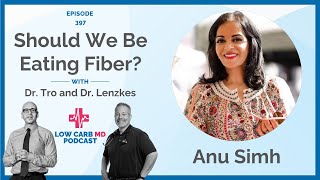
Anu Simh discusses whether fiber matters for health, how it feeds your gut bacteria, and why the answer depends on what you're already eating. The conversation covers short-chain fatty acids, microbiome testing, and why a carnivore diet might work for some people even without fiber.
Chapters
Welcome to the Low Carb MD Podcast. No one is beyond help. No one is beyond hope. Nothing said on the Low Carb MD Podcast is medical advice. Please consult your own doctor before making any lifestyle changes. Hello and welcome back to the Low Carb MD Podcast. We're kind of cheating today because I have someone that I actually had on life's best medicine. I said, oh, I think we should get you on low Carb md. And it's funny because we. We talk about these things. Low carb, you know, vegan diet, all these different approaches to better health. And so we can get into our little militant areas that I find. I'm carnivore. So if you have an avocado, you're gonna die and you're out of the club. And so those are the kind of things I've been seeing lately too. So we had a great discussion. Turo, you can do the intro if you would like, but just wanted to. To. It would be fun to. And she even. And we had a great discussion. We had a really good time. And she goes, oh, my gosh. When I saw you're one of the low carb guys, I was like, I was going to cancel on you because I didn't want to get confrontational. I'm like, no. But we had such a great time and I learned a lot. And so it's nice to hear this. Of having different approaches to health and how do we just. It's an end of one ultimately, what works for you? So, Troy, you could do the intro if you want.
Yeah, absolutely. I'm excited to have an sim. Am I pronouncing that right? Anishim. Did I pronounce that right?
Anu. Anu. Sim. Sim. The H is silent. Yeah. Thank you.
And you're.
You're just like Dr. Lansky's difficult name.
He's got that silent s look. You're a board certified health and wellness coach. You're an author, right? You wrote feed your microbiome to flourish and you were on Brian's podcast. So any friend of his, a friend of mine, and you know, always, always interested to learn, maybe hear, you know, something that I haven't heard before. So I'm super excited for this. And it's not the then Brian, you know, we're just friendly, you know, discussion and, you know, it's all exchange and nobody knows everything, right? So we all. We all are here to learn and.
You'Ll see tro how much we have in common. That's why I'm excited, because nine arms of Wellness, we go, okay. It's not just about what you're eating. There's a lot more to this story, right? If you're stress intense and hate the world and all these things. So talking about the gut microbiome perspective, the, uh. And that's something I think in the low carb community we've totally missed. And it's one of those things where. And I knew you were asking, what is low carb and keto and all what. How does all that kind of fit? So, Troy, do you want to give the definitions or what you think?
Yeah, I just wanted your definition of it because everyone has a different perspective on low carb, and I just wanted to know what your stance on that was so I can speak to it from my experience and from what I know. And, and you're totally right. Nobody knows everything. And that, that's one of the dangers of today's social media world. You know, a lot of nutrients are vilified, you know, and it's at the detriment of the people who are listening to us. So that's really important to me that we stay in our zones and, you know, we just kind of speak to what we know rather than like, the other day I was on a podcast and insulin was. The host brought up insulin, and she just dropped just, Insulin is a storage hormone and there was no backup of why or what, or is it a regulatory hormone? What else is happening? Is it responding to nutrients? So that puts the listener at a disadvantage. So I'm hoping that we can kind of really talk about the microbiome and what. I see how it helps even a low carb. Carb diet. So.
Yeah, well, absolutely, 100 agree. You know, I think when you're interacting on social media, you know, as Brian mentioned, it can be so challenging because people want simple answers and we make simple statements. You know, social media is not conducive really, to lengthy discussions, and I think podcasts and medical papers are just for that.
Right.
We have 45 minutes here or so to sort of discuss things. And, you know, the papers we published, I think, also serve as, you know, an idea of the science that we do or the science that we know. So, yeah, I'm excited. And your question before we started was, you know, what is low carb? And I think, you know, the commonly accepted definitions according to the, you know, society of Metabolic Health Practitioners is basically, you know, depending on who you ask. But, you know, under 120 grams of carbohydrate is the definition. And then there's Very low carbohydrate diets, which, you know, could mean under 50 gram. And that could include, you know, zero grams of carbohydrates, which could be, you know, a carnivore or a zero carb diet. And predominantly, I think the theory behind lowering the carbohydrate is around lowering sugar and processed carbohydrates and essentially decreasing the load, the glycemic load that the pancreas has to deal with. But if you look into, you know, what's interesting about a ketogenic diet, which is typically under 20 to 30 grams of carbohydrates, again, depending on who you ask. You know, and I know we've talked about this with Brian before, and we've had guests talk about the microbiome before. You know, it's very clear that the microbiome is what modulates the seizure protection from a ketogenic diet. So, you know, when we wipe out, when we lower the, you know, carbohydrates in mice that have seizures, we can get them to stop having seizures. And then when we transplant their microbiome, we're able to then get other mice to have their seizures stop. And when we give those mice antibiotic and we wipe out their flora, the seizures return. So it's very clear that the central nervous system interaction, at least for maybe seizures and migraines, is modulated by the microbiome. I think there's human data on mental health that supports that. I think the problem that I've had with microbiome, and I can't wait to hear what you think about it, is how exactly do we modulate it? Do we know exactly which species is associated with that seizure protection or which species is associated with weight loss or will cause weight loss or will change mental health benefits? I'm not certain, but I'd love to hear you talk about it. I'm not sure that medicine is caught up, but maybe you could catch me up with what science shows.
Yeah, I 100% agree. All the research that I've done the past few years before writing the book, and I think even microbiome researchers will humbly say, we're just at the beginning of research, you know, and that's important. You know, a lot of times we just, you know, we'll see something which is mechanistic and we'll say, okay, let's run with this. But what I have seen that clearly all the research pointing out to is one thing that fiber is important, you know, and fiber is important. So many levels because of short Chain fatty acid production, insulin sensitivity, all of that has some good data. And even if you look past the microbiome health, if you look at cardiovascular health, there's so many different incredible studies that are pointing to cardiovascular health and about 30 grams of fiber. So my whole book and approach is about feeding the microbiome and I think it can be done when you have an intentional low carb diet as well. Because in my practice I have many clients who come in who are metabolically inflexible. You know, they have insulin resistance, high blood pressure, cholesterol issues. They respond of course to a low carb diet, you know, but then as a coach, my whole thing is how do I get them to stick to the diet? It has to be a diet that they completely buy into. And I think that is the bigger question sometimes because we can talk all day about, oh, this is the perfect diet or this is, this helps the microbiome, this helps the brain, or this helps the heart health and stuff. But if a client is not responding to it or if they're not sticking to it, then this just becomes a conversation. So that's pretty much how I handle, you know, my protocols. You know, it's really client centered, it's, it's client led and really asking the client, what are your thoughts about carbohydrates or is there something that you feel like is a non negotiable in your diet? Because I will have clients come in and say, oh Anu, I'm not doing, I'm not doing fruits anymore. And then they'll tell me I don't do fruits. Because I heard someone say that eating fruits is just as bad as eating a Hershey's bar. So as a coach, that was a facility.
He says like fruit was poison.
Yeah, fruit is. Well, I mean, yes. And for me as a coach, I'm putting this where I have to explain this science and then ask the client, why, why, what do you think? You know, you know, if we did this as an experimental goal, try a Hershey's bar versus versus a fruit, are we going to see a difference? You know, is that, is there going to be a difference? So everything is rooted in a client's response to food. Rather than my saying a carb rich diet or a carb low diet or a keto diet or a vegan diet is the only way to do it. That's pretty much my stance. I don't have. I'm not religious about food, food rules. But I find it very interesting that the microbiome, the brain Hormones, all of that makes such a big difference in weight loss. And we're just not a closed system. And I've tried the calories in, calories out approach for a very long time, but I see that all of this really does make a difference, and we can certainly talk about that.
Yeah, I think it's so important. I think it's so important, Turo, because look at this. So let's just get to it. To a case. Case. Just a little quick case study before.
We go to the case study. Can we explore around? Like, you know, I, I think, Brian, there's so much, there's often a lot of agreement, and I think, like, the real beauty in, in these podcasts or maybe in exploring those areas, we, we don't agree. So. So after your case study, actually, maybe we can explore some of those areas of fiber supplementation that maybe I think, you know, are, are worth, you know, exploring. I've noticed. Maybe we'll, we'll start with that. So go with your case.
And then maybe we'll make the point of saying, okay, look, let's, let's take Sean Baker, who's a lot bigger and stronger than me. Right? So Sean just recently, and I have a lot of respect for him. I think he's a solid guy, Carnivore, says, look, I have this injury that's not healing. So he went back to a ketogenic diet because he knows ketones can help inflammation, but ketones also help the lining of the gut. So say he has leaky gut syndrome and he has a lot of inflammation going. Now you have the other carnivore that used to be carnivore, Paul Saladino. Right. So now he's adding in honey and fruit, and a lot of people are upset with him for doing that, but he's doing what works for him, and he feels better and he's metabolically healthy. Sean Baker's metabolically healthy. So what I'm saying is if you're an accountant who's £300 and you're diabetic and you're sitting at your desk all day, you're not Paul Saladino and you're not Sean Baker. So maybe we need to change for those. It's an individualized thing that we have to do for our nutrition. So if it works for him and he's feeling well, like, would you argue that Paul Saladino is sick tro by adding in honey and fruit into his diet?
Well, I certainly don't know his health, but, but, you know, but I'm curious. Sean Baker's adding back carbohydrate. Is that, I didn't know that.
No. He's doing more ketogenic adding in like, you know, things to raise his ketone to get into ketosis because he knows it's natural anti inflammatory.
Got it. So he's looking to decrease inflammation to heal an injury. Yeah, yeah. Was that his cervical spine that he was injured or.
I can't, I don't know specifically. He just said he had an injury. I didn't, I haven't talked to him. So I'm, I would love to have both those guys on and just talked about their perspectives at some point. But, but the point is I'm seeing it. Oh, go ahead.
Yeah, yeah.
I think both, both are just, I mean, it's very anecdotal. Right. You know, I mean, what am I, what am I as a coach going to do with that? I can't generalize that, that what they're doing in their life to my clients, because a client is unique. Their approach to life. Food is social, food is community, food is, you know, metabolic. There's so many different aspects to food that we can't really look at someone else and say, especially when it's not 100% backed by science yet. You know, I do say yet because it's, I mean, we have so many studies on the microbiome and you know, diets that are how fiber is important and things like that. But the whole carnivore diet is just starting to, you know, to be this thing people are taking note, notice of. And I do have clients who come in and say, I really want to just try the carnivore diet. And my job as a coach is not to say no, that does not, is not going to work for you to dig deeper to find out why they want to be on a carnivore diet and is it sustainable long term. And that is the biggest job I have as a coach to find out is there a sustainability in the, in the, in the diet. Is this something that after two or three weeks they're going to just go back to the standard American diet? You know, there are so many questions. So that's why I feel really frustrated when I say, see people on these podcasts who are just saying this is the only diet or this is the only way. I, I don't agree. You know, I, I don't feel like it. It's, food is very bio individual and I think we need to respect that.
So, so I, I, I want to, I want to explore some of the things you said, I've been taking notes and like, excuse me, because I think when I focus on disagreement, people think that it's hostile. And I don't want to come off that way. I so respect. Just explore and give you a chance to sort of air out, you know, things that, that maybe I'm misunderstanding. You know, you said a couple of things that, that struck me. Like, I think most people are looking for simple food rules, right? And they're looking for like fiber is healthy or fruit is healthy or more protein is healthy. Right. I, I think the lay public, you know, wants that. Right? They want, they want easy rules to follow. And I think as a coach, when you're trying evidence and then help people, you want to give as much truth as you possibly can. You want to understand what we know and then guide these people as best as you possibly can. And, and this is the problem I have with, with essentially promoting fiber and promoting fruit, which I don't, I have nothing against, but from a strict intellect intellectual point of view, there's never been an interventional study that's shown that fiber reduces cardiovascular endpoints all cause mortality. Right. Otherwise Metamucil would have done the study and they would have been a even bigger company than they are. Right. So they haven't done that. Right. And all we've relied on is like the nurses Health study, Epic study, all these observational studies where maybe you eat more fruit, maybe you get better. Most of the curves for fruit show that the mortality benefit stops at around 2 fruits and you don't get more mortality benefit above that. So I feel like, and certainly if you look at fibrous starchy vegetables, that mortality benefit isn't there at all. So I think as a coach or as a doctor, we often, we want to, you know, pretend that there's this health halo over certain groups of foods, fruit being one and fiber being another, you know, and we'll, we'll point to, you know, these potential and interesting physiologic benefits like the microbiome. It is very interesting and, and it is certainly a very powerful, you know, the gut brain axis is very powerful. I think it's under research. But to look at a client and say you need to eat more fiber, in fact, you need 30 grams, right. Or you need to eat more fruit. Without, without that hard data, I just find it fake. Tell me if I'm looking at it wrong, you know.
Well, I mean, the research, like, if.
I feel fake, I think I eat green leafy vegetables and occasionally I have fruit so and I think that I'm doing something healthy, don't get me wrong. But as a recommendation, as a recommendation.
I mean, I think there are enough studies that do show that fiber is very important. Like for example, there's the Iowa Women's Health Study, there's a meta analysis and the Lancet, the HA all pointing to maybe about 25 to 30 grams of fiber. And you know, but that's again, it's a very, if a client comes to me really struggling, they're on, they have a condition like SIBO or ibs. There's no point in me saying you need to take in 30 grams of fiber. That is what I am really referring to that it's very client led. If they're in pain, they have gut issues, maybe a carnivore diet is the way to do go for them. You know, I mean, who am I to say that's not going to work for you? But long term, I think there is such benefit from fiber. And there's no, I mean there's so much data that, that, that does show that fruit. We do know that fruit. For some people, like I am South Asian, I struggle all the time with insulin resistance. You know, I am striving for more insulin sensitivity. So am I going to eat a lot of high glycemic fruits? No. You know, am I going to eat like how my ancestors ate lots of rice and stuff? Because no, my life is not like how my great grandfather's was. He used to walk like 20 to 30 miles a day. Not because he was rocking or something. He had to go to work and there was no transportation. I can't compare my life with that. So everything has changed. So we really have to kind of think, I'm saying it's very bio individual and to really say there's only one kind of diet for everyone is, I don't agree. So some people may thrive on a meat based diet and I have nothing against having more protein or more good fats and things like that. But to not have any fruits and vegetables, I, I don't know about that. You know, I mean I feel, and.
I think that's an important point. I think that's what I'm looking at too saying, okay, look, if, if you're adding fruits and vegetables, so the fiber throw. There's actually a lot of good data on, on fiber, one being inulin. So there's a study they did with inulin. They took obese diabetic patients, split them into two groups eating the same diets and they Said, let's add Inulin to one group and just see what happens. When they added Inulin, they had more insulin sensitivity, more weight loss, they felt better. Right? So you go, Inulin's feeding the gut microbiome. So interestingly enough, and anew, you're the expert, so you can correct me if I'm wrong, but if you feed the gut microbiome, right, who makes short chain fatty acids? The majority is coming from your gut microbiome. So if you're not, if you're not.
Making, especially, you know, we want butyrate for. And, and again, this is something, Dr. Rio, I, I see this in my clients who eat a lot more protein. As long as they're eating some fiber. And that fiber could come from a fiber supplement or the fiber of their choice, right? It could be like a mixed fiber thing. What happens is the fat, you are supporting your microbiome. So the microbes in your colon, they're not really, they're not very good at proteolytic fermentation. So they've evolved to really support digesting these fibers. So eating that fiber becomes almost like it's an evolutionary thing that we've done, you know, So I, I see such a difference. Like when granted, a microbiome test today is not diagnostic in nature, but out of curiosity, let's say a client does a microbiome functional analysis test and they see that the proteolytic fermentation is pretty high. You know, the. So you begin to wonder, why is it that most of the protein needs to be digested before it ends in the distal colon? Why is there so much, so many toxic metabolites? Then I see clients who eat meat, but also eat a lot of fiber, meaning lots of low carb vegetables and things like that. And there's a little bit more balance there. And they don't have as many toxins, toxic metabolites. So it's, you wonder about that. And I see a shift when someone says, hey, I want to improve my microbiome. And they go about six to eight months and make these small shifts. There's definitely a change. And again, that's anecdotal. That's what's happening in my practice. I'm not saying that this is supported by, I mean, definitely most of the microbial research supports that the gut microbiome's major fuel is fiber. And you're supporting their well being because their well being supports us. It's, it's very simplistic. But generally I think that's, that works as an explanation to my clients because then they understand the value of fiber. They understand the value of choosing grapes over a Hershey's bar. You know, just having a little bit of fiber. And again, to answer your question, we're talking about the layperson who may not understand the difference between a Hershey's bar and grapes.
You know, I struggle to, you know, I'm really having some struggle around some of this. You know, I've heard the idea that, you know, feeding the gut microbiome increases like the benefit of inulin that you mentioned, Brian. You know, that was a short term randomized control study. And they've also done, you know, other short term randomized control studies with like let's say psyllium husk lowering ldl. But does that do anything over the long term? It's really unclear, right? It sounds good, certainly.
Well, I think the point is, and gosh, you know, several docs and so one, one of this theoretical ideas. I don't think it's theoretical anymore. But William Davis, when I interviewed him, he has a good book called Super Gut talking about taking care of your gut microbiome. He said, and when I interview him, I go, what do you think of carnivore diet? He goes, initially it's great because it does get rid of a lot of the bad microbiome. You want the good people to take over the neighborhood, right? Long term, he's concerned Akkermansia, some of these bacteria, if you starve them of sugar or they have no fiber to run on, what do they start eating? Your mucus layer of your colon. Guess what? That is a disaster always. So if you can maintain your mucus layer of your colon, autoimmune disease goes way up. If you don't maintain the, that tons of health problems and fatigue and brain fog and all those things. So you say, what's the harm of adding in a little bit of some good fibers, resistant starches, things like that?
I'm very curious about long term on just like a carnivore diet. I'm really interested in that because I don't know if there are any. So I'd love to see your opinion about that because you were talking about long term for fiber. There's a lot of data saying that fiber is very important for the health of your microbes. Microbes. And is that, is that what is struggling for you? Is that long term data around what the microbes are doing for us? Or is it the fact that one should, why should one take in fiber? I'm trying to.
Well, I think that people who are having the issues are people who are type A, very strict, and they go, I'm there. All I'm going to do from now on is eat meat. That's it. And so we know, I mean, you look at the data because I've been looking at this. There's a microbiome for Parkinson's disease, there's a park, there's a microbiome for depression, there's a microbiome for anxiety, there's one for, for Alzheimer's disease. And you look at all of those have in common, less diversity of your gut microbiome. So if we go to their studies on cows, like in America, we give all the cows a ton of antibiotics. Why? It makes them fatter. It makes them fatter. That's what the data shows. And they've done the same research with mice, we've done the same research with women. If women are pregnant and they're on, they take antibiotics, amoxicillin for a sinus infection. When they're pregnant, they go from having 800 species of gut microbiome to 400 to 200. Like the more antibiotics you take in these mice. And they've done the same research with mice, we've done the same research with women. If women are pregnant and they're on, they showed if they took a bunch of antibiotics when they were small, no matter what they, they take antibiotics, amoxicillin for a sinus infection, when they're pregnant, they go from having 800 species of gut microbiome to 400 to 200. Like the more antibiotics you take. And these mice did, they couldn't replace those. Those, they're gone, you know. So I'm looking to say, well, what happens long term if you don't appease some of these gut microbiome and they die off and you need them as part of your community. So if you think of the gut microbiome as a bunch of our community once, if you don't have any taxi drivers or garbage collector people and you lose these guys, then what? Your society doesn't work. Right, Right. So what I'm seeing trolls. I'm looking at gut microbiome and I'm seeing, and I'm not saying it's a cause, but I'm just saying I'm seeing a lot of carnivores who have leaky gut and very narrow diversity in their gut microbiome.
And again, I think maybe not initially, because if they are switching from a standard American diet to a carnivore diet, anything could be an improvement on a standard American diet. They come in eating ultra processed foods, high in sugar, absolutely high in refined carbs. I mean, you think about it, flour and sugar, I mean, I think we'll all agree are something that's just not beneficial to us. And our microbes look at it as like, what the heck is this? You know, I mean, so there are specific pathogenic bacteria that really feed off of that, and beneficial bacteria really benefit from the fiber. So we say Bifidobacterium, you know, really well studied strains, and I'm not talking about every bacteria, but really Lactobacillus, pathogenic bacteria that really feed off of that. And beneficial bacteria really benefit from the fibers. So we say Bifidobacterium, you know, really well studied strains, and I'm not talking about every bacteria, but really Lactobacillus, Reuteri, Achromansia, all of these really benefit from the fiber rich food derived Akkermansia. All of these really benefit from the fiber rich foods that we eat. But I also feel like if someone said we eat. But I also feel like if someone is feeling better on a carnivore diet. I was on a podcast the other day and the host said, I just eat meat and a little bit of fat. No vegetables, no fruits, and none of that is feeling better on a carnivore diet. I was on a podcast the other day and the host said, I just eat meat and a little. And she said, I feel great. And then we started talking about the microbiome and she said, well, I feel so full on my protein, I don't have room for anything else. So that is my, I mean, when we think about vegetables and fruits, you think about micronutrients and a bit of fat. No vegetables, no fruits, and none of that vitamins and things that we don't produce and we get from the diet. Would you agree that vegetables do have a lot of micronutrients and how many things can you get from a supplement? Just like on the other opposite spectrum, someone who's vegan and who's completely off of animal protein may need to substitute certain things. And she said, I feel great. And then we started talking about the microbiome and she said, well, I feel so full on my protein, I don't have room for anything else. So that is my, I mean, with the B12 or, you know, also the Omega 3s and things like that, I think there's, there's a detriment to labels. Is, is my stance, I mean, really hard diet Rules are very challenging for people. And if we are to just look at science and not just anecdotes because I think nutrition today is just, just, just a lot of anecdotal things and not rooted in science. And I have a hard time with that because what am I supposed to tell the client who is, who is, who's comes with all this information? And I'm looking for studies that back up every single thing. You know, it doesn't work. You know, I think it's when we think about vegetables and fruits, you think about micronutrients and vitamins and things that we don't produce and we get from the diet. Would you agree that veget do have a lot of micronutrients? And how many things can you get from a supplement? Just like on the other opposite spectrum, someone who's vegan and who's completely. It's better to really talk to people and say why do they want to do it? And as doctors, I think you will agree that when a patient comes to you, it's very challenging. You can give them a list of things to follow, but what are the chances that they are actually going to stick to it three months from now? So we need to finally get that conversation to is this going to work for a particular client? If a client does really well on from going from a standard American diet to a carnivore diet, I mean there's no argument there, they are feeling better. But eventually I think a response of animal protein may need to substitute certain things with ability of people like us would be to ask the bigger question, is this sustainable? How are your, how is your blood picture? What's happening? You know, let's look at with the B12 or you know, also the Omega 3s and things like that. I think there's, there's a detriment to labels is look at, let's look deeper, you know, because sometimes they may not be symptomatic but who knows down the road? I mean, how is your lipid picture? How's your apple B is my stance. I mean really hard diet rules are very challenging for how's your LP Little A? You know, just all of that really matters when we, when we talk about food. And I think the big question really goes back to the client or the patient and what is right for them.
I think that's a huge thing. Like what can we stick to what works for you socially people.
And if we are to just look at science and not just anecdote, religious.
Reasons, you know, we have a lot of reasons for what we eat. And people get very religious about their diet, right? So one of my patients who's carnivore, he was getting really upset with me when we had this discussion. I go, look, I just, just look, I'm not speculating here. I'm looking at your gut microbiome. We just did a test on it and you have leaky gut, you have all these issues going on. So maybe what's the harm of adding in a teaspoon of fiber here?
Because I think nutrition today is just, just, just a lot of anecdotal things and not rooted in science. And I have a hard time with that because what am I supposed to tell the client who is, who, who comes with all this information or doing.
Whatever, these kind of things and seeing how you feel, you're completely true. This is not me saying this, I'm telling you. This is. Rob Sivas has been talking about having people on a long term carnivore diet. All of a sudden they start getting A, their A1C starts going up, their insulin level starts going up. Why their inflammatory markers start going up that tell you it's not working for that person. I'm not saying.
And I'm looking for studies that back up every single thing. You know, it doesn't work. You know, I think it's what I'm.
Just saying for that person. So I have a guy, just as a case study, he had leaky gut, he had all these things, carnivore diet. He didn't change his diet one bit. Except we added in fiber. We added some stuff to heal his gut lining. I just showed my pa yesterday, his LDL cholesterol went from 299 down to 97 in months. And it started listening.
It's better to really talk to people and say why do they want to do it? And as doctors, I think you will agree that when a patient comes to you, it's very challenging. You can give them a list of things to follow, but what are the chances that they are actually going to stick to it three months from now? So we need to finally get that conversation to is this going to work for a particular client? If a client does really well on from going from a standard American diet to a carnivore diet, I mean there's no argument there, they are feeling better. But eventually I think the responsibility of people like us would be to ask the bigger question, is this sustainable? How are your, how is your blood picture? What's happening? You know, let's look at, let's look at, let's look deeper, you know, because sometimes they, they may not be symptomatic.
So I just dropped dramatically. And you go, there was no other intervention.
Yeah. If your gut is not healthy, several studies for soluble fiber and the viscous fiber and what it does to cholesterol, ldl. And even if you just think about apob versus anything else, but who knows down the road, I mean, how is your lipid picture? How's your apob? I think most people will agree that that's a, that's a big marker. I have seen may know how's your lp little A. You know, just all of that really matters when we, when we talk about food. And I think the big question really goes back to the client or the patient and what is right for them.
I think that's a huge thing. Like what can we stick to what works for you socially? Religious reasons. You know, we have a lot of reasons why we eat. And people get very religious about their diet. Right. So one of my patients who's carnivore, he was getting really upset with me when we had this discussion. I go, look, I just, look, I'm not speculating here. I'm looking at your gut microbiome. We just did a test on it and you have leaky gut, you have all these issues going on. So maybe what's the harm of adding in a teaspoon of fiber here and there or doing whatever these kind of things and seeing how you feel. You're complaining, Troy, this is not me saying this. I'm telling you. This is. Rob Sivas has been talking about having people on a long term carnivore diet. All of a sudden they start getting their A1C starts going up, their insulin level starts going up. Why their inflammatory markers start going up that tell you it's not working for that person. I'm not saying everyone. I'm just saying for that person. So I have a guy, just as a case study, he had leaky gut. He had all these things, carnivore diet. He didn't change his diet one bit. Except we added in fiber. We added some stuff to heal his gut lining. I just showed my pa yesterday, his LDL cholesterol went from 299 down to 97 in, in months. And you go, and his triglycerides drop dramatically. And you go, there was no other intervention.
Yeah.
If your gut is not healthy, there.
Are several studies for soluble fiber and the viscous fiber and what it does to cholesterol, ldl. And even if we Just think about apob versus anything else that I think most people will agree that that's a. That's a big marker. I have seen major improvement in my practice with just that apob number with, with diet, exercise, you know, both, and just adding that soluble fiber. I have many clients who are on a very low carb diet, but who add the fiber in fermented foods. Things like that have really made a huge difference in these people. And I actually work with a doctor who sends me a lot of his patients and we kind of look at it together to see, you know, just, wow, this made a difference. That's all we can do is because every. Everybody's bodies and their systems are so different. It's really hard for me to come up with a bunch of blanket rules because it doesn't work. It just works differently for different people, you know, and that's why nutrition is so challenging and difficult. I just feel like if we could just. That's why I have. My protocol is, I call it mbhr microbiome. Brain hormones and reframing the mindset. All of that's very important. And my nine arms is part of that. Reframing the mindset. Because we can talk all day about which diet is the best, but if your client or patient is not compliant, it doesn't really help.
Yeah, not only that, and we know this, and Tron, I. I've lamented and we've talked about this. We could have someone on a perfect low carb or ketogenic diet and they don't lose weight and they go, how's life? I'm fighting with my husband all day. I'm stressed out. So all these things, stress, tension, all these things screw up our gut microbiome. There's no animal that eats when they're stressed. Right? They don't eat when they're stressed. If you take your dog and you put them in a new environment, they'll look around and make sure they'll walk the perimeter. They check, you can put their favorite food there and they're not going to eat it. If a deer's getting chased by a lion, it's not going to stop and eat something. It's running. But when we get into a fight with our spouse, we want to eat cookies. So you see. And so I think just starting from the high level, where we all agree, I think is, hey, let's get rid of processed food. Let's get rid of all the bad stuff, all these dyes and all these kind of things in our diet and give our Gut microbiome, the best benefit. So there's a low carb influencer out there, one of the leaders in the low carb. And I brought up gut microbiome and he tells his people to drink Diet Coke and it's fine. There's no calories. Like, guess what? It screws up the gut microbiome. And there's definite hunger signals. And so I think we have to look at that. We can't say, well, there's no calories in, you know, tequila is low. Like so many people on a ketogenic diet, they drink tequila all the time and they go, well, there's no sugar in that, so I could drink it. So it doesn't affect my. Well, it affects a lot.
That's the problem with just kind of vilifying nutrients, you know, I mean, it's really hard to do that in nutrition. And a lot of researchers just, just stay away from it or don't speak to it because they don't know what to say. It's like, like it's very challenging. And I think that's my problem about generalizing. I can't do that with clients. And I think we have a responsibility towards the people we serve to kind of let them make the choice, you know, and we kind of counter it with, have you looked at this study or that study? Or simplify the science a bit, but it has to be client led. But I agree with you, Dr. Lunsky, that I think when you simplify it and say sugar is evil, if something does not have sugar, it's fine. That's the same Hershey's Bar analogy that I made. You know, like, I mean, grapes have. Yes, grapes today especially has a lot of sugar. And would I have like a bunch of grapes, you know, without any protein? No. And that would be silly. You know, if I had my CGM on, it would just shoot up. Definitely. And someone who, who is insulin resistant, I would be very, very uncomfortable having a bunch of grapes without any kind of fiber or protein to support it. But at the same time equating that to like a candy bar with artificial sweeteners and you know, junk in it just doesn't make sense. And that's the kind of thing that I'm trying to step away from when I, when people ask me for what are the three things that you do in your diet? Well, what does it matter? I mean, I'm very different from you. My microbiome is different. My lipid picture is different. My genetics are different. Doesn't really help. We can make Some simple rules. And my simple rules would be eat a balanced diet, make sure you have enough protein, good fats and fiber on your plate. And that's something all of us can do. And just make sure there's enough diversity. So your microbiome is supported, your brain and your gut brain axis is supported and, and, and then see how your body responds to it.
Yeah, yeah. I'm gonna poke around at some of the, what I think is our assumptions that, that were made here. You know, when you look at the, the data for the microbiome, it's, it's not, you know, if you're looking at observational data, there's some importance to having diversity. If you look at animal models and you know, low micro, you know, microbial diversity because they're germ free or because, you know, they've never, like whether it's a hormetic stress or a benefit is unclear really to having a diverse microbiome. And certainly a low microbiome, like low microbial diversity has been associated with bad things. But you know, I think diversity in itself is not the issue. You know, we've done fecal transplants, you know, for very specific composition of microbiomes that seem to, you know, affect health outcomes. So I think the blanket, you know, we want to have diversity. I think, I'm not sure that that's the case. We certainly don't want, you want diversity.
With good microbiome, you don't want diversity of all the bad ones. So you want to, you want to have what we see in the gut microbiome. TRO is if you have Bifidobacterium lactobacillus, those are both lacking by the way, in obesity, diabetes. And so there's certain things that we see missing all the time. That's a huge role in immune function.
Is that because of fiber or is that because of the glyphosate that's in the, you know, or is that, well, what feeds them?
I mean, you have to, you have.
To see what feeds them. And like faculate bacterium pronitiae, which is a key member in your firmicutes phyla really responds to fibrous foods, you know, and resistant starches, polyphenols. I mean, when you really think about plant foods like polyphenols, flavonoids, the bioavailability is very low. And that's where the microbiome comes in. They are able to digest just that and produce things like short chain fatty acids. That's something that's been very clear over A lot of studies, and I can actually send you those studies. And they actually use that. The energy extraction from food, all of that is dependent on the microbial composition. You can really compare two people with very different microbial pictures and how they extract energy from food and their ratios. And even that is debatable. You know, and I'll agree with you that, for example, for the longest time we thought firmicutes bacteroides balance really kind of dictated how someone extracted elevated ratios meant obesity. But that's not across the board. So there's a lot that we do not know. But the one thing that I feel like every research points out to is that the food that they really thrive on is fiber. And fiber resistant starch, polyphenols, flavonoids, and they all come from the plant kingdom. I mean, and you really think about it like 20 of the drugs, a third of the 20 of the drugs that we have taken today in America comes from plants. And so to just say all plants and, and fruits are bad for you, I think is like throwing the baby.
Who said that? You know, you said. Just. Who said that? You've said that?
No, no, no, I don't think you said that, but I said, who did say that?
You know, I hear this often, like, you know, somebody who like, vilifies, you know, vilifies certain foods. Like, I just, I hear that as a trope. And so that's why I'm asking you. I've never, you know, we've interviewed 400 people here. I've never heard anybody say that, you know, that nobody should eat fruit. I've never heard it once. I don't know, Brian, if you've ever heard it, tell me if I'm wrong. I've never heard anything.
Well, not that, you know, I mean, if you're part of 400 people we've.
Interviewed, you know, I've never heard it once said. And people say that. People say, you know, that somebody out.
There said, I don't think the influencers necessarily, but I think there's a lot of people out. Like the guy, I'm saying, hey, add some fiber, you have leaky gut. You have. Because part of his little look, I, I'm looking and say everything we do in medicine is risk and benefits. I go, what's the risk of adding short chain, adding glutamate to your diet, or adding things that may help feed the gut? Micromo, is there any downside to that? Is there any downside other than to say you don't need a. I've never.
Even heard a patient say that. I mean maybe I'm getting like the.
Best patients in the world.
You know, I've never heard a patient say, oh, you know, I'm just never gonna, I, I've heard, I don't know.
Look at, look on social media, Paul Saladino, the heat he's taken because he added in honey and fruit. Like people think he's the devil.
Now how do you know it's bought? Like, I don't know. That's a real person. You know, that's no, there's people met a real person actually say this. And I've heard it, I've heard it by so many people who talk about it, but it's such a trope. Like I wouldn't even discuss it. You know, I wouldn't say, well, we.
Would say like for us say that. We would say like I would say.
This, but if you were talking to someone who is on a carnivore diet or a low carb diet, wouldn't you say that there's a possibility that they really think that all fruits or plants or any plant source could be not great for them at least have this feeling that oh, that's going to up my blood sugar or something similar to that. I mean, wouldn't you, wouldn't that be.
I've never seen I for sure.
I mean, I feel that I, I mean, honestly I feel that way. I mean I have a patient who got diagnosed. He, he used to eat candy all the time. He switched over just eating grapes and he ate grapes and he got full blown DKA from grapes. He had a thing of grapes and he ate them all day and that was his snack and he got, he got full blown diabetes. So I'm like, okay, that's not a good idea. Probably right? Especially with our, our very. So if you're drinking fruit juice. I've had people go into DKA from going on a fruits fast. I mean a juice fast because you're drinking all juice. So Gundry, he was getting it.
But Brian, but Brian, if there's pulp in it, if they leave the pulp, it'll feed the microbiome.
Well, the best, well the best thing was Gundry was getting picked on by a couple vegans and they were just, seriously, I, I, it was disrespectful the way they were treating him. And they said you're, Wait, wait, wait.
I saw him on a podcast and he, you know, there was like this grape versus chocolate which I've heard twice today. You know, if you're Looking at polyphenols. The chocolate is more polyphenols than the grape.
Yeah, but if it's dark chocolate, not polyphenol.
I'm just saying it's like. And nobody's done an interventional study that even saying, even if you do a candy bar, like, I don't know if you have a piece of a candy bar. Right. Like once in a while, is that better than a grape? Nobody's done that study. I would just avoid both. Like, why are we talking about that?
What I'm saying is it's very simplistic to say that to a layperson and because they're not going to look at it and say, oh. The reason he's saying is, is today's grapes are this. And I'm not. I'm not here to pick on one. One little comment someone made. But I see this very often that clients come in with these little half truths from people from in the influence.
And we've done so many half truths just here today. We.
So can we all agree, we all.
Agree that all of us have done it. Like, we've, like Brian said it. Hey, the microbiome is that, you know, you've said it everything.
But the point I knew is she's making. You're taking that out of context. I think the point she's making is you can't just say calories. A calorie like you're eating a thousand calories of gummy bears versus a thousand calories of salmon. It's totally a different thing. So the, the argument of saying, okay, grapes are. Are, you know, chocolate's bad, but grapes are good. Right. Like, the point is, if you're metabolically healthy, if you're metabolically healthy, does it really matter that much here and there, having. So it's gonna be life in the way. So the point I was making with Gundry is they were attacking him. He said, no, you guys are. I'm not against juicing. You guys are just doing it wrong. And he goes, what do you mean we're doing it wrong? He says, you should be juicing out the fiber.
Yeah. He doesn't.
Pour out the juice. Pour out the juice and eat the fiber. You'll be fine. You'll be better. Right?
He. I don't think he's really pro meat or anti something. It's just those little sound bites that are very. I hope people don't take that away from today's conversation. All I'm saying is let's keep it simple for the people who are listening Food is personal, food is if you are, you know, you have insulin resistance, then there are certain diets that are better for you. But the underlying thing is the microbiome does matter. I mean there's. When I started looking into the microbiome, it was just when the human microbiome project had just started and I had my own gut issues that got me excited about it. And I thought maybe this is the puzzle that I'm missing. And personally I just really felt so much better when I went back to adding fibrous foods and things like that. I was on a, granted, a very standard American diet at that point for convenience. That's what most of us in America do. We just, you know, we're working, we do just find something that's convenient. And my microbiome had taken a beating. And I 100%, very anecdotal, this is what happened in my case. And it started making me feel like I just needed to feed them better. But that was when the microbiome, human microbiome project had just started. We didn't have as much research. But today if you look in PubMed, there's microbiome research around. And I'm not talking about 20 people in a research, I'm just talking about observational studies, I'm talking about epidemiological studies, I'm talking about RCTs, I'm talking about meta analysis. There's just so much. And the big underlying thing is fiber is important as a fuel for your microbiome. And supporting your microbiome really is not just gut related but cardiovascularly important. It's important for your brain because of the gut brain axis. It reduces inflammation. Saying it this way may make it sound simplistic, but basically when they take in the fiber really helps them to produce something called short chain fatty acids. Butyrate especially. That really helps us with, you know, inflammation making us more insulin sensitive hormones like GLP1, you know, really supports that. So there's been a lot.
I know you just, yeah, I know you're looking nutty, but I'm telling you. And, and I just as anecdotal, like I eat vegetables.
Brian. Brian. And I know I eat vegetable, I eat cucumber, I eat salads. My wife Meg, I eat it. I love actually.
But, but the point is this troll.
But like, you know, like here's the thing, right? Ketogenic diets make butyrate, they decrease il, right? Like literally you're making butyrate, you have endogenous butyrate being produced, correct?
So Correct. So that's a benefit of the ketogenic.
So what I'm saying is it's like. But I don't know that. You know, we don't. Is it better if it's delivered through the gut? Is it better if it's delivered through your own fat sources? I'm not sure.
So. So just say. Like I just say you're low carb tro. Yeah. If you're not, you're not making butyrate. Right. As you would with a ketogenic diet. Right. So what's wrong with just taking butyrate or having. Saying, hey, I'm gonna. My gut microbiome that makes butyrate once. If I lose that part of my gut. Microbiome. Right. Short chain fatty acid. You said it yourself, Tornado. And I would challenge you just to try this for the heck of it on your.
Just.
Just to keep an open mind.
So, no, I've done fiber supplementation. I've done psyllium husk supplementation in patients. I've. I've done it. I've all done it.
No, for you. Like, Like I've seen you. Well, we're going on the cruise together in a few weeks. But. But if you eat that much meat and you go, I'm eating all this meat. I can't get satiety. I'm still hungry. Right. So you go, what else? If I add some short chain fatty acids to that and see what happens? Short chain fatty acids give satiety. And what's if you're not making enough short chain fatty acids.
Listen, Brian, I've eaten broccoli until it hurt. You know.
Can I just say, that's my thing. Feeding your microbiome just doesn't mean just eating broccoli. There's so many fermentable fibers that really.
I have them all. I mean, I have a lifetime of drinking, you know, kefir and a lifetime of having, you know, fermented vegetables. I mean, it's not like a. I just for me, I'm not saying it doesn't work. I believe. I believe that it. Like, it's so clear. If you look at C. Diff. If you look at fecal transplants for depression, the gut brain axis is real. Its effects on inflammation are real. You know, I check fecal calprotectin on so many patients. Anyone with autoimmune disease, I'm there with you looking at that. Okay, Calprotectin there is a lactofer. Lactoferrin there. We've sent MRT testing. I mean, I I'm, I'm with you all, but, you know, it's all right now for me. I don't know, it seems like a bit of half truths. Maybe. I'm, I'm, I just need to read more.
I don't know. It's half truth. I think we're saying we don't know the answer. We're saying, what is the harm of saying, let's add in some fiber to your diet? What's the downside that you might get gas? Right. I mean, you look at it and.
Go, I think that's how I, I. Science really is from ANECD and you know, interest in learning more. And I think for us, just experimenting with it and just saying maybe one week of just trying 30 grams of fiber along with the protein. Because a protein is what's, what's, what's really. I mean, protein is important. No one can take that away from. You know, I completely 100% agree. But why not feed yourself and your microbes as an experimental goal for like.
A week or two or the other way around, like an elimination diet of doing none. No fiber or no protein. Right. So, like.
Yeah, and then you add it back in.
We're talking about experimenting because, you know, we've, we've said a lot of these half truths, which is everybody should have fiber or everybody can agree. Or everybody should have protein. Everybody can agree. If I had cancer, right. If I had cancer right now, I probably would be eating very low protein.
Yeah. Or if you have kidney disease. But I, I'm not. I, I mean, protein, again, we're not, we're making an assumption that protein comes just from animal protein. Right. There's someone with cancer plant protein.
You know, I'd probably be very low in, in. In it. So, like, it's, it. This is a tough discussion to have. And I think, you know, I, you know, I just, that tendency for all of us is to come up with these truths. But, you know, I guess maybe I should.
I don't, I don't think it's, I don't think it's a truth. I think it's really saying, look what works for you. Like, if I have a carnival, who's.
So what testing was like, so how would you. So can you walk me through. And I'd love this question because I think this will help me. Walk me with the ideal patient and the ideal sort of dysfunctional microbiome you'd see and then the intervention that you do and what you'd expect because that would help me, like, understand for both of you. I'd love to answer that question. I know Brian's got like two seconds left, so.
No, no, I'm good. I can be a couple of minutes.
Yeah. Yeah.
Do you want me.
Yeah.
Both of you guys answer it. I'm just curious. Like, walk me through the ideal patient and the intervention you do and the outcome that you'd like to see and or have seen.
Okay. Most of my, my clients are come to me for weight loss and some of them have gut issues. So the diagnosis, it's not a diagnostic test, but the test that I use is whole genome sequencing and has a good idea of the distal colon looks like in the test. So when I read the test and there's like, the client has like 30 species, I point that out and say, are you open to doing certain things to grow, increase your species diversity and richness? And that's what a resilient microbiome is. A resilient microbiome is one that has both evenness and diversity as per the definition. So if a client is willing to do it via food and do a lot of prebiotic fibers, then we do that for about three months to six months.
That looks like kimchi psyllium husk.
Yeah. So the diet that I propose is like foundational layers. That's your fruits and vegetables and diversity in that and of course, taking their metabolic picture into account. So someone was who's diabetic. I'm not going to add any high glycemic foods. Just really kind of focus on lower ones. Increase resistant starch, green bananas, things like that, you know, oat bran, if they do well on that. And again, they would probably be on a CGM to look at spikes and see how your body responds to it. And then we keep tracking it and if they start feeling better and they say, oh, my gosh, I feel better, I feel clearer. I feel like my gut is doing better. Just one week of one client just being on a fiber supplement, she was doing so much better. Especially women, Dr. Yeoh. They, you know, they struggle with constipation, a lot of them, and they, they start having better bowel movements. They started feeling clearer. So. And again, it's all, all, all about tweaking, you know, some. Oh, my gosh, that was. I just got really gassy on that. I can't do that. So we just pull back on things like that and really look at the client for answers. How is. That's why food is so. It's so bio individual. So I can't really generalize and say okay, it's going to work across the board for everybody body but having some general rules of how to up the fiber and increase prebiotic fibers, flavonoids, things like that. And fermented foods usually comes last, especially if they have got issues. If someone has SIBO or ibs, I'm going to, I'm not going to stop them on kimchi, they're not going to do well on it, they're not going to do well on kefir because, because of the fermentation. And we take them through that, maybe add a probiotic, a good, good, well studied strain that is beneficial for them like some BB lactose 12 has been studied for constipation. Add a few well, well studied strains and then check again in six months. And yes, the, the test itself will show an increase in bacteria, increase in how they are, how the sacrolytic fermentation is doing, the protolytic fermentation. All that gives me clues, but the client itself gives me the most. If they are feeling better, they're feeling they've lost weight, they're able to manage their weight. That is a big question. Anyone on a low carb diet is going to lose weight. You know, it's water glycogen initially, but long run, you know, how are they going to sustain that? Weight loss is my, my thing because 80% of people who lose the weight gain it back. So as a weight loss coach, that is my biggest interest is to see how do we make this sustainable. And I think the microbiome has a big part to do with it. And so we run with that, we run with that protocol and they usually don't gain the weight back when they stick to it, when they stick to this diet. This is what I see in my practice and I am so confident of it. I always tell my clients, if you gain the weight back, you come back to my program gratis because something, I didn't do something as your coach to support you because that's how much I believe that the microbiome holds the key. And it's not just, just just on the research. I see it in my practice.
Yeah, I think that's a clinically trove. For instance, we see a lot of patients, what we do, who have, have oxalate sensitivity, guess what? Oxalate sensitivity, guess what? The microbiome Lobafidobacterium lactobacillus and the oxylobacterial.
Formogenesis is a specific bacteria that digest oxalates.
So you're not absorbing as much oxalate. Yeah. So if you can help with those things, histamine sensitivity, guess what? You're missing those same three. And you go, wow, maybe we need to look at that bad. Like, why do you have histamine sensitivity? Why? Because once if they digest this stuff, like we. And we know with diabetes too, diabetics, a lot of them will have low akkermansia. And that helps digest the sugar before you even absorb it. Wouldn't you rather poop it out and absorb it there and let those guys take care of it? But if you. So we see these. It's there. The science is there. We don't understand it. Like, how do we fix the problem? But we do know that if we. If you're stressed, intense and pregnancy, the gut microbiome changes. Menopause, the gut microbiome changes. Testosterone deficiency, they go hand. They have a huge influence on each other. Depression, anxiety, vitamin D deficiency, B12.
And we haven't even talked about sleep. Sleep, one day of sleep really affects the. We've seen it trending down of the microbial diversity. So sleep is huge, stress is huge.
Sun exposure, being out in the sun.
Antibiotics, all these things. PPIs, you know, I've seen a lot of people struggle with that, you know, and that's notorious. You know, people are on PPIs for like forever without even asking themselves, why am I still on this? Do I. Am I still symptomatic? So that I see a lot of. And you know, drugs, definitely pancreatic insufficiency.
Right. All these kinds of things. We're not digesting your food. Right. And enzymes and breaking them down. There's so much to it. Tro. There's more science than we think there is, but we still don't understand. We're at the infancy, like, but. But it's one of those things we have to say, huh? You know, like you. And I'll tell you. And I just want to throw this out the last second because this is. This is something I saw. True. I would love to hear both of your takes if you have an idea, because I don't have an idea, but I know what I'm seeing. I was in Guatemala. We're in an underserved area. We're out in the middle of nowhere. And these doctors insist that if they give their poorly. I mean, we're talking people like 120, 130 pounds that have sugars in the 500 range, 400 range. And they say if we give milk, they do better. Their sugars come down. I go There's a lot of sugar in milk, but they go, it gets better. And they've been telling me, you've heard me talk about it probably before, Troy. So I go, you know, I'm going. And the sponsor of my other podcast is Health Code. So I said, I'm going to take Health Code and just see, I think it's a malnourishment problem. I don't have insulin. I don't have labs I can do on all these people. But I have a lady that came in, her sugars were 556, and we documented it twice, and we gave her a thing of Health Code. I go, come back in an hour and 20 minutes. Don't do any. Don't eat anything. And she comes back an hour, her sugar's 280. 280. I don't see that in the U.S. i was like, wow, that is crazy. So another guy. So I did this with four people. The. The minimal drop in sugar I saw was 50 points, right?
50.
Everyone dropped the least was 50. 120, 180, whatever. Anyways, I'm like, what can this possibly be? So I go back and I go, what nutritional deficiencies are consistent with diabetes? Number one, selenium.
Yeah.
Magnesium, selenium, zinc, vitamin D3, omega 3. And. And it's all in there. And I was like, huh, I wonder. But how can it happen so fast? I think they don't make enough insulin is what I think. And I think this is. It's helping their. Either the gut to digest or something.
But no, no, it's. It's an. It's insulin product. It's a beta cell. Like, if you want to make your beta cells sluggish, you make the magnesium and zinc and. And selenium deficient. Right? Like that.
So that quickly was like a jump start. And we've seen this here. Like, everyone was laughing. They go, this is ridiculous. How can this be happening? And it may. It may be some of the fiber in there that is blocking some of absorption of sugar. Who knows? There's a lot of factors, but this is something we need to look at, you know, from a nutritional deficiency.
Yeah, please, please, both of you. Brian, I know you're used to my, like, questioning and, and, but. But I knew. It's just, you know, exploring, you know, our disagreements, and I feel like the listener benefits when we disagree because they hear sort of the back and forth and, And I appreciate you coming on. And Brian, you know, I appreciate you so much. You know, with. With everything that you've Done. So I just, just wanted to thank you both and thank you and clarify that I can't wait to read the book and I'm very excited. Now I'm going to follow you and keep. I know you got a YouTube. I'm so excited to meet you and I'm glad Brian brought you on. I really am.
Definitely. We'll send you a copy of the book and I, I love a good discussion. I think science cannot advance without, you know, having proper discussions from. And I feel like we are kind of of intermediary here between the layperson and researchers who give us a science and to just really break down the science and really understand it and just say, okay, this is what a research study is saying is so important. So thank you so much for the opportunity and thank you Dr. Lunskis for having me on again. And it was really fun.
Yeah, it's always fun. Yeah.
Yeah.
Andro's going to speak.
Already.
Yeah, we could talk. Yeah, we'll get you back on life's best medicine. We'll talk about again and anyone who has go back, go and listen to. That was a great discussion. I really enjoyed that a lot. And how do people track you down if they want to find you and.
Well they can, they go to nine arms of wellness.com that's my website and they can pre order my book and also nine Arms of Wellness on Instagram. Yeah.
And tell people the name of your book again in case they want to track it down on it.
It's called Flourish from Within. The within mean meaning microbiome.
Awesome. Thanks so much for joining us. Tro. Thanks for putting up with us. It was fun discussion.
Thank you.
And I think people listening. I think this is the, the take home look. We can't be too dogmatic in what we're doing and I know TRO doesn't think people are dogmatic but yes, people are trope. Dogmatic. I, you know, I've experienced it talking to some of my patients saying hey, let's just try this. What's the harm? Right? Let's just see what happens.
But we see the numbers doctor Trio because half truths, you know, I mean I understand that because we all biased.
I've never met, I've. In my patients, I've never met it. Nobody we've ever interviewed. Brian. You know, I never felt like, you know, even like the hardcore, you know, carnivores, they're like whatever works, you know. So I've never, I've never done it, you know, I've never met on social Media, they exist. I think they're boss.
Yeah, yeah, maybe bots. But I see it like again, I'll tell you that because the Paul Saladino thing made me think, I was like, what's he doing? Like, he, he, he changed. And so one of my patients was criticized by. How can he say one thing? You have to be. He wrote a whole book on Carnivore and you know, nose to tail, whatever. And now he's eating fruit and vegetables. Like, how dare him. I was like, he, he evolved.
Yeah, I think, I think for him it was, you know, an autoimmune issue, but also he was losing.
Okay, okay, but what, what okay, autoimmune issue. Where's the autoimmune issues? The other.
No, no, it got improved with Carnivore and then he reintroduced, reintroduced foods because he was losing electrolytes. He had to, he had to do like 2 grams of salt. Salt, 3 grams of salt, you know, tons of magnesium. Because his insulin was so low and he's so metabolically. Well, right. He's just basically peeing out, you know, a whole bunch of calcium and salt. And it makes sense for somebody like him, you know.
Yeah, he's been above the healthy, I get it.
Yeah.
But he got himself that way through Carnivore. Okay. So I'm saying is like, I think we have to look and say let's follow long term and when we have long term data then we know, right. Then we, then we're going to be.
Able to see no long term data on any of this. You know, like just do one of these and hope that everybody does okay. You know, I mean, I mean that's just my thought, you know.
Yeah, it's all best guess what we believe in. But ultimately we're here to kind of just break down science and what has a little bit of data behind, behind it. And I hope that the hundreds and thousands of, you know, really well done studies on the microbiome will at least please get other people interested in the microbiome. That's a good starting point. I think we can all agree on. Let's learn more about the microbiome and all these forever guests within us and how to take care of them. You know, I mean that can't be it. It's not a difficult ask, you know, to at least get interested in it. I think that's where I would like to end and say just be curious, just be interested in learning more and see where that journey takes fix you, you know.
Yeah, it'd be curious. And if what you're doing is working. Keep doing. If it's not working, then change. Change a variable. This is what we do, right?
That's the, that's the best advice I've heard, which is if it's working for you, keep doing it. Make small improvements, try stuff, and if it helps, you keep it. If it doesn't. I think the problem with diet, and I'm sure you all agree with, you know, modulating the microbiome, it takes months. So for the listener, you know, if you're doing any intervention, remember it's a month thing, you know, an elimination diet. Same thing. It's not often day one or week one that you're going to see something. So if you're trying something, make sure to give it enough time. Thank you so much, both of you guys. Appreciate it. Sorry. Thanks so much, you know, but it's all meant in. Good.
You're not hostile. Troll.
Yeah, you were not hostile. I didn't feel that.
For a New Yorker.
Yeah, for a New Yorker, I thought, how do I.
Good. Yeah, good, good. That's how it was meant. Okay, good. I'm so glad.
Yeah, no, it's fun to have this go. Okay, like, and we're all saying, hey, let's, let's do whatever works best for that patient or for us and, you know, risk and benefit and all those kind of good things. And, but, and again, I know you don't think anyone's done that.
I would love to talk to you guys just about the different kinds of fiber there are and, you know, come up with a goal for all our listeners, like for a week of just trying to. Trying fiber along with their low carb diet. If, if you guys accept the challenge, I'm. I'm ready.
Yeah, I would love to do it. I would love to. Let's discuss, let's discuss it. We could do on life's best medicine. You and I could just get together.
Take away, you know, like, put me on.
Put me on a regimen. I'll do it. I'll do any testing you want me to do. So you, you let me know. We'll put it.
Oh, cool. Yeah, sure. I'll just tell you one anecdote. Just. And I was reading about this inulin, all this stuff. So I go, I'm just gonna add it to my Greek yogurt at lunchtime. And then we went to friends house Friday night. They had wine and cheese and a keto plate. Everything was out. And they go, we made you. And I was like, nothing looks good. I didn't I wasn't hungry at all, and I wasn't thinking about it. And I was like, this is crazy. Usually I'll have a glass of wine. I was like, I'm happy with my sparkling water. And I was like, this is kind of weird. And then on our way back to the house, I thought, oh, that's right, because they thought I had my stomach messed up from Guatemala. And I'm like, I just wasn't like, none of it sounds, so. I think it's this short chain fatty acids and satiety thing. True. I think there's something to that. We'll see. See? We'll see. So I knew. Thank you for your wisdom and for sure.
Would you mind sending me your address?
Yeah, I'll send that for sure.
Yeah.
Thank you. She doesn't want mine.
See? Oh, no, no.
I want yours, too.
All right, guys, have a great memorial weekend to everyone.
Bye.
Bye. Bye.
If you enjoy the show, please consider supporting us on Patreon by going to lowcarbmd.com.
More from Anu



The Bad Medicine of Travel: Why Airplane Food and Jet Lag Are Ruining Your Gut


We’ve been waging war on the microbial 0.1% and carpet-bombing the 99.9% that keeps us alive


Picky kids + mac & cheese: here’s one low-friction idea to expand their palate