The ONE Heart Health Secret Dr. Joel Kahn Wants You to Know!
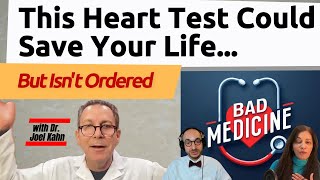
YouTube episode (Bad Medicine) featuring Dr. Joel Kahn interviewed by Dr. Nicholas Canelo and Anu Simh about cardiovascular prevention. Dr. Kahn emphasizes that coronary artery calcium CT screening exists and should be used more widely (origins cited ~1990/1995), recommends routine calcium scoring around mid-40s for many people, and describes more advanced coronary CT angiography (CTA) with AI interpretation for detailed plaque assessment. He advocates updated blood testing (ApoB, lipoprotein(a), hsCRP, homocysteine) rather than relying solely on a traditional lipid panel, highlights lipoprotein(a) as a largely genetic, high-risk factor present in ~20–25% of people, and mentions forthcoming targeted drugs (anticipated availability ~end of 2025). The episode also covers statin tradeoffs, combination therapy (statin + ezetimibe), supplements (CoQ10, berberine, bergamot, red yeast rice), dietary guidance (whole-food, plant-based staples), exercise, sleep, and practical rapid-fire tips.
Questions this video answers
Evaluated/reported in 1990; became available (wider availability) around 1995.
Approximately $50–$75, maybe up to $100 (as stated for some locations).
Local ClearlyHealth-affiliated CTA prices cited around $450–$600 (site-dependent); standalone CTA + separate interpretive fee can total similar amounts.
Around age 45 (he said ~45; sometimes 40–45 based on risk and sex differences).
About 20–25% of people inherit the ability to make lipoprotein(a); ~75% do not.
Chapters
Where is the heart screening? So I think the biggest misconception is that there isn't one. I strongly disagree. I've disagreed for almost 30 years. I've written books about it, I've talked about it. So I'm blue in the face. But if we would just start screening people, and I'm not talking just their blood pressure and their cholesterol and their blood sugar and their family history, these are critically important. But if we just did one thing, there has been this heart calcium CT scan that was evaluated and reported on in 1990 in my state of Michigan became available in 1995. At that point, you needed a dedicated CT scanner. Now every hospital, every clinic has a CT scanner and the software to do it. And maybe it's $50 to $75 nowadays, maybe 100. But if we would just screen everybody like we do for all these other conditions, which are actually not as frequent. Now, none of those cancers are as frequent as ischemic heart disease.
Welcome to Bad Medicine. Healing Medicine. One episode at a time.
I'm Anu Sen, Board certified functional health coach and this is Dr. Nicholas Canelo.
Board certified family medicine physician.
We believe in the importance of lifestyle factors, evidence based medicine, and moving beyond symptomatic treatment to true healing.
Our mission is to empower you on your journey to optimal health by demystifying healthcare and guiding you through the vast.
Sea of wellness information.
We help you ask the right questions, become more knowledgeable about medicine and build a good relationship with your medical team.
The Bad Medicine podcast is for informational purposes only and should not be considered as professional medical advice. The views expressed are solely those of the hosts and guests.
Enjoy.
Welcome to bad medicine. Dr. Kahn, we're thrilled to have you on the show.
Thank you.
Can you start by telling us a bit about your background and what led you to the field of cardiology?
Sure. I'd like to tell you I was born in a basket left on somebody's porch and overcame unbelievable challenges. But it's almost as interesting a story. But I grew up in suburban Detroit. I did have have identified when I was under a year old that I had a heart murmur. It scared a lot of people. Scared my mother for sure. So I started seeing pediatric cardiologists and got me interested. So if you would have asked me by age 9 or 10, I had a weird answer. I want to be a cardiologist. Even though there were no doctors in my family at the time.
Wow.
So I stayed true to that. And then I grew up in a home keeping kosher. We did not eat pork or cheeseburgers. And when I went off, I got accepted to an interesting program in Ann Arbor, University of Michigan, where you got accepted to med school right out of high school. So you did it in a more of a European quick way. And when I walked into the dorm, I said, I'm either giving up this keeping kosher thing or I'm going to eat from that salad bar over there. And 48 years later, I only eat from the salad bar still. So I adopted a pretty strict dietary approach to my Life. At age 18, a girlfriend who was with me made the same decision in that first week in the dormitory. We'd been married almost 44 years, so we just stopped eating all those luscious cheeseburgers and eggs and bacon and fish and chicken. And we have never eaten those since then. So it was an interesting part of my background until I learned about Dean Ornish and like John Robbins, wrote a book called Diet for a New America. And frankly, these were like personal choices. But I didn't realize they were as impactful because my nutrition education in Ann Arbor and ultimately in Dallas at University of Texas Southwestern, even though it was a center of lipid research, cholesterol research, we didn't get much nutrition training. But you know, I had already been doing this. I just have been a student of nutrition ever since and kind of converted after 25 years of standard wonderful cardiology practice with. I was a cath lab stent guy, heart attack guy on call all the time to an all preventive clinic about nine years ago in suburban Detroit and also southeastern Florida. I split my time between sunny when it's nice in Michigan and sunny when it's nice in Florida.
Snowbirds, that's what we call that. Snowbird. Do they use that term out there? I learned that in Palm Springs.
That's what they were. We use it a lot.
Yeah, yeah, yeah, that's great. I actually did a combined program as well. Accepted to medical school age 18, but it was, wasn't truncated. I don't know pros and cons there, but the Brown University Ple me program.
If you've heard it, we had a very short summer, so it was truncated, but you got the whole experience.
And so you've been plant based for a very long time.
Dr. Khan, thank you.
Yeah.
A lot of temptation you've resisted over, I'm sure.
Definitely. It's habits. Right. So let's start with just defining to our listeners what cardiovascular health. I mean, it's a leading cause of death in our country, but yet you know, you ask a typical, like I ask my clients, what are they most afraid of? It's always cancer. So can we define cardiovascular disease and just give us your insight on how you talk to your patients about it?
Sure. And, you know, just what you just said when I lectured to a medical group or often to the public, I have a slide that goes back to 2016, but I don't think it's any different that if you look at actual causes of death In America, about 33% are cardiovascular disease, about 30% is cancer, and then everything else fills in the rest. But if you look at what people are googling for causes of death, 2% is heart disease, and much more are things like terrorism and crime and cancer. And then if you look what the New York Times in the newspaper, the Guardian in England report on, it's actually 2% is on heart disease. So for reasons, you know, I'm sure there's a rationale why cancer particularly has captivated people's minds and Alzheimer's to some degree. But heart disease gets, you know, not a fraction. Even with what's going on in America right now with the make America Healthy Again movement and, you know, some optimism, we're going to be talking about, you know, reformatting, hopefully a better medical system. I haven't heard anybody talk about heart disease. And I've actually reached out and on Twitter, I'll tag Robert Kennedy Jr. Every time I post an article on heart disease, trying to catch his attention. But when we talk cardiovascular disease, it's a whole broad field. The most important ones are the big number ones, the heart attack, the stroke, the need for stents and bypass and something called that everybody should know. But you know, in the public, they don't think about sudden cardiac death. You know, over 300,000 people a year in the United States at were okay, they seemed fine, you know, kissed them good night and then they're dead in bed or they're dead in the bathroom, they're dead at a football stadium, dead in the gym, dead in their car. I've seen every version of it, tragically. And, you know, the official definition is they seem to be okay within the last 24 hours. And they've had long standing, clogged arteries, maybe silent heart attacks that weren't recognized. But, you know, that's the biggest piece of the pie is what we call ischemic heart disease or, you know, circulation problems. Of course, children are born like I was with congenital heart disease, although mine cleared up on its own. So I did fine. People consider Hypertension to be a cardiovascular disease, but that leads to stroke, heart attack, aneurysm, rupture. So it's part of that bigger piece. And then there's all the arrhythmias, the fibrillation, which is a big piece, sometimes with ischemic heart disease, sometimes without. And then the last, well, there's valvular heart disease, leaky valves, clogged valves. They contribute. And finally the whole spectrum of heart failure, heart failure following a heart attack, or heart failure due to other causes, sometimes unknown. So that's kind of the big picture. But ischemic heart disease is what people should be worried about. I feel okay, but am I clogged up? And it's bad medicine not to ask that question.
Okay, yeah, yeah.
People, you know, they feel fine. They feel fine. And they'll tell me that. And I say, well, you know, we're trying to prevent something. It's number one cause of death in this country. And, you know, you try to get people to come around to doing some of the testing. I think we'll talk about to be bit, bit more proactive. Well, in the bad medicine vein, what would you say if you had to pick maybe the biggest misconception about heart health?
Maybe, although it isn't discussed much, that there's no way to screen for it, because again, this is bad medicine. We screen for prostate cancer. I mean, there's a little controversy about it, but we do screen for it in men. We screen for breast cancer. I don't think there's too much controversy about that. We screen for colon cancer. Not too much controversy. We screen for cervical cancer. Now we have these new blood biopsy tests. We can screen for 50 plus cancers or total body MRI scans. We can screen for essentially almost every kind of cancer. Those are clearly controversial, with some people favoring. We make a more widespread. And other people calling for more research to be done first because they are expensive. But where is the heart screening? So I think the biggest misconception is that there isn't one. And I strongly disagree. I've disagreed for almost 30 years. I've written books about it, I've talked about it. I'm blue in the face. But if we would just start screening people, and I'm not talking just their blood pressure and their cholesterol and their blood sugar and their family history, these are critically important. But if we just did one thing, there has been this heart calcium CT scan that was evaluated and reported on in 1990 in my state of Michigan, became available in 1995 at that point, you needed a dedicated CT scanner. Now every hospital, every clinic has a CT scanner and the software to do it. And maybe it's 50 to 75 dollars nowadays, maybe 100. But if we would just screen everybody like we do for all these other conditions, which are actually not as frequent. None of those cancers are as frequent as ischemic heart disease. I have no doubt we could put people in two buckets right away. You seem to be fine. Goodbye. Here's some nutritional fitness, sleep, lifestyle guidance. But we'll see in five years like we do with a normal colonoscopy. And we'd have this high risk bucket. And it would be gradations of risk because calcium score could be 1, which is abnormal, but could be 1001 at age 45. And I see those people, which is extraordinarily high risk. And we would develop programs through primary care doctors and cardiovascular specialists and preventive medicine and lifestyle specialists to watch those people carefully. And they're not going to need bypass, they're not going to need stents. But, you know, they do need to understand that this is a disease that usually you can find out the root cause. I have a few patients that really frustrate me a very bad heart disease. And 40 labs later and, you know, hours of history taking, we still can't completely identify the major root cause, but we can find the root cause and we can work on it. So let's start screening for heart disease because it's very, very bad medicine not to. And it's not expensive. It just hasn't been recommended yet by the United States Services Task Force Preventive service. You know, there's some odd hesitation to just ordering this inexpensive study in the primary care world, which I hope this podcast helps end that.
Yes.
Is there a certain age that you would recommend the calcium score? And as far as culture too, I mean, race, you know.
You know, right now it's about age 45. You're going to start discussing the mammogram and the colonoscopy. And I think that's a very good age for men. I do hesitate a little bit if I have a very healthy lifestyle woman with very good labs and she's still pre menopausal. I'll probably wait till about 50. There's a very low dose of radiation. It's equivalent to about a mammogram. But I'll hold off a little bit. But boy, I sure like to see one in everybody. And the higher risk of if somebody comes to me and their cholesterol's extraordinarily high, which is a risk factor. It's not a perfect risk factor. Or they've been a smoker or their family history is really scary. I might do it. I won't do it. In your 20s I rarely order it. In the 30s I have seen abnormalities. But by age 40 on based on risk, come at it. Let's get it done.
Well, you're not going to meet any disagreement here. I'm a very high frequency order of the calcium score and also a high frequency receiver of denials from insurance. And I just have a blanket. I just encourage patients to pay the cash because you know, we're not going to win these fights.
Like I don't think I've ever tried to give pre authorization.
Yeah, right.
Calcium score. If you drive to Cleveland, you can get it for free at the university hospital. That's how proponents they are of the scan. But you know, a lot of people don't live near Cleveland. And just as an example that, you know, cost is not the biggest impediment for this particular exam. And I'll just say for anybody listening, I'd rather use some ultrasound technique. But you can't see the coronary arteries by ultrasound. Non invasively. I'd rather use mri, which is non radiation technique. But you can't see the coronary arteries where the blockage is formed by mri. So we're left with CT scanning and fortunately it's painless, it's very fast. Anybody can have a coronary artery calcium scan whether they're nervous or claustrophobic. It's such a simple test. Yeah.
As I've ordered it over the years and gotten scores from 0 to over 2000. More and more in the last few years I've been bringing in when, when do I go with a CTA coronary, an angiogram with contrast where you have to take a medication, more radiation, you know, it's for the audience. This is a much more detailed test that looks at actual narrowing. And something I've struggled with is, you know, when do you get this? Cause you find soft plaque instead of just the calcified plaque. So I'd love to hear your take on this.
Yeah, it's a very good question, one I'm very capable of, you know, addressing. The test is called a coronary CT angiogram and it was developed about 2010 and it was a revolution that you could without doing a catheterization inside the body, which always entails some risk to the patient that can include death, that you could see the coronary arteries in great detail and as you say, see how narrow they are. The hospital that I was doing rounds on at the time now called Corwell, we developed a very aggressive program in the emergency room. You know, the paradigm was you come in with some chest pain, but it's not a heart attack. You're going to stay overnight, you're going to get a bunch of blood tests, you're going to go in the morning for usually a treadmill, stress of some kind. We don't get the reports. You're in the hospital almost 48 hours and the expenses were enormous. And stress tests are fine, but they never are actually directly looking at the heart arteries. So there's false positives, false negatives, there's all kinds of issues with that. So we instituted, you know, you get one negative blood test, your EKG is okay, you go right for this iodine dye based CT angiogram, you could be out of the hospital in three hours and actually have definitive my arteries are clean, my aorta looks good, which is a good part of a complete emergency room chest pain evaluation and you know, really, really kind of groundbreaking stuff. All published in peer reviewed journals now. But the drawback with this test you mentioned some other than this emergency room kind of setting is you have to inject iodine, a few people are allergic, you have to be very quiet, very still and you have to have a very low heart rate. So usually we're giving medicine called beta blockers ahead of time and very few people can't take it. They might have asthma or some situation. Few people have kidney disease and they can't inject iodine willy nilly for fear of exacerbating their kidney disease, putting them into a real problem. All those are issues. The final one is that it's read by visual subjective analysis. That looks 50%, that looks 30%. And we already had data from the cardiac catheterization world that the eyeball assessment of how narrowed an artery is. Now in the cardiac catheterization world it's two dimensional, it's a flat screen with this coronary ct. It's by definition a three dimensional. It's a little better view of things. It's still subjective. The breakthrough, and there's a point to my madness, was in 2021 Artificial intelligence software got introduced and the most popular company I'm not affiliated with, but I use them is called Clearly Help. And now you can go and get that, you know, 32nd test and get it read by a computer using the top of the line AI software and you can you can really take it to the bank. That's 48% narrow. That's 11% narrow. That plaque is 50% calcified hard plaque, been there a long time. And 50% soft, non calcified, higher risk plaque. So it's a complete new paradigm. And I've ordered about a thousand of those artificial intelligence coronary CT angiograms on outpatients that generally have no reason for the insurance company to authorize and pay for it. So they're actually paying out of pocket when they realize the value. All these peer reviewed studies and this is, you know, somewhat an entrepreneurial enterprise. It's a company, a software company, but it's backed by tremendous research in major universities around the world and good publications. So it's about a fifteen hundred dollars test. So to close up, I don't use it as my first line test. I do not think we're going to make a dent in cardiology care and switch bad medicine to good medicine by ordering 15 to $2,000 tests. Because most people are not gonna be in the game. They might be in the game for a $75 calcium scan if it comes back low or zero. I don't think they need that test. Even though we do recognize we might be missing a little soft non calcified plaque. But if your calcium score comes back in my clinic, 400 or 200 or 600, I'm gonna tell you, I have no idea how clogged you are. I have no idea how much soft, buttery plaque you have. The more dangerous kind. And I think you should go deep in your pocket and shell out the dollars to get this more advanced test done. And surprisingly many, many people do. And I do not own a CT scanner. So this is it. Radically helps the patient stick to a better diet, a better fitness, a better supplement, and a better prescription plan without scaring them. I mean, I try not to scare them. I'm sure they get a little scared to see all that narrowing. But it's a whole new era. If we could bring the price way down, of course I'd order a few more.
And Dr. Khan, is that available throughout the country or certain places?
It's a good question and important question. So there's two ways to get that study. You can go on this company's website, clearlyhealth.com C, L, E R L Y. And they will tell you where there's a official center in your city. And many cities don't have an official center. Minneapolis, no official center. In Detroit, we happen to have two. Two Places signed a contract. So in Detroit, if I send somebody down the street, they'll go in, they'll lie down, they'll have the CT. 20 minutes later, they're gone, they're done, and I get the full report in 24 hours. It's one stop, one price, one simple process. For most places, you get your CT angiogram and you pay a cash price. In Detroit, that's 450, 500, 550, 600 range. And then you take the CD of the procedure and you mail it to the company and they charge an additional interpretive price. So it ends up being the same cost, but there is a little delay and a little extra step, but it works so that therefore, yes, you can get it anywhere in the United States and it's just a little more involved.
So, Dr. Khan, as far as you're so active on social media, you know, and there's such an incredible amount of misinformation floating around, and where do you begin in your conversations with people that are not your patients? You know, just like, how would you approach cardiovascular health? You know, what do you recommend to them as a general, like, that's not here sort of thing?
A lot of people do ask me questions in the messaging. And if they're not my patients, one of their my patients, I tell them, stop messaging me this way. I have a clinic. If you email me or call the clinic, I'll respond. I try and teach them it's not appropriate to have a deep discussion on Facebook about their health, nor is it HIPAA compliant. Number two, if it's not a patient of mine, I will give a very generic answer. I've written hundreds of blogs, so if I'm being kind, I'll go over and find the blog and paste it in and they can read it. You know, what do I do with my high calcium score? What about eggs? You know, a thousand different topics. Or I have my own weekly podcast. I might do the same. But either way, number three, you know, the conversation about heart attack prevention, I mean, I'm not saying I own it and I'm the only person in the world that posts on it relatively frequently. But just like we started this with the description that may be 2% of newspaper articles, I think also, I don't see enough conversation amongst health experts talking about heart attack prevention, maybe talking about lipids, maybe talk about diabetes, maybe talk about fitness. There you'll see all the time what's there that causes controversy. We're never going to solve the nutrition controversy. It's going to be a controversy. There are people that eat one way and feel good and people that eat another way and feel good. But it's our obligation to try and use the science as much as possible to guide people. And I do believe that whole food plant based nutrition has incredibly more data behind it. Some of it is lackluster nutritional epidemiology association studies. I get it. But some are small, medium randomized studies. Of course, not double blind. Nutrition's pretty hard to do double blind unless you have two drinks that are exactly the same and it's the short term kind of drink supplement kind of study. But and all but nutrition never ends. This, currently this high protein, low protein argument is going round and round and it confuses people. I get patients email me all the time, it happened in the last couple of days, eat eggs for brain health. Well, you know, I'm going to get 25 patients emailing me that comment. And you know, what do you think about this? I know we talked about eggs in the clinic and I've got to deal with it because you know, there's always. There is one new study from Chicago about eggs and brain health because they provide choline, but you can also eat soybeans and you can eat shiitake mushrooms. Get lots of choline for your brain health without all the other stuff that comes with eating eggs, like the tmao. Tmao. Nobody would disagree with, you know, how much eggs raise your cholesterol and cause heart attack risk. You know, you can find a study for anything you want to promote. But there's plenty that say it does that egg consumption does increase cardiovascular risk and death rates. But I know there's studies that say it doesn't. So we're left with what do you do? I say eat soybeans.
Well, then you're going to have people like, what do they call soy boys? How that's the flavor on skin.
Yeah, soy boys. Well, there just was. And again at the University of Toronto this week, they just presented a big paper, Soy and postmenopausal women. And a review of all the world's literature said does not raise cancer risk in postmenopausal women. But then you got the guys and you know, does it create testosterone issues or does it create man boobs and all the rest? And you know, soy is a component of an overall healthy dietary pattern. It isn't, you know, the exclusive thing you eat day after day after day. But in my house, organic tofu or tempeh or edamame is a very regular component of Our diet and the one I teach to patients and very science supported.
Lovely, lovely. I wanted to move to blood testing a little bit specifically about how you.
Or bad medicine.
Exactly, exactly. How you incorporate apob or apo, lipoprotein B, the full name as well as lipoprotein little A. Kind of very different. How do you incorporate these and what impact does it have on your treatment decisions?
Right. And you know, the opening pitch I'd make with the theme of your podcast is, you know, they're good doctors, but I think it's bad medicine to order the same lab panel you ordered 30 years ago or 35 years ago when I started practice. And it is the same. I have my nurse all the time. Can you get Mr. Jones's, you know, labs from his internist? Annual physical sent over. It's just the same thing. There's, you know, rarely a vitamin D, rarely a hemoglobin A1c, never a homocysteine, never a lipoprotein little A. That's changing a little bit, that's starting to get a bit more popular and almost never an apolipoprotein B. So anyways, I do think that we are shortcutting good medicine by practicing, you know, old habits that aren't flying with all the science we have for some of these things I mentioned. But you know, as a preventive cardiologist, sure, I'm dealing with people's lipids, their cholesterol profiles all the time. And I've had a, you know, self trained myself as many as have reading books, listening to Dr. Thomas Dayspring all the time. A great man with a funny, kind of funny attitude about a lot of things. I'll tell you a funny story only because people need to listen to a podcast and laugh a little bit. 25 years ago I was invited to give a talk and some people know who Thomas Day Spring MD is, Dr. Lipid on Twitter. But he brilliant. He knows every pathway in the world on lipids and he draws these crazy wonderful diagrams about how cholesterol is produced throughout the body. Triglycerides. And I was invited to lecture with him at a local Detroit restaurant. I thought that was pretty cool back then because he already was quite famous back then, 25 years ago. Anyways, I speak for 30 minutes about lipids and heart disease. And he came in from, I think New Jersey to speak for 30 minutes. You know, it's a drug company sponsored meeting. But he was such a big name that there were 200 people in the restaurant, which is very rare for a Pharmaceutical dinner. Two and a half hours after starting, he took a breath and stopped.
Oh, my gosh.
And people hadn't even got their entree yet. So they quickly served the entree. And then I talked for five minutes. I couldn't possibly abuse the people anymore. But the theme of his talk now circling back was it's an apob world, boys and girls. He must have said that 30 times in his two and a half hours. It's an apob. And I don't know that I'd call the audience boys and girls, but that was his style. Anyhow, that forced me to dig deeper. So the bottom line is, as we know, the standard lipid panel, total cholesterol, triglycerides, HDL and LDL is calculated. LDL is not directly measured. The most important kind of guideline, bullseye. Nowadays, LDL cholesterol that internists and family doctors are obtaining and most cardiologists are obtaining, you know, you go up to Ann Arbor, University of Michigan cardiology department, they're going to poke your finger into a point of care cholesterol panel with a calculated ldl. And, you know, we know that with all the metabolic disease out there, the fact that maybe 7% of Americans are metabolically healthy and 93% are sick, wow. That the LDL cholesterol hides a lot of pathology. And, you know, you have to go a little further and maybe get the NMR lipoprofile. And now you're looking at the LDL particle number, the LDL P. And two people with an LDL of 100 may have dramatically different LDL particle numbers based on the size and accumulation of cholesterol in their LDL overall. And so particularly overweight pre diabetic, diabetic people. 70% of America ought to get the more advanced lipid panel and look at their LDLP as a way to really identify their risk. And it's surprising sometimes how it doesn't really. It fit my expectations, but it's valid. And then nowadays and can circle around and finish in a minute, we know that this little particle in the blood that was discovered in 1963 called lipoprotein little A. And I will be slightly commercial for one second because everybody needs to know how to spell lipoprotein little A, because when you write it on a lab slip, a lot of people write it wrong and write apolipoprotein capital A, which is a lab done by Quest and LabCorp and all the others, but that's a totally different particle. This is what you want to write on your lab slip. And I'll tell you why in a minute. It happens to be the title of one of the books I've written and the only book on this topic at the present time. Anybody can read. Wow. 1963, a scientist in Europe identified this particle, and over the last 62 years or so, we now know it's very atherosclerotic, it's very pro inflammatory, it's very pro thrombotic. It causes your aortic valve to get calcified and causes aortic stenosis. We know it's completely genetic. And 20 to 25% of people inherit the ability in their liver to make that cholesterol. And 75% or so of people have no ability to make it. And so we should be weeding out and separating those that make it and work with them versus those that don't make it and congratulate them for having better parents than the other group giving it to them. But if you really want to track a diet therapy, a fitness therapy, a supplement therapy, or a prescription therapy in somebody, 25% of your patients that have LDL cholesterol and lipoprotein little A cholesterol apob is a great way to track it because apob tracks all the atherogenic components of LDL cholesterol and of lipoprotein. So if I were to start somebody on a statin who has lipoprotein, I'll tell you why I bring that up as the example. I will track apob hoping it falls, because statins lower cholesterol, but they raise lipoprotein little A, and sometimes they raise it a lot. I mean, 50%, 60%. So eight weeks later, I want to ask the question, and that's my own unique approach, but did I benefit the patient? And if their apob goes down, that means I've reduced in their total burden of atherogenic particles. I've reduced it and lowered their risk. Even if lipoprotein A went up a little bit, I've brought LDL down so much that I've benefited them. But sometimes I see that's not the case, really. LDL goes down, but the apob actually went up some. It's not very common, but it can happen. And there's a whole new generation of drugs that are about a year away from being approved by the fda, hopefully. Because since statins do not work at all for lipoprotein, we need special drugs, injectable drugs, antibodies to lipoprotein and their production, and they're in phase three trials with huge numbers of people. Just recently there was, this is why it's so important, a major analysis that after controlling for ldl, people who have high lipoprotein A are at much more risk than people that don't. So we can do all that we want to control lipoprotein, but it's bad medicine right now, I think not to check your patients. In Europe, it's recommended everybody get checked for lipoprotein little A. And even though we don't have a great approach to them, there are some approaches. We don't have a great approach. When these drugs come out, the high risk people should know, you know, they should be waiting in line. I've had bypass. I had a heart attack. My lipoprotein little a is on 300 nanomole per liter. I should be lining up to get that drug when it comes out, hopefully at the end of 2025, so we can get people prepared. The last thing I'll say, talk about bad medicine. This is just a comment. Every statin trial in primary prevention failed to do two things in retrospect. They didn't do calcium scores. So we were judging their risk based not to check your patients. In Europe, it's recommended everybody get checked for lipoprotein. And even though we don't have a great approach to them, there are some approaches we don't have a great approach. When these drugs come out, the high risk people should know, you know, they should be waiting in line. I've had bypass. I had a heart attack. My lipoprotein little A is 300 nanomole per liter. I should be on risk calculators to get in the study. But we were treating people with statins and placebo that didn't have heart disease. There had to be a fair number of them had a calcium score of zero. But they were still in the study. Nobody checked. And you're not going to expect people with a calcium score of 0 to benefit from primary prevention with a statin. So, you know, if the study had 28,000 people then lining up to get that drug when it comes out, hopefully at the end of 2025. So we're, we can get people prepared. The last thing I'll say, talk about bad medicine. This is just a comment. Every statin trial in primary prevention failed to do two things in retrospect. They didn't do calcium scores. So we were judging their risk based about 7,000 of them. Actually, no. Maybe about half of them had a calcium score of 0 and just diluted the potential to average child benefit. And we didn't check lipoprotein A in those. So we're actually treating people with lipoprotein A with statins. It may actually not benefit as much. That's pretty well shown. But they're all mixed together and it's like we almost have to go back ache. If I can think about it. We need to do primary prevention for people with lipoprotein A and a high calcium score, primary for people with lipoprotein A and a low calcium score based on risk calculators to get in the study. But we were treating people with statins and placebo that didn't have hard. People with a high calcium score, but no lipoprotein A. And of course, why would we put people in that have no calcification and no lipoprotein A? They should just go to the salad bar that I started eating at 40. Heart disease. There had to be a fair number of them had a calcium score of 0, but they were still in the study. Nobody checked. And you're not going to expect people with a calcium score of 0 to benefit from primary prevention with a statin. So, you know, if the study had 28,000 people, then. So it's sort of confusing medicine slash bad medicine. When you think about how hard we try in the clinic, you do too make the best judgment for patients. But the foundation of the science is sometimes pretty shaky in retrospect.
Dr. Kahn, does your book lipoprotein A, does it talk about women, postmenopausal women and lipoprotein A? Because there seems to be some snot.
About 7,000 of them. Actually. No. Maybe about half of them had a calcium score of zero.
Are you suggesting that.
Yeah, I'm a big, big fan of, you know, at menopause women considering hormone replacement therapy. I always recommend that. And just diluted the potential to ever show a benefit. And we didn't check lipoprotein A in those. So we're actually treating people with lipoprotein A with statins. It may actually not benefit as much. That's pretty well shown. But they're all mixed together. And it's like we almost have a book. What's it called? The Estrogen Myth. I think it's called by Dr. Blooming, Avram Blooming, written in 2018. It's a great book. And I just finished a book by our next head of the FDA, Marty McCary, MD. The book is called Blind Spots Where Medicine Got It Wrong. And he has a really nice Quick chapter on why the Woman's Health initiative and hormone replacement therapy was a complete debacle. And maybe a manual to go back ache, if I can think about it. We need to do primary prevention for people with lipoprotein A and a high calcium score. Primary for patients, people with lipoprotein A and a low calcium score, people with a high calcium score but no lipoprotein A. And of course, why would we put people in that have no calcification and no lipoprotein A? They should just go to the salad bar that I started eating at 40.
Yeah, there you go.
A fractured crisis that didn't need to be manufactured. And we wasted 20 years of women being denied a good therapy for bone health, brain health, cardiovascular health, and as you said, the potential to lower lipoprotein A with hormone replacement therapy and appropriate women.
That's really sad.
Yeah.
Finally it's coming around, I can tell you, just seeing, you know, other primary care and specialists, it's, it's moving.
So it's sort of confusing medicine slash bad medicine when you think about how hard we try.
A little late, but it's, it's turning around. So it's, it's nice to see the trend is finally coming back. To do the. To the appropriate HRT, I'm working with.
A 400,000 organization called Fraternal Order of Police. The number one cause of death during service as a police officer is a heart attack and, you know, sudden cardiac death on the job.
Wow.
They're considering making it uniform to do a coronary artery calcium score on every police officer. And I would say about age 40 to 45. And we just turned off a teams call the other day while they're working through their committee. In a lot of bureaucracy, though I give them credit for all this in the clinic, you do too make the best judgment for patients, but the foundation of the science is sometimes pretty shaky in retrospect.
Dr. Kahn, does your book lipoprotein A, does it talk about women, postmenopausal women and lipoprotein A? Because there seems to be some snot.
And I said, but don't wait too long because every 39 seconds, you know, somebody has a heart attack. So if we meet in two weeks and that's the same urgency, he's suggesting that. Yeah, I'm a big, big fan of, you know, at menopause. So, you know, to your audience. Yeah, you know, it may be coming around that we're talking about hormone repair, replacement therapy more honestly. But don't wait Too long for all those women in your clinic. Certainly don't wait. About starting women considering hormone replacement therapy, I always recommend that order a more advanced cardiac screening panel even if it's out of pocket Book. What's it called? The estrogen myth, I think it's called by Dr. And fortunately, as I say, these few extra labs and this heart CT scan are not completely cost prohibitive. So good news.
And you're so right about women. But also even South Asians like being South Asian.
I see Blooming Avram blooming written in 2018. It's a great book and I just.
Finished a lot of our men just dropping dead, you know. And do you see? Do you. Are there any good studies based on this particular population? And maybe lipoprotein a book by our.
Next head of the FDA, Marty McCary.
And A&APOB and diet.
Right. I don't think number one, there's a lot of good data about South Asians having a metabolic profile that raises the risk of heart disease. The book is called Blind Spots where Medicine Got it Wrong. And he has a really nice quick chapter on oh, why the Woman's health initiative and hormones and you know, pre diabetes particularly and low HDL cholesterols and sometimes high triglycerides. I'm sure some of it's genetics, some of it is the diet, the standard diet with a lot of oils and ghee, even though it tends to be vegetarian. I wouldn't call it very healthy vegetarian diet and they need to be, you know, assessed. Immune replacement therapy was a complete debacle and maybe a man, many, many South Asian individuals in my practice and I'm going to screen them just like everybody else and not all of them have disease, but you know, they are a refactored crisis that didn't need to be manufactured and we wasted 20 years. Whether there's been a study, I don't recall seeing a specific study about salvations and lipoprotein A being a unique problem. It's clearly up to women being denied a good therapy for bone health, brain health, cardiovascular health and as you said, the potential to lower lipoprotein A with hormone problem. It's a worldwide problem. Given the marvels of the Internet. I quickly just looked up. There's a nice review article in March 2021 elevated lipoprotein A in South Asians and the associated risk of coronary artery disease and in fact hormone replacement therapy in appropriate women.
That's really sad.
Yeah.
Finally it's coming.
Apparently they found 72 articles on the topic so you know, there's no doubt it's important they concluded like every other population, elevated lipoprotein little A is associated with an increased risk of premature coronary disease and premature death from coronary disease in South Asians. But you'd say that about, you know, almost every other ethnic group too.
I want to ask about statin side effects. You know statin type around. I can tell you just seeing, you know other primary care and specialists. It's, it's move one of the most common cholesterol medications if not the most common. Lots of patients have heard about and are concerned about side effects. Muscle pain, weakness, increased risk of diabetes. They're concerned about cognitive effects, reports of increased risk, hemorrhagic stroke. How do you sort of balance. How do you sort of explain what's your kind of approach to explaining this very common clinical thing? A little late, but it's, it's turning around. So it's, it's nice to see the trend is finally coming back to, to do the. To the appropriate HRT.
I'm working with a 400,000 organization called Fraternal Order of Police. The number one cause of death during well number one first step there was a society that got formed nearly 20 years ago called the Society of Heart Attack Prevention and Eradication which is the acronym SHAPE Society. They still have a great website. They wrote an academic book on preventive cardiology. They published some academic papers and they're very radical Hypothesis back in 2020Service as a police officer is a heart attack and you know, sudden cardiac death on the job. 2007 was her proposal was paradigm shift was that and when you see somebody with elevated cholesterol panel and they're asymptomatic and never had a heart attack, get a calcium score.
Wow.
They're considering making it uniform to do a coronary artery calcium score in every police officer. And I would say about age 40 to 45. And we just turned off a teams call the other day while they're working through their committee and a lot of bureaucracy though I give them credit for all this and if you have access to it, do a carotid intimal medial thickness ultrasound or a CIMT ultrasound. Both backed by thousands and thousands of research studies. And if you don't have disease, don't treat that person with a statin. That was 2007. Now I read that back then I read the textbook and I follow that to this day. But because of a large amount of data that looking at, you know how many do you need to treat that famous number needed to treat with a statin if your calcium score is zero. It's so nearly impossible to help a person with a calcium score of 0 with a statin that I don't prescribe statins to people with calcium scores of zero. I do the CIMT in my clinic. It's not a very easy study to get done in a quality way. And they may have a little plaque in their carotid even with a calcium score zero. And, you know, we'll emphasize lifestyle and fitness and supplements and you know, rarely there might be somebody going on. But in 2019, even the American Heart association published in their preventive guidelines that people offered statins with a calcium score zero. And I said, but don't wait too long because every 39 seconds, you know, somebody has a heart attack. So if we meet in two weeks. And that's the same urgency to, you know, to your audience. Yeah, you know, it may be coming around that we're talking about hormone replacement therapy more honestly. But don't wait too long for all those women in your clinic. Certainly don't wait about a cardiac. Order a more advanced cardiac screening panel, even if it's out of pocket. Unfortunately, as I say, these few extra labs and this hardened consider deferring the statin and working on lifestyle. So it's much more of a well accepted concept. So you can't have a complication from a statin if you don't. CT scan are not completely cost prohibitive, so really qualify for one. That's number one. I try very hard not to use them in people that don't have documented disease. And a very famous imager, I think it was John Rumsburger, MD in Columbus, Ohio, said, you know, we don't treat people without cancer with chemotherapy. Why are we treating people without atherosclerosis with lifelong statins? And well, it's. We just don't think of heart disease like we think about cancer. We're much more passive about it. But good news.
And you're so right about women, but also even South Asians, like, being South Asian, I see a lot of our men just dropping dead, you know. And do you see? Do you. Are there any good studies based on this particular population? And maybe lipoprotein A?
I like that quote. Number two, I think all the side effects you mentioned are real because, I mean, I've dealt with so many thousands of people on statins. I think it's bad medicine not to.
Get a and apob and diet right.
I don't Think I number one, follow up blood sugar assessments after a few months. I think you see a lot of people, their hemoglobin A1C will be creeping up. A lot of people now are wearing. There's a lot of good data about South Asians having a metabolic profile that raises the risk of heart disease. Continuous glucose monitors and they're so sophisticated nowadays they'll tell me doc, since you put in, you know, pre diabetes particularly and low HDL cholesterols and sometimes high triglyceride. Beyond that, 5 milligram of a statin, which is my usual starting point, low as you can go dry some. I'm sure some of it's genetics, some of it is the diet. I've noticed my sugars are higher than they were before I started. So that's one way you hear about it. Or two, do the testing. It's a real deal now. I don't think we're causing a lot of old standard diet with a lot of oils and ghee even though it tends to be vegetarian. Full blown type 2 diabetes. But we're raising people's blood sugar which can't be good in the long term. Yeah. And you know, and probably lower doses safer. I wouldn't call it very healthy vegetarian diet. And they need to be, you know, assessed. I have many, many South Asian individuals in my practice and I'm going to screen them just like everybody else and not all of them have disease but you know, they are at risk. Number three, I already mentioned we're raising people's lipoprotein A. So again bad medicine. I'm not saying I do testify in courts a lot as a medical legal expert and it is not a violation of the standard of care to give somebody a statin without their lipoprotein A being checked. But when we talk good medicine, bad medicine, really up to date medicine. Whether there's been a study, I don't recall seeing a specific study about salvations. And lipoprotein A being a unique problem. It's clearly a that lipoprotein A at baseline and recheck it on therapy in 8 or 12 weeks. See if you blew their lipoprotein A way up. Particularly if you're using 40 or 80 milligrams of a statin which a problem. It's a worldwide problem. You know, given the marvels of the Internet I quickly just looked up, there's a nice review article and March 2021 elevated. I rarely do and the last little trick I do besides I can't prove lipoprotein A in South Asians and the associated risk of coronary disease and in fact prove to this audience that adding coenzyme Q10 will prevent some of the side effects. But I find the data that Coenzyme Q10 is such a health promoting supplement that after age 40 we make less and less that if you're on a statin we block. There's a pathway everybody remembers from med school, the HMG COA reductase pathway that statins interrupt to make less cholesterol. But there's a sidearm that some people call it the farneseal. Farneseal pathway or the geranial geranyl pathway. It's called both. But that's where CoQ10 is made in the liver. So when you use a statin, you really block CoQ10 production. So I put all my patients on actually a fairly high. Apparently they found 72 articles on the topic. So, you know, there's no doubt it's important they concluded, like every other population, elevated high dose, 400 milligrams of CoQ10. It's quite inexpensive. The safety data for CoQ10 is enormous. And there are benefits to CoQ10 in terms of both blood pressure. Lipoprotein little A is associated with an increased risk of premature coronary disease and premature death from coronary disease in South Asians. But you'd say that about, you know, almost every blood cholesterol, hypertension, arrhythmia, and provocative double blind randomized studies in Sweden that you may be preventing cardiovascular events and disease with coenzyme Q10 that nobody talks about. But I think the studies are very, very interesting. And then the last thing I do, I use a lot of ezetimibe in my clinic. Z, the other ethnic group too.
I want to ask about statin side effects. You know, statin side effects, one of the most common cholesterol medications, if not the most common. Lots of patients have heard about or concerned.
And I do it for a very specific reason. I can keep the dose of statin down and add in Azatimibe 10 milligram, very inexpensive, very well tolerated, and I can get the same, you know, lipid results in eight or 12 weeks.
And concerned about side effects, muscle pain, weakness, increased risk of diabetes.
I had the sense I was doing it with less side effects. But now there's data which is great. I'll share with you in a minute.
Concerned about cognitive effects, reports of increased risk, hemorrhagic stroke, how do you sort.
But there is a very rare condition that Usually is called Cystosterol Emia. It's an inherited cholesterol disorder. Some people want to rename it phytosterolemia where you absorb plant sterols out of your gut hyper aggressively. So maybe you're taking balanced.
How do you sort of explain what's your kind of approach to explaining this very common clinical for your cholesterol which.
I don't use plant sterols in my clinic but maybe you're eating foods rich in plant sterol. Well number one first step there was a society that got formed nearly 20 years ago. It's called the Society of Heart Attack Prevention and eradication which is the sterols which are some of the best foods on the planet like soybeans and sesame seeds and sunflower seeds and acronym shape Society. They still have a great website. They wrote an academic book on preventive cardiology. You're absorbing them and you get premature coronary disease. So if you use a little statin and a little azatomide, you'll get great numbers. But just in case you're dealing with a very rare genetic disorder, that's how you treat it. You treat it with ezetimage. So when I encounter my first official case study they publish some academic papers and their very radical Hypothesis back in 2007 was or proposal was paradigm shift was that and when you see somebody with elevated testosterone will have proudly said to the patient don't worry about it, I'm already taking care of it for you.
It's a good feeling when you've done that.
There is a study on cholesterol panel and they're asymptomatic and never had a heart attack. Get a calcium score out of Korea just to finish this topic called the racing study. Everybody should look it up. 20, 22, 3,000 people that had a coronary CT angiogram like and if you have access to it, do a carotid intimal medial thickness ultrasound. Or we talked about a while back so they had coronary disease. They were either put on 20mg of Rosuvastatin or 10mg of Rosuvastatin plus 10 of Ezetimibe followed for a year and they repeated the coronary CT angiogram. What they found was the LDL cholesterol was lower on the combination even though it was less statin. The side effects the blood sugar, the muscle aching was lower on the combination. A CIMT ultrasound both backed by thousands and thousands of research studies. If you don't have disease don't treat that person with a statin. That was 2007. Now I read that and the amount of soft plaque that was resorbed on the follow up study was greater on the combination back then. I read the textbook and I follow that to this day. But because of a large amount of data that looking at, you know, how many do you need to treat that famous number needed to treat with a patient leading. I'll go back. Dr. Dayspring says on Twitter all the time, why isn't everybody lowering their apob boys and girls with combinations therapy. It's so inexpensive and I'm proud to bring him on because I've been doing that for years and years, you know, and I get pushback. People say I don't want to be on any drug. And now you're giving me.
Right.
I got, I got to educate him. Why?
Yeah, yeah, I think I read that study actually, I think it was shared with me.
Statin. If your calcium score is zero, it's so nearly impossible to help.
Yeah.
Now there's a meta analysis that confirms it and you know, other, other components of literature.
Very interesting, very interesting. I'm very curious.
A person with a calcium score zero with a statin, then I don't prescribe statins to people with calcium.
Hear your take on the pros and cons of including political views as a doctor on social media.
Well, whether you know it or not, I am one of those that find no barrier to posting politics on my social media. And number one, I work for myself. If I worked for a hospital, I think I would have been called in scores of zero. I do the CIMT in my clinic. It's not a very easy study to get done in a quality way. And they may have a little plaque in their carotid even with a calcium score zero. And you know, we'll emphasize lifestyle and fitness and supplements and you know, rare long ago and maybe fired during the pandemic, I probably would have been fired for posting medical political views. I did not wear Dr. Fauci socks. Surely there might be somebody going on. But in 2019, even the American Heart Association Dr. Fauci pajamas. And I proudly posted that I thought it was an embarrassment that my peers were posting they were wearing Dr. Fauci's eyes.
I didn't see those.
So. And then published in their preventive guidelines that people offered statins with a calcium score 0 can consider deferring the statin and working on lifestyle. So it's in the last six months it was pretty obvious what political party I was backing and why and I lost patience. I didn't lose a lot. I lost patients. Much more of a well accepted concept. So you can't have a complication from a statin if you don't, you know, really qualify for one. That's number one. I try very hard not to use them in people. I got unfollowed on social media. You know, if you're thin skinned, you're going to cry. You know, as I actually I posted Sayonora mf. I won't say the MF word on your nice podcast to some of the unfollows. And that pissed off some of my patients even more. I'm not trying to be rude and ridiculous, but people say what does politics have to do with healthcare? It's like everything. Otherwise we'd actually be able to practice the way we want to practice without all this pre authorization. They don't have documented disease. And a very famous imager, I think it was John Rumsburger, MD in Columbus, Ohio, said we don't treat people without cancer with chemotherapy. Why are we treating people without atherosclerosis with lifelong statins? And well, it's, we just don't think of heart disease like we think about cancer. We're much more passive about it. But BS and all the, all the hours, you know, in my clinic and your clinic we spend dealing with administrators that all we want to do is take good care of people and we have to fight the good fight. So I'm excited, you know, I, but I don't think I'd be so bold. One, I, you know, I've been in practice 35 years. I'm a little old and gray and cantankerous too. I mean, I have the freedom to not get too beat up. The only thing I worried about during the pandemic was our state board of medicine because obviously without a license. I like that quote. Number two, I think all the side effects you mentioned are real because I mean, I've dealt with so many thousands of people on statins. I think it's bad medicine not to get follow up blood sugar assessments after a few months. I think you'll see a lot of people, their hemoglobin A1C will be creeping up. A lot of people now are wearing. We're in trouble. And I have friends that have lost their American Board of internal medicine status. Dr. Paul Merrick from the FLCCC and you know, they're trying to pull my very good friend Peter McCullough, one of the most academic cardiologists in the world. They've, you know, stripping him of American Board of Internal Medicine. I went in continuous glucose monitors and they're so sophisticated nowadays, they'll tell me, doc, since you put me on that 5 milligram of a statin, which is my usual starting point, low as you can go. Got board certified by the National Board of Physicians and Surgeons, which is that I've noticed my sugars are higher than they were before I started. So that's one way you hear about it. Or two, do the testing. It's a real deal now. I don't think we're causing a lot of over other.
The alternative ones.
Yeah. And I didn't need to, but, you know, I was so supportive of what they were doing and creating a alternative pathway to board certification, so sort of backed it up. So now I've got five board certifications. I got my American Board of Internal Medicine twice and three others now. But it never hurts to have, you know, a little extra. But I don't know, I think we have full blown type 2 diabetes. But we're raising people's blood sugar, which can't be good in the long term. Yeah. And you know, and probably lower doses safer. Number three, I already mentioned we're raising people's lipoprotein A. So again, bad medicine. I'm not saying I, I do testify in courts a lot is to be humans, you know, not just robotic doctors. So, yeah, I'm very excited about what Robert Kennedy Jr. May do and Dr. Marty McCary may do and my God, that if you would have told anybody three years ago that Jay Bhattachara was going to be ahead of the nih.
Yeah.
Oh my God, am I optimistic about that.
I share that.
Yeah.
I mean, yeah, he's, he's amazing.
So I share all that. In fact, I wrote a, I write a blog of medical legal expert and it is not a violation of the standard of care to give somebody a statin without their lipoprotein A being checked. But when we talk good medicine, bad medicine, really up to date medicine, check that lipoprotein A at baseline and recheck it on therapy in 8 or 12 weeks. See if you blew their lipoprotein A way up, particularly if you're using 40 or 80 milligrams of a statin, which like once a week. And I just did it this morning. It's called what are Chronic Diseases and How Can Make America Healthy Movement Help. You know, Kennedy's agenda isn't my agenda because he doesn't Talk about calcium scoring. And he doesn't talk about advanced blood panels and Coq 10. He's talking about interesting and important stuff, the fluoride in the water and reorganizing the three letter agents. Again, I rarely do. And the last little trick I do besides I can't prove these and banning toxic ingredients in food. But at least we're talking about these things on a national level to this audience that adding coenzyme Q10 will prevent some of the side effects. But I find the data that coenzyme Q10 is such a health promoting supplement that after age flavor.
Yeah, that's well said, Dr. Khan.
I just have one last question before wrapping 40.
We make less and less that if you're on a statin we block, there's a pathway. Everybody remember rapid fire.
You know, we just have a rapid fire question.
I thought that was the rapid fire.
We'Re really stringing you on here today.
Only from my perspective as a functional health coach and a lot of people who come to me are for weight loss. Right. So if a prospective patient came to.
You, members from med school, the HMG COA reductase pathway that statins interrupt you.
Who had perfect metabolic health in every other way. Diabetes, blood pressure, make less cholesterol.
But there's a sidearm that some people call it the farnesele Farnesele pathway or the geranyl Geranyl pathway. It's called boat, but that's where CoQ10 is made in the liver. So when you use a statin you really block CoQ10 production. So I put all my patients on.
Actually a fairly all of that but they were obese. What would you tell that patient for as far as cardiovascular health?
Yeah. And when I would test them, I would, you know, do a few extra advanced inflammation tests and insulin resistant tests and you know, I would check their lipoprotein A for sure. I would do a coronary artery calcium score. And I've seen 350 pound patients that have calcium high dose, 400 milligrams of CoQ10. It's quite inexpensive. The safety data for CoQ10 is enormous. And there are benefits to CoQ10 in terms of both blood pressure scores of zero. And we celebrate it and I'm glad for them. So I never make an assumption that they have advanced disease or not. You just have to, you know, turn the cards on every patient one by one. Yeah. You know, and the approach in my clinic, I'm a whole food plant based clinic for blood cholesterol, hypertension, arrhythmia and provocative double blind randomized studies in Sweden that you may be preventing cardiovascular events and disease with coenzyme Q10 that nobody talks about. But I think the studies are very very interesting and maybe 50% of the patients follow that and 50% don't. And the last thing I do, I use a lot of ezetimibe in my clinic Zetia. They all get the same care. But I'd educate em about great randomized Studies in Washington D.C. by Neil Barnard, MD and the American College of Lifestyle Medicine on calorie density being more favorable. Or the Dr. Furman eat to Live program. And I do it for a very specific reason. I can keep the dose of statin down and add in as a timib 10 milligram, very inexpensive, very well tolerated and I can get the same lipid results in eight or 12 weeks. And that has helped so many people lose weight. I'm a big fan of the Prolon five day fasting mimicking diet. I had the sense I was doing it with less side effects but now there's data which is great. I'll share with you in a minute. Diet program which isn't exactly a weight loss program but many people will enjoy a weight loss if they do that regularly. We've both done it.
We've both done it actually.
Yeah, I think it's a phenomenal program. I am friendly. Well that's Dr. Longo, he's in Los Angeles. But there is a very rare condition that usually is called cystosterolemia. It's an inherited cholesterol disorder. Some people want to rename it phytosterolemia. Where you. I was emailing Dr. Longo today because we're doing a little research project. I think it's brilliant. You know I use GLP1 agonists in the clinic. I don't use a lot but now that absorb plant sterols out of your gut hyper aggressively. So maybe you're taking there's cardiovascular data. It's pretty hard not to. I talk to patients about it. You know it's very hard to get insurance approval just for weight loss. It's easier to get insurance approval for the diabetes in them for your cholesterol which I don't use plant sterols in my clinic but maybe you're eating foods rich in plant aspect of it. But some are paying on their own through compound pharmacies and I mean I see amazed sterols which are some of the best foods on the planet like soybeans and sesame seeds and Sunflower seeds and you're absorbing them and you get premature coronary disease. So if you use a little statin and a little easing results. But I better teach them some skills.
Exactly.
To get.
Well said.
That's where I'm at. You know, teach them the skills, habits. Because you can't be on a zempic all your life. You know, it's like on any other drug. Right.
So all right. Rapid fire, rapid fire.
Okay.
If you is a timide you'll get great numbers. But just in case you're dealing with a very rare genetic disorder.
That's how could recommend one essential habit for better heart health. What would it be?
One sleep eight hours. You treat it. You treat it with ezetimide. So when I encounter my first official.
Case, three best foods to eat for heart health.
This is out of scientific studies. Legumes, beans, peas, lentils, number one, whole grains number two and nuts and seeds number three of cystosterolaemia. I will have proudly said to the patient don't worry about it, I already taken care of it for you.
Such a good feeling when you've done that.
There is a study out of Korea just to finish this topic called the racing study. Everybody should look it up. 2022, 3,000 people that had a coronary CT angiogram like we talked about a while back. So they had coronary disease. They were either put on 20mg of Rosuvastatin or 10mg of Rosuvastatin plus 10 of Ezetimibe followed for a year and they repeated the coronary CT angiogram. What they found was the LDL cholesterol was lower on the combination.
Should lipoprotein be measured in everyone?
Everyone maybe age 23. Favorite blood tests HSCRP, homocysteine, lipoprotein, homocysteine target less than 11, less than 10. Some people say lower, but it's hard.
I agree.
Olive oil, yes or no?
Big time. Big time. Big time. I'm about a tablespoon a day. Two new studies this week reduce all cause mortality significantly with extra virgin olive oil in the diet. And one of the studies, much better endothelial function which is the big controversy in the plantation. Even though it was less statin. The side effects, the blood sugar, the muscle aching was lower on the combination. And the amount of soft plaque that was resorbed on the following study was greater on the combination leading. I'll go back. Dr. Dayspring says on Twitter all the time one pace world so big Time.
What's the best ratio for aerobic exercise to strength training?
Why isn't everybody lowering their apob boys and girls with combination therapy? It's nope. I usually teach about 5050 and that's what I do in my own life.
And the last question is supplements. Berberine, yes or no?
Yes. Not across the board but you know, when I'm trying to lower blood sugar and blood cholesterol, you know, it can be so inexpensive and I'm proud to bring him on because I've been doing that for years and years, you know, and I get pushback. People say I don't want to be on any drug. And now you're giving me right. I got for gut health but I do a little less gut health work.
Red yeast rice lot.
I gotta educate them. Why?
Yeah, yeah, I think I read that study actually. I think it was shared with me.
Yeah, well there's a meta analysis that confirms it and you know, other gotta get a pure form. But if somebody doesn't want to take a statin, it's the number one most effective supplement for lowering cholesterol. It's not clear what it does to lipoprotein little A. It should work like a statin. But I haven't seen lipoprotein A go up in people. Citrus, bergamot, other components of literature.
Very interesting, very interesting. I'm very curious hear your take on the pros and cons of, you know, including political views.
I use a lot of bergamot and it's very similar to me as berberine.
As a doctor on social media.
Well, whether you know it or not, you lower blood sugar, lower blood cholesterol, it may reverse some non alcoholic fatty liver disease or metabolic associated fatty liver disease.
And your favorite plant based restaurant.
I am one of those that find no barrier to posting politics on my social media. Well, I used to own one for five years. I owned a very large one in Detroit but we closed during and number one, I work for myself. If I worked for a hospital, I think I would have been called in Covid and I don't regret it. It was a good run. But what is it? Eleven Madison. Long ago and maybe fired during the pandemic. I probably would have been fired. New York, that's where I'd go if you guys were funding a trip to any plant based restaurant.
Nice, nice.
Should we club for posting, you know, medical political views? I did not wear Dr. Fauci socks. Yes, sure.
I think we did it.
That was. Thank you doctor.
That was spectacular. I loved the topics we covered Dr.
Fauci pajamas and I proudly posted that I thought it was an embarrassment.
Appreciate your time.
Good stuff.
All right, thank you.
Thank you. Have a good day. My peers were posting, they were wearing Dr. Fauci's eyes.
I didn't see those, so.
And then in the last six months, it was pretty obvious what political party I was backing.
And thanks for joining us for today's episode of Bad Medicine. We hope that today's conversation empowers you to take a more informed role in your health journey.
Remember, your path to optimal health is unique and.
Why. And I lost patience. I didn't lose a lot. I lost patience.
Integrating medical insights along with lifestyle changes can make all the difference.
Don't forget to subscribe.
I got unfollowed on social media. If you're thin skinned, you're going to cry. You know, as I actually I posted Sayonara mf. I won't say the MF word on your nice podcast to some of the unfollows. And that pissed off some of my patients even more. I'm not trying to be rude and ridiculous, but people say what is up.
To bad medicine on your favorite platforms so you never miss an episode and.
We love hearing from you. If you have questions, a topic that you'd like for us to explore, please.
Reach out to us on Instagram admedicinepop.
Politics have to do with healthcare. It's like everything, you know, otherwise we'd actually be able to practice the way we want to practice without all this pre authorization BS and all the hours, you know, in my clinic and your clinic we spend dealing with administrators that all we want to do is take good care of people and we have to fight the good fight. So I'm excited, you know, but I don't think I'd be so bold. One I, you know, I've been in practice 35 years. I'm a little old and gray and cantankerous too. I mean I have the freedom to not get too beat up. The only thing I worried about during the pandemic was our state board of medicine because obviously without a license were in trouble. And I have friends that have lost their American Board of internal medicine status. Dr. Paul Merrick from the FLCCC and you know, they certain they're trying to pull my very good friend Peter McCullough, one of the most academic cardiologists in the world. They've, you know, stripping him of American Board of Internal Medicine. I went and got board certified by the National Board of Physicians and Surgeons which is that other computer.
The alternative one. Yeah.
And I didn't need to, but, you know, I was so supportive of what they were doing and creating a alternate pathway to board certification, so sort of backed it up. So now I've got five board certifications. I got my American Board of Internal Medicine twice and three others now. But it never hurts to have, you know, a little extra. But I don't know, I think we have to be humans, you know, not just robotic doctors. So, yeah, I'm very excited about what Robert Kennedy Jr. May do and Dr. Marty McCary may do, and my God, that if you would have told anybody three years ago that Jay Bhattachara was going to be ahead of the nih.
Yeah.
Oh my God, am I optimistic about that.
I share that.
Yeah.
He's amazing.
So I share all that. In fact, I wrote a. I write a blog once a week and I just did it this morning. It's called what Are Chronic Diseases and How Can Make America a Healthy Movement Help? Kennedy's agenda isn't my agenda because he doesn't talk about calcium scoring and he doesn't talk about advanced blood panels and Coq 10. He's talking about interesting and important stuff, the fluoride in the water and reorganizing the three letter agencies and banning toxic ingredients in food. But at least we're talking about these things on a national level.
Yeah, that's well said, Dr. Khan.
I just have one last question before rapid fire. We just have a rapid fire question.
I doubt that was the rapid fire.
We're really stringing you on here today.
This is only from my perspective as a functional health coach. And a lot of people who come to me are for weight loss. Right. So if a prospective patient came to you who had perfect metabolic health in every other way, diabetes, blood pressure, all of that, but they were obese, what would you tell that patient as far as cardiovascular health?
Yeah, and when I would test them, I would, you know, do a few extra advanced inflammation tests and insulin resistant tests and you know, I would check their lipoprotein A for sure. I would do a coronary artery calcium score. And I've seen 350 pound patients that have calcium scores of zero. And we celebrate it and I'm glad for them. So I never make an assumption that they have advanced disease or not. You just have to turn the cards on every patient one by one. And the approach in my clinic, I'm a whole food plant based clinic and maybe 50% of the patients follow that and 50% don't. And they all get the same care. But I'd educate them about great randomized Studies in Washington D.C. by Neil Barnard, MD and the American College of Lifestyle Medicine on, you know, calorie density being more favorable or the, the Dr. Furman eat to Live program that has helped so many people lose weight. I'm a big fan of the Prolon 5 Day Fasting Mimicking Diet program, which isn't exactly a weight loss program, but many people will enjoy a weight loss if they do that.
We've both done it. We've both done it actually.
Yeah, it's a, it's. I think it's a phenomenal program. I am friendly. Well, that's Dr. Longo. He's in Los Angeles. I was emailing Dr. Longo today because we're doing a little research project. I think it's brilliant. You know, I use GLP1 agonists in the clinic. I don't use a lot, but now that there's cardiovascular data, it's pretty hard not to. I talk to patients about it. You know, it's very hard to get insurance approval just for weight loss. It's easier to get insurance approval for the diabetes aspect of it. But some are paying on their own through compound pharmacies and I mean, I see amazing results. But I better teach them some skills.
Exactly.
To get.
Well said.
That's where I'm at. You know, teach them the skills, habits. Because you can't be on a zempic all your life. You know, it's like on any other drug.
Right. So. All right. Rapid fire.
Rapid fire. Okay. If you could recommend one essential habit for better heart health, what would it be?
1. Sleep, 8 hours.
3 best foods to eat for heart health.
This is out of scientific studies. Legumes, beans, peas, lentils, number one, whole grains, number two, and nuts and seeds, number three.
Should lipoprotein A be measured in everyone?
Everyone maybe age 23. Favorite blood tests, HSCRP. Homocysteine. Lipoprotein homocysteine.
Target?
Uh, less than 11, less than 10. Some people say lower, but it's hard.
I agree.
Olive oil, yes or no?
Big time. Big time. Big time. I'm about a tablespoon a day. Two new studies this week reduce all cause mortality significantly with extra virgin olive oil in the diet. And one of the studies, much better endothelial function, which is the big controversy in the plant based world. So, big time, what's the best ratio.
For aerobic exercise to strength training?
I usually teach about 50, 50 and that's what I do in my own life.
And the last question is supplements. Berberine, yes or no?
Yes. Not across the board, but when I'm trying to lower blood sugar and blood cholesterol, it can be used for gut health, but I do a little less gut health work.
Red yeast, rice, lot lot.
Gotta get a pure form. But if somebody doesn't wanna take a statin, it's the number one most effective supplement for lowering cholesterol. It's not clear what it does to lipoprotein. It should work like a statin, but I haven't seen lipoprotein go up in people.
Citrus bergamot.
I use a lot of bergamot and it's very similar to me as berberine. You know, lower blood sugar, lower blood cholesterol. It may reverse some non alcoholic fatty liver disease or metabolic associated fatty liver disease.
And your favorite plant based restaurant?
Well, I used to own one for five years. I owned a very large one in Detroit, but we closed during COVID and I don't regret it. It was a good run. But what is it? Eleven Madison.
Ooh, Love it.
That's where I'd go if you guys were funding a trip to any plant based restaurant in the country.
Nice, nice, nice. Should we close?
Yes, sure.
I think we did it.
That was. Thank you, doctor.
That was spectacular. I loved the topics we covered. Appreciate your time.
Good stuff.
All right. Thank you.
Thank you. Have a good day.
Thanks for joining us for today's episode of Bad Medicine. We hope that today's conversation empowers you to take a more informed role in your health journey.
Remember, your path to optimal health is unique and into integrating medical insights along with lifestyle changes can make make all the difference.
Don't forget to subscribe to Bad Medicine on your favorite platforms so you never miss an episode.
And we love hearing from you. If you have questions a topic that you'd like for us to explore, please.
Reach out to us on Instagram admedicinepower.
More from Anu


The Bad Medicine of Travel: Why Airplane Food and Jet Lag Are Ruining Your Gut
We’ve been waging war on the microbial 0.1% and carpet-bombing the 99.9% that keeps us alive


Picky kids + mac & cheese: here’s one low-friction idea to expand their palate