Why Couples Should Look Beyond IVF for Fertility
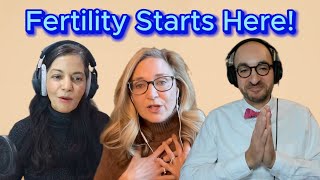
Dr. Christina Masinopol argues couples rush into IVF without fixing underlying health first. Optimizing diet, sleep, stress, and reducing toxins like BPA and microplastics can improve fertility for both partners. Her 12-week program focuses on whole foods, targeted supplements, and gut health before considering assisted reproduction.
Questions this video answers
They ask couples not to attempt pregnancy for 12 weeks (they state 90–120 days to optimize sperm and egg).
April 17, 2025.
A 12-week (evergreen) program.
She states an optimal vitamin D range of 50–80 (units implied ng/mL).
She states about '30% of the population' have that genetic snip.
Chapters
Unfortunately, our traditional medical world doesn't know what they don't know. Right now we have, you know, as, as a traditionally trained doctor, I know how much nutrition education I got in medical school and it was like an hour. And so a lot of times in the traditional world they don't really know that so much can be changed by changing someone's lifestyle and nutrition habits. And so I get that. But what is happening now is that there's a very fast jump from having unexplained infertility or whatever it is, endometriosis or something else to immediately going to IUI and ivf. And when you go down that road and then you start bombarding the body with multiple other types of hormones, stressors, all the things, it's very, you know, anxiety provoking as well. It can just become this spiral. And we see so many clients coming to us that are just, they are just at their wits end by the time they get to us because they've been through seven rounds of IUI and ivf. Oh my gosh, you know, they have spent a boatload of money. Some of them have been hospitalized because of ovarian hyperstimulation syndrome that happens after some of these medications. And it's, you know, it's not benign and it's not the easy way. And we know that if you don't improve that whole environment before somebody gets pregnant, your chances of IV if working are not very good. Exactly. You know, it takes multiple rounds sometimes to have any success. So it doesn't make sense to completely skip this foundational piece of optimizing your health before going into that. You know, some people may still need IUI or IVF down the road for whatever reason, but you've got to give your body the best chance by doing the foundational work first, cleaning up the diet and actually what you do in a program like that. You're going to change how you raise your children, how you feed your children. I mean, it's, again, it's going to change the way you live.
Well, Dr. Masinopol, thank you so much for joining us on Bad Medicine. We're thrilled to have you.
So happy to be here. I love this.
We wanted to start off and hear a bit about your story. It's such a fascinating story. What brought you to the fertility space and yeah, your career trajectory. Always interesting.
Absolutely. Yeah. So I am a traditionally trained doctor, I'm an MD, I'm internal medicine board certified and practiced medicine for 20 plus years in emergency medicine as well. So I did both emergency Medicine and clinics, and then just realized that what we were doing is just putting a band aid on most things. And it really started to get me to look a little bit deeper into how could I incorporate nutrition into my own practice. So I. I left the er, left the urgent care, left some of the other spaces and said, I'm going to dive into this and open my own place. And in doing so, I found functional medicine. That was probably 2016 or 2017, when I then found IFM and could not turn back. And that's the Institute for Functional Medicine. And once I had, you know, went to the first conference and saw how they were doing it, it actually gave us a stepwise approach to be able to look at the whole person. And it seemed so overwhelming at the beginning, but again, they give you an organizing system that allows you to do it, because we know all the systems of the body talk to each other. This is not just one specific thing. So that's what brought me into functional medicine. And I opened my own practice in 2020 in the midst of the pandemic.
But good timing.
Yes. And that really opened our eyes to the metabolic health of our country even more so. We already knew it was bad, but that just, we made it. It made it so much more obvious that we have a serious. And unfortunately, our patients don't know because they're just not educated. So my whole goal was to empower my patients to take their health back into their own hands, understand it, know that they have control over chronic disease. So that's the most important thing.
That's. That's wonderful. Yeah, it's great to hear.
Yeah. And then in doing so, just to get into the fertility piece. So I did have an interest in, you know, I found a lot of times when I was seeing patients in my office that struggled with infertility, they started to get pregnant when I was fixing their underlying metabolic issues or their autoimmune disease or whatever it was. And they were like, they told me I would never get pregnant, but here we are. And so then I took a little deeper dive into holistic fertility, got certified in holistic fertility, and then took. Trying to take this to more people. You know, the one on one space is limiting because of our time. And so I have, we have taken this to the online space so we can actually help couples who are struggling with infertility get pregnant naturally.
I love that you say couples struggling with infertility.
So important.
Anu and I were speaking about how it's so important to include both partners in this discussion. And it's something that I've seen in my practice. It seems that the woman is really the one with a lot of appointments and testing. Is this changing, do you feel?
Absolutely. Well, it needs to. Unfortunately. We know that couples have been told that, oh, you know, it's not really him, it's you, or, you know, they've been given a chance of like, oh, you're only gonna have about a 10% chance of conceiving or a 3% chance of conceiving. You need to do IUI or IVF. But yet nobody's really looked under the hood. Yeah, under the hood. And the male especially, because usually they get relatively ignored in that space. Now, many of them may have had a semen analysis, but it's a little bit of the deeper dive that needs to be done because we. So, you know, reproductive health, it's kind of like the canary in the coal mine. We know when something is wrong with reproductive health and whether it's, you know, erectile dysfunction in a man or just that AMH or the ovarian function is low, there's something going on with health in general. So we know that we need to optimize health in order to optimize fertility.
So how do you connect metabolic health with sperm health?
Oh yeah. So that's, you know, it's all intertwined. And we know in our society right now, in our standard American diet, it is the reason that we are a metabolically unhealthy country. And it's unfortunate that again, you know, the food industry doesn't really help out because we know that things seem to be healthy or health foods that are not. Again, it's our hyper processed foods that are very problematic for our body which lead to inflammation which can lead to then further problems down the road. Metabolic health is the same thing. It goes hand in hand when someone is not eating a nutritious diet, a whole food diet. We know that blood sugars go up, insulin levels go up, cholesterol goes up, liver enzymes go up. You know, we find that one of the most common things we're seeing now, and I've even seen it in some children in my functional medicine practice, is non alcoholic fatty liver disease, nafld. That should not be happening.
So common.
Yes, it's so common. And unfortunately, patients are not usually told that this is a lifestyle driven disease that is reversible.
And now we have another drug for a lifestyle disease, you know, like yoke, the agonist. So do you have an opinion about that? How do you handle these conversations with azempic? And things like that, or there's so much we can talk about, but from a fertility angle, perhaps, you know.
Yeah.
And, you know, so many times when people come to me and I know that fertility is their goal, and I say, well, first we have to clear the noise. First we have to clean up the environment in which you want to conceive in because your body has what it needs. We just need to tweak some things to give it the tools that allow it to have the most optimal environment, a low inflammatory environment in which an egg and sperm can meet so we can have success. And that means cleaning up everything. And it seems overwhelming, which is why we have a stepwise approach that we walk couples through, that we. That I walk my patients through as well in order to do that. But they do have to be ready and willing to make a few changes.
Yeah, yeah.
You know, on their everyday habit program.
Makes complete sense. Yeah. Can. It can feel maybe overwhelming. I imagine for many patients where this is already a very emotionally, emotionally charged part of their life to how do you tackle that part of it? And always trying to avoid, you know, having people feel blame, you know, which can feed more negative, negative emotions, you know.
Well, we already know in the space that we're in that those clients are anxious, they have felt hopeless. They have been told, you have unexplained infertility, you're just not going to get pregnant naturally. You know, to us, nothing is unexplained. It's just that somebody hasn't taken the deep enough dive into it. We know that there's so many factors that we can control in order to optimize that environment. And so stress is one of the biggest things. It's one of the biggest hidden factors of infertility that we see. So it is something that must be addressed in everyone. Yes, I know I cannot control your stressors that come your way, but I absolutely can control the way your body responds to the stress.
And when does one get labeled with unexplained infertility? Is it how long or.
Yes. And so typically, if someone hasn't been able to get pregnant in a year of trying, and usually that's if they're under age 35, sometimes they, they increase that or they decrease the amount of months at 6, if you're over 35, that they can consider it unexplained infertility, if all your blood work looks normal, if there's no definite explanation from the outside. But what we know is that there is much more underneath the hood and there are things, and, you know, stress is one of the biggies. But obviously male factor fertility is huge too. A lot of women feel that this is their problem and it's not their partner's problem. We know that up to 50% of fertility issues is male factor.
Wow. Wow.
I mean, it's a lot. And we know that if you really look at the trend of what's happening in male sperm health over the years, it is frightening. The Trend continues by 2050, like, sperm counts can be zero. So what is that gonna do?
Yeah, it's crazy. Sounds like a dystopian nightmare.
Exactly. And it's frightening. And people are wondering, like, why is that? You know, we live in an industrialized world. There are toxins that surround us every that we are exposed to hundreds and hundreds of toxins every day. So that's one factor. And again, it's really about educating the couples to know how can you clean up your environment? How can we control the toxin load? So that's one, you know, absolutely big factor that is contributing to it. Covid has opened our eyes to what viruses can do to sperm health. We know that it takes a big hit. A lot of times sperm do after Covid. We know it does recover though, you know, so there's other viruses and, you know, hidden stealth infections that can be contributing to the problem, and just inflammation in the body itself can be contributing to the problem, both in males and females.
Well, in a country that's so politically divided right now, you know, how we respond to these conversations can be dependent on that as well.
Right?
I mean, it's like, how does your typical patient even respond to information like that? Like, like glyphosate, for example. I have clients who will say, that's just hogwash. There's nothing like that. There's really, you know, and then there are people who are like, who respond to that and say, oh, I see, you know, that chemicals and pesticides and things like that and going organic really has some benefit. How do you respond? How do you help your clients kind of go through all of those and just kind of really look at science and what science is telling us about metabolic health, pesticides, glyphosate.
It's really about education. And, you know, I've. I run a four week detox as well. And so in that detox we have a four week course that goes along with this. A lot of this is education. So I put online courses together so we can educate them. Because if they know why we're asking them to do these things, then they're going to be more likely to do it and stick to it. And then once they start doing that, they feel the difference. So I don't have to tell them what they need to do. They recognize it themselves and say, oh, my gosh, that was such a big difference when I switched to organic produce. And I, you know, I usually Refer to the EWG.org site, the Environmental Working Group, because they do up the clean 15 and the dirty Dozen, those that you really want to buy organic in the Dirty Dozen list and the queen 15. That's okay to buy if you don't have the organic ability to do so. And we know not every location where people live, they have the ability to get good organic produce.
Right?
But it is, it's a game changer when we know it's a to. It just adds to that toxic burden that really can negatively impact our bodies and our fertility.
I was going to ask you about microplastics. It's really hot right now, so I wanted to hear if. What's the science on this? How do you educate your patients on this?
Absolutely, yeah. It's kind of crazy what we've learned about just in the last year or so with microplastics. We have already been asking people to get plastics out of their diet from the beginning, simply. We know that BPA is a problem in our plastic water bottles. What is bpa? It is bisphenol A, which is a xenoestrogen. It acts like an estrogen in your body. We wonder why estrogen dominance is a problem. We wonder why many have endometriosis. We wonder why, you know, a lot of people are having all kinds of issues simply because of BPA and other chemicals like that. They're present in something we do every day, water bottles. So now the fact that they found microplastics, even in cardiovascular disease, you know, within carotid arteries. Carotid arteries. I'm like, are you kidding?
Every organ they've tested, right?
And we were already telling people, get rid of your Tupperware. Get rid of all plastics in your house. Do not ever a microwave in it, but just get it out of your house. In general, get glass containers. You know, if you are going to microwave, make sure it's in glass. Make sure you have your metal water bottle or a glass bottle or something else that you use. And don't use the bottled water. Yep, there we go. And make sure you're getting filtered water. I don't know where, where you guys are, what the water supply is like. But unfor my area, we got a letter from, you know, from our water companies saying we have found a hell, you know, higher level of PFAS in your water that you might want to consider filtering it. So, of course, I've always been using a filter, but.
And women are bombarded by way more toxins, and that's the reason we see that autoimmunity jump in women, like makeup and skincare and all those things. I mean, I'm sure you have. That's part of the course, too, right? Just teaching women about. Because I feel like that's education is so crucial for women. You know, I mean, I spent like a month just teaching them about toxins and seafood and, you know, makeup and things like that.
So 100%. And it's nice because other companies have come out with things that make that easier because it seems so overwhelming. Oh, my gosh. You know, I put these five creams on my face, and I use this soap, and this is in my hair. And, you know, how do I know if mine's good or not? Well, there's now apps out there. So there's the Think.
Yeah, I love that app.
There are all these. You can scan your products and it gives you a score of how bad it is.
Yeah, yeah.
You decide to know. Everybody kind of picks their poison.
Yeah, I agree. I agree.
Overwhelming for people. And I don't want them to raise their hands and say, I'm just not going to do anything. You know, we try to bring it down to, what can you do?
Correct.
Get the plastics out. You know, do not order takeout food in these plastic containers. That's just a big part of it. And then start really looking at some of the products. But if you still want to get your nails done at a regular nail sale, be it. But if you want to get your hair colored, you know, like, choose the.
Thing like you said, choose the poison that you choose the toxin that you can't really part with. Like, for me, it's always been hair color. Right? It is like, especially with dark hair. It's just so, you know, like, I'm letting it all grow because I want to see how long I can go without having to color my hair. And when finally Nick says, go do something with your hair, the podcast looks.
No, she's lying. I didn't say that.
That's funny.
You think I would comment about hair? Come on. I guess.
Oh, that's funny. Yeah. So it is one of those things, because we know that all of these things add to a toxin load. So if you can get rid of some of them, you're still going to be in a better position. And we know that. And then what does that do? You know, your body is. Your liver is able to work better, is that you're able to get rid of things. The microbiome gets better. Yeah, we know that glyphosate just destroys our microbiome and so many things destroy our microbiome that we are exposing, exposed to every day. That's another hidden factor that 100% impacts fertility.
I didn't know about the glyphosate and microbiome, but we have microbiome expert Anu, so maybe she can answer too. But I actually, I was unfamiliar with that.
Yeah, there are so many things that impact our gut microbiome that it's, it's really, when, when I started diving into it too and really learning about it, I'm like, oh, my gosh, you know, what your gut can do for your entire body is a lot. I mean, it really is that core foundational piece that, you know, and I find when we clean up gut health and we really address the gut first, so many things get impacted, whether it's your skin health, whether it's your anxiety. I mean, it's mood, mood gets better, your sleep gets better. It's crazy. All the things that impact so too, Dr. Christina.
And the food industry is so powerful, you know, so things like that, pesticides and all of that is just. It's so much harder to get that message across. You know, it's so. It's easier on certain things in certain levels. But when you see the power that they have and these hedonic ultra process foods that you were talking about has such a hold on all of us. Right. You know, just to even, just to be able to say, I just, I don't want to eat anything out of a box, that's a huge step for a lot of people because that is all they do. And our country is so socioeconomically divided, you know, I mean, many people are not able to afford some of these fresh, whole, you know, unprocessed things. And like you said, maybe not even have the education to say, okay, this is good. This is not that great for me. So. But I'm sure you have a lot of clients who come to you, patients who come to you for like, fibroids or pcos. That seems to exacerbate the whole fertility issue. Can you speak to that? Because I do have a lot of clients who struggle with pcos and fertility, so. And I Think Nick does too.
So, yeah, that is one of the most common things that we see that contributes to infertility, of course, is pcos. A lot of times, you know, it can be driven by insulin resistance as well. So really, regardless of whether it's PCOS or endometriosis or unexplained infertility, if we start with the foundational piece of gut health, of really healing the gut lining, cleaning up the diet, getting the processed stuff out, getting the gluten out, you know, all those inflammatory foods, they need to be taken out so the hormones can be balanced. Remember, gut health impacts on hormone balance as well. So once we do that, and then most of the time, the patients or the clients start feeling better. They may have dropped a little bit of weight, maybe their insulin levels are a little bit better again. We just start with that layer and then take a little deeper dive, because it's not just about the gut health. Then we can move on to a little gentle detox. Then we can move on to maybe addressing the adrenals. You know, it's all of the things in a stepwise approach that we do. And then weight loss is the side effect. And so a lot of. Even if people come to me for specific weight loss, like, I need to lose £50, I was like, well, our focus is going to be getting you in the healthiest position that we possibly can, and weight loss is going to be a side effect. And sometimes with them, it just gives them a sense of relief because they've tried diet after diet after diet. And I said, look, I'm not putting you on a diet. We are gonna have a food plan that, yes, we're gonna hit a little harder at the beginning again, just so we can clean up the inflammation, just so you can come back and tell me what foods are not your friend. Because you're gonna tell me you don't.
Really prescribe a certain diet, let's say a ketogenic or. I mean, we do have some studies that say with people with infertility, like a higher fat, you know, good fat diet seems to help. And. But what is your take on that? Is it more like a whole unprocessed approach to.
It's very much a whole unprocessed approach, but we also have to get the most inflammatory foods out. We know the biggest one on the list is gluten. We know that's hard for a lot of people to get gluten out of their diet, but again, we have the resources to teach them. So it's not just Telling them, these are the things that have gluten in it. These are the things that you can substitute that don't have gluten in them. And then you start getting used to these other food items. You're like, oh gosh, I like that better anyway. And now my joints don't hurt, my skin is clear, I sleep better, I really don't want gluten anymore. So a lot of times they'll come tell me that they just don't want it in their diet, that they don't want to bring it back into their diet. And so, you know, that's really part of it is just getting those inflammatory foods out. And we help them. Again, they need to have a guide. We actually give them. We have a fertility reboot diet that we call it, but it's much more just based on whole foods. Yes, we want, if, if they are not vegetarian and they want to eat meat, we just want it to be well sourced beef. So we would like it to be grass fed beef, we would like it to be organic chicken, you know, all of those things. Because we do feel like that is important, especially in the preconception period to have those types of proteins and lots of healthy fats. We're all about avocados, nuts and seeds. We even recommend seed cycling according to the cycle that a woman, woman is, you know, in her menses. That can help support progesterone and estrogen at different times of the month. So it really is about healthy fats, well sourced proteins and eating from the rainbow in terms of fruits and vegetables.
That's. Yeah.
Does, does the diet change when they become pregnant?
No.
Do you take them through pregnancy? Yeah, that, that's a question I was curious about. Is it just up until they get pregnant or do you take them through a healthy pregnancy?
We have actually a pregnancy membership that goes along with our program too. So because we know there's different types of questions that they're going to have about what they should be eating. And we, we like them to stick to this low inflammatory diet when they get pregnant until their first trimester is over. We don't want to shake things up too soon. If they really want to bring back gluten, dairy or peanuts or one of these more inflammatory foods, you know, they can do it a little bit later if they know that they didn't have a problem with it before that they can do that, you know, later in their pregnancy. We just prefer not to rock the boat in the first trimester because what we just did in that time period Leading up to it, it's a lot.
Of work and besides getting an appointment with a doctor may take about that much time, you know, so it's nice to have that support, you know, just in the first time. And what is your take on fish?
So you know, I. Fish is great. Again, you have to see where it's being sourced from. We are all about wild caught salmon. I do not love farm raised salmon. Now I, I think there are some new companies coming out with maybe healthier farm raised salmon. But I am not well versed in it just because it's not happening in my area. I know that. So we really want them to focus on wild caught. There are certain higher mercury level fish that we definitely want them to limit. And tuna is a big one. Tuna is a lot of people's favorite. So you've got to live on the ball.
Smash.
Smash is best. And where if they can incorporate those foods into different things. If you mix it into a salad dressing or something, even if you don't like that stronger fish flavor, you can do that as well. So and just make sure you know it's coming from a good place. You know, I'm all. Because I do live on the Gulf coast, we tend to catch a lot of our own fresh fish. But you have to be careful about if it's a really deep fish, a lot of times it can have a higher mercury level. You know, whether it's a grouper or something like that.
I think that that's fish is a big fear factor for a lot of people. They've heard about mercury, they were concerned about the baby's health and you know, so thanks. Yeah, that, that really helps.
Would you say this is a concern pre pregnancy as well? You know, usually we say like, oh, you've become pregnant, you know, now you need to start caring.
When we clean up that toxin load before someone gets pregnant, you know, in the preconception period, there's so many things that are happening and we know that with changing our nutrition status, change the epigenetics that then you transfer down to the next generation. So it's really what we do in the preconception period can impact not just your child, but your children's children later down the road. It's kind of a little mind boggling to think about that. But it really does impact it that far down the road.
And the biggest gift a mother's giving her child is her microbiome. So keeping it that healthy is, I think, you know, kind of makes sense.
To really start taking care of avoiding Unnecessary antibiotics.
Yeah, exactly. And that's, you know, back to the microbiome. We do at least give them a list of good probiotic rich foods that they can consume in addition to a good, you know, supplemental probiotic is beneficial. You know, there's a couple different kinds out there. The whole supplement realm, that's a different topic. We're all about those that are more medical grade, professional grade supplements, of course, because we know exactly what's in them and how they work.
And I mean I've seen like with just functional analysis of microbiome, how the microbiome changes during pregnancy. You know, when you do your first trimester to second time, it's like a complete change of the microbiome. It's so interesting to see that happen. And, and when you explain the why, you know, then that's, I think that's when it clicks. And so, ah, you know. Right.
And it's an evolutionary thing because we know that, you know, as the mama's body is getting ready to deliver a baby, you know, things need to be optimized and microbiome is one of them. You know, things that's, the baby's gonna be getting all of that.
So I'm curious, is there, is there new information about the vaginal microbiome? I know it's not as hot a topic as the gut microbiome, but I would.
It's becoming hotter. It is becoming hotter. So it is coming out a lot more now about the vaginal microbiome because a lot of women do suffer with different type of vaginal complaints. And whether it's bacterial vaginosis or something like that, that tends to thrive in an environment that healthy, doesn't have a healthy microbiome. There's some other ones out there, like urea, plasma can be a problem, sometimes infertility. We're just now starting to learn a little bit more about it. It's, I'm kind of waiting for a little bit more research to be out there and really understand. Okay, if I start getting, you know, looking at the microbiome of everyone in terms of the vagina, like what do we do with the information? Is it clinically relevant? Right. You know, and how, how do we change that environment? And so there, there's a lot of recommendations out there. I know that standard oral probiotic right now helps so many different things, but there's going to be more about that. And there are vaginal probiotics as well. You know, that can be beneficial.
I've seen a BB and UTIs really respond well, to probiotics, but yeah, yeah, definitely, definitely.
And it's interesting because I have just. In seeing patients over the years, certain inflammatory foods can impact vaginal symptoms, bladder symptoms, all of that. I mean, it's. I really. My patients teach me so much because, like, if they really have a bad diet and maybe they were drinking six diet cokes a day, and that's the first thing we have to get rid of. And it took care of the bladder spasms that they saw seven urologists for and were given 10 different drugs for that. It never. And all of a sudden, the bladder spasms go away. She's like, I'm ready to do more. I don't know how that could be, but that was my problem. I'm like, for real. I mean, I learned about.
Have you seen that connection with alcohol?
Oh, so alcohol, you know, that's. That is a topic in and of itself. Because we know, especially in the fertility realm, we have to. Alcohol's got to be out. Alcohol, cbd, marijuana, any form of smoking has got to go. We know that is a problem, for sure.
Yeah, I agree.
And alcohol, just in terms of general health, you know, it negatively impacts our gut microbiome, for sure. Can contribute to leaky gut, for sure. And it's another toxin.
It's a toxin.
It's a toxin that your body has to handle. Right.
So, yeah, but it's harder, right, Dr. Christina? I mean, like, do you think we'll be at a place where. How we look at smoking today? Do you think we'll be there with alcohol in maybe a few years?
You know, I feel like enough leaders in the field and that are out there, more on social media are really talking about it a lot more going 100% alcohol free. And a lot of times they can hear, you know, patients and clients and just society can hear it. But once they say, well, let me just see what it does if I take alcohol out of my diet, let me just go for a month and not drink alcohol.
Huge.
And then they're going to come back and say, oh, my gosh, how was I, like, abusing myself like that? Because they feel so much better. And it's something that my patients come to me all the time. We know that we get into a habit. You come in from work, you have a glass of wine, and then you cook some dinner, you have another glass of wine. Before you know it, you've had a couple glasses, your sleep is awful, you wake up with brain fog. You do it again the next day.
Rinse and repeat. Yeah, yeah.
And you see something in like Hollywood, the movies, you know, guy comes home or the woman comes home, exhausted, frustrated, anxious, they reach for the alcohol. It's like almost like it's, it's cultural and that needs to change.
Yeah.
As it is. So I think it's slowly getting out there and just knowing that again, when I see a woman in my practice who gets the alcohol out of her diet and it gets so much better, then her partner follows suit and then, you know, again and then her kids follow suit and, you know, it's, it's going to be hopefully a trickle down effect. I think there's just much more awareness out there of how dangerous it can be for all of us. So you choose. If I'm going to drink alcohol, I know it's not good for me, but, you know, and I say save it for the holidays. Save it for, you know, when your whole family gets together and you want to have that celebratory glass of wine or whatever it is. And I find that when we walk people through the steps and they take it out of their diet, when they bring it back in, it so negatively impacts their sleep that they're like, there's.
A lot of decision fatigue around alcohol, I think. You know, you go, you see a friend having a glass of wine and you feel like, oh, you feel almost like, oh, I probably should partake. But if you have that already figured out, saying, I do alcohol only on certain days, then we take that out of the equation and say, okay, it's not my birthday, it's not Christmas, not doing it, you know, Exactly.
And it's really kind of about, you know, pairing these habits or, you know, not pairing them, like just getting used to coming home and having that glass of something. There's so many good, yummy mocktails out there that you can put it in a wine glass or a cool cocktail glass, kombucha. It's just as enjoyable and it doesn't have alcohol in it. So just little things like that we can do.
Let's talk about some bad medicine. In the fertility world. What would you say are a few things you'd highlight? Diagnostic approaches, treatments, advice out there, or.
Well, you know, and unfortunately, our traditional medical world doesn't know what they don't know right now. We have, you know, as, as a traditionally trained doctor, I know how much nutrition education I got in medical school and it was like an hour. And so a lot of times in the traditional world, they don't really know that so much can be changed by changing someone's lifestyle and nutrition habits. Habits. And so I get that. But what is happening now is that there's a very fast jump from having unexplained infertility or whatever it is, endometriosis or something else to immediately going to IUI and ivf. And when you go down that road and then you start bombarding the body with multiple other types of hormones, stressors, all the things, it's very, you know, anxiety provoking as well. It can just become this spiral. And, and we see so many clients coming to us that are just, they are just at their wits end by the time they get to us because they've been through seven rounds of IUI and ivf. Oh my gosh, you know, they have spent a boatload of money. Some of them have been hospitalized because of ovarian hyperstimulation syndrome that happens after some of these medications. And it's, you know, it's not benign and it's not the easy way. And we know that if you don't improve that whole environment before somebody gets pregnant, your chances of IV if working are not very good.
Exactly.
You know, it takes multiple rounds sometimes to have any success. So it doesn't make sense to completely skip this foundational piece of optimizing your health before going into that. You know, some people may still need IUI or IVF down the road for whatever reason, but you've got to give your body the best chance by doing the foundational work first, cleaning up the diet and actually what you do in a program like that, you're going to change how you raise your children, how you feed your children. I mean, it's again, it's going to change the way you live.
Absolutely, yeah. It'll make less medical problems in the future, less for me to deal with as a primary care in 20, 30 years.
Exactly, exactly. And I will have to tell you. So one of the ones, since I just mentioned ovarian hyperstimulation, we did have a doctor couple that we saw. She's an endocrinologist, he's a cardiologist. She had failed seven rounds, I mean, multiple rounds of IUI and ivf. Both was admitted to the hospital multiple times for ovarian hyperstimulation syndrome. Family didn't know they were even doing, you know, any IVF treatments. And she's just like, I didn't know what else to do, so I'm just gonna try this way. She knows nothing about functional medicine. They just trusted the process, cleaned up everything and she now has a two two year old Two and a half year old girl, a baby girl. So she got pregnant within eight weeks of working with us. We actually ask our couples not to attempt pregnancy for 12 weeks because it takes 90 to 120 days to optimize sperm and egg. So. And to, you know, give us that opportunity to affect the environment. But she was pregnant within eight weeks and had never been pregnant.
Doctors are famously bad patients. So this takes sense.
They are. And they were stressed out, you know, all the things. And so. But we again, stress cannot be over.
Yeah.
Because we've got to teach our body. Yeah. To control, you know, we've got to have a nervous system control. Like it's just. Things just will spin out of control if we don't do that.
So. Dr. Christina, how many of these patients who are coming to you are already kind of, they're into egg freezing, you know, things like that. Are they already taking those steps to. Because I'm, I imagine that women are. And men are older than, I mean, like having their babies a little later in life, you know, just given the economic and all of these reasons. Right.
And it is very common that we do. We see older couples for sure now and we have had.
Sorry, what is older? What, what does that mean?
Yeah, you know, to me it's really over 40. I mean 35, you know, age to us. Yes, I know they call it a geriatric pregnancy when you're 35, which is a little frightening. But. But what that tells us is that, you know, what does age do to us? You have more oxidative stress. So as you have more oxidative stress, we need things to help combat that oxidative stress. And really it's about antioxidants, about, you know, improving all of these factors in your body so that you can have just healthier egg quality. And again, we know that. And it's again, another topic. We know that people can change their biological age.
Yeah.
Ah, yeah. You know, can't change our chronological age. That's going to stay the same. But we know that there's so many studies coming out of how one can reverse biological age and a lot of it is strictly on diet and nutrition and supplements. So it is something that we find really helps support our clients that are older, even if it's just over 35. But especially in the over 40 year olds. We already know. But we need to work a little harder on that and make sure that's under control.
What's your take on the over the counter fertility testing, like AMH testing? I'm curious Would you call that bad medicine? Or is that something you welcome?
I don't know how accurate that's going to be. So obviously testing. We're all about being data driven. We do need to know some numbers in order to know where we're starting from. But so many have been told that the AMH is a stagnant number that's only gonna go down. It's not gonna go up, up. That is not what we see. We have quadrupled it. We have multiplied it times five. And really, it's crazy how much that can improve for something that has been told to them that there's no way you can't change, that your AMH is just in the dirt. It's less than 1. You're in trouble. That's not true.
I think we just highlighted some bad medicine.
Yes. And it really is discouraging, I think so many women. And that's why we really want to be out there.
So we.
So they know there's just another option. And it's not like this is not given drug. We're not giving anybody drugs. Like, we are strictly teaching them how to live a healthy lifestyle and in doing so, optimizing their reproductive health at the same time.
Yeah. Oh, the. The one question that we. I think you and I both had is acupuncture. And how do your patients try that as.
Yes, and we absolutely support that. We know there's different. It's. It can help in different ways for sure. And it goes for both males. And FEMA can be assisted, you know, with acupuncture. It's not the only thing we do ask. If they do go see an acupuncturist, sometimes they want to give them some Chinese herbs as well. Unfortunately, I'm not trained in traditional Chinese herbs, and there is some overlap with some of the supplemental support and nutrients that we like to use. So we don't want to confuse things and have too much on board. But yes, acupuncture is a great extra that one can be doing to help support their fertility.
So do patients come to you in your group program, like basic blood work, you know, or do you order blood work as part of the program?
You know? Yeah, so what we do, a lot of times they've already had some bloods done. They usually don't have everything that we like to look at because we're a little bit more about inflammatory markers and nutrient status and different things like that. But what we do is we actually give them a list of the labs that we like to look at. They are welcome to go to their provider and say, hey, I'm in this coaching program. They like to look at some numbers, you know, can I get this through you all or we have the ability sometimes to order a cash based, a cash price that is much more competitive with some of the bigger lab companies that we can get back for them if they need that.
I've been on the receiving end of some of these.
Yes.
I like to cause the easiest visit I'll have today is like the big list of labs. I look it over assuming it's like reasonable and we, I, I try to code it as well as I can and I give no guarantees of coverage because I'm not their insurance company.
And that's the thing is, that's what I tell them is if you know your insurance company A doesn't cover fertility, it's probably not going to cover the AMH. Sometimes they'll charge more for an AMH than they will for the whole 20 lab panels that they can order.
So wish I was could say I was surprised to hear that.
Right. I mean I see it in my practice all the time because if somebody doesn't cover a vitamin D level, I mean sometimes they don't cover a vitamin D level, which is mind boggling to me, but they'll charge them $200 and I'm like, okay, we could have gotten the whole panel for $200. So, so that's what we let them know. So we have the ability to assist them to be able to get these labs done if they haven't had them done. Because a lot of times there are certain labs that the doctor's like, well, I don't know why we need to do that. Why do we need a homocysteine lab? Why do we need an hscrp? Yeah, but why do we need some of these things?
I feel like while it's the worst it's ever been in some ways for like coverage and it's also the best in terms of like all these options for cash pay labs. I think this is like the golden age of like you can go out.
And you're so right. Like vitamin D, like you could get that for like 30 bucks, you know, like direct labs, you know. So I don't understand why insurance would just veto something like that. It's just beyond me.
Yeah, yeah, it, they're antiquated. They're antiquated. It's the same reason that the reference ranges are essentially incorrect on the lab results we get. It's because they're working off of data from many, many years ago, we know vitamin D is not optimal at 30. You know it and I know it. But yet that's, you know, patients come to me and they say, well, my doctor said it was normal because I'm 30. I'm like, no, that's not normal. That's not optimal.
What is your optimal range? We probably heard various, as we've asked different people, they give their own take.
I like 50 to 80. I like 50 to 80. If. If somebody is hanging in the 40s and I'm just starting to work with them, it's not like I absolutely have to throw a vitamin D supplement at them, because I know as we do the gut health piece, they'll start absorbing things better. It's really an absorption problem. When there is again, so much noise in the body, so much inflammation, things are just not working well. You're not absorbing nutrients like you should. And so we find a lot of these nutrient deficiencies improve with time. Now, if somebody's at the lower end of the 40s or under 40, then, you know, we do recommend supplemental vitamin.
D because I know with African Americans, Indian, you know, we just. Yeah, there's. I don't know if there are enough studies done on us.
So, yeah, there's, you know, and it's funny that there's more and more people that have vitamin D deficiency now across all cultures. And we think that there's something going on that even though even if you're outside a lot, you can't always convert to the active form, there's a problem just converting to the active form. So you may have to give the active form. And we just know our food is not as nutritious as it used to be. You know, it's mag. Magnesium depleted. You know, sometimes the vitamins are not as good. And when you have gut health issues, you're just not absorbing all those good nutrients.
Yeah, we do a rapid fire now.
Rapid fire. I always get excited about that.
All right, is three best foods for te.
Three best foods for fertility. Oh, my goodness. Okay. I would say salmon, mainly because of the Omega 3s, but make sure it's wild caught. I would say pumpkin seeds. And I would say, oh, gosh, if I just had to choose one more. That's so hard. Gosh. I would say any green leafy. That is your favorite because again, chocolate full of empaths.
What about three supplements for fertility?
Top three supplements for fertility. Okay. Well, obviously a good quality prenatal vitamin for any female probiotic. And I already mentioned omega 3s. Omega 3s are pretty darn important.
Throw that in.
Full nail fertility. So I'm gonna have to put Omega 3s at the top. Fish oil, definitely. Methylfolate. We see way too many people with MTHFR and they may not know they have 30% of the pop does have that genetic snip. So they cannot really utilize the.
It's not even in pregnancy.
Need to have that carryover in pregnancy. We see that a lot potentially. So. Yes. And so we find that most of the prenatals now have switched over to doing methylated B vitamins in there instead of, you know, just doing traditional folic acid. Because we do find like that. Again it's kind of a topic in and of itself. But folic acid can kind of bind to some of the receptor sites. So like the active form cannot bind. So we really only use methylated forms.
One common mistake people make when trying.
To improve their fertility is just focusing 100% on the woman.
Yeah. That's our biggest female problem. That's the bad medicine.
One lifestyle hack.
Nice.
That.
Yeah.
Yeah. One thing that they need to change to make this. Yeah.
One lifestyle a big difference.
Yeah.
I would say. You know something that I see so often is poor sleep in many, many people. And sleep again is one of these foundational pillars that if we're not sleeping, we're not repairing. Our body is not restoring itself for the next day. And sleep dysfunction is on the rise too. A lot of times because of these devices that people cannot seem to get off of the computer that shuts down our melatonin at night when we're on it too late. People have a lot of bad sleep habits. I notice because we do inquire about that and switching just that improves so much the next day and people just feel better. Can. Or just more positive minded people eat.
Better when they're in bed. Sleep better with a little bit more pep in their step back in this positive way.
Yeah, yeah.
Right. And then eating earlier of course at night helps you sleep better. Just don't. And that's what we encourage. People don't eat at night expecting the circadian about an hour later. That's just not making sure have a combination DAR from your last meal until you sleep.
Yeah, yeah, absolutely.
Absolutely 100%. Seeing a little sunlight when you wake.
Up in the morning residency is a great way to convince anyone of the importance of sleep.
We all have some limitations now. No, I, I think I remember very clearly not seeing the sun for a month when I was on an every other night I see you rotation in my internship. Didn't see the sun for the whole month of December.
I remember the 23rd hour of a 24 hour shift. Yeah, that was memorable as you can tell.
So yes. Things we remember.
I guess if you want to convince yourself, try going without. You know, go with five hours a night for a week and you'll really be convinced how critical it is for every function of your human body. It's amazing.
Yeah, it really is. Yeah. Sleep is sleep and stress. Two biggies. And we know that if we can control our stress and learn how to manage our stress, we sleep better.
Well, take baby steps and at least we know where we're aiming. Right.
I love it.
Yeah.
Right. And it's possible. It is taking baby steps because the end goal at the end it's going to be dramatic transformational change. Even if you're so Dr. Christina, how.
Do people find you? How do they get in?
Yes. So the fertility program actually you can look at reimagined-health.com is for the fertility program. My business partner, she is kind of the face our Instagram face of our program. And it's at your functional doc. That's pretty easy. And then my clinic is I'm CMASS MD C M A S S M D. And is that in Instagram handle as well as my website.
Thank you so much.
Yeah. So our reimagined. Yes, the Reimagined Health is an evergreen program. A 12 week program is so they can roll in at any time when they're ready. We do talk to them ahead of time, make sure that we are the right fit for them. Absolutely. And make sure that we can help them.
Beautiful. Well, let's hope we help a lot of people with this. Thanks for joining us for today's episode of Bad Medicine. We hope that today's conversation empowers you to take a moment more informed role in your health journey.
Remember, your path to optimal health is unique and integrating medical insights along with lifestyle changes can make all the difference.
Don't forget to subscribe to Bad Medicine on your favorite platforms so you never.
Miss an episode and we love hearing from you. If you have questions a topic that you'd like for us to explore, please.
Reach out to us on Instagram admedicinepower.
More from Anu


The Bad Medicine of Travel: Why Airplane Food and Jet Lag Are Ruining Your Gut

We’ve been waging war on the microbial 0.1% and carpet-bombing the 99.9% that keeps us alive


Picky kids + mac & cheese: here’s one low-friction idea to expand their palate