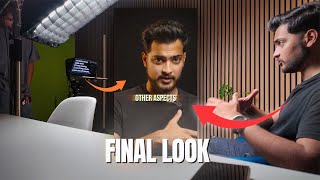
Areeb Mirza walks through his content workflow: write scripts on iPad, shoot with Sony FX3 and wireless audio, record clean takes with minimal retakes, then send organized footage to an editor. He says short-form content is 60% volume and repetition, so the setup matters less than showing up consistently.
Chapters
Hey guys, welcome back to a brand new video. And in today's video, I want to give you a full breakdown of how I record content from start to finish. Let's go. So step one is usually just writing down all the scripts. I'm a script guy because if you need everything organized and if you just want to do it fast, relatively fast, because you still need time to write down your scripts. But some people don't need scripts. And of course, if you're at that level, you can like do content very, very easily. But me personally, I want scripts and I want to know what I'm going to say because there's a lot of details, a lot of specific things I want to put in there to kind of give value and also just want to make sure that it makes sense. Because if I do it on just on the top of my head, it most likely won't make sense. So that's why. And it'll just take me a lot, a lot longer. So that's why I want to make sure that I have the scripts ready to go. Just to make sure that every single clip makes sense. I'm writing down my scripts on the iPad. So what I do is I'll just write it down. And there's this teleprompter app I use. I just like load it on there and the iPad just basically goes onto the teleprompter, which I'm going to show you guys in a minute. And that's how we just start recording content. It's pretty simple process.
Like the scripts is the only thing that takes time. After that, like the other processes are fairly simple and only takes might take up to an hour, but it just speeds up the whole process very, very fast.
Okay, so we just got our iPad here attached to the teleprompter. So this is going to make reading your scripts really easy and fluent. And we have our camera mounted to the back. This is our FX3 Sony and we have our Rode wireless go connected the wireless mics. That way we'll slap a mic on you and you can begin recording your reels. Yeah, so, so here we have our C stand with the Hammeram 60x cob light. We have it at 100%. And then we have a Godox soft box right here with the grid on to get that really nice soft lighting for these reels.
So this is how the lighting, of course we're going to close that door. This is how the lighting looks on this camera. We're going to show some results on how it looks like on the actual reels. But if you want to see more of these, we have like a bunch of them on like my personal page. And then we upload some behind the scenes on the focus page as well. So. Yeah, so this is just kind of like step two, three ish. Step one is, of course, writing scripts. Step two is making sure they're good to go. They're actually like, presentable and everything. And then the last step is just to make sure. Well, my last step is to actually make sure. Like, I record the content and then the editor edits it. I also just polish it out in the edit. Like, I'll put it in the project file. I'll make sure each clip is good to go. Like, there's no filler words or all the retakes are done just to kind of make the editor's life easier. So as soon as the editor receives the file, it's just good to go. They just have the correct footage and they'll just edit it. It makes everything faster for me, for the editor, and just for the posting as well. Yeah, I accidentally ordered boneless wings last time. No, I don't hate it. It's like chicken nuggets. What's the point? I ordered it boneless last time and the bro, the experience was so bad. Yeah, that's what I'm always a boneless one. Why does it even exist? Bone wings.
All right, so now we're about to start recording and that is pretty much the process. So scripting and then making sure you know exactly what to say and then just actually recording the content.
That is. That is quite literally it. And then after that, it's just editing and just publishing it out. It's actually pretty simple. People complicate this so much and then just don't do it. Short form content is like 60% volume. You just need to push out volume. The rest of it will come naturally to you. The same with marketing. If your competitor has all the ingredients and is creating content, running ads, showing what they do, how they do it, who is it for? A new prospect is most likely going to go with your competitor. You have to realize that the the text on the website is just not enough. We all agree times have advanced, but some of us can look past other aspects of time moving forward. Everything needs to progress and strategies need to be updated. See where people are headed and go there.
And that is pretty much it. That is how the content process works. It's pretty simple, like I said, but it's just one of those things that requires repetition and you just have to do it over and over again. That's pretty much it. All right. I'll see you next week.