3 Growth Hacks for getting more views on Youtube videos | The Ask Avi Arya Videos
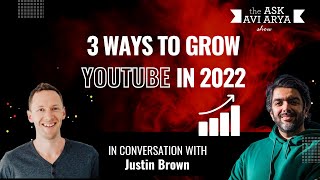
Ryan Aviana and Justin Brown discuss three strategies to grow a YouTube channel: keyword research, video optimization, and audience engagement. They cover practical tips for beginners trying to increase views and reach on the platform.
You need to focus on getting your videos to show up on the platform. You then need to focus on getting a click. What's the point if you show up in search results but everyone clicks all the other videos and not yours? YouTube's going to stop showing your video and no one's going to see your video masterpiece. So you need to focus on showing up on the platform, getting the click. And then the third piece is to keep them watching. Because even if you get the click and people leave at the start of your video, that's not a good indicator to YouTube that your video is worth putting in those top spots.
So if you are looking to learn about starting a YouTube channel and how to get views and how to spread your passion in a way when people actually listen, keep watching. So Justin, thank you so much for taking out the time. Hey everyone, welcome back to imotw. It is Ryan Aviana back at it and today we have a very special guest, Justin Brown here with us today. He has a very interesting story. He's an awesome YouTube creator and we are so glad to be here to learn from him. So if you are looking to learn about starting a YouTube channel and how to get views and how to spread your passion in a way when people actually listen, keep watching. So, Justin, thank you so much for taking this time out. Tell us a little bit about who you are and a little bit about your story.
Thank you very much for having me on. So my story, I've been working in video production and creating documentaries for as long as I can remember. Creating a lot of started out young with a camera, doing home movies and then moved into action sports and was working with some crazy big wave surfers and free divers and got to follow them around the world which was an amazing journey. And then I moved into the documentary space where I was working with some really influential change maker people that were shifting perspectives and changing the world with what they had to share. So from all of that, it kind of got to the point where we were looking at the videos that my clients were wanting produced and what they actually needed produced. And there was this big pivot between the really high polished content and content that people were starting to shoot on their phones. Just the raw, real stuff that was really organic and authentic, that it was actually what the viewers started to resonate with and could connect with the people on camera more. So the more we started looking at that, we started teaching how people can get great results using things like their smartphone or their webcam, but also knowing what to say in those videos. So that they would have that impact and that flow on into their business and into their life. So that's now what we teach. How you can create effective videos using the gear that you have and get the best results out of those pieces of gear. Things like your phone right through to how do you get views on YouTube and those sorts of things. How to get eyeballs on it, see a return on it, and then through to the business side. How do you make money from it and have impact with it? So that's what we teach.
Awesome. That is an awesome story. Yes, I know. I was reading up a little bit and I am really into acting and I want to get into that. So when, when I was reading up about your story and creating videos and all that, I was like, I definitely want to take over this interview. So that, that is awesome. When did my first question to you would be, when did you realize that you kind of wanted to stop making videos for other people? But take this, take that into a business and when did you actually start your side hustle of primal video?
So primal video started, I think we started taking it seriously around five years ago or started. And we started on YouTube around five years ago. It's probably around three years ago that we really started to get serious with it. So it was a side hustle for those two years, but it really was the frustration. And I could see what my clients needed to be doing, but it didn't mean me making the videos for them or them spending tons of money on having these really professional level videos. Videos really. It's got to the point where in order for them to actually see great results with their video strategy, they needed to be doing them far more frequently than just a one off, really polished video every now and then. So that was when we started to teach that stuff and obviously going through the motions ourselves. And me being on camera instead of being behind it was a learning experience. I would say any day. I am a behind the camera person, not someone that's comfortable on camera. But. But we leave up our early videos so that people can go back and check them out and see how bad they really were as encouragement that our first videos are going to be our worst videos. But this can be learned and it does get easier and evolve over time.
Awesome. Okay. Wow. My second question is for teenagers or for people like me or even just adults, how do you find the problem? Because nowadays everything is pretty much talked about. You know, people struggle with, oh, finding good food, but healthy food. And so now they have healthy food businesses. Oh, you Know making videos easily on your phone so they have apps. How do you find the problem in society? If someone like me wants to create a business, how do I find the problem that revolves like that the business is rolled around.
Normally the easiest way to find the problem is to look at the frustrations and things that you've seen yourself. So for me, it was frustrating for me to see my clients trying to make videos themselves because I'm telling them that they should be and them looking really, really bad. Let me show you. And it wasn't just show one person, it was showing people over and over again. So that was a frustration point for me. But also on a big opportunity as well in that the way that I think people should be making videos is unique to me with my background and experience. All I'm doing is sharing that packaged up to how I think people could do it and in a process. So I don't think we need to look too far rather than the own struggles and frustrations that we see in our own lives and opportunities that can come from that. So what are the things that you know that based on your experience and whatever that you could help someone with that is going to change the game for them? And a lot of the times people with this question, I think it's a great question. People overcomplicate it and they go too far. They think they need to be changing the world with this stuff. I mean, all I really do is help people make better videos and then get eyeballs on those videos. But the flow on from that is that the ripple effects from is that those people can then get their message out. They can change the world. They can do what they need to do, their gift. So that's where it's like, you don't need to be doing all of that yourself. You might be able to enable someone else to have the big impact as well.
Awesome. Okay. Yeah, that definitely makes sense. I feel like if I, I mean if I was to start a business right now, I would also over complicate it. So that also made a lot of sense. Okay, my next question would be what is the best way to, to get customers through social media? So yes, you make YouTube videos. How do you engage with them in the comments? Do you act on the videos that they suggested? What is the best way to get people from online to actual customers in real life?
I love that. Another great question. You're coming out with a great question today. Okay, so I think that my answer might be a little bit different to others here. I think that if you're creating the right content and you've got true understanding of what the pains or problems and things are that your ideal customers and clients have, and you're able to communicate that, then the best way is to have them be able to contact you so that you're not chasing them. You don't need to interact in the comments. Yes, that stuff is nice, but if you're creating, if you know what the demand is and you know what the pain, the problem, the struggles are, the things that your people are waking up at 2 in the morning thinking, oh, if I could just solve this thing tomorrow, I need to make a video, but I have no idea how to do it, whatever it might be for you. If you can really dial that in and communicate that in a way where the people, your people are like, you get me? You understand that frustration, my fear of being on camera, my fear of technology. You understand that and you can communicate it. They will want to reach out to you. They will leave comments. How do I work with you? They, they will send you emails. So I think the first step is mastering that communication piece of putting your content out. Yes, your content has got to be found. So that's a whole different strategy to put it out so people can actually find it, the right people. But you've got to dial in and really nail that messaging so that you're speaking to the right people and then they'll want to contact you. It's a much easier game that way.
Okay, understood. And how do you get the right people to view your videos?
So before we create any video, we do some research. It's not the videos that I think people want. We're actually doing some basic keyword research that you would for any SEO strategy or search engine optimization strategy where it's telling you what people are searching for, what they're typing into Google and what they're typing into YouTube. That is normally their pain or their problem. People go to Dr. Google to figure stuff out for themselves. People go to YouTube for free content to learn. But it's not just creating videos and hoping that they get views on them. By doing this keyword research, you can actually figure out exactly what your ideal customers and clients are typing in to Google and to YouTube and you can create those videos. So before we create any video, we're doing that research to see what that pain or what that problem is, to dial in that messaging. So I know who it is that we're speaking to. If they're a beginner, if they're advanced, and I can make them feel like this video was created just for them. And the flow on from that is that they then want to work with us, join our programs and courses and see impact with the content that we have put out there.
Awesome. Okay. And. Oh, I had one question just slipped my mind. Okay, what if a video that you. Okay, so somebody has suggested a video, right? Say someone like, personally, I stand for self love and when I just recently started my YouTube channel, I speak about self love. So if somebody suggests a video like, how do you stay confident all the time? But I am still going through the phase of trying to stay confident. I'm still trying to gain confidence. How do you kind of make videos around that? Do you show them the real struggles or do you just not target that topic at all?
I think all you can do is being raw, real and authentic in it. You can share your experiences, you can share your thoughts, share your journey. And that's the stuff that's real. That's the stuff that your viewers are going to want to see and to resonate with you. So it could be that you haven't figured it all out yet, but you're better today than you were when you started tell that story. Because you're already ahead of the people that are watching that content. So you don't need to have it all figured out. You've got the next step though, for the people that were where you were and how can they get to where you are now? So I think we've all got that ability. We don't need to be certified experts with PhDs and everything. You're just able to help people with your knowledge, your experiences, your skills, the stuff that you've got that no one else has based on your life up until this point, there is no one else out there like you. And that's why there is still so much opportunity out there or on YouTube and other social media platforms as well to put out your content. Even if you think there's already a lot of people that are already doing what I want to do and making the videos that I want to do, if anything that shows you that there is a need for those types of videos and that people want those videos because they've got views, so it's a perfect opportunity to start making that. And I don't think that's a reason to stop at all.
Okay, great. That's definitely a reminder to myself because sometimes I'm like, how do I target it? I'm still going through that. But yeah, I'm sure that helps many people Watching this avian, do you have a question? Okay, so my first question is what type of gear and like equipment do you need to make a video? What do you think is kind of essential and things that just make your video better?
I guess most people these days, if you've got a phone, you've probably got more than enough to create videos. We have a video, a couple of videos on our channel that were filmed on the front facing camera. So the low quality camera on an iPhone5, now an iPhone5 was a phone from 2012. So it's a very old phone and it was old at the time of filming that video and it was using the lower quality camera on it. But we're still getting comments today with people saying, I can't believe this was filmed on the front camera, let alone a camera from 2012. So I'm here to remove anyone's excuses that the gear that they have already in their pocket is probably more than enough. But to answer your real question there, what can you do to improve it? That's where you can have a clear process. And yes, there are a few things that you could purchase cheap things that will make your videos better. The first one, if you're going to buy anything, buy a microphone. There is an amazing $20 little clip on microphone. It's a lapel microphone that you can clip on that's going to dramatically improve the quality of the audio in your videos. And if anything, the audio is more important than the video piece of it. Because if you're recording a video and the audio is good, but something happens to the video piece, you can still use that audio. You can still make a video by using stock footage footage or photos or having text written on screen. But if your audio is bad, doesn't matter how good the video is, it's going to annoy your viewers and they won't be able to concentrate on what it is you're saying and what you're sharing and they'll switch off and they'll leave your videos. So your audio is the most important piece. So if you don't have a microphone, still make your videos, but just be mindful of background noise or wind, that's going to make it hard for your audience to engage with your content. After that, then lighting would be my next thing. So audio first, if you're only going to get one thing, get a cheap microphone or a microphone. Second would be a portable light or a small light. All you need to worry about with lighting is that your viewers, your audience can see you. You're not hidden away in the background somewhere that you are lit well, if you don't have any lights, you can't purchase any, then sit in front of a window. You just want to make sure that you are lit well and that you are the focus of the video. It really is that simple. If you focus on audio and lighting as a secondary, you know, first off, create the video, go through the motions. I don't want to see anyone procrastinating around. I'll make videos one day when I get that nice camera or when I get the latest iPhone or something. What you have now is more than good enough. And some of the biggest channels around just use webcams to create videos. So, yeah, it really can be easy.
Awesome. Yeah, that's definitely something that's very important because I know so many people are like, I'll get a camera for my birthday and then I'll make the video. But they already have such great knowledge.
That's it. Yep. That's one of the biggest excuses that we see as well, people using gear or technology as an excuse. But what happens then is they waste money because they haven't gone through the motions on creating the video. They haven't committed to starting their YouTube channel or whatever it might be. Then they go and spend the money on the camera with every intention to do it, but then they've spent the money and they're still not going through the motions of doing it. So start now and you can always upgrade down the track, but at least you start learning from day one if you're able to start now.
Okay. Awesome. And on that topic, do you think quality or quantity?
Definitely, Definitely quality. You were wondering what I was going to say? No. So it's not about amount of content. More videos doesn't mean more results for us. We only upload one video a week. We've even experimented with two videos a week and the results weren't twice as good. It wasn't. It wasn't worth us continuing to do that. Instead of creating more videos, we make sure that we are doing that research upfront and that we're really making sure that that one video that we make every week, that we are speaking directly to the people that are looking for that or that need to see that video and that we're giving them everything that they need so that video is complete. We're not leaving them with halfway through a video where they've got like, we've given them more questions than not. We want people watching our videos, clicking on our videos and leaving with Everything they need to understand or to go and take action with what it is that we've told them. And that would be a big tip for anyone creating content. Don't leave your viewers with more questions or with more confusion than where they started your video.
Okay? Understood? Understood. Okay. So my next question would be, how do you make videos in a way which is engaging, which is engaging, yet still has knowledge and people still want to watch? For example, when I talk about self love a lot, my target audience are teenagers. But a lot of the time teenagers don't want to hear, oh, so you just need to love yourself. Oh, you just need to do this. Oh, you should do, you know, this meditation Every day they're like, I don't want to waste my time on that. How do you make videos in a way where you can speak the same stuff and they're getting the same knowledge but they actually want to watch?
It's interesting. And just to give you an example here of your channel with self love, that might be what they want, that might be the outcome that people want, but they're probably not typing that into Google or to YouTube. How to get self love or how to meditate to have higher self love or whatever it might be. Instead this applies to anyone. How do we take a step back on our content? Because we already know what the solution is. The solution in your case is self love. And there's different ways of achieving that. Meditation and mindfulness and other practices that they've mentioned. But people are looking for that pain or problem that they have right now. What are they feeling, what are they struggling with, what are they suffering with? Is it overwhelm, stress, frustration, any sort of feeling? Feelings are good or they're looking for a step by step process to do something. How to meditate for higher self love or more self love would be more in line. So you're able to hit both of them. But look, taking a step back and don't just speak to the outcome. This was one of the biggest mistakes that we made when we started out. And I think we were six months in and we only had about 50 subscribers because our strategy was totally wrong. We're creating videos that I thought people wanted and if they found them, that that would help them. And yeah, if they did find them, it probably would have helped them. But they weren't able to find them because the videos that I was creating were around the solution, the self love, the edit faster. But people don't search for the tip or the solution. They're back searching for the problem. So their problem is how do I make a video? Can I make a video? Can I use my phone? What gear do I need? And I'm over here saying, if you use these keyboard shortcuts, you'll edit faster. They're not there yet, so I need to meet them where they're at, how do you edit, what software to edit and then introduce them to how they can edit faster. So that's like talk to the problem and introduce them to the solution. Is the biggest thing with any of those videos. That's how you can get your viewers engaged. So a very simple structure. Now back to your question I'm sorry about how do you keep people engaged in your videos? We follow a five step simple structure for every one of our videos. The first piece of it was the research. So we know who they are and what they're searching for. But the first thing you want to do inside your video is hook up them them in immediately. Don't say, hey, it's Justin from Primal Video because at that point no one really cares who you are. They want to know, is this person going to answer my pain, my problem or speak about whatever it said in the title or the thumbnail? So in the start of a video, I'll start every video saying, in this video we are going to talk about whatever video editing software on Mac so people immediately know that they're in the right place. From there you can then move into an intro where you would say, hey, it's Justin from Primal Video, where you're introducing yourself, your channel, the type of the content that you're making and how this video that they're watching is going to be released, how it's going to be delivered. So in this video I'm going to break down the top five options for you so you can see which one is the best one for you. So you get your hook, got your intro. Then you want to get to the content where you're going to deliver those five things. Now structuring it in this way, people are going to want to be engaged, giving them everything they need to commit to watching your video. You've hooked them in, you've told them how it's going to go down, you then delivered the content. But we also throw in what's called a bonus or an over deliver. I'll say. And make sure you stick around to the end because I'm also going to share with you three tips to help you edit faster or the number one strategy to help you with something that's related to that Video that they've clicked on. Not just random things. It's like if you've come in for this video, what else can I give you to help you stick around? So that's where you talk about love, self love. So if you stick around to the end, I'm also going to share with you my top three tips for self love or for meditation or something, whatever it is, but you're over delivering. So they're going to stick around for that. Even if the content piece, they'd heard it all before or they thought that you haven't figured it all out yet, whatever it might be, you're keeping them hooked towards the end and that is really, really important. And then the last thing, the last step is your call to action. And this is what is the next step for those viewers that made it all the way to the end of your video, what do they need to do next? Is that watch another video? Is it subscribe to your channel? Is it go to your website, download your free PDF guide, whatever it might be. Those people are your action takers. They're the ones that made it right to the very end of your video. Give them a logical next step that's designed to help them. Don't just promote or spam your own stuff out. It's really, really important to keep that on topic. So hook, intro, content bonus, call to action. We use that for every single video that we make on our channel.
Awesome. Amazing. Okay, so really show, would you say show them the value in the intro as a hook?
So I would say always come from that place of how do I pack in so much value into my videos that people just want to keep coming back? And they actually you're building up reciprocity with them because they're like, wow, I know that those videos are definitely going to help me. So you want to tease it in the hook in this video I'm going to share with you top five ways to do something or the best answer for this problem or whatever it might be. But where you lead to giving them more information and showing them the value is in the intro. So when you introduce it yourself and the channel, you might also then go a little deeper on the topic, but still just introducing it. And it would be that point there where you're showing them that you know the answer, that you have a solution for them. That might be where you say something like now if you've ever searched for video editing software, you'll understand that there's a lot of options out there. That's the pain point for them. There's too many options. So you're speaking directly to the pain point. So don't worry. In this video, I've tried and tested all the top options and I'm going to help you decide which one is the right one for you. So you've just told them again, reconfirmed, that they are in the right place and that you are actually going to help them and that you get the pain or problem that they have because you've been there or you've recognized it yourself. So it all fits into that structure and it's super powerful.
Okay, awesome. I will definitely apply that to my YouTube skills next time my YouTube videos. So my next question is, what are two rules of thumb that you believe in when making any YouTube video?
Two rules that I believe in when making any video, as in the process I go through when I'm making the video or what I'm looking to achieve with the video for the audience.
What you go through when you're making a video.
Okay. So my goal with making any video is not about making to a specific time. My goal is to make it as short, as sharp, as punchy as possible, but still packing in everything that the viewers need to have success with the video. So one of the biggest questions I get is how long should my videos be? And my answer is always, as long as they need to be A and no longer. So if it's going to take you five minutes to give your viewers everything that they need to share your stories and give them everything they need to go and take action or to understand everything that you're sharing, then make it five minutes. Don't unnecessarily pat it out. Your viewers will know. They'll get bored because you're just waffling on or rambling on. So keep them short, sharp and punchy, but don't hold back. So if I record a video and it comes out 25 minutes, I'll probably look at it and say, is there anything I can cut out? If there's nothing I can cut out of it, then we're releasing a 25 minute video knowing that I haven't held back from our viewers. So that would be my answer to that question. How long should your video be? As long as it needs to be and no longer. And that is the number one thing that is my focus when I'm prepping and doing the research. I plan out first. I look at the keywords that people would search for to find it so that I understand what it is that they're looking for, what are all the things that they need to know to go and be successful with this. And then my goal then is to make it in short, sharp and as punchy as possible.
Awesome. Okay, so don't leave out. So if a video is like, sometimes my videos get to 15 minutes, but I only. My goal was to make them eight minutes. But I feel like if my video has been extended, I relate to the audience more, I give them more value. So I keep it the same length.
Yeah, I think as long as it is engaging for your viewers. And the perfect place to check this is on once you release your videos, you've had them up there for a couple of weeks. Have a look at your analytics and have a look at the watch time on your videos. And this is something that we should just all be mindful of. It's all just learning and trying to improve on each new video we make. But if you're seeing that there's a big drop off at one point in your video, clearly where people have left and where you've lost their interest. So maybe you've said something, maybe you dragged it on too long, maybe there was something shown on screen that they didn't like or it was too boring. You can go back and look at those areas and say, all right, from now on, let's never do that again or let's see what else we can do to help them understand. Or how could I tighten this up? And that's where following that structure really made a big difference for us. When I wasn't following that structure that we just ran through, I was. I've got like a squirrel brain where I'll just jump from one thing to another. I might say, here's an advantage. And then, oh, but this thing isn't as good with that one. And then this. Oh, one thing I forgot to mention was this. So those videos are very hard for people to follow, but having a clear structure makes it so easy. I'm going to share with you five steps and I'm going to take you through step 1, 2, 3, 4, 5. It's a logical process and it sounds so obvious, but we see a lot of people out there that are using their squirrel brain like I used to and creating videos like that, that's very hard for people to watch, which means they're going to leave in the middle of your video, which means that YouTube's going to stop promoting your video because it's not a good experience for viewers, which means that you're not going to get many views on that video. So it really is pretty simple when you think about it. Have a simple structure that you can flow through to make your videos easy for people to watch and consume.
Understood. Okay, Vienna, next question. Okay, so my next question is, in your opinion, why do you think making YouTube videos is worth it when everyone else does it? And when it's already the big thing, why do you think it's worth it for you?
So I think the biggest thing that the biggest power with YouTube that none of the other platforms or social media places have is the lifetime of your content. We have videos that are over five years old, and they're still bringing in a ton of views every single day with no extra work from me than creating that video five years ago. And we have now countless videos that are still bringing in views. More videos is bringing in more views over time because we have optimized those videos to show up in search results and to be suggested to people. And that's where starting with that research really is the most critical step. So why YouTube and why do we love YouTube is the amount of traffic that we get. So for our business, we don't have to run paid ads. We don't have to use Facebook ads, Google Ads. If we want to run a webinar, we can just send out an email list. Send out an email to our email list. All of it is grown organically off the back of our YouTube channel, and it grows and scales with each new video that we put out. So now we're at the point where every month, we're able to impact and help millions of people. We're getting millions of views every month from videos that are already up on our channel. So we're not on a content hamster wheel where we've got to upload content every day or every other day to make it work. It's literally one video a week, but one optimized video a week. And as to other people already creating the content that you want or YouTube being too popular and too busy again, there is no other you out there. There is no one else out there with your opinions, your thoughts, your experience, and your personality that gels it all together. We don't need everyone to like us. We don't need everyone to agree with your opinion or your thoughts. They're just your thoughts and opinions. That's all we're sharing on there. But for everyone that maybe doesn't like you, there'll be another five or ten that do. And that's the beauty of it. Don't get caught up in in the weeds of people like this person doesn't like me or that was a negative comment. Focus on the good comments. Focus on the people who you are able to help and serve with your content. And the flow on from that is huge.
Understood? Yep.
That was a long answer to your question. I'm sorry.
No, that makes a lot of sense. We love the more information we get, the better. Okay, okay. So my next question would be why is it hard for people to grow their YouTube channel? To grow their YouTube channel, which results in growing their business. So why is it hard for people to, you know, get views or to get subscribers on YouTube? Why does it take so long and what are what have been some of your struggles?
So where we started was where everyone does at zero. And I've already told you that our first six months on the platform, we had 50 subscribers. But why just 50 was because we had no strategy. We were doing what we thought we had to do. Just upload a video and people will find it. And then there's the experts out there that tell you just keep going, just stick at it, it'll happen. It doesn't work that way. You've got to think about it. Like, YouTube is a business. YouTube has goals. YouTube's goal is to get the right video in front of the right person at the right time. So when they're searching for something or when they show up on YouTube, it's YouTube's goal to give them content that they want. Can you imagine if you rocked up on YouTube or you search for something in Google because Google owns YouTube, you search for something and nothing related or nothing relevant showed up on there, then that would be a bad experience. And you wouldn't go to Google for stuff, or you wouldn't go to YouTube for stuff. So any algorithm change that they make is only going to push further down that way of helping them get the right video in front of the right person at the right time. So your goal for anyone creating videos and wanting to be successful on YouTube and where we were getting it all wrong at the start and where we see a lot of people getting it wrong is to remember that goal and to try and give YouTube everything that it needs to understand your content so that it can put it in front of the right people, the people who actually want to see it, not just anyone, not just random people. Because a random person that clicks your video that is not interested in it is just going to leave. And that again, is not going to help you getting the wrong people watching your videos. So your goal becomes how do I give you YouTube everything it needs to understand my content? And it really starts back at that research by knowing what people are searching for. So whatever they're searching for, we'll use that key phrase in the title of our video. We'll use it in the description. We'll also use it in the tags, along with other variations of that. And knowing that, I'll also say it word for word in the start of every one of our videos. If I'm doing some research and I see that the most popular topic is best video editing software for Mac, then I will start my video saying, are you looking for the best video editing software on Mac? Because YouTube is transcribing your videos, it is analyzing inside your videos as well as the titles and tags, and all of that stuff is looking inside your videos itself. Again, to place that video in front of the people that are looking for it or the people that need to see it. It really is that simple. Starting with research, you can then use that research to flow on into your video as well to help YouTube understand what it's about. That was the biggest shift from us from going from six months in 50 subscribers to. It took us a long time to figure it out. I really oversimplified this, but it was a lot of trying and testing. But, yeah, that's really what it comes down to. You need to focus on getting your videos to show up on the platform. You then need to focus on getting a click. What's the point? If you show up in search results but everyone clicks all the other videos and not yours, YouTube's going to stop showing your video and no one's going to see your video masterpiece. So you need to focus on showing up on the platform, getting the click. And then the third piece is to keep them watching. Because even if you get the click and people leave at the start of your video, that's not a good indicator to YouTube that your video is worth putting in those top spots. So it really comes down to those three things. Showing up, getting the click, and then keeping your viewers watching. I wish someone told me that years ago, because that totally changed the game for us. And I know that's a very simple explanation, but it should make so much sense if you think YouTube is a search engine. How do I give it what it needs? It's not what I think people want, it's what are they actually asking for and what are they looking for?
Understood. Okay, that makes a lot of sense. And I'm sure all of you watching definitely valued from that Answer. Because I know I definitely did. So on that note, what are the best keyword search engines that you would recommend?
I can actually share a slide for this if you'd like.
Yes, for sure, go ahead.
Okay, cool. All right, I will switch over to slides. You'll have to enable my screen sharing capabilities.
I will. It says to make you host, so I'll make you the host. And then if you could, giving me the power.
Okay, yeah, not a problem.
If you could switch us back at the end just so we get the recording.
Okay. I think the recording still goes to you.
Yeah, I said make co host. Does that work?
Okay, yes, I have it. I'm a co host now. Let me share desktop number two. Okay. Have you got my. Hang on, I need to hit share. All right, so you have my screen now.
Yes, there we go.
Okay, so this is what I was talking about. YouTube's goal, getting the right video in front of the right person at the right time. And then the three things that you need to focus on showing up on the platform, like how do you actually figure out those keywords and what's the benefit of it? We start with research before every one of our videos because we know then that there's going to be demand for it. And that demand is also going to tell me exactly what the language people are searching for. So if I just type in video editing software, Mac, but people are searching for something slightly different around that topic, then my video is not going to show up as well as it would if it matched exactly what it is they're searching for. So again, really simple with this stuff. And this is kind of just refreshing what recovering what we've just covered. I'll get to the keyword stuff in just a second. It's going to show you who you're serving by what they're typing in, what they're looking for and where they're at. Are they an absolute beginner based on what they've typed in, or are they someone more advanced? And then you speak to that instead of inside your videos? So keyword research, where we go. First step in our process is to go to YouTube itself. You start to type stuff into the YouTube search box and you get a lot of suggestions that come up. So you can see the example on screen there. Best video is all that's typed in. So you want to go to the YouTube search box and type in a couple of words related to your topic or your niche and see what is being suggested. Now, those suggestions aren't just random. Those are things that people have actually searched for before. So this is a great place to come for topic ideas or to validate your topic ideas. So just by typing in best video, we've got best video editing software, best video editor for Android, for iPhone, best video game soundtracks. So you can see there's a big broad range. But these are places you can come that people have actually searched for this stuff. And if you create these videos, they're more likely to find your content than if you didn't use these words in your videos. But we can take this one step further. We do take this one step further. While you're doing this basic keyword research, we use an underscore or a wild card, that little line across the bottom there. So an example there is how to underscore or fill in the blank healthy. And YouTube then suggests how to eat healthy, how to get healthy hair. So it's filling in words on either side of that to show you what people are searching for based around what we've typed in. This is so powerful. And we do this before every video. So just by typing in how to underscore healthy, we can see how to lose weight with healthy foods. Like, that's amazing topic. That's a fit for your channel. Then this is the kind of how to plan a healthy diet, how to eat healthy in a day, just from looking at words around healthy. So powerful. So this is what we do for every video that we create. Obviously you can then look at tools and stuff. To take this further from here, there's a tool that we use called keywords everywhere. It's not free, but it's incredibly cheap. So it's keywords everywhere. And that will actually tell you how many people are searching for these things per month. So it'll come up next to it, It'll be written there on the side and say, okay, how to eat healthy might have 200,000 searches per month. So you'll be able to validate. Yes, there's this many people. There's this much demand for that topic. So this is what we do before every video we create. So I can switch back to the camera. Oh, no. So there's one step further for you. We then use those keywords. So best video editing software on Mac. I use them in the title because I know that's exactly what people are searching for. I'll use it in the description, we use it in the tags. And it's also used word for word in the video itself, which was my example before. What's the best video editing software on Mac? In 2020 is what I'm saying at the hook. It's how I'm hooking people in. Can you imagine if someone searched for best video editing software and they found a video that popped up and it was titled Best Video Editing software. And then in the start of the video, the person in there actually said the exact words that you've typed in. You're just going to feel pretty comfortable thinking, hey, that video is a match for me. It really is that simple. And YouTube is doing the same. So this is how simple it is and can be easier if you start with that research and know what people are searching for or looking for before you create your videos.
I'm literally writing down as you speak.
So I can take you through the next two steps quickly if you'd like.
For sure.
Okay, so once you've got that sorted, as I already mentioned, the next step then is getting the click. So now that's how you get your video showing up on there YouTube. Now you need to make sure that your video is getting clicked over all of the other ones. And people here, they do judge a book by its cover. So you want to make sure that you've got an attention grabbing thumbnail image or they're not going to click your video. And if they don't click your video, YouTube's going to stop featuring it. So these are the things that you need to have in your thumbnail image to make them click, worthy to grab that click. They need to be attached grabbing. So you need to have something on your thumbnails that's like bright colors, big text logos, something that grabs their attention. It needs to be on topic or related to the content so that people can quickly figure out what your video is about without needing to read the title or the description. So the more people can just at a quick glance work out that your video is a fit for them or work out what the topic is about. That is the best thumbnail strategy. You also want to try and make sure your thumbnails are branded so they're consistent. So for us we'll have consistent fonts, consistent colors that we use across all of our thumbnail images and we also have my face on all of them. And the reason you want consistent branding is if someone's watched one of your videos once and then they do another search or come back another day and there's another one of your videos presented, they're far more likely to click it because they've already seen one of your videos before. And you want to make sure that your Thumbnail images look good small. A lot of people are consuming content on their phones these days and sometimes these thumbnail images are really, really tiny. So you want to make sure that you don't have a lot of text, just two or three words, big, bold text that people can read if it was a small size is really a game changing tip there as well. Okay, so now we've got people that are showing up. Our videos are showing up on the platform. This is how you get them to click your video over all the others. The third one that we did run through and I'll just bring up the slide, we don't need to talk through this one is to get them to engage with your video and stick around in your video. So this was the five step structure that I shared with you before, just so it's on there in case anyone wants to screenshot it or anything. So we're starting with the hook, moving into the intro, then delivering the content, then we had that over deliver or the bonus where we share additional tips or additional things that we know are going to be related to our users, viewers and then we give them a next step which is the call to action. Really like that's, that's it in a nutshell. That that really is the strategy for success on YouTube. It's what we teach our clients and students and it's what we do before each one of our videos or inside of each one of our videos. So yeah, I wish someone told me this years ago.
Awesome. That is so. That is so valuable. I already have a whole page of notes right here. So thank you so much. This has been such an honor. Thank you for teaching, not only us, teaching, the many people who will be watching this. We have loved having you and we hope to talk to you soon.
Thank you very much for having me on. It was good fun.
It was good fun for us too. Take care. Thank you.
Thank you. You too.
Thank you. Once.
More from Avi

The strongest mindset doesn't begin with meditation. It begins at home. Before you conquer the wor

The strongest mindset doesn't begin with meditation. It begins at home. Before you conquer the wor

Your mindset isn't something you fix once. It's something you train every single day. Just like yo

Don't build a company just because your friends are. Build one because you're ready. A startup is

Everyone dreams of becoming the boss. Very few understand what that really means. The moment you b

Most entrepreneurs say, "I don't have time for coaching." The truth? You don't make time for what

Over hiring doesn't always solve problems. Sometimes, it creates them. Having a small buffer in you

"The highest-paid" isn't the goal. The highest-value is. People often ask why premium mentorship co

The founder will always be a bottleneck... at some stage. The goal isn't to pretend you're never th

People ask me how I stay consistent with my morning routine while traveling across countries and tim

People ask me how I stay consistent with my morning routine while traveling across countries and tim