4 Hacks to Foolproof your Business| Social Entrepreneurship hacks in 2021 | The AskAviArya show
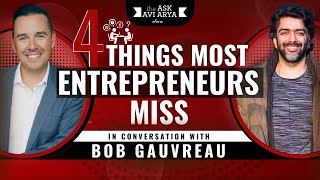
Avi Arya talks with Bob, a founding partner of a CPA firm, about four financial strategies for entrepreneurs: cash flow management, pricing, partnerships, and investment accounts. Bob shares practical advice for growing and scaling a business.
The shortest distance between two human hearts is always a story.
And even if you weren't successful and even if failure happened, that's okay. As long as you can look yourself in the mirror and say, I did everything I could to try and succeed. We don't care about making money. We just want to have the most amount of impact.
Hey, guys. This is Avi Arya, father of two girls, six dogs, husband to a superwoman, a streetcar racer turned hotelier, now social media marketer and founder of Internet Moguls. Welcome to my channel, ladies and gentlemen, boys and girls. Thank you very much once again. My dad always says the most expensive thing you can ask from people is not their money, but it's their time. And amazing individuals, human beings that we track on the Internet and then request to come on this show, like Bob, our guest over here. We really appreciate their time. I also often say the shortest distance between two human hearts is always a story. You tell a perfect stranger a story and you win hearts for life. And that's what we did before this interview. But now I'll request Bob to tell us all his story. Bob, over to you.
Yeah, absolutely. So I don't know if you want the short version or the long version because we just talked about two different. Whatever works, right? So my name's Bob, founding partner at Govero cpa, a CPA firm and in Canada that's evolved into being a business coaching, consulting, proactive finance company that helps entrepreneurs grow, scale, and thrive in their business. We started this firm in 2008 and we have expanded out to now 35 members on our team, working with over 500 entrepreneurs across North America. So that's the short version. The short version for sure. On a personal level, I'm married, two kids, 12 and 10, Jack and Sophia. And we live just outside of Toronto, Ontario, Canada as well.
That sounds lovely. That sounds lovely, Bob. Thank you very much for that, Bob. Let's start with the basics. Entrepreneurs in the making. Every day, every opportunity, good, bad, ugly, creates a different breed of entrepreneurs. We've been through this last one year, and everybody, based on their perspective, has labeled the last one year as good, bad, or ugly. Regardless, there are entrepreneurs in the making. They've come on to the field. They want to play the entrepreneurial game. As a CPA, as somebody who's helping guide 500 entrepreneurs, what would be some of the basic foundational steps from finance and accounting point of view that you'd like to talk to our audience about?
Yeah, and probably a great intro into a model that we created when the global pandemic hit for entrepreneurs, which was called the survive and thrive model. So it really focused on three separate things and the very first one was super important, and that's on managing your cash resources and increasing your safety net. So essentially what that means is during times of uncertainty, the only thing that we can really rely upon in our business is to make sure that we have the resources available to survive some uncommon, unforeseen circumstances. So we looked at cash resources and said, how are ways that entrepreneurs can ensure that they have the cash resources they need to survive this sort of situation? So if it's good, I'd love to share a few tips on how people can maximize their cash resources 100%.
Alrighty, we are live now. Please go ahead. We were talking about, we were talking to Bob about how you can plan a financially secure future and a few fundamental tips on how to save money during these times.
Yeah, yeah, absolutely. So again, it was a survive and thrive model because in order to thrive, we need to set ourselves up and make sure that we're positioned in the right way to thrive. And the one major area that a lot of entrepreneurs fail or have challenges is understanding how their working capital or their cash, how they get access to it, to make sure that they have the resources they need to survive. So looking at different ways to manage cash resources in your business and would love to share a few ideas with you guys. So the very first thing that a lot of entrepreneurs face is delivering a service and then chasing payment after. So this involves sending an invoice and going and getting the accounts receivable later. If you're in a position right now where you are doing this, you need to change your model. Instead of delivering a service and then chasing money, we need to figure out how we get the money before we chase the service. Now, if you've got people who owe you money, now is a really great time to go after them and make sure that you get paid for what it was that you delivered for them. Another great idea is looking at the different ways that transactions take place in a business. So in many circumstances we have, again, we order a product or service, we deliver it, maybe we get payment somewhere in between and then we finally deliver and we collect at the end. So so many different ways that we can do it. But the goal would be to continue to move the transaction forward. So before we even accept engagements, we should look at how we get cash resources up front. Instead of us paying for our teams, the supplies, the inventory, whatever it is that your business model is Making sure that we get the cash in order to pay for that completely changes the dynamic of cash management inside your business. And then the last one that I'd love to share is just the use of cash resources inside your business. So what I see so often, again, we work with hundreds of entrepreneurs across North America and one of the things that we see all the time is that a business generates profit. Right? Revenue minus expenses, cost of delivery gives you a profitability. But what happens is when a business owner makes profit, they then take that profit and they reinvest it in buying inventory, invest it in growing their business instead of taking that profit, making sure we keep it in our cash account so that we have that reserve, and using financing tools in order to finance the growth of our business. Don't take all of the cash from your business and put yourself in a dangerous position, but rather let's utilize the bank's resources to make sure that they're.
Funding our future growth, especially in these kind of times. Because you feel that why should I give interest to the bank when I have non interest free money lying with me? But the idea is the money that's lying with you is not interest free. You could have invested it and it sort of pans out the same. You invest the money that you have in cash reserves into the mutual fund market or the stock market, or you borrow from the bank. The cost. Every money, every source of money has a cost. So I love what you said. Don't use every penny from your cash reserves. And I'm sure, Bob, that that allows you to run a very different business because you are making healthier, smarter decisions when you're not cash strapped, when you have all those reserves.
Absolutely. And one of the challenges is we all know as entrepreneurs and business owners, life isn't always EAs the last 12 months, but the one major 94% of businesses who fail, fail because they run out of cash doesn't mean that they don't have a profitable business where you're generating profit from everything you're delivering. You might have a great model set up, but it's just that you improperly use your cash resources to reinvest and maybe grow at the wrong time, where we could use other people's resources, pay a small fraction of it, but scale up the volume that we can deliver and make lots and lots of money using other people's money. And I think it's super important not to put yourself in a dangerous position, but let's figure out how we get access to cash resources to really grow and scale our business in the right way.
Lovely, Bob, tell us a little. So basic steps too. Now, for entrepreneurs who are starting off or restarting, what would be about three takeaways on what they should focus on? You know, I love the fact that you spoke about cash flow is not profit. The two different things I love when you said that you, you know, you, when you, when you start a business, you have a different mindset, you know, versus these kind of times. You have different mindsets now for people, you know, my question is for, on behalf of people who, who are restarting now, I have a little bit of money. I have a business idea. Should I first go to my CPA for my chartered accountant and ask him what I should do? Or, you know, how does that work? Because normally people come to their finance planners once it's postmortem time and, you know, so they should, they should come when everything is life and healthy. So what would you suggest to these new entrepreneurs?
Yeah, and maybe a couple things. We focus on different rules for success. And one of the major rules of success for us when we're working with entrepreneurs is to make sure that you outline and fully understand what you want to accomplish with your business venture. Whether that's doing it on your own or working with someone like myself who helps businesses understand and benchmark their future success. We have to be very, very clear on where it is we want to go. And what I mean, for example, would be if you say, this year I want to restart a venture, I want to take my existing venture and carry on with it wherever, whatever stage you're at, you need to say, what am I trying to accomplish? How much money am I trying to make? Right. Am I trying to make six figures this year, $100,000. If I'm making $100,000 and I understand the financial model of my business, I can tell you exactly how many sales I need to make in order to hit that hundred thousand dollars profitability. So it's so important to be very clear of where you're going, because if you don't know where you're going, how are you going to understand how to get there? So that would be definitely one. And I would say another thing that I see some people who are starting a business, some of the concern that they have that profit isn't everything, and it's definitely not everything. But without profit, you can't survive and you will not be in existence in the future. And one of the things that we hear a lot that, well, impact is the number one thing that we want to focus on in our business. We don't care about making money. We just want to have the most amount of impact. And if that's. If you're an entrepreneur and you're resonating with that, absolutely. I hear you and understand you. But if you double your profit, you can expand, grow, increase the resources in your business, increase the reach and double the impact that you have in your business. So profit is a good outcome regardless of who you are. It should be something you focus on so that you can maximize your impact.
Lovely. Love that impact with you'll stop making impact if you stop making profit. If you continue making profit, you can continue making an impact. So very well said over there. Thanks, Bob.
It's that easy, right?
You know, common sense is not very common and that's why we bring in experts to say, let's revalidate some principles that you may have heard of, but let the expert come and tell you in a blueprint format how it works step by step. So, Bob, tell us about. So say a business is in growth stage and would you recommend, in your experience, have you seen partnerships working better than single founders? Should we go out there and raise funds? Ask the bank. When you grow, what do you do? Get a partner. Get a bank as a partner. Get multiple co founders. Find a vc. Is there a best route?
Yeah, well, I'm going to be completely biased here and I'm going to say get yourself a virtual cfo. One reason I'm saying I'm biased is because that's something we do. And the reason that that's so important is, again, working with multiple entrepreneurs. We see partnerships happen that are successful, but we see a lot of them that aren't. Bringing on two people who may not be completely in alignment is potentially an issue of destruction in the future. And as a partnership, if it doesn't work out, it's really hard to continue on as a business owner in that venture. We have to come up with a whole new structure, new business number, potentially new name. Right. So it could be extremely challenging. I'm not saying partnerships aren't a great idea. If you can create synergy in a partnership, fantastic. The other thing I would say is if you're looking at growing and scaling a business, and I'll come back to that in a few minutes because I think there's some very key things that people need to understand and how to grow and scale a business. But if we're looking at how we do it, should we do it bootstrapped with our own finances? Should we bring on venture capital money. One of the things that I really focus on is trying to maintain ownership in our company. And sometimes when people are growing and scaling at a certain level, maybe new partners that are not involved in the business or VC money is a good idea. But for the majority of the fact is, if we can use bank money at 2%, 3% versus venture capital money at 10, 12, 20%, unless that strategic partner comes in with a whole new network that we can blow up our business, it's likely going to be a better situation for you to continue to maintain your business. And I'll give you an example of this for me, a few years back, I had the opportunity to work with Tony Robbins, and Tony Robbins brought us into his business events. Yeah, you've heard that name, right? A few people have heard that name. And Tony brought us in as a partner for his Global Accounting Advisors Group, which was fantastic. Had a great experience. Experience. Loved my time with Tony and his organization. But ultimately what they wanted to do was to become formal partners down the road. And for me, that was a bit of an intimidating situation having a billionaire partner who wanted to essentially come in, own half of my company and if I had any sort of issue, I'm out of my company. Right. I can't fight a billionaire like Tony Robbins. So looked at it and said, okay, what resources could he and his team bring to this situation? And, and can I utilize different resources like bank funding to do the exact same thing? And that's ultimately what we ended up doing again, maintaining ownership, maintaining control of my company, maintaining my vision, and not necessarily having to stray from that because I kept control and was able to maintain the environment that I truly love in my business.
I love how authentically you shared that story. Because just by. You see, this happens sometimes in some interviews. And that's where I pause and I remind myself, my team who's watching this, the teams who are going to be editing this, and everybody who's watching. We have about 136,563 people on our email database. When I checked yesterday, 20% people open our emails, say about 10% people, but 14 to 15,000 people are going to be watching this interview. Even if 10 people have actually understood what Bob said in the last 300 seconds, you do not need. Your business is your business. You need to run it with conviction. Happiness need not necessarily have a overarching partner to be able to come in. And Everybody in the VC space, the VC, some VCs must be great. But, but you also said, look For a strategic partnership. Partnership. Not only just money, because there might be other sources of money that will not interfere in your business. So to be able to make a choice of having freedom over having a celebrity name, Huge respect to you, Bob, for saying that and doing that.
And believe me, that was not an easy decision.
I can imagine that.
Let me say it actually was a very easy decision when I actually thought about what it was I wanted to accomplish. Right. And what the values are that I stand for and what my company stands for. And you know, we're very authentic in who we are, which is people passion and integrity. And in no way was I going to compromise that. And I'm not saying that the Tony Robbins organization was going to compromise it, but it was the ability for me to not control it going forward and potentially go down a different direction from the value that I've created. And you know what, it's, you know, half a six of one, half dozen the other. Could it have been a really great opportunity? Absolutely. But it didn't need to happen for me to continue to grow and be successful.
That's fantastic. I love the conviction. And did you push back and say how about 10%?
Well, it was interesting because ultimately when we looked at the legal ramifications of ownership, unfortunately the ownership structure the way that they want it couldn't work in the Canadian environment anyway. So that was again just all the signs were aligning that this wasn't going to be something I needed to pursue because it was just becoming too difficult to try and make something work, trying to force something into, you know, round peg, into a square hole kind of thing when we could ultimately offer the same value without that partnership.
Lovely. Tell me when. You know this requires a lot of guts.
And on real estate income, on selling it, you've got capital gains tax that you've got to pay. So that's non registered investments. And then in Canada we've got this whole element of registered investments for individuals. One is called the tax free savings account. So the tax free savings account is essentially this. You put money into your tax free savings account, you don't get a deduction. But anything that those investments earn inside your tax free savings account is not taxable to you. And you can pull it out later at the new appreciated value without paying any personal tax. So if you are in Canada and you have access to a tax free savings account, that is definitely an area that we want to maximize our investment again because it's sheltered and it's not taxable. The second one is an RRSP a registered retirement savings plan. So what how this is is when you earn salary or self employed income, you generate RSP room every single year. So you can take the money that you earn, put it into a retirement savings plan and whatever money you put in there, you actually get that as a deduction from the taxable income on your personal taxes. So I know that's a whole bunch of verbiage and language out there, but ultimately if we put money into our RSP account, it's going to drop our taxable income by whatever we put in there, ultimately saving short term tax money. Now when that RRSP grows, it also eventually comes back out to us personally when we need it and we have to pay personal tax at our rates at that time. So again, TFSA tax free savings account money in, it's not taxed and it's not taxed when it comes back out an rsp, we get an upfront tax savings, it grows, but we pay tax on it later on at whatever that value is. The last one I believe that we've identified here is a retirement education savings plan plan. So and we don't see these a lot anymore, especially with entrepreneurs because we focus on corporate investments and making sure we leave as much money in there as possible. But as a, as an individual with children, if you contribute money into a registered education savings plan, the government matches contributions and I can't remember the total match, it's not a significant amount, but it is free money that if you put your after tax money in, they will contribute it into the program. Now when you have your son or daughter taking this money out, when they're maybe in post secondary education, it is taxable to them at that point.
Hopefully I did okay there, 100% and all the three accounts, you can do direct investing with that money?
Absolutely, yeah. And this is something that we recommend a lot with our clients based on the psychology of spending. So the psychology of spending says that if you have money sitting access to its own tax filing, its own business structure, it's legally protecting your individual assets and it operates as a separate legal entity. Now some of the benefits of a Canadian system are the tax rates. Now as an individual, the tax rates aren't so great. The maximum marginal tax rate is over 55% in Canada, which is a little bit daunting. But if you're a Canadian resident operating a business, our team can certainly help you with that.
And I'm definitely going to link up all the descriptions on how you can get in touch with Bob and his team. For the various aspects of accounting, setting up a company and all of that. Tell us a little bit about the different types of accounts. Once you move to Canada, you're like resp, rrsp, tfsa. Like, it's, it's overwhelming when you, when you.
So many acronyms, so many acronyms.
Right. And some of them are tax free, some of them the government puts in money. So a quick overview of how this works, if you don't mind.
Totally. Yeah. So, and hopefully I don't miss anything because I'm kind of going off the cuff, but we'll do our best here. So there's two different ways that you can invest money as an individual, and we're going to stay on the individual side because corporations are a little bit different. You can have registered money and you can have non registered money. So non registered money means that you can invest in whatever you want. It's taxable. You know, if you're investing in real estate, it's taxable on inside an account and you're looking at it and you have access to it, you're likely going to spend the money because it's just money sitting there. It's like, well, I should probably do something with this. So instead of doing that, we talk about a forced savings plan. So whether you put it in your tax free, your RSP or an resp, whatever you choose, we want to get it on a consistent, regular basis. So what I mean by this specifically and for me, as my example, is I take $500 a week and I put it directly into an investment account. And I want to make sure that at the end of the day that money gets out of my account. I don't see it, I can't spend it, and it starts getting invested into the market, compounding and growing so that our future is being planned for. At the same time, I always want to make sure that I can get access to those investments if I need it for some reason. Again, always thinking about my safety net, but just knowing that we're getting that income going away, it's out of our account, it's starting to save and accumulate wealth in our lives is a really great plan.
Lovely. Awesome. Now, we had a bit of a detour to understand what kind of accounts happen now. Coming back on the grid. So, Bob, tell us, I leave it to you. What are the three or four important things that you'd like to talk about that you feel maybe entrepreneurs are missing? Corporations are missing. Yeah.
And I think we've identified some of them, but I would say probably if you're looking at being in the position that you want to grow and scale a business, right, you want to take it from where it is now, and you want to get to the top level again. When you're in that space, you probably want someone who's been there, done that to be able to do it. Because with them, you're going to be able to get there faster, right? Getting the guidance for people who've tried and failed, learned from it, built something incredible, learn from them, right? Whether it's a business coach, whether it's a virtual cfo, whatever it is, understand that they can help you achieve those goals at a faster way than you can do it on your own. So one of the things that we talk about is, again, this was a byproduct of working with Tony Robbins. But the three ways to really grow a business. So one, from a marketing standpoint, and this is something that your organization does extremely well, is to create new leads and new business, right? So the one way you can grow your business is to increase the number of customers that you serve. That's gonna be a lead generation strategy, a marketing strategy. The second way that you can grow a business is to increase the number of times that your existing customers buy from you. Again, which could be an ongoing email marketing campaign strategy. It could be having your existing customers refer other business in whatever way. You're just generating more revenue per person. Now, those two of the three ways to grow your business, they involve taking on more team, taking on more customers, delivering more product or service. But the last one is always the one that I focus on so much. And it's not because we don't like lead gen, because we do and we invest in all of those. But this is going to be the simplest one to implement in your business today to get guaranteed results. And that is the third way is to increase the price per transaction. Maybe if I can, I'll just share a quick story.
Sure.
So in business, a lot of the time we have a mindset block on charging people enough, Right. We as business owners always have a difficult time to say, this is how much our value is, and we actually have a block on it more than our clients do, 100%. So a lot of times when we're looking at our pricing strategy, it's because we don't want to increase price because we're fearful that people will leave. Right. So my one quick story here is I worked with a small cafe. It was part of a bigger business, but they were building out a cafe. And of course As a cafe, you've got coffee on one corner, there's another competing coffee on every other corner of the street, right? So we went in and we're looking at this particular business model. And she said, well, based on what's happening in my business right now, I'm not financially solvent, so we need to figure out a strategy in order for us to get access to more profitability. Otherwise I have to close this area of my business down. And I said, okay, well, competitive nature is really strong, right? It's a coffee is a coffee to a certain extent. And I said, well, you generate and create a lot of value in the experience that people have. So the people that come really appreciate the value that you offer versus anybody else. I said, so they're pretty happy here. I said, so here's one way that we could do it. Let's look at a 10% price increase strategy. So, for example, with a $2 coffee, it's 220, right? 20 cents more. And if you look at every 10% price increase in whatever business model you have, it's not enough for you to say no to it. So the story goes that I had talked to her, she implemented this 10% pricing strategy. And I went back the next week and I said, so what happened? What was the result? And she said, well, only one person said anything about it. Nobody else even noticed that the price went up. And I said, okay, great, let's talk about that one person. What happened? Well, it was an older gentleman came in with the exact change, put it on the counter, and the staff said, oh, unfortunately the price has gone up, but guess what, we're going to give it to you for that price. Just know that next time you come in, it's now 220 versus $2. So I said, what happened? Well, the next day the gentleman came back in, bought his coffee and everything carried on. So with this simple, effective solution to just increase the price, she created a business that was losing money to now, one that was profitable without changing anything but the pricing. Because the pricing strategy ultimately increases your profit margins on all your product and service and drives true bottom line profitability in your business.
Lovely. Love that. So, gentlemen, ladies, you're watching this on YouTube or on Facebook Live right now. Drop in questions in the comments and we'll invite Bob to our Facebook group so he can come and see that 29,000 members over here. And once they get active, there's a lot of engagement happening all. Also, I'm going to link the description to Bob's company and all the services that they do, you can get in touch with him directly. Bob, for people who want to get in touch with you and ask and see how you can help them, what's the best way to get in touch with you?
Well, what I'd love to do is share two minutes of an event that we're hosting, if I can. I want to give a huge plug to this, and this is going to be a way that people can get in touch with us. So we have a book launch coming out on April 3rd. The book's called the Wealthy Entrepreneur. It's my heart and soul put into helping entrepreneurs understand what they need to do to grow and be profitable in their business again so they can maximize their impact. And we started focusing on selling books, and I really got disinterested because I don't care about selling the books. I want to help the people. So instead, we did a complete shift and we said, okay, well, instead of investing in launching this book and selling a whole bunch of books, what if we launched a massive virtual event that was focused on helping entrepreneurs grow, scale, and be profitable in their business? And then I got excited, right? This is me being able to help a lot of people. So the first thing I did is I reached out to Gary Vaynerchuk, which I'm sure everybody knows, and I said, I want to know if Gary will come be part of this event. And he agreed. So on April 9, we've got an event called the Ascent Summit. Let's begin to thrive. It's going to be focused on getting ourselves getting out of our way in a mindset, understanding how to outline our goals, how to benchmark our business, how to grow sustainably, and then when we've made money, how to invest it and create financial freedom in our lives, all with Gary Vee gonna be there during the day, it's gonna be an incredible day. I'm so excited about it. April 9th, and it's $97, and we essentially, we wanted somebody to have to pay to go because there's gonna be so much value. But we wanted to make it easily accessible. And if you sign up, you get a copy of my book as well. So we got a two for one opportunity there.
That's fantastic. Is this a live event or virtual event?
This is gonna be a virtual event, but it's live, so it's going to be a live Q and A with Gary V. On there as well. We're going to do a fireside chat with him. So we're really, really excited about it. Again, April 9th, it's ascent. Summit.com is the website. I'll make sure that I give it all to you so that you can get it out in this info. But I would love to be able to post it in the Facebook group too, if that's. You're open to that. Because we want to make sure that we drive so much value to entrepreneurs and, and ultimately, as a community, we want to change the world. So we're really excited about it.
Absolutely. Me and my kids, we went to meet Gary at his office two years ago and then the year after. And so we met him a couple of times. He came to Vancouver. We've had the opportunity to have a quick grab, a quick lunch with him as well. Great entrepreneur. Obviously many of his philosophies have changed the way that I run my agency. I'm very excited for you. We'll definitely make sure we do an email to everybody to get them to know what's happening on the 9th. And also I'll give you, I'll just give you an invite to the Facebook group. You can join it and you can start engaging with people over here. Ladies and gentlemen, boys and girls, I hope you had fun. Bob, thank you very much for your time. I'm just going to have a quick chat with you after I finish my outro here and stop the recording. So, ladies and gentlemen, boys and girls, like I said, entrepreneurs in different parts of the world, people who are actually working on purpose, impact and money. My dad always says one thing, keep your money and your charity separate. Make enough money so that you can make enough help in all the people. And that's what Bob started his interview with. He said, you want to make impact, make sure that you're making enough profit. So with that, I come to the end of this interview. Thank you all for watching. Once again, my name is Avi Arya, father of two girls, six dogs, husband to a superwoman, a streetcar racer turned hotelier, now social media marketer and founder of Internet mogul. Signing off for now and don't forget to ask your questions in the comments. Thank you very much.
More from Avi

The strongest mindset doesn't begin with meditation. It begins at home. Before you conquer the wor

The strongest mindset doesn't begin with meditation. It begins at home. Before you conquer the wor

Your mindset isn't something you fix once. It's something you train every single day. Just like yo

Don't build a company just because your friends are. Build one because you're ready. A startup is

Everyone dreams of becoming the boss. Very few understand what that really means. The moment you b

Most entrepreneurs say, "I don't have time for coaching." The truth? You don't make time for what

Over hiring doesn't always solve problems. Sometimes, it creates them. Having a small buffer in you

"The highest-paid" isn't the goal. The highest-value is. People often ask why premium mentorship co

The founder will always be a bottleneck... at some stage. The goal isn't to pretend you're never th

People ask me how I stay consistent with my morning routine while traveling across countries and tim

People ask me how I stay consistent with my morning routine while traveling across countries and tim