6 Proven Ways to Become Successful in Creators Economy I JIM LOUDERBACK I AskAviArya Show
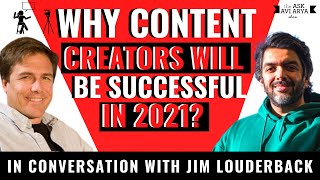
Jim Louderback talks with Avi Arya about building a business in the creator economy. They cover team management, content strategy, and how to use new platforms to grow an audience.
I will say on the mindset, startups particularly are, you know, they're bipolar by nature, right? So it's either like, oh my God, it's amazing, we just got a new customer, we just raised money and everything is great and we're all going to be going to be amazing, or it's like, oh my God, that customer left and I'm running out of cash. And so the highs and lows for startups for new companies are so outrageous. Hey, guys.
This is Avi Arya, father of two girls, six dogs, husband to a superwoman, a streetcar racer turned hotelier, now social media marketer and founder of Internet Moguls. Welcome to my channel. Alrighty, ladies and gentlemen, Jim is here. Jim, welcome to the Internet Moguls masterclass. How are you doing?
I'm doing good, thank you. Sorry, I couldn't find the link. It was hidden in a different part of my mailbox. I was like, where is this link?
No problem. Thank you for being here.
I can't start video. Have you turned it off?
One second, let me check.
There we go.
Nice to see you, Jim. Thank you for taking the time out for this amazing community of ours where we meet every week and we have sessions, we have master. We call this the Moguls Master class session. All of our students are entrepreneurs from different parts of the world. We have people from Spain, South Africa and then mostly India. And one person from Vancouver, Canada, which is me right now. And we meet every week on this VIP inner circle and we talk about entrepreneurship and we have new coach coming from different parts of the world every single week. 52 weeks, 52 lectures. And we are so happy that you accepted our invitation to be able to add value. So, guys, in true Internet Moguls fashion, can we just give. Can we start with giving Jim a warm welcome in the comment box, please?
Hello, everybody. Thank you.
There we go. I love it. Let the comments go crazy. Wes, welcome. Jim. Awesome. That is fantastic. Great. Jim, so what, how we going to do it? We do a Q and A style. We tell our Vogels to ask questions. But before that, I always believe, Jim, the shortest distance between two human hearts is always a story. You tell a perfect stranger a good story and you win a heart for life. So what is your story, Jim? Tell us where you're coming from and what do you do?
So my story is I'm actually a geek and I am, you know, started out and got into this whole world of media, interestingly enough, because I love technology and I love computers and I love chips and I love Programming, which doesn't sound like the right way that you would get into the media world, does it? But anyway, out of uni, I ended up programming building systems for large companies here in the United States, including Citibank and National Semiconductor and a bunch of others. And through that, I actually started writing about what I was doing because I like to write. So I was right. I ended up writing a methodology about how to build computer systems quickly and how to build distributed computer systems. And interestingly enough, I got published in, in a series of magazines. And I was like, oh, that's kind of fun. And I ended up writing a guest column for a magazine for this company, Ziff Davis, and they liked it. And then they had a job available to come test computer products in their lab, actually to run their lab. And I applied, thinking I wouldn't get the job, but they gave me the job. And so that's how I went from being a computer programmer and leading teams building systems to. To being in media. So I worked in magazines, helped start the first television network about computers and technology called ZDTV and then Tech tv and ended up running websites early on and was editor in chief of a PC magazine, which you might know, which was global for a long time. And, you know, as part of that, ended up some of the folks that I'd worked with at the TV network we started, started a couple companies. One of them back, I don't know, 15 years ago, 17 years ago, they're like, we want to do what we were doing on tv, but on the Internet. And I had already been doing some of that at PC magazine. And they said, oh, and I think we're going to be able to raise some money. You want to come be our CEO? And I'm like, yeah, that'd be fun. So I kind of shifted gears and went to go be the CEO of this early online video startup called Revision3, which was about technology and video games and things like that. And so we, we built our network on the backs of YouTube. Actually, it started out on the backs. It was video podcasts. But then YouTube came out, and this is 2007, 2008 started to rise to prominence. We put all of our chips on the YouTube, you know, table whatever you want to say, we became a YouTube network and built it up. As YouTube grew, we grew, sold that company to Discovery, Discovery Channel, Discovery Networks in 2012, stayed there for a few years. As I left, we'd been working actually in the online video industry. There was an event that started up in 2010 called VidCon and VidCon was the first place where if you were an online video creator, you could come together in person and meet your fans and perform for them and connect with each other. So 30, 40 of the top online creators in 2010 got together at VidCon. Because I was running a network about that had a bunch of them in our network. We were there, we sponsored, I spoke. I got to know the guys who started it, Hank and John Green. They're amazing. And then after I left discovery in 2014, I wasn't doing much and I'd called up Hank Green. I said, yeah, I'm not really doing anything. I can work in events. I can't go work in media again for a year because I have a non compete. He said, why don't you come help me help us build the business side of what we're doing with VidCon on our industry track. And I was like, yeah, sounds like fun. I can do that halftime and I can enjoy life the other half of the time. So I did that for a couple years. And then 2017, Hank came to me and said, you know, I built this business. I have no debt, I have no investors. All the risk is on me. We started to go around the world. We did events in Australia, we did events in Europe along with the U.S. he said, you know what I need? I need to either raise money or I need to sell this thing, because I built a lot of value in it and said, you want to come be CEO and help me with that? I said, okay, sure. Sounds like fun. And four months later, we sold to Viacom CBS. It was Viacom, and now it's ViacomCBS. And so for the last three years, I've been building up VidCon around the world for ViacomCBS as the GM. So that's kind of the story of going from, you know, math degree and computer programmer to magazines, web, audio, video, tv, online video, and now events about online video.
That is fantastic. How many people find this story supremely inspiring? Just say inspiring in the comment box, guys. That is fantastic. Jim. We have entrepreneurs from different parts of the world. All of them are in the process of building or rebuilding a business. And we all know when you're building or rebuilding a business, first you're building or rebuilding over here, especially during these times. So you gave us a synopsis of what you went through, but I'm sure behind the scenes, there was a lot of madness that happened, lots of things that you had to deal with. Tell us the importance of mindset in Running a company, in running multiple companies and taking them to their desired results. And how, what do you, what does Jim do for his mindset?
So I will say on the mindset, startups particularly are, you know, they're bipolar by nature, right? So it's either like, oh my God, it's amazing, we just got a new customer, we just raised money and everything is great and we're all gonna be, it's gonna be amazing, or it's like, oh my God, that customer left and I'm running out of cash. And so the highs and lows for startups, for new companies are so outrageous that as a CEO leading one of these companies, you have to be the model of consistency. So everybody around you will be freaking out or everybody around you will be ecstatic with joy. You can't get too high and you can't get too low. You really need to, as a CEO, as the leader, forge a straight ahead path because otherwise you're going to end up going, you know, it's going to drive you crazy. You'll be like, oh my God, this is great. Oh my God, it's terrible. And everybody in the company looks up to you and they want to see what you are doing. And the same thing goes with your leadership team as you grow. I remember when we were selling Revision 3 to Discovery and there was a lot of twists and turns there. I mean, one of our biggest talent on the network decided to leave to go to a competitor in the middle of it. And so my team was like, oh my God, this is terrible. We all thought we were going to sell and make money and now it looks like we got to go out of business. I'm like, first of all, we're not going to go out of business. Second of all, they didn't just decide to buy us because they like that one talent. It's what we bring, it's what we have up here, it's what we've built together. And then I'd say, look, we are going to leave this conference room and go out and on the floor of our office and every single one person in that office is going to look at us and they're going to see, are we happy, are we sad, are we frustrated, are we freaking out? I want everybody to go out, be yourself, be normal, congenial, everything's great. Because that aura we have to present now, you can do whatever you want. When you go home, you're driving home, you're in the office, you want to scream and yell and gnash your teeth and Throw things around if that's because that's how you cope. But when you're out there around our employees, around our team, around our staff, everything's great. You got to have that great optimistic attitude. So I think for me, I think you really need to evaluate your own mental makeup. Are you somebody that is prone to extreme highs and extreme lows? The more that you're, the more that you see that in yourself. You need to tamp it down. Whether that's doing, exercising, whether it's deep breathing, exercise, yoga, whatever it is that allows you to get back in yourself and keep the highs from getting too high and the lows from getting too low. You have to do. For me, I like to go out walking and walk on the beach, walk the dogs, hiking, make sure that there's always time for food and make sure there's always time for family and friends. But you have to figure out what's right for you inside you. Because if you're bipolar, your company is going to be that way too. And if it is, it's going to be really hard to manage.
That is fantastic. I loved it. Guys, how many people had a big bulb on moment right now? Aha. This is how I am a true reflection of how my company is a reflection of who I am. And therefore, if I'm bipolar, who am I blaming for my company? Going in Erratic. Going all erratic, awesome. Bulb on moment size. I had definitely a bulb on moment when I heard that. Awesome. And okay, moving on. So, Jim, about people, different companies, different people. And you jumped in many times to save a company, many times to make a company thrive. And you walked in in senior position roles. I'm sure it was not very easy to just walk into a company and say, hey guys, I'm here. And everybody falls in love with you. People management, talk to us about that.
So there's a couple different things, I think, on people management. One, and this is an area that I am not very good at and I have to continually push myself on is if you walk into a situation and you've got a group of people working for you or even a level below and they're not delivering, you work with them, you set those goals, you set those priorities, you tell them what you want to do and it doesn't happen right. In many ways, we can't change people. And particularly at small companies and startups, but really all companies, if you see a problem with someone, everybody on the team sees it too. Everybody knows if you don't correct that problem, then the team, the company will be looking at you as a weak leader, as someone not solving the problems, and they're gonna lose confidence in you. It is so hard to fire someone. It's so hard to let someone go. Because I hope you are all empathetic leaders. Because if you're not an empathetic leader, you know, then you may see success, but you're gonna destroy everybody on the way. I don't think that's the right way to run your life or to run a business. So if you're an empathetic leader, which I'm going to assume that you are, it's so hard, but you need to do it. You need to do it both for the person that you fire, but also for all the other team members are there because all the other team members know. And by you letting them get away with that or coddling that person, they're going to just see you as a weak leader. But. And for the person themselves, if they're not doing well, they're not right for that position. And I have seen this happen time and time again. If you let somebody go who's not right and explain it to them and do it in an empathetic way, they will go find another position that's more suited to who they are and their temperament and what they want to do in their expertise. And it's going to be better for them, too. It's going to be bad for the next three to four, six months, but it'll be better in the long run. So I think make sure. And it's not just the people working for you. It could be somebody two levels down in that other organization over there. If they're not doing well, everybody knows, and it's going to be really hard to change them. And you're better off separating from sooner rather than later. So that's. It's a harsh message. And I just remember the times that I didn't do that and it was not good. And then you end up having to do it anyway.
Awesome. So when you find a problem, deal with it as soon as possible, because people are looking at you. They're expecting you to make those difficult decisions happen. Awesome. Jim, before we get into the life of a creator and why people should become creators and the new creator world and everything, I have two more questions. When it comes to keeping the enthusiasm high, which you definitely do, and you raise the energy for all 50 human beings over here, what do you do yourself? What is your morning, afternoon, evening rituals? Tell us a little bit about what you do every day or Every week.
You know, basically get up early, I spend an hour thinking, reading, chilling, drinking coffee and sort of easing into the day. So I make sure that I have that hour of, you know, or of more, you know, just. I mean, I start looking at news, but then I start diving into interesting things that are interest that I find fascinating. So not necessarily for work. So letting the brain sort of open up and expand and not pushing my brain right into it, that's what works for me. And then at the end of the day, I always make sure and take 45 minutes or an hour to get out and walk around and physically move around and not have media. Like I don't walk around with earbuds in listening to podcasts or I just experience the world around me. And I think those things reflecting in the morning and experiencing the world in the afternoon or evening, to me those are really important. And then if you can, a day, a week, try and unplug from everything. It's super hard, but try and which I do, I try and you know, it often doesn't work for the whole day, but at least for, you know, eight or nine hours, try and stay away from anything that might be work oriented and really, you know, let your brain rest because I think that's really important.
What about exercise, meditation, reading books? Does everything form, part. Form a part of your life?
Yeah, look, I mean, I think exercise, when I talked about in the afternoon, exercise, to me, getting out and walking on the beach or walking in the mountains or walking in the hills is a form of exercise and meditation at the same time. Because I'm not listening to, you know, I'm not listening to podcasts, I'm not listening to music. I'm not, you know, I'm basically let that happen. And so, and then at night before I go to bed, I typically read for an hour and I read various different books, summer workbooks, summer, just escapist science fiction and fantasy and other things. So, you know, it's good to get a different, different mix of things. And as we get out of the pandemic, go back to seeing live music, going back to travel and experiencing new cultures, which I find very eye opening for myself.
Lovely, Jim. Let's go into the greater economy now. You saw it happening from afar, then you got into it and you were deep into every, every, almost every company that made it happen. For the 5046 people who we have today with us and everybody else will be watching here, what is your take on the creator economy? And how can everybody, a small business owner, a Housewife. How can everybody partake in this new gold rush?
So first to understand the creator economy and where it comes from is for a long time. So media for a long time has been about gatekeepers. So if you wanted to be a movie maker or a writer, or, you know, a video star or a radio dj, somebody had to give you that opportunity. You had to get a gatekeeper to give you that shot, to give you that TV show to cast you in a part. And that meant you had to go to Mumbai, you had to go to London, you had to go to New York, you had to go to Sydney to get that job, really, or la. And what happened as the Internet came out? And really, this is, you know, 2005, 2006 and beyond. And we saw it with writing and podcasts earlier, but with video, suddenly you could build an audience, make video, create without anybody giving you permission and giving you a slot and giving you that authority to do it. And so the early online video stars, the early creators that built that success, nobody gave it to them. They all woke up one day and said, I'm gonna start a YouTube channel, right, I'm sorry, TikTok channel. And they had no followers, no fans, no friends, no likes, no dislikes, but they built their audience 1, 10, 100, 1000, 10,000, a million, all by themselves. And so that mindset is very different from the traditional media mindset. Why that ties into where we are now is as these creators have been building connections directly with audiences through these platforms. Even though the platforms are a layer between the audience and the creators, in essence, it's them and the audience and they own that relationship. And so the power of a creator directly owning the relationship with their audience creates an extreme amount of opportunities to help that creator monetize that or figure out a way to make money directly or make money for brands indirectly. So when you think about the opportunities in the creator economy, think about the fact that, you know, for the first time in the modern media world, a creator, whether it's a book, comic, book, audio, video, art, music, has really had the ability to have a one on one relationship with their fans and just directly connect. So things that sit between the direct connection between a creator and a fan base, that's where there's opportunity to help build businesses to enable creators or fans derive value out of that connection. So, and we're seeing like new things pop up all the time. Like there's a company called BitCloud right now, and Rally is another one that are basically creating crypto coins around creators so one way for anybody to get involved is go up on bitcloud, go on Rally Coin. You can actually buy coins for your favorite creators, buy currency around them, and as the creator rises, the value of your coins will rise.
Isn't that amazing?
It's fascinating. And I'm not sure, like, there's so many problems with BitCloud. There's so many things I'm like, oh, why are you doing it this way? But the idea that you can participate at that level is really interesting. And so the creator economy is expanding in so many different ways. There are ways that creators are investing in other creators. There are ways that creators are monetizing their back catalog. You look at Jelly Smack and others doing that Spotter La. They're the tip jar approach where you as a, you can start to give your favorite creator money. Patreon's just raised money at a $4 billion valuation. The idea that you can, you know, as a, as a creator, you can get virtual goods and what are those virtual goods and how does that transmit? There's so many interesting things that are happening there and we're just scratching the surface.
Isn't it fantastic? What do you do? What Jim just said was he actually gave us a masterclass, a mini masterclass in how the creator economy works from you, all of you entrepreneurs, having no gatekeepers, whoever you want to be, wherever you. If you have a message in your heart, a product or a service that can go and change somebody's Life in the 21st century, you may be doing a disservice to yourself and society at large by not sharing that message. Today, you're able to just say, record and go out there, learn a platform and start making, start making revenue from there and getting fans from different parts of the world. House, husband, housewife, kid, grandfather, grandmother. There are enough and more examples for every person in every genre for who's making money creating content. And now with BitCloud and Rally Coin, if you're a creator and you're an up and coming creator and you have a super fan base of super fans, they are investing money in you, crowdsourcing money. And your, as the investor, as the creator goes up in value, so does the investment of the people who are investing. So you're not only giving, you're not only giving feel good money, like, here's the money angel round. You actually partake in that person's success. That is how powerful it is to be a creator. You could be a business person and creator on the side, or you could be a business Person and creator, because you're a business person. We have one of our entrepreneurs over here whose name is Ricky Khurana. Ricky is a giftologist and he has a channel where he's talking about how he gives, how he designs different gifts for different corporations so that they can stay connected to their clients. And an everyday show like that, you know, could catch fire and Ricky could be the next creator in house. That's fantastic, Jim. I love that.
And you know, what I would say there, by the way, is that when you think about these platforms, there are so many of them and they have different sort of areas and ways that they work so that, you know, for example, the person you just talked about, that may not be a show or a thing that you'd want to put on YouTube or TikTok or you might, but it would be great for LinkedIn, for example.
Right?
So think about your audience and where it is. And each of these platforms has a different flow in a different way. It works. I said, you know, I know, I know you can't access TikTok in India, but around the world, there are a lot of interesting ways and different subcultures being built there. So don't just lock yourself in and say, I have to be a YouTube star. I have to be on, you know, Bilibili, or I have to be on this or that. Like, there are many platforms where you can build those connections.
That is fantastic, guys. Now I'm going to open it up to the floor. All of you entrepreneurs, you have questions. We'll take a couple of them. We won't be able to take all. We did have a few questions sent into us yesterday. We're going to start with those, and we're going to entertain the questions of the people who, who logged in yesterday and said, I'm going to be here to listen to Jim Louderback live. So bring in your questions and I'm going to take them on one by one. Yes, in the comments, please. Right. Nervous pause. I wonder what they're going to ask. All right, Gopalji. Ricky, right? Have you got any questions?
Well, I was just going to say one thing as questions come in, just to think about as you build your company also, which took me a little while, but if you want to keep people motivated and keep people focused, first of all, don't try and do too many things at once. I always try and do that. I'm like, you know, people can really only focus on one or two things every few months. But when you think about planning your business, you may get Wrapped up in what's happening today and this month and this quarter, but really come up with a strategic plan as soon as you can to think about where do I want to be in 20 years? What is that area? What is that thing I want to be in 20 years and work backwards from that. Say, okay, if I want to be the global leader in X, okay, so what do I need to be in five years? In five years I need to be the leader in the Middle east or I need to be the leader in Southeast Asia in X. And then this year I need to ship my product and okay, so this quarter I need to come up with a beta. This quarter I need to get some customers. This quarter I need to do. So really focus on 20 to 30 years out and work your way back to today. Don't come up with too many things to do every quarter and get everybody focused on what they're doing right now and that one or two things. And then keep telling them over and over again what they have to do and what they're doing, the objectives. You'll sound like a broken record, but your team is going to want to hear that.
That is so fantastic. Because the power of repetition works for our family at home. We want to tell the family how we're aligned together, where we're headed as a family. And the same thing happens at work. Okay. Aditya says, from a content creator or startup business perspective, can you show how your journey was start to zero and how you built your base so that he, he did talk? Okay, from a content creator perspective, how do you start and build up?
So I'll tell you my perspective. I mean, I sort of ended up, if I am a content creator on any platform, it's LinkedIn. And it was very accidental. I was lucky enough to get connected to Reid Hoffman and LinkedIn early on when it first started, because I was at PC Magazine and they came in to show off their new LinkedIn product and I was user 8500 or something like 8550. So it was fascinating because I like. A few years ago, Reid sent out a note to the first 10,000 users, like, thank you so much. I'm like, really? I'm one of the first 10,000 users. That's pretty cool. But I basically just kept on. As people over my career wanted to connect with me, I kept on connecting with them. I posted and I'm in a place where I've got, you know, 25,000 or 23,000 followers on LinkedIn, which is pretty good. I mean, it's like nowhere near the top people there. But I started saying, well, how do I leverage this? And so started writing a newsletter six months ago, posted a lot. Now we're doing live stream videos there and it's just continuing to build and focus on that. So I really wasn't focusing on being a creator. But it turns out the platforms that we're on will give you an opportunity to create if you want to and keep on connecting. And if you do, the key thing is connect with your audience, figure out what they want, ask them, but also keep an eye on the analytics, because the analytics that hopefully most of these platforms offer will tell you what your audience likes, what they don't like, maybe what other people are looking at. And then you have to be on platform anyway and take a look at what other trends are happening. So you can sort of lean into those trends as well. But don't slavishly follow trends. Be yourself, be authentic, cover the things you want to do.
Perfect. Love that. Yeah. Ricky says is it okay to do, like Ricky the giftologist in the house, he says, is it okay to do live shows on LinkedIn as people seem so serious over there and difficult to get them to move their fingers to comment or interact?
Yeah, definitely. We've been experimenting with live on LinkedIn and it's been working pretty well, I think. You know, it's hard when you're doing live to actually be doing comments too at the same time. So certainly ask people about it. You know, ask them to post comments. It's good to ask your audience questions and it's good to get them into the habit of responding. So post questions in the comments maybe, and then see if people are answering them. Just keep on experimenting, see what other people are doing too. But live on LinkedIn, people are actually watching live video on LinkedIn. I was surprised, too.
Fantastic. Guys, if you have any more questions, we're going to be taking three. Three more questions. Okay? In the interim, I have, I have a question. So what is your message to people who walk, who get inspired by today's master class with you? Go on. And one of those, one of the two things cripple them. A, the fear of creating content, fear of what will people say? Fear of being on camera. And B, when they see that there are millions of people out there, say, I think I missed the boat, and they come back to being who they were and they waste such an amazing opportunity. When Jim came to the master class and motivated us, I don't want anybody to miss this opportunity. I Know, for most people, when we go back, either there's going to be. It's not for me, or it's going to be. It's already overcrowded. How do we get over that? What's your message to these guys?
Two different things. I'll start with the second one first. Don't necessarily think you have to be on the biggest platform. There are new online video platforms popping up every day. And if you get there early, like I did at LinkedIn, accidentally, you can build before. There's lots of other people there. So, yeah, YouTube's great, and you could go up there and you could build a big thing, but, you know, there's millions of people, billions of people on YouTube. I don't know if there's that many, but you know what I mean, if you're, you know, if you're in a place where TikTok is available, the algorithms that they have will give, you know, make it easier for you to connect to audiences. But also audiences are fickle and TikTok's getting bigger and bigger, so that may not be great. Right now, I'm actually playing around. Cause I've not really done a podcast and I want to. Cause I used to radio early on in my career. And so there's a new platform called. And I've been up on Clubhouse a little bit, which is the darling audio platform of the moment. It's getting crowded there, too. But there are a bunch of other audio platforms, including one called Fireside, that's still in beta, not out there yet, but there's not a lot of people there. And so if I want to build my podcast, which I think would be fun, I'm going to start there because it's going to be not as crowded. So the second thing is when you go on one of these platforms and you want to learn it, just make content. Do it every day or every week. I mean, when I wanted to learn TikTok, I made a video every day for a month and nobody watched it because it wasn't any good. But it doesn't matter. No one's going to be watching it. Just do it. Same thing with Snap. When I wanted to learn Snap, I went out and I had to hike this trail near my house every day. And I do my daily Snap weather report. Nobody watched it. Actually, they did highlight one of them once, but nobody watched it. So don't be afraid of. Of looking funny or weird or bad when you first start out, because you'll learn the platform. And if you really want to be concerned about it. And you need inspiration. Find some of your favorite creators on YouTube. Sort the YouTube videos by first video posted. And a lot of creators have left their early videos up. Look at their first video, you'll laugh, you'll be like, oh my God, I can't believe how bad that was. And then look at their latest video, be like, wow, they really developed and became great. You can do the same thing.
Lovely. I like that. Short form videos or long form videos, what do you think is going to be the future?
Whatever the platform is, people will watch long form, they'll watch short form. There's a different arc, there's a different format, there are different things to do. And you know, look at TikTok started out at 15 seconds, now it's a minute. I'll bet it gets bigger. You know, you say the same thing. Vertical or horizontal, what's the future? It depends on the platform, depends on the setting, depends on where people are watching and how they're watching. And so it's less about is it short form or long form, is it vertical or horizontal? It's more about what sort of videos do people like watching on the platform, what's the context that they watch in and how do you fit into the way that people consume, discover and share and, and make sure that you're following in sort of the similar ways.
Lovely. Asta Tatia, who's business leadership happiness coach for leaders in India. She said you spoke about letting people go if they're not performing and they might find something that suits them better. Isn't it upon the leader to help them figure out where they can perform best? We may end up discarding people who may have, who, who may be potential assets.
There's a balance there. But I will say the business of a leader is to grow the company and build it for everybody. If you are babysitting somebody who you think has potential down the road but is not doing it now, everybody in the company is demoralized because of it. They're not going to be giving their best. They're going to find that it's distracting them and causing problems. So do you? You know, I use an analogy. If you're out there in the garden and there's 20 great plants and one weed, do you help that weed and coax it and the idea that it might end up being a beautiful plant? Probably not. So similarly here, your job is not to coddle people and it is to grow the organization. And yes, if you have a high performer who's doing well and you can coach and work with them, and they can be even better. Do it. But your energy as a leader is spent on taking. It's just better spent on taking the people who are already good and making them great versus taking somebody who's not and trying to coddle them along and trying to change them. So it's really important that you look at it that way. You're not their mom, you're not their dad, you're running a business. And in the end, you want to build that business for everybody. One of the best things that happened with Revision three, and when I left, I told people, look, we built a great business, we sold it. But the people in this company grew as well. We had people marry each other, people had babies, people made lives, People learned. Remember, it's a collective of many people. And don't let the issue of one overwhelm and change what you see when you look across. Wanting to build it for everybody.
Got it. Perfect.
Took me a long time to learn that lesson. It's tough.
So lovely. Okay, Content ideas. People get crippled. Put on the camera. What should I talk about?
Yeah, so, you know, talk about. Look, don't try and do things that you think are going to get people to look at. Try and do things that speak to you. So in the end, don't make a video just because everybody else is making a video about, you know, the next cooking craze or whatever. Think about who you are, what you have that's unique, what you have to offer and follow that. Now, it could be that if you look at some of the trends that are happening, like TikTok, trends are great. If you look at a trend that's happening, you may be like, I like to do this type of content and talk about this sort of thing. I can lean into that trend and weave it into the type of content that I do. Another interesting way to do it for some of the platforms is think about holidays. Think about those tent pole moments that happen around the calendar and see how you can take your custom brand of what you do and weave that Halloween, that thing around. So imagine Halloween, right? Halloween. Scary masks, pumpkin carvings, et cetera, et cetera. If there's a way to take what you do and what you like and what means a lot to you and put a Halloween theme around it. Like, you know, maybe you're selling culinary equipment and you're like, we're going to take my best knife and carve a pumpkin with it. That might be something you do, but don't just do a trend because of trend sakes. Hmm.
Don't do a trend just because it's a trend. Definitely do study them, but bring in your own flavor and see what you can do with that. Because the only thing that's original is you. And work with that. Trust in that, believe in that. Ricky asks, what's the biggest differentiator? I mean, you've studied so many videos from back in the day to now. Is there a formula or is there a underlying theme that you see in viral videos?
No. And I think the whole concept of viral video is one that people get hung up on, Right. A single viral video that reaches 10 million people or 100 million people and then goes away doesn't really deliver you any value. I mean, you may get a little bit for that video, but in the end, you want to build a sustainable connection with a community rather than interesting people, then giving people something to watch once and then going away. So deliver consistency, time, type of content, connections. Listen to your audience, give them what they want, grow that audience, and don't worry about going viral, because if you do that, sooner or later something might actually go viral. But if it does, it'll go viral for the right reasons, because you're making stuff that you love, that you're proud of, that speaks to who you are and the authenticity within you. And then when people find it and they're like, oh, that was really cool, I wonder what else that person does. And they get to your channel, they'll watch some of your other videos and they'll subscribe, they'll watch, they'll follow, they'll share. So don't try to go viral. Try to be yourself. Try to be authentic. Try to give it your audience, your community, what they want. And then if something does, you can benefit from it.
Excellent, Jim. As we come towards the end of the the session, we leave it to the guest, the masterclass host, to ask a question to the community. What would you like to ask any of these entrepreneurs?
I think the question is, why are you doing what you're doing? Are you doing it because you want to get rich and famous? Are you doing it because you want to change the world? Are you doing it because you have this deep inner need to build this thing because you think everybody wants it? Are you building it because it seems like fun? Are you enjoying what you're doing? That's a lot of questions, but think about that. Because if you're just building something because you want to be rich and famous, yeah. You're not going to be satisfied every day. So we all, I mean, Building a company is great and selling it is great and doing that. But think about the day to day. Are you going to be happy about what you do every day? Every day? Are you going to come to work energized and psyched and ready to like, just conquer the world? Look inside yourself and if the answer is you are for that, then awesome, do it. If the answer is you just want to do it because, you know, you just feel like you need to be the next Elon Musk, you're probably not going to be happy. And in the end when you know, you look back on your life, you have to say, was I happy? Did I do good stuff? Did I enjoy it? Or did I slave away on something I really didn't like? Because I had this dream that probably wasn't really a good dream.
Interesting. Very interesting, Jim. Now we have one very important question that we ask almost at the end of every. Now the thing is we bring in, we bring in some amazing human beings like yourself from different parts of the world. Now guys, can you please, before we go to the next question, can you answer what Jim just asked? Why are you doing what you're doing? And it does not have to be the right answer.
If you're doing it, there's no right answer.
There is no right answer. If you're doing it for the money and the fame, you say, I'm doing it for the money and the fame. Self introspect, self reflect. You, you do you.
Yeah. That may make you happy, right? Doing it for money and fame may make you happy, right? And that's fine.
Exactly. And that, like he said, that's fine. Give yourself the permission to be who you are. Okay, so now I'm going. So the last question I'm going to ask you, like I said, for this community, the Internet Moguls of the world School, we're building a school for entrepreneurs who want to leverage the Internet to get known, get leads, get sales. I created my first website in the early 2000s, which was one of India's first ever hospitality websites. By 2005, I had 100 plus websites. 96 of them flopped. One of them became India's number one travel affiliate site. 2009, I started a company called Internet Moguls doing Internet marketing for brands. People said, we have no idea what you're doing. And I. So I followed the Internet from the late 90s to now and I know that it, it allows people to find livelihoods, find self respect, find location, freedom and everything in between. And we wanted to bring in Amazing human beings like yourselves. And Jim bhai, thanks you so much. My dad always says the most expensive thing you can ask from people is not their money, but it's their time. For you to accept a request. To come into our masterclass, our online school and teach and train and do a masterclass with our audiences means a lot to me and everybody in my team which just finished a 520 people workshop last night. So many of my team members are not here right now and in the morning our entrepreneurs are here. So this really means a lot to us. Thank you so much for supporting us. The question is, and like I said, so this is a slightly personal question. We like to go behind the scenes and understand the speaker, the guest. A lot of people have honestly teared up when we asked this question. And if you think it's too personal and you don't want to answer it, I totally respect that. And you can choose to decline and we'll go to the next one. Are you ready, sir?
Go for it.
Okay, so who is your favorite superhero?
I don't even know who those superheroes are. Can I show you my favorite superhero?
Can I show you the mirror? Maybe you are your own superhero. Like my, my. I tell my daughters I'm my favorite superhero.
This is. This is my favorite superhero. Yeah, there we go.
Is that Bumblebee?
No, that's Link from.
Of course. Yes, yes, yes, yes.
From, you know, from. From Link from the Zelda franchise. That's my favorite superhero right there.
That is fantastic.
The master shield fell off when I was pulling it out.
You know, they say. You know why we asked this question? Because they say you love, you see in others what you have inside of you. So what do you find? What do you see in your superhero that inspires you the most?
Oh, totally. The ability to just keep on going, to learn from your environment, to keep on leveling up, leveling up, leveling up and being really good with a sword. I'm actually not very good with a sword. I've never tried. But you know, it's like that Link just keeps on going and keeps on going and keeps on getting more and building more experience and skills and leveling up. And in the end, he saves the princess.
That is. Have you saved a few princesses in the last few?
Figuratively.
Awesome. So we, ladies and gentlemen, boys and girls. Jim, before we go, what is the best place to find you? How can our audiences follow you and see all your awesome work?
Yeah. Best thing to do is to go up on LinkedIn. J. Louder. B. J it's the last. It's the first seven letters of my last name. First letter of my first name. J, L, O, U, D, E, R, B, Avi. You'll know this because remember when all we could do with our usernames was have eight characters because we only had that many bits to stick our usernames in. Well, I've been Jay Louderby ever since MCI Mail back in like a long time ago. But so just on Twitter and Everywhere else. And YouTube. I'm J. Louderby, but that's. I'm boring on those places. Go to LinkedIn, go to J. Louderby. Follow me. Subscribe to my email called Inside the Creator Economy. It comes out every week. I have to write it today and yeah, that's it. Thanks.
Are you active on Instagram as well?
I am, but not as much.
Okay. Can I give you my Instagram?
Jay louder. Be on TikTok if you want to go there.
Let's make that happen. Can I give you my Instagram so we can stay connected even beyond this?
Absolutely. Yeah. Give me your Insta.
There we go.
Oh, ask aviation. Cool. I will pop up my answer. Yeah. Like I said, I'm Jay Louderby on Insta and I do, but I just don't. Even though I take a lot of photos and I love taking pictures, just not as doing as much on Insta these days. I don't know, maybe I'm just spending more time on TikTok.
Awesome. And I just follow you back and I will make sure.
V A R Y A we go. Cool following. Nice Streetcar racer. Wow. Where's your streetcar racing videos?
At the age of 18, all I wanted to do in life was to race streetcars. I used to borrow my dad's car keys from under his pillow. Go and race with people. My dad lost everything in his business. As the eldest son in the family, I had to go back and take care of his 27 room guest house. That's where we discovered the Internet for the very first time. And then that started changing everything from there on. So streetcar racing happens now I go to the track and at least every week when there's no Corona Covid happening right now I've not been able to go. But today, now it's more go go karting and following the rules and all of that. So not as much fun. But I still do whatever I can on the track.
See, the next thing you got to do is you got to do a little bit of when you can go back to doing stuff in person is to have a Mario Kart, you know, competition with all of your students.
I know that would be fantastic. There we go. We have a great content idea right there.
And you live stream a live stream it on Twitch for one of your classes.
I've got my, I've got, I've got my next, my content journey sorted out for the next month. I hope this Corona thing gets over soon. I hope everybody in your neck of the woods are doing well. Jim, we are in Vancouver, Canada. We have a small outfit over here. And then everything else happens. All the magic happens in India. So anything that we can do for you in this part of the world or there by the, you know, by the, with all humility, I say we have about 225,000 odd people on different channels that follow us every, anytime you're coming out with a book or a podcast or anything. Me and my community, we'd love to support you for anything that you want to do. You have a friend in Vancouver and India. Anything we can help you launch or do, we'd be happy.
Appreciate it. I'm right down the coast in San Francisco. Not that you know, a little bit further away. But we are doing Vidcon in Abu Dhabi in December. So if anybody wants to come buy tickets when we go on sale and come over, our industry track will be talking about a lot of the issues we talked about here. Our creator track as well talking about how to build your presence on these different platforms. So I know it's three or four hour flight from India, but if you want to come over to the UAE in December and take a little break and come to Vidcon, I encourage you to do it. And who knows, maybe sometime we'll bring Vidcon to India as well. Love to do that.
Many people say that Dubai is India's one of India's most advanced cities.
It's come on over now or south two hours. So.
And I love the Ferrari track over there. For me, that's one of my favorite parts of Abu Dhabi.
Well, here's the thing that you'll love. We are the weekend before Formula one.
Is that right? Oh, and what date was that again?
So it's December 3rd to 6th. That's National Day. 50th anniversary of UAE is on the 2nd. 3rd to 6th is Vidcon in Abu Dhabi and then like the 7th or 8th to the 12th is the Formula One. So are you going to have these.
Kind of gentlemen like the, like Darryl Evans?
Oh yeah. Daryl was going to speak in 2019. I hope he comes. I haven't formally invited him, but I, you know, he was, he was going to speak in 20, actually 2020 when we're going to do it in March. So he was on my list, he's on my list to invite Darrell's awesome.
He is awesome. He was on the show a few weeks ago. Cool. Awesome. Great. So thank you. Thank you, Jim. Thank you for your time. Everybody. The Internet moguls, guys, all you entrepreneurs, can you give a big, big, big heartfelt gratitude thank you in the comment box to Jim.
Thanks, everyone. I appreciate it.
Before we go, we always say, you know, we, we tell everyone, thank you very much for your time. Once again, my name is Avi Arya, father of two girls, six dog, a superwoman, a streetcar racer turned hotelier, now social media marketer and founder of Internet Moguls. Thank you very much for your time, Jim.
Thank you guys. See you later.
Bye. Bye.
Bye.
More from Avi

The strongest mindset doesn't begin with meditation. It begins at home. Before you conquer the wor

The strongest mindset doesn't begin with meditation. It begins at home. Before you conquer the wor

Your mindset isn't something you fix once. It's something you train every single day. Just like yo

Don't build a company just because your friends are. Build one because you're ready. A startup is

Everyone dreams of becoming the boss. Very few understand what that really means. The moment you b

Most entrepreneurs say, "I don't have time for coaching." The truth? You don't make time for what

Over hiring doesn't always solve problems. Sometimes, it creates them. Having a small buffer in you

"The highest-paid" isn't the goal. The highest-value is. People often ask why premium mentorship co

The founder will always be a bottleneck... at some stage. The goal isn't to pretend you're never th

People ask me how I stay consistent with my morning routine while traveling across countries and tim

People ask me how I stay consistent with my morning routine while traveling across countries and tim