6 Strategies to Grow your Agency Business | Interview with Vivek Bhargava | The Ask Avi Arya Show
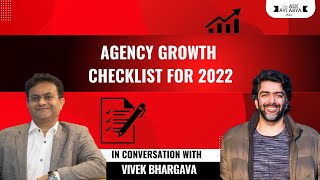
This is a YouTube video titled "6 Strategies to Grow your Agency Business | Interview with Vivek Bhargava | The Ask Avi Arya Show" recorded in November 2021. It features a conversational interview between Avi Arya and Vivek Bhargava, a prominent digital marketing entrepreneur and former agency leader. The discussion covers topics such as agency growth strategies, pricing, sales involvement, technology differentiation, entrepreneurship challenges, raising capital, and personal insights on happiness and mindset. Avi Arya hosts the session, engaging Vivek in a detailed dialogue aimed at entrepreneurs and agency owners.
What is your message? We are about 100, besides you and me and two people from my team. So we are about 102 entrepreneurs over here. We are 75 days approximately away from the end of the year. Everybody wants to be happy and successful. What is Vivek Bhalgar's message to everyone? One last message that they should always remember before.
So I used to joke around people that if people are charging $10,000 and you charge $12,000, then you have to justify why you're charging $2,000 more. But when you charge $100,000 then they have to find justification. You don't have to justify it anymore. Every single piece of content covered some of the actions people need to do to increase happiness.
Right?
You exercise, you meditate, you sleep adequately, you be generous, etc. But what happened was all this was focusing on making you happier in your very temporary manner. You exercise, you will be happier today, you sleep adequately, you'll be happier tomorrow. But it was sustaining happiness. I found that every single person I spoke to, I figured out that long term happiness comes from the belief systems that you have.
Vivek, welcome. How are you doing?
I'm always awesome.
Always awesome. That is fantastic. I'm just going to take one second. Can everybody hear us? Loud and clear. Me and Vivek.
Just.
Can everybody hear us? Okay, Vivek, you're in Bombay.
I'm in Bombay. Awesome.
Big Internet moguls. Welcome in the comments, please.
Thank you everyone. Pleasure to be here.
Awesome. So there are entrepreneurs, there are yoga teachers, there are Reiki people, there are, you know, there are entrepreneurs who built multiple businesses. There are hotels mostly. There are some marketers here as well. And so guys, welcome and thank you for taking the time out. I know the share of Diwali, the whole festive season and. But thank you for all making it so. Thursday master class is always us, is always bringing in people who I admire and I learn from. Right? It's always so this, you know, random people. They're people who I learn from. So I'm very happy to announce and say that Vivek has always been somebody who I've, you know, who's been a mentor from afar. At least once a year I take time out, ask him for his time and I go to his office and we sit together for what is always supposed to be a 20 minute meeting, turns out to be an hour plus. And I go back with a vision and a plan for the next year. So, Vivek, thank you for always being there and supporting and guiding and Showing the path.
My pleasure, Avi. And I think the feeling is mutual. I think we both learn from each other and it's always been the same.
So Vivek, for all the audience members here, have you been running one of India's largest digital marketing agencies ever? Like is there an agency bigger than yours?
Okay, so basically what happened was that I started a a company called Communicate 2 in way back in 1997. So it started off when people did not have Internet. So you can imagine doing digital marketing in those days. And those days our primary business was creating CD ROMs that we would insert in company brochures. And I think a lot of audience out here will ask what a CROM is. But basically that's what we did for the first two, three years of the company. Then I sold my company to Dentsu in 2012 and then some of the performance managing performance agencies were dovetailing into me. So then at that point in time these four agencies were about 1800 people. So 1800 people focused on India does make it a pretty large agency.
So that's what. So I don't know anybody, I don't know if I haven't met anybody who's running an 1800 member agency. So you know, a lot of us are from agency backgrounds. A lot of people. So does for 18 to run an 1800 member agency, you're obviously not. Are you involved in sales even then? Are you still involved in seeing how the operations shape up? Or you're only involved in mentoring and guiding the five, seven people who are part of your core team?
Actually what happened was that when I built Communicate to, when I sold it and became my prospect, then obviously as an entrepreneur I was doing everything. But once I joined Denser, my earnout was over. When these four agencies became a part of the performance group, then I had CEOs for all all of the agencies.
Right.
So we had Anubhav leading Sukrati and Merkle. They had Rubina who had hired for running iProspect. We had in those days Devin Chirag running SVG, Bhagya running the consult business. So the CEOs running day to day operations. There were only two key roles that I would do for them. One always is sales and business development. So you cannot be an agency lead without doing sales. So I think I would use my connections and deliver business to all the agencies in the network. And that I think was the primary role. And second thing is be a bouncing board.
Right.
So many times you take decisions and because of experience, you know what Decisions can have long term consequences and based on that. So I think your job is to be a mentor in a bouncing board to critical, consequential, sort of irreversible decisions. And that's the primary role you pay. But day to day operations, the CEOs run it pretty effectively and probably better than me. In fact, Anubhav and some of the guys, they have more experience in running larger agencies and larger number of team members and what I have. So sometimes what happens is people with more experience are dovetailing into you but they, they actually clearly are more competent than what you are.
So Vivek, thank you for mentioning that at any level you can never remove sales from your portfolio. That so when you're starting up as an entrepreneur, you're a solopreneur, you have a 20 member team or you have an 1800 member team, sales still has to be on your portfolio, correct?
Absolutely. I think what happens is that, you know, even when I was sort of replacing myself and I prospect now, Rubina came from money control but she didn't have a lot of product knowledge of agency business.
Right.
But she was great in sales. So I said if I have to replace somebody, I will replace somebody who can make sure the sales is taken care of. We'll always be able to find people who will be able to help her in operations. And I'm there and some of the other guys are there. But if you replace yourself with a person who can't do sales, then basically the agency business would have gone down and Iprospect would have gone down. But since the time she joined in, she did phenomenally well and Iprospect continued to grow even after me not being operationally involved in it.
Awesome. So Vivek, for most people who are running services, consulting, many agencies or you know, hybrid models with some consulting, some training and some agency models, the biggest thing is to be able to constantly they find themselves not on a treadmill, but maybe in a hamster wheel going round and round one more client and sometimes the client will have a duration, whatever, they will leave. Then you need more people. By the time the costs of the company go up, the salaries are going up, everything is going up constantly. So how so to retain existing clients and to get new clients at a higher price is so do you, did you find your, is that, does the agency model have an owner or a founder, Anybody who's running it find himself always in that hamster wheel or is there, is there a silver lining?
No, I think it is always in the hamster wheel and I don't think so. I think, you know, the first time around when I was building Communicate 2, I focused a lot on services and what I found was that I didn't have much of IP because that what happened was we were easily replaced by somebody was quoting a cheaper price right then over a period of time what we did was we built a lot of tech around us. Now this was not technology which was licensed as SaaS to clients, but we're using it internally. So we would use that tech to know what kind of content one should develop. We had tools which were working on Facebook and Instagram and social media. In fact, some of the products we built within Dentsu in those days are now licensed to 1200 plus clients all over the world in 35 countries. The first case where Dentsu became the Facebook marketing partner, which no other network in the world is a Facebook marketing partner. So we built it with zero budgets, with zero tech. Companies have raised hundreds of millions of dollars to build the tech that we had built. So Gautam Mehra, who was leading the land data sciences clearly built it because we realized that if we don't have a technology differentiator then it becomes very difficult to continue charging the right price. So I would recommend anybody who's an independent agency that a lot of things that we do today are going to get automated. So if you take UAC or you take the triple A campaigns of Facebook and that in the role of agency is going to be very limited. So unless we build some tech, we build some differentiation, it is going to make it more and more difficult. But on a broader sense, I think till the time you have a solution bent of mind and you will solve the problem of the client and deliver him outcome, then what happens you will always a role to play, right? Because as a agency you're playing the role of a consulting company but just unfortunately not getting paid enough for it. So I think people are realizing that they can hire the big fives, but they don't have the digital expertise that some of the agency folks have. And basically if you can deliver that value, sometimes what happens is they'll pay a big 5 millions of dollars and then come back to you and work with you. We have to go up the ladder, right? We have to charge more for what the service we deliver. So many times what happens is the race to the bottom and that is virtual cycle. So it's how do you convert that into a virtue cycle? Like we actually went through tough times in the financial crash of 2008. And then I started, you know, changing one thing. So I'll give you an example. We started charging about $100,000 a year for SEO in 2009, 2010, those typically people were charging $10,000 for SEO. So I used to joke around with people that if people are charging $10,000 and you charge $12,000, then you have to justify why you're charging $2,000 more. But when you charge $100,000, then they have to find justification because you don't have to justify it anymore. And then I had, you know, two of my colleagues from uk, they are the best SEO guys in the world. We got their own board. They were able to justify the price we were charging, and we were able to get a lot of clients. So we build a pretty stable SEO business, immensely profitable, very, very high gross margin. And we are already known as the best search company in the country, in spite of having never done SEO. But people confused doing paid search, and we just kept quiet and we built this. So I think if you can charge more and build a narrative around it. So let me share the narrative we had built for SEO.
Right?
Sure.
I went for my first pitch. We had never done SEO before. And I said, see, listen, you're spending about $2 million a year on paid search. Paid search is 35% of traffic. 65% of his traffic is organic. The conversion rates, organic traffic is at least twice as good, twice as good as much as paid searches. So 60 if 12 is 35, and the rest, it should be at least 24. You know, 24 crores will be like $4 million should be spent on SEO, actually, not 4. 8, because the conversion rates are double. You're not spending $8 million. Can I ask you for $100,000?
Okay.
It is no longer about $10,000.
Right.
We're saying that SEO can deliver potentially $8 million of value to you as just comparing it to your paid search is the most effective advertising medium known to you. In any case, it's better than display, it's better than everything else you've done. So now what happened was then, when you threw that $8 million figure in this head, then $100,000 seemed very reasonable. $100,000 was 10x of anybody else in the market.
Right.
Nobody charged SEO in 2008.
That was fantastic. $100,000 today is a big deal.
100,000, 2008, we went to almost half a million dollars. We've charged 2 and a half, 3 crores. 3 and a half crores for a project. SEO projects.
So thank you for saying that. Because there are so many entrepreneurs over here, the biggest problem is that I can't charge more. I can't charge more. The market doesn't pay. But we always tell entrepreneurs over here, you need to find out what is the problem that you, the scale of the problem that you can solve and fit a number like you said, fit a make, show that number and then show your service as part of the whole equation.
You know the problem is.
Right.
I think you have to genuinely believe it.
Right.
So what I said was not, I'm trying to build a story narrative. I believe that 65% of traffic is coming from organic sources. Generally, that source of traffic is converting at almost 2 times 3x of the paid search. If you're already spending $2 million on paid search, it just makes sense for you to spend $8 million on organic. Now, out of the $8 million, maybe $2 million should go into content creation. Maybe $2 million should go into, you know, different forms of translations of languages, maybe $2 million somewhere else. But then if you're not spending even a few hundred thousand dollars on organic, then you are actually going to lose out, right? You as a client, it's going to be detrimental to your interest. So it's not about me charging $1,000.
Right.
Generally believing that the partner does invest $100,000 in organic, he will get benefit, which is much more than spending $100,000 more in paid search.
Now, Vivek, as a counter argument from the client side, he says, great, I think it's a good analogy. You can wrap up the paperwork with some of my junior members. And he walks out of the meeting. And in the second follow up meeting, there's a marketing manager who says, what are the metrics you're going to give us? And maybe were there negotiations which said you take an upside of the percentage, don't take a fixed fee.
Yeah. So I think, see that that question has always been there, right. So I've always answered in this manner that, you know, we can be an entrepreneur once. I can't be an entrepreneur twice. When I'm running an agency, I'm already an entrepreneur.
Right.
I have to pay salaries, I fixed cost. Now, the thing is, your sales is dependent on a lot of factors, including your price, including your competition.
Right.
So the fact of the matter is that, yes. Can I have some kind of variable component? Probably yes. But if you ask me, my entire compensation should be based on your product selling.
Right.
It's impossible. Is like I asked that, okay. You tell me one person, including your team or you are, you paid your salary based on sales, right? You get a bonus, you may get a variable. But show me a person who's not charging a salary to the company, is working 100% on performance, and I'll promise you, if you are doing that, I will do this to.
Right?
Everybody does get a salary in a company. So secondly, the other thing is that, you know, people have told me that, Vivek, you know, there is a problem. You know that you charge a lot more than everybody else, right? So I've always said, like, you know, it's not the problem. The problem is I'm proud of it, right? So the fact of the matter is, so many times, like I've had discussions with juniors and they wanted to say, so I've told them, like, you know what, there are these six other agencies. Let me introduce you to these guys. Let me give you their number. Please approach them. They will pay 10,000 rupees a month and they'll work with you. So the fact of the matter is, if you want to work with Rolls Royce, then you will not get a Maruti price, right? But there are Maruti's out there. And I can give you a contact who you can help you, right? But then that's what it is. And if you're confident, right? So I've, I've had times where if I didn't book the client, I would have problems paying the salary next month. But my confidence never wavered, right? It was all lovely. It was like, you know, it's like, like in Heart of Heart, my hardest topic, I said like, please don't say no, please pay me the hundred thousand dollars, but you don't pay me. How am I going to pay my salary next month? But I was like acting as I don't care, right? You know, like, it's very simple, right? You know, okay, but you know, I'll give you a Maruti. Don't worry.
You know, lovely. Thank you for sharing that. That gives a lot of perspective and confidence to everybody else. So, Vivek, from running an agency, having that confidence to say, you know, from the brick and mortar, you understand SEO, you understand search, you understand your, you are paid, you understand, you know tools, you understand technology, you understand manpower. I also, you know, I remember when I went, you had, you have two assistants, Vivek. Yeah, yeah, you have two assistants. And you know, they, and they're smart people. You know, they're, they're, they qualified to handle so many things. So, so many Things on, you know, multifaceted. I've learned from you and I've seen you doing. Then you took on senior roles and it just almost seems that what may be difficult for you, I'm just sort of referring to some of our past conversations and giving context to the audience. What seemed difficult for maybe you to do maybe 10, 15 years ago, raising a couple of million dollars, I think now you can do on a couple of phone calls before without leaving your home, right? So how does one go from running an agency, brick and mortar every month. Every month and then building an agency, building a network and then saying, you know, now I can raise money for multiple startups. How does one person go from there to be able to raise capital?
Actually I have not raised money for multiple startups. I've just raised $3 million for one startup which I'm going to put 100% of my time in, which is called Profit Wheel. So there are multiple startups. I have done 25 odd in real investments with my own money. But there I'm not taking anybody else's money. It's my money, but my hundred percent, my concentration goes towards building the product company we're building. But so basically Covid, there were two babies in my life, right? One baby was I wrote a book on happiness that hopefully we'll talk about a little.
Yes, we're going to come to that.
But second baby was starting profit we, which is a SaaS product company. So one of the chapters in my book, right, we were talking about that if you want to sustain happiness then it comes in the growth phase. It does not come in the stability phase and stagnation phase. So I realized that I could be in Dentsu for 10 more years and retire there, but that was not going to be a growth phase. So I said, okay, what are the things that I haven't done before? I've never built a product company before. I've never built a global company before. I have not worked with co founders in building a company. I have not been in the SaaS sort of field, right? So I've not built a SaaS company and I've also not built a multi billion dollar company because at the end of the day in great attempts is glorious even to fail. So the way I look at it, right, entrepreneurship is like being a trapeze artist in a circus. You're capable of three somersaults, but you only do one because you fall down, you're going to die. But when you sell your company once, right, second time around, there is safety Net. So now you're capable of three somersaults. You try six, you do six, 12, 24, 48. You keep on increasing it. So one day you want to fly because you don't have to worry, right? I have the permission to fail at everything I do for the rest of my life. I never have to worry where my next meal is going to come from or roof over my shoulders, right? So basically what happens is that now I want to create something which is scaled globally, which is huge. We already raised $3 million before starting the company. I'm already in my talks with some people for a pre series A. I'll do the series A. We want to build a global company. So you know, essay, right? In the great attempts is even to fail. So I'm going to give it the best shot, right? This wasn't possible earlier. Possible earlier was that, you know, if I fail, I'm going to die. So I was hitting below my weight range, right now I'm hitting above my weight range. That's what I'm doing in profit wheel and get a chance I'll tell what are the things we're building in profit wheel. But again, all our profitable products are actually meant for agencies. So we license it to agencies so they get a competitive advantage to fight the technology companies and also fight the big networks, right? Because big networks have tech where independent agencies don't have.
Awesome. So building your own company, having that everyday, every month, salary, things, whatever you exited from there, you got your exit price that you're happy with. And so that's given you a safety net to now, you know, play front foot. And even if you get out, you, you know, you continue to play. So and also you have to take time out. I remember that there were times when I wanted to meet Vivek in Bombay and the destination was the table tennis club that in between matches we used to meet because table tennis is such a passion. Sneakers is a passion and learning is always a passion. So now going to happiness. I remember when I, you know, when I spoke to you a couple of months ago and I said Vivek, come on our masterclass and let's talk. And you said, this time I want to talk about happiness, right? And I don't know, maybe it's because you said it or whatever. Since then, every time I see you on Facebook, your smile on your face is constant. So tell us about happiness and you know, your new book and you know, how do entrepreneurs feel? Because most entrepreneurs over here and you know, generally like you said, different phases Once I have that, whatever that is, I'll be happy. So tell us about, you know, your definition of happiness and your book and everything. Let's deep dive into that. And then I have five questions to ask you.
So let me tell you a story how this quest started, right, this quest of happiness. What happened was that I grew up middle class. And when you grow up middle class in India, you have only one ambition in life, make money. And luckily Dentsu came and bought my company. So I made some money. But in a way, just a few months down the line, I found myself in front of a ventilator and my father was on the ventilator and there was nothing I could do to save him. And I quickly realized that all this money, which was in my life, which in my mind was a silver bullet, which has solved every single problem, was quite worthless when it came to things that mattered most. And I said, you know, this can't be my purpose in life. So I said, okay, I'm going to write down a new purpose in my life. And I wrote down a purpose that I'm going to make myself happier every second, every hour, every minute for the rest of my life. And that started my quest about eight, nine years ago. And I'm a voracious reader, so I read about 30, 40 books on happiness. I went through every single. I've been a regular TED star. So whether it's Vancouver, whether it's TED Global in Brazil, I've constantly gone and attended TED conferences. So I went through a lot of videos on ted. I found something very interesting. Every single piece of content covered some of the actions people need to do to increase happiness. You exercise, you meditate, you sleep adequately, you be generous, etc. But what happened was all this was focusing on making you happier in a very temporary manner. You exercise, you will be happier today, you sleep adequately, be happier tomorrow. But it was not sustaining happiness, right? And I found that every single person I spoke to, I figured out that long term happiness comes from the belief systems that you have. And the way I define happiness, which is now in like there are people like Ben Hoeven who have described happiness is how much do you love the life you lead? It's overall life satisfaction. Now, God forbid I break my leg. Somebody asked me, are you happy? Of course I'm not, right? But in the overall scheme of things, breaking a leg, which is going to get all right in a few months, is not actually reducing my overall quality of life. I still love the life that I live. I have a cast for the next few months and I'm having difficulty to walk, but my old quality of life is going to come back to where I was earlier. Very quickly you come back to your baseline, whatever the baseline is. So I think that's the time when I decided that, you know, if you can build a framework where you have actions on one side and beliefs on the other side, it's almost like the Jim Collins flywheel, right? Where one improves the other. So along with exercise, meditation, sleep, etc. You should have certain empowering beliefs. So whatever beliefs you hear, they empower you, adopt them. And whichever beliefs that limit you, you reject them. So I've given my beliefs on money, on trust, on a concept of learnability, and I've connected them to these universal things, right? Actions. So actions are universal. If 100 million people exercise, they will be happier than 100 million people who don't. But I have a belief that I trust everyone. Now, every person who trusts everyone may not be as happy as me, right? That's my personal belief. So it's unique and individual to me. But I've seen that I've had more relationships with people, even though some people have not been fair to me, because I trust everyone, right? So that's my empowering belief. Similarly, I have a belief about learning new things. And I learn new things every day by singularity. Whether it's ted, whether it's disruptive strategy from Harvard or even experiences, right? Like, I'm off to a trek to the base camp of Everest on the 23rd of October. I'm training for it right now, but it's. I wouldn't call it is that it's like a glam luxury trek, right? Where we are trekking only 5, 6 hours, 7 hours. Then we are flying to half the places. But we're going to land up at Kalapattar, which is the western base camp where you can see the entire Everest in front of you. So keep your fingers crossed that the weather is good, we get to see the sights.
But are you single malls traveling with you?
So the thing is, you know, this is one of the few times where I'm being off alcohol, I'm climbing 100 stairs a day and I'm doing about 120 sports because wow, really want to enjoy the trek. I better be physically fit. But. But one of my friends is carrying some very, very interesting sake mate in India which we're going to have on the 27th when the trek ends. So I'm looking forward to the sake on the 27th. But till that time, I want to be off alcohol.
Awesome, awesome. So I have a. I have a. So, you know, I have a few questions here that I wanted to ask. So, around. Around your book, you know, like. So can you just summarize your book for us?
Sure. So basically the book is called Happiness is a Muscle. Right. So broadly says is that happiness is like a muscle. You can't basically build muscle by going to the gym for one day or eating healthy one day.
Right.
You have to work on it from a consistent manner over a period of time. Now, I believe that everybody has a baseline. Let's say I'm an optimistic, you know, positive guy. I'm 70 and 100. If 100 is ecstasy and 100 is nirvana, right. Somebody else is a realist. They believe that, okay, you know, life is not all good and hunky. So let's say they are 60 on 100 right? Now what happens is both of us win a lottery. Now 60 will become 80 and I'll become 70, will become 90. But after a few months, few years, you come back to your baseline. Or the baseline is similarly if you had an unfortunate incident, you got Covid, you broke a leg, you go down, but after a few months, you'll come back to your basement. But if you can work on your baseline like a muscle, that means you do the actions every day, which is sleep, be generous, exercise, etc. Meditate and build empowering beliefs on trust, on vulnerability, on money, your mindset about friendship, tribes, karma. Then you can make the 70 and make it 71, make it 72. So when something doesn't go your way, you may come back to 65, but you will come back to 72 instead of coming back to 70. So basically, you work. Your eventual goal is to reach 100, where your natural steady state is ecstasy. Now, you may still break a leg and come back to 80, but then after a few months, you'll be back to 100 because your natural steady state is 100. So that's what the book is about. I don't say that the book is going to make you happy. The book is about making you happier. How do we increase your baseline if you are on 20 or 100, doesn't matter. How do we make you 22 if you're 90 or 100 doesn't matter. How do you make it 91? So the fact of the matter is that if you follow all the actions that I've described in the book and build all these beliefs that I've described, and the thing is, beliefs Are sort of personal, right? So what happened was I have a belief about money. Everything that I upgrade in my life upgrade by a factor of 4x. So I've shared that philosophy with you, right? But I spoke to Vishal Gondal. He had a very different view about money. I spoke to Anupam Mittal, he had a very different view of money. Like Anupam Mittal said, for me money is like this dialogue of forest. Come. One less thing to worry about. Rajesh Jain from Redcore spoke about that. Money for me is freedom. Because I have the money then I'm free to do all the things I want to do and say no to everything else. So now every single other person could have a different belief about money that empowers them. So you adopt all these empowering beliefs and reject the limiting beliefs. But if you can build all these empowering beliefs in your life and follow these actions every day then your baseline will go up. And if your baseline goes up, it's like a muscle. Then what will happen is it'll stay there. It goes to 72, it will go to 73, it will go to 74 and go 75. Then something go wrong, happens. It may drop down 65 for two days but it'll come back to 75. So that's what the book is about. That how do you work on your happiness like a muscle and keep on improving it bit by bit, every day, every month, every year. So. Right. So if I, I was 70 when I started writing the book, I'm probably 74 now. In the next five years, 10 years, I should be 80.
Right?
It's a slow process, but once you get there.
Right.
And 80 will remain 80 even if I don't do much.
Lovely Vivek. So tell us from that time when you were worried about the salary for the next month and you still quoted 100,000 without a safety net. Now with that safety net and more confidence and more years of experience behind you, is it easier to be happier?
So you know what my belief about happiness. So you know I did a lot of research on money aspect of happiness, right? Honestly, money only increases your happiness till the time it reaches about $75,000 a year.
Right?
So 50 lakhs a year approximately.
Right.
So the fact of the matter is if you are drawing let's say $30,000 a year and 30 becomes 60, you can actually be almost doubly happy.
Right?
Because you can now buy a lot of things which you couldn't buy earlier. But it's like, you know, the the master's laws, right? The food, shelter, security, clothing, those things. But once you reach that 50 lakhs a year and above, right? Then that 75,000 becomes, let's say, 150,000. Maybe your happiness will go up by only 20%, 150,000 become 300,000, then your happiness will go up only 10%. So when you reach a million dollars plus, right, then what happens is that instead of million, you get 2 million. There aren't too many things that you can buy with 2 million, then you can't buy with a million, right? So the Captain Zeta Jones and you know, Sean Connery, there's an entrapment movie. He says that what can you buy with $7 billion, you can't buy with $4 billion.
It's so true.
So the fact of the matter is that I reached that level where money was not going to add to my happiness. I almost experienced most of the things I wanted to experience with the money I already had. So then what happens is you need to find a hack to increase your baseline. So whether it's about learning new things. So I learn random things every day, right? So I'm learning Urdu right now for the last five months. I'm learning chess.
Oh nice.
I should captain chess for Sydney Muras. I learning chess. So I, I learned chess like Netflix, right? So my chess tutor, along with my friend will, will say, okay, you know, let's study game number six of Spassky versus Fischer. Because that was a game with Spassky, got up at the end of that game and clapped for Fischer, right? So it's just like going back in time and watching a game which was one of the most brilliant games ever played, right? So now what happens is that all these things that I'm learning, whether it's mentalism, where it's stand up comedy, where it's, that gives me joy and I feel that it makes me a better me mentalism. If I get somebody's password, it helps in sales because that guy is never going to forget me in his life. If I go and, you know, do stand up comedy and make people laugh, then people have better recall value for me, right? And I become a better speaker. Every single thing that I'm learning, even when I learned Urdu, it gave me some philosophies in life which were helpful for me raising funds because it gave me what values I should have in my company. It was a share. I wrote an Urdu. So the more and more things you learn. So that's one of the chapters in my book called Learnability, that you learn random things. It's almost like stay hungry, stay foolish of Steve Jobs when he talks about connecting the dots. The more and more random things you learn, the better you. You will become better. You could be an entrepreneur, doctor, lawyer, doesn't matter. But you become a better you.
Nice. So, Vivek, I just want to take reference to the, one of the. So just because I'm asking questions where we can. Because eventually this interview is going to go to, you know, our channel and I want it to be a Q and A so that people can forward and, you know, listen to whichever question they want. So a lot of people are pre. Covid, during COVID whatever. You know, some people have always had a problem with money and some people are struggling with money after Covid. So when you're struggling with money and you're looking to increase your net work, right, you're meeting out people, you're seeking mentorship, you're asking for advice and all of that. So I have always used, made, you know, short videos, reached out to people. And you know, like you've said, my parents have been eternal optimists. So that makes me an optimist. And Maybe that's why 80, 90% people have always opened their doors and said, why not have a conversation? And I, you know, have been fortunate to, you know, multiple times meet people like yourselves and you say, okay, Kavi, come over. What is the. And so that coupled with. I remember when I met you in your office last in Bombay, before COVID you were going somewhere to the East Asia. And you said, abhi, I'm going for this very luxury camp. And the consulting that happens is on a very different level. I never knew that that kind of thing happens or you, that that level is, you know, I never knew that level existed. And you were very excited when you were leaving for that trip. So at every time that you become successful in a certain, in the material world, another level opens up to you. Level of people who are okay to let you in their circle and says, yeah, come in. And you know, we sort of. So what happens with people? So do you. What is, what would be your message to people who are struggling in their entrepreneurship journey, not being still thinking of their next month or next quarter, should they focus on a network?
So see the, the way I look at it, right? So when I was leaving Dentsu and starting this company where this guy talks about, he goes on stage and he says, I'm going to tell you something about a ceramic cup. I don't know if you heard this talk and he said that, you know, last year I was at this conference, I flew first class, there were three people there to receive me, the limo. I was escorted to the speaker's lounge. I asked for a coffee and I was given the ceramic cup coffee. This year I'm here. I flew coach. There was nobody there to see me. I don't have my speaker bash. So I had difficulty entering the conference. When I asked for a coffee, somebody directed me to this coffee machine where I got this plastic cup. So I said, what changed in one year, right? So then I realized last year I was Secretary of State, this year I'm not. The silver cup was never meant for me, right? So when I left Dentsu, honestly I'm very clear in my mind I am going to be a struggling entrepreneur for the next three years, five years, 10 years of my life, right? And I am struggling today, right? If I don't have that mindset, I don't have the attitude I'll not create profit wheel into a multi billion dollar company. So all of us are struggling at all levels. The way I've seen is that I've always had, I never network for the sake of networking, right? My belief is very simple. We are living in this abundance age where our role is to help as many people as we can, right? So meet people, find out, genuinely be interested in them, be curious about the problems they're facing, see how we can solve these problems. Don't have an approach that what I'm going to get from that person now, right? So people tell me that, Vivek, you're very generous. I said I'm not, I'm very selfish. Just that I have a 20 year horizon for selfishness, right? So in 20 years time these people will be valuable to me, right? So I'm extremely selfish, but I have a 20 year horizon. If I do something for you and then I'm expecting something back next week, right? The next time when I'm approaching you, you'll know that, you know, Vivek has approached me, he must be having an agenda, right? But if I have a 20 year agenda with you, then I have to deliver value to you for 20 years before I expect something back, right?
Right.
Automatically that's not networking. The problem is, right. So many times what happens is that you won't believe it. One of the practices I follow very, very religiously and it's almost sacrosanct for me is I never offer my visiting card. I meet a person, I'll have a conversation at the end of the Conversation, that person must ask for a visiting card. If he doesn't, that means I've not had a valuable conversation. That's a lesson. That's a lesson to me that I've not been able to convince him to ask for my contact. That means he can move on with his life without keeping in touch with me. So because see, that is very powerful when he asks you for a visiting card, right? Then he's going to make an effort to get in touch with you, right? So imagine, right? So I'll tell you one interesting story. I was sitting in a flight and you know when you sit in the aisle seat, you always have this vision at one point in time. I don't know if you have it or not.
I have heard this.
Some beautiful girl should come and sit next to me. And actually she's walking. He said, okay, she is walking towards me. I hope her seat is next to me. And she does, right? And then she was wearing a GoG headphones, everything. And then basically when those days, they used to make us remove headphones and everything when the flight was taking off, right? So I had to start a conversation with her. I found out she's ex Miss India. No wonder. So I said, you know what, I'm gonna have a conversation with her and she's going to ask for my number. And she did, right at the end of the conversation. Unfortunately, we had a client called DSP BlackRock and we had to make some marathon videos for her for them. So I hired her and I, I put her on a treadmill for eight hours. So therefore that she never spoke to me ever again. But basically same thing, right? If you have this philosophy, the networking becomes interesting because you're going to have that, you're going to ask, you're going to wait for that person to ask you for your number. Now that's. You have to add value to his life, right? And he should feel that keeping in touch with you is going to make a difference to his life. Otherwise he's never. Otherwise that card is useless in any case.
That's amazing. I love that. That's almost like Shahrukh Khan waiting for Kajol to turn back. And that's fantastic.
Asking about the book, right? So the book is on route to getting published. So it will get published in a month or so. But also have a happiness course, which the 21 video course. A lot of Gen Zs are not going to read books these days. So that, that course is going to go live in the next two, three days. So hopefully once the course is live. I'll share with you, Avi. So it's a 21.
I would love to promote it wherever I can please.
So on a platform called you school and one of my friends and my daughter is actually sort of, it's a startup of theirs. So I said, okay, let me give you a happiness course.
That's amazing. I remember talking to your daughter last year during COVID I think we had that conversation. And she's what, 12, 13?
She's 18 now.
Right?
So she's 18 now. Wow. And she was talking about her new venture and everything.
Earning two and a half, three lakh rupees a month. A week means, you know, honestly, between you and me, you know, a few two years ago she spent some 2000 rupees on some fizzle Kachi as we got it right. And I gave her this big lecture that Pesa paid penny upta hai. And you know that that whole thing my father had given me 20 years ago, right? And then she started earning 50,000 rupees, 80,000 rupees for a post. She watched Cinderella movie and got paid like 1 1/2 lakh rupees or something from Amazon prime.
Right?
Just watch a movie with your friends. So, so then I, you know, she said, papa, you're saying something. I said, you know what?
Fantastic. That is amazing. And so all this in one year, huh?
All this in one year.
That's fantastic. So Vivek, tell us you have a few drills in your book which you know, which are, you know, exercises that get you to increase your baseline. So can you share some of them with us?
Yeah. So what I've done is right. I have actually created a happiness drill after every single chapter. So my first chapter is that, you know, my father passed away and I thought to myself that I'm going to make myself happier. And then what I did was that I wrote a book so many times what happens is right. We'll get a negative report in our blood test or an acquaintance of us will get cancer because of smoking and we will decide that we'll do this. But after a few weeks, few months is get forgotten. So if you just go back in time, decide two or three things that you decided which is good for you. You said you will do it and you stop doing it. So just make sure the next 28 days take up one of those things.
And do it right.
Then make a list of things that used to be passionate about. You should love to learn and no outcome in mind. Make a list of three things that you will Learn over the next one year. Make sure that you learn it for at least 50 hours. Hire a teacher or do an online course. In 50 hours you're gonna spend learning those things. It could be chess, it could be Urdu, it could be mentalism, it could be stand up comedy like what I'm dying. It could be anything under the sun. It could be painting, be sculpture, be poetry, anything you want, right? There's three things that you want to learn in the next one year, four months each, right? Similarly, I think if you take sleep, please track it, right? So I don't know if people have read the book called why we Sleep. They say that three things contribute to your health is exercise, nutrition and sleep. If you can do only one out of these three, then sleep you can ignore and exercise. But one thing you should not ignore is sleep. So see, all these actions will make you happier if people meditate. My recommendation is meditation is everybody should take up. So something is universal, right? Meditation, sleep, exercise, generosity. These are universal things everybody must do. But just see, one thing I recommend is a drill is find out what are the limiting beliefs you have in your life and see if you can get rid of them. And whenever you hear an empowering belief, try to see if you can adopt it. So let me give you an example, right? I was going to sign some documents last month and my CFO told me sign this document tomorrow because today is Saturday. So I said okay, I'll sign it tomorrow. So no, no, I don't want to sign it because I'm saying so there's a scientific reason you should not sign it on Saturday. So I said see, listen Pratap, let me be honest with you, right? I've spent half my life signing documents when they come in front of me, I've never ever delayed something because today is a different date or something is happening, right? So I said, you know what, I'll sign it on Sunday because you asking me because it makes you happy. But if you tell me your belief, right? What are the worst that will happen to me, you'll convince me. Then tomorrow I'm going to look at what day it is, what date it is, what month it is. And it's going to limit my life. So I don't even listen to it. So so many times what happens is there are so many beliefs that we have in our lives that are limiting our belief, right? So we should get rid of those beliefs. And you can actually hear beliefs which actually. So I'll give you an example. One of my other friends came over Home about three, four years ago and he told me about this belief about soul, how Hinduism has a soul and in 7,000 years of soul age you achieve nirvana. So your body could age 30 years and your soul could age thousand years. In the same 30 years your soul could age one year and your body could age 30 years. So for me, I'm almost an atheist, so I don't for me anything to do with soul is mumbo jumbo. But I found the belief very empowering. I see. What am I doing that will really age my soul? If there is something called age of a soul, can my book and my happiness course touch 100 million lives? Can I do something about climate change? Can I do for some things which will change? Can I create a billion dollar company that will feed tens of thousands of families? What can I do that will result in aging my soul? So I took something that I may not have belief in, but in my book I've covered karma. I generally believe karma is powerful for me. It's an empowering belief for me, right? Because when I'm doing something good, it actually increases my happiness while I'm doing it. And I don't have any expectations. As I said, I have a 20 year belief about returns that I want from it. So on a day to day basis, I'm adopting beliefs that empower me. So the way I look at it is that all these things, you should do it because you love doing them.
Vivek, I have two questions for this. One is you have again, I'm sure you'll have 1800 people working for you again very soon. So as the team grows, do they need to adhere to your beliefs patterns?
So I think what you do is very clearly right. There are certain set of values that you believe in and it's important that your culture of the company should have those values, right? So for me, let's say integrity is very important. So I'm very clear that whatever I build, it'll have, that's one unforgivable sin, right? So very clearly that is one value that I will not compromise. Similarly, I would like people to know, take decisions, use their judgment. So then what happens is like somebody's asking me something, I said, okay, what's your judgment? What, what do you think you should have done?
Right?
So let me give you an example. I was reading this book called no Rule Rules for Netflix, right? And they, they don't actually have an expense account and they have user judgment, right? So what happened was they were going to partner with Samsung and they were going to these 85, 90 inch TVs and the TVs didn't arrive in time. Now this employee went and bought three TVs of 90 inches each with his own money.
Yes, I remember that.
So now the thing is, that's what it is, right? Use your judgment. The larger scheme of things, that $10,000 didn't matter, but $10,000, a lot of money for the employee, right? What if that happened in some of the companies in India, right? So approval, reimbursement, and now just imagine, right? You have taken one person who did the right thing to do the wrong thing for the rest of his life.
Right?
The thing is you want to build your culture, starts with you. So they say culture, each strategy for breakfast, Right?
Right.
I don't think people should have the same belief, but I think people should have some values which are organization values. If you're, and the thing is, see, listen, you can be a Microsoft, you can be an Amazon, you can be a Facebook and Google and Tatas, each of them have their own values, right? So we're not trying to copy somebody. But every organization must have some values, must have some culture, must have some beliefs, right? So those beliefs, if they're common, then the chances of that company being more successful is higher, right? So culture is important and perfect. I generally believe that happiness brings you success rather than the other way around. So if you are happier, I have a feeling that you will be more successful. And the same way happier organizations will be more successful.
Oh wow. Happy organization. Okay, well I love that, I love that. So, and obviously it's, it's not, it's not a one, it's again like you said, building the muscles for the whole organization, making sure things happen for them. So this answer was so beautifully explained. I'm, you know, I'm, I'm never going to forget that. Vivek, I wanted to ask you this question for a very long time. I mean I want to ask this question to a lot of people and I want, I don't know if I, if I ever will get the right answer, but it's just because I am asking on behalf of so many people a pressure successful or Japanese social media, for example. I'm just painting a picture. Delhi, Bombay, Bangalore. And they make billion big companies. Even Bollywood movies are now about smaller towns and everything. So that is, you know, Internet and all of that. A lot of democratization has happened. So this pressure to become successful is so big that if people are not successful, they're just not happy. So what would you what should. Even the other day I was listening to Sadhguru. He also said when you become successful. And I wanted to say successful Mantu nahi hai successful. But I maintained a good lifestyle. I was happy. And my grand. My father in law I believe is the happiest man on the planet. That book happiest man on the earth should have been him. He was an ex army person who became a lawyer, did nothing for money. Just gave value like you said, continued to give value to people. Today he's very decently successful in real life terms. It just happened to him. But he did not care about. So when I. When I got married he used to say listen, I have nothing. I'm just happy. I have values or whatever. So today everybody says so what is success? And does everybody need to be successful? And how should they measure that?
So you know, it's a very interesting question. I'll tell you what my view is, right? My view is that sometimes in life, right? You take sports like running, golf. You don't play against anyone. You play against yourself. So Vishal I was talking to, right? He was talking about that, you know, life is a game. I don't care about money. But you know when you play a game during the score, the score is for you, right? At least you would know that, you know, you're doing well or not. The fact of the matter is that unfortunately or fortunately, right? Entrepreneurship is the most creative pursuit a person can have. And it's the one of the only creative pursuits where there is a very objective result and a score that you get, right? So the fact of the matter is my belief is very simple, right? I've already said that money is not going to increase your happiness, right? After a certain time till the time you don't hit your base levels, right? So I do agree. You're not making 50 lakhs a year. Please work hard, do whatever XYZ. And you can only talk about philosophy once your tummy is full, right?
Right.
Basic necessities in life. And today there is a certain amount of money you need to make to keep your family happy, have a roof over your shoulders, etc. After that is not going to give you happiness. After that you'll have to do more, right? You go away the muscle loss and there is fame, recognition, spirituality. And I would say you can replace spirituality in the current context. What happens, right? Because if you can be mindful, you can be happy. You can be, you know, at 100 and ecstatic all the time. Then you are spiritual in nature, right? But I think I've never ever looked at myself from a monetary terms and. And being embarrassed about it. So let me give you one example, right? I should have a Honda City that had gone to the garage. I used to have this beat up Centro which was in a pretty beat up state. Got banged a couple of times and I didn't have money to send it to the garage, etc. I was going to a house where the house itself was maybe thousand crores, right? It was multi billionaires house. You're going for this thing where I'm part of YPO kind of organizations where everybody is very wealthy, right? So wife said, you know, we shouldn't go in this car. Let's just rent out a. You know at least, right? I said no, this is what I am, right? So I was leaving the party. I remember there was Rolls who drive drove up. There was a 7 Series Rover up, there was a Maybach who drove up. And then my Santo came, right? And I was talking to somebody. I had not even an iota of shame. This is what I am, right? I've tried to travel. I like, I've traveled. So we should go for these trips. And some of most of my friends had never traveled, you know, economy. But I said listen, I'm not spending $4,500 extra for a business class ticket. In those days that $5,000 will be better served in my company. But you guys can travel, I have no problems. Yes, I'll spend the hundred dollars extra in hotel because that's only two days. $200 is something I'll spare because that makes a difference. We don't spend a lot of time there, sleep there, right? But it's a three hour, four or five, six hour flight. I'll manage, right? So everybody in that group flew economy with me for that eight year period. So once you are clear in your head, right? So my belief is that one of the biggest problems in our life is that sometimes we have this belief in Lokiya Kaingiya Sochi, you know. So my belief in that is very simple, right? Nobody thinks about you, dude. It's like you only think about what other people are thinking about you. Nobody's thinking about you. Everybody's thinking about themselves, right? So the thing is I have never bothered, right? What I am, I am right? And I'm very clear, right? I have friends who per se like me the way I am. And I'm very, very. I call a spade a spade, right? If you don't like it, you may not continue relationship with me. But it's fine, right? The end of the day, in a way, this is what I am. I'm authentic. I'm always going to be like this. I'm always going to be passionate. I'm always going to say the things I want to, right? Do I care about money? Of course I do, right? I'm not saying I don't care about money, but my value is not dependent on how much money I have, right? Because even like when I started a new company today, I got arrested in my laurels, right? I'm a successful entrepreneur, but now if profit really doesn't work, then I'll be a failed entrepreneur. So a huge risk for me, right? But why should I take the risk? Because I don't care if I fail, I'll try again. I fail, I'll try again. I fail, I'll try again. I have now the permission to fail at everything I do 100 times. And the 101st time I'll try again. Because there's nothing to lose, right? I never have to worry about my next meal, right? I never have to worry about my basic necessities. So if that safety net is there, why shouldn't I keep on trying? Okay? If people are going to call me a failant, so be it. How does it matter?
You know, So I totally understand what you said about. I liked when you said that, you know, it's not with the world. You have your score, with you, it's like a game of golf, not a game of tennis. Maybe, but do you also think so a lot of people find solace around the world. It doesn't matter. I'm not doing it for anybody. But sometimes. And it works, it's 100%. But some people use this to put a curtain and hide their indiscipline and don't work hard enough or don't they are disciplined to do the work, to get the results. So, you know, so then. So that's. That is there as well. So do you. When you. Could you meet so many entrepreneurs, so many people come to you, meet you and all of that, are you able to figure out somebody who's just doesn't have the discipline to make it happen versus people who don't want to make it happen because they're happy where they are. And my final question is, somebody's not doing it because he doesn't have the discipline. The other person is not doing it because he's just very content. Do these people, Would you invite these kind of people to build a startup where you need lots of Fire every day.
So you know these are very difficult things, right? Every person has certain strengths, certain weaknesses. So I'll give an example, right. I'm actually not a very disciplined type, right. I'm a procrastinator. And you know there's a very interesting video on TED about procrastination and I'm, I would say a role model for procrastination, right. So what I realized is that in order to hack my procrastination I have to create false deadlines. So now what happens is 23rd I'm going for a trek. I want to walk, you know, 10 kilometers uphill every day for three, four days, five days, etc. If I'm not physically fit it's going to be a disaster for me, right? So now what happens is I have to do my exercise every day. I have to be disciplined about my nutrition. I have to do everything, right? I'm committed to people where I've my happiness course. By the way, I've sold 500 copies of the course to one of the companies in India, thousand rupees a piece. So now I've already sort of committed that this course is there, right? So now working backwards I have to sell it to them similarly, right. With somebody who's going to help me distribute my book. So now book has to be ready in a certain date, right? I've committed a profit wheel and I've raised capital and I've told them that you know, know next race I'm going to create this thing, I'm going to raise this, I'm going to open my US office and I'm going to do this and I'm going to build this, right? So what has happened is that because I'm a procrastinator but I have, I would maybe I'll call it ego or vanity that I don't want to not achieve the things that I've committed to, right? My commitments. So because I know I'm a poor, because I know it's my weakness, I create false deadlines. So because I create those false deadlines and I create then automatically brings a display because if I didn't have a deadline, right? If I said, you know, one day I will go for an average trick, right? And one day I don't know when it's going to come, right? Yeah, paid for it, I've signed up for it, right? I've signed up OPM of Harvard, right now I know May 22nd I'm going to go there. So three weeks in a year I'm going To be busy with opm. Now the fact of the matter is it'll have assignments, it will have that. I will have to take lectures or do everything. I commit to taking talks, right? If I've committed this talk or whatever, right? So I don't have a choice then. So because I'm a procrastinator, I create this false deadlines in my life. And these deadlines allow me to work hard and become more disciplined. Because my basic nature, I'm an indiscipline. If I didn't have those deadlines like I would be chilling out, right? So the fact of the matter is that I have to create this, right? So you don't understand. There is no harm in being a procrastinator or being the chilled out guy.
To be aware of who you are and then build systems around it.
Absolutely.
Don't fool yourself, don't say it's not there. And one day I'll change it. First accept it. Okay. You know, so we asked for one hour. We already crossed that. I have this last thing to ask you. What is your message? We are about 100 besides you and me and two people from my team. So we are about 102 entrepreneurs over here. We are 75 days approximately away from the end of the year. Everybody wants to be happy and successful. What is Vivek Bhargav's message to everyone? One last message that they should always remember before the keywords.
So I think I would leave this one message that if you generally research has shown that happiness brings you success. So work on happiness almost like that. Because you want to become more successful and there are certain actions that you must do, right? So you must sleep adequately, you must exercise, you must meditate, be generous and abundant in life. These are essentials, right? You have to do these things and then just make sure that every day be mindful of your life and see which are the things that are limiting you, which are the beliefs that are limiting you and which are the beliefs you're hearing that have the potential to empower you. If you keep on adopting these empowering beliefs and sort of reject all these beliefs are limiting you. You will have a. Your baseline will keep on going up, right? Your 75 will become 76, become 77 in the next few years, right? You will be at 190, 95. And as I said, right. If you achieve this, you'll be more content. And the way I definitely happiness is how much do you love the life you're leading? You're going to love the life you're leading. Like I do love my life. I love the life I'm leading. So I think this is one last parting message I would like to give to everybody. Be happier and you will have a lot of fun.
Awesome. People are typing goosebumps in the comment box. Awesome. So guys, what before, before we let Vivek go, what's the one thing everybody got different based on where you are currently in your life situation? Everybody got a different message. What is that one thing that you took away from today's talk?
So looks like I was successful. People asking for my card.
Good one. I'm going to drop down the link for your, for your, for your Facebook and your Instagram. Vivek is everywhere. You can type Vivek Bhargav and what I'll do is that you give me the link. Sorry, go ahead.
Because very difficult for me to respond individually. So what I would recommend is that if you can direct the questions to me and we'll figure out a way to that. Because I'm trying to build a startup so time is scarce. Become very difficult for me.
Yeah, no, I don't want anybody to reach out to you personally. I'm just saying reach out. And you have so many articles, your story here, there TED Talk. You must.
Guys, for all of you people link please share it.
I think 100% no. So what I'm going to do is I'll, I'll, I'll connect with you tomorrow day after I take those links and I'll build a promotion thing around it because I would love for people, people to reach to first for me to read it and then for others to read. To read it. 100% awesome. Vivek, thank you so much for your time and my regards to your daughter and all the best to her for just getting started in a one year. That's a, that's a pretty decent revenue to start with.
Thanks Avi. Pleasure to be here. And thanks everyone for spending your evening with me. I hope you got some value. Okay, my friends, bye.
All right, take care. Thank you.
More from Avi

The strongest mindset doesn't begin with meditation. It begins at home. Before you conquer the wor

The strongest mindset doesn't begin with meditation. It begins at home. Before you conquer the wor

Your mindset isn't something you fix once. It's something you train every single day. Just like yo

Don't build a company just because your friends are. Build one because you're ready. A startup is

Everyone dreams of becoming the boss. Very few understand what that really means. The moment you b

Most entrepreneurs say, "I don't have time for coaching." The truth? You don't make time for what

Over hiring doesn't always solve problems. Sometimes, it creates them. Having a small buffer in you

"The highest-paid" isn't the goal. The highest-value is. People often ask why premium mentorship co

The founder will always be a bottleneck... at some stage. The goal isn't to pretend you're never th

People ask me how I stay consistent with my morning routine while traveling across countries and tim

People ask me how I stay consistent with my morning routine while traveling across countries and tim