6 Things to Remember for Making your Podcast Successful in 2021 I @MarcGubertiIThe AskAviArya Show
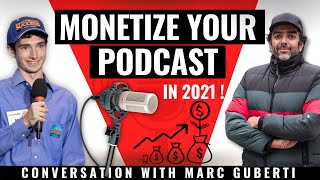
Avi Arya talks with Mark Gilberti about launching and growing a podcast, covering monetization strategies and practical tips for building it as a business asset. They discuss audience growth, revenue models, and what actually works for new podcasters.
Why are you launching the podcast? Because you don't want to launch a podcast just for the sake of having a podcast saying that, okay, I'm doing audio too, so have some goals for your podcast. Do you want to use your podcast to get clients? Do you want to get on more stages? Do you want to get more book sales? If you view your podcast as an asset, that allows you to achieve all these key objectives. And we'll talk about how to use a podcast to achieve these key objectives. Don't worry about that. Hey, guys.
This is Avi Arya, father of two girls, six dogs, husband to a superwoman, a streetcar racer turned hotelier, now social media marketer and founder of Internet Mobiles. Welcome to my channel. Before I start every interview, I always like to ask one question. I always say that the shortest distance between two human hearts is always a story. And I always say you share your story with complete a good story with a complete stranger, and you win a heart for life. So before we move ahead, Mark, for our audiences, what's your story?
So since we're talking about podcasting, I'll talk about how I started breakthrough success, because podcasting was something I had wanted to start years ago because there's a lot of value in having conversations with people. But I had tried two times to start a podcast, and it didn't work out because I was overwhelmed with technology, didn't know what to do. So for breakthrough success, the reason I started that show was I actually decided I feel like if you want to start something, one of the best ways to do it is to force accountability on yourself. So I reached out to five people who I knew. I invited them to be on the show knowing nothing about how to host a podcast or technology or anything like that. And once I got my first yes, I was in. If all five people said no, I was taking that as a sign that I shouldn't be a podcaster. So I would just say that if you're getting into podcasting or anything and you're afraid of, like, you know, how to go through it, I would just say, give yourself that accountability. Start reaching out to people like, you know what you're doing, and then when you get that first, yes, you could kind of use that to figure out where you go from there. So that's just my little story of how I started breakthrough success and the story that I decided to share today. So we're going to talk about launch, growth, and monetization. We're going to quickly go through all the different stages. We're going to be gearing this towards authors, speakers, coaches, if that is not you, because I know we also have a lot of entrepreneurs here where podcasting can work really well for you. These strategies, you're going to be able to mix and match them with your own business. So the first thing with a podcast, we have to figure out, why are you launching the podcast? Because you don't want to launch a podcast just for the sake of having a podcast, saying that, okay, I'm doing audio too. So have some goals for your podcast. Do you want to use your podcast to get clients? Do you want to get on more stages? Do you want to get more book sales? If you view your podcast as an asset, that allows you to achieve all these key objectives. And we'll talk about how to use a podcast to achieve these key objectives, don't worry about that. But if you have some key goals for your podcast, you know what your podcast you want it to become for your business, you know what role it plays, it's going to give you the extra motivation to launch your show. Because when I first started my show, I didn't have, I mean, when I first tried to launch a podcast, like I was sharing in the story before, I didn't have these key objectives. But if you view your podcast for all the potential it can provide and how it can grow your business and help you reach more people, that will give you the motivation to get through the initial launch stage so you get to the more exciting parts where you are getting the listeners, you are building the relationships, and you are able to monetize as well. So there are a lot of different things you could do for a podcast launch. You can really make it as simple, simple, or as complex as you desire. But this is just a nitty gritty checklist for people who just want to get out there and get started. The first thing you'll need is cover art for your show. I personally, I just hop on Fiverr to hire someone to create the COVID art. $5 or $10. It's very affordable to just have someone create really great cover art for you versus trying to figure out how to do it yourself and learning graphic design. So I would suggest hopping on someplace like Fiverr and hiring someone to create the COVID art for you. When it comes to producing the episodes and doing interviews, I recommend Zoom. We're all on it right now. It is very universally understood, especially with a lot of people learning to use Zoom for the first time last year. So I would just recommend using Zoom when it comes to recording the interviews. And it's also a great place to record yourself solo as well. So, like a slideshare presentation like this one, you could record that on Zoom. And the same goes for interviewing people on your show. One of the things where people get tripped up on is the episode prep. Like, what do you have to do to prepare for an episode? And I think this is the overwhelm phase that makes people a little more hesitant to start their own show. But all you really have to do for episode prep is just have the intro, know what you're going to say about the guest who comes on your show. A quick bio I on my acuity form where people use to schedule their interview, I ask the guest to provide me with their bio and the topic they would like to discuss. So now I don't even have to do that work. They do the work for me. So I just have to show up, copy and paste their bio, the topic they want to talk about, and then we proceed from there. At the beginning, it's good to write some questions in advance, just so you have a bit of a compass. But the best conversations are where you just listen to the person rather than have a list of questions you feel obligated to ask in order. But at the beginning, it is good to have some questions you always go to for the hosting platform where you host your show. I use Libsyn for breakthrough success. If you want to use multiple podcasts, I would recommend Captivate because they're really great if you want to host multiple shows. But at the end of the day, just get on a hosting platform that's very affordable and allows you to get started at a low price. Libsyn and Captivate both qualify as those. Now for editing. Another thing that really derails people is just a lot of podcasts. They gotta add the intro music, they gotta add splice. They do all this detailed editing, but all you really have to do, especially when you're first getting started, just cut out the beginning and cut out the end. If there is some type of mistake in the middle, like take note of the time the mistake happens while doing the interview. So you could go back to impost editing. I never re listen to my episodes during the editing phase because I do all the show notes while I'm interviewing the person. I write down the key links. I I write down some stuff while I'm listening. It's like when you're in school and you're writing notes while the teacher is talking. Like, you don't re watch the class. You would just take notes in your notebook while the teacher is lecturing and then go back to those notes later on. But again, a launch can be as simple, as complex, or as complex as you desire. But if you get these down for your launch checklist, you're going to be at a good start. And I will be sharing a free resource at the end that goes even deeper into how to launch your podcast in five days. So if the launch is the big issue, make sure you stick around for that free resource. So once we get the show idea off the ground, the next step is finding guests for your show. Now, before you go around looking for guests, remember at the beginning we said, what are our key objectives for a lot of people? They want more clients, they want to be on more stages, they want more visibility, which can translate into book sales. And with each guest you interview, you can tap into one of those key objectives you set for yourself. So if you want to get on more stages, interview the event organizers and other speakers in your space. If you want to have clients interview guests on your show who fit the avatar for your potential client, or their audience consists of people who fit the avatar for your potential client. And if you want more visibility, bring on guests who are known for promoting the episode when it goes out live. Just because someone was on your show doesn't guarantee they will promote the episode. But if you make it a point to bring on micro influencers, not the people with millions of followers, but the people with maybe a few thousand, those are the types of people more likely to show up on promotion day, show up when your show comes out, and share it with their audiences. So when you are looking for guests, and we'll talk about different places to find them very soon, think about where does this fit with your overall podcasting strategy. Instead of a transactional relationship where you just interview the guest, the episode goes live, and then there's no communication ever again. So keep your objectives in mind when you are looking for guests. So now where exactly do we go and find these guests? There are a few different places. One is LinkedIn. LinkedIn is a really great resource for finding business related people who maybe they're a speaker, they're an author, and LinkedIn lets you search people based on what their occupation is, what state they're in, what city they're in. So if you are a local based show trying to find restaurant owners in your local area, you can do that using a platform like LinkedIn. I think LinkedIn is certainly one of the more underrated social networks based on how you can find People based on a variety of criteria. The other place you go is Facebook groups. If you are an active participant in other people's Facebook groups, it's almost the same thing as having your own really big group and people start to notice you. So not only is this a place to find guests for your show, where you see people contribute in the group and you're like, I want that person on my show. But you could also use Facebook groups to grow your own show. For some people, they see a bigger benefit in being active in a variety of popular groups in their space versus starting their own group and having to start from scratch versus being active in a Facebook group with over 10,000 people in it, or something like that. Another way to find guests is to just do your own research. This is just one of those, like, be creative with it. Think about what best fits for your show. This can range anything from industry events. Maybe you see a bunch of bloggers in your space and you want to have them on your show. You could look at a podcast similar to your niche. One of the best things to do when you were first starting out is interview other podcast hosts. I had no idea what I was doing when I first did Breakthrough Success because I've always been on the other side of the mic. So I interviewed two guests for my show. The first two were both podcast hosts. So I was able to ask them how, what did you think about the interview? And they were able to give me feedback as podcasters who have been on the side of the mic that I was trying to master. And it accelerated my ability to be a better host by interviewing other hosts and asking them for their feedback after the interview. So that's a really great tip if you are getting started in this space. You can even dig on social media as well. Sometimes there is a trending topic related to your industry. You can also just do a search based on your podcast topic and potentially find a guest who would be a great fit for your show. But this is where the creativity is entirely up to you. Although I think for Almost any podcast, LinkedIn and Facebook groups are going to be really useful for you to find great guests. Now one of the best things you can do to find guests without a ton of time because you know, going on Facebook, LinkedIn, all these places, it does take time. But as you get more people on your show, you can just ask them, who else do you know who would be a great fit for your show? So if each guest comes on your show and they recommend one or two people, then that's one or two potential guests for your show where there's not too much work involved in getting those guests because you have a good head start with the relationship you have with your top guest. So just asking people who they know could really help you get more guests and not have that part of podcasting be an issue for you. Now, for top guests, you may want to think about who do you ask for a good potential guest? Maybe you learned a lot in the conversation, really enjoyed it. Maybe this top guest is someone who fits your client avatar or they are an event organizer, someone who you need more of those people to network with for your business to grow. You could also look at a top guest as someone who promoted the heck out of the episode and was able to get you hundreds of extra downloads. So top guest is going to be different for each person based on what you're going after with your podcast. What, again are your key objectives? But it's important to know what the top guest is is for you. So now that we've talked about the guest side, we're now going to explore reaching more people with your episode. So it's great to have the guests promote, it's great to build the relationships. But what do you specifically do while waiting for the guests to promote and sending emails to the guests? Like, what are some of the things you can do at this moment to reach more people? The first thing to do is to repurpose your content. Quote pictures are a great way to do this. So for instance, I had James Clear on the show and not only did I get a picture of him where it's just a title of the episode, but I'm also taking one of his quotes and turning it into an Instagram post. So as you are listening to the guest talk on your show, as you're having that conversation, just like any student who's writing the notes while the teacher is lecturing, rather than rewatching a recording of the entire class and then taking notes, you can take a note of some of the quotes they say for your potential pictures. So for instance, it's not until two, five or ten years later that the impact of your daily habits becomes fully apparent. That is a great message James mentioned in episode 275. It's solid as a standalone post with a solid message and people who want to learn even more about it, they know they can go to episode 275 of Breakthrough Success to learn even more. We also have quote pictures, episode 292 and episode 357. As you can see, these Are different types of. One of them has a black background with white and yellow text. The other has a blue background with white and yellow text. So you could actually take the same quote and turn it into multiple pictures just by changing the color scheme. So you can share one of these quotes the day your episode comes out. Maybe you share the next one three or six months later to bring attention back to the episode. So you're able to constantly show up on your audience's social media feeds and constantly promote old and new episodes alike. So your podcast continues to gain exposure. And if you don't have an active YouTube presence already, podcasting is such an easy way to get into it. So for my Profitable Public Speaking podcast, I had Ramon Ray on the show. Few years ago, we talked about organizing your own event. So on Zoom, much like what we're doing right now, like, you guys can see me, you guys can see the video. So it's not just an audio element, but it's also a video element. So you could take your podcast recordings, record the video elements. The audio goes on your podcast, but the video could very easily go on your YouTube. And now you're growing on multiple platforms and podcasting and turning it into video. It's just going to make it easier for you to be consistent on YouTube as well. Because if you are consistent on podcasts, then by definition, following this strategy, you are also consistent on YouTube. You can also create a playlist. As you could see, I've done for Profitable Public Speaking. So if people like, they finish watching the Ramon Ray interview, they can then proceed to tune into some of the other interviews I've done over at Profitable Public Speaking. And Zoom lets you record video. It's a very easy way to feed two birds with one scone. So some of the other ways that you can grow your podcast, one is a sponsorship swap. You partner up with with other podcasters and you say, at the beginning of my show, I will mention your show. In exchange, I ask that you do the same for my show. If you're able to develop enough of these partnerships, it can compound over time, especially if going back to key objectives. Maybe you want to interview more podcast hosts and arrange for this type of sponsorship swaps. So maybe you interview five podcast hosts this month and three of them agreed to do the sponsorship swap. That's going to be three new audiences you automatically gain exposure to. In addition, you can mention past episodes if you're talking with a guest and you remember that you did a similar episode a few weeks ago. So let's say for speakers, you're talking about how to get on more stages. And then you remember, wait a minute, I did an episode a few weeks ago about how to do a great presentation because some people, they want to get on more stages, but they're a little nervous about their presentation or they want to optimize it to create a better response. So if you could tie in those two episodes and then link back to it in your show notes, you're getting your listeners to bounce from episode to episode, which is going to build loyalty and result in more people who are eager to share your podcast with other people. You could even reach out to other people's listeners. So some podcasters, they're very active on platforms like Twitter and you could see the users and Instagram as well. Any platform, you could see who is liking their content, who is commenting on their content, and you can engage with those people. You can say, hey, I saw you enjoy this podcast. You might want to check out my podcast as well because there are some similar themes. Let me know if you're interested. People really love it when a podcast host takes the time to reach out to them directly. It makes them feel like they've been heard, acknowledged and it's really beneficial to build relationships this way versus just having a megaphone shouting out from the rooftops that I came out with a new episode. When you do take the time to engage with people, you put the social back in social media. You can get some really nice growth for your podcast. Now we're going to cap things off with some podcast monetization strategies because if you have growth but you don't have any money coming in, it's just a time consuming hobby and we don't want that. Especially if podcasting is going to be an asset for your business or, or you see podcasting as the potential for a full time income. So we're going to cover some monetization strategies. Everybody thinks sponsorships. When it comes to podcast monetization, a big element of this is download numbers and reach. Now you can get creative with this. So maybe your podcast download numbers aren't too good, but you've got a big following on a few social networks and you could throw in the social media promotion in the podcast sponsorship to boost the offer potential and then you could raise prices because you're putting more on the table for potential sponsors to consider. You could also list your sponsorships on Fiverr. Fiverr does take a 20% cut of everything you saw on their site, but it is a really good place to just list the sponsorship, talk about it in detail. And sometimes you get sponsors without having to do any marketing. Fiverr has the setup where you do have that type of capability, where people are just actively searching for podcast sponsorship or something along those lines, and then they decide to sponsor your show. You can also reach out to brands that have sponsored other people's podcasts in the past because they know how podcast sponsorships work. And then it's easier for you to explain what you can provide them via a sponsorship. But the way that most people should approach making money with a podcast, because it takes time to build out to a sponsorship level, is you create the episodes. You direct people to your email list. You have a call to action at the end, maybe you also include it at the beginning as well. You definitely put it in your show notes. And then someone goes on your email list. And because they're on your email list, that is where the money comes from. For a lot of brands, your email list is your most valuable asset. And if you use podcasts as a lead generator, that will be where the bulk of the monetization potential resides. So you could do anything from a targeted free offer. So I have the profitable Podcasting summit. It's a free evergreen event where people are able to access a whole bunch of sessions around all things podcasting. And then you have to pay a lifetime to get a lifetime pass if you want lifetime access to everything going on there. So you could start with a targeted free offer. You could also do a targeted webinar where you lead people into a webinar and then you make a pitch at the end. And you could even do an inexpensive product. Like you could start with a book, where a book is a lower commitment. You don't want to rush in with like, oh, here's my, like, expensive service that I'm going to introduce right away. Because it takes time for trust to build. And someone who spends just $1 with you is a lot more likely to buy your high end products and services versus someone who spends nothing on anything that you've created. So when it comes to making money with a podcast, it's not like you start a podcast and you're off to a race and making a ton of money, unless you're turning some of your guests into clients. But the way that you get listener monetization is you've got listeners who will listen to you for months, sometimes even years. And each time they're listening to one of your episodes, it's building trust. They start to see your value. They start to see what you can provide, and eventually they decide to buy something from you. And as more listeners decide to buy more things from you, that is when you really see the snowball effect of podcasting. So for the overwhelming majority of podcasters, it's not like it's an on off switch where you make a ton of money right when you start your show, it takes considerable time to build because you're going to be in someone's ear for months, if not years, and then maybe based on all of that, they decide to buy something from you. Some people may listen to your show forever, but then still not buy anything from you, because that's just, you know, some people, they will never buy. Some people buy very quickly. But the more active you are with growing your show and building relationships, the more opportunities you create for yourself to make money from your podcast. Now, we have covered a lot of ground with podcast, the launch, the growth and the monetization. But if you don't have a podcast and you don't launch, you're not able to take advantage of any of the fruits that we talked about a little earlier, where you can reach out to a lot of people. You can get on stage, you can get clients, you can sell your books and courses through podcasts. You don't get any of those benefits unless you launch. So if you are someone who has not launched your show yet, you still feel a little overwhelmed, I recommend you go into the Launcher podcast in five days mini course, just five videos, very quick. And they just give you an overview of what you have to do to launch your podcast.
So.
So at this moment, the presentation's over. Anybody who has any questions, I'm happy to answer as many of them as I can get to.
That was a very nicely laid out presentation, my friend. I know you do this pretty often. It's pretty good. And if you cannot do a presentation like that, unless you have made several attempts to reach out to people, build something from scratch, this kind of thing happens only when you're building. And my favorite takeaway from this was when you said, I think you quoted an author who said one year of hard work and then it sort of builds up.
So.
A couple of days back, somebody was asking me, yeah, so I got a deal to speak at a very prestigious event on a webinar last week. And the gentleman after the end, the master class, it went very well. They were 159 people. They paid me substantially for that 90 minute chat. And at the end they said, avi, I was just going through my WhatsApp messages you have seemed to be in touch with me for the last two years. And so what made you continue to follow up? So I said, in my. I'm 44 years old. In my experience, everybody gets motivated and excited to start something. Maybe 5% people make it to the finish line. So somebody who continues to do something is somebody who's making it to the finish line. And it's always uncertain till it starts becoming certain. So that process of saying, hey, nobody's getting back to me. Hey, my podcasts are not doing well. Hey, I've actually started getting a few guests, but nobody is watching. Hey, I'm getting guests and people are watching as well, but there are no sponsors. Hey, I'm getting people and they're watching. And there are sponsors as well. Hey, now the guests have dropped off or the sponsors have dropped off, so things start breaking. I just thought after four months of hard work, things will finally take off. Now it feels I'm at level zero again. Should I give up now? I knew this was not hard. This was not for me. I should not have started podcasting. I already had so much on my plate. And then, boom, things start taking off. So it's only for people who keep marching and are there till the very end. Will they see the whole picture? Sort of. It's almost like a vision, only in your head. And there are blurbs. They come up into the real world and hey, I thought I saw some success. Oh, it's not happening here. I saw some success. It's not happening. But slowly the vision in your mind starts becoming reality. And then you. As sooner than you, sooner than later, you see your calendar getting filled up and the important and influential people coming on your podcast. Everything gets monetized and all of that. So thank you for sharing that very important lesson that it's going to take time. It's. But it's going to happen. It will happen. We'll take Pradeep Nair's questions. What was the application which you used when you started? Thanks, Pradeep.
So I would say for just getting started, like, Libsyn is really great liberal.
Lost your voice a little bit.
Oh, really?
We didn't lose it, but just sort of became.
Oh, lower.
Yeah, it was.
Am I good now?
Perfect.
Okay. I recommend Libsyn for hosting your podcast. It does start at, I think $5 a month. I do have a coupon code breakthrough for anyone who wants to get this month, in the following month for free. If you want to launch a ton of podcasts, not podcast episodes, but individual podcasts, Captivate would be really great for that.
We interviewed the founder of Captivate a few weeks ago on this very. For him.
I know him. He's a. He knows a lot about podcasting. He's got his own show.
Okay, so Debanhi says, how do you choose topics to talk upon?
So I would connect it to your business. Like, what are. Like, you always have to think about your products and your services. What are the episode material people have to listen to to better make that jump from listener to buyer? So. So the episode topics are going to be very different if you are selling like a how to become a successful author course versus how to grow on social media. So I would always think, what is your business about? And then find guests who fit the criteria so I don't have to, like, sit down and think, like, what am I going to talk about on my show? I find guests who are in that space who provide value where it connects with the business I currently have.
Got it. That makes a lot of sense. How can a podcast help in the insurance business? Any ideas?
I would say, like, podcasting, it's just, you can get listeners, but you could also build relationships with potential customers. So I would think about who do you best serve in that space? And then how can the podcast fit? So you can interview people who they know. Like, their audience consists of people who would be your potential customer, or you interview people who become your potential customer, or you use the interviews as a way to partner up with other people who can help grow your business through some type of a joint venture. So podcasting could definitely help with any business. For some, you gotta be more creative than others to navigate that, but podcasting can definitely help out there.
Got it already. We have. Can you please show the book title content standing right behind you?
This is the book Content Marketing Secrets. It is available on Amazon. All of the books that I do are available on Amazon, so anyone can check them out there if they're interested.
Can you give us a outreach hack? When you really want a guest and you're like, hey, I really want Gary, be on my show. What's the craziest thing you've done to get people on your show?
I wouldn't say it's crazy. I would just say, go on. Because some people, it's just like, you know, no matter what you say, they're not available. But I would say, go on Amazon. And when these people are, like, coming out with a new book and pushing it hard, that's when you ask them, because they want the exposure. That's how you get some of these celebrity type figures to come on your show because now that they have a book they are in, let me get on as many podcasts as possible. Mode.
Got it, Got it. Mishadi says besides Spotify, which are the other options I should look at?
Apple Podcasts is the go to for a lot of podcast hosts. Stitcher is also really good. I would say those are the main ones you could also use. I think tune in. That's how you get on Alexa.
Oh really? That's one. Okay, so you mean when somebody says alexa, I want to know about YouTube marketing and hey, I'm going to bring in Mark Gilberti.
Like the way you would do is you would say something like, alexa, play the podcast, breakthrough success. So it's not like you could say like, I want to listen to YouTube and breakthrough success comes up, but you could say, alexa, play the podcast, breakthrough success. And the latest episode will come up.
Interesting. Interesting. Okay, can you share with us a few more ideas on how to monetize? Okay, I've got a couple of thousand listeners in a micro niche in a target. I always talk about a micro niche. The more targeted your niche, the easier it is for sponsors to say, I don't need a million listeners. You have 5,000 listeners. They belong to my niche. Here's the money, here's the check. Let's do a sponsorship deal. What do you think about the power of a micro niche when you're niching down on a podcast?
A micro niche is really useful just for that reason, because sponsors better know what they're going to get. So like, if a WordPress plugin, like they want company that has a WordPress plugin, they want to sponsor some shows, it's going to be a very different response if it's a General Business show versus if it is a WordPress focused podcast. So micro niching is very useful when it comes to sponsorships. Sometimes it decreases your potential pool of listeners and sponsors, but at the same time, the people who are in that pool feel much more appreciated and, and are far more engaged with your show versus if it was more of a broad category.
Interesting. So guys, the power of micro niche plays in everywhere. If you're an expert, you don't need a million followers. You have listeners, you have followers, you have subscribers who understand your message, want to listen to you, want to hear you. Sponsors will see that, appreciate that, and that's how you monetize.
So.
So whichever industry you're in, make sure that you look at the first hundred superfans Take care of your first hundred superfans and that will build your brand for that. From there. Many a times, Mark, we get overwhelmed. Oh my God. John Lee Dumas has millions of listeners. I'm never going to get there. What's the point of starting a podcast? And all these crippling thoughts stop us from doing anything great with our lives. And then comes comes along Mark, who gives us his wisdom from all those years and says, build your micro niche. Talk to the people you want to talk. To be clear about your audience. Once you're talking to your customer Avatar, you know who he is, you know their problems. So that brings us back to the customer avatar, all of you people. We talk a lot about customer Avatar here on this group. If you know your Rajesh Singh and Pooja Gupta, if you know your customer Aftar, you know what you're going to talk to them about. So that the other Rajay Singh and Puja Gupta's are also there listening and saying, this podcast is for me, this YouTube channel is for me. This email marketing list is for me. Okay, we'll ask you one more question before we let you go. And you know, this is a, actually we have two more questions. One of them, I think I missed a question from the audience over here. Audience, there was one question that went up in the chat. Can you just repeat that question? Rema saying, I have a sugar candy business. Can you give me an idea on how I can make a podcast around this?
I would just say, I mean the, for podcast just the key is think about who you're trying to serve and what type of experience they would want for your show. So again, it definitely takes like for some topics you have to be a little bit more creative than others. But if you really do think about it, you can find an idea for any potential topic for a podcast. So I would just definitely think always focus it on the listeners and again, those key objectives, who are the types of people you want to have on your show and think about the types of conversations. So for some people it's really hard to think about like how do I start a podcast in this? But I think if a lot of people brainstorm for 30 minutes or an hour, you can find a lot of great potential directions to take your ship.
Got it. Varun says, what credibility does a potential guest expect from a host before they say yes?
I've had no problem getting guests who are like best selling authors and people who, you look at them and they're very credible. I've had no problem doing that even Though my show, like I hadn't launched it yet, I was completely new. So there are some people like, you know, a John Lee Doom, as has mentioned before, where, like, you know, you would think that those people, they get more requests to be on a bunch of shows, so they have to be more selective with what they say yes or no to. But there are plenty of best selling authors, plenty of successful speakers, plenty of people who are successful entrepreneurs who maybe they don't get as many requests and they just want to share their message, they want to grow their business, gain some more publicity. And your podcast fits into that equation.
So, Mark, we have this last question for you now. Okay. And so I asked this question to many guests and sorry, can you hear me? Because I think we lose. Okay, great. So we asked this question to all our guests at the very end. It's we want to know the behind the scenes of the entrepreneur behind the story. And so we ask a very personal question and it's absolutely okay if you feel this too, this is too personal and you don't want to reply. I totally respect that. Some of our guests have also teared up in the past when we asked this question. So like I said, I apologize if it's too personal. You can choose to decline. Can I? Go ahead. Okay, so that question is who is your favorite superhero and why? It's gonna be a tough one.
So could we go like, are we going for like DC or Marvel or any. Or like a real life.
You choose your own superhero. That's absolutely.
I mean, I would definitely have to go with my parents just because like when it comes to like a superhero in like the, like a comic or something, like a Batman, which you know as all the DC Marvel, like, you know, he's my favorite, but you got the real life ones in front of you. And like with parenting, it's like they set the model for what the child becomes. So that's why for me, I see them as my heroes.
I have, I love that answer. I was recently on a podcast which is recorded on my YouTube channel. I said I cannot think of better people than my parents to be my superheroes. So I do. We are all. You've made 41 people live over here and 29 on the Facebook group. So about 60 people have instantly fallen in love with you with that answer. So thank you very much. Thank you very much for saying that and answering that very difficult question. Because you know why we asked this question. Because you are what you see in others. And so you know, your parents being a superheroes can't be better than that. So thank you. Thank you for your time. Mark, where can the audience connect with you? Like, can we do, can we, can you and I exchange our Instagram handles right now so we stay in touch.
So my Instagram is Arkbirdie. Just Mark with a C. You got it. Like, just make sure you put it with a C. And I'm Mark Burry everywhere, every social network, like website, on Amazon if you want to like. Because I know someone asked me about my book and if you just shoot me an email, my email is mark@markgooberti.com so anyone who has any additional questions, like they're watching us live or they're watching the recording, like, darn, I wish I got that question answered. Always happy to answer people's questions. And anyone who wants to follow me, just like, let me know you are from this presentation, this event and I'll be happy to follow you back because.
The learning is not over. I'm sure he's got so much more to give. Awesome. Thank you, Mark, we're going to let you go now. Thank you very much. This is Avi Arya, father of two girls, six dogs, husband to a superwoman, a streetcar racer turned hotelier, now social media marketer and founder of Internet Mogul. We're building a community of entrepreneurs around the world. You. We meet every week and we introduce them to Internet moguls from different parts of the world who are helping people get known, get leads, get sales. People who walk the path are coming in here to this university section of ours and giving you the breakdown of how they've done it and the blueprint for you to do it yourself. Cannot appreciate it more. Mark, thank you very much for your time.
It was a pleasure. Thank you all for having me. You got me, loser set me free.
You make me win every way you.
Showed me how to turn my way.
More from Avi

The strongest mindset doesn't begin with meditation. It begins at home. Before you conquer the wor

The strongest mindset doesn't begin with meditation. It begins at home. Before you conquer the wor

Your mindset isn't something you fix once. It's something you train every single day. Just like yo

Don't build a company just because your friends are. Build one because you're ready. A startup is

Everyone dreams of becoming the boss. Very few understand what that really means. The moment you b

Most entrepreneurs say, "I don't have time for coaching." The truth? You don't make time for what

Over hiring doesn't always solve problems. Sometimes, it creates them. Having a small buffer in you

"The highest-paid" isn't the goal. The highest-value is. People often ask why premium mentorship co

The founder will always be a bottleneck... at some stage. The goal isn't to pretend you're never th

People ask me how I stay consistent with my morning routine while traveling across countries and tim

People ask me how I stay consistent with my morning routine while traveling across countries and tim