7 Deadly Sins a Designer Should not Commit | Anette MacDonald - Easil -DIY Graphic Design Tool|
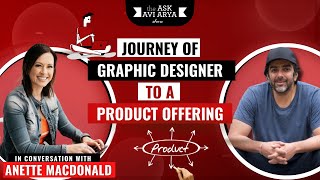
Anette MacDonald, a graphic designer turned software founder, breaks down seven deadly sins of DIY design. She covers branding consistency, common design mistakes, and how to avoid them when creating graphics yourself.
The shortest distance between two human hearts is a story. You tell somebody a story and you win them for life.
It's important to put that best picture out there of your brand. And that's what people will perceive. What they see that good quality design is that they'll get a good quality product from you. Sometimes you've only got one chance to take that opportunity. So think about if you lost that by not taking that jump and going out there and putting yourself out there. What have you got to lose?
Hey, guys, this is Avi Arya, father of two girls, six dogs, husband to a superwoman, a streetcar racer turned hotelier, now social media marketer and founder of Internet Moguls. Welcome to my channel. The shortest distance between two human hearts is a story. You tell somebody a story and you win them for life. So I'm going to tell you a short story about who I am and then. And we call this model of storytelling the hero introduction. And then we'll request you to tell us your hero story.
Sounds good.
Okay. So, Annette, my name is Avi Arya, father of two girls, six dogs, husband to a superwoman, a streetcar racer, turn hotelier, now social media marketer and founder of Internet moguls. Over to you. What is your hero story?
My hero story is I'm. I'm a graphic designer by trade and I've turned into a software developer. So. So easing the burden for people to make their own graphic designs, taking out that problem of working with graphic designers and making it easy for them to do it themselves.
That is fantastic. That's fantastic. So tell us about your story. Tell us a little bit. How did you get started? What happened? All of that?
Yeah, absolutely. So I started out when I was young, working out in hospitality, which I believe is similar to your story. And I always had sort of an arty, arty sort of vibe with me. I wanted to do something more. So while I was working in hospitality, I decided to study graphic design. And I got a wonderful opportunity through my hospitality job of doing graphic design for a huge group of companies here in Australia. And I started doing tons and tons of work and built up my own agency with 30 different staff working for me. And it got really obviously quite busy and huge. And that was before social media even sort of got on the picture. And we got into this stage where clients were waiting for a long time, up to weeks. Even though we had such a large team, things were taking a long time and our clients were wanting faster, some are wanting cheaper and everyone's wanting good quality. So we tried to Work out what can we do to eliminate those problems and make everything a lot faster. So we came up with, you know, coming up with a system. So we wanted to build software so that we would take out some of that backwards and forwards of working with a graphic designer, you know, administration and emailing and all that sort of stuff. We wanted to get rid of that. So we came up with the idea of building software which eventually turned into what we have now as Easel, which is a DIY graphic design system with ready to go templates and our clients can go in there and make their own changes instead of working with a graphic designer.
That is fantastic. So it came out of your own need to be able to serve more efficiently?
Yes, absolutely. Yeah, definitely. There was a. At first, it wasn't a public product at all. So we built it for ourselves and we used it with our own clients only to start off with until, you know, they started saying to us, this is awesome. And they would go and work somewhere else and say, can we use this? And we thought, well, okay, we'll rebuild this properly. And that's when it actually became easel.
Lovely. And so, you know what? I've seen that how you do everything is how you do how you do anything is how you do everything. The way you lay your bed in the morning determines, you know, if you do it half. Half baked. Everything in life is going to be half baked. Right. I saw your website, it was flawless. I see your camera angle, I see your mic, I see everything. Your whole setup, everything is flawless. You look lovely. How. How does. How do you do? You carry the same work ethic of having everything nicely laid out at work as well.
I'm going to confess that I'm. My messiest place is my desktop window, so I have way too many browser windows and tabs open. But apart from that, I do like to have things organized. And when you say, you talk about things being half baked, that's my pet hate in life. I hate things being. That's saying it nicely. Half baked, I would use another word, but, you know, everything has to be done properly. If you start something, finish it and do it properly. So. Absolutely. I like to have things organized. I like having systems especially, probably because of that problem of having browser windows open everywhere and so many things going on and so many things to do. I need to have everything else, you know, ready to roll and organized and, yeah, on track all the time.
Tell us, Annette, when you run a team of so many people, how do you translate this value system, this work ethic? In everyone.
Look, I think the most important thing is the recruitment and the onboarding stage. You know, it's very important to go through those interviews and make sure that you find that those people do have those values and it's not just what they're writing on a piece of paper or on a video that they send through to you for an interview. You know, really testing that and having a good probation period, I think is important to be able to cull out the people that are, you know, they're not what they seem at face value. So for us, onboarding is, it's pretty important we take it slow. We don't like to rush into hiring people because I always say hiring someone is, you know, it's more, it's harder to get out of than a marriage, you know. You know, you're stuck with. Once you hire an employee, at least here in Australia, if you hire them, it's very difficult to get, get rid of someone that doesn't, doesn't work out. So it's important to have the right person before you actually make that commitment to them.
Now, for example, if, because like I said, I'm very impressed by the kind of work that you, you know, that I see online now. Second part of this question is if you do find people who are not in alignment with your kind of, your vision or your level of perfection and everything, what happens? How do you, how do you have that difficult conversation?
Yeah, we've got, we definitely do performance management. So, you know, there's no, there's no surprises when someone's not performing. You know, it doesn't sort of, well, not normally. It doesn't sort of happen suddenly. It's little bits of things falling down, people, you know, maybe slacking off. And in our workplace, we're quite flexible, especially even before this year, we had a lot of remote work. Even though team are local here, we would let them work from home quite a bit. And so we trust them. You know, there's no, you have to start at 9 o' clock and finish at 5 o'. Clock. We trust that they're going to do the job, but you have to keep track of, you know, whether they're actually making those milestones. So, you know, we make sure that we address that stuff as soon as it starts to drop off a little bit so that we can performance manage that and put those expectations back out there before it gets too far. Because no one likes that surprise of a meeting with a list of things that they've done wrong.
So, Annette, when a service industry Expert like yours becomes a software CEO or founder. Does that transition require you to learn coding and do everything yourself or depend on a smart team?
Depends on a smart team, absolutely. I would love to say that I can code and, you know, I'm a bit of a control freak. I have to say that in the past, I liked in my graphic design business that my stuff couldn't pull the wool over my eyes, you know, so to speak, because I'm a designer. So if they told me something, you know, is this or that, I would say, hang on a sec. I'm not sure if that's true, but with coding, I have to have full trust in my team that what they're telling me is legit. Really?
Because they used to change this bug to fix this bug. You're like, okay, get it done.
Yeah, that's right. If they tell me it's going to take two weeks and they're really out on a holiday for two weeks, I really have to trust them, unfortunately. But fortunately, I've got a good team and I do. I totally trust them.
So then how. So if this is something which is not in most. I asked this question because most founders don't have this in their control. So how. How did you then build something so nice, and how do you continue to reiterate and make it better?
Look, a lot of research. I think I'm so passionate about the graphic design software and what's out there and what we can do that even though I don't know how to code, I know what outcomes can come from code, if that makes sense. I can see what is possible with technology. I'm always looking at software even that isn't online. Comparing to what we used to know in Photoshop and desktop stuff, software, and seeing if that sort of stuff is now possible in browsers and getting our team to do a lot of R and D on that, but definitely a lot of research on what's out there. And, yeah, excuse me, Pushing the boundaries of what we think might be possible, seeing if that actually will be possible in the future, and refining it. There's a lot to be done on Easel yet, you know, my list is only this far of a long, long list, so there's so much always to be done. The team probably wish that the list was shorter, but the roadmap is huge.
Of course, I can imagine that. And that's what I keep telling my team as well. I said, you know what, from the client side and from my side, the company will always get. We always need to get Stronger muscles to lift more. We'll never get less weight to be. To carry around. It always had. We have to just sort of. And some people can and some can't. And that's just part of the journey. So, Annette, great to know about your story. Great to know about how as a service industry person, you've sort of pivoted and added another element to your agency. Would you like to. Do you have a presentation or something to show us around your amazing product tool?
Yeah, absolutely. I actually got some design tips, so.
Sorry, can you just unmute yourself?
Sorry.
Yeah, no problem. I did that. Totally my fault.
Yeah. So what I've got is our seven deadly DIY design sins that I'll share with you. So it's not specific to Easel.
I have to ask you a question that might. It's the most important question ever and I don't think anybody's ever asked you that. And it's, it's a life changing question. So I don't know if you'll be able to be comfortable asking, answering that.
I'll give it a go.
And the question is, are you a Hulk fan or an Iron man fan?
I like Hulk.
There's three of us for this interview now.
You're right. No one's ever asked me. I love it. Okay, I will jump in and I will share my screen. Can you see that? Okay.
Oh, yeah.
Okay. So as I said, this is not specific to Easel. This is, you know, this is design tips and you know, it's applicable to static designs and also video. You know, when you're compiling video, which obviously you guys are very much into, just some basic DIY design tips for, you know, a lot of people are learning how to design, but they don't know the fundamentals of why something looks good or why it doesn't. So we've got our easel 7 deadly DIY design sins that you need to avoid. So first of all, the first DIY deadly sin is Fontenvy. So that's when you see another brand and you go, I really, you know, I really love their fonts and I'm going to steal them and I'm going to use them for my own brand because they look so good. I'm envious. And I'm going to take them and I'm going to use them for myself. That doesn't work. You know, you've got to choose your own brand fonts that showcase your own brand strengths. So it will like, if you do that, that can lead to poor legibility. No brand personality or a mixed mismatched brand personality. And the other thing with font envy is using too many fonts. So when you have. Look, a lot of designers have got hundreds or thousands of fonts that they like and they can't choose which ones they want to do, so they put in three, four, five different fonts into one design and it becomes chaotic. So making sure you don't steal fonts from anyone else and making sure that with your fonts that you stick to a maximum of three per design will keep your brand looking professional.
So important. Such an easy point, but I've seen between people who've hired a good agency versus people who've done it themselves, you can see this difference very clearly.
Absolutely, absolutely. And it's a simple one. And once you've got your fonts there and you stick to them, it's easier just to pick your fonts than to go browsing through hundreds of lists and trying to find something that will look good. So that is number one, and I think it probably is one of the most important ones. The next DIY design scene is spacing greed. So this is one I see a lot as well. So it's when people move their spacing and they put things right up to the edge or they fill their design with text everywhere on their design. So cramping it in and being greedy with how much you put on your design and leaving no spacing or no design for your elements to move on your design. It is another really, really common DIY design scene. And it, and it makes it look DIY design. And that's the thing is that no one wants their designs to look diy, Everyone wants their designs to look professional. So, yeah, this is a really, really big one that you don't have to, you know, you're making a video or you're making a static graphic, you don't have to put any every bit of text or every graphic into every single design that you do. You can put some of your text in your caption or obviously if you're speaking on a video, then you know you're putting some of those words out there and you don't have to have everything jam packed in there and being greedy. So the next one is sizing sloth. So that's being lazy with your sizing in a couple of different ways. So when you're working on creating graphics for social media, there's obviously different preferred sizes for different social networks. So I've picked out a few different ones here that I'm showing. So there's Twitter, which is predominantly a landscape image. There's Pinterest, which is a tall image and it really hates. If you post a landscape image on their network and Instagram grid, which is preferably squared, they do take portrait as well. But being lazy in just creating one image or one video size and using it across different social sizes, that'll affect you too. Both in potentially reach for Pinterest, for example, really doesn't like landscape images. They won't get much reach at all. And same with those other social networks. If you post a portrait image on Twitter, for example, in the feed, it gets cut off at the top and the bottom in the preview. So that can look unprofessional as well. So making sure that you learn how to create and repurpose your graphics, use them over all the different social networks in the correct sizes is very important as well.
So you're saying when somebody's doing something with their phone, so just be mindful of you holding the phone and doing a horizontal. Vertical versus a horizontal.
Yeah, well, depending on what your choice of output is. Yeah. I mean, if you're doing an Instagram story or you're always doing stories, then you know that they're always portrait. But if you're also repurposing to YouTube, you have to think about your strategy for how you'll be displaying that video when you're posting it to YouTube as well. So making sure that maybe when you're recording that you have two devices, one's doing a landscape and one's doing a portrait or working out a square format that you can then create into a landscape Design on your YouTube. So thinking about that stuff up front. So you're not just going to. Yep, that's all I've got. And I'm just going to slap that up there. And, you know, it won't be the best version of your brand that is possible.
Understood. I like the names. Sloth, Gluttony. Yeah.
Yeah. So they're all the real sins. They're all the sins that we need. Maybe we don't avoid them so much in real life, but we should avoid them in design.
I know. And when you see a kind of the kind of website that you have got for your product versus you see many others or you see this amazing presentation that you've put together, you know, why somebody is winning in life versus most who are still trying. So I get that.
Yeah. I mean, the thing is too just going off track a little bit, but design can really, you know, it can fool people, you know, In a, in a good way or a bad way, you can create that perception of being much bigger with good design and good videos, or likewise, you might be a very successful business, but it can pull you down if you have low quality design. So it's important to put that best picture out there of your brand. And that's what people will perceive. What they see that good quality design is that they'll get a good quality product from you.
Therefore, be mindful of what kind of agency you're working with, because price should not be the only deciding factor. Yeah, I get it.
Absolutely. Absolutely. So the fourth one is color gluttony. So that's over indulging in colors. And it's similar to some of the earlier ones where, you know, if you put too much on, if you have five, six or seven colors, you know, it's a, it's a Technicolor dream for some people. But it's, you know, it's horrible, it's overpowering. It can be really hideous if you put too many colors into one design and people won't know where to look. And it can be painful on your eyes if you go with too many colors. But the other thing is also being mindful of what colors mean. In some cultures, you can have red being danger, and in other cultures it can mean luck or prosperity. So making sure that both when you choose your brand colors and when you're creating graphics that you're matching those colors to the correct mood for what you're trying to put out there. Because when someone else views it, it can give them a totally evoke a totally different feeling to what you might want to intend. But definitely limiting the colors is important on any design.
Got it.
So number five is filter lust. So this is, you know, going overboard with filters. And a lot of people do it, you know, the, the trying to be perfect. Too many filtering out reality, you don't need to do that. You know, people want to see the authentic you, the real you. So don't feel that in a video or even a photograph in a design that you need to over filter. Take good video content, take good photos, and maybe apply one filter across your designs. But don't go overboard with trying to, you know, be the best through a filter or putting out a fake version of yourself or your team by filtering all the time. So that's that one. And the second last one we've got is drop shadow Wrath. So this is one of my favorites because I feel that drop shadows can be overused and in a bad way. So when you're using drop shadows, making sure that you use them really simply on your design to make something lift out a little bit rather than just using them for the sake of them and making them hard to read and things like that. So very simple close to your text. If you've got a big chunky font, then using a nice little thin drop shadow, that's the second last one. And we say that bad drop shadows are like bad clip art. So that old school stuff where people would just drop on really bad graphics onto their designs. And the very last one is proofreading pride. So making sure that when you do your any sort of text on a design or maybe even captions on your video, to make sure that you proofread them and go in and fix those mistakes. Because if you don't check them, you will end up with a mistake on your graphic and they can very quickly make you look unprofessional.
100%.
Yeah. So that is the seven deadly DIY design scenes. And if you keep an eye on those, especially the ones with the small spacing and the fonts and the colors, you'll quickly see that your graphic design will become more professional and you just need to look at it and step back from it and you know, always look at it and see if it is looking right or if it's too busy. And if you can take something off, take it off.
Got it, Got it. Perfect. So lovely. So what I'm going to do at the end of this presentation is I'm going to be going to put in links in the description on how they can get maybe a free trial and how they can get your product. All our people in our community can get your product. I wanted to ask you a few questions. So our brand colors. I since I'm not a brand person at all, I put it, I make men. I've made in the past many of these mistakes. Now I know not to make these mistakes, but I'm not a graphic designer myself. So every time that our graphic design team changes and this happens with many of our a lot of people should every company have a set of fonts and colors and color codes and everything ready so that when you give it to the new people and say follow these rules because I say red, black and white for most of my work and then everybody makes a completely different red, white and black. Sort of have handy as a, you know, like when you go to a doctor, you have an X ray from the past or a report from the past and new doctor takes that Report. And so what do you do in the design field to give to your new teams?
Yeah, absolutely. So in. I'll call it the olden days, in the olden days, you used to get a graphic design, you know, like a PDF guide that would have those colors and those fonts and that guide, you know, put into a PDF, and you would hand that over like you would that X ray from the doctor to the next designer, and they should follow it. But the. The thing is, and this is where some of the ideas of Easel came about, is that every graphic designer thinks that they've a better idea than the last one. It might be the same with the Doctor too, that the doctor thinks they've got a smarter idea than the last one, too. But what we have built into Easel is, firstly, the brand kit. So when it's in there, the colors are in there. The colors, the logos, the fonts and your images are all in there. So when the next person steps into your Easel account, you don't give them permission to change that brand kit. You don't give them that role. You know, you don't allow them to do that until you trust them. Obviously, there's, you know, there'll be some stuff that you trust, but the other thing is, is that what you talk about with people changing things and designs and colors, that's common to so many companies, big companies, small companies, that everyone, especially with all these tools out there, everyone thinks they're a creative and they want to. They want to. So what we've designed in Easel is templates that you can lock things down as well. So when you create your design, I can show you quickly if I share the screen again. So I'll just quickly, you know what I'm saying?
From the signature of a company to the presentation to the PDF, everything looks at the website, everything looks different.
Yeah, it does. Because, yeah, everyone, if there's not a consistent style guide or if it's not enforced, then people will. Designers might guess, or they might say, I don't like that font, so I'll change it to something else. Or if they don't know what it is, they might be guessing what it is. And it happens, like I said, it happens in big companies. So we deal with a lot of franchises and a lot of businesses that have got distributed teams or hotels that might be in different cities and different languages even, and they have the same struggle of keeping it in the big brand of things. So what we've got in our templates is the ability to actually Go in and lock things down. So if you can see this side panel, what happens if. Let's just say this was your design and you wanted to say, I always want the logo to stay here and you're never allowed to change that logo. You can come in here and you can totally lock that down and it can't be moved. And same with this font. So let's say you're allowed to use this layout as it is and you're allowed to change this text here, but you're not allowed to change the color, you're not allowed to change the font. I'm going to allow you to change the font size. So if you look up the top here, what I'm going to do is just show you again what all the controls are up there. And that means you can change anything. But with this, what you can do is you can go in and you can close off and you can only allow some tools available. So if you say I'm allowing them to edit the text, that will allow them to edit that. If you want them to have the color available, the color palette pops up. If you're allowing them to change the font size, then the font size is available. But if you don't want them to change the font size, then you can lock it here and they don't have the option to lock that. So when you share these designs with your team, you're really restricting that right down to how much you want them to edit it and how much you want them to change it. But they've got the template ready to go, the colors are loaded, the fonts are loaded, they can make the changes, they can use the graphic and they can change the text to make it something new. But they're not destroying your brand, which, you know, it's so common, it's so.
Common, it's actually destruction of the brand. The audience doesn't see any consistency. And that is, that can be, that is you're sending a proposal many of, many times without even having a face to face meeting with the client. And the only way he can judge you is based on these, you know, these, these disastrous, seemingly small, but disastrous mistakes.
Yeah. And the thing is, the thing is, is that the person getting the proposal doesn't necessarily see the mistakes of that. They just, what they feel is, you know, a bit of chaos. You know, it just doesn't feel right to them or it feels a bit unprofessional, like they're not looking at it and going, oh, that font's not right. But it just doesn't feel consistent and maybe that might be their deciding factor to go. Well, I've got this proposal from someone else and it feels right. Everything aligns and it feels more professional. They just don't know what that is. But it's definitely, you know, it all adds into someone's feeling about your company and their trust with you.
Oh yeah, 100%. 100% it, I mean, I definitely know that it has, it can allow small startups with two people working from their garage to be able to win deals which are bigger than a large company who's sending a proposal which is, which looks chaotic.
Yeah, that's right. And it's going back to what you said about the half baked. You know, you do things half baked.
I teach that to my daughters all the time. You know, I'm like, half baked is almost like infection. It spreads all over your life ecosystem and it ruins everything.
That's so true. I really like that. But it's. Yeah, that's very, very true.
Excellent. So great. So we just, I just stop sharing this and we can come back to full screen.
There we go.
Great. So Annette, we spoke about your story. We spoke about how you got into this. We spoke about the journey from service to product. We spoke about you actually gave us the seven deadly sins. For everybody who's watching this, I'll be putting in the description to be able to download this tool for all of you people and get in touch with Annette if you want to hire her agency, graphic design service or just the software tool. Before we go, I have two more questions. They're not as intense as the one that I asked you earlier on. They're going to be easier ones for Annette McDonald's. What does the next five years look like? What is your vision? Tell us about maybe whatever you're comfortable sharing. Family, work, everything. We just want to know more about your story.
Yeah, absolutely. So my five years actually looks like me wrapping up work a little bit in five years. My goal is to be less hands on because I'm very, very hands on in my business at the moment. I've got a nine year old or nearly nine year old son. So I'd like to know that by the time that he's, you know, getting into his high schooling that I can be there a little bit more for him. But I'd like to look at personally both my husband and I, we work together in our businesses and we work very, very hard and we have for a long time and we still intend to for another five years. 20, 20, 20 is a bit of a write off. But the next five years we're going to go really hard and I'd like to after that, step back personally. But professionally in those next five years there's a lot that I see happening with, with our tool. You know, we'll be. But definitely keeping everything on brand is the big goal. Helping companies to really be able to create more but also never veer away from that brand standard, whether it's static graphics or video graphics. But there'll definitely be a lot more video actually coming into our tool in the next five years. And then I think I say it now that after five years, hopefully once I've ticked that off, I might move on to something a little bit more creative and, you know, less, less stressful.
I know a service services agency, I've been running one for 11 years and it does take a lot out of you.
It does, it really does. Yeah. And that was one of the reasons. Sorry, go ahead. Sorry. I said that's one of the reasons towards going towards the software as well. That you know, it's intense as you know, working with an agency, hours for time. You know, there's always, there's a limit to how many hours whereas with the software it's scalable to help, you know, so many more people.
Anet, do you have any online courses for other graphic designers who want to be as perfect in their work? Because I'm sure there are many designers who like we, they must be looking up to you saying you have your own business now, you have so many people working for you. You have an agency and a software product. Needless to say, somebody who's known you for the last 40 minutes, I feel I'm proud of you and I've known you for a while. I'm sure there are many people in the graphic design field who must be looking up to you. What is your message to young designers who are sitting 10 years behind in their journey? How should they build their business over here?
Yeah, absolutely. Well, firstly, I believe that you can learn everything online. So there's so many courses. We don't actually have a proper structured course as such. We've got our blog that teaches little snippets of how to design and how to use a feature or how to achieve something. I do have something that I want to roll out next which is specific to an industry that will be a training for those people. But I think the more that you can take on board from online learning and try and get out there and just try and get feedback, join communities design communities and really be open to getting feedback on your design. I think that's really important to be able to take that and grow from what other people can tell you about your design. Because if you can't take that feedback, you'll never get any better. And it's the same with anything. Obviously, you need to be able to take critique to be able to grow as a, as a designer or in business as well.
Got it. And for entrepreneurs, personal brands, see what we tell people, like I said, the shortest distance between two human hearts is a story. Tell as many stories as you can through your social media. Connect with people. First you get known, then you get leads and you get sales. So the whole process works like that. So a lot of people will be watching this episode. So I would request a message from you to all the people who are entrepreneurs who are now getting onto social media, taking it more seriously. Can you give us one or two tips on how they should brand themselves faster, better and more professionally?
I think it's important to get your personal brand out there as early as possible. You know, press the button, go live, record, get videos out there, make connections, let people see you and learn about you. As soon as you're comfortable with it or earlier, you know, just do it. I think a mistake that I made is waiting too long to do some of this stuff as well. I was self conscious about that and I think I missed opportunities. So sometimes you've only got one chance to take that opportunity. So think about if you lost that by not taking that jump and going out there and putting yourself out there. What have you got to lose? Usually it's opportunity and nothing bad to lose. So I think everyone just, just do it. Just start, start your side hustle, start your side business and just start moving with it because there's nothing to lose and everything to gain.
Excellent, Annette. This brings us to the end of this interview. Masterclass, I like to call it. Thank you very much.
You find me loser, set me free. You make me win every way. You show me how to stand my way.
More from Avi

The strongest mindset doesn't begin with meditation. It begins at home. Before you conquer the wor

The strongest mindset doesn't begin with meditation. It begins at home. Before you conquer the wor

Your mindset isn't something you fix once. It's something you train every single day. Just like yo

Don't build a company just because your friends are. Build one because you're ready. A startup is

Everyone dreams of becoming the boss. Very few understand what that really means. The moment you b

Most entrepreneurs say, "I don't have time for coaching." The truth? You don't make time for what

Over hiring doesn't always solve problems. Sometimes, it creates them. Having a small buffer in you

"The highest-paid" isn't the goal. The highest-value is. People often ask why premium mentorship co

The founder will always be a bottleneck... at some stage. The goal isn't to pretend you're never th

People ask me how I stay consistent with my morning routine while traveling across countries and tim

People ask me how I stay consistent with my morning routine while traveling across countries and tim