Are Sales and Marketing Still The Same?
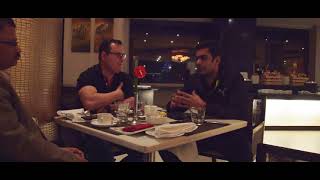
This is a YouTube video titled "Are Sales and Marketing Still The Same?" recorded in January 2018. The content is a multi-speaker discussion focused on sales, marketing, and revenue management strategies in the hospitality industry. Participants include several speakers, notably Sanjeev, who shares insights on the use of technology, customer engagement, and market dynamics. The conversation covers topics such as the role of OTAs, data management, and adapting to changing markets. There is no indication that Avi Arya is one of the speakers in this dialogue.
Like you said that sales and marketing a lot hasn't changed in the last 10 years. And still data is still research, it's still going out and meeting people and understanding what's happening. But there are tools which are available today. Softwares where they say that you know, I'll give you competitive pricing, I'll tell you what's happening, you know, STR reports.
Or OTA Insight benchmark readily available.
So at so and today I feel I see some young, you know, if I can say we are not young age young, new revenue managers coming in and saying let me follow that blindly and make a decision. A because they're young and they don't have the years of experience. B because sometimes they're new at a property so they don't have historical data which you know, sometimes it's a new property, they don't have historical data, all of that. So would you say that that's what would you say about that strategy completely relying on technology and software which starts people claim is smarter than humans?
Well I wouldn't holistically completely agree with that. It's on a product. Depending on what you're selling, what destination you are in, which property are you in? Now in a hotel like this, a business hotel is purely driven by data because you don't come to Whitefield unless you have a business might be right and the impounding decision is that the location and your business of the company that you're going to deal with and the locality of the hotel, are you close and does it fit my requirement? That's it. So there. It's important that if you're looking at an unstructured market you require data to help you to sort of funnel that business towards you. So but if you're in a leisure based company, you're selling your story right, you're selling your uniqueness. You don't have to copycat anybody. You can create your own experience, you can create your own story, reach out to your market which is befitting to you. Like in a city like people can use a cookie cutter method and say yeah because oh Zuri has a lot of weddings. Let me go hammer and tongue after weddings, right? Is your property wedding ready? Wedding ready? Is it got what others don't have right? For us we've got two swimming goes. So we uniquely talk about that very easily that listen, we can have the fight segment at the same time look after you with an exclusive party and nobody both sides are happy.
Sure.
We've got multiple venues where you can have a ring Ceremony somewhere, you can have a wedding reception somewhere else. And then the Mehdi, whatever it is in a different place. And you don't have to break your head of cutting down and dis, you know, dismantling your setup.
You have the infrastructure to support the story, so we have to support that.
But at the same time, we also sell a story to an European inbound market where we say that, you know, get away from the ordinary. Goa is just not about only nightclub pubbing. And, you know, there is a realm where you wake up in the morning and you get the toe. You get your sand between your toes and walk on a beach where you don't have touts and people running after you and harassing you to buy their trickets.
Right?
That's what we offer in Southpur. It's how you position your product. We are not promising a very unique holiday, but what we're definitely trying to tell you is that we're going to give you a piece of Kerala. When you go back with you completely, because you're there, you will experience the backwater. You have got the curry meal right there, fresh cotton. You experience the culture of a local traditional fisher fork.
Sure.
And you explore the city on a bicycle, on your own. Now, what revenue management is going to do with this?
Right.
Price is not going to make you deciding factor whether I'm available or 7,000. No, it's the uniqueness of your product. So I wouldn't answer. Coming back to what you said, I don't completely endorse that. Yes. Okay. It helps, but it depends on what product you're selling.
Right?
So you're saying that. So in a way, you know, people who watch this, some younger hospitality people, the message would be. I'm asking, the message would be that have the guts to tell your own story and demand a price for it.
Absolutely.
Okay.
Absolutely. I completely agree with you.
Okay.
And the second thing I wanted to ask you was recently, I think about a week back, the CEO, the new CEO of Expedia, right. He made a statement saying that we're doing our best to get you customers. If the second time you're not able to get him to yourself, then it's your fault, not mine. What do you say about that?
No, I think absolutely. I mean, anybody who's smart uses the. Uses an OT as a billboard, right?
Right.
You showcase your product there because the reachable billboard of an OT is far, far more than you.
So.
But then the uniqueness, once you've got him to you, you have every ability to convert him to Your direct front channel right now, that is your intelligence. If you don't, then, then don't regret it. Don't blame the OTAs, right? The OTAs are bringing you to the traffic. Now you garner them onto you and convert them to you to become a direct consumer.
So that means the reservation team, the call center, your revenue manager, sales and marketing, everybody needs to know what, what the OTA is doing because that OTA is giving offers, promotion, you know, whatever. So that when the call comes to you, you're 100% ready to counter it with the uniqueness of an offer that the OTA might not have. And if you don't have that awareness, then you lose the game to the ota.
Is that, See the first thing is, the first lesson is rate parity. If you want to survive in this game, you maintain a rate parity. Now rate parity is a vanilla approach, what you're offering versus an OTA offering. Now once the call lands up at your center or email comes to you, how you bundle in a value add on within your product, which nobody knows your product better than you. So you have all the ability to convert that back to you. Now if you don't, you're not ready for the game.
Sure.
You know, in fact, what we did recently for a hotel in Goa was, you know, sometimes you're sitting with your own team, your avenue people and all of that, you'd get lots of ideas or whatever, you know, you, things become redundant because every day you telling me the same thing, I'm telling you the same. I, you know, we stopped taking each other's cities more seriously. So we went to the clients who were sitting in the coffee shop and we said for the next one week or two weeks, we seem that we have slightly stressed occupancy and we want to, you know, what would you think should be offers which would appeal to you directly? The ideas that came out from there were legendary. That, you know, they wanted things that we never thought of. You know, they said that things like, you know, OTA won't have that. You know, if I'm coming with my family, I don't want every time to climb a second floor of a hotel or take an elevator, ground floor room, if I have the option of that. I would have said, you know, if you confirmed to me, seriously, you would have booked just because. Yeah, of course, I mean, of course, yeah, families reconfirmed and all of that. And then there was one, one customer who spoke about vodka. He said, I'm coming to what to drink and I Come here. And I'm, you know, I'm saying, okay, what is this?
Whatever.
And I have Grey Goose. It's expensive vodka. He said you have wine everywhere. Why are you not serving me vodka? He said you give me vodka, I.
Would have booked it.
So you get some insights from guests directly.
Knowing your consumer. Yeah. Knowing your customer. Now what you pointed out very interestingly was at the first, at the first point of engagement.
Yeah.
But what the ots are giving is a very large platform of second engagement. Because the first time he comes through an expedia or a booking.com or whatever, once he's landed in your property, he's your customer.
Sure.
How you retain him.
Right.
Is engage him so the future he doesn't go back to an ot. So that's the duty of your gre, your front desk.
So do you think hoteliers should have kras for their team to say this? Percentage people came from OTS. Mr. R.A. always comes from the OTF. Make sure that at least 30 people or 300 people, at least 10% should come to you. 20%, that should be a KRA going forward.
Absolutely. We do that ourselves. Oh yeah, we have it. I mean every single O OTA client that has come into this hotel is met in the morning over breakfast.
Okay.
Oh, okay, yeah, yeah, that's a point. If he's missed it, but he or she is missed at breakfast, we'll make sure that when he's coming back at a point of checkout, there are a certain set of requisite questions that we ask him. What brings them to here is you. This is a one off visit. Is it going to be a recurring visit? And why did you book through ota? Did not. What, what was wrong? Why didn't you book through the website or whatever it is? So we, we get that information, then we go hammer and tong after that to convert it.
Sure.
And we have to a large extent, I mean we will endorse that. We, we have effectively we're doing that in GOA as well. You see, we used to be. Today I say we are about 24, 25% of our business in Goa comes through an OTA. But having said that, in the same breath we also get direct business which is equivalent 24, 25%.
That's amazing.
Which is not just happening happened overnight. It has happened with a consistent approach because all data capturing is done. You, you put them into buckets. I always say put your data into buckets.
I am so happy you said this. Putting your data into bucket, this hard work. Nobody wants to do it's like going to the gym. Nobody wants people go to the gym every day but they don't do the right exercises and then say the body need banana or I didn't feel healthy or whatever. It's just about that putting data in buckets. And because data is what's going to.
Drive you forward, I'm your team. I mean we, we've had in our, this hotel in Bangalore, we've had iteration very high in our catering sales department. But the only thing that keeps it going is because we've got our information very, very nicely bucketed. Put in whose book, who's gone. We refresh that content every six months and there's a custodian of that data. Unfortunately, or funnily enough, the custodian of the data is me. I sit with that entire information and I said to them, I make sure that my system goes out and bucket, you know, rewets it again. We recently did this exercise. What about last week? Last week, Last week we just done this whole thing and it stays with me. So when a new person comes in, they hit the ground running. We're not wasting time. 100%, you know, they know who to go, they know what they've done. They know exactly. And it's broken up into whether this person done a social business. What's the size of the event, how much, what are the booking window for this event, how far back they booked. So, so we get a lot of information whether we should really take up a smaller event of 30% of our actual capacity very early and confirm it rather than, you know, rather than waiting for a bigger event to come.
Yeah, that's a very important point.
We revenue manager banquet also.
Yeah, yeah, yeah.
You don't. It's lost. It's as good as a room, right. You, you take in a smaller capacity of 80% of the fearful, then you, you book it up and then suddenly you're in an inquiry of 70 people. Then you're scratching your head, you're trying to move this guy to another location.
Which you showed him a location, but.
You try to move into another location, he ends up unhappy. You don't get the other guy. So it's, it's all about that. Another experience I'd love to share with you is, I mean Sanjeev has been with me on that is Kumarakam. We were very heavily reliant on our GCC market. Now suddenly with all the turmoil happening in Saudi Arabia, that market began, began to shrivel up. Now too much faith in the system. Travel Agents in Naini Jayaga. It'll come pick up. So what was happening? Was they refusing domestic driven mice market, Right. We were scared to even take down our OTA rates or try and open that funnel up. So by filling or replacing that floor. Why? Because we are contracted or we are obligated in a contract to a market. So they're going to get upset. Why are you discounting further? Whereas I believe to a certain extent we as senior people are trying to advise our team, listen, open the funnel for everybody, right? If you're going to discount one discount for everybody. So you rather get that all that market in even if it's a 5 or 7% lower yield rather than trying.
To manage different relationships and so transparent things.
Eventually it happened. That market never came. So we ended up losing. It's not only us, it's everybody in the market lost everybody. I mean veterans in the trade kept insisting that this market is going to come back. So my take to a lot of people is, you know, keep your ear on the ground, right? Do your own research, don't listen to chatter in the market. Do your own. Validate your facts, go back to your sources which are giving you that business. Find out from the source markets, with all what's happening, is it really going to happen? Do not rely totally on a ground handler or a online agent or whatever it is because get your facts right, you can burn. It's a perishable product. You have to sell it. So the end, you're going to go back and explain to your shareholders, you know, that this happened and that happened and nobody wants to buy. They're interested. You had one year to plan. You got your budget to achieve. No excuses. Markets happen. That's business, right? Markets change, dynamics change. That's business. Get your act together, polish yourself, keep on evolving. That's what I'd say to the younger folks of today. I mean, that's what I've learned. That's what Sanjeev's learned. We as a team and we all believe, we ask our young, put soldiers on the ground. We take a lot of information from them, right? It's not boardroom decision making that, you know, you sit on top and you concoct one great strategy and you think you're working. You know, you're the Parmatma.
That never works.
Doesn't work. You've got to talk to your team, you got to have information. Moving from bottom up, not top down.
You know, my dad's got a small hotel business as well. So Delhi, we have a hotel. So he always calls his stewards who've been with him for eight, ten years, and he says, yeah, what is this one thing I can give? Extra chargers. That small thing helped 5% actually occupancy. So these small, small things and this maybe the GM would never be able to say, but that guy said, you know, charger.
So.
So you're right. Keeping a. And that's, that's a constant activity and that maybe you can't get from online chatter or whatever.
You will not. Your direct engagement, your direct. See, I think success in this field is online is a vital part. Yes, you need online feedback, but most of the people who give online feedback, I don't know why, they give it away from the hotel.
Sure.
They should actually give it right there. If they're unhappy about something, they should.
Give it right away.
Right.
Say it there and then.
Yeah, yeah.
Right.
I think now booking.com and some other OTAs have this thing that, you know, if you have the booking.com Pulse app, then you can automatically, if there's a complaint from the room, he can send you a message, I'm not happy, and you can take care of him before he checks out. So, you know, live guest sentiment versus a postmortem.
Absolutely. See, I'm an ardent user of booking.com I completely endorse what they do because the most friendly thing that they have is flexibility.
Right.
Which nobody else has. And today Expedia is also moving.
Yeah, they're all moving towards that.
They're all moving to other. They were a trendsetter.
Yeah.
So see, they had the guts to do something different.
Yeah.
They were much younger.
Yeah.
Than the erstwhile xp. They're much younger in the market. They actually change the whole.
And I'm telling you, especially for an Indian consumer who I feel to a large extent is non committal, you know, so it works great. So this is, this is good learning for all the youngsters. So thank you very much for this pleasure.
Thank you.
Subscribe here and I promise you you won't be disappointed.
More from Avi

The strongest mindset doesn't begin with meditation. It begins at home. Before you conquer the wor

The strongest mindset doesn't begin with meditation. It begins at home. Before you conquer the wor

Your mindset isn't something you fix once. It's something you train every single day. Just like yo

Don't build a company just because your friends are. Build one because you're ready. A startup is

Everyone dreams of becoming the boss. Very few understand what that really means. The moment you b

Most entrepreneurs say, "I don't have time for coaching." The truth? You don't make time for what

Over hiring doesn't always solve problems. Sometimes, it creates them. Having a small buffer in you

"The highest-paid" isn't the goal. The highest-value is. People often ask why premium mentorship co

The founder will always be a bottleneck... at some stage. The goal isn't to pretend you're never th

People ask me how I stay consistent with my morning routine while traveling across countries and tim

People ask me how I stay consistent with my morning routine while traveling across countries and tim