Become A Generalist Before Being A Specialist | DM Agency Q&A | Avi Arya | Jason Miller |
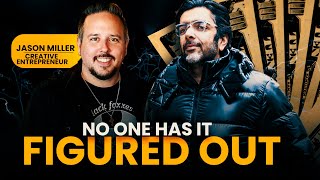
Avi Arya and Jason Miller discuss why you should learn broadly before specializing in marketing. They cover soft skills, networking, and the differences between startup and corporate work, drawing on their own career paths.
If you really want to know the culture of a business, ask the people on the ground floor. Your success at this company is going to be dependent upon your soft skills, not your hard skills. Your ability to communicate clearly, your ability to collaborate. You know, these are the things that a lot of folks sort of miss.
Hi, my name is ABHI Arya, father of two girls, six dogs, husband to a superwoman, a streetcar racer turned hotelier, then marketer and founder of Internet Moguls. What up, Internet Moguls. Ladies and gentlemen, boys and girls, welcome to another episode of the Internet Moguls of the World where we call in amazing human beings and personalities from around the world today. We have Jason Miller. And you will find all the description and everything in the links over here. Jason, how we start the show every time is by giving a hero introduction. It is a format that we have sort of perfected over the years. If you meet somebody for a quick second, it could be your somebody who you're going to marry for life. Somebody who could be a business partner, an investor. So what is the shortest introduction that you can give to them? We call it the hero introduction in our community. So I'm going to give you mine and we request you to follow that format and give us yours.
Sure. Sounds good.
Awesome. So, Jason, my name is Avi Arya, father of two girls, six dogs, husband to a superwoman, a streetcar racer turned hotelier, now social media marketer and founder of Internet Moguls.
Well, nicely done. Nicely done. If I had to say the same in that amount of time, I'd say my name is Jason Miller from San Francisco, live in London now. I used to work in the music business, transitioned over to tech marketing. Marketo, LinkedIn, Microsoft. In my spare time, I shoot concert photography. And I have two children and a lovely wife who works in tech as well.
Awesome. Lovely. Love that, Jason. You know, everything they say begins with a story, everything in life. So with working with all these amazing companies and now doing what you love doing yourself as your own boss. Audiences today are sold different lifestyles by different people. Or let's say we buy into lifestyle. Nobody's selling us anything. We. You know what? I think I should get a great job. I want to work in Microsoft. I want to go to the Seattle office. I want to make those. Hang on. Why am I going to doing something for somebody else? Let me start my own business so everybody is looking at somebody else. You've been on both sides. Please speak to our audiences on how it was to be on both sides of the spectrum.
Yeah, I Think it's interesting. I think you need to ask yourself, you need to try a lot of different things. And I mean I've been in startups, very small startups, I've been pre ipo, I've been in big corporations. I think you need to ask yourself how much direction do you need in your role and how much independence do you want? I think if you work in a startup, I think you have to be a lot more scrappy as a marketer. I think you have to wear so many different hats. I think the fact that collaboration is so strong across these startups not because they want to necessarily, it's always a good thing, but it's because they have to be because they're so tight knit and they're working together to build this growth engine to where if you get into a bigger company like Microsoft or whatnot, you know, it's much more structured and it's much more focused on playing the game, if you will, right. So I think you need to ask yourself as a marketer, where do you want to go? Do you want to climb the corporate ladder, jump into a big company is much more structured, it's easier to navigate in my opinion. Or do you want to, you know, take a risk and take a chance and go into a startup and, and sort of sharpen all of your, all the different marketing disciplines at your fingertips, pull them together into this true sort of hybrid marketer. So I think you really need to maybe you try both if you're early enough on in your career. I would recommend both. I clearly found out that I don't fit into a big corporation. I'm much more of a startup scale up, sort of somewhere in between marketer. That's where I kind of find my sweet spot.
But yeah, now that you're running your own business, what are the few things that you would like to share with us that you learned from working for the structured organization that you know or feel that a startup must incorporate.
Well, I think the biggest lesson I've learned is there's a couple of things, right? So one is, is focus on building your network out because if you do, you're going to need something to fall back on if you're going to take that risk, if you're going to go out on your own. And I've spent the last 10, 15 years going to conferences, networking with folks, just engaging across social and in person events. But I think building that network and getting those connections, I would say the biggest thing, all of the opportunities that are going to come to you, whether or not you're trying to get a job at a startup or a big company or anywhere or even your own business and getting consulting opportunities, it's all gonna come from the power of that network and referrals. So I'd say the biggest thing you need to do is build up that network. And again, that network isn't only beneficial for getting opportunities and jobs or projects to consult on, but it's also a support network for yourself. If you have a question, I think you know as well as I do, if you drop a question on LinkedIn and it's a smart question and you have a good network, you're going to get a lot of quick answers very quickly. So being able to not only understand what the challenge is and how to grow a business, but also how to get the answers from some trusted advisors within your network that you've brought with you. So I think that's probably the most important thing. It's just understanding having that network of support, understanding how to pull the levers and get to growth with zero waste, you know, Lovely.
I like that. So you're saying community is very important in any business. And if you work for a corporation, you have a community. You have people around you who are there to support you. Tomorrow when you start a company, you have that network of people to fall back on. They can vouch for you. You can get back to them with questions, understand what's happening. And what specifically would you have learned from working with all these amazing corporations, which you're like, dude, I wish I'm going to incorporate this into my startup. Beer during lunchtime could be a part of it.
I mean, ask me that question again. That was a big one.
Yeah. So I said, what, Working for such amazing corporations, what are the few things that you've learned from there that you're like, you know, I need to copy paste this into my startup?
Well, I'd say probably the biggest thing is, you know, there's a lot of smart people out there. So the one lesson that I've learned throughout all these corporations is it's not about necessarily how smart you are. It's your soft skills that are going to matter. Your ability to communicate, your ability to communicate clearly, your ability to, to collaborate. You know, these are the things that a lot of folks sort of miss. And I think that's critical, especially when you're, when you're growing a business or when you're growing your network. And again, I think, you know, my, my wife, she was doing, she was interviewing a client in the house the other day during, you know, when we were still in lockdown. And I walked past her and she said, you know, your success at this company is going to be dependent upon your soft skills, not your hard skills. She goes, there's a lot of, there's a lot of really intelligent people here, but there's not a lot of people who have the soft skills to take that knowledge and navigate through either a startup or a scale up or even a larger corporation. So that's the biggest thing I'd say. The second thing is culture. I think everyone wants to have a good culture. I think everyone wants to feel that that culture is sort of embraced across the org. But what I've seen at Big and Small is I've seen the culture sort of live In A, a PowerPoint deck or live on the website, but it very rarely trickles all the way down to the people it matters to most. And I saw this on LinkedIn. I'm not sure who it was. I don't want to misquote the post I saw, but they said it might have been Joe. Sure enough, for someone. But they said if you really want to know the culture of a business, ask the people on the ground floor. Right. Because those are the ones who are going to tell you, the entry level folks. They're going to be able to tell you if that culture has trickled down. And I think that's sort of, that's probably critical as well.
Got it. Perfect. That sounds great. Jason, tell our audiences about what you're doing now.
So, I mean, I have my own consultancy called Immersive Marketing and I do consulting for, for marketers, for B2B. Marketing is kind of my special, my sweet spot. Marketing and marketers is where I find my magic, you know. But I recently just launched a creator coin on rally IO called Metalcoin, which is where I'm building out my community and dipping my toe into crypto and NFTs and whatnot, which I think is super fun and fascinating. It's going to see, and to see the brands sort of jump in this space as well. But yeah, that's where I'm at today. And I just like the, the flexibility and I think, you know, I've always been sort of, I've always been. The last two roles I had at LinkedIn and Microsoft, they created specifically for me. These roles didn't exist because I feel like I bring this certain unique element of a little bit of content, social pr, branding, a little bit of everything. And I think that these, there's the folks who would say that, oh, you're, you know, was it jack of all trades, master of none, or whatever? And it's like. Or you're like, you're not a specialist in one specific area of marketing. And I think that's. That's such a miss for marketers who. Young marketers who are trying to figure out their way.
I like that.
I say learn as much as you can about all the different disciplines of marketing and most importantly, how they all fit together. Because if you want to be a marketing leader moving forward, that's what it takes. And I can't tell you how many times I've seen agencies take advantage of this. And I'm a big believer in agencies, so I don't want to say anything bad, but I've seen some folks paying for some services where they don't really understand what they're paying for.
Right. I totally get that.
So I think it's critical. And again, it goes back to the marketo days. I sat in between the demand gen and the SEO team and the PR team, and I started to learn how all these different disciplines sort of work together to build a true integrated growth engine. And then you go to the bigger corporations and they're so siloed and they've been so siloed for so many years that they can never get back to that. So it's fascinating to me to see anyone sort of say, don't, or anyone say the only way forward is to become a specialist or an expert in one space. I think it's the exact opposite.
Love that. Love that. Because 99% of the people we've interviewed have said this. I'm going to highlight this definitely to, as, you know, as a. So we have crazy thumbnails going on YouTube. So I'm just thinking in my head, I'm going to position you as the contender who said you have to be a generalist. Come on, watch this video now.
Yeah, I mean, some of the coolest roles I've been a part of, like, yeah, you have to, especially a startup. You have to be able to write a subject line. You have to be able to do copywriting. You don't have to be an expert by any means. You have to understand how the web interprets your content through SEO. You have to understand how to qualify a lead through the funnel. You have to. All these different things. You don't have to be an expert, but you have to know how they fit together. And you have to be able to roll up your sleeves and get this done. In a pinch, if it comes down to it. And that's what I feel like I can do. Right. And I appreciate that in a marketer.
Jason, before I move ahead, I want to, you know, I want to ask you what's not part of the script, but what's coming to my mind after talking to you for 10 minutes.
Wait, what? Sorry, say that again?
I said I'm going to ask you now. Before we move ahead to the next set of questions, I want to ask you something which is not part of the script, but what just came to my mind after talking to you for this 10 minutes.
Yeah, of course. What do you got?
Are you proud of yourself?
Am I proud of myself?
Because I just met you 10 minutes ago and I feel proud of you, man. You've done so much and, you know, I mean, I don't know, maybe we'd say similar age and.
Well, I think, you know, there's two things that make that up. Yes, yes, I. Some days I am, some days I'm not. It depends. I mean, I clearly get my energy from other people, Right. And I think during lockdown, you know, I was probably. I was not necessarily where I think I should have been, but, you know, there's a couple of things that keep me going. The first thing is work, life, balance. I don't. It doesn't exist, but it is what you make it out to be, right? And there's a lyric. There's a lyric in this from Liam Gallagher, who I love so much, from Oasis. You know, Liam Gallagher I love, because he walks the line between ego and confidence, which I think is really important, right? But he said in it, and there's a great lyric from Oasis that says you can have it all, but how bad do you want it? And so that's the question, right, if you want to be successful in your career. I don't think it's necessarily about luck. It's about how bad do you want it? And so I don't like to sleep. I like to. I'm always creating, I'm always doing something. I always have like 10 different projects going. I have 170 different half written blog posts. I always have ideas on who's moving.
But, you know, thank you for making me feel normal.
It's just again, like, you set your goals and then you go after them and you go after. And, you know, you go after them viciously and, you know, and. And determine.
If I ask your wife, she's going to say she's very proud of you.
What's that?
If I Ask your wife, your kids, they're going to say that we're proud of Daddy.
Yeah, 100%. 100%. I mean, I think. But, you know, I think I got. We met my wife a little bit later in life and we got started a little bit later life in our family. So I had a lot of time to do test experimental phases on what my career path is going to be. And I feel like, you know, lost. I lost some time in the music business because it was fighting digital so much instead of embracing it that I felt like I'm always trying to play catch up a little bit too. Like, to be honest with you, I feel like, I feel like I'm a little bit behind where I should be. But then I look back and, you know, I'm grateful and I'm happy and I look at what I have and I'm incredibly grateful. So I'll say that, you know, I.
We were. I've got two daughters, 16 and 12 now. Three, four years ago, we started a project called Internet Moguls of the World. And we went to interview, we went to Gary Vee's office, we went to Grant Cardone's office and then we interviewed them for our channel. And then we finally decided to write this book. So we, John Lee Dumas, Patrick Pat David, Dan Locke, you know, like they were some of the nicer, nicest marketers around the world.
Yeah, see some friends on there. Dennis Yu, Ran Fishkin.
I'm sure, I'm sure. So we interviewed about. We sent personalized request videos, 5 minute videos to over 200 people. 70 people said yes, 62 people made it to the book. Right. And one of the common theme when we interviewed all these people over two years, publishing over Covid took two and a half years of hard work, was that it's the chase that I enjoy. And that's what you just said. You said you feel you're behind and that's the chase that you enjoy. You will always enjoy the chase because you'll always want to, you know, in your mind you'll always say I have to get ahead of for something.
So, yeah, I mean, again, I think, you know, with, with sort of the creator coin thing, like it came out of nowhere and yeah, probably diving in a little bit too deep. But, but it is that chase and it's a bit of, it's a little bit of fomo. But at the same time, the thing I'll say about the chase that I don't like is that, you know, you build these networks and you build your thought leadership or whatnot. But at a certain point, you have to look around and say, I got to where I wanted to be. Right. And then enjoy what you have instead of constantly, instead of never stopping. So I think you do need to find a point to where you set a goal with the hustle and you're comfortable and then you just sort of enjoy, enjoy the chase, but slow it down a bit because you can't keep that up for too long because you'll burn out and then you'll get frustrated, then you'll figure out that you're trying to be everywhere at the same time and that's impossible.
Yeah, absolutely true. Words from experience. I totally get that. So talk to us about your journey into the 3.0.
Yes. So, I mean, I was following Anne Hanley and Her Word Coin and Joe Polizzi and the Tilt Coin and Mark Schaefer and the Ryse Coin and Brian Fanzo and the ADHD Coin, who I started listening to his NFT365 podcast and just kind of thought, you know what? Oh, look at that.
I just had this card here. I'm supposed to email him for something.
He's a really good guy. He's a great guy. And, you know, so I applied to Rally and they accepted me and we launched about three weeks ago. But I'm taking some of my best photography, turning into NFTs and then building a small community around it. I've always wanted to build a community around the things that matter to matter to me the most, and that's marketing, creativity, photography, and the intersection of those three. If there is one, if there is one, who cares? But a place to talk about those things in a inspirational, kind of fun way. And so this is not a big numbers game for me. It's more of a game of relevance and sort of, can I find this community? Can I get a few hundred people together and reward them with the coin? So, yeah, it's interesting, Rally. It's been a really hell of a learning experience and it's a really cool company to follow. I think when you talk about nailing their brand tone and voice and the brand guidelines and bringing their communication community together, I think they absolutely smash it out of the park. So I'm just getting started, but yeah, hopefully in the next couple of months, we'll see that coin value rise and we'll see the community sort of start to flourish in the new space that I'm building out.
Lovely. Tell us, what are the sort of prerequisites of building a community?
Well, I think, number one, I think you need to have obviously, the network in place and you need to have sort of an underserved audience, I would say. What is that underserved audience? I think if you look at a lot of, if you just kind of scroll through your social feed, especially on LinkedIn, you'll see a lot of people trying to go after the same audience, the same conversation. I think you need to drill down into that a bit more and find what is that underserved audience. And the more niche it is, the more specific it is, the more fun I think it is and the more engaging I think it could be. So I would say that would be the first thing. And number two, again, I think you just need to have a space outside of these crazy algorithms that change every day from LinkedIn. What's LinkedIn gonna show? You can't put a link in there or you can't put. You're putting links in comments? You're trying to find this shortcut to engagement. Everyone's always trying to hack the platform and why not pull the best, most engaged folks from each of your platforms? Mine are pretty much Instagram and LinkedIn. And pull them into a space and reward them from being there and keep the conversation there and keep it loose and don't make it anything, you know, too, I would say too time consuming because, you know, you want it to be a place where they can check in and switch channels when they want to. So that's what I think is important. But, yeah, it's incredibly difficult. But if I can find a place where, you know, marketers can talk about creativity and a little bit of photography and a little bit of web three, I think that's pretty cool. Oh, and music. And infuse the music in there, too. Everyone loves music, right?
So if I'm, if I'm a newbie, if I'm not a marketer, should I do Facebook ads to find these audiences and tell them to come to my Telegram channel or my Discord or somewhere? What would be the basics of starting something like this?
Well, I think that's a question for Dennis. You. If you're going to go to. I mean, I'm, you know, I'm.
The $1 video.
What's that?
The $1 video.
Oh, yeah, yeah, yeah. He's the master of that. And I mean, I'm all about, like, I'm kind of old school that way. I'm all about blogging, right? So, you know, I look back at, and you know, I look back at John Miller from Marketo, he used to say, you know, back in the day at Marketo, when I started there, he said, before I wrote my first line of code, I wrote my first blog. And what he meant by that was he, you know, the product that is Marketo was shaped out of the feedback and the comments that came to the community around the Marketo blog. And so, you know, I write about music, I write about creativity, I write about photography. And so I say, you have to have like Joe Polizzi always said, don't build on rented land. Well, go back to your blog. Go build, have that place, that central place where you can put your story up and then take bits of it and sort of trickle it throughout your social channels. But the other thing that's really interesting is, and this came out probably a couple months ago, I was on another show and I was talking to Mark, Mark Masters and Joe Pulitzi was on there and he said, he goes, you know what, I had it all wrong. 10 years ago when he first started talking Marcus, where he said, you have to be on every social channel, he said, I had it all wrong. He goes, he goes, now focus on one channel and crush it. Right, right. I know it's super hard to do. I mean, I'm down to like, you know, Facebook and Instagram and Twitter and LinkedIn. But that's, that's, I mean, I would double down. My channel of choice right now would be LinkedIn for business, you know, obviously, and Instagram for photography. But, you know, he, he, he shifted his whole strategy based on, you know, figuring out where your community is and focusing on that. Like skip TikTok, skip everything that's not working for you or everything that's taking up too much of your time or too much effort and focus on one channel. And I think that's, it's a challenge, but I think it's the right thing.
To do if you, everybody doesn't have to go the Gary Vee route and go on every channel and have a 26 member team working on your personal brand.
You know, it's funny because when you talk about, you know, Gary Vee, who's obviously done, you know, amazing things and, and you look at Seth Godin, but if you look back at their roots, I mean, where they started was they, they one channel pretty much. Seth started with blog, Gary started on, on Facebook or, you know, whatever, wherever he was starting. And then, you know, and then, and then there wasn't much competition back then either. You know, the competition is so fierce. So if you're trying to spread yourself too thin. It's just you're gonna fail 100%. So yeah, the competition obviously, as you know, I mean, and to see LinkedIn shift from what it was to sort of people sort of posting these sad stories from other people just trying to get engagement and it's like taken away from what I loved about the platform was actually getting, being inspired and actually learning something from scrolling through my feed instead of being entertained, you know, that's what I loved about it. So I think, you know, and the other thing I'll say is I got frustrated for a bit. Stopped, just stopped like just unplugged from everything. I know we all do that every once in a while.
Yeah.
And my wife's like, oh, why haven't you posted to LinkedIn in a while? And I said, oh, I'm just so frustrated with the clickbaity kind of content on there. She says, well, well then, you know, well then, then do something about it. I'm like, oh, I guess that makes sense. So I can sit back and complain about it and let it, let it flourish. Or you know, us, the rest of the marketing community who actually has something unique to say can jump in there and do something about it. And whether or not it makes a big difference, who knows? There'll always be someone trying to, you know, trying to one up and you know, hack the platform, hack the algorithm and. Oh, I know how the algorithm works. No you don't.
Jason, tell us, you said, you know, very fascinating conversations about how marketo and you understood how everything boils into one growth engine. And measurement is the criteria, what you put in, get out roi, you know, all those metrics that especially working in corporations, you are corporations, agencies, big million dollar budgets. And somehow from the outside world it seems, and maybe it's true, I haven't been, you know, I haven't had been privy to these kind of organizations. I have a million dollar budget, I have a five million dollar budget. Let me hire large companies, tell us what to do. They say, okay, you put in a dollar out, you get $0.72345% as dialed in as that or you get $4 back with this ad and everything. Oh my God. Wow. How do they measure everything which is so uncertain? And then it comes a startup which is building a community based on a blog, based on their interests and everything and hoping that things work. Is there something called exact real measurement? And when can a startup start incorporating that in their business?
The answer is no. And the other parts of that, quite frankly, is that no one has it figured out. No one has it figured out. Like, even the, even the companies who you think have it figured out, who tell you they have it figured out, they don't have it figured out.
Right. Can we use that as the thumbnail? No one has it figured out.
What's that?
I said, can we have that as a thumbnail? No one has it figured out.
Yeah, like there's. There's a couple. There's a lot. There's a lot in that question to break down. Right. I think the first thing I would say is Rand Fishkin said at a conference I was at years ago, he said there's a serendipitous element to marketing that you'll never be able to measure. And we should be okay with that now. I agree 100%. There should also a tremendous amount of test and experiment phase in the early days, especially if you're starting with a startup where you need to try a bunch of different things and try to get some scale and then see where you get that scale and put some money behind it. But the other thing I'll say about that is it if you would have asked me 10 years ago if you would have said lead gen or brand awareness, I would have said Legion 100% all day long. If you ask me today, I will say startup, big corporation, whatever hell it is, I would say 60, 40 split, maybe even 50, 50 split. But brand, you cannot do Legion without brand awareness these days. And then the other part of that, like what is don't, don't try to define your brand before people know who the hell they, who, who you even are. Right? And I've seen startups where they try to define their brand guidelines and try to define their brand before they even have one. And what happens is they never break through because their brand guidelines, the brand they built, is holding their content hostage because everything looks and feels exactly the.
Same and nothing breaks through. I love this. So you say, give it time. You know, a few co founders come together, start running the company, start the brand evolve, you know, and then maybe the brand guidelines can evolve as well. Don't have anything definitive. Is that what we say?
I'm saying the first thing you do is get the engine humming with some leads, right? And some activity keeps sales at bay. Then you have to nail your messaging, your messaging framework, your messaging house. What is your manifesto? What are the pillars? What do you stand for? What do you not? What is your story? Get into one elegant little sentence, just like what your bio was earlier today. How many brands can say they do that, especially as a startup, not a lot nail that messaging. Then it's off to the races with not more content, but more relevant content being very strategic with the story. Everybody wants to be a storyteller until they figure out how difficult it is to tell a story that anybody gives a shit about. Right?
Yeah.
So that's the other piece. But you start with some leads, do a couple programs, bring in the message, bring in a PR agency to help you with that messaging doc, and nail that, and then you have a foundation to build. But here's the other thing. In the early days at LinkedIn Marketing Solutions, we didn't get any help from LinkedIn proper. We were sort of an. We were like a startup operating in a larger company, but we didn't have a brand. We didn't have any brand guidelines. But what we did have, we had three rules against that. We put every piece of content or blog or ad or whatever against, and we had to filter through these things. That was our sort of. Our sort of brand guidelines on the fly, if you will. But if we would have made every piece of content and every campaign and everything look and feel exactly the same when we're trying to. When we're the underdog against Facebook and even Google at the time and Twitter, we're trying to shift perception right from. From LinkedIn as a place to get a job to LinkedIn as a place to. As the definitive professional publishing platform, the place to advertise. You know, we had to. We had a lot of kind of crap we had to break through. So we didn't focus on everything looking and feeling the same. We focused on everything being a little bit different. So it broke through each time we launched something new. But we let the logo carry the brand in the beginning. And then once we got some traction and sort of got to a point where, oh, man, this is out of control, this is actually working. Then you swoop in and you bring the brand together and you make that seamless look and feel. And I think that's what people get wrong. They try to make everything. They try to build the brand before the brand exists or before anyone cares about the brand and they're shooting themselves in the foot.
That is so deep. That is so deep. That is experience, my friend. I loved it. And millions of people are going to make that mistake before realizing what you just said. And I hope we are able to send highlight the last five minutes of the conversation and bring it out to as many startups as we can, because they need to be Aware of this fact because there's a lot of people are going to make that mistake. I have two more questions. Jason. Yeah, People are worried about staying ahead of the curve. And I'm not talking about the chase. We already spoke about the chase. But staying ahead of the curve is like, you know, what everybody's doing nft. If I don't do nft, will I get left behind? Or it could be any new shiny object, you know, right, wrong. And that as a startup, as a small company which is making, you know, small profit, sometimes the founders take time out from their existing to be able to chase something and they lose focus on what they already have. How much would you say should a founder focus on the existing and grow it and maximize whatever they can or say? You know what? Don't focus on maximizing anything more than 70% and keep on moving to next things.
I would say two things. I would say get rid of the distractions, number one, and then hire someone you can trust to, you know, well, who knows how to get a little bit of traction, build a little bit of a story and scale it out. This is about taking, building one home run piece of content or one home run story or one home, one home run sort of messaging framework and just pushing and pushing and pushing and tweaking along the way. Like this is not. You don't need a big massive team with a big massive budget. You know, another thing John, John Miller taught me was brains over budget, right? We never had these red bull sized budgets. Even Microsoft, LinkedIn, we never had these huge budgets. We had to get scrappy and we had to get, we had to have opinions. So I'd say like hire a marketer who can get in there and understand how to again, hit the ground running, get a little traction going with some leads, do some test experiment, do an event here and there, but get that messaging framework in place and build out and get a couple of pieces of content and kind of hammer, hammer home and keep those going, right? And then pull. I think the biggest thing is how do you pull that opinion out of the CEO or the, you know, the founder? What is that story and how do you make it a different story than everything else is out there? And I can't tell you how many times I've seen the opportunity. Every time someone gets up to bat and they have the opportunity to tell that bolder story that they've been, you know, talking about forever, they always fall back to something safe. And safe is boring and safe gets passed by. And safe doesn't break through. So you can't make everyone happy all the time, nor should you be trying. But if you're in that position, if you're in a startup, I think you need to find, like, you know, I go back to punk rock and music, and like, you had these bands like the Clash, who. They had a very clear message. They knew who they were, they knew who they weren't, they knew who they stood for, they knew who their audience was, and they spoke directly to them in a very unique way. You know, the punk rock movement was very flamboyant and outrageous to get people to pay attention to them. But that's, you know, it's not a gimmick if it's real, you know, and it goes back to Liam Gallagher. Confidence and ego. There's a fine line between that. Like. Like, it's okay to have a little bit of an ego if you can back it up or if your audience can back it up for you. But it's also more important to have the confidence to know that what you're saying or what you're out there promoting is the truth and is real. And I think these are the things that get lost. It sounds. It's not easy.
Sure.
And I just think so many people get lost and in the metrics and the roi, when they should be worried more about the story and breaking through.
You know, Jason, that was fantastic. You know, it's just. I'm just. I'm just in my head, I'm. While I'm talking to you, I'm thinking about the editor on where he has to pause, where we have to put the. Because there's so much, so many. Because we have footnotes and we pause and I come in and I say, this is how I explain what, you know, what was said in our own context. So thank you very much. This is. I'm feeling very selfish because since I'm doing it for myself for the most part, we do all these interviews because I'm learning a lot, but we still have an audience of a lot of crazy fans who follow us every single week. We just hit 100,000 downloads day before yesterday on the podcast.
Congratulations.
Thank you. And 123,000 people on Instagram, and we do 100 people mastermind every single Thursday, and we bring in all our sorry podcasts and guests to the people. So the community is slowly building up, and all of these people are hungry for these questions. So thank you. I really appreciate it. My last question is. I'm going to take three minutes and tell you the story that we have for, you know, that's. And please feel, please rip it apart if you think it needs to be ripped apart. And you know, and tell us it's bad and you know, we'll work from there. And that would be awesome because what we do as marketers and storytellers and so we have a school called Internet Moguls of the World. So we interviewed these people. So we do an edition every year and we have a school where we teach entrepreneurs how to find their own niche and then market that niche and run a business from anywhere in the world. And so that if you're able to have a location free business, you save two to three hours every day. It's 15 hours a week, 60amonth, 720 a year. In a lifetime, that's about three to four years extra that you spend only in traffic, not going to work, that you put back into your family and you have a good life. So I'm going to tell you a short story. I'm going to take three minutes and then please tell us about storytelling because this helps our community in various aspects of storytelling. So on the 29th of October, I turned 46. Last year 45. But the story I want to tell you, Jason, is when I was 18 years old, born and brought up in New Delhi, India, all I wanted to do was race streetcars. My dad used to go to sleep and from under his pillow I would take out his car keys and race with other people. I thought, one day I'm going to become a streetcar racer. My 18 year old self was very confident that this is going to happen. The second dream that I had was to go to Oxford and wear the Oxford blue blazer. Not because I wanted to study, because I just wanted to meet a lot of people. Both their dreams came crashing down. Jason One day when my dad called me to his office, I remember that phone call. I took a three wheeler, a tuk tuk and I went to his office. My dad, there was a somber mood there. My dad told me to sit down. I remember the red carpet on the wooden floor. There was a smell of incense. My dad had just finished his prayers. There were these two landline phones. You remember the phones coming out from the wires from the walls. They were off the hook. Jason. My dad's phones were never off the hook. I sat down. My dad said, son, we've lost everything in the business. There's a family separation. We have to leave the house. We're going to go to rented house and we have to sell the cars. And after Your school, you cannot go overseas to study. I don't have the money. You, the eldest son in the family, you have to join the business. And so tomorrow morning, join me at seven o'. Clock. We're going to restart. Maybe he should have put it in a better way. But as a young man, I was so angry. I was like, how can this happen to me? I said, I'm leaving. He said, if you leave, don't come back. This is the time I need you. If you leave, don't come back. I said, I'm not coming back. I left the room. My mom was waiting outside, spoke to her for half an hour. She explained to me how a family needs to stay together during these times. I think better sense prevailed because the very next morning, Jason, I found myself behind the reception of my dad's small 27 room guest house. I was doing housekeeping, I was doing the restaurant work. I was taking care of everyone one day. But I didn't know how to find my dreams. Back to streetcar racing, back to going to Oxford. There's no way out. Was I going to do this forever? One day an international tourist walked in. He paid us in Dutch guilders. This was the currency of Holland before the euros came in. We converted the Dutch gilders. It turned out to be double the Indian rupees that an Indian guest pays. I'm thinking to myself, if a foreign guest pays double the money, why don't we have all 27 rooms filled up with foreign guests? But late, early in the late 90s, early 2000s, how do you get the whole world to know about 27 room guest house in the middle of nowhere in New Delhi? During that time, Jason, there was a new phenomenon on the market called the Internet. And just like crypto, a lot of people want to do it, but most people don't know how to do it. That was the state of the Internet at that time. I wanted the Internet. It was only in two places. The Sheraton Hotel and the British School library. Or both of them were charging 300 rupees which was $9 for 30 minute access. Prohibitively expensive. After 6 months I saw an ad in the paper called Satyam Computers looking for cyber cafe. Partners applied in six months we had six computers now Jason, I had 24 hour access to the the slowest Internet on the planet. It would just open a website. Half by half, half by half. By the end of the day I could see everything. Websites were open slow, but chats would happen. And I realized hashtag, people are good, everybody is helping. Hey, why don't you have a website? Good idea. But early 2000s, how do I get a website? During that time there were some companies from Bangalore who were doing websites for Indian companies. Ask those developers, can you do something on the site? They said, Saturday, Sunday we'll do it, deliver something to you and see. Six months. I didn't even know what I'm going to get. They asked me some pictures. In six months we had a website. I was like everything is going to change. Nothing changed. My first ever business lesson. Life is not a series of one major event. It's a series of small events that happen in life. Second went back to the chat, very depressed, what should I do? Some people said start writing blogs. Once I started writing blogs, I started seeing that they started ranking in B. It's a matter of weeks. I realized I was early in the game but still there was no business coming in. Some people came to me and said, you need a query form. Where people need to set a great idea, a developer needs to make it for you again. Find a developer. 2, 3 months query form, put all those things together, Boom. I started getting this new thing called electronic mail. First time I'm replying to people who I've never spoken to in my life going back and forth with them. Finally on the 15th of December, my first customer comes in. I took the taxi to the airport, picked up a family of three and their young kid, two and their one young kid. Got them, checked them into room 302. They paid me 400 for a 14 day stay in India. And when I came back Jason had put that money into in. At the reception I remember saying to myself dude, this Internet thing works. After that I doubled down. Hotel Ajanta which was my dad's small guest house became one of the highest selling hotels to do Internet marketing. First ever non 5 star hotel guest house in the country to go online. Google did a study on us after that. TripAdvisor, Expedia, every company that came with the first ever hotel, not the first five, not the first step to get listed on this platform because we were ahead of the curve by miles. That sort of gave me a bit of a recognition as a young guy who knows this Internet marketing thing. Things started becoming big. Fast forward the story. A small guest house is now a 75 room property which I own and operate myself. We made another hotel in Goa which is a resort on the beach. Beach with 75 rooms. I became known as the guy who can do wonders with hotels. Now from 18, I'm 26 years old. I started getting calls from companies saying, hey, do you develop websites for travel? I was like, that seemed like a good idea. Started developing travel websites. Some of them started getting a lot of traffic. I didn't know what to do with the traffic. One day I got a call from the Indian equivalent of Expedia. Hey, would you like to do an affiliate deal? Jason? I didn't want to sound like a fool on the phone and say I don't know what an affiliate deal means. I said, I'm busy in a meeting, can you send me an email? They sent me an email saying, we'll give you $10 for the conversion of every ticket that comes through us. I still didn't understand, but they asked me to paste the code, which I did. I pasted the code. In a few weeks things started kicking in. We started doing 60, 70 tickets a day. Not a big, not big business, but that meant 6 to $700 every single day. I'm talking about 2000, 5, 6, 7. So that was my second venture. We were making 30, $40,000 in net profit just from one website called www.cheapetiquetsindia.com. that was my second venture. But when these two stories started getting out, people started TripAdvisor came to India and TripAdvisor said, I love your story. We want you to speak for us all over the world. I went to stages across the world and I started speaking to people. So I started speaking to speaker on people, on stages and I told them exactly what I'm telling you, but maybe not in such a crisp format. And people said, avi, we love what you're doing. Can you do it for us as well? I said I can't do it for you, I'm doing it for other people. How can I do it for you? I mean, I do it for my dad. And they said, set up an agency. What is an agency? From 18, I did part time school and part time college. I worked with my dad. How do I know what an agency is? How to send a proposal, how do you even write an agreement, how to, how to ask for money? You know, I just knew how to run these, this. So people said, think of running an agency. 2009, 15 August, I spoke to my dad, I said it's time for me to do something on my own. Started a four member team, called ourselves the Internet moguls and started a company. In the next 10 years, Jason, we went from 4 to 225 people working with 700 clients in 10 countries. 90% of our clients are hotels. We work with the best hotels around the world. Everything was going fine. I would go on stages and tell people my story. My name is Avi Arya, father of two girls, six dogs, husband to a superwoman, streetcar racer turned hotelier, now social media marketing, founder of Internet moguls. People would clap. I would tell them my backstory of hotels, travel and all of that. My agency business grew 225people. People would clap. But I was feeling fake inside because my two daughters and my wife, by that time my wife and my kids, we fell in love with this place called Vancouver. My wife and kids shifted here. I was going back and forth like a zombie. Six, seven times a year, but 14 hour flight six times a year and I'm feeling fake when I'm father of two girls, six dogs. Where are the dogs? Where's the wife? Where's everybody? They're here in Vancouver and I'm traveling back and forth. I needed an opportunity to be able to spend more time with the family, but also run a business. Everybody said you can't have both. You have to have priorities. Either this is the business or it's the family. I said, no, all I want is everything. They said, you know, these are pipe dreams. This looks good in marketing. You can't do it. And I used to, I swear on my family, I used to pray at night. I'm 45 years old. My mom and dad are in their 70s. I used to speak to them every week. That is ever going to be a solution. Will I actually have to give up on one or the others? My dad said some. Sometimes when the answer is not there in front of you, time will give the answer. So Covid happened and when Covid happened, we started doing webinars and I doubled down because the hotels got shut down, the agency got shut down and I started doing webinars. We did the first webinar we made to twelve thousand four, five hundred dollars selling a short two hundred three hundred dollar course. After that we did 75 webinars in 75 days. We made about half a million dollars. Since then we realized there's a big name. I moved back to Vancouver. I've not been to the office for more than one month in the last two years. We're generating revenues. I am now teaching people. We have 411 entrepreneurs in the Internet Moguls of the World school where we are teaching people that you can finally work from anywhere in the world, have the comfort of your family, this emotional support that you need of your family and Grow the world. What we promised, what I wanted for myself. All I want is everything, family and everything people said, you can have one. Today I have it all. And I want to teach people that is our pitch, that is our speed, that is our story. And that's how I tell people they should make their own stories. Sorry for taking more than three minutes. I got carried away.
No, it's a great story. It's a great story.
So is this what you meant by story or this is completely going too personal?
No, I think, you know, I mean, obviously it's a very condensed version, but I think the lessons that you learned along the way sort of, you know, I was fortunate enough to have lunch with Seth Godin one time. Like, it's a long story on how it happened. It was Brian Eisenberg introduced me to Seth and we ended up having lunch and we were talking about stories versus anecdotes. And it was something to the effect of the difference between a story and an anecdote. And the story is sort of this, you know, the hero's journey. It's got a start, it's got a beginning, it's got the climax, it's got, you know, all these different pieces. But the anecdote is the most important part of the story or the lesson in the story. And more importantly, it's the part that happened to you and how you interpreted it. So I think there was so many different anecdotes in there that I think I would love to hear more about on the shifts and the mindsets and the challenges. But yeah, I mean, it's an amazing story. Overall, I think there's just so much value when you break it down into why you did this, how you did this, and what lessons and how you were feeling. I mean, again, it gets to a point where you have to take a step back and actually recognize that you've done something pretty amazing and be happy with it instead of trying to do more. And some of us are wired to non stop.
We've done over 500 webinars since first day of COVID Every webinar I tell this story. And that's how we've been able to build an audience of people who say, you know what? I want to do this. This is the family I want whatever everything has happened from. And like you said, take one story and you know, take it, take it. Don't have 10 stories. Take that one story. So. So thank you. Thank you for your patience. Thank you for listening. I just don't get to talk to marketers and have them talk about our story. Because what I learned is from amazing marketers like yourselves.
And then the other thing I would say about this, and this comes up a lot, you know, is that there's a lot of folks out there who are preaching about how to do something, but they've never actually done it right. I call it philosophical approach to marketing. And it's like there's the others who've been in the trenches who have actually done it right. I've built these programs, I've ran these campaigns. I've seen what failure looks like. I've seen what success looks like. I've seen what mediocre looks like. So I think if you've done it and you can bring that story to life. So I think that's remarkable.
Fantastic. Jason, this has been a fantastic 50 minutes. Thank you very much for your time.
Yeah, thanks. Great chatting with you. Thanks for the invite and yeah, definitely keep me posted. I love the story. I'd love to just keep in touch.
And you know, like I said, Last 10 years, I've been privileged to make lots of good relationships. So if anything I can do for you while you're in, if you ever happen to be in Vancouver or if there's anything in India, please feel free to reach out. Be happy to help.
I was there before lockdown, speaking at Ali Gardner's event. Who? You know Ali. Ali's one of my dear friends.
Of course you. Oh, my God. My God. That is such a small world.
Yeah, I love. We had such a good time in Vancouver. We went to a couple shows and beautiful city. But yeah, Ali's a really, really, really good friend of mine. I love that guy to death. But yeah, I'm sure we have so many different friends in common, but I will certainly hit you up. But I hope we chat before that as well.
So 100%, thank you very much for your time in my regards to your family. Bye for now.
Cheers. Bye. Bye.
So, ladies and gentlemen, boys and girls, that was Jason Miller, amazing human being. He was smiling throughout. Soft skills is everything. People are good. Loved the guy, loved the conversation. Family. Keep learning from this, keep following and I'm going to keep make sure that I never made a podcast or a YouTube channel episode to get to all of you people from around the world. Thank you very much once again, my name is Ab Ar, father of two girls, six dogs, husband to a superwoman, street car racer, turn hotelier, social media market and founder of intern moguls. Signing off for now.
Sam, professional publishing platform. The place to advertise you know, we had to. We had a lot of kind of crap we had to break through. So we didn't focus on everything looking and feeling the same. We focused on everything being a little bit different. So it broke through each time we launched something new. But we let the logo carry the brand in the beginning, and then once we got some traction and sort of got to a point where, oh, man, this is out of control. This is actually working, then you swoop in and you bring the brand together and you make that seamless look and feel. And I think that's what people get wrong. They try to make everything. They try to build the brand before the brand exists or before anyone cares about the brand.
More from Avi

The strongest mindset doesn't begin with meditation. It begins at home. Before you conquer the wor

The strongest mindset doesn't begin with meditation. It begins at home. Before you conquer the wor

Your mindset isn't something you fix once. It's something you train every single day. Just like yo

Don't build a company just because your friends are. Build one because you're ready. A startup is

Everyone dreams of becoming the boss. Very few understand what that really means. The moment you b

Most entrepreneurs say, "I don't have time for coaching." The truth? You don't make time for what

Over hiring doesn't always solve problems. Sometimes, it creates them. Having a small buffer in you

"The highest-paid" isn't the goal. The highest-value is. People often ask why premium mentorship co

The founder will always be a bottleneck... at some stage. The goal isn't to pretend you're never th

People ask me how I stay consistent with my morning routine while traveling across countries and tim

People ask me how I stay consistent with my morning routine while traveling across countries and tim