Best Holistic Living with Technology on The Internet
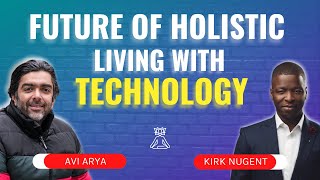
Avi Arya and Kirk Nugent talk about using technology without letting it take over your life, plus advice on leadership, careers, and how to set up for live streaming. They share personal stories and practical tips for content creators.
Everybody's got a story.
Fail, fail, fail, succeed. Fail, fail, fail, succeed.
Fail, fail, fail, fail, succeed. Hello, hello, hello. My name is Kirk Nugent. I look to help people to integrate technology into their daily lives. And he's an engineer. He was making, you know, six figures, but his public speaking business is making double. So I want to see how it all works to be an established show, hopefully with a TV spot, if TV is still a thing.
My name is Avi Arya, father of two, girl, six dog, husband to a superwoman, a streetcar race. Now social media marketer, founder of Internet Moguls, and I'm going to be teaching you something very interesting. Okay? So my name is ABHI Arya, father of two girls, six dogs, husband to a superwoman, a streetcar racer turned hotelier, now social media marketer and founder of Internet Moguls. And I'm going to let today's savvy, fashionable, young 24 year old looking friend of mine to introduce himself with his own hero story. Over to you, my friend.
Hello, hello, hello. My name is Kirk Nugent. I am affectionately known as the geek speaker preacher. I challenge everyday people to think holistically about their relationship to technology at home for their families and at work for career success. And I'm excited to chat with this audience today, hope that you will check us out as well.
Fantastic. It's almost the first time I've ever heard somebody use holistic living with technology because normally people want to throw technology out of their homes and say, you know what, this, because of this, that I have no holistic living. Before we get into that, tell us a little bit about where you were born. You know, how weird were you as a kid? Because we were all weird. And I want every audience to say that people who are interviewed today who are successful, who look so good, who do what they do well, we all come from weird places and that's okay. Own our weirdness.
Absolutely, absolutely.
Tell us a little bit about yourself.
Well, as I said, my name is Kirk Nugent. I am the second of five kids born to two parents who are Jamaican and they migrated from Jamaica to the United States just before I was born. So my claim to fame is that I can run for president. I just barely made it in. So what we're in, I guess in psychological circles you call us third culture kids. So you're not necessarily a part of the primary culture where you live, you're not necessarily a part of your parents culture where they immigrated from. You kind of make your own culture. And so the term in the 90s was born Jamericans, kind of a popular reggae song that came out and that really does define my background, especially related to being an American, but also Jamaican, but not quite either. So interesting mix. Jamaican. Yes, yes, yes. So I had my twin died when I was two years old. I do not remember this entire thing. Of course there just hear stories from my parents and from older cousins and aunts and uncles and they always refer to me as the twins, like this is the guy who had the twin. And so there could be two of us, but for whatever reason, as life would have it, that was not allowed to happen. But I feel like I am living my life for two people, so. So I always feel like there's a higher purpose and a higher calling for which I was allowed to live. He died of sids, Sudden Infant Death Syndrome. So nothing really was wrong with him. Just stopped breathing and didn't get him to the hospital in time. So definitely something that has been a touchstone in my life, something has really driven me, something that's caused me a lot of questions but also helped me to really have a different set of focus. I'm not 24 years old, I am in my early 40s, have worked in the technology field for a number of years at every level, from entry level technician all the way up to CIO and CTO for large organizations spanning multiple countries. So have had a very interesting experience and perspective to share with where technology is concerned, conversation or business, it is a tool to be used. Whatever that business is looking to do, whatever space they're looking to conquer, they're looking to use technology, to leverage it, to innovate, to get a leg up on their competition and to provide a stellar service that stands head and shoulders above their competition. And so I look to help people to integrate technology into their daily lives, to make it something that isn't so taboo, that isn't so. I'm not a geek, I'm not a techie. But the truth of the matter is, and my students and in the higher edit circles that I worked with, they know this statement to be TR said it for years. I don't believe there are any non IT jobs. Every job is an IT job. Every job has a technology component. And there is technology specific to every discipline, every field, every training, every certification, every degree, everything that you could actually do. There is technology that's specific to that platform or to that area or arena. And understanding that technology can be a leg up can really be the difference maker. One of the reasons why I stood head and shoulders above my colleagues and was picked out from the crowd to be groomed for leadership is because I sought to understand not only the technology side of things, but understand it from the perspective of the business for which I was working. So while working for NASA as an entry level technician working for government, it was a completely different environment. And then working for T. Rowe Price, which is a finance firm, stocks, bonds, mutual funds. I worked on the trade desk with portfolio managers with traders and equity and fixed income. Had to deal with stuff like Reuters and Stock Val and Bloomberg. And was an interesting perspective to have coming from a technology standpoint and really sought to understand what it was they were doing so that I could recommend solutions that really stood out for them, that really made the difference for them. And I think that's one of the reasons that's really made the difference in my life. Then worked for an ngo, global NGO in Silver Spring, Maryland and for which I was able to take an assignment and work in South Africa for a number of years, which was assignment of my life. We went there with a one year old and a four month old. Don't do this. Do not do this. Don't move. With a four month old. We were literally waiting for her passport to be printed. Once we got it printed, we had to take one more month. We got a passport at three months. We had to take one more month to get the work permit and accompanying visa in there so that we could actually make the move to South Africa. But that was the experience of our lives. Then moved back here to the United States and worked in higher ed as a CIO and CTO in upper level management as an executive and really began to understand the world of the executive suite, Understanding some of the perspectives, the 10,000 level foot view that they often talk about that we really don't see when you're at certain levels of an organization and so you don't understand sometimes why certain decisions are made and why we pivoted and went a different way when it made sense to us at certain levels that we should have gone a different direction. But really good perspective. Now I'm working on my own. I have my own business called Composition and we do media consulting and web design. My wife does the web design, I do the media consulting and I've got a YouTube channel called HowItAllWorks. It's YouTube.com KirkrNugent and how it all works is a live show we do every Monday at 5:30 Central Standard Time. We kind of get into different career sets, career fields and skill sets that are little known or better yet not often heard from. I like to get people on the show who you don't often hear from people. People who are behind the scenes. Maybe an animator. I had a guy on a couple.
Of weeks back who reported to people in different roles. How would you recommend people who are watching this and working with senior executives on a mission? When you don't see eye to eye with your senior management and you want them to lay it out, be more transparent and like you said, sometimes just go with the flow because somebody's got it planned. Your team is to be a soldier and the soldier goes, as pointed by the general. But do you feel that sometimes the senior management gets it wrong and they're also, you know, like entrepreneurs get it wrong. Senior management gets wrong.
Yeah.
Fail, fail, fail, succeed, fail, fail, fail, succeed, fail, succeed. So we don't know when that comes. So at that time, how does an agency owner, which is working as a technology partner, or maybe I've got a job as a tech, how do I continue to keep faith in that management or that company when I know that you know.
So, yeah, there's a couple aspects there. I think part of it has to do with leadership. Right. And so what is your leader's leadership style like? If your leader is one of those who's very authoritarian, who wants what they have said to be followed without any question, then you're kind of in a tight spot. And you as a worker need to now be cognizant of that fact. And you need to understand what your leadership style is not from your perspective going to your subordinates. I mean, your perspective towards your leader. If your style is not conducive to work with somebody who's authoritarian, you may need to find a different leader. This is a very critical point. A lot of people look at jobs in terms of fit from the perspective of can I do the job? You really want to take time in your interviews. I learned this as a young guy coming out of college. I went on over 200 interviews trying to find a job. That first job was so elusive. But one of the things I learned in that time was you've got to understand the person that you're going to be working for. You got to ask questions that will give you insight into that person and the way they work and the way they think. Now, as best you can, of course, in the interview process, a lot of people are trying to show their best face, but you do want to make sure you understand that person because that dynamic is really going to determine a lot of what whether you can be successful in that role or not depending on your work style. But a lot of people are still trying to find themselves, so they will adapt to the leadership style of the person that they're working for, which is also not necessarily a good thing, but it's just the way that the world works. The other piece that I want to mention is what I said before. Seeking to understand the business, the industry within which you work. I don't care if you're, I don't care what your role is. But if you're in a specific industry like I, you know, you could be in finance but still be in higher ed. But if you're in the higher ed industry, you got to understand how that industry works. What are the norms? What are the rises? What are the things that caused the company or organization or institution to rise and fall? And when you understand those things, you can actually speak intelligently. And I think you can open up doors to have open conversation. For me, one of the things I know from my predecessor, the guy I replaced when I got to this specific university, he was a technical guy. So there wasn't a lot of desire on the part of leadership to really engage him around educational topics, service learning outcomes advisors and class schedules and bulletins and research and master's degree. And he didn't want to engage around any of that stuff. But because I took a vested interest in the industry within which I was working so that I can apply technology that was relevant to then, I was able to have some more meaningful conversations at a different level. And I think when you do that, you're able to have that rapport where you can actually hear from them some of the more finer details of why a certain decision was going to be made. And that does help you to swallow it. What may seem like a bad decision. But that last piece is how does the leader frame the decision? Not at the standpoint from which we failed, but when they're making the decision, if they frame it in a way that is like, okay, this is the way forward, I am 500% sure and we're going to move this way, then if there's a failure, it's difficult. But if this leader frames the decision as, look, folks, based on all that we have seen, I've gathered data from the four corners of the organization and this is the way we feel is going to be the best for all of us and we're going to make this move together for the better or for the worse. If, if that's the environment that your leader has fostered, it's much easier to accept a decision that you may not necessarily agree with, and especially better when that decision may end in failure. You can now come back and say, hey, you know, we tried it. That wasn't the best thing for us to do here. We're going to pivot and we're going to shift in a different direction. That leader gets a lot more grace just by the way that they frame the decision.
You know, this is what you said in the last five minutes. I don't know if I can transcript this and put the keywords online and find enough meaningful conversations like the one we had in the last five minutes on this particular topic. Because how you go in as a technology person, you know, at whatever age, 24, 34, 44, and you're reporting to someone and everybody says you should have resonance with the outcome and all of that, and here we're talking about real world problems. That resonance sometimes is, you know, it, it's, it's. It's a moving target.
Yeah, yeah.
And so excellent. I love that. I mean, I'm just. Because every time I'm thinking from, I'm. I'm always doing these interviews from two people's perspectives. One is mine. Oh, yes. I get richer and learn more. And then the people who are watching, I'm like, wow, right? So this is so beautiful. I want to say thank you so much for the last five minutes was pure fire.
Okay, man, thank you so much. I appreciate that.
We went to something lighter and then we go back, you know, switch tracks again. We had the opportunity to do a get to know each other session last week. We got to know each other, and then now we're doing the final interview. And that was amazing because I feel I already have a friend in you and it's, you know, it's easier to do interview and all of that. And so. So that was so fantastic when you broke down your office setting. If you don't mind, can we just do that once more? You have a. You have a great sound mic. I love the purple light at the back. It's a nice studio. Can you. For all people who are beginning their video journeys or YouTube or studio whatever, can you just break that down for us? From sound to lighting to video.
I have moved one of my cameras to a different machine, so it may take me a second to kind of get this thing where I can. Where I can move it around like we did before, but I definitely can do that. But even while I'm getting this set up, one of the things that we Talked about last time was just making sure your basics are covered. A lot of people often ask me, in fact, I had a speaking engagement this past Sunday where the main thrust of the presentation was live streaming best practices for faith based institutions. And one of the things that I'm often asked is, can you give me an equipment list? What should I buy? I want to go out and get some gear. I want to live stream like a pro. And I'm saying to folks, you want to make sure I talk with my head, but you want to make sure that your gear acquisition does not outpace your ability to use the gear. You want to learn, learn along with the gear. And so if you have a phone now or if you have a laptop with a webcam and all you're using is the built in microphone, or if you've got a set of headphones that have a little mic on the side, start there. That's a great place to start. And then when you've maximized that thing, you'll tell, you'll know exactly when that is. When you've maximized that value on what you now the gear becomes a limiting factor to your live stream. Then that's the natural time to now start looking, to grow your gear and to start buying other equipment. Let me plug this in real quick so we can.
You probably one of the few people who don't need a mic to have that baritone voice.
Yeah. I have been getting some interesting compliments on my, on my mic and on my voice. So I, I do, I do some voiceovers as well as next time somebody.
Said, oh, which mic do you use? You say, excuse me, I've never used a mic in my life. That's just what I, my, my daddy gave me.
That's it. That's it, man. It's all natural. That's a whole new song, man. That's good. I'm just pulling up what I. Pulling up this camera here. We're gonna make a switch and then we'll be able to bring that in as well. So let's see if we can get this going. All right. So yeah, it's not, it's not picking up this cameraman. I apologize. I.
No, no, no problem. Whatever, Whatever. Whatever works. That's absolutely fine.
I'm going to see if I can do this one other way. Not certain if this will work, but I'm going to try it because hey.
That'S all we can do.
And that's all we can do. It is a 50 second video that I took. I'm going to Try and play it and see if, if we can at least show that view of what I've got set up.
You know, this is what you said in the last five minutes. I don't know if I can transcript this and put the keywords online and find enough meaningful conversations like the one we had in the last five minutes on this particular topic. Because how you go in as a technology person, you know, at whatever age, 24, 34, 44, and you're reporting to someone and everybody says you should have resonance with the outcome and all of that, and here we're talking about real world problems. That resonance sometimes is, you know, it, it's, it's, it's a moving target.
Yeah, yeah.
And so excellent. I love that. I mean, I'm just. Because every time I'm thinking from, I'm always doing these interviews from two people's perspectives. One is mindset. Oh, yes. I get richer and learn more. And then the people who are watching, I'm like, wow, right? So this is so beautiful. I want to say thank you so much. For the last five minutes was pure fire.
Okay, man, thank you so much. I appreciate it.
We went to something lighter and then we go back, you know, switch tracks again. We had the opportunity to do a get to know each other session last week when we got to each other, and then now we're doing the final interview. And that was amazing because I feel I already have a friend in you and it's, you know, it's easy to do interview and all of that. And so, so that was so fantastic when you broke down your office setting. If you don't mind, can we just do that once more? You have a, you have a sound mic. I love the purple light at the back. It's a nice studio. Can you. For all people who are beginning their Video Journeys or YouTube Studio, whatever, can you just break that down for us? From sound to lighting to video.
I have moved one of my cameras to a different machine. So it may take me a second to get this thing where I can, where I can move it around like we did before, but I definitely can do that. But even while I'm getting this set up, one of the things that we talked about last time was just making sure your basics are covered. A lot of people often ask me. In fact, I had a speaking engagement this past Sunday where the main thrust of the presentation was, you know, live streaming. Best practices for faith based institutions. And one of the things I'm often asked is like, can you give me an equipment list? You know, what should I buy? I want to go out and get some gear. I want to. I want to live stream like a pro. And I'm saying to folks, you. You want to make sure. I want to. Want to get. I talk with my hands, but you want to make sure that your gear acquisition does not outpace your ability to use the gear. All right? You want to learn, learn along with the gear. And so if you have a phone now or if you have a laptop with a webcam and all you're using is the built in microphone, or if you've got a set of headphones that have a little mic on the side, start there. That's a great place to start. And then when you've maximized that thing, you'll tell. You'll know exactly when that is. When you've maximized that value on what you. Now the gear becomes a limiting factor to your live stream. And then that's the natural time to now start looking, to grow your gear and to start buying other equipment. Let me plug this in real quick so we can.
You're probably one of the few people who don't need a mic to have that baritone voice.
Yeah. I have been getting some interesting compliments on my. On my mic and on my voice. So I, I do, I do some voiceovers as well as next time somebody.
Says, oh, which mic do you use? You say, excuse me. I've never used a mic in my life. That's just what my daddy gave me.
That's it. That's it, man. It's all natural. That's a whole new song, man. That's good. I'm just pulling up what. I'm pulling up this camera here. We're gonna make a switch and then we'll be able to bring that in as well. So let's see if we can get this going. All right. So, yeah, it's not. It's not picking up this cameraman. I apologize.
No, no, no problem. Whatever. Whatever. Whatever works. That's absolutely fine.
I'm gonna see if I can do this one other way. Not certain if this will work, but I want to try it because, hey, that's.
That's all we can do.
And that's all we can do. This is a 50 second video that I took. I'm going to try and play it and see if we can at least show that view of what I've got set up.
Awesome.
Made some changes, actually, to the setup here. All right, let's get that.
And you already done your gym for the day?
Oh, yes.
Your Morning. Four hours. Because, my friend, you know what? I bring this up every time I speak to you because when I look at you, I'm like, my God, we're the same age. I. I swear, I promise you, since the time we started this interview, I had a, I had a massive headache in the morning and I'm getting better. But I was like, today I don't need to go to the gym. But since the minute I've been talking to you, I'm like, I cannot not go to the gym.
Oh, wow. I have. I am, yeah, I definitely, yeah, I try to get in a workout every day here. I'm going to make a. I'm going to make a switch. I'm hoping this is going to work out well. So let me get the mic switched first. Going to switch this mic and are you still hearing me? That's the question.
Oh, yes, absolutely.
Yes, you're still hearing me. Good. And then I'm going to make a switch on my camera and then that should do it. There it is. Here's. Let me move my video around here. So I just, I literally, I think I've made some changes even while. Since we talked last, I think. So I had a two monitor set up with my Mac Mini, but I just got the MacBook M1 with the M1 processor, which is really good for several livestream platforms, although it does have some significant drawbacks in other areas. But this is just giving you an idea of what that, what my, my setup looks like. I was doing a video where I was showcasing how to connect multiple webcams to your system. And so here you're seeing there's a webcam on top of my iPad. There's a webcam up top there. Of course, I have the Webcam for my MacBook. Two other webcams on top of the monitor here. And then of course, the camera that I'm using now, which is my dslr. And I've just got them connected into a USB hub and that is connected to this dongle that takes up both of my USB C ports on my MacBook Pro.
So, yeah, so. So number one. So what camera is that? The Sony What?
The Sony A7 II camera. It's a great camera. It's, you know, the A7 III is kind of the standard bearer right now. And then, you know, of course, you know, Apple Sony just came out with the A1, which everybody's salivating over, but it's almost $7,000. But either way, Sony is a great, great, great platform. Their color science is phenomenal. I just love what their camera, what it does. The camera that I'm using to record this video, however, is my phone. It's a pixel. Pixel 5 or no pixel 4. Pixel 4 XL. I didn't get the latest model, but it is a great camera on my phone as well. So this is what I'm saying is like, you have these different perspectives, I think depending on what your show is gonna look like or if you're gonna do a live stream. If you want to do interviews like Avi's doing with me, there is some things you want to look into. What is your personality? My personality lends itself to me having some lights on the floor to get that shallow depth of field from my camera. That's why I have the lens that I have and set myself in that focal length. But all of those are technical terms. I want to say this piece as well. The camera is not just for streaming. I would never recommend this camera for streaming only. I would recommend a different camera for streaming. If you're going to use a DSLR or micro 4/3 camera, I would recommend the A6400. But the Logitech C920 or Logitech C922 or even the Brio 4K, those are great webcams that will give you a great color and great picture quality as you go into these zoom rooms or into whatever live stream that you're looking to do.
Why do you have so many webcams?
So that was for the purposes of a video I was showcasing how you can connect multiple webcams to one computer and add them all into Streamyard. So that video is actually available on my YouTube channel right now. Multi camera stream in Streamyard without a camera switcher. So a lot of people use the ATEM mini to be able to switch between cameras. Here I was just showing folks, I've got a bunch of webcams connected directly to my computer and I can switch between all those cameras in Streamyard as if it was a switcher. So that's the reason for that. I actually borrowed them from all over the house. I had my wife's. I took my sons, I took my daughters. I took a different one that I have sitting on another computer downstairs. So I grabbed all of them, connected them in here, and then used it for that video. On a normal basis, I really just have the Sony A7 II. And then I have this Logitech C920.
Which for some reason, very quickly for the audience, if one DSLR on top and one maybe an angular Webcam. How do you connect both and go between either of them?
So it depends on what application you're using. For me, I use a product called ECAMM Live and that's how you're seeing my video right now, how you're seeing me as picture in picture. ECAMM has multiple scenes that I can choose from. I mean, I can go back to this one. It has my signature on the screen. I can move to this one. And this has a space for me to do a tutorial. So I would have my screen up on this other side. I have multiple different scenes that I can switch from. Of course, I'm going back to the one that we were in earlier. And you're still seeing that video. I can mute myself. I can mute the video. I've muted the video actually, so you're not hearing the audio coming from there. But yeah, this program, eCamm Live really gives me a lot of flexibility and allows me to kind of pick what people see when I come into a studio. I'll give you an example. Here's a, Here's a presentation that I did just Sunday, just this past Sunday. So here's, here's, here's one of the slides from that presentation. You know, what, what should be our approach. And of course, this is how. So this is how I would look in ECAMM in Zoom and I would be full screen. I mean, as in you're seeing my whole camera. It's not cropped. But then you're also seeing the different things on the screen. And I can just kind of move through the slides very seamlessly without having to do a whole lot there. So this is the title, title slide for the presentation. And then, you know, at the bottom I did have the question slide. So, you know, people could find me, follow me, all that other good stuff. So, you know, just kind of again, ECAMM Live and its virtual camera really gives you that ability to be very versatile. There's a new program called I don't know if you've heard of it. Mm hmm.
Oh really? That's what it's called.
It's called MMHMM App. It's great program. It is a virtual camera and virtual microphone. You can go into Zoom. You can have your entire presentation behind you. So so cool how they're able to do that. I'm trying to see if I can maybe show a small clip of me doing some stuff with MH is what I have been calling because I got so tired of saying of course. But here, let me see if I can pull up a clip real quick and see if we can't show a piece of that. Let's see here. That's countdown. Oh, here we go. Here we go. It's under movies. And this is the. That's a live test. This, I think this is the one here. So this is the beginning of the video. I'm. I'm showing it. I'm showing the video. I'm showing the product now.
Yeah.
So this is the website MMHMM app. And of course this video is the latest video on my YouTube channel right now. I just released it on Sunday night. But yeah, this is the actual application. This is what it looks like. And somewhere here I go into showing you what it looks like inside ecamm. So this is what my desktop looks like. This is ecamm, all the floating windows. And you can see there that under the microphone. Mm hmm. Is available. Let me, let me scrub a little further to show you. So there's my presentation. And you can see that I can move myself to be bigger, smaller. I can make it big, you know, take up the whole screen behind me. So it's basically a green screen. I can actually show a video. And then there is a. Oh, there's another piece here. Okay, here it is. This is Zoom. So you can see in Zoom, I can come in and be on screen in zoom with my presentation behind me. That's the power of this platform.
That's fantastic. And what about the virtual mic, you said, how does that work?
Yeah, so you would select In Zoom. I think that's what I was actually showing a second ago there. Yep, there it is. I'm showing you connecting, selecting the camera. And so here I'm joining the audio. And there I'm selecting the microphone. That's the. So see right there, I paused it right there where you can see that. I know it's small, but under select microphone you can see. Mm hmm. Audio Virtual. Right. So that's a microphone. And so what you do is you add your microphone to mm. And then if you're playing a video or if you're playing a clip or if you have some music you want to play, add that to your, your MM session and then it will play into Zoom along with your microphone. So it's kind of a pairing. So it pairs both your audio and the audio of the video that you want to play to. So your, you know, all your attendees or whoever's in Zoom can hear it as well. So it gives you both virtual camera and a virtual microphone, which is very versatile. Very, very powerful setup that they've got there. So I will say, you know, if you, if you catch that video where I was talking about this, I made sure to tell folks I will 100%.
Put a link to this and I'm already making sure that I need to look at that video right after this.
Yeah, absolutely. That it's, it is still very much new. It's out for Mac and it's in beta for Windows and they're taking beta testers. So a friend of mine signed up to be a beta tester. I signed up as well. I haven't heard back, but friend of mine was able to get back from them. So he has it installed on his Windows computer right now. So it is going to be both, you know, compatible for both platforms, although not quite yet. And so that's, that's, you know, you want to keep that in mind. It's new, so there's going to be some bugs. We're going to learn and grow along with the platform, but I think they're on the right track. Very easy to use. You can use it with any platform. I've used it with streamyard. I showed it in the video. I showed it being used with eCamm, Streamyard and Zoom. But of course, any application on your computer that takes a webcam that, that application can be used in there as your primary webcam. So, yeah, glad to share that.
What headphones do you have?
So I have, I have. These are, they're called Me Me Something man. I'm trying to remember what the name of it is. Let me see if I can show you that too. Real quick here. There we go. Move that over some. Gonna try and bring, bring this screen in if I can.
At the gym the other day, I lost one, one of my earphones from the AirPods.
Oh wow.
My brand colors are red, so everything is red. So when I got the AirPods about two years ago, I sent them to Dubai. Friend of mine, there was a custom agency there and they turned them red and our custom colors and we had a signature on that and I lost that red one. So it's painful. I can't get the same one again now.
Yeah, that's tough, man. I feel for you there because I know that those can be hard to find. Okay, so here's Google Chrome. I'm going to share that. And so I'm just going to change this camera to this one and that should allow me to share something here. So yeah, here we go. So Kit co Kirkarnugian is my Gear page if you go there, KIT CO Kirkarnugian if you go to my office, setup this right here at the top, actually. So this is the camera I'm using, this is the microphone I'm using the bundle. So I have the headphones, I have the board, the soundboard and I have the microphone. And then these are the headphones. So they called me Audio Sport. You know, they're over the ear, they're noise canceling. They really are great headphones. And they give you that on TV look. Where you can't really tell, you know, from a straight on shot, you can't really tell that I've got headphones on. So. But yeah, there's a ton of great things here. This bundle that I'm showing with this camera is what you need. If you're gonna stream with a camera, you gotta have the battery pack, you gotta have the mini HDMI to hdmi. And you're gonna need some capture cards. And I recommend this tripod. What do you call this? That's where my camera's on right now, the uniform. That's it. Yeah. But it's really stiff and firm. It's a great option. So yeah, KIT co Kirkarnuja that's where a lot of the items I have are. The lights that are on the floor behind me. These are them. The Mickey four pack. Yeah. And these are not, you know, these are relatively inexpensive. So we're not talking about stuff that's gonna break the bank. And then, you know, right above my head, I do have this light which is, which has really served me well. So, you know, these are, these are some of the things that are, that I have. And I mean, it's not necessary to have, you know, again, I always tell folks, you know, you want to go small before you go big. In fact, I have a video here called Home Studio Hacks. Right on Kit co Kirkarnugent and I kind of show people from using my laptop sitting on the table to putting it on a raised, I guess, holder and then using the webcam and then upgrading it to using the camera that I have and then even putting some lights in some colors. So I go through all those steps in this video for people to kind of get a feel for. What does that upgrade look like? Okay, so if this is what my look is, what would adding color to my background look like and how would that appear on screen? But yeah, like I said, live video strategies is something that I'm really passionate about. I'm happy to be able to share that here as well.
That's fantastic. I'm going to link that up as well. So people who want to go live. So we spoke about gear, we spoke about strategy, we spoke about start small before you go big. We spoke about bringing your own personality, all of that. Now, in terms of going live, you spoke about eCamm, Streamyard, all of these tools and anything else you'd like to say in terms of, you know, take more questions so that there's more engagement. Like when people go live in the beginning, when they're starting off, they see less engagement and that makes them shut off forever.
Yeah.
So what would be your tip for those guys was just starting out.
You know, there's. There's something we all probably did as kids. And this goes back to that weirdness factor, obviously, that we need to kind of tap into. And that is having an internal dialogue, but having it out loud on screen. If you're gonna go live, like I'm. If we're. Me and Avi were live, then we could talk to one another as well as engage with the comments. But if you're live by yourself, that internal dialogue, just make sure that it's not only in your head. You know what I mean? So if you think something is funny, laugh about it and tell people like, hi, I'm laughing, because da, da, da, da. And it just pulls them into the conversation. They can't be heard, but they're in the conversation with you. And any way you can engage in the comments, any way you can ask people, hey, what do you think about so and so? Let me know, let me know. I'm looking at the comments. Come on. I'm waiting for you to respond. What do you think? What do you think about this gear website? How many of you guys use Kit Co? I mean, is that a thing? Is it great? Is there a better one? Talk to me. I'm new to this. Talk to me that's getting engagement and it immediately. I mean, somebody could be scrolling past and they see, you know, hear you saying, talk to me about this site. And they're like, oh, what site? Let me, Let me pause for a second. I want to. I want to see what site he's talking about, right? And. Oh, Kit Co. Yeah, I know that site. I've got some good guys on that site. So they come in and they type in, yeah, I follow a couple people that are on Kit Co. Okay, cool. Hey. Hey, Tom. In the chat, I see that you follow a couple people. Tell me who you follow. I want to follow some people too. I'm new to this site. The engagement helps with the back and forth. If you're doing a live stream, one of the things you want to be able to do is to create a two way conversation. This is one of the things that I teach folks is you want to create a two way conversation with the people who are on the other side of the camera. You got to make sure you're talking to the camera. You got to keep your focus on the camera. I'm tempted to look over at Avi because he's right over here. But I want to talk, I want to be present on camera. So I want to keep my focus on the camera and I want to make sure that if there's something in my head that I'm thinking about saying or it's just kind of crossing my mind, don't be afraid to just let that out. Like, man, you know, I just got this cup, these cups in yesterday and we just launched the merch page for how it all works. And I'm still very excited about this. So I've got coffee on my brain because I've got this cup here. You see, what I'm saying is just allow people into your environment. In the production world, we call it breaking the third wall. By breaking the third wall, it was like, you know, every production set has three walls and then the third wall is where the audience was watching. So if you any of your favorite sitcoms from back in the day that were not, you know, that were filmed, quote, unquote, live in front of a studio audience, that used to be a thing. They had this third wall. And you never broke the third wall. You didn't look at the audience and say something. You're always kind of off camera. You're talking to the person or in the scene that you were with. But you didn't necessarily break that third wall. In live streaming, it's a flipped concept. You want to constantly break that third wall so, you know, let people know. I can tell you, like what I did when I was with Avi the other day last week when we were chatting, I took the camera and I showed him everything. I mean, I just went everywhere and showed it to him. And it breaks that third wall. Because see, right now, you know, when you're live streaming, you want up your shot, you know, so everything that's in shot right now is very intentional. So if I zoomed out even just a little bit more, you'd be like, whoa, what's going on in his office? You saw some of the videos that were of my Desk and everything like that. It's kind of a snake pit. I've tried to clean it up. It's. It could be better, but it works. It's functional. And in terms of what you see on camera, this is what it is. But when people get a chance to see something just slightly outside of what you have in your frame, it lets them know, oh, he's a real guy. He's a real person, just like me. You know, I'm messy sometimes, too. Yeah, I would like to be cleaner. But it sometimes doesn't work out that way. That level of humanity that, that shared experience that you have with your audience, it goes a long way to, you know, galvanizing people around whatever it is you want to share. And everybody's got a story, and that's the, you know, I'm going to stop there. Everybody's got a story. Everybody has something that they need to share. Everybody has a tribe that's out there that's waiting for you to get online and put your unique spin on content out there, because they're waiting. They're literally waiting that you have with your audience. It goes a long way to, you know, galvanizing people around whatever it is you want to share. And everybody's got a story, and that's the, you know, I'm going to stop there. Everybody's got a story. Everybody has something that they need to share. Everybody has a tribe that's out there that's waiting for you to get online. And so, you know, being able to do employ some of these techniques and practices really helps to engage folks, and it really helps to, you know, tip that nose up in terms of your numbers and analytics for your live stream. So. Yeah.
Wow, that was so real.
Put your unique spin on content out there because they're waiting. They're literally waiting. So, you know, being able to do employ some of these techniques and practices really helps to engage folks and it really helps to, you know, tip that nose up in terms of your number and so.
Fantastic. Kirk, we're coming to the end of the interview. I had two more questions left.
Sure.
Where can people find you? Do you have a course? Do you have a website where. For people who want to interact with you deeper, where should they go?
Well, I, like I said before, I do have. I do have a couple of websites where I work with my wife. Like I said, we do media media consulting and we do web design, and that is for a company called Composition. That's her, you know, her company name, it spelled with a K because my all of us are K's. Her name is Kanique. My name is Kirk. Our kids names all start with K's and so we decided instead of a C we're going to change it to K. And that's the name of our business is Composition.
You know when you say that like that, I can never forget the website name. I love that.
Yeah, yeah, yeah. We had, I always make this joke. We had a, we had, was myself and her and then our son Carson with a K. And then we had to have a four, a second child. So there was four of us. We didn't want to leave it at kkk. You know, we didn't want to leave it there. So. But yeah, Carson, so Kirk, Carson, Kenzie, that's us. And our business is called Composition. I'm trying to find that question screen. I can show that real quick for people who are, you know, wanting to see that on screen. So YourComposition.com is the website for our business. HowItAllWorks.com is the website for the show. And so that's where the merch page is. It's where we have some of the latest stuff that we're doing on the YouTube channel. A lot of stuff I'm doing right now is on YouTube and it is free. You know there's an entire 31 day course on best best tips for live streaming that is available. It's a playlist available on my YouTube channel. So you can, you can get that there. Kirknugenspeaks.com is another space that, you know where I do a lot of my public speaking, where I do my voiceovers from and I will be launching some courses on the Kirk Nugent speaks platform. So that's, that's actually something that's going to be coming mid year this year. So we're working on some of that stuff right now.
Lovely. And my last question is.
You know.
Most of us are big fans of Gary Vaynerchuk. I had the opportunity to meet him a couple of times in his office and we went for lunch and all of that.
Oh yes, absolutely.
Yes. And so that, so he says work hard in the micro but be patient for the macro.
Yes.
So in five years, where do we see how it all works?
Dot com in five years, man. So, and I, this is such a great question. This is something that I often do with clients that coaching clients that are with me trying to figure out what are their next moves, what are the next steps. Trying to get past that mental block. I asked them, you know, if, no, if money was not a barrier, you know, all things being equal, you, you, you could actually achieve it. Where would you want to see yourself? And so I want to see how it all works as a full fledged show. Want to see it integrated into educational scenarios and systems. I want schools to utilize some of the content that we have. We interview people on the show who, you just never know what that perspective is and how much money can be made in some of these spaces. A good friend of mine is a public speaker and he's an engineer. He was making, you know, six figures, but his public speaking business is making double. You know, who knew that? And how do you, what are the mechanics? How did he make the transition? Those are the kinds of conversations that we have. And I often get hear from parents who have college age kids or high school age kids. They're watching the show and they're like, man, this was phenomenal. You know, this kind of opened up our eyes and our minds to this entire space, this entire world, and how we can actually be successful and how we can pursue some of these dreams. So I want to see how it all works. To be an established show, hopefully with a TV spot. If TV is still a thing in five years, maybe, maybe Netflix, I don't know, but some kind of a streaming platform. Definitely want to see it integrated more into the educational arena for people to learn and experience and tangibly feel what it's like to be in some of these career paths. But I also want to, you know, really ramp up my public speaking. I'd love to rest on that public speaking career. And in order to do that, that's why I'm trying to get a lot of these classes and courses recorded and done because there's a lot that I need, I know I need to teach. It cannot be done in one public speaking session. That's why being able to go and speak and then refer people to the course is so critical. And I think there's a lot of people out there. If you have the skills, if you, if you do anything with excellence. I really feel like it's, there's, there's a space for us to create these courses and allow people to consume them. Because honestly, I don't know what the education system is going to look like in a number of years, because people are learning much more from when they're online in, you know, as they say, YouTube University. And one of the reasons for that is simply this is, I want to end with this last point. I know this is our last question. Often hear people say, you know, I'm not really a techie. You know, I get this question, you know, this comment all the time. Not really. In media, I don't get it. It's just foreign to me. It's just not my thing. And what I say to them, and I said this on my years, because people are learning much more from last night. What you're actually saying to people is that you don't when they're online in, you know, as they say, YouTube University. And one of the reasons for that is simply this is. I want to end with this last point. I know this is our last question. Often hear people say, you know, I'm not really a techie. You know, I get this question all, you know, this comment all the time. Not really. In media, I don't have anything that. That's motivating you enough to learn the technology. That's actually what you're saying. And once you find that thing, trust me, all the rest of the stuff's gonna just float away. You're gonna realize, like, hey, I'm elbow deep in this tech and this gear, and I'm working it. I'm making it happen. Because you have a motivation. So find the motivation first. Don't get the gear. Don't look at the top youtubers or the top live streamers and say, I want to be like them. What do you want to share with people? Figure out that part. And if that is your motivating factor, all the rest of the piece, don't get it. It's just foreign to me. It's just not my thing. And what I say to them, and I said this on my show last night, what you're actually saying to people is that you don't have anything that's motivating you enough to learn the technology that will fall into place. You'll figure out the rest because you're motivated. And that is, I think, the piece that we're missing. In the education system, people are learning just for the sake of learning. And you're going to actually what you're saying. And once you find that thing, trust me, all the rest of the stuff is going to. Just going from grade to grade just for the sake of moving on. But what is the motivating factor? You know, you approach that history exam. Why do you want to know this stuff? That is the piece I think has been missing. And that's why I think YouTube does much better than traditional school, because people are searching for what they want to learn, and when they find it, they'll watch float away. You're going to realize, like, hey, I'm elbow deep in this tech and this shit 50 times over until they master that thing and they can go on to something else. So that is absolutely where I want to see myself in a number of years. And one of the things I wanted to leave with the audience. Find your motivation, Find your why. Figure out that piece. It's so, so, so, so critical. Number One search on YouTube today, probably been that way for the last six, seven months. Purpose, purpose. Find your why. Find your motivation. That's gonna be the driving factor for anything that you hope to achieve, anything you want to be successful at. Find your motivation. And I'm working it, I'm making it happen because you have a motivation. So find the motivation first. Don't get the gear. Don't look at the, you know, top YouTubers or the top live streamers and say, I want to be like them. What do you want to share?
Love that, Kirk. Like I said, every time I start talk to you, it feels like I've known you forever. You seem to be someone who's not in a hurry with people.
Figure out that part and if that is your motivating factor, all the rest.
Of the piece, someone who's got the patience, someone's got the empathy, and, you.
Know, those will fall into place. You'll figure out the rest because you're motivated. And that is, I think, the piece that we're missing. In the education system, people are learning just for the sake of learning.
And you're going up for somebody who we haven't even met. But I can just feel so relaxed and, you know, not feel under the gun, you know, that, you know, I'm interviewing somebody and, you know, so it's been.
It's going from grade to grade just for the sake of moving on. But what is the motivating factor?
It's been a tremendous learning for me as I take notes over here while talking to you.
Wow.
And. And for. And for the community, you know, you.
Approach that history exam. Why do you want to know this stuff? That is the piece I think has been missing. And that's why I think YouTube does much better than traditional school, because people are searching for what they want to learn, and when they find it, they'll watch.
I'll never forget composition with a K aside should be everybody who's listening to this now, tomorrow or in the future should be the your go to place for getting a website done. And if you have a media content technology strategy that you're struggling with, you want to go live and you feel.
Every 50 times over until they master that thing and they can go on to something else.
But he's going live. And you know, you need to be handheld from the beginning or if you.
Think you're so that is, that is absolutely where I want to see myself in a number of years. And one of the things I want.
Already somewhere but need to up your game.
Up your game, right?
You need to go to Kirk and get this done, as I will after this show. Kirk, thank you very much. And for all of you, I just.
Wanted to leave with the audience. Find your motivation, find your why. Figure out that piece. It's so, so, so, so critical. Number one search on YouTube today.
Watching this is Abhi Arya, father of two girls, six dogs, husband to a superwoman, a streetcar racer turned hotelier, now social media marketer and founder of Internet moguls.
Bringing on more probably been that way for the last six, seven months.
Purpose Internet moguls like my friend Kirk over here. Thank you for all for your time and your patience.
Find your why. Find your motivation. That's going to be the driving factor for anything that you hope to achieve, anything you want to be successful at. Find your motivation.
Love that, Kirk. Like I said, every time I talk to you, it feels like I've known you forever. You seem to be someone who's not in a hurry, someone who's got the patience, someone's got the empathy and, you know, the love for somebody who we haven't even met. But I can just feel so relaxed and, you know, not feel under the gun, you know, that, you know, I'm interviewing somebody and you know, so it's been, it's, it's been a tremendous learning for me as I take notes over here while talking to you.
Wow.
And, and for, and for, for the community. And I'll never forget composition with a K. Should be everybody who's listening to this now, tomorrow or in the future should be your go to place for getting a website done. And if you have a media content technology strategy that you're struggling with, you want to go live and you feel everybody else is going live and you know you need to be handheld from the beginning or if you think you're already somewhere but need to up your game, up your game, right, you need to go to Kirk and get this done, as I will after this show. Kirk, thank you very much. And for all of you people watching this is ABHI Arya, father of two girls, six dogs, husband to a superwoman, a streetcar racer.
More from Avi

The strongest mindset doesn't begin with meditation. It begins at home. Before you conquer the wor

The strongest mindset doesn't begin with meditation. It begins at home. Before you conquer the wor

Your mindset isn't something you fix once. It's something you train every single day. Just like yo

Don't build a company just because your friends are. Build one because you're ready. A startup is

Everyone dreams of becoming the boss. Very few understand what that really means. The moment you b

Most entrepreneurs say, "I don't have time for coaching." The truth? You don't make time for what

Over hiring doesn't always solve problems. Sometimes, it creates them. Having a small buffer in you

"The highest-paid" isn't the goal. The highest-value is. People often ask why premium mentorship co

The founder will always be a bottleneck... at some stage. The goal isn't to pretend you're never th

People ask me how I stay consistent with my morning routine while traveling across countries and tim

People ask me how I stay consistent with my morning routine while traveling across countries and tim