Build a Powerful Community - Boss Mom || Dana Malstaff 😎 || IMOTW
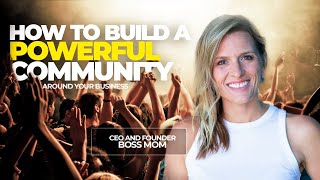
Dana Malstaff, founder of Boss Mom, talks about building community through questions and appreciative inquiry. She argues that pursuing your gift matters more than chasing passion, and that authority comes from engagement, not expertise alone.
I am Dana Mallstaff. I am mother of two, lover of singing in the car, founder of boss mom, ultimate think tanker, and believer in that any problem can be solved with duct tape. What we want most is to belong to something. And in that belonging, we want to feel as though we are being brave rather than being crazy. What you have to do is you have to. You have to facilitate your audience becoming self sufficient. It's like being a parent. Right. Don't do all the things for your child. Make them put their own clothes on, make them, you know, start to make their own lunch. Make them brush their own teeth, reward them when they actually remembered to do it without you asking. Up teaching and start asking. So what I think the online space has taught us is that you create content. You put out content and you just constantly are creating things. Right. You have to become an expert in your space as quickly as possible. You have to build authority in your space as quickly as possible. And we're taught to do that by creating more. Long time no see.
I know, it's been a while.
Yeah, it's good. A little warm here, a little tired, but, you know, nothing unusual.
Awesome. Awesome. The girls are not joining us today because after a long time, the schools opened up and they somehow had to make that attendance happen. We learned only yesterday. So sorry about that.
No, that's okay. Complete. I mean, good. Yay. Yay for getting to go back to school.
I know, I know this. It's a bittersweet feeling for them. They're like, do we want to go back or not? I'm like, go figure it out. Let's figure. Let's. Let's talk when you come back.
Yeah. My kids are 5 and 7 and so they love being home. But when I asked if they wanted to go back when camps opened a couple weeks ago and they were like, yes, we're bored here. You're boring.
Awesome. Should we get started?
Yeah. Yeah. Here, let me just make sure I got everything closed and all good. So we've got as much space and goodness as we can. Okay. Okay. Yeah.
Awesome. Dina, thank you so much for taking the time out for this interview. Like I said, this is a daddy daughter venture. The idea being that we want to make a family digital marketing school. It comes from my own story, which where I spent the last many years traveling back and forth and not being able to spend quality time with my family as much as I wanted to, because as most entrepreneurs, our business is our child as well. And then we have our children and we want to make sure that we can balance everything. And why do you need balance in today's day and age when somebody in your house can become a YouTuber, somebody can learn affiliate marketing, the other person can start a Facebook group and monetize it, and everybody can do something on the Internet and spend less time traveling on flights and traffic and spend more time. Because we've all realized now more than ever that the only thing that's finite is time, and it's more precious than ever. So we started this school one year back, this mission that we start this school with this in mind. And it's been a long journey. We've traveled around the world and we would have loved to come and meet you, interview you in person. But because that didn't happen, we thank you for your time on Zoom. So before we get started, we always talk about. We always teach our students of something called the hero introduction. I always tell people the shortest distance between two human hearts is a story, but because till you are known, people don't listen to you. And therefore, your story has to be short and concise so that when you post it on Instagram or Facebook or LinkedIn, people stop, watch and share it with others. So we call this the hero story. I'll tell. I'll tell you mine and then we'll request you to tell us yours.
Okay?
Okay. So my hero story is. My name is ABHI Arya, Father of two girls, six dogs, husband to a superwoman, a streetcar racer turned hotelier, now social media marketer and founder of the Internet. Bogus of the world. Short, concise, tells you everything about who I am, my family, where I came from, where I'm headed, over to you.
Oh. Oh, okay.
Wow.
This is on the spot. Okay, well, I am Dana Malstaff. I am mother of two, lover of singing in the car, founder of boss, mom, ultimate think, tanker, and believer that any problem can be solved with duct tape.
Lovely. I love that. I love Dina. Thank you so much. I remember we met a few years ago and you told us that you have. I remember Greg Smith, who's an amazing human being and a very good friend, happens to be one of my. He's a neighbor. We live on the same lane almost. And so Greg said, you know, he introduced us and he said that you have a community of people who love you. And in today's day and age, a lot of people want to start and build businesses and they want to start from the community angle. So whenever we do an interview for the Internet moguls of the world, we are catering to three audiences. The 13 to 18 year old at home, the 25 to 45 year old and the 71 year old youngster. So everybody in the. Because like I said, Internet moguls of the world, the family digital marketing school. So based on whoever's listening, what would be your advice to people to start a business but lead from the community angle?
Yeah. Well, I think that what we want most is to belong to something. And in that belonging we want to feel as though we are being brave rather than being crazy. So when we, you know, North Face has done a really good job with their marketing and the way they build community because they show you that when you are a mountain climber or you're a cyclist or triathlon, you know, runner, and you, you look at those things and the people that don't understand why you're doing what you're doing think you're crazy. But when you're with other people that do those things, they think you're brave and they, they get it. I think if you are looking to grow a business, if you are looking to grow a brand and you want a community that is loyal and that loves you, then you have to create a space where they know that they are safe, that they belong and that they are brave for what they are doing in their life. And you have to reinforce that consistently. That is what Boss mom does. Boss mom says that you are a, a woman who has children and just like you said, that your business is another baby and it does not mean you do not love your children, but that showing our children that what we love can be financially viable is one of the most important lessons we can teach. And if you believe that, then you're going to come hang out with us and we're going to make you feel brave and loved and strong and excited as opposed to a lot of the people that you hang out with now that make you feel like you're making bad decisions and are crazy. So I think that's the key, is that we all want to feel as though what we're doing in our life is led through bravery and courage and not made through silly decisions that make us feel bad about ourselves. We're surrounded by a lot of people often in our lives that don't make us feel very good about ourselves. When you can create a space where people feel connected and safe and like they belong, really magical things can happen.
Awesome. I love that. I love the bravado angle in the community. Tell us so what can you give us? Can we go slightly more, you know. Indeed. Can you can you give us an idea of how to build a community for the teenager versus the middle aged person versus the 71 year old youngster?
Yeah, well, and I think it's, I think it's the same across the board. Obviously there's, there's nuances in that, but this is what I would tell people, stop teaching and start asking. So what I think the online space has taught us is that you create content, you put out content and you, you just constantly are creating things. Right. You have to become an expert in your space as quickly as possible. You have to build authority in your space as quickly as possible. And we're taught to do that by creating more. Well, I come from a background, I was a broadcast journalism major. I've got question based selling training, I've got appreciative inquiry certification, I've got all. And I used to run focus groups for companies back in the day when I was in Quebec corporate. The idea that everybody feels as though they need to train and teach in order to build a brand to me is backwards. If you want to create a community and really strong loyalty, you learn how to ask good, engaging questions. A journalist always asks questions. You can't actually train and have insight into your audience until you ask questions. And so for every single age group, that's it. The questions may be different because of the age groups, right? The depth of the question, the way we're asking it, the words we use because of the different lexicon that's used within, you know, different age groups will be different, but it's the questions that we ask. And if you'll notice on social media, the places that really get the kind of engagement aren't that they're just teaching something, it's that they're asking for engagement and they're asked. There's a bunch of different ways you can do that. You can ask for decision support so you can ask people to help you make decisions. We do that when we say I'm coming out, like your daughter could say, I'm coming out with my YouTube channel. Help me decide what are my cover images look like. Help me decide what, you know, clothing I use, what my brand colors are, help me decide on my logo, on my topics, on my, all of those things the same thing. If you have a book or a podcast, you're asking questions to help you make decisions about the pictures you use and what the COVID looks like and you know, what guests you should have on. That creates engagement. It also creates buzz and familiarity for the thing you're doing. You can ask questions about people's opinions. So you could say, who else? You know, like, what other podcasts do you listen to that? We could go on. You could ask opinions. Like, for instance, there's a client of mine who does decluttering. And she asked her community, who here is. Wants to be a declutterer but doesn't consider themselves a minimalist? There's an opinion there. You're asking people to identify themselves. And so you get opinions. There's all sorts of. You can do ones where we call just can't help themselves. Right? Where it's a question that says, if you're this person, raise your hand, who are my homeschooling moms? And you get all the people that are like, that's me. Because they want to stand up and say, I am a part of this group, and therefore you now know that group. And then we say, within those questions, if you want to create community engagement, you see who your super engagers are that don't just say, I'm a homeschooling mom, but say, I've got this many kids, I've been doing it for this many years, or this is how it works for me. And now you go a deeper level engagement with those people because they're your super engagers. And now you start to create a grassroots network and community based off of really good questions. But I would urge everybody in every group stop training so much and start asking good questions, because you cannot initiate good conversation without first stopping and taking it off of yourself, as if you are the only one with the answers. And start asking other people to help share their answers. And that's where conversation really starts.
Lovely. I've almost. I don't think I ever heard that. So don't talk down to your audience. Don't say that you're the expert, because that's what everybody's saying. Position yourself as the expert. You're saying, go hang out with your community and make them belong.
Yeah, yeah. And building authority and being an expert, they're two nuanced things. Right. In today's day and age, my dad always corrects me and he says, in a lot of areas of my life, I am not educated. I am informed. Right. If I don't have a degree, I can be educated in what's happening politically or educated in what's happening in my schools or informed, But I can't be educated in those spaces because that's not where my degree is. That's not where my years of tenure are in terms of what I know. So we want to decide where is it that we want to truly be an expert and where is it that we want to be informed in our lives. And I think that's a good distinction, because when we go in to start marketing, you need to start deciding where are the areas where you don't have to say you're an expert, because everybody quickly understands you're an expert in that space. The humility of not having to say, I'm smart, I'm an expert, but that people come to you and say, I can obviously tell you're smart and you're an expert. That's the better goal. So what we should seek, as opposed to expert status, is we should seek authority or clout. And authority and clout are built, I think, are built up by familiarity. There's a really good book called the Creative Curve, and it talks about why the Beatles became big and why, you know, certain tennis shoes get big and those kinds of things. And there's this, this. This space between familiarity and novelty, right? And our brains, naturally, as humans, we are scared of novelty. Now there, there. There are those, you know, adventure seekers that see something novel and they need to be the first one to do it. But most of the world are not those people. And so you have to start considering your brand, your business, you, as an expert in yourself that you are novel. And so what a lot of people do is they push themselves in teaching, and they push themselves with content and say, okay, now we've gotten to know each other because I say smart things. And what they don't understand is that's not how people work. The familiarity has to go on in a lot of different levels. Are you familiar with my personality? Am I consistent with what I say and what I do? Do those things come together? Is there trust there? Do I hang out with other people that you think are good, viable, intelligent people that you also trust? So what we have to do is we have to seek to build up familiarity with people as opposed to simply build up expert trust. Because there's always another expert out there. There's a. You're a dime a dozen. You want to be an expert in marketing, dime a dozen. There's a million of them. Like, you want to be an expert in beauty. Dime a dozen. There's a million of them. But what there isn't a million of is you. Which is why I love. I love that your daughter Raya is doing what she's doing. Because if the more we feel comfortable in ourselves and who we are and what we care about, the Easier it is to build authority, not just in the things we're an expert in, but in ourselves as an authority over a particular. Like think of Oprah. Oprah's not an expert in anything in particular, but people trust her opinion because she's built up authority as being somebody who knows how to lead well and gather the right people.
Right.
And that's. That's powerful. That is some powerful stuff. So I said, stop trying to be an expert and start trying to build authority in your space. And it's way easier to actually make money that way.
You know, that is so fascinating. That is. I just got lost in those thoughts for a minute and I forgot my next question, but it's come back to me now. Thank you so much for sharing that. So when it comes to. You mentioned something which is very interesting, the pursuit of inquiry, can you appreciative inquiry. How do you. Can you explain that a bit?
Yeah, yeah, it's super interesting. So there is a program outside of Cleveland that is. They have a program called the LEAF program. Of course, I don't remember what the acronym is off top of my head, but. But they teach what's called appreciative inquiry. So appreciative inquiry has been around for some time now. And it is the. It is the process of pulling a group together. So people all throughout a value chain, whether that's within a community or a company or an industry, you pull everybody in through the value chain. And then through a series of really well positioned questions, you're able to pull out the strengths of the community as opposed to highlighting the weaknesses. So it's a way of solving problems. A lot of big companies, municipalities, all those things will bring appreciative inquiry summits in where they have past clients, future clients, community members, you know, that are pro and against certain things, and they bring them all together and they say, here are the problems we need to solve. And what we do is instead of just saying, how do we solve this problem? We ask really strategic, positively based questions that pull out people's strengths. So we can start going in a table. And what you do is you start internally, then one on one, then small group, then unmasked. And this is the way you would run an event or a mastermind as well. So internally you would say, let's think of a time in your life when you. Blank. Right? So just as a generality, we could say, think of a time in your life when you did something that you thought was courageous. Okay? So that you think on that, you journal that now Turn to the person next to you and tell them that story and they're going to tell you their story and you connect that. Okay, now as a table, you guys discuss and share like some of the stories. Call out somebody in the group you thought had a really good story and speak to that. Okay, now somebody stand up a couple people stand up in the whole group of however many people and tell a little bit of those stories. And so it, it's these little micro actions that start to reinforce what courage collectively looks like amongst the group. And it's a really positive experience through stories, like you said, which is the most powerful thing. Then we can start say, okay, now how do we take this concept of what courage looks like and start to implement that within our community? Right, so say you want to help start a community space or you want to, you know, build something up. There's ways that we start with these really positive based, appreciative inquiries on the asking questions that show a positive reinforcement from the questions. Everybody's mind opens up so much more. It's actually they've done studies. Richard Boyaza, who does a lot of these studies from Case Western in Cleveland and he's written, co written a lot of the books on emotional intelligence, There is a brain wave that changes when you have a negative emotional attractor versus a positive emotional attractor. So what we do is we seek to pull out the strengths and the positivity of the way our brain works so that we can actually dig into solving real world problems collectively, even when we don't all agree on the same thing. It's a really beautiful methodology that comes out with some really wonderful solutions. That wouldn't happen had we all tried to sit in our own homes, our own offices and decide what the answers were and then try to simply push those answers on our communities. And that's why I love the idea of questions answering and not training as much. You're going to train, you're going to teach. You know, of course that's a lot of what all of us do. But you do it not first, you do it last, you do it after you've talked to your community, after you've. I think all Facebook groups should be looked at as focus groups. Don't look at them as communities, look at them as think tanks and focus groups. Go into your communities and seek to learn about your ideal client, not to tell people who your ideal client is. And appreciative inquiry is part of where that basis has come from. My understanding of how people really work.
Awesome. Were you an honor student in school and university?
No. Well, it depends on the timing. No, I am a team oriented learner that are much more team oriented to just sitting in a classic way. I was in choir and did music to be you know, a singer and. And play piano and things like that. But. But ultimately I. I decided to go journalism and because honestly I had no idea who I was. So I decided to go into journalism because my stepdad, you know and my mom who I was good, you know, good friends with my parents luckily said they thought it would be a good avenue for me. And so I looked into it. I said that looks fun. I had no real basis of what I wanted to do. And this is like just when the Internet was becoming. We had one universal computer and one email, one family email back in the day when I was in high school. And yeah, and I went into broadcast journalism and I think I college I did fine. I had a couple scholarships, a 3.2, you know, a higher. A little like average B student. I studied abroad in France my senior year and came back and had decided I did not want to be a broadcast journalist. Like the way that America really news very much and I didn't want to be a journalist. I didn't know what I wanted to be yet. But I so but I came back from. From Europe interestingly and was an honor student. I did full load my entire. And worked a job and seemed to be able to do it. So I must have grown up a little bit over when I was over in France and yeah, and then got out of college and I think was probably just as naive as I was when I went in. But I was maybe slightly more mature in just knowing how to make sure I get up in the morning and get things done. And I think the very first time I realized things like how my brain worked was, was I started working for a. It was when they were taking old movies and putting them on DVDs. Like DVDs were becoming a thing, which is funny because now DVDs are obsolete. But DVDs were becoming a thing and we would put old movies on there. So one of my very first jobs out of college because I knew video editing and some things from journalism school was I took. I got to watch old movies and old shows like you know, the I Love Lucy show and the Red Skeleton and you know, old, you know, John Hancock movies and things like Hancock movies. And I would go and. And then I would take screenshots for them to be on a DVD and I would like design the back cover and write the blurbs. And that was literally my, my job. If that would have paid anything, it would have been the best job ever to just be paid to watch shows all day and good, good old shows. But what happened was I could see that they had all of these different ways that they could be making more money if they were make combining these movies. And so I came to them with a project idea that said what if we started combining these movies? What if we had a tough Guy series? What if we had these series and, and started to make combinations that weren't 99 cents but that were $2.99 and it would, they were putting them in like the target dollar section and, and they liked it so much that they made me the project manager. And I just sort of like quickly realized I liked, I liked guiding things, I liked managing things. I don't like project management in the tiny detail oriented, but I love guiding people. I love identifying their strengths. I love ideas and brainstorming ideas and then knocking them all down and coming down to the one or two ideas that really work. And that think tanking was where I really found my joy. And so that's a lot of what we've worked to build and what I work with a lot of clients is how do we become strategic thinkers in our business? Because there's too many things you could do. The true goal is to dive deep into what you could do and really understand what you should do and what will be the most successful options for you that marry this idea of doing what you love and you're passionate about and you're excited about that you'll get up in the morning to do, but also is financially viable and is not a waste of your time. Because I think a lot of us are all wasting our time doing a lot of things that we don't need to be doing. And I think we Essentialism is one of my favorite books. We should all seek to be more essential in what we, we execute every day. That was a long answer to your story.
That's why I asked, are you an honest student? Because every answer is articulate and it's made for the audience to understand in depth. So obviously you have to be good at every. Like they say, you have to be good. If you're good at anything, you're good at everything. So that's why I asked. So tell us a little bit about Boss Moms.
Yeah. So I was working as a director level in Columbus, Ohio. The husband and wife that ran the business together decided to get a Divorce. And they basically everybody he hired because he was the cmo, she's a CEO, was we could see, was starting to quit or get fired or things were happening. And he, I was in the marketing side, so he, he had hired me so I could see the, see what was happening. So I go out to lunch with the guy that they brought in to kind of manage the separation. And I just said, I see what's going on. I have a feeling I'm probably not going to be here for too much longer. What can we do to make sure my team's taken care of and I'm taken care of and make this happen? And it was one of my very. Is the scariest lunch I've ever had in my entire life. Just like frightened out of my mind, but tried to seem as adult as I humanly could, you know. And I was 29, I think, at the time, which felt like looking back, I was so young then. I felt like I was super old. But right now I see it as super young. And so I basically had this 90 days to go find a different job and do and you know, and prep my team. And I, at the end of the 90 days, I couldn't really find anything I wanted to do. I couldn't find, find anything where I love the company enough to spend 8 hours or 10 hours or 12 hours a day there, which I had been spending 14 hours a day at this other company. My husband and I had been trying to have a baby and we had not had any luck, probably because we both worked ridiculous hours. And so I had been kind of being mentored by somebody who was a facilitator that the company had brought in before. And he just told me, he's like, you'd be a great consultant. Like, you could work for a lot of different companies and you could own your own time again, and that would be amazing. And I was I nice. So I said, okay, if I can't find anything at the 90 days. We had saved up a bunch of money and we both agreed I would try and start my own consulting business. What happened is everybody took me out on New Year's Eve. The night I my last day on the job took me out, we had a bunch of tequila shots and six weeks later I was pregnant. Which is amazing because one I joke that I became an entrepreneur and a mom in this same 24 hours, which is like make true boss mom material. But it was also a blessing because we'd been trying and we hadn't been able to. And I think my Body was like, oh, now you're gonna have time for this whole motherhood thing. And I just found that when I none of my friends were having babies, I found that none of my friends were starting their own businesses. I felt very alone and isolated. I had family members, you know, extended family members tell me, well, you need to get a job before anybody knows you're pregnant because, because you need to have that security. And I was like, why are you saying I can't provide that security myself for my kids? I had people tell me because I knew I didn't want to be a stay at home mom. I love my kids, my babies too much to go back to work. As if me going to work meant I didn't love my babies. And there were just some things that it just made me feel sad and alone and made me feel crazy. It made me feel like what I was doing wasn't brave and it was dumb and I didn't like that feeling. And we ended up moving out to San Diego to be because my family is originally here and it was really cold in Columbus, so it was not a hard sell for my husband. And we came out here and then all of a sudden there were all these women that had babies and businesses. There was entrepreneurship was not uncommon and was celebrated. And all of a sudden I started hanging around with people and going to these meetups where it was a thing where, oh my gosh, this is a real thing. So I was doing content strategy with people and I ended up connecting through an event with a colleague who. Or a good friend now who's a. They invited me into a mastermind and there's four or five of us went into this and one of them was a book coach and his name's Azul Trones. He's amazing. And he. I decided I wanted to write a book and I thought I was going to write it about content strategy. And when I really started the mind mapping, what I wanted to write about was this horrible feeling of guilt that I felt that running a business and having a baby, that I couldn't do both, that I had to choose and that by not being born or built as a stay at home mom, that I didn't find joy like some women do, which I love that there are women that feel that joy. I didn't feel that. And I didn't want to engage with my kids as their teacher or things like that. And so I ended up writing Boss Mom. And when we went out and started asking those questions, those decision support questions, what should our title be? So boss mom was my least favorite title title for the book, by the way. I didn't like it. No. I had some clever name that I don't even remember now that I thought was awesome that nobody understood or got or cared about. Which is why I say, like, you know, the Stephen King's kill your own darlings is a true statement. Whatever you think is most brilliant is you're too close to it. Nobody else cares. Like, listen to your audience because they're gonna tell you what. What they actually care about and what they resonate with. And they resonated with boss mom. And so we named the book boss Mom. And then it. They resonated so much with what we were talking about and the topics of the chapters and the things we're doing that we started the boss mom podcast, and then we started the Boss Moms Facebook group, and we just kept Boss momming as much as possible because it was. It was. It was hitting home with everybody. And people were saying, there's a ton of mom entrepreneur spaces, but none of them are giving me permission the way you're giving me permission. And that's how we ended up. Now we teach people how to do what we call permission sandwiches, which is a met as a marketing nurturing technique that we have a very specific set of. Basically, you're giving permission, you're building clout, you're doing training, you're recommending, you're asking, and then your feedback loop, I guess. And then. And then it. Permission, it loops again. And what that does is permission is to give them permission to be who they already are. So in boss mom, we give you permission to be a hot mess, right? Like your kids do go through a range of emotions. I believe that a balanced day, a balanced life, is not that you're always happy. It is that every month, you actually feel the full range of emotions that your body can feel. You feel frustration and a little bit of anger and a little bit of sadness and the excitement and joy and all of those feelings. That's what well balanced means. It means you know, how to understand how to move through those emotions and move through them exactly that way. Not sit on them, but move through them. And so one of our big sayings is, you know, you can't cry out your intelligence. You can have your kids take two hours to get their shoes on and be frustrated as all get out and then cry about it, like in the bathroom, and then an hour later, get on a client call and be just as brilliant because you can't cry out your Intelligence, you know, because everybody's telling them that you're emotional, and emotional is bad. And I said, no, no, no, no. Being one emotion is bad. Right? Being emotional, if you are understand how to move through your emotions, is a really powerful tool you have. So we teach that, and we give women permission to be a hot mess. Sometimes that permission alone means that they are more productive and get more done because they're not feeling guilty and letting their brain tunnel in that idea that they're not good enough or there's something wrong with them. I'm giving them permission to be who they already are, and therefore, it releases them and allows them to start acting instead of just thinking and festering on ideas.
That is fantastic. That was fantastic. So you're saying that anybody can start a business based on what they love. And when you start a business like that, start with a podcast or a Facebook group, whatever. And instead of being a teacher or a mentor initially, on talking to people, you're talking with them, you're asking questions. You're building a community. You're giving them permission to be themselves. You're giving them the permission to be brave. You're telling them it's okay to be vulnerable over here. Once people feel safe and vulnerable in a community, that's when you talk about commerce or whatever you're selling. When does the money part?
No. Okay, okay. So there's two things. So one is, first, I like to tell people, building a business you love does not mean you're. You're following your passion. So one thing that I always like to tell people is your passion and your gift are two different things. So there's a lot of people that say, I'm passionate about saving the animals or I'm passionate about this particular thing. Passion does not always mean you're going to make money or it's going to be successful. And if you're not careful and you follow your passion in an area that you don't have a gift for, then you just end up resenting that passion for ruining your happiness.
Can you just repeat that? I love that.
Yeah. So when you follow your passion in an area that you aren't gifted in, you end up resenting that passion for creating a life you don't love. So I just wanted to be clear. Creating a business that you love does not mean that you are pursuing your passion initially. What you should do is you should pursue your gift. And your gift is the thing that you do faster than anybody else. It's the way your brain naturally works. Right? So when somebody Tells you we just need to change and be this different person in order to run your business this way. That's. Don't. Don't do that. You can't change who you are. You can better your skills. You can learn and grow. But the natural way that your brain works, the natural way that you solve problems, the natural inclination to either spend most of your day, you know, working in a spreadsheet or the urge to be in front of people, those things are going to. Are part of what makes you happy. When you're in that zone of genius where you're. Where you're leveraging your gift, that's where you find happiness. And so what I tell people is pursue your gift, monetize your gift, because then what it does is it gives you the ability to infuse your passion into what that is. Like Koenigs, you know who does the. Is his. One of his parties is where we met. My favorite quote from him is, he says, your business is not a charity. It's a conduit with which to be charitable. Right. So. So, so create a business around your gift. You will find happiness there, and it will give you the free freedom to ensure that your passions are also pursued. So that's. That's number one. That's the caveat I want to say to that.
That was. That was so needed. And the way you put it was fantastic, because I loved what you said. That you may still end up resenting the life you're leading because you chose to monetize your passion and it didn't work out. I don't think anybody's ever said it the way you said it. And, you know, I'm going to make sure that we sort of highlight this and promote this to people when we launch the show, because this will. This statement, this last three minutes in itself will change so many people's lives. Saying that it's okay not to monetize your passion. You can still be passionate about something, but then business can be about something else. And that's what we're going to learn from you next. What happens to the business then? Okay, I understand.
Yeah. So, okay, so. So here. This is what I tell people is. And that same. That same book, the Creative Curve, that talks about how we have to build up familiarity in order to get people to buy from us and trust us and care about us. The same is true with your product. So you're not just building up film familiarity with you as a person. Right. A lot of what we do is teach people how to do a Buzz plan so that you can build up familiarity with what you see sell as well. So what you don't want, and I've seen this a lot where people have kind of hidden funnels so you don't know what they're selling until you're in the funnel and then they convince you with good marketing copy to buy their thing. And that can work. It can work. However, I find there's a lot of buyers remorse. You don't want a buyer's remorse with your audience, right? You want them to feel excited about it. So what I recommend, and we have a lot of really great results from this with, with me, my clients, our audience members. That is the idea that you want them to not only know what you sell, you want what you sell to be on their bucket list that are truly loyal and loving in the community that you have. They want to give you money. They want, they want it. They want to pay you for your efforts and they value your efforts. The worst, you don't have an amazing community if the community doesn't think you're valuable enough to pay. Right. They want to contribute. So just remember that if you get it, if you get somebody that's telling you you're awesome, but you're too expensive and they don't understand the value that you could be too expensive. But they may tell you, but I'm saving for you. Or they may like, they find a way, right? They find a way. And yeah, I've actually been, I was on an interview, she's a really good friend now with Jessica Stansberry. But she, we, we did the interview and all of a sudden I got a ding on PayPal. And she sent me $50. And I was like, what did you send me $50 for? She's like, you just gave such good advice, I felt the need to send you money. And I was like, I was like that, that is a good, that is a good sign. So this is how I would do it. You, I generally recommend you have a free group. So our boss Moms group is free, right? That is your, that is your, your community space, right? That is the, the meetup space, right? It's the space where people go. I like to use a lot of dating analogies, right? So that's, that's like this, the speed dating place. They come in, they connect, they're, they're not required to buy anything from you or pay anything to you because they don't know you yet. They're just coming in, they're getting to know each other. The connections they make with each other. They attribute to you and your group that that is a free space and you should grow it that way. And then you're actively marketing in that space as well. So you're, you're acting as two roles. You're the leader, right. And you're the business owner. And they do two, two different functions. The questions that you ask that are prompts in your group that ask people to, like if you have a business group, right? We ask people to share their Instagram handles with each other. We don't allow them to post those things, but we do what we call prompt posts, right? Share who has a Facebook group. You know, post it in here and everybody join each other's Facebook group that's relevant. Who's got YouTube channel, who's got books, who's got podcasts, who's got those kinds of things? So we can, you know, who are MLM women? Like, make sure you guys are connecting. So we facilitate, facilitate connection. We facilitate visibility. I do that from a leader perspective. From a business owner perspective, I ask market research questions about my particular audience. I ask decision support questions. And I ask. And I actively tell people to go buy my stuff. We have a flash sale going on, go watch this webinar. And we don't feel bad about that. And they. So I. You fill two different roles in that space. Now, if you sell a digital product, if you sell something that, that also should have a community, then you should have a paid space as well. And that basically is the community that you build for your purchasers. And I don't ever think that's a bad idea because, you know, grassroots sort of affiliate marketing can be really powerful. Right? Your audience are your best sales team. So you should. So I do think having a group or space for the people that have bought from you, for us, we have our nurture to convert society. That's our. That is our membership that we have. I've sold a bunch of individual courses and it's taken me six years to finally find the system that I believe works for mom entrepreneur. I mean, it could work for anybody. But we target mom entrepreneurs about how they should grow their businesses because we say your business should be simple because your life is complex. Right? And there. And that's one of our things. So don't build a business that when you walk away from it because your kid gets called home sick, that it starts crying too. Right? You don't want both your babies crying at the same time. So, yeah. So we have a system now. And now we have a Facebook group for our nurture to convert society members. And we have different kinds of prompts in there and different kinds of space. But you know, I'm not necessarily promoting, we promote right now it's not open but we promote our boss mom academy in there. So we may promote the next level up. Right. And then, and then I generally suggest because we have a lot of our, you know, small price product groups in Facebook, I recommend that if you have a large product, it's not on Facebook, there's a prestige taking it off. So our higher end group coaching program, we manage through that community through Slack and that's a much tighter engaged space and it's just a, it's an, it's a different elite, more elite feel than where they're at. But yeah, I'd say free and paid. You want, you want both and then you want support. So for people to help you run them. And that does not have to be expensive because you as a leader should also should not always be the implementer. It's very hard to do all the things at once. So don't seek to write everything, post everything, be everything, let everybody in, you know, manage all the comments, be there all the time. I generally tell people if you have a community it's going to be really, really hard. But when somebody posts something unless they specifically tag you, do not respond for 24 hours. And it messes with people's heads. But I tell them that because what you have to do is you have to facilitate your audience becoming self sufficient. It's like being a parent, right? Don't do all the things for your child. Make them put their own clothes on, make them start to make their own lunch, make them brush their own teeth, reward them when they actually remembered to do it without you asking. You can condition your community to do the same thing. And when you try to be the answer all the time, then you will burn yourself out because you can't run a community where 1,000, 10,000, 50,000 people are dependent upon you. You need to have a independent community that you lead and facilitate, not run. And that's a very big distinction. And that's why you see a lot of big groups shut down because they try to be the person who runs and is everybody is dependent on because they think that will make them more special and get more sales. And it's not true. People love when they are asked to contribute. Your children may complain about it, but they will grow up knowing that you, they were a respected part of your family, right? Not just the child. So don't treat your community members like children. Treat them like adults and allow them to contribute.
Do you have a Boss Dads group coming up I can sign up for?
We don't have a boss dads group, but we have a. We have a Boss dad podcast. Right. So you were, you were on. We just had you on the podcast for that. But we are actually, interestingly, since, since you. Everybody's learning about how businesses are run, what my vision has always been is to move Boss mom as into a nonprofit space, which is a completely self sustained community run space. We're now moving towards that. We just started our advisory board that's come in that's helping us now pick podcast episodes. We're going to have additional hosts besides myself and we're start moving towards that to make it its own nonprofit and I will bring somebody in to run that. And then our nurture to convert society and me as my own expert is going to have its own space. That is not mom specific. It is not necessarily even. It's more. It's going to lean itself towards parents because I like to run my business understanding that that's my life. But it's not going so that we, because we started to get a lot more guys joining our nurture to convert society that our parents or just believe what we believe. As far as how you nurture people and what kind of business you want, which is a business that you should be able to run 20 hours or.
Less, you must be really good. I mean, I'm sure you're fantastic in the way you run your business. For men wanting to join a moss moms group, which I did want to, like I said five minutes ago, I said, where do I sign up? It has to be. You seem so detailed. You put. The message is very articulate and it comes from the heart because you're a mother yourself. So congratulations on so much, you know, success. And when I mean success, obviously it's on various fronts on how you're running multiple levels of your business, but also because without having to have, without having seen your community, I can just, I can just feel, I can just, I can just imagine people wanting to get up in the morning and saying, let me check what's happening in my family. Because these people make me feel good, special and cared for.
Yeah. Well, just so you know too, from a, from an engagement standpoint, the Facebook group we have is 50,000 and I've had people had me do audits in their groups. So other groups that are at the same level as us. Right. Generally have several hundred posts per month. Our 50,000 group is 70% of those 50,000 are engaged, actively engaged every single month. We have on average 5,000 thousand posts that happen in our group every 28 day cycle of over. I think it's over 100,000 comments every month, 100,000 reactions every single month. We generally get somewhere between right around 100 people a day asking to join to join the group and 80% of those are recommended. Or yeah, 100 people a day asking to join the group. And we 80% of those are organically sent to us by Facebook. So what we teach people is how do you prime the algorithm so that Facebook thinks you're the most popular kid in school and it then recommends that people join your space and that we. I have really through the entire growth of Boss Mom, I've spent less than $10,000 on Facebook ads. All of our. Most of our growth, I would say besides that 10k, most of our growth is organically grown by me being featured on podcasts and me having our Facebook space and really understanding how to be engaging and make that engagement work for you so that Facebook recommends you. And it's a really, it's a really beautiful cycle because then we grow organically. And I don't want to grow too fast, right? Like I can't manage insanely fast growth. I want to, I want to something to grow like your child would. It goes through growth spurts. You manage those then as soon as you get to know things change a little bit. But yeah, so we've seen really steady growth over the last six years which I, you know, I would urge people to try and do that. Like don't grow too fast. Grow the right amount that you can actually manage if you want to build something you love because you can quickly, you can quickly get overrun by your own business. I think if you're not careful.
I completely, you know, like I said, in the last 60 days we did about 60 plus webinars lockdown. Everything came upon us. We wanted to build a community 60 webinars. And we grew our Facebook community called Learn social Media where we call everybody video influencers from 9,000 to 27,000 in the 60 on all organic. All organic. And it's. And so what you've been doing, I've only. I've been doing. I started a company with a four member team. We grew it to 200 for the last 10 years. But it's only in the last 70 days that I've realized the power of a community. Because during the lockdown Period. We did a webinar every day and we helped people. I was like, you don't need to worry. We don't need to be scared. No need to get anxious. And if you are, I understand. We all are. My agency came crashing down almost after 10 years. My hotel business, you know, sort of. We've got two hotels in India. Both of them are shut right now. So I understand your fear and your pain and I'm building a new community. Let's build it together. Just that built up a huge sort of a new family. I get up in the morning excited because I know there are people waiting for a message. So and so that's why this was such an amazing interview, because I selfishly learned more than or as much as, you know, for their own Facebook groups. I have a last question. Our definition of an Internet mogul is that's the name of the school and that's been the name of the company that we had for the last 10 years. Have 10 years. We've lost 70% of the business. Hopefully we'll get back another 20% and it's going to be a new normal and we're getting used to that. Our definition of an Internet mogul is somebody who loves to balance the third child, which is, or the first child, however you call it. In my case, the company came after Raya and before Abhiana doesn't like it, but it's a middle child and so manage your business, your family together and have equal respect on both quarters. Is who an Internet mogul is, according to, according to us. How would you describe an Internet mogul?
Yeah, no, I completely agree. I think I heard somebody say recently one of my clients that was working on pitching herself and she said, I want to teach people how to not take over, like how to take over their world. How to take over the world, but how to take over their own world. And I think that is a beautiful thing, is that, you know, just like me saying a well, well balanced life is where we feel the full range of emotions. I think that our business, when our business is a part of our life and it is not the entirety of our life, that's when you can reach that mogul, that mogul status. Right. Is when something doesn't own you, but you are able, yes, you are able to have a, like, facilitate beautiful things in your life. And sometimes those things are going to take up all of your time and sometimes those things are going to. Just like I say, sometimes your, your business is going to be a priority, a priority over your Kids. And you're going to say if unless a kid is in the hospital, somebody else has to take care of this because this launch has to happen, right? But it's a finite time and sometimes your kids are going to take precedent and you're going to drop everything in your business and maybe sometimes your self care becomes precedent and everything else has to fall away for a moment. I think this idea, like this Internet mobile idea is, this, is this idea of completeness, right, Is that there are these pillars within our lives that are meaningful and important and they play off of each other, but they also have to. We call it the one bucket method in my boss mom book, which is if each of the elements of your life is a bucket that you're trying to fill, then all of a sudden you're going to have a bunch of buckets and there's only one of you, right? So live the one bucket method, which is everything that you care about in your life and that you work for has to fit in that one bucket. And sometimes some rocks are going to be bigger, some rocks are going to be smaller, but you have to recognize that that is one bucket and you only have that one bucket, right? And if it overflows, then you can't be helpful to anybody because you can't move the bucket, you can't pick it up, you can't do anything with it, right? There is stagnancy. And I think a mogul is somebody who can move, who, who's somebody who can change, who can solve problems, who can. If everything comes crashing down, they build the next thing, right? Because they know how. Because they know that they are resilient. They know that they are like Brene Brown. As long as we build our children and ourselves to be resilient and know that we are worthy of love, those are the only two things that you need in order to be successful. And a mogul is somebody that everything could come crashing down and they are secure in themselves and what they care about and what they value in their life, that they could just rebuild it right back up again and five years from now they would be running something equally as awesome or even better because they know they can.
That was fantastic. Do you know you're a fantastic speaker and you speak from the heart? I'm sure you told that multiple times, but I had to say that myself as well. This was fantastic. 30% of my mind was very selfishly taking notes and I was like relating everything to my Facebook group, my website and the rest of the 30, another 30% was like, I wish Raya and Aviana were here. They should have heard it firsthand. But nevertheless, this is going to be aired, showcased everywhere. Thank you, Dana. Thank you so much for your time. This really means a lot to us. Like I said, the next step is that, you know, I send you a link to the Facebook group where all the 50 speakers, one by one, as their interviews are going, they're joining the Facebook group and they're posting one short video saying, my name is Dana and I support the Internet moguls. And this is our definition of an Internet mogul. Whatever you want to say. Just an opening message. We're building the Facebook group to be able to. When we have the final launch, which is a couple of months away and 5,10,000 people come in, they will have the messages ready and people's welcome ready and all of that. So any advice on that, you know, from the master, we'd be happy to incorporate into the group as well. And what we're going to do is every month till the launch, we're sending all the speakers an update. The podcast is ready, the YouTube channel is ready, the online summit is ready 15 days away. And eventually we give birth to the online school, which is going to be an LMS and all of that. So we'll keep you notified. We send everything run by you and so, you know, anything you want to change, edit. And also, please feel free to promote any course, paid, unpaid, whatever you want into the program. Like I said, this would not have been built if all of you didn't support us. So we hoping to build a hundred thousand people community very quick and fast because we know people are waiting for this and this community belongs to all of you. So at any given time, today, tomorrow, next month, next quarter, next year, any of the speakers want to promote something on this group, it is their group. All you need to do is send us an email and we make it happen.
Okay. Awesome. Yeah. And Nicole's on my team, so when you send stuff to me too, we'll make sure we coordinate and, and get back to you on anything else we want to add or do or, you know, and. Or questions we have, and we'll figure it out.
I will do that. All right, thank you very much for your time. It really, really appreciate.
Thanks.
Thank you so much.
More from Avi

The strongest mindset doesn't begin with meditation. It begins at home. Before you conquer the wor

The strongest mindset doesn't begin with meditation. It begins at home. Before you conquer the wor

Your mindset isn't something you fix once. It's something you train every single day. Just like yo

Don't build a company just because your friends are. Build one because you're ready. A startup is

Everyone dreams of becoming the boss. Very few understand what that really means. The moment you b

Most entrepreneurs say, "I don't have time for coaching." The truth? You don't make time for what

Over hiring doesn't always solve problems. Sometimes, it creates them. Having a small buffer in you

"The highest-paid" isn't the goal. The highest-value is. People often ask why premium mentorship co

The founder will always be a bottleneck... at some stage. The goal isn't to pretend you're never th

People ask me how I stay consistent with my morning routine while traveling across countries and tim

People ask me how I stay consistent with my morning routine while traveling across countries and tim