Competent Creates Confidence - By Dennis Yu | IMOTW
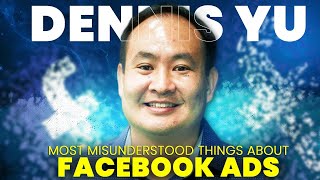
This is a YouTube video titled "Competent Creates Confidence - By Dennis Yu | IMOTW" created on December 9, 2021. It features a conversational interview between Dennis Yu, a digital marketing expert, and Avi Arya, along with Avi's daughter Raya. The discussion covers Dennis Yu's personal background, digital marketing strategies such as the "dollar a day" testing approach, insights on communication skills, marketing automation, and advice for students and aspiring marketers. The content is educational and motivational, focusing on marketing, personal development, and career guidance.
Engineering IT guy that creates digital marketing systems. Well, I didn't speak English until I was six. I spoke Chinese, so I learned at school, and I was made fun of and bullied. And that caused me to, well, first become good at math, because you always start with what you're good at. Oh, I'm never frazzled because I've done it so many times. You know, competence creates confidence. Not because you fake it. Not because you tell yourself that the people in the audience are wearing underwear. It's because, like, for example, Avi, have you thought about breathing today? About breathing in and out? Have you thought of, like, there's things that you do that become unconsciously competent? When you do it enough times, you're not worried about it. I've spent a billion dollars on this, Not a million dollars, coming into this confidently, you know, because I feel like I have to impress people on stage. This is something that is, like a law of gravity. So it's not anything that we question. And people, they can choose to accept it or not, but it'll still be true. You can decide that gravity doesn't apply to you and then jump off a building. Then you die. That's your problem. Right. The idea of a dollar a day came to me because me, as a math guy, I like to test. I'm just a plain old engineering IT guy that creates digital marketing systems.
Awesome. Awesome. It's not as plain as that, because you are somebody who's well known all over America, all over America for the work that you do. So, Dennis, tell us a little bit about your backstory, if you don't mind.
Well, I didn't speak English until I was six. I spoke Chinese, so I learned at school. And I was made fun of and bullied. And that caused me to, well, first become good at math, because you always start with what you're good at. And then I learned that building relationships was also math in a kind of strange way. And the way I made that transition from being a dorky Asian kid that didn't speak English to an Internet marketer and public speaker is that I read a lot. And you see, there's a lot of books behind me. And I was scared of talking to people because I didn't know what the right words were. But through all the reading that I did, eventually represented California in the national Spelling bee, Washington, in 1988.
1988.
Yep. Long time ago. Flying out as a kid, Right. And I made it to the quarterfinals. That's kind of funny. And that was kind of like, my way of Saying, you know, if you put enough time into something, you really can succeed. And a lot of people say that, but they don't realize how much time it takes. And the last 22 years, I've been in digital marketing since the very beginning, and I've seen that there's been an incredible opportunity to be able to grow businesses and to be able to help other people as agency owners help local businesses. So I see supply and demand with young adults that we teach at lots of colleges and then even not in college, and they're getting certified as digital marketers in our program, and then we're giving them businesses. So dentists, plumbers, mortgage brokers as clients. And I see this, then this is the beautiful convergence of supply and demand. And that's what drives me now, is how do we create more jobs for more local agency owners, even if they have no experience, especially with the crisis going on now. A lot of people are learning digital marketing because maybe they're not allowed to work or their company was shut down. And in last month, we've had 2,000 business owners. Sorry, 2,000 agencies sign up for our training, and then 10,000 business owners learn about digital marketing.
Wow, that's huge. And you do it so effortlessly, Dennis, I've always seen whenever you're on stage talking to 5,000 people, how do you do everything so effortlessly? Are you like a meditator or, you know, like inner calm? You just don't seem free, frazzled about things.
Oh, I'm never frazzled because I've done it so many times. You know, competence creates confidence. Not because you fake it, not because you tell yourself that the people in the audience are wearing underwear. It's because things that, like, for example, Avi, have you thought about breathing today? About breathing in and out? Have you thought of, like, there's things that you do that become unconsciously competent. When you do it enough times, you're not worried about it.
Lovely.
It's just practice. It really is that simple. Think about the things that you do habitually. You do them so often. You never worry about how you sound or look, until at which point it's autonomous. It's subconscious. I never thought I'd be a public speaker. I was always scared. I didn't speak English. I was scared to talk to even one person on the phone. And just recently, I did a webinar with 6,700 people watching live. Wow.
I thought I did the biggest webinar so far, 3200 people two weeks ago. Yeah, we did lots of, like, we did I did 45 webinars in 30 days of the lockdown. Every day, one and a half webinars every day. It's been crazy. Everything has been so good, so fulfilling and helps your personal. Everything. Yeah. Okay, so I think Raya's back. That's my elder daughter, Raya.
So my first question is, I understand that you love Facebook ads, and like Mari Smith says that you're the king of Facebook ads. What is your strategy when you use this method?
Strategy, Raya, is goals, content, and targeting. Those are the ingredients that you put into the machine. A lot of people think it's about how you. I'll give an example. Have you used an appliance today? Maybe like a toaster, maybe a microwave oven? Maybe, you know, something. A rice cooker. You press the button and it does what it does. Name something that you use today or. Yes.
A blender.
A blender. Okay. Now if you and I, we have the. By the way, I just bought a Vitamix blender from Costco. These things are amazing. Yeah, they're great. Like, you just tell they're really high quality. I think of Facebook like that, too. Do you think that there's an expert course on how to be able to press the blender button to be able to do the high puree, or do you think it's more about the ingredients that you put in there?
The ingredients.
Is there a technique on how you press the blender button? Because me, as a professional, when I press the high puree button, I'm gonna do a lot better than when you press the button on high puree. Yeah. You know there's different buttons, right? Like, whatever the low mix is all the way up to where it goes very fast. Right, Right. Are you. Are you at all, like. Let's say that, you know, I'm a great chef, and I make smoothies with my blender. Do you want to know what my technique is to press the button or what are you really going to look at if you want to make the same smoothie that I'm going to make if we have the same blender with the ingredients. So what are the ingredients in this case? Analogously to Facebook ads, it's goals, content, and targeting. And that's what I care about. And I've audited thousands of ad accounts, and what I look at is goals, content, and targeting. If any one of those is broken, it doesn't matter how good of a chef you are. Doesn't matter which blender you use. And in this case, the blender is Facebook. The blender is YouTube. The blender is Google Ads, the blender's Twitter. The blender is, you know, email, you know, whatever, mailchimp or infusionsoft. People obsess over who's pressing the button on the blender. And the blender. I care about the ingredients. And so the strategy is the ingredients. That's what matters. If you want to drive sales with Facebook, put in the right goals, content and targeting. Now, because of things like Power 5, OCPM, campaign budget optimization, all the things that Facebook has done to make things easier for you, you really just press the button.
Right.
Wow, that answers so many questions. Because one of my questions at the very end was going to be, what's going to happen with automation coming in? And you already said that more automation.
Now it's going to be, you think you want something and now right now you have to press the button. Right now you have to take the ingredients and you have to put it in the blender and then you have to press the button. Right. Maybe you have to hold the button down for 30 seconds until it's done spinning. Right. But in five years from now, you'll just think that you want the thing. The ingredients will come through Amazon prime directly into your house, whatever it might be, and the blender will do its work. So the analogous thing to digital marketing is, well, how are the ingredients going to come into your house? Like the Amazon prime, the doorbell thing, they let you, you know, come in with the, with the groceries. Last night I needed a potato smasher for some reason. I must have lost mine. And I ordered it, I think, at 8:47pm on Amazon and at 10:00pm, an hour and a half later, it came to my door along with other groceries. I ordered some green onions and some other groceries from Whole Foods. Right. It came right away. Isn't that really cool? Right? That's. That's come a long way. Technology's come a long way. Now, what's the analogous piece for Facebook ads? Well, now with all these people that are at home and they're making videos and they're leaving reviews of their favorite food or whatever it is, or whatever it is that you're selling. Right. People are talking about it in some way, whether you know it or not, people are talking about the products and services you offer. Yeah. That is going to be automatically captured by Facebook and they will automatically be able to create ads from that, automatically edit the videos. And you know, this is coming because have you seen, like Facebook memories where they said, oh, three years ago, this one thing happened. Or, you know, Avi and Rhea, here's. Here's your friendship. And it shows, like an automatically made video of all the different pictures and image. You know what I'm talking about?
Yep, yep, yep.
Now imagine they do that and they create ads using that same system. And they say, look, you know, we already took all your best customers who already made this ad. All you have to do, press the button. What do you say?
Money with us.
Yeah, yeah. Then you don't need the agency. Why do you need an agency?
Right.
Why do you need to hire all these people to do something that the system could do automatically? That's where marketing automation is going.
Got it. Very powerful. I needed to ask a question over to you. Back to you.
Okay, so my next question is, I understand that you study finance at Southern Media University. Yes. And also at London School of Economics and Social Science. So, you know, a lot of influencers preach that if you love something so much, do that instead of school. Do you think it is right or wrong to get a good education and to stay in school, to be able to follow your dreams?
You know, that really depends. You ask me whether I like strawberry ice cream or not. Depends on what flavor you like. And right now, it's popular to bash the university system for all kinds of reasons. And I certainly say there's some merit to that. And there's something to be said about inefficiency in both. People who just go out there and start becoming an entrepreneur. Well, as people who spend a lot of time in school and don't really learn anything. But you know what the common ingredient is? It's you. So it's what you make of it. So when I went to the London School of Economics, do you think that me just going to the London School of Economics automatically makes me intelligent and successful and smart and all this? I had to reach out and build my network. I had to spend time with the top professors there. There were guest lectures like CEOs of other companies. When I was at SMU, I was in the President's Scholars Program, and I got to have dinner with Margaret Thatcher. I got to sit right next to Herb Kelleher, who founded Southwest Airlines. I had Al Casey, who is the CEO of American Airlines, as my mentor. And I would visit him twice a week, him and I, in his office. Do you think that just happens? I was in the right place. But let me ask you, if you're in the garage, does that make you a car automatically? I think the university system is fantastic if you have a clear goal and you take advantage. If you just go to class and you just sit there and watch the lectures, you might as well just watch YouTube videos. Yeah. It's what you make of it. For the same reason, if you go out and I'm an entrepreneur, I've listened to all this Gary Vaynerchuk, and I'm just going to hustle really hard and work 80 hours per week. Yeah. What percent of those people are successful?
Not a lot.
It goes back to your knowledge and your network every time. Right. So what are you going to do to build your knowledge and your network? And it has nothing to do with follow your passion or some nonsense like that. It's you. It's your decisions and it's your knowledge that's gained through whatever way you gain the knowledge, sometimes direct experience, which is not necessarily the most efficient way, and through the network that opens up opportunities for you. So I'd ask you, like, what are you doing to build your network? So where do you want to go? You know, what's the area you want to. You want to thrive in? What kind of goals do you have then? Who's achieved those goals? Do you have a list of those people? So if you don't have a goal, you can't decide who you're going to hang out with, because who you're going to spend time with should be predicated on. You only want to talk to people who have achieved the goal that you want. You don't want to talk to people who will give you advice, even it could be, you know, your successful father, unless he's giving you advice in something that you want to do that he has done. I only listen to people who have done something that they're talking about. If you're giving me your opinion on something that you have an opinion, that's great, but I don't listen to it unless you have actually done it. Ray Dalio calls this. Ray Dalio started the world's largest hedge fund and he wrote a book called Principles, which is incredible. And he calls this believable. Incredible. So a lot of people want to give me an opinion. And a lot of people on the Internet, they have their opinion. Yeah, they're called Google PhDs, you know, but I only listen to them. A if. So I have my goals, I have things that I want to do. So then I look at those goals and then I look at people who have achieved the things that I want to do, and I listen to their advice. And of all the people that are trying to give me advice, and there's a lot of people that want to give you advice. I don't listen to them unless it aligns with my goal. And they have done the very thing they want to give advice on. That's going to disqualify 99% of people trying to give you advice, don't you think? Or avi, what is imposter syndrome? Either, either.
Imposter syndrome syndrome is when you feel that you're doing something just because somebody.
Else is doing it, you feel like an imposter. So let's say you actually are an expert at something, but then you do some public speaking and you get scared. Right. And then you end up, like, doing poorly. Or you maybe have a friend who. Very humble, but they actually are very expert in certain areas, but they're afraid to say anything because they're afraid that they don't know enough. And we usually find that those people who are the most knowledgeable. I know some people who are very knowledgeable in a few areas. They're very, very humble. And those people who are very loud and very arrogant and very confident actually know very little. So we see this, this inverse correlation. And so the opposite side of imposter syndrome is Dunning Kruger, which is most people severely, severely overestimate their capability. And there have been lots of studies. But, for example, you take a hundred people and you ask them to rate themselves 1 to 10, how well they drive a car. So what should the average be? If everyone is rational and they're accurate and there's no bias, what would the. If you took 100 people, you pulled them one to 10, one being very bad, 10 being amazing, what would, what would it. What should you see? If you took all the responses, what should you see? People. If people were accurate in being able to assess their actual competence at driving a car. Right. What would you expect? If you collected 100 of the numbers, added them up, and divided by 100, what would you expect to see more.
Are people who underestimate themselves.
Well, it. On average, you would, you know, like a normal curve, like a bell curve, you would see a five. Right. Because the average is five. So it should average out to five. Right. Just by definition, right?
Yeah. Some people will actually think that they're very bad. People think they're excellent. So in between, it'll balance out and come to a fight. Okay?
Yeah. But what actually happens is that it averages out to a seven instead of a five because most people think they're way better than they actually are. And I'll give you another example. And this Is this will change your approach to making decisions, as well as which advice you're willing to listen to or not. So there's a study done also at a university with. And by the way, this is research that I did when I was. I built Yahoo Personals with a few other people. It became one of the world's largest dating sites. This was 20 years ago when I worked at Yahoo. I built the analytics, the internal analytics at Yahoo. Maybe Ria, before you were born. Oh, yeah, that's what we were doing. Yeah. Wait, six years before you were born. And back then there was no Google. Okay. There wasn't a Google back then. All right. We were the dominant player. As the search engine Avi can tell you, this is how it was. And with the dating site, you know, we needed to get a lot of people to come in and, you know, you're choosing. You're a male looking for a female in your particular city who have a certain, you know, personality. Right. In a dating site. And so we looked at what it was that people were looking for that would cause a match. So then people would, you know what? You know, why would some people, like, ignore other. Like the pretty woman. Why does she ignore all those other guys? Because there's all the other guys that are going after and she thinks that she's here and all the guys are here, and then the fat, ugly guy versus what? You know, there's like, people are assessing each other to see. See what level they're at. Yeah. And if you believe that you're way higher than someone else, then you feel like they have to work harder because you're better than them. Right. Or you know what I mean? Right. I don't need to explain that. Right. Okay. So you have a hundred people in a room, and every one of them has a deck of cards. But the deck of cards instead of like, you know, the three of hearts is a picture of everyone else in the room. So a hundred people and they have a deck of cards with of which one of them is theirs? And you rate how attractive each person is the deck of cards from 1 to 10. What do you think the average is? What should the average be? And then what is the actual average?
Maybe, like, it should be maybe a five. And it would be like a three.
Most people, it should be a five. And we also found that beauty is universal. So you think like, maybe like, you know, Indian people would have a different view of what's beautiful versus Chinese people versus. No, it's actually the same. Everyone has the same universal way of rating. And old people maybe have different ideas. And young people.
Nope.
Someone who's a six is a six no matter what culture, no matter what language, no matter what. It just is. Someone who's a three is a three. Right? We can go, we can spend an hour talking about that. But here's the point. If people are accurate, they then someone who, if the whole group somebody as a five, then they actually are rating themselves as a six because they believe they're one point higher than what they actually are.
Okay?
So if you are actually a five, then you believe that you are a six. If you believe you're a six, then you think you could probably approach a girl who's a seven. Right. So if you approach a girl who actually is a seven, what does she think she is?
Eight.
An eight. And if she's an eight, what kind of number do you think she can go approach? She thinks she can go. She thinks that, she thinks she's an eight. She's actually a seven, but she thinks she's an eight. And therefore she thinks that she could, she could go for a nine. Right? Now she thinks that she can go for a nine and she can see who that guy is. She sees that that guy's a five. So now there's a four level gap between a nine and a five. You see this?
Oh wow, I never thought of it.
That. Now, now because of this, I think we lost her. What kind of problems exist because of this gap?
Right. People don't end up with the right people. Yeah, I mean hr, hr Disasters. Relationship disasters. Everything can happen.
And a failure of expectations. Uh huh. So what happens when there's a failure of expectations in a relationship, A business relationship, a personal relationship? What happens when there's a failure of expectations?
You break. You break off.
And then people, how often do people blame themselves versus they blame someone else for being, you know, a jerk or it's blame yourself.
You have to blame somebody outside.
That's right. So then they blame someone else and then they get into another relationship. You know what I'm talking about, Avi? And then the same thing happens again. And then they do you have a friend where they come to you and they complain about the relationship problem and you just want to tell them, hey, you know, you'd had the same problem every, the last three women you dated. It was the same thing.
Oh, I see that. Pattern recognition 100%. And as you're talking I'm thinking of relationship with clients. How many times, you know, it's how many times we've Been at fault or how many times the clients have been at fault? Yeah, because that's what's coming to my mind. Listen to this.
How many times does the client want to tell you what to do? Because they think they know because they saw some YouTube video, and so they're thinking that, you know, they know better than you.
Right.
You and I, we're Internet marketers, and we are the surgeons in the hospital. We know what we're doing. We have a lot of experience. We have a lot of training. Just because someone else has watched some YouTube videos, they think they're now going to be able to tell us what to do. Come on. Right.
Interesting. Wow. That. Dennis, I'd like you to speak to our audience about your amazing strategy. The first time I was. I mean, I'd known you because Raya and I met Mari Smith a couple of times. Raya and I met Gary Vaynerchuk, and I think everybody knows you, so we also knew you. But the first time, I actually went into your ecosystem. And Raya, by the way, you got two perspectives. Raya. We went to Gary's office a couple of times. Raya got to sit down with him, and he gave her a lot of time. Then we went for lunch with him another couple of months later. And every time, Raya sat down and asked him a similar question. Do you think I should leave school? And all of that. And now you've asked Gary a question, and you asked Dennis a question. You've got two different answers, and now you can dwell on both of them. Awesome. So how I got drawn into Dennis's world and my respect for Dennis as a marketer went to another level was when in front of maybe a thousand people at Social Media Marketing World, then in many of your videos, I saw how effortlessly you told about the $1 strategy. Everybody's using it. Can you please add to us the.
Dollar a day strategy is I've spent a billion dollars on this, not a million dollars. And I am not coming. I'm not coming into this confidently, you know, because I feel like I have to impress people on stage. This is something that is like a law of gravity. So it's not anything that we question. And people, they can choose to accept it or not, but it'll still be true. You can decide that gravity doesn't apply to you and then jump off a building, then you die. That's your problem. Right. The idea of a dollar a day came to me because me as a math guy, I like to test. I want to know what is the Smallest increment I can use to test because I don't want to waste a lot of money. Right. And I found that it's $1 per day. If you want to test on Facebook, if you want to test on Google and you want to set a campaign budget, what's the minimum budget? You can run $1 per day. If you want to run a campaign on Twitter, what's the minimum budget? You can run $1 per day. Yeah. The minimum budget on Facebook, $1 per day. What's the minimum budget on LinkedIn? Probably $10 a day. They're the only one that doesn't play, according to our game.
Okay.
And so if you believe that the Internet is a great place for testing because there's lots of data, there's lots of targets that you could do. There's lots of creatives, there's lots of ads, there's lots of keywords you could go out. There's lots of different things that you could try on the Internet because there's lots of data, lots of people. Yeah. Well, if you want to test as efficiently as possible, then you're going to run a lot of experiments at $1 per day. And the idea is that if you want to test without wasting money, some people, like, you know, I have lots of money. We had a client that just this morning wired us $85,000 into our bank account to start testing.
Wow.
Just today, you know, I looked, I logged into the company bank account like, oh, look, $85,000 just came in this morning. That's nice.
And during these times, that. That's almost like 200,000.
Oh, that's just for this month. Right. And that's just one client. But, you know, even though they come in and they say, yep, we've got this. All these big plans, and we have lots of money, and we're gonna do all these big things, we're still going to spend a dollar per day to test. And a lot of these big companies that we've done work for, it could be like running ads for Nike, run ads for Starbucks. Right. The launch of Frappuccino, the campaign that we worked on, they spent $17 million one summer on Facebook ads. But we test at a dollar a day. And so what happens is, for any particular ad, we're gonna test for a dollar a day, and we want to use video where we can, because no. Video is the thing that on social media gets the most engagement and just for many reasons. Right. Vertical video or square video. And we test for a dollar a day for seven days. And if that works, which it does about 10% of the time, then we're going to put more money. We're going to put $30 for 30 days, and then if that works, we'll put maybe $500 for 30 days, and then maybe we'll put a million dollars. And we were running ads with infusionsoft, now called keep, and we launched hundreds of ads. How much did we start testing with for these hundreds of ads?
Dollar each ship for ad.
Dollar a day for seven days, which is how much money?
$7 for a campaign.
$7. Yep, $7. But across hundreds of ads. And then we know that 90% of the ads that we run, it doesn't matter whether we did it for the Golden State warriors, or we do it for Quiznos, or we do it for the orthodontist, or we do it for whoever. We know that 90% of the time, the ads will fail. That's just how it is. And it's not because you're a bad person. It's not because you're not creative. It's not because you're not competent. It's because the math is that just 10% of your ads will become winners. That's just how it is. And you cannot predict which ones will win. You know this, right, Avi? This is how it is, right? 10% will win. So we make maybe 50 ads, and five of them will win. So maybe 50 of them we put out there for $1 per day. Five of them win. And when they win, we put. We extend. We put more money, right? And then, like, we ran a campaign with infusionsoft, and we had, you know, we had this. It's like, you know, American Idol or like these singing competitions where they start with a lot of people, then they, like, you know, how these. These competitions work where there's fewer and fewer people at the very end, there's only people. That is what we're. So, like, these contests, singing, dancing contests, that's. We're running our own audition. Like, I am Simon Cowell, and I have all my ads. That's the way I look at it. And at the end. At the end, you have a winner. So that one with Infusionsoft, I think we spent $1.7 million, but we put it on the winner. But the winner had to go through, basically, you know, the quarterfinals and semifinals and all the different stages all the way. Or what is it like Survivor where, you know, eventually you're left with, you know, the winner. Right, Right now. Now you have a winner. It's proven, you know, it works. You could put as much money as you want and you know it's going to be profitable as long as you know, depending on the size of the audience. Right. If you're a local business, then you're targeting just the people in a, in a five mile radius. Then you know there's only so many people there. You can't, you know, target a million people because you're limited by the audience bucket or you're, if you're doing E commerce, you're limited by the niche of how many people you're selling mountain bikes. How many people want to do mountain biking? Well, not everyone's going to buy the mountain bike. Right. But you're limited by whatever that, that target pool is that you can fish inside. But the dollar a day strategy is I'm going to do lots and lots of little tests and the winners, I'm going to put more and more money on it. As I'm doing that, I'm not just blindly just looking at does it meet the threshold and they advance. I'm trying to understand why is this one doing better than these other ones. And then based on that, maybe I will try another variation. Maybe I'll try like in the video, like you teach a lot of micro video. Right. Avi, so what are the, what are the things that you're looking for in a video? How can you tell whether a video is winning or not?
So, well, we look at it right off the bat. In this video, I'm going to ask Dennis to give me the three secrets to make an ad work. Watch to the very end. And if I've gone through that path, it's like I made it halfway through. And then the second metric we look at is everybody's seen at least 50% of the ad. If they've seen 50% of the ad, then maybe they got distracted because of other things. It's enough for us to then go and remarket to them. And so that's for an ad for clients. Yeah, yeah.
So it's sequential. So first you want to know are they even going to pay attention or are they going to scroll past you? Right. Or it could be like the YouTube. Do they skip you or not? Right, right. Then do they stay towards the end? Do they engage with you? Then do they come to the website and look at where you're selling? Then do they buy or not? So you can look at every stage along the way. So the dollar a day strategy is nothing more than sequential testing.
Wow.
It's just you'll never go away. It's not some fad, right? It's not some hack.
Yeah, I know. Because you know why I'm glad you said that? Because. Because you've been saying this for years. If it was a hack, it would be hack of the season.
Oh, yeah. I've been doing this for 10 years. It works very well. I'll still be doing it 10 years from now.
Awesome. So, you know, Raya and I, we spoke to the other day, we spoke to Pat Flynn, then we spoke to. Then we spoke to Chris Ducker and everybody had one favorite. You know, like Pat said, go after your emails because that's the only thing you can control. Everybody has their different tools. And what for all the students? Because like I said, this is an online university, online school we go to. You know, in the Internet moguls of the world, we want kids and their parents. We want it to be a family digital marketing school. So hopefully very soon this video will be watched by many of our students who enroll. There'll be parents and teachers sitting together and they say, you know what sounds interesting? I'm new. The father sitting here, the son is here. How should I get started? Should I start with all four or five channels? Sounds too overwhelming. Should I start with only one? And then if I have a limited amount of money, what should I do? So how would you answer that?
Let's go back to our blender. So do you really care about which blender it is now? Depending on what you're trying to do, different people are going to be on Twitter versus LinkedIn versus Facebook versus what have you. But I would focus on the ingredients. Focus on the ingredients first. And in this case, if you are a new Internet marketing mogul, focus on your ability to communicate via video. Because if you can't do that, it doesn't matter what tool you use, it doesn't matter what technology, doesn't matter what social network. What's the difference between someone who's very successful, like think about someone in your mind who's very successful, whether you've met them or not, and someone who maybe is very talented, very smart, but isn't very successful? What's the difference? What's the key difference?
Their communication skills out there as much, not mingle with people as much.
I know some people who are, who are very successful. And one of my friends, Bill Harnish, he's a billionaire and you've probably never heard of him because he's not in the public. So he's not out there, you know, going live 12 times per day.
Right.
But one thing is true. He's a very good communicator. Think about the people, not just the people that are famous, but the people who actually are successful. Not the same thing. I know a lot of people who are famous and they're not successful. They have all kinds of problems.
Okay?
The people who are successful, they are excellent communicators, especially face to face, especially on video. Think about the people that you watch on YouTube. Think about the people that you've interviewed so far. You've named some of them that are friends of ours. You know, it could be Mari or Gary or Pat Flynn or. What is it in common? It doesn't even matter whether it's Facebook or digital marketing or email or what. What they have in common is they are excellent communicators. That's what you need to focus on first. And what you're doing here by interviewing other people, that is a great way to improve your communication skills. Notice how I don't ever say am or ah.
Yeah, yeah, I saw that. I did notice that.
And when I do, I say it intentionally. I will never unintentionally say am or ah because it was important to learn how to speak clearly.
Is it also some kind of meditation that you do? Because, like I said, it's something such a calm energy about you. You just. You have an answer instantly, but at the same time, it doesn't sound rushed. So I automatically assume that you're a meditator or somebody or some kind of Tai chi or something.
Oh, I go running in the morning. That's my meditation. And you'll see behind me there's some books. I'll pull out the Bible or I'll pull out. I'd like to read a lot. I have. Well, you can't see it here because the camera is only limited to this right here. But I have books with me on the table.
Nice. You know, my grandfather was in the army, born and brought up in India, but no, my grandfather was born and brought up in Hong Kong, and my. And so was my mom then later on. And they used to speak fluent Cantonese and Mandarin. And my grandfather used to read, write, and speak 14 languages.
14.
Wow. Languages. He was head of the. He was the head of the army intelligence in India later on. And there was no Internet, obviously. And everything he learned from libraries. And he used to come back home and say that, you know, I need to travel further tomorrow because I've finished all the libraries in the next 10 kilometer radius.
Oh, wow.
So that's the kind of voracious reader he was. Raya, that's your great grandfather. Okay, over to you, Raya.
Okay, so my next question is. You've done a lot of speaking, I understand, in 17 countries in five continents.
How.
I've done India. Yes.
Oh, you have. Oh damn. We have to give you to India the second or third or fourth time.
I love India. Yes. I've been all over India.
Oh, you have? Oh damn.
Yeah. Chandigarh, Mumbai, Delhi.
Okay.
Bangalore.
How can we take you to Goa then?
Koi? I want to. Yes, the beach. I want to hang out and relax for a few days in Koa.
You know, many years back. Sorry Raya. I was 18 years old and I wanted to become a streetcar racer. My dad lost everything in his business and there was a family separation. Very ugly story. He had to sell his house and we had two small cars. He sold those cars which were the most hurtful thing for me because I thought I'm going to learn, I'm going to become a streetcar racer and make it into a profession and all of that. Anyway, we lost everything. I wanted to go for higher education. My dad said we've got nothing. You need to join my business. He had a small 27 room guest house. Like a motel, like an inn. I joined it back in 98, 94. I left school and so 97, 98. I joined it around that time. And the new phenomenon on the market was called the Internet which was allowing you to speak to people around the world. One day we had a foreign guest who came in and paid us in Dutch gilders. And we converted those Dutch gilders into Indian rupees. It turned out to be multiple Indian rupees. So I was like, why don't we have all 27 rooms filled with filled up with foreign guests instead of Indians? Because the foreign guests would pay us much more. And the only way to get foreign guests was the Internet. So started working on the Internet and we didn't know how to build a website. Somebody said get a website done. Hired a company out of Bangalore. At that time only Bangalore based companies were doing websites for American companies. A 27 year old hotel would never do a website. Back in 2000 to get a website done, it took six months. And when the website was launched, nothing happened to the business. That's the first time you realized that just with your website. Anyways, so we did a lot of stuff in the next six months. One year I learned a little bit. SEO did all of that. Next three, four years. Next two years, the business started Booming because the website was doing well. I was ranking on every keyword on every page, four, five position on every single page. And so business exploded. We bought the hotel next door, another one, that, another one, then another one. So My dad took 40 years for that one hotel to happen. In the next five years, we bought four hotels outright. Bought them. That's how the business story, the best part was that two things happened. One was that I became, you know, I became, I started making money for the first time. And now the person who wanted to throw me out of the house because my dad gave me an ultimatum, either you join me or get out of the house now. He was having strategy discussion with me. That was business number one. Now I started knowing how to rank websites. So I started doing travel websites and some of them started ranking. And so one day Expedia and all of these companies came to India Yatra and all of that. They called me and they said, we want an affiliate model with you. I didn't want to sound like a fool on the Internet. I said, can you email me the details? They said, we'll give you eight. On the email it said, we'll give you $8 to $14 for the conversion of every ticket that comes through you. I had nothing to lose. I gave that to them. We started doing about thousand dollars in net profit every single day. By now we reached 2005. Then the word got around and I started. I discovered a new platform called YouTube. And I just played around with some videos and all of that. And I used to send videos to people in that trap because the travel agency had people coming from America to India. And I used to send videos and say, this is my dad's hotel. I'll take you to Aagraj Airport, Taj Mahal and all of that. And I used to upload those videos which took 8, 10 hours to maybe upload 1 out of 10 videos. But if the video made it to the other side, we would always get that person coming back and saying, this is a great way of doing business. So the word got around and then TripAdvisor, Facebook and Google finally came to India. They said, yeah, this guy had been speaking, let him speak about his Internet journey. I started speaking about my Internet journey. They said, why can't you do this for other hotels? I mean. And so that's where in 2009 we set up an agency with a four member team called Internet Moguls, which then further grow on to be a 200 more person team which was doing very well till last month to Be very honest. Last month a lot of things started, you know, sort of.
Yeah, things changed.
Yeah. But this online school that we've been building for the last six months or so, that is sort of taken off and so just wanted to give you a backstory there before.
That's cool. Congratulations.
Thank you. Thank you. And now, now it's Rayan. I have new, new team, new partners and. Alrighty. And super disciplined. I mean, nobody in our family is as disciplined as this little girl over here. Okay, over to you.
Okay, so my next question is. So you've done a lot of speaking and I understand that a lot of our audience wants to get into public or paid speaking rather. So how did you get into that strategy wise? And what is one helpful tip you would tell to our audience who does, who do want to become paid speakers?
So I get this question a lot because people will see that I've spoken on a big stage and they'll see that it's being glamorous and they think that somehow if you're doing that, you're already very successful. But they actually have it backwards. When you are successful, you are then invited to speak. It is not because you speak that you're then you then become successful. And my first keynote was 22 years ago in front of 2,000 people. I was the closing keynote at a marketing conference and I was speaking as American Airlines because I had Al Casey as the CEO who was my mentor and he pulled some strings and I became the guy who built the website back in like 97 and kind of like when you're doing your hotel thing, just starting. And I got my taste for speaking because accidentally, while I'm American Airlines and I'm reasonably well spoken. And what conference doesn't want to have American Airlines talk about the future of the Internet, about multi channel communication, about CRM, about one to one marketing, Remember that? Peppers and Rogers, all this. So I was going around talking on stages and when I spoke on these stages, people would say, wow, you know, American Airlines is doing this, American Airlines is doing that. And I didn't realize it, but it wasn't because I was a good speaker. It was because I was in the right space and I was representing American Airlines. That's how I got into Yahoo. If I didn't have that initial credibility, I couldn't have gone to go work at a search engine that was just starting. And they didn't have any analytics when I got there. They needed someone to build their analytics. And from there I got invited to speak. So many different places and since then, I think I've given 740, 750 speeches all across the world. And a lot of people say, well, what's the key to having your speaker submissions accepted, right? Well, I don't have any answer to that because I don't apply. I get invited. I get invited to speak. So I don't have rejection because there's nothing to reject. And thus, because of your network, because of the expertise that you have, you will get invited to speak. And a lot of people that come to me, they don't even have a webinar. They've not even published any expertise. They don't have any articles. They don't know how to talk. They've not done a zoom. Anybody can do a zoom interview right now with somebody else. Maybe you don't get Gary Vaynerchuk on your first one and you wouldn't want to anyway. That would waste a great opportunity. Why don't you interview your friends? Why don't you interview people that you meet? Why don't you interview other people that are B level celebrities and learn how to communicate? And when you learn how to communicate, then you get invited to speak because the conference organizer, do you think they're out? What criteria do you think they're using to select your speakers?
You're talking about a marketing expert. They've already helped other businesses to grow with their strategies.
And usually that correlates with two things. There's two things it correlates with and one thing that it doesn't correlate with, which is what everyone gets wrong. The conference organizer is not looking for who has the best presentation or who's the most aggressive in applying to try to speak. They already get inundated. Right. At Social Media Marketing World, how many people are trying to apply to speak there? They're looking at two things. One is, do you have the network? Because speakers we all know one another, right? Most of the other people who are speakers at Social Media Marketing World or a traffic and conversion summit, we're all friends. So if these other people are vouching for me and they're already good speakers, and let's say the conference organizer doesn't know who I am, but the other speakers all say, oh, yeah, yeah, Dennis is very good. I've known Dennis for many years, then that's how you get in. If you don't have any intersection with the other speakers at the conference, then the odds are you're not playing in the right space or you don't have enough experience. Right? You have to build the connections with the other speakers first. And that goes to point number two on what the conference organizer is looking for. They want to know that you are not going to mess it up. So they're risk averse. Most people think, oh, I can get a dynamic, amazing presentation and the organizer will say, yeah, you probably could. But what I'm looking for is I want to minimize the risk. Because there's so many people speaking at my conference. I want to minimize the risk that I bring someone on the stage and they're going to act like an idiot, they're going to start promoting their self, they're going to sound bad, they're going to be unprepared, they're not going to show up on time, they're going to, you know, bad things. They're always worried. They're so worried about minimizing these problems, they're trying to minimize these problems as opposed to trying to go for a hit. So if you can demonstrate that you can speak clearly, that you understand what the audience is doing, that you don't sell from the stage, that you have some good experience and you have the network, it's very easy to speak. I know some people who have no experience speaking. They don't have any knowledge and they just want to get on stage because they want to be famous.
Right.
Those are the last people they're going to get on stage.
100%. You see that so often. I want to speak. Why? Because you want to get into the selfie world of people saying I love you and without adding value.
Yeah, it's all about them.
Dennis, we've got just a couple of more minutes. We asked for an hour. We've already six minutes shy of an hour. Can we have, can we request you to do a message for people who get into this university and to study this online school and all? So just a message from the NSU to the new students who are coming into the Internet mobiles of the world.
So if you're new to Internet marketing, if you're new to Internet moguls of the world, this is the right place to be because you're learning from people directly. Learn from the people who have done the thing that you care about. So if you want to learn about Facebook ads, you might look at how much money I've spent on Facebook ads. If you want to look at someone who's done a lot of public speaking as a keynote, you might look at Mari Smith, someone who's done a lot of lives and knows how to build an audience in Social media, you look at Gary Vaynerchuk, you have direct access to these people here that Avi's assembled. And imagine, don't just watch this like a YouTube video. Imagine that you are sitting with them and you know, maybe Ria's asking some, some questions. Imagine you're asking questions. What questions would you ask? And when the speaker may be asked a question, like I asked a question, imagine how would you respond. Pretend you're there and you're going to get 10 times more value. Number two is put it into application. So when you hear someone give some advice, but then you don't do anything about it, the next day, you retain none of it, right? So when I learn from other people on how to make video, I put it into action. When I learn about the dollar a day technique like we talked about today, put it into action and you learn so much more and it's more fun. I look at it as a difference between a course versus a program. So if you're here for this, Internet moguls of the world, are you like, what's that? I would ask you, what's the difference between a course and a program?
So a course would be something which will take you, I don't know, maybe a course is a short term measure to quick fix. And a program is something which is mind, body and long term learning, which is going to transform me into somebody I want to be for the long term.
So do you have a favorite chef? Maybe you watch on TV like a cooking show, right?
I don't. Raya, do you?
Gordon Rams. Gordon Ramsay.
I would say Gordon Ramsay. So Gordon Ramsay teaches some great classes on how to cook a steak and how to use knives. And you know, he's got that restaurant show where he revamps the restaurants. And that's entertaining, right? It's fun. It's like watching Netflix. And that's like a course. Of course you're watching someone do something. But a program, now imagine that, that us three, we joined an exercise program and we're competing to run our first marathon. Or we want to lose weight or we want to be able to bench.
Press 300 with you. I've seen your videos and pictures from the past. Not going to run with you.
But let's say that we are joining this program because we're going to embark on this journey together, right? And the reason why you're here as Internet moguls of the world is that you're not here for a course. You're here because you want to do something. You want to achieve Something. So this is a program. So what's the difference between watching Gordon Ramsay on TV versus you are in a, you know, Navy Seals exercise program. What's the difference? Like, what's a program? What do you expect? What do you expect to see there?
You're invested, you're doing it yourself. You're flexing your muscles, you're getting hurt, you're taking action.
So if you just want to watch videos, go to YouTube, go to Netflix, entertain yourself by people who are very expert. And it's great. How many times do you see Gordon Ramsay, or let's say you watch Gordon Ramsay or Rachel Ray or Bobby Flay or whoever the chef is, of the people who are watching Gordon Ramsay, what percent of the time are they actually cooking at the same time? While Gordon Ramsay's cooking versus, let's say that, you know, because of coronavirus, these gym, these personal trainers that are doing the workouts and aerobics, and you're following them along. Like, why would you, would you ever watch an exercise program and just watch it on tv? No, you're going to be following along and doing the exercises with them. Right. So why, why don't we do more of that? That's the mindset. Even though it's Internet marketing. When someone teaches you a recipe and you don't implement the recipe, how much value are you going to get?
Wow. I like that. Perfect. Thank you. And Raya, you have that last question that you ask every time before we finish the show.
Yes. So our definition of an Internet mogul is someone who.
Can I give him a pre. Listening to why we named it like that, Raya, if you don't mind. So the thing is, like I said, you know, because of so many businesses that happen and God has been kind, good things happen. I was not being the ideal father. And, you know, I've been spending time away from home. Home is Vancouver, Canada. The girls are there, travel back and forth. So he said, no, now forget everything. Let's just sit at home and build something together. And we're going to do it together. So that's why we said, we build Internet Moguls of the world. It's a family school with the family, for the families. So. And so therefore, now, Raya, you can ask the question.
So our definition of an Internet mogul is someone who can spend time with their family and at the same time leverage the income. The Internet, you know, their income rates go up. So a lot of people have said, oh, your definition is right. Blah, blah, blah. What is Dennis Yu? What is your definition of an Internet?
I think of a mogul as someone who's rich and successful, but not just wealthy in terms of money. I know a lot of people who make a lot of money. If we see that money is a means to an end, then the real riches are the relationships that we have. So it's our families and our friends and having the freedom to be wherever we want to do whatever we want, not be controlled by a job. Right. When we have freedom to. Like today, I don't have to do any work necessarily. I don't have to go into meetings. I can, if I want, teach a show together with you guys. When you have that kind of freedom with your time and your money and your relationships, that's worth more than any amount of money in your bank account.
Sam.
More from Avi

The strongest mindset doesn't begin with meditation. It begins at home. Before you conquer the wor

The strongest mindset doesn't begin with meditation. It begins at home. Before you conquer the wor

Your mindset isn't something you fix once. It's something you train every single day. Just like yo

Don't build a company just because your friends are. Build one because you're ready. A startup is

Everyone dreams of becoming the boss. Very few understand what that really means. The moment you b

Most entrepreneurs say, "I don't have time for coaching." The truth? You don't make time for what

Over hiring doesn't always solve problems. Sometimes, it creates them. Having a small buffer in you

"The highest-paid" isn't the goal. The highest-value is. People often ask why premium mentorship co

The founder will always be a bottleneck... at some stage. The goal isn't to pretend you're never th

People ask me how I stay consistent with my morning routine while traveling across countries and tim

People ask me how I stay consistent with my morning routine while traveling across countries and tim