Get Insane Results Using Youtube Ads for Your Business | 2X your sales | @adleg_marketing
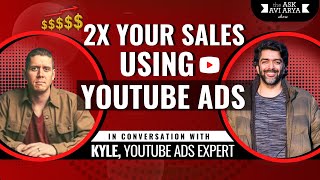
Avi Arya and Kyle Sullerud discuss YouTube ad strategies for coaches, consultants, and course creators. Sullerud runs Adleg, a YouTube-focused marketing agency, and shares practical advice on budgeting and best practices to scale businesses through video ads.
So I had this entrepreneurial spirit when I was young. No one ever noticed that, you know, no entrepreneurs were in my life. So I broke off and started a junk removal business, making no money, taking a 100% pay cut and trying to figure out how to make money because I really didn't want to go back working for anybody else. The ad really brings people to the point of where they would fill out an application and schedule a call to work with the consumer consultant. But yeah, I mean, if it's something that, that is in demand that people would find value in paying a consultant for, then yes, YouTube ads can work. If.
Hey guys, this is Avi Arya, father of two girls, six dogs, husband to a superwoman, a streetcar racer turned hotelier, now social media marketer and founder of Internet mobiles. Welcome to my channel. Namaste. Kyle, how are you doing?
Namaste, Avi. I'm great. How are you doing?
Perfect, thank you very much. There we go, another episode of another Internet mogul of the world. Ladies and gentlemen, as you know, we travel around the world virtually now after Covid and meet some of the top moguls around the world. These are people who've done what they're talking about and, and really bringing value to people's lives using the Internet. My today's guest is Kyle and I'll let Kyle introduce himself in his own introduction. So Kyle, before we start, my name is Avi Arya, father of two girls, six dogs, husband to a superwoman, a streetcar racer turned hotelier, now social media marketer and founder of Internet moguls. Over to you.
My name is Kyle Sullerud. I'm the CEO of Adleg. We are a YouTube focused marketing agency. We, we work with business owners who have high performing webinar funnels and other high performing funnels. We send more traffic to those funnels to help them make more money.
Awesome, Kyle. I love that. Kyle, tell us a little bit about behind the scenes. Who are you as a person? Where did you grow up? Who was your favorite? You know, did you grow up looking at listening to Samantha Fox, Madonna or Britney Spears? Tell us about who you are, which era you were born in, all of that. So the people who are actually listening and I can't see that you look like a 30 year old man, not younger, not older, but need to know where you're coming from. So we get a behind the scenes context of the human being.
Yeah, good question. So I was born in 83, so I grew up in the 90s. I actually had my first experience with Internet marketing. In 97, when I was 14, 15 years old, I started selling things on ebay. And this is before PayPal, and this was when people would send checks in the mail for the things that I was selling that I had found at garage sales or wherever. So I had this entrepreneurial spirit when I was young. No one ever noticed that, you know, no entrepreneurs were in my life. My life consisted of the basic structure of going to school, going to college. So that's what I ended up doing. Went to college as a trumpet performance major, and the whole entrepreneur thing kind of took a back seat for a while until I finally got out of college, got a job not as a musician, but a corporate job with a company that ended up getting acquired by ebay. Strangely enough, realized I didn't really enjoy that. Not the job itself, but just working for someone else wasn't something I enjoyed. So I broke off and started a junk removal business, making no money, taking a 100% pay cut, and trying to figure out how to make money because I really didn't want to go back working for anybody else. This led me to marketing, which led me to Google Ads, which led me to helping other people with Google Ads, starting to grow a Google Ads agency, and then eventually transitioning into YouTube ads.
Awesome. So, Eddie Betts.
I do have a dog, a wife and three kids. And we have a family dog named Griffin who is extremely hyperactive. We can't get him to stop barking, but he's. He's very lovable and very good with the kids.
What breed is he?
He's a beagle mix. So he's some kind of a mutt. The. The beagle in him is very prevalent. I don't know what else he is.
Okay. Alrighty. So you have four kids now?
Three kids.
And a dog.
And a dog.
Awesome. So, Kyle, welcome to the Internet Moguls of the world. Here we are interviewing people who are family people, and they want to stay close to the family, and therefore they leverage the Internet because this is the same magical service that allows you to do work from anywhere in the world, stay close to the family, and still reach out to as many people as possible. But you, my dear friend, are doing one step ahead. You're not only doing this for yourself, but you're helping all everybody else who's got a message in their heart, a product or a service that can go and make a difference. You're teaching them how they can do YouTube ads to be able to take their message to different parts of the world and be able to do business from anywhere in the world. So tell us how. Why YouTube ads? And there's Facebook, there's Google. There's so much LinkedIn. Why did you pick a micro niche like YouTube ads for yourself?
So, honestly, I really fell into it. So I got into Google Ads because I figured it out. I figured out how to make that work for my junk removal business. And I enjoyed it. I enjoyed working with the numbers and the data and figuring out how to put a dollar in and get $4 back. You know, that type of thing was really exciting to me when I was getting into Google Ads. So it just became a thing that I could do that most people couldn't do. So I really fostered that, you know, that talent and really tried to pursue that path. And then YouTube ads became an extension of that. Because it's the same ad platform, you run YouTube ads through Google Ads. It's just a different place where your ads are showing obviously on YouTube, as opposed to Google search and the targeting, everything. It's. It's all very different from Google Ads, which I knew, but there were some similarities. And I was able to take some of the things I knew about Google Ads and apply to YouTube ads. And I think a big reason I fell into it a few years ago now, four. Four years ago or so, is because really nobody was doing it at the time. Which seems funny to say about something four years ago that nobody was doing it. But that was the truth, like to the point where I had people coming to me just knowing that I knew Google Ads and seeing if I could do their YouTube ads. And I said, I don't know, um, I can try, but I've never really done YouTube ads. And they said, all right, well, give it a try, you know, because I literally can't find anybody to do it who. Who's done it before. So you at least have a little bit of experience through Google Ads. Give this a try. So I had those opportunities to. To work on some YouTube ad campaigns and then really started to figure it out and really became experienced with it and became someone who was learning by doing. I was learning from other sources as much as I could, but again, that was hard because there's just a lot of conflicting information.
Right.
A lot of the people teaching don't really have experience that qualifies them to be teaching, but I was still trying to learn what I could, looking at everything through my lens of understanding Google Ads, at least, and understanding marketing and figuring out how to make everything work for YouTube ads.
Awesome. So that's how you fell into these ads. You were doing Google and people said, why don't you help us with YouTube as well? And you realize that you found a micro niche because it's four years was not a long time ago. The Internet was very prevalent. A lot of people were doing it still. There were not many experts. So you chose that. So for everybody listening, there's never the right time to start. Every time you find something that you're doing and you feel you can help others, that might be an opportunity there for you to help people doing what you're doing. So thank you for sharing that story with us, Kyle. Kyle, not for our audiences who are somebody who has a message in their heart, a product or a service that they can sell. Is there like a minimum price of a product that you must have for the ROI of YouTube ads to start working?
So the clients we work with are predominantly experts selling courses or they're selling coaching programs, stuff like that. The lowest price program from our clients, I believe is $500, and that goes up to $15,000 or more for some clients. So I don't want to say 500 is a minimum. It just would depend on what your whole advertising looks like. If all you were doing was trying to sell a book for $10, let's say absolutely not. There's no way that that's going to work with YouTube ads right now. If after someone buys your $10 book, if you then have something higher ticket to offer them, then maybe that can work. Okay, I'd say you need, you know, $500 is probably close to the minimum. Depending on, you know, the market, maybe you could get away with selling something less than that, but probably not. It probably has to be pretty close to 500 or a recurring sale. If you're selling someone a subscription to something where over a year you're making your money back, maybe not in the first couple months, then maybe something a little lower ticket could work. But don't expect to be selling like a $50 product or a $20 course on Udemy or something and really be able to make that work because it's probably not going to even come close.
Got it. So my next question is when it comes to selling consulting, right, A lot of people do consulting, and consulting is not sold online. You book a call. So for all kind of consulting, you've seen that YouTube work, YouTube ads work well, yeah.
You know, I wouldn't use an absolute like saying all for all consultants. It works because it's really about the funnel. Like you said, people aren't Buying the consulting right from the ad. Even for the consultant, they don't want to sell their services to everybody. They need to talk to the prospects first too, to make sure they can help them. The ad really brings people to the point of where they would fill out an application and schedule a call to work with the consultant. But yeah, I mean, if it's something that, that is in demand, that people would find value in paying a consultant for, then yes, YouTube ads can work if you have a funnel, a selling sequence that could bring them into your world. For our clients, what that usually looks like is a webinar or a video sales letter of some sort. The longest webinar we've run is like two and a half hours long with, we're, we're working on shortening that. We're, we're working with him a little so he can shorten that. But it's been working so we don't want to change it too much. And all the way down to a 15 minute video sales letter. And we're sending the YouTube ad traffic to those video assets. And then those video assets do the job of getting people to book a call. If it's for a consultant or buy a course, if it's $500 to about $2,000, then that stuff can be sold without a phone call.
Nice. So even for somebody who's a lesser known brand.
Yeah, yeah. That's what the video does that, you know, first they see your ad and if you're the expert and you're selling a product, this might be their first exposure to you. But you're in a video on YouTube and people already have an impression that someone in a video on YouTube is an expert. We're conditioned to think this way about videos. So before they even click on your ad, they're starting to see you as an expert. Now they click on your ad, they go opt in and to watch your video sales letter or your webinar, which from YouTube ads should never be live. You should give someone the video right away so that they, you know, because they're in the mode to watch video. So let them watch the video right away. Don't try to pretend it's live. Give them the video. Okay, so now they come over to that video. And now for a half hour, an hour, whatever it is, now they develop that the know, like and trust. They, by the end of an hour long webinar, they know you, they like you, and they trust you. So by the time you're asking them to book a call, you're not unknown to them anymore. You're fully known to them because you just gave them an hour's worth of value and now they're ready to take that next step with you.
Interesting. So that two and a half hour webinar is a recorded one?
Yes.
Wow. So you're saying people actually, if a video is done well, a webinar is crafted well, people will actually listen to a two and a half hour webinar because they're interested in the product or the service and the learning that the expert has to offer.
Absolutely, yeah.
Wow, that is fantastic. Chris, when it comes to is there a typical length of a YouTube video.
Ad, there's no typical length. I get that question a lot. So you're not alone in wondering that. But we've run successful ads anywhere from a minute long to 10 minutes long. I'd say the average is between like three to five minutes. You just need enough in there to grab people's attention with a hook at the beginning that relates to them and appeals to something that they're going to be interested in. You demonstrate your expertise a little bit by teaching something or by sharing your results that you've gotten that the viewer would also want, or by sharing student results or something to initially demonstrate that you are an expert and then you're inviting them to learn more from you in your webinar. So that can all be accomplished in a few minutes.
So why I'm asking this question, I want to dig deeper on this one a little bit because most of us are used to 30 second Instagram reel in this video. You're going to learn how you can lose five kilos in five weeks. And my name is Avi Arya. I lost 10 kilos in the last two and a half months. And I'll teach you. If you want to know more, click down download, book a call with me. People are used to just fast form content when it comes to YouTube. And you're saying, wow, a 10 minute video. So can you sort of run us through an anatomy of YouTube ad done by Kyle or maybe two, three types of ads? Because you said from two minutes to 10 minutes.
Yeah, I mean, so let me first say. So you're comparing this to Instagram. So here's what we have with YouTube, we have people's attention. People go to YouTube to find things, to consume their time. They're not waiting in line at a store like scrolling through YouTube. Right. Like they do with Instagram or Facebook. They're actually planning to spend some time there. That is their goal is to learn something or be entertained about something. And they're not getting alerts, they're not getting bombarded with alerts that distract them and take them somewhere else. They're just focused on, on watching a video that could be your ad just as easily as it could be the video they were, they clicked on that they wanted to watch. So we have their attention. So don't think you need to get your message across in 30 seconds or a minute. Because if you start giving them what they want, usually, you know, information more so than Entertainment. Although entertaining YouTube ads can work. You know, you're giving them what they want in terms of something that will improve their life. If you're a consultant, a course creator, you are ultimately going to help this person improve their life with what you're selling them. People are going to pay attention to that. If you're speaking to them, they will pay attention. So in terms of the structure of the, of the ad, like you asked, the very first part is the hook. Now the hook should in some way communicate to the viewer that you're speaking to them. So maybe you could give me an example of a product or an audience we're trying to reach and I can try to come up with an ad on the spot.
That would be fantastic. I'm sure the audience is going to love it. So let's do something with a automate, like a $500 course on video marketing. Like I've got a course, the MVM method, $500 course on video marketing. And then I've got a, we've got agency services for the whole year, which is 12 months, which is $100,000 program.
Okay, so your, your target audience is a business owner. Is it a specific type of business owner?
Any business owner who's tried everything but they're not getting results, or results are too expensive.
Yeah. So your hook could be something like have you tried everything to market your business, but you're just not getting the results that you want or the results are too expensive to make it work? Well, in the next 60 seconds I'm going to explain why the reason you're not getting these results is, has nothing to do with xyz, but in fact it has to do with this one little known secret about blank. Okay, right, fill in the blanks.
Lovely.
So you're in the hook. You're, you're addressing the user's pain point. You're making it clear that this ad is for a business owner. Now that's important because if someone who's not a business owner sees this ad, it'll be helpful if they skip it. Ultimately, Google's going to optimize for people who are watching your ads and clicking on them and taking action. So we want to get rid of anyone who's not in our audience by having them skip the ad as soon as possible. And then beyond that, you're not only identifying them as a business owner, but you're identifying specific pain points that they have. So if I'm a business owner and things are going great for me, I'm gonna skip your ad too. And maybe you can't help me now if at the same time maybe you can help that person, but maybe there's a different ad with a different hook that talks about that person. Like, hey, if you're a business owner just trying to get a slight edge on your competition and you've exhaust, you've scaled all of your marketing campaigns as high as they'll go, and, and you just want that one little secret that's going to help add another 10% of revenue to your business. Then in the next two minutes, let me break down for you, XYZ. You know, I'm just coming up with this stuff on the spot, but you kind of get the idea. Then you're introducing what they're going to learn right away from you in this ad. Okay? Then you deliver on that you actually can teach them something. You teach them the thing that you just promised to teach them. So you're helping them right away. You're showing that you can help them. As Frank Kern would say, you show them you can help them by actually helping them. And you can do that in a minute or two minutes in an ad just by breaking down some really valuable information that would help that person. And then from there you, you can transition into the offer and say, you know, I don't have time to share all of this in this ad, or you know, I can't talk to you about this in this ad for the next 30 minutes, but if you click the link in this ad and go sign up for my free training, you, you'll find a 30 minute training where I actually break down X, Y and Z. So you'll have the exact roadmap that will be required for you to achieve this goal that, that you have.
Got it. Very nice. So Kyle, you know, I've seen that there are, the, the skip ad option comes in, you know, maybe less than a minute, 60, 30 seconds or whatever. So a lot of people try to get their message within that 30 seconds. But then there are these 6, 78 minute ads where people have not really heard the meat of the matter. So this, so that means it has to be planned that your message goes out in 30 seconds on what you'll be teaching here and if people are interested. Because at this point in time I agree that I'm not waiting in a line to and I'm not scrolling through a restaurant line lineup. But at the same time, I am looking at Kyle's videos where he's teaching me about YouTube marketing. And then I see Avi Arya's ad on video marketing. You know, it's distracting. But at the same time, if Avi sounds valuable, then I'll, I won't skip the ad. I'll just fill up the query form that comes after 30 seconds. I won't watch the entire eight minute video. And then maybe Avi will keep on reminding me over emails and I might never go back to him. You see, you know what, I'm, where I'm coming from. Is there a way to solve this?
Well, I don't think it's a problem that needs to be solved. So, so people. Yes, they can skip an ad after five seconds. Right now about 80% of people will skip the ad within 30 seconds.
Okay.
On average.
Right?
That's fine. I'm not talking to those 80% of people who skip the ad within 30 seconds. I'm worried about the 20% who keep watching it, you know, and the 10% of people who are going to watch all the way to five minutes.
Right.
I'm worried about the people who are going to watch the ad. You just have to take into account that the vast majority of people will skip the ad and that you can't be worried about that. That's part of the game.
So. No, what I meant to say was there are some people who like, they, they skip the ad. They're not skipping the ad, but they don't want to watch 5 minutes right now because they're busy watching somebody else's video when your ad came up. So they'll wait for the query form to come up. Let's fill up the query form and they'll wait for the follow up to happen.
Yeah. So on YouTube, all the ads I run, we're not using the integrated lead form in YouTube. So someone would have to click on the ad, go to the person's website and then sign up there. And yeah, people might do that. They don't watch the whole ad. They click, they go sign up just because they want to start getting emails. They don't watch the webinar right away.
Right?
Yeah, absolutely. That, that happens, you know, and that's why, that's why you do want email follow up. That's why you do want retargeting ads to run.
Right? You don't want, you do suggest retargeting ads on YouTube for the same demographic.
Yeah, absolutely. We retarget every way we can. If people land on the page but they didn't opt in, we retarget them until they, until they opt in. If they opt in and they haven't booked a call yet or they haven't bought a course yet, we're retargeting them differently. We have specific ads for getting them to come book a call or getting them to buy a course. And that's not just on YouTube. We retarget through Google display banner ads and we even retarget through Google search ads. So if you, if you watch a webinar and then you go and search for the person's name, the ad that you see on Google Search isn't going to bring you back to sign up for the webinar again, because we know you've already seen that the ad you'd see on Google Search in that instance would be to book a call or to purchase a course.
Got it.
If you haven't watched the webinar, then the Google search ad might try to bring you to the webinar if that's the most valuable piece of content we're trying to bring someone to.
Understood. Got it. That makes sense. So, Kyle, when it comes to, when it comes to production, I see ads with nice DSLR cameras, three angle cameras, a nice story being told in a nice fancy office, and it obviously builds credibility for the brand. And this person is definitely an expert. And then there are handheld video ads which are, which you see all the time from people's smartphones. What is your view on that?
The most important thing is the message.
Okay.
Message is most important. Now, it does not hurt to have a professionally produced ad. Sometimes depending on your message, it might only make sense to film it from your phone. Like maybe you're on a beach or something. And I'm not saying everyone should like film an ad on a beach.
Right.
I'll be overused, actually. But your setting might have something to do with what you're saying in the ad. And the only way to get in that setting is on your phone. Or it can depend on the audience too. If your audience is video editors, they're probably not going to be as forgiving if you have. That isn't Edited professionally. You know, they're expecting that. But it, you know, most important is the message. It's really all about the messaging. I would rather have 10 different ads filmed on an iPhone than one professionally put together ad. Because that one ad might have the wrong hook. It might have the wrong messaging. If I have 10 ads, eight of them can have the wrong hook, and I still have two that will work.
Got it.
Messaging is number one.
So do you use things like Vidiq and TubeBuddy to be able to see what people are searching for before you come up with an ad idea?
So in terms of. So we don't really. We think more in terms of the audience we're trying to reach. And. Yeah, so the things they search for are part of that. And I have my own software, vidhoarder, that actually can show you what people are searching for on YouTube. So you type in a keyword and Vidhoarder will show you all of the predictive search results that would come if somebody started typing that keyword. So we use that more so in targeting. But in terms of messaging, it's really thinking about who. Who this audience is. Who are the people in this audience? What do they care about? More so than what. Just what are they searching for on. On YouTube? That comes more into play when we're thinking about targeting.
So going back to the customer, aftar who is he? Where does he live, what kind of lifestyle, what are the interests? Everything. Awesome. So, Kyle, in terms of planning a budget, can you just, you know, we've got the last few minutes left. Just wanted to, if you can help our audience plan a budget. Like I have a course. I'm a new coach. I don't have a lot of money. I just got it. Became an entrepreneur like you did many years ago. I want to start YouTube ads. Is there like an ROI you can run me through? Okay. I've got a $500 course. I spend a thousand dollars a day on YouTube. Seven days. I've spent 7,000, but I've got a 5% conversion and I can make, you know. Can you give us a rough equation?
Yeah. So it's, It's. It is really hard to do because there's a lot of variables.
I understand.
Here's how we approach budgeting with clients. So we basically start usually with a goal of $200 a day in budget. That's just our first milestone.
Sure.
Sometimes we can do that on the first day. Sometimes it takes a couple weeks to get just to spending $200 a day. But what that Tells us Once we're spending $200 a day is really, what are these numbers going to look like that'll start giving us enough leads. It'll be generating applications or sales to where we can say, okay, you know, you're spending, you're selling this program for $500. We're generating sales for $150 in ad spend per sale. This looks great. We're making over a 3x ROI. Let's scale this up. The next goal is going to be a thousand dollars a day in ad spend and we'll see what happens with the ROI once we get to that level and we'll see what we want to do from there. Or, you know, maybe we'd say, maybe we'd figure out that we're not getting results we want and we're breaking even. Or we're not profitable at all yet. And okay, what's the bottleneck? So now we're looking at, is it the ads? Do we need different ads? Do we need to adjust the landing page? Is it the webinar? Do we need to do something about the webinar? Is it the application? Is it the sales team? Are they not closing? So there's all these different steps in the process. We're looking at that whether a campaign's working or not, there's always a bottleneck. Even in a campaign that's just crushing it. There will be a bottleneck that we can look at and improve the results even more. But 200 a day for a week or so gives us that data to really look at. Is it working? Is it not? If it's not working, what's the bottleneck? Can we fix this bottleneck? Okay, let's try to fix it. We won't scale anymore until we fix it. Is this something we can't fix for some reason? Well, then maybe we just need to turn the ads off until we can start with maybe a completely different offer. But that's how we approach it is to really start relatively small. And if you have $50 a day to start with, you know, it doesn't have to be 200 a day. It's just about seeing what the data is going to look like and figuring out if you can scale or if you need to address some big issues first.
Got it. That makes sense. So we spoke about production. You said you can use your iPhone. You'd rather have seven, eight new ads rather than one high production ad. But it doesn't hurt to have a high production ad if you can do it. We spoke about how to create a budget, you said $200 a day, find your ROI and then scale from there. If not, you can also $50. The idea is to keep seeing what works, which hook is actually working. Then the next thing is to. You said, anybody can get started as long as you have a message in your heart, a product or service that can go and change people's lives. New entrepreneurs. Good news for you. Coaches, consultants, people. Because of whatever is happening around the world. The pandemic. If you're looking at becoming a coach, consultant, or you're wanting to monetize your knowledge, become a course creator. YouTube ads are the way to go. Kyle has given all of us permission. Kyle, you must agree, sometimes we just need permission from experts like you to say, I too, can do what you did. You. You had a dream. You didn't want to go back to your job. Your first junk removal business didn't do well, but you persisted and you made this happen. And now you're helping so many people. By listening to you for the last 33 minutes and 11 seconds, I'm sure thousands of people will get the permission to say, you know what? Kyle has today given me the permission to say, I too, can find freedom and use the Internet to have a lifestyle where I can spend more time with my family and make more money selling products and services from anywhere in the world as long as I have YouTube ads and Kyle to support me there. So, Kyle, thank you very much for this message. For people who don't know you want to reach out to you, what's the best way to reach out to you?
Best thing would be to go find me on YouTube, find a topic you're interested in, and you can always comment on my videos or go. There's an application form on our website if you're interested in being a client. Uh, but yes, I absolutely give you permission to get started. If you go look at the oldest videos on my YouTube channel, you're gonna think, like, wow, this guy. This guy did it. Like, this guy put these videos out that I think you'll agree, like, are pretty, pretty amateur videos. But they're still there. They're still there for you to see. I don't plan to take them down. And hopefully that gives you the confidence to do it yourself and to put something together yourself and just start somewhere. Okay, I like where my channel has headed. I like the content I'm putting out now on YouTube. It's extremely valuable. The content from six years ago, not as. Not as polished. So that's where I started. You can go to my channel and see where I am now. And I encourage you to start somewhere also. And I fully give you that permission.
Awesome. Kyle, thank you very much for joining the Internet Moguls of the World show. And for ladies and gentlemen, all of you people, I'm sure you had fun. Do not forget, listen to this podcast one more time because repetition is key to understanding. And once you do the three best takeaways that you got from Kyle today, head over to our Instagram channel, post your three best takeaways, and tag the show. Ask a V Arya Show. And one lucky winner gets a book on entrepreneurship couriered to their home every single Sunday. So just wanted to remind all the audiences of that. Once again, my name is Avi Arya, father of two girls, six dogs, husband to a superwoman, a streetcar racer turned hotelier, now social media marketer and founder of Internet Moguls. Namaste Kayat. Thank you so much for your time.
Namaste.
Awesome. Great. So, Kyle, thank you very much. Kai, until we meet again in another show, thank you for watching and listening.
More from Avi

The strongest mindset doesn't begin with meditation. It begins at home. Before you conquer the wor

The strongest mindset doesn't begin with meditation. It begins at home. Before you conquer the wor

Your mindset isn't something you fix once. It's something you train every single day. Just like yo

Don't build a company just because your friends are. Build one because you're ready. A startup is

Everyone dreams of becoming the boss. Very few understand what that really means. The moment you b

Most entrepreneurs say, "I don't have time for coaching." The truth? You don't make time for what

Over hiring doesn't always solve problems. Sometimes, it creates them. Having a small buffer in you

"The highest-paid" isn't the goal. The highest-value is. People often ask why premium mentorship co

The founder will always be a bottleneck... at some stage. The goal isn't to pretend you're never th

People ask me how I stay consistent with my morning routine while traveling across countries and tim

People ask me how I stay consistent with my morning routine while traveling across countries and tim