How A Failed Analyst-Designer Built A $25Million Empire | Hotjar | Avi Arya | David Darmanin |
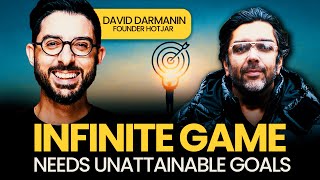
David Darmanin, founder of Hotjar, talks about building a $25 million SaaS company from scratch. Starting as an analyst and designer, he grew Hotjar to over 700,000 users by focusing on co-founder selection, marketing strategies, and sustainable business growth.
Thrown in the deep end. I was suddenly working with some of the biggest brands in the world and it was so interesting to me. We're going to connect back to the story, right? That Dave, analyst, designer, who couldn't figure out whether the customers were happy. I saw this, I could see this in the teams I was working with, with these Fortune 500 companies, banks, SaaS businesses, publishing companies in the US and whatnot. And it was the spark in my mind of I've always tried to build a business and this is the industry that I know, right? This is what I use. I'm a designer, I love software. This is it. And that is the birth of hardjar.
I can imagine, I can imagine that you are as relevant today as you were maybe a few years ago. Because as the Internet revolution continues to, more and more people are saying, you know, let me get a myopic view of what's working and what's not. Every dollar needs to convert and if it's not converting, I need a hot jar. Now, David, I love your T shirt by the way, and totally now up to you for our audience who love your product, who love this thing. I saw all the people who interview you, they are super excited even before they get started. And can you tell us very briefly who is David and your story?
Yeah, that's great. And now I'm looking forward to do a 10 second version of it. So look, who is David? I have two children, 4 and 6. My wife is also a superhero, a Swedish superhero. I was born in Australia, but I now live in Malta. Family is everything to me and that's why hotjar is a fully distributed company. So I've been close to the family and fully dedicated to our life. Which comes first? Freedom and family since 2014. But if we rewind a little bit. Who is David? I'm a designer at heart. I like to build things and solve problems. And when I was in Australia, I remember my dad very early on because the technology was available, unlike Malta, had this very early Mac computer and had a big printer because he was creating like leaflets for the community of Maltese in Australia. And I remember this noise of this Mac switching on. It was the plus. It was the very first one. I still have it in my office with that smile. Right, right. So that interface, right? The fonts, how it worked. PageMaker version one. That is David. Right now if we fast forward a little bit. I took that and even though.
Sorry, I lost your audio. No, I can't hear you. I lost your audio. He said, even though. And I Lost your audio there. If your earphones have run out of battery, then you can remove them.
Yeah. Odd. Can you not hear me?
I can hear you now.
How weird is that? Looks like the computer took a break there because everything stopped working.
Now you're fine.
So where were we?
Even though.
Yeah, yeah. So fast forward from there. Even though I studied to become a lawyer and I did that, God knows why and whatnot, my passion always remains designed, right? So I'll never forget, my dad got me my first job when I was 15, and I was supposed to be selling tickets for a cruise ship between Malta and Sicily. And I remember I was really bored. But a couple of weeks in, the ship I was selling tickets for stopped operating like a fishing net got stuck in the screw or something. And I remember our bosses said, we can't send you home. You're just going to have to stay here and do something. And I was like, I can design. Like, if you give me a shot, I'll make you new brochures. Everything new for the company. And they're like, sure, we're paying. You might as well. So this was my first opportunity and I just ran off. I did this on the back of it. I got a job working with a German firm here in Malta. And this was just the beginning of my career in design and whatnot. Fast forward even more. I started doing logos. I got some gigs. I was designing stuff. It's all offline, right? There was no Internet yet at this course, but at that point, I got a break. A client, I had, an international client, told me, you're doing the logos for us and whatnot. Will you do us a website? And I was like, I have no idea how to build a website, but obviously I said, of course. So I went. I figured that out. I learned how to do that on my own, and I was hooked. But the big thing at this point, which was very frustrating to me, was I was building this website. I had a lot of traffic because this was a very famous international comedian. Funny enough, right? So I was running his website, and the client, his agency, wanted to build it in a certain way. And I was like, I don't think people like it this way. But there was no way to measure it, right? There was no way to know, is this good? Is this. Is it bad? Is it performing good enough? And I like to mention this in my story because this was the point where analyst David, the designer, who's still analytical, was pissed off. And I didn't like the idea that back then, a website was good. Or bad defined by an award that you win or by the client being happy. I was constantly thinking, I like to empathize a lot about the customer. The fans of this comedian, do they like this website? And I couldn't figure it out. Anyway, fast forward. I joined a software company here in Malta because I wanted a full time job. And I learned so much from them. And I did it mainly because I had tried to start a business. This was a long time ago. I was trying to build a Shopify kind of approach, but it didn't work. But working with them, I met my co founders today at Hardjar and I also learned what it takes to sell online conversion rate. Right? Like all the metrics, branding, marketing. So this was an amazing experience for me. They invested in me, they sent me abroad. More importantly, I met my wife there. So it was a very good return on investment. Of course, on the back of this, I then got a consulting gig. This was a huge break. And I chose this consulting gig because I was based in Malta, right? So it was very limiting here in terms of opportunities, people to meet. But I love Malta. So I wanted to kind of expand my opportunities from here, but I didn't want to leave. So. And this was the time, this was 2012. I was getting married. My wife and I were like, you want to travel? We want to do stuff. And this was the beginning of this movement that today many people call remote, right? And I was like, I told my wife, I want to, I want to work remote. So back then I was obsessed about conversion rate optimization.
What year was this, David?
So this was 2012. So in 2012, this was the moment. David wants to be remote. I want to travel the world. I want to open up my opportunities. I saw that I was obsessed about conversion rate optimization and all of that, optimizing and whatnot, which sits perfectly at the middle of design, product and whatnot. And the experts in this field were running a remote business and had vacancies. So I applied and nothing. I didn't hear back from them, but I didn't give up. So I kept on waiting and hoping for this dream. I contacted again and then a few months later they reached back and they're like, oh, so sorry, like we missed your application. And at this point I told my wife, the remote dream is over. And I never forget, we were, we were in Thailand and I received this email. Can we interview you immediately? Anyway, long story short, switched over to them, thrown in the deep end, I was suddenly working with some of the biggest brands in the world. And it was so interesting to me. I'm going to connect back to the story, right. That David, analyst, designer, who couldn't figure out whether the customers were happy. I saw this, I could see this in the teams I was working with, with these Fortune 500 companies, with banks, SaaS businesses, publishing companies in the US and whatnot. And it was the spark in my mind of I've always tried to build a business and this is the industry that I know. Right. This is what I use. I'm a designer. I love software. This is it. And that is the birth of hardjar. Putting all the tools that are needed for people that are building experiences to measure and understand that human experience, the customer on the other end. Because in digital, as you know, it's very easy to be kind of hide behind the monitor and the numbers.
Sure. Fantastic. I love, I love in your story how you lit up when you said I met my wife and when, when you spoke about the fact that you made that a brochure for that person who gave you that opportunity because you wanted to prove to the world that I am a designer. And you know, let me, let me, give me the opportunity of designing so that I can, I can prove to everybody and validate the fact that I'm a designer. And so it's good that the cruise ship didn't take off.
Yes. Thank God for that. Thank God for that. And actually I didn't mention it. Right. So it's, I have to pinch myself today when I think that the dream of not just the product but also the type of company we built, the values are important to us. Empowering people, hiring people all over the world. Today Hotjar is we're over 150 people now based in over 28 countries. So it's a very diverse, it's very interesting team. We're self serve, like we're low friction. So we allow people to just use Hardjar wherever they are. We want Davids right very early on in their career to have access to. So it's a freemium model. It's open, we don't want to set limitations. We have over 700,000 sites using hard drive today. And yeah, it's great to see that we're just getting started, but we're already having an impact.
I can imagine, I can imagine that you are as relevant today as you were maybe a few years ago. Because as the Internet revolution continues to happen, more and more people are saying, let me get a myopic view of what's working and what's. Not. Every dollar needs to convert. And if it's not converting, I need a hot jar. So tell us dav, what was your initially, you're driven by passion, you're driven by an understanding of design and an understanding of optimization. But how did you go about. Aviana, can you say hello before you leave the imotw happening? Aviana is leaving for school. She wanted to say hello for the IMOTW project.
Hi. Hi. Enjoy school.
We have been doing our projects together. All the interviews are done by this girl and her sister. But today they had to go to school. But thank you very much for your time.
No worries. It's a pleasure. Thank you.
Bye. So she got worried for a second. She said, oh my God, no, no.
I have to go.
Okay, so how, how, how difficult was it to. Okay, let's start with the how did you first get a co founder? Did you first start a company?
You mean this company or any company?
This company.
So there's a tiny backstory I started with. So I employed one of the. Well employed. I brought on board one of my co founders first to work with me on a project. I was paying him and we were together. That failed. Then two of our friends similarly were not doing very well with another project and they were kind of what we were missing. So we combined together and my brother in law came in to put his money and my money into the project. So it was kind of a bigger vision idea and then let's come together and work together.
So when it, when it comes to finding a co founder, would you like to give us a few suggestions on what to do and what not to do? I mean, sometimes it's also an ego game. You know, people are like, I am so good at what I do. My co founder cannot be somebody who I worked with. Maybe there was somebody who you were working with and he was a junior engineer in the coding space. But you feel he's the right co founder. But he was, he was, you know, you were his boss and now, now because he's so good and he's running the show, you want to make him a co founder. Would you like to tell us a few things about how to hire a co founder?
Look, I'm quite opinionated about this. Like first off, I think we need to start with it all depends where you are in the cycle of life or entrepreneurship. Right?
Sure.
If you're like me, it's your first shot. I think you need to focus on values. You have to have similar values. That's the most important thing. And find people. I used to think you want to find people who are different than you. I think they need to be very similar to you in, like, how they think. But find people that are really good in areas where you're not. Right. Like, so you're building a team. Ultimately it's the first team. So sometimes people think that co founders kind of have this kind of different element. It's actually the first team from which all the other teams are then born. Right.
Right.
Now, obviously, if you. If you're a serial entrepreneur, you're doing it again, then. Then a lot of these things will change. But I don't think we want to go into that. Then it's different. Then you're looking obviously for a different type of team to put something together. So. But I think in the context of this story, and maybe people who are looking for tips because they want to start something for the first time, I think there's a danger of thinking about the per. Ideal co founders. I think it all comes down to, again, what is the project you want to do and succeed in? What are. What are the skills that you need to put this together in the beginning with a focus? Maybe not necessarily only on technical. Right. But entrepreneurial. Like, what does it take to make this happen and then not overthink it, Just start.
Got it.
But I think the values fit is really important now. How does this apply to us? Right. Like with Hard Joy, the challenge when we launched was to build. We were very bold in the sense that Hardja was very wide. Right. Like, it's a very wide product. So I think back then, I couldn't have made a better choice of bringing on board the best individual contributors I knew. So they weren't maybe the most experienced leaders. Actually, they had no experience in building businesses. But together we could spend two years building a very challenging product, and that's what was needed. You know what I mean? So I think it depends by the project, but I think the biggest danger is to start thinking cto, CPO and all this stuff. Early on at Hodja, we had none of that. We were all individual contributors. And that comes later when you scale.
I love that. I love that. Yeah, that makes so much sense. Don't think CTO CF all of that. When you put hats on different people, then you have different expectations, different judgments and. Okay, got it. So you started the company and then how did you. What was the challenge on getting your first few clients? You were already known. You knew you were working with big brands. When you started your own company, did you just call them and say, hop onto my company and you got your first client easy or was it a first? Was it a challenge?
That's a great question. That's a great question. The reason being because since I was working through a consultancy, actually David did not exist. So I was not allowed to mention I worked for these big brands and I didn't have a relationship where I could call them. So that was a big learning lesson for me in terms of, in life, you want to build up this equity, right, that is available to you as you do stuff. But anyway. But that didn't worry us that much because what we wanted to build with Hadjar, our model was, now I'm going to use big words, right? But it's consumerizing enterprise tools. Right? So our vision back then was we had used tools like basecamp, right, or mailchimp. And we came from a consumer background, all of us, and we prefer that we don't like this whole sales team and demo and everything. So we were like, why don't we just create something super simple? Anyone can just access right quickly. So we didn't want to build the business based on the phone calls, but the traction. So for us, the traction was very early on. We said, let's not make the mistakes we did in the past. We spent a year building a product and then figured out no one wanted to buy it. So instead we're like, okay, build a very quick version of it. Version meaning there was not even an interface. Right. So Eric, our most like engineer, like our engineer, whiz kid, he built a thing that he would tell us, yeah, it's working. I can tell you that it's actually doing it, but you can't see it. Okay, that's good. It's possible. Then we designed what it would look like, threw it on a homepage, and we're like, do you want this? It's this, this, this, this for an amazing price, right? Like, do you have this itch like us? Right? If you do, put in your email and then we know, like, we'll let you know as soon as it's. It's ready. And we quickly started to see people fill this in. Like we just shared it with friends and we knew we were onto something. When the emails coming in, we didn't know who they are. Like we would search them in our address book or in our network. Oh, I don't know him. I don't know. I don't know her. So this is good. This is, it's.
It's moving, it's spreading. Yeah. So to get to. For for so a new so how did you. Now let's come to this. The marketing. Did you say so for people like yourselves, you're saying it comes naturally to be able to find an answer to why things are working. But for everybody else, did you actually have to say I'll help you create the next hundred thousand dollars or find the hidden revenue in your business or what were your marketing lines or your email? What were you saying to people to say come to hotjar?
That's a good question. So look, first off, we were lucky because we had this problem ourselves, right? So we didn't need to do a lot of customer development in terms of understanding what they were thinking and the big, big problem that we were solving for. This was quite a big realization for me because my previous startups were more focused on let's help you make the money, let's help you lift your conversion rates. But what actually we found was that the problem we were solving for was not that there was a few layers deeper in that is what the organization was solving for or the leadership, but the team who are playing a role in that Their problem was the tools that they like. Their tools were not the tools they needed were not easy to use. And easy to use means they're not easy to approve, they're not easy to install, they're not easy to actually use. So actually what we found this was through testing and then I explained how we tested. We realized that the big core pain was access to the tools to actually empower them, give them the insights to then themselves do the job. So they didn't want to hear a marketing message of increase your conversion rates. The message they wanted to hear was see how people are really using your site. You know what I mean? Like get the tools needed to find the problems. That's and we figured this out by just running ads and seeing what people clicked on and what people put an email in for or didn't that just.
That single line that you said is going to be a huge value add to this interview because most people who are entrepreneurs watching, they will realize that most of the time their messaging is so confusing out there in the market. Excellent. So moving on, you got your first few clients, you have a passionate team, you raise some, you know, you've got some money from your brother in law and everybody comes in together. And what was your sort of first breakthrough when you were like this is here to stay, you know, initially I know in a startup co founders might drift apart, funding might, money might finish the first few clients, you know, that excitement goes away. When did you say, you know what? Or when can entrepreneurs actually say this is here to stay? When does the stickiness start happening? When is it that you're too invested in the game to, you know, pull back?
Yeah, that moment is super clear in my mind. So, as I said, we started seeing emails coming in we didn't recognize. We quickly built. Well, obviously my experience in conversion rate optimization really helped because I designed a homepage which had persuasion in it. But then we went even further and we created kind of a gaming experience around it. So then what we started to do is when you signed up for Hotjar, you'd see a message saying your number 100 in the queue, share it with friends and you move ahead. If you're in the top 100, you get a free T shirt. If you're in top 20, a free Lifetime Hodger account. But if you refer five friends. So fixed reward system. Right. We'll also give you six months free for Hodger. So we kind of. My previous startup that failed was on this. It was on loyalty and gaming. So we took all our learnings and applied them to this.
Nice.
And this really was effective and we start to see more and more kind of traction. So then this system that we built, which probably we could have built a product around this as well, but we didn't have time. Yeah. So we built like a little graph in the back and we said, like, let's make a goal, right? Like, our goal is we want to get, I don't know, 10,000 people signing up for this. Right. And. And then we put out an ad again. I had done a lot of ads, right. So we did some ads on Facebook. And all of a sudden we realized, first off, the ads were incredibly effective. Right. So just to put this into perspective, the cost of an acquiring an email, right. Of getting an email was like a dollar. And obviously this is Facebook a long time ago. But then what we started to see was the word of mouth picked up and all of a sudden this graph was just moving. And I think having experienced how difficult it is to get people's attention before, even when you're giving them something for free on a phone or meeting them, it was painful, this sudden inversion of roles, of suddenly people were emailing us, like, can we interview you? Can we do this? There's this magic that you feel of. This is. This has a life of its own. So this was quite early on. Three months in, we knew this was going to be something magical.
Excellent. And all this while, while you're Getting into this magical phase of your business, were you already married or about to get married?
So there's an interesting backstory here, which is when I was working as a consultant, I was making really good money, right? Like, I was making good money, but I was. At its core, I was unhappy. I think mainly because I'm a very purpose driven person and I felt I was helping one customer at a time and it wasn't the pace and impact I wanted. So I remember I read. I started reading a lot of books that were recommended to me by the other amazing consultants I worked with because they were all much smarter than me. So it was a very good move. And I remember I was reading one particular book and I woke up my wife in the middle of the night. She was pregnant with. With our first child. And I told, I've decided I'm gonna quit. I wanna. I wanna start my own business. And I told her, I want to join forces with those guys. I'm gonna ask your brother for money. Like. And she's like, do whatever you want. Let's just go back to sleep. That's why she is my most avid supporter. Whatever I say, she's. Just do it. Trust your instincts.
So, yeah, I love that. I know I can make out because I can make out in. Because in the first five minutes of the conversation when you said the most important thing was that I met her. That's why I keep bringing her into this conversation, because I know how important she is to the story and to your story. And, you know, sometimes I travel all around the world. I made a very, very, very connected following, if I can use that word. And every time I got an opportunity to travel to a different part of the world for a month, the first person I looked over, my wife. And she was like, you're not saying no to this opportunity. You're going, we take care of things. So, you know, it's. It's so much, so much love and gratitude for. For our partners over there. Okay, so moving on. Hotjar. You know, I know a lot of interviews have asked you this question. Like, you zoom to 25 million now as entrepreneurs, you don't. You know, there's a lot of. There's a lot of, like, you know, when, during corona, when 75 days, we did 75 webinars and just exploded as a brand. And, you know, we did more revenue than we did in any other quarter. During the worst quarter, you know, after Corona, people were like, who are you? Like, you're an overnight. Because, David, we were doing a thousand People coming for a webinar every night, 75 days in a row. And there were 2,000, 3,000 people registering, and about one third of them coming. So 75,000 people heard me for 90 minutes. 75,000 different people every night. And then three times of three times the size, subscribed to our email list. They got to know about us. So it's about 225,000 people got to know who this guy is. A small, you know, and they're like, why God, this guy? And I was like, I've been doing this since I was 18. So when it comes came to your $25 million mark, and everybody's interviewing you and 25 million. It's a lot of hard work and iterations and doing all of that to be able to reach that mark. It's not that one pull of the lever and you're like, this is what I did it. And you can do this too. So what would be your message to all the entrepreneurs who are listening? When does that moment come in to say, you zoom past? It's never forever, and then you stop. It's a plateau. And then you go up. But when is that? One thing that happened is like, yes, I can. I can. You know, I'm. I'm. I've arrived at least for the short term. And then there'll be another one. How does. How do you recognize it? Or do you just say, keep marching, keep going. Some of these will happen. Or what would be your message to entrepreneurs who want that kind of growth?
Oh, this is a great question, right? The way you articulated it, it's a very important question. And I say, why? Look, I believe that to be successful and more importantly, happy in entrepreneurship, you need to embrace that the game we're in is an infinite game, right? So there are finite games, like Monopoly, right. There's an end, and there's infinite games, like a cold war. Right.
I like that.
So you need to understand what game you're getting into, and it's not me. Like, Simon Sinek has said a lot about this. It's a very interesting concept, and it's very important, I think, that to come into entrepreneurship, like, and to build a business that understand what you're getting into, you're not playing Monopoly. This is an infinite game. So it's constant. And the only way to make this infinite game successful is you need to set the right goal. Right? So. And that's why it's so important. I always say to budding entrepreneurs that one of the biggest lessons for me was that when it, when I was very young, my goal was to make a million dollars. Like, for me, that was like just so amazing. If I can make a million dollars, I come from a, a family who's always been employed and like, can't complain, we haven't been poor. But you know what I mean? Like, it's just unattainable. Right, right. But the big shift was when I started to realize that actually this game is not about the million dollars, it's about serving a million customers. Like, how do I provide value to a million customers? And I think when you start to realize that, you start to realize that actually what's important when you're playing this game is obviously celebrating your wins as you go, but mental toughness and grit and kind of building your company around the game as it is is so important. Right. Like, you need to have a long term view, a purpose, a goal, or else you run out of steam. And we did run out of steam. There's been plateaus more than anything from morale point of view. Right. This is a gruesome, tiring journey.
Awesome. So a million customers, do you think entrepreneurs who are listening to this, they could be in the service field or they could be in tech. And now tech has evolved to AI and machine learning and all of that in 2021 and beyond. If there's an entrepreneur who's listening to David right now and saying, I want to be the next David or I want to. Do you think he can do it without tech?
Do you think he can do it without tech?
Like for example, Yeah, a restaurant or agency business. There are many service based businesses as well. And can they ever reach a million people without having tech as a core part of what they're doing?
Look, everything is possible, but we live in a world where it's going to be more difficult to do it. Because if we think about even brick and mortar tech is still a core component of it. Right. Accelerator. It's there hopefully to serve us, not the other way around. But.
Right.
So I think it's very difficult to take it out of the equation. But yeah, I don't think it needs to be. It doesn't need to be a tech startup or a tech company to do that, like 100%. Like, let's look at Greta Thunberg, right? Like she doesn't even have a business and yet she's impacted a million people, you know what I mean?
So that's a good point. That's a good point.
And I guess, and this is very important. Right. So I'm not saying that you necessarily need to serve a million people. I'm saying that needs to be your goal, because in an infinite game, you need unattainable goals. If that makes it a little bit weird, but I like that.
Yeah, I think that we've just found the title for our. For our show, for this one. For an infinite, infinite game, you need unattainable goals. I love that. It's. It's almost like a. We can almost make it into a movie someday. Okay, so. So it's. I loved when you said it's grit and losing morale is a part of it. Having technology at the core of it can help it accelerate. But you gave a very good example that you can be a personal brand and, you know, impact people. Gary Vee is not really tech. You know, he's all over the place.
He's impacted a million people for sure already.
100%. 100% just by talking. And I remember meeting him in his office. We met. Me and my daughter, we met him a couple of times. And every time he. That's what. I like that.
Yeah.
I think that we've just found the title for our. For our show, for this one. For an infinite, infinite game, you need unattainable goals. I love that. It's. It's almost like a. We can almost make it into a movie someday. Okay, so. So it's. I loved when you said it's grit and losing morale is a part of it. Having technology at the core of it can help it accelerate. But you gave a very good example. My elder daughter remembers. She's like, all he says is, are you happy? That's it, done, finish, end of conversation. So everything else stems from there. And you mentioned that as well. You know, as long as you're happy, you know, you're able to build. You know, I love what Steve Jobs said about the dots connecting. Looking back when you're going ahead now when I look at you, that you can be a personal brand and, you know, impact people. Gary Vee is not really tech. You know, he's all over the place.
He's impacted a million people for sure already.
100%. 100%. Just by talking. When I look at your story and I look at, you know, a tech startup like yours, you know, with a very good revenue line and the right founders, everything. When a regular entrepreneur like me or others who will be watching this interview are looking at it, saying that, you know what? David knows, David has it all figured out for the next 10 years. He can see that. I wish I could see the future as clear as David. So I think your smile gave it away. But, but do people who are, who are, you know, as successful as you with the team, with all of that, do we all face similar challenges of an uncertain future?
100% right. The David a year ago didn't know the things I knew.
And I remember meeting him in his office. We met me and my daughter, we met him a couple of times. And every time he, that's what my, my, my, my elder daughter remembers. She's like, all he says is, are you happy? That's it, done, finish, end of conversation. So everything else stems for, from that, from there. And you mentioned that as well. You know, as long as you're happy, you know, you're able to build. You know, I love what Steve Jobs said about the dots connecting, looking back when you're going ahead. Now when I look at you today.
The David five years ago didn't know the things I knew two years ago. And to be honest, the major.
When I look at your story and I look at, you know, a tech startup like yours, you know, with, with, with a very good revenue line and the right founders, everything, when a regular entrepreneur like me or others who will be watching this interview are looking at it saying that, you know what David knows, David has it all figured out for the.
The future is uncertain and I like it that way. I think it needs to be that way because I think if it's certain again and if I had everything figured out, what would this game be? You know what I mean? So first off, David has not got it all fig. That's very important we're figuring out as we go. Look, I think, and I come across.
The next 10 years. He can see that. I wish I could see the future as clear as David. So, so I think, I think your, your smile gave it away. But, but just do, do people who are, who are, you know, as successful as you with this a lot?
Because I actually do get a lot of people when they speak to me, especially friends, like, yeah, you got off. And my answer to them is team.
With all of that. Do we all face similar challenges of an uncertain future?
No. Like I'm figuring it out day by day and that's the work you need to put in the work. And I think it's all about mindset, right? It's about, I think the moment you start to think that David's got it figured out, I think there's a danger of falling into a fixed mindset 100% right. The David a year ago didn't know the things I knew today. The David five years ago didn't know the things I knew two years ago. And to be honest, the majority of the future is uncertain. And I like it that way. I think it needs to be that way because I think if it's certain again and it's it. A fixed mindset is one where you think either you have the knowledge or either have the ability or you don't. If I had everything figured out, what would this game be? You know what I mean? So first off, David has not got it all figured out. Right, Right.
Got it.
Or I can't improve or I can't be like Avi. I can't be like Gary. You know what I mean? And that's the fixed mindset. Because in reality, most of the champions in sports, they're champions not because of their muscles, but because of their mindset. They have a growth that's very important. We're figuring out as we go. Look, I think, and I come across this a lot because I actually do get a lot of people when they speak to me, especially friends, like, yeah, you got all three. And my answer to them is no. Like, I'm figuring it out day by day. And that's the work you need to put in the work mindset. So I think it's all about growth. I think the moment that you realize, make mistakes, learn, go every day, just keep on going, going and figure it out as you go. And I think all the other entrepreneurs I've spoken to, and I see it in your story as well, right? You're figuring it out as you go. The next thing, the next level. So Hodjar at 10 million ARR. Like, we're like, shit. Like, what do we do next? How's this look? And I think it's all about mindset, right? It's about, I think if the moment you start to think that David's got it figured out, I think there's a danger of falling into a fixed mindset. A fixed mindset is one where you think either you have the knowledge or either have the ability or you don't. Right?
Got it.
Or I can't improve or I can't be like Avi, I can't work. And obviously it's SaaS, so there's a predictable side to it. But right now we're figuring out what is the future. Like, what is Hotjar's second act? How do we grow from here? What are the teams we need? How do we change our go to market strategy? It's A constantly evolving journey.
Lovely. I love the fact that you broke it down into so many things that are uncertain. And your, you know, a company like yours has to figure out, go to market strategy or. Because for a regular entrepreneur, like, you know, once it's done, it can't be.
Like Gary, you know what I mean? And that's the fixed mindset. Because in reality, most of the champions in sports, they're champions not because of their muscles, but because of their mindset. They have a growth mindset. Right. So I think it's all about growth. I think the moment that you realize.
Make mistakes, learn, done, and that's how you reach. So thank you for saying that because it helps all, everybody who's watching this realize that we are all in the same boat. And, you know, it's a journey of constantly figuring it out. And I cannot get it out of my head. What you said.
Go every day, just keep on going, going and figure it out as you go. And I think all the 15 minutes.
Ago, it's not Monopoly, it's a finite game. So I'm just. For me, that's the biggest takeaway for, for me personally, entrepreneurs I've spoken to.
And I see it in your story as well, right? You're figuring it out as you go. The next thing, the next level. So hotjar at 10 million, ARR. Like, we're like, shit. Like, what do we do next? How is this gonna work? And obviously it's SaaS, so there's a predictable side to it. But right now we're figuring out what.
It's an infinite game. Because sometimes I get frustrated saying that, oh, you know, by now I should have done this. And why. Why am I getting this call again? I mean, this was sorted out six months ago. I should not be getting a call on this. But it's, you know, my dad always. Who's an entrepreneur. My parents are in their 70s. They work 12 hours a day. My dad always says three things. He said, avi, you will.
What is the future? Right? Like, what is Hotjar's second act? How do we grow from here? What are the teams we need? How do we change our go to market strategy? It's a constantly evolving journey.
Lovely. I love the fact that you broke it down into so many things that are uncertain and you fit your, you know, get calls for the things that you need. You, you need to see it as a sign to see this is company like yours has to figure out go to market strategy or. Because for a regular entrepreneur, like, you know, once it's Done it, and it could have ramifications. So go deep down and say, why is that call coming? There could be other symptoms similar to that. So all those calls are signals. And second thing my dad says, is that done? And that's how you reach. So thank you for saying that because it helps everybody who's watching this realize that we're all in the same boat. And, you know, it's a journey of constantly figuring it out. And I cannot get it out of my head what you said 15 minutes ago. It's not Monopoly. It's a finite game. So I'm just. For me, that's the biggest takeaway. For me personally, it's an infinite game. Because sometimes I get frustrated saying that, oh, you know, by now I should have done this. And why. Why am I getting this call again? I mean, this was sorted out six months ago. I should not be getting a call on this. But it's, you know, my dad always, who's an entrepreneur. My parents are in their 70s. They work 12 hours a day. My dad always says three things. He said, avi, you will get calls for the things that you need. You, you need to see it as a sign. To see it's just try to talk less. You talk too much. You should talk less and listen more. And the third thing he says is symptom, and it could have ramifications. So go deep down and say, why is that call coming? There could be other symptoms similar. If you can't figure out anything, get up at 4 in the morning because there is a divine, you know, hour when you're quiet and there's nobody around. You find your answers over there. Which brings me to discipline. You look like a very fit man. So tell us, in your journey of growing a company, how important is discipline to that? So all those calls are signals. Second thing my dad says is that try to talk less. You talk too much. You should talk less and listen more. And the third thing he says is if you can't figure out anything, get up at 4 in the morning. Because there is a divine in mental and physical health to you. You know, our. When you're quiet and there's nobody around, you find your answers over there. Which brings me to discipline.
I'm a big believer in discipline in general, and I wasn't that much like that in the past. It's something that came with age. Look, I think it's important, though, to have a good balance between.
You look like a very fit man. So tell us, in your journey of growing a company, how important is Discipline, Mental and physical health to you.
Discipline and fun, though. Right. So I'm not. I'm not like, I'm a big believer in, more than anything, self discipline, but yeah. So I'd say while I've given it a lot of importance, I've not always been very good at prioritizing it. This last year I've definitely given it a priority. So I've started to exercise every day. I do it from home because I don't like going to gyms. Like, I had to figure out my own way of doing it.
You have a peloton bike or something?
No, actually I just use an app. It's called Freeletics. And it's just you use your body weight to exercise 20 minutes a day and you feel fantastic, especially if you're working remote. It instills this routine of exercise. Shower. I like long showers. For me, it's long showers. Gets the. Yep, same. There we go. Very, very effective in terms of mental discipline. I've always been quite good at that. But to be completely honest, this last year has been tough for me. Look, the more you grow and the more successful you are, maybe not everyone is the same, but for me it was a case of there's a tendency that you have more to lose than to gain. Right. And you start to have a little bit more uncertainties. Right, of course. So. And especially as choice becomes like wider and more abundant. Right. It took a little bit of toll on me. And then I'm a person that cares a lot. So the team, growing amount of people, like, I took too many things to heart. I also, in hindsight, realized I became too much harder and harder is me. And you start to connect things too much. So while we introduced, for example, a wellness budget for my team, I was a little bit too late to get on that. But now for a year I've had a therapist, which is great. It's been really helpful for me. We've invested more in vulnerability at work and opening up with each other. And also I'm doing meditation now and I've changed my routine and also structured the way I work because as I said, it all comes down to grit and mental toughness. Right. So I'm glad you asked this question because I think especially in the first few years, it's not that important. But I think if you miss the mark on this, it's very easy to kind of fall into a pit. I think it's very important that we. I had the realization, I think it was in the shower two days ago where I Realized I'm probably stealing this quote from someone, but as an entrepreneur, when you think about it, the ultimate tool, right? Like if you were, if you were a street racer, right? The car, right? The way it's modded, the way, like that is your tool, right? And you invest a lot of time, like as an entrepreneur, your body, soul, brain is your primary tool, right? So you need to like, like it is your temple, right? So you need to, I think you need to really think about, like, how do you take care of that, the sleep you're getting, like the, like the mental wellness, right? The health you have and the exercise, I think very early on, because again, you're in this infinite game. You need to be training and prepared for this voyage. And I wasn't for quite a long time.
I love that. I mean, I've almost never heard this in any of my interviews. And I'm so grateful for you for saying that because I was having a conversation with a friend of mine who's a very successful entrepreneur, but he had a, he had a major, major upheaval in his personal life, which sort of, you know, set him off track. And as, as some of his closest friends, we were with him during that time and we were talking about the fact that. Why is it that every single human being on the planet, especially not really especially, but because we are entrepreneurs, we're talking more about entrepreneurs. You know, like, we have an HR department to go to, we have an accountant to say, you know what, I've got an accountant in house, but I'm talking to my chartered accountant to save. How should I plan my structure? And I've got a mentor. Everybody's got a mentor, everybody's got a coach. Where is everybody's therapist? I love the fact that you brought that out. And I personally have been thinking that I need, do I need a mentor or do I need a coach or do I need a therapist? And this brings in, I think every single entrepreneur feels whatever you do. Like you said, with all due respect to our spouses, they have their plate full. So to wake them up in the middle of the night and say, this is what I will be doing. Sometimes you just get that five minute window while they're doing something else. You need a full time therapist to say, hear me out man, this is what I'm thinking about. Does your therapist need to be a successful business person, David?
No.
Okay.
Look, for everyone it's different, right? So for example, one of my colleagues in our senior exec team is our chief product technology officer. Mahanath is Amazing. He got lucky. He actually found someone who helps him on both levels, both coaching and therapy. Right. Like, in my case, what I needed was, like, different. It's not to say I don't need a coach, but I think there's a. There's, I think also a humbling aspect to it to me that my therapist is 15 years more senior. To me, he's not a businessman, right? But he's got it figured out from another point of view, right? Like perspective of life, simplicity. And I think for me, that that is very grounding.
I absolutely love that. Because I'm getting goosebumps thinking that, what are all the other people who are going to watch this show, what are they going to say, you know, what? Therapy for entrepreneur.
But he's got it figured out from another point of view, right? Like his perspective of life, simplicity. And I think for me, that that is very grounding.
I absolutely love that. Because I'm getting goosebumps thinking that, what are all the other people who are going to watch this show, what are they going to say, you know what? Therapy for entrepreneurs. Some people are going to be shocked. And some people are like, thank you for saying that. Because a lot of people don't talk about it. It's like, why do I need. Is so important to be able to. I was talking to a friend of mine who's a very senior, who. The wealth consultant, works for a large company, and he's, you know, obviously busy on the phone, stock market going up and down. When I tell him about my regular month, he's like, you're crazy. How do you even deal with this? He said, because in our. In a. In a. In a setup, we've got everything happening for us and we leave, and everything happens for you. We don't leave. And I'm like, we don't want to leave. And that's why we chose this. And, you know, like, sometimes I go to sleep, I don't know if it's good or bad, but sometimes I go to sleep with an out, with a. With a. With a blueprint of what's going to happen in the next few weeks for a new product that I'm launching. And I'm like, you know what? When I sleep and I'm like, I'm giving somebody some work in my head to say, you know, let's figure it out. Be ready, because when I get up, we're going to have that discussion again. So be ready for that discussion. So I see what you're saying, David.
Yeah. In fact, what we did I'll mention this because I think it's worth saying it as well. At Hardja, we're distributed not just by the virtue of the fact that everyone is based somewhere else. We've literally designed the business to be distributed in every possible way. So obviously we still have a senior exec team, but we distribute ownership, we distribute budgets, we distribute allowances so people approve their own leaf. No one approves your leaf. So again, we distribute power. We don't centralize it around managers. Our monthly departmental budgets are automatically distributed and allocated based on a formula. We don't have a big office. Instead we have a working together budget. It's €2,000 per person to travel and meet anyone they want anywhere in the world. We have many budgets and allowance. You receive your own credit card and you pay it's trust from day zero. You see my point? But then one of the things we did, which is, I think, important to mention, is we gave everyone a wellness budget. It's €250 per month to use against a therapist, against even supplements, against anything that you need. And we plan to improve that as well. So I think on that topic, I think it's. It's a very important topic to me. And I think as entrepreneurs, we owe it to others to kind of talk about the subject.
I love that. That is so fantastic. Thank you so much for saying that, David. You know, we have just a couple of minutes. We finished the hour that we asked. Thank you very much for giving this your time. David, for everybody who's watching this.
Just.
Tell us more about hotjar, where you're going, how they can log in, tell us about your website. Let's do a little bit of plugging in hotjar now.
Sure. So hotjar, we call it, it's a behavioral analytics tool. So again, big words. What does that mean? We're all used to using analytics tools which show us numbers like web analytics or product analytics or user analytics. With hard drive, we try to take you beyond the numbers to actually see and experience what your users and customers are doing. So what does that mean in practice? Right, like you can replay how they're moving their mouse or what they're clicking and what they're doing. It's all anonymized and privacy friendly. You can create a heat map of how people are interacting with a page. You can ask them questions, you can do surveys, you can ask them to give input when they're frustrated. We identify when specific behaviors are happening. So all these things empower teams so that they can have the right insights they need to make the right changes then to improve the experience and ultimately we know that improves the bottom line. So that's what we do. As I said Rogers, there's no friction. Anyone can just use it. There's a free plan. So even if you're a student or you just want to play around or build a website or using Shopify or even if you're a Fortune 500 business, it's really easy. Just jump in, you use it and within 24 hours you're literally getting live data from your website and seeing what the experience looks like. We also publish a lot of information and content because that's part of our purpose and mission where we're going to so hardjar.com blog we publish a lot of guides and information on how you can do this with your co founders, your team.
Lovely David. This has been a fantastic learning for me personally and I'm sure same as we because I like the fact that you talk in third person sometimes. David did this. David, this, this. It's almost like a chapter of a story. My editor is going to have a lot of fun editing this, making it into a chapter wise story. No, not at all. Not at all. It's going to be so much fun and we're going to watch it again and again. The first thing that happens is my entire team watches what, you know, the interview just so that they get motivated. This is fuel for them to understand. And then we sort of chop it up and we promote it everywhere to the, to everybody in our audience. And finally the Internet moguls of the world book which comes up out very soon. So thank you for supporting us in this venture. I will have a short 30 second conversation with you but before that I'll finish this show. So ladies and gentlemen, boys and girls, as promised we had the founder David from hotjar telling us about life, wellness, a few mentions of the most important, one of the most important people in his life, his spouse and the company and health, wellness, fitness, long showers and everything in between. Thank you very much David. This is ABHI Arya, father of two girls, six dogs, husband to a superwoman, a streetcar racer turn hotelier, now social media marketer and founder of Internet moguls. We'll be putting in the description the links on everything for all of you people to be able to join hotjar in the description. So stay tuned for this interview to come out in full. Thank you very much.
Sam.
More from Avi

The strongest mindset doesn't begin with meditation. It begins at home. Before you conquer the wor

The strongest mindset doesn't begin with meditation. It begins at home. Before you conquer the wor

Your mindset isn't something you fix once. It's something you train every single day. Just like yo

Don't build a company just because your friends are. Build one because you're ready. A startup is

Everyone dreams of becoming the boss. Very few understand what that really means. The moment you b

Most entrepreneurs say, "I don't have time for coaching." The truth? You don't make time for what

Over hiring doesn't always solve problems. Sometimes, it creates them. Having a small buffer in you

"The highest-paid" isn't the goal. The highest-value is. People often ask why premium mentorship co

The founder will always be a bottleneck... at some stage. The goal isn't to pretend you're never th

People ask me how I stay consistent with my morning routine while traveling across countries and tim

People ask me how I stay consistent with my morning routine while traveling across countries and tim