How A Millennial Power Couple Built A Fitness Empire | Avi Arya | Brandon & Kaelin Poulin |
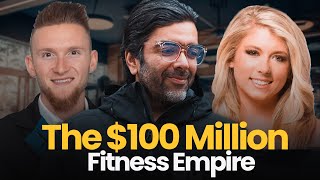
Brandon Poulin built LadyBoss, a $100 million health and weight loss company, starting from network marketing. He discusses overcoming financial struggles, the mindset needed for entrepreneurship, and why focus matters when scaling a business.
So when I lost my weight, I was like, free. And I understand, I get it. And I think what you're doing, if you're helping 45,000 human beings get fitter, it's not only about getting fitter. It's people don't understand. People talk about mental health and all of those. And I love, and I, and I love those topics and I all for that, but it's so related to the, to the weight. Obesity is, is caging people into saying, you know, you want to live, you want to live inside a cage, you don't want to go out and you're not feeling good. You know, you wear all the time, you're wearing black, you want to wear loose clothes, you don't, you don't want to hang out with people.
It's. I mean, you're. Your health, your health permeates every area of your life, right? Like your, you know, if you want to be productive in business, like drink water, go eat healthy food, like, you eat junk, like it's going to drag you down, your energy's down, your outfits down, right? You can't show up for your family, you can't show up for your clients, you can't show up for your customers. I mean, it permeates everyone, right? Is that you have the earning potential of a multimillion dollar racehorse, but do you treat your body and fuel your body like it's a multimillion dollar race?
Before we get started, Brandon, I always believe the shortest distance between two human hearts is always a story. You tell a story to a perfect stranger and you win their hearts for life. And so for all of us in our audiences over here, Brandon, what's your story?
Yeah, that's a big question. Well, thanks for having me, Avi. And I got to hear your story before we went live here. And you tell it very well. You tell it very well. I've spent a lot of the last 10 years building companies, not telling the story a whole lot. So it's fun for me to get to do it when I kind of take the time out and do it. So. Yeah. Well, I started as a kid from Albuquerque, New Mexico, signed up for a network marketing company at 17 years old because I figured through this selling opportunity, it was actually a weight loss company, right? They showed me the video and I saw how one time turned into three, turned into nine, and so on and so forth. And I figured it'd be a faster path to getting a motorcycle than working for $7 an hour at a laundromat. So I did the math. And I figured, hey, I could probably get there faster here. I calculated how many hours it would take because I really wanted a street bike that was like what I wanted. So I had a similar adrenaline addiction. Like, sounds like you do these days. It's more on the dirt because I have a wife and kids and street bikes are a little wild. But essentially that's how I started network marketing was. It's a weird kind of misunderstood industry, but it taught me really everything that I needed to start my own business. And in network marketing, I was with a health and weight loss lifestyle company. We sold health products, supplements, stuff like that. And I learned how to lead, I learned how to sell, I learned how to speak, I learned how to communicate, I learned how to work. And essentially you get this like business in a box and now you have to go sell it. And I learned so much doing that from 17 to about 22. That's what I did. I met my wife, who's on my wife through that company. So I think we sold about $12 million worth of product for that company over the span of five years. And I think it kind of hit its kind of momentum stride and really kind of came back down and the business really started to struggle. So we did super well, kind of cycled, as I like to call it. I think it's important. I'll get into that topic in a second. But kind of came crashing down to two months behind on rent, two months behind on car payments. My wife and I, we were engaged. We were like, oh, we can't have a wedding because we don't have any money. And that's actually when we launched what is now Ladyboss, which is my main role right now as being the CEO of LadyBoss. And so in short, network marketing growth, contraction, cycled, crashed and burned, reinvented ourselves, decided to create our own business serving the same kind of customers in a similar way, but through digital marketing model. As you've spoke to the Internet moguls concept, right? And you know, now we've done over $100 million in revenue. We were number four on the Income Inc. 500. So essentially the fastest growing weight loss and health consumer consumer direct to consumer packaged product company in the US and just are continuing to grow and having a blast doing it. So that'd be the short business style version of the story when you ask.
But I can totally imagine the heartburn and the heartache and everything that went behind from that from you got me. When you said you were two months behind on rent, that could, you know, I can imagine the mindset and to stay motivated then and say, I still need to power through this or worse can happen and you're already engaged and all of that. Awesome, man. That was fantastic. So tell us for people who are watching right now and are at your stage, at the stage that you were at maybe a month or two behind their rent, and they're like, should I give up, go back to a job? And I mean, I was at a job and I came and did entrepreneurship, and that job was not working. That's why I've come here. Why am I even thinking of going back? Because I don't have money for the next two months. So next time, should I have started with at least six months cushion money or what am I doing? I have no idea. What should I do?
Yeah, that's a good question. I mean, I think everyone's situation is different, right? Like, I say, every business is a snowflake. I consult a lot of companies and business owners kind of in my. That's like, fun for me to do that. And everyone is a snowflake, right? They're all unique and individual in your situation. I think there's kind of two ways I see people get started in business. I think, number one is if you have it in your heart and you have, like, that burning desire, like, I, like, you just can't quit, right? Like, you're just. You're going to sit there and go, like, what if. And like, if you have that. That burning flame, like, and it doesn't go out, I think, like, you know what you need to do, right? Like. Like, you know what you need to do? You probably need to stop listening to so much stuff and go work and go do the boring stuff that it takes, right? Cause that's what it takes. But I think there's that, that. That person who. I said, there's two types. I think there's that person who needs to just go all in and, like, get two months behind in your. All your payments because you need to just be, like, burning bridges past the point of no return. I have to go make this happen. Or I think that. And that's kind of who I was, right? I like, that's. We spent two months building the foundation for what is now ladyboss and helped over 450,000 people as customers, right? Like, that was like. We burned our bridges. My wife and I locked ourselves in a room. We had a whiteboard, we had laptops. We had a concept, we had a dream and a vision, and we painted it Out. We made it a reality, and then we set. Set to work, and we did it all day and all night for two months before. So I think there's that kind. I think the other kind is probably, you know, like, hey, maybe I have a family to support. Maybe I have kids, maybe I have a spouse, Maybe I have parents I'm taking care of. And I need to maintain a stability and the financial, you know, stability in my life while I then build my business or dream or that I work on that flame that I have inside of me in the after hours, in the spare time, in the weekends, in the evenings, in the, you know, the moments in between. I think. I don't think there's one way to do it. I think those are two good ways, and I think it just depends on the person.
Got it? No, that makes a lot of sense. So you're saying if you're a true entrepreneur at heart, you will find a way in instead of a way out, and that just comes naturally. However, you did also point out that there are two. There are various situations for different people. So you need to see where you are at in your growth path trajectory, life pattern, wherever you have a family to take care of, definitely balance it out. And you have enough time in the weekends to be able to do that. Great. I shift gears and I'll go towards company mindset. I always say, you know, like, people say you're the sum total of the five people that you're with and all of that. So I was interviewing John Lee Dumas day before yesterday, and he said something very interesting. He said. I said, stake. I always say, stay close to the router. The router is your family. Stay close to them. He said, if the family is pushing you in the direction of your dreams, sure, stay with them. If not, then they can be in your second circle. But the first five has to be those people who are moving you ahead every single day. So as you were, you know, you. You said you and your wife, you locked yourself in that office and you started working. Did you have. Were you conscious or at what. What stage were you conscious of the five people who are in your circle who were giving you the positive on not so positive shifts in your life?
Yeah, I think at that point, you know, we're early 20s, just, you know, engaged, like, we weren't taking care of anyone. We weren't, you know, carrying the weight of relationships. And, you know, it was like we were trying to find our way. And so at that point, it was like, let's just go all In. I mean, really, we didn't have many relationships, right? I think. I think there's seasons, right? You know, I'm not a big fan of, like, this is the principle, and this is how it is your entire life. And if you don't follow it, you're wrong. Like, I think situationally, you have to make those assessments for yourself. But I think for us at that time, we're in our 20s, we're like, you know, hey, like, we can lock in. We don't need to have all of this other, you know, relationships around us that we're worried about taking care of. As far as, like, what you're saying of, like, you are the five people you're around, you know, it was me and her and then the mentors. We were watching their stuff online, right? So. So even though we weren't, like, in relationship with them, we were still consuming that mindset, that content, those books that. You know what I mean? And I think that's huge. I think. I think, show me your calendar and I'll show you what's important to you and your life. If you're spending. If one of those people is the Real Housewives of Orange County TV show, like, you're going to reap the fruit of that, right? Like, you know, if one of those is, you know, for me, reading the Bible, going to church, I have a spiritual connection, I reap the fruit of that. Another one is the time I spend, you know, with my daughter, with my wife, and then another one is in the personal development books, and then another one is in friendships that I love and people I want to give to and be a good friend. And like. So I think you, you know, I think you have to figure out, really. I think a lot of people just don't even think about what is really important to them or where they should spend their time and kind of map that. Like, I'm very pragmatic, right? Like, I'm not very emotional as a person. I'm very like, okay, what's the end result? How do I get there? Reverse engineer the way.
Lovely. I love that. And is your wife a very emotional person?
Depends who you ask. No, not really. She's pretty pragmatic like I am, you know, but she has unbelievable way of connecting. Connecting with people that she's probably way better at than I am. Among other things.
It took me 40 years to realize that being overly emotional is not a superpower because I'm a sensitive human being, and I feel sensitive and I feel. I feel pain for. For everyone. And I realized that that allows me. That makes me pause at various trajectory, you know, on various stages of my journey where I don't need to pause. There are so many things which I. Which don't need my attention or me to. You know, people have their own growth paths and their own karmas and everything. So I'm very happy that you pointed this out because a lot of people who are listening right now, you need to understand who you are and where you're coming from and there's no right and wrong. And this is where my next question is going to be. So, you know, I like to give. I'd like to ask you, do you think, Brandon, what you said right now there are already some questions coming on the Facebook group that people are understanding and asking their own personal questions. I love what you said about the calendar. You show me your calendar, I'll show you where your life is headed. And you followed it up by saying that people don't even know what they want in life. Because sometimes when you sit down with yourself and look in the mirror and say, this is what you like or don't you? You hate it. Just like sometimes when you put on a lot of weight, you don't like to look in the mirror. When you're all jumbled up with emotions and thoughts, you don't like to look in the mirror. And therefore we stop looking at the mirror. And therefore we don't know where we are going. And so life is just carrying by. So a lot of people have that they don't look in the mirror. Then there are those kind of people who look at Brandon, who look at John Lee Dumas, who look at all these successful people and say, I'm motivated to look in the mirror. You start looking at the mirror, you start feeling. You feel bad for the way you look initially and then slowly start shattering and slowly start becoming a better version of yourself. Then the third thing happens, and this is my question for you. When I start looking at Brandon or all these successful people and I say, oh my God, these guys are so successful and I'm nowhere. And my success quotient or my happiness quotient could be couple of thousand dollars a month in recurring income or whatever and everything else is fine. I don't to be $100 million company. So Brandon, would you give permission to everybody who's watching to choose their own success or does everybody have to be a multimillionaire to find success in today's world?
Yeah, I think comparison is an interesting point. And I think that comparison you Know, as in comparing yourself to somebody else is saying that you're supposed to be the same. I think everyone's unique and individual and has intrinsic value comparison. Either one of two things will happen. So one, I look at somebody who's doing worse than me and I become prideful because I'm doing better, right? And that doesn't lead to anything constructive or healthy, right? That turns into ego. And whatever you have above that person, your ego and your pride could take it away from you real quick, right? And I think the other thing that'll happen is if you look at someone who is more successful than you, it creates envy and covetous covetousness. Right? Now I want them to lose what they have so I can gain it, right? Or I'm not satisfied with what I have and so I need to work towards that end. And so now I have no sense of peace and no sense of satisfaction, right? Because I'm just constantly comparing myself either up or down. So I think recognizing and have the self awareness to just be like, I have my own journey. I'm walking in and I'm going to walk in it and I'm going to be happy for people that are doing better than me and I'm going to learn from them and I'm going to be like, wow, that's awesome. To celebrate them, right? And then the people that are doing not as good as me, I'm going to say I'm going to figure out how I can lift them up. I'm going to maybe take lessons about what not to do, right? I think you can learn two things from everybody, either what to do or what not to do, right? So I think there's a lot to learn there as well. And to the point of like, what do I really want? I think the world tells you that you need to be driving a Ferrari at a club every night. And culture, especially in the United States, right. I don't know how, where everyone's from, but in the United States the culture that's pervaded is culture of self. It's a culture of, of no substance really, because it's all about showcasing wealth. And I'm doing this and I'm doing that. And it's pride and ego. And as you know, with many famous actors and actresses and people that are successful that turn to drug addictions and all this, it's not about the success level or the wealth. It's about finding fulfillment and how that means for you. So I think having a business is about the growth process that you Go through about adding value to your customers and then creating a lifestyle that fulfills you. Right. And so do I want to be Jeff Bezos? No, I don't. I have no desire to have that much responsibility, to be honest with you. I have a lot. Like, I have 150 employees. You know, there's a lot of families that we feed. And like, it's a lot of responsibility. I'm going to continue to grow. But I don't compare myself to him. I don't compare myself to the homeless guy and say, wow, look how much better I am in life. Right? Like, I just walk my own path. And I think it's important. People just need to develop the mindset that it's okay to walk your own path. Like, you're unique. Right.
Awesome. Love that. Thank you for giving every. Because you started with $100 billion company, 150 people and all of that, and then still you give the same person, the same guest on the interview is giving all of you permission to say, you know what? I, I did this because I wanted to do this. I still don't want to become a multi billionaire like Jeff Bezos. And you choose your own path. So thank you for giving that permission because normally what happens is when somebody comes for an interview and people get. Every interview changes somebody's life, somebody is going to pivot at the end of every interview 100%. It could be one, it could be 20, it could be 100. And that's why I bring this question often. And I always ask my guests, can you give them the permission to get inspired by you and still do what they have to do themselves? So thank you for giving that permission. Thank you. So moving on and towards our, you know, next gear, what about the shift?
That was the shift knob.
Oh, yes, exactly. It's built in. Thank you for noticing that. So, and, and in my head, I'm. I'm in inside a Mustang when I do this. So just for context, so when it comes to building, when you're building a business, like, you know, you're the first five clients, what advice would you have for people to, you know what? Because my first five clients, to a large extent, I mean, all of them are to some extent, but my first five, ten clients are going. Are so, so related to my self worth and confidence and my game plan. Otherwise I want to get back to a job or whatever, quit. So I need those first five to say, you know what, at least I got so far. So what is your advice to people to get their first five clients to.
Get their first five clients, figure out where your clients are hanging out and go get in front of them, right? Like, I mean, you're going to have to break through the noise. I mean, the attention span is like, what, a millisecond now? Like, I feel like it used to be like nine seconds and then it was like three, and now it's probably like a millisecond, right? Like, it's. It's this tension span. So to go get your first five clients, like, I don't. You're a carpet cleaning company or you're a. You're going to be a, you know, a digital ads agency. I mean, it doesn't matter. Like, you just need to go get in front of people and, you know, if. If it's knocking on doors, it's knocking on doors. If it's running an ad, it's running an ad. If it's going in a Facebook group and adding value, that's what it is. But you got to go get in front of people and figure out where they're at, right? So, I mean, sort of like that general sense. I think most people who start a business don't realize that. I think the most. One of the most essential skills, if not the most essential skill to even have a company is being able to sell, right? And so you gotta go get in front of people. You have to present your. Like, you're going to exchange dollars for something, and you're going to have to convince them that it's worth it, right? So in whatever medium that is, understand how your customer thinks, right? Understand what their problems are, what their pain is, right? Like for us, like, for example, with ladyboss, so we're a women's health and weight loss company, right. I spent five years in people's living rooms, one on one with them, right? Talking through their goals, their fears, their, you know, just everything with them. Before I started this company that looked like an overnight success and had such great trajectory, but really, like, I spent five years getting to know them and in rooms with them and in their mind and their thoughts and understanding it. And so I think when you. When you talk about getting your first five clients, like, do you understand who your client is? What are their pains? And then does your message that you're bringing speak to those things as a solution? Right. It's that simple, right? It's like, it's not hard. Like, you don't need a marketing guru. You don't need like some magic. Like, you just need to understand what your customer's problem Is. And communicate clearly how you can solve it with whatever you're selling. Right? That's the gist.
Perfect. Perfect. I love that. Tell me, were you. Did you ever have challenge with weight loss or. You look like a very strong person, fit guy.
Personally, not really. I think health for sure, right? Like, I was like fast food every single day. Wendy's McChicken sandwich. Right? Like, that was my jam. So through my own just transformation of understanding health and taking. Taking health products and educating myself on what was good and what wasn't, that was transformative for me. But not personally. My wife actually lost 55 pounds. So she. Yes, she's had an incredible journey with that. She set a world record for the fastest IFBB pro card holder. So she's like, got an incredible picture. You can Google her. She got incredible pictures of herself and doing these competitions, like, literally from, like, clinically obese to, like, on stage at a fitness show.
My God.
Which is a huge kind of part of Ladyboss's story and why we kind of, you know, got into the women's health and weight loss space. But not personally, but thanks for saying I look like a strong guy. I appreciate that.
You do, you do, you do. And, you know, I give credit where it's due and. But you know that 55 at best, at any given time, I've lost about 18 kilos, about 35, 40 pounds. But I know this journey of losing this is so. Is so. It's so tiring over here. You want to give up every day. And the thing is, when you do it, you do it for so many other people who are overweight and they're like, you know what? Seriously, I can do it. I don't need to wear a hoodie in the summers. I've been there, I'm telling you. And I want to be vulnerable here. And I say it all the. I used to wear hoodies all through summers because I couldn't wear a T shirt. So when I lost my weight, I was, like, free. And I understand. I get it. And I think what you're doing, if you're helping 45,000 human beings get fitter, it's not only about getting fitter. It's. People don't understand. People talk about mental health and all of those. And I love. And I. And I love those topics, and I am all for that. But it's so related to the. To the weight. Obesity is caging people into saying, you know, you want to live. You want to live inside a cage. You don't want to go out and you're not feeling good. You know, you wear all the time, you're wearing black, you want to wear loose clothes. You don't, you don't want to hang out with people.
Yeah. I mean, your health permeates every area of your life. Right. Like you're, you know, if you want to be productive in business, like drink water, go eat healthy food, like you eat junk, like it's gonna drag you down, your energy's down, your output's down. Right. You can't show up for your family, you can't show up for your clients, you can't show up for your customers. I mean, it permeates everything. Right.
Sorry.
I once heard it put this way, is that you have the earning potential of a multimillion dollar racehorse, but do you treat your body and fuel your body like it's a multi million dollar racehorse? Right.
I like that.
Most people don't. Right? They don't. And so I think that's a cornerstone of success in any area for sure. Which is why it's easy to get passionate about it.
I used to tell people, your balance sheet is directly proportional to your waistline.
There you go. There's some exceptions. I agree. I like that. I like that there are exceptions.
I've seen those exceptions. Oh, yes. You know. Yeah, I know what you're saying. But tell me when it comes to, you know, the, your network marketing and all of how. Tell us about this kind of business and how do people get into this business? How do people grow this business? Give us a little behind the scenes.
Oh, in network marketing. Oh. I mean, there's a million of them out there. I mean, it's basically like when your friend calls you and says, hey, I want to show you this opportunity. And you know, it's sell Tupperware or sell keto diet, you know, powder or cooking ware with pampered chef or. I don't. My wife buys everything from everyone else who sells network marketing stuff now, so it's not hard to find one. There's some good companies out there. You could do a little googling and find some of the best ones. But it's a great way to start. Like if you don't, if you don't have a, if you don't have a business right now and you're like, kind of, I'm not ready to like, open up an llc, start a company, like, do that. And you just like want to learn how to sell and lead and train. I think network marketing is a great, like, industry to just start. Right. Especially if you're young too. But I think digital marketing is great too. I think there's, you know, you can drop ship product, you can, you know, go learn something in the digital world and give that, you know, like, learn how to use Yelp and manage reviews online and go sell it to a local business. Like, there's so many ways in 2021, it's. Yes. Like, we had a rough year. We're in this weird, weird place right now with this whole health thrown a thing. But there's more opportunity now than there's ever been, period. And there's more access to new opportunity now. I'm so optimistic about, you know, if you want to win, like, and you want to be successful, you want to have your own thing. Like, there's literally never been an easier time. Like, the barrier to entry is so low right now, right? Like, if you wanted to start a company and get in the farming game 50 years ago, before the Industrial revolution, it might have been further back than that. I'm not that good at history, but like, you had to buy equipment, you had to buy land. Like, you know, if you wanted to get into manufacturing, like, but now there's so many ways that you can leverage this laptop, you know what I mean? And like, create something.
But.
But it's not, it's not easy. Like, it's. It's not. It's probably simple, but it's not easy. I think that's a good way to say it, right? Like, it takes work, it takes research, it takes diligence, it takes time, right? Period. And I think a good friend of mine, Alex Hormozi, says, do the boring work right. Most people don't want to do the boring work, right? Like, you hit me up on LinkedIn. Like, you probably pulled a list of whatever people from whatever places said, I want to get interviews, I want to grow my reach. Like, you did the research, you pulled the list, you wrote the message, you sent it, you followed up. It takes that kind of effort to create something. It's not magic, right? There's no button, you know, even though it's the Internet, there's no button for success, right? It's steps taken every day. I think people, people underestimate, like, okay, it's going to happen faster than it could, but I have to be diligent every day, you know, 100%.
No, no, that, that makes a lot of sense. I love what you said. There's no end for the editor who's watching this video right now. Put in the button and then put A cross arrow say there's no button there. Great. So I have two more questions for you before. Before we call it an interview. What did you learn when you grew now, like 150 people, $100 million. All of that versus, like they say, you don't know what you don't know. Right. And so a lot of us don't know what you know today. Like why, how is it to run 150 people, company, 100 million and all of that, and through the COVID and all of that. And you speak so highly of taking care of families was that.
It's insane is what it is.
Okay, now can you. Can you define some of that insanity to us? Like, what are the three things? I never knew that to grow 150 million person company, I needed to depend on people and I needed to get good at people. I need to hire good people. So because people don't know how to grow.
Yeah, absolutely. There's a couple thoughts. I call them steps. You wrote, you know, what are five steps, Right? I think, you know, I don't have a formula, but I have some things that for me, from 17, broke, don't know what I want to do with my life to 10 years later doing 100, 100, I don't know, 30 million or something in annual revenue at. At age 27. Here's like five biggest principles that I would say I want to leave people with, no matter where they are on the path there, right? Like, even if you're a bill, like even if you're twice the size of me right now, or if you're just starting, I think these apply. So I think the first thing is focus, Absolute focus. And what I mean by that is there is a highway of shiny objects, right? Like Speed Racer guys and Mustangs flying by you all day long with shiny objects, right? New, new opportunity, new business, new thing, new tactic, new strategy. And so are you distracted and going like this all day long because of that highway? Right? And I think that one of the biggest things that I see is as soon as people have a little bit of success, they're like, okay, I'm done with this. Now I'm gonna go move on to this other shiny highway object. And so I think that in the era of this and no absolute half a millisecond attention span, as soon as we see success, we immediately are like, okay, that worked. Let me go try something new now instead of doubling down and focusing on what's working, right? So I think you're either at the stage where you just need to focus long enough to see if something will pan out. Or you're at the stage of, like, you have something that's working, you need to go double down on what's working. I can't even tell, like, the reason we went from. We went from 30, so it took me two years. I sat 30 million. 30 million stayed stagnant, right? A lot of people be, like, ecstatic to be at 30 million. But, like, I was like, I'm like, I'm not growing, so something's wrong. And that's what it was. And so we doubled down on what's working. We grew to 45 in 2020, right? So it was like 50% growth because of that concept. Focusing and doubling down on a product on a specific way that was working. Right? So however that applies. So I think that's a huge one. The next one I would say is the path is math. And so wherever you're trying to go. So for you, Avi, like, how many interviews do you need to do to get the audience reach and what you're trying to do, right? How many you probably know. Okay. I don't know a whole lot about what you do, but I understand the gist of your platform. Like, okay, how many LinkedIn messages do I need to send to get one interview, right? Like, how many connections do I need to make to drive one sale? How many leads do I need to make One client? How much is a client worth? How many clients do I need to cover my overhead? Like, the path is math, and if you don't know your numbers, you can't scale something that you can't measure, right? So people use that word scale. Like, it's like, I want to scale. You know, it's like, okay, well, what does that even mean? Like, what are you scaling? Where's the path of the math that you need to scale? So I think. I think that any entrepreneur you meet that has a great business, that has a growing business, I should say they know their path. They know the math of how they get there, right? I think that one's huge. Next one, I would say is. Next one I would say is that at the end of the day, if you don't have a great product with a unique selling proposition, right? Or service with a unique selling proposition, if you don't have that, you can make a sale, but you're not going to have a customer. And I think that, like, you can make a funnel and you can make an online thing and you can set up a page and you can run an ad and like, you can do all these things, but like, if you want a business, you have to create customers, not just transactions and sales. And so, you know, I think, I think in the hurry and rush of the digital age to like be successful really fast. I think people put out a lot of crap, to be honest with you. So I think it's okay to spend some time, you know, curating something that's, that has value, right? It's okay to, it's okay to spend time in R and D. It's okay to, you know, get really good at understanding what you're selling or your services. Go do it for free, right? Like if you want to sell SEO services to your local, you know, dentist, like, go do it for free and create a great service, improve yourself before you go. Try to like fake it till you make it and learn as you go kind of thing, right? So I think you have to have a product with unique selling proposition that solves a problem. It doesn't have to be like, no one's ever done it before. That's not what I'm saying. Like, I'm in a weight loss and health supplement market that there's literally thousands of competitors in. Right? Like, but I have my own unique value proposition, the way our company works, which is why we've grown. Right? So I think that's important. I've got two more. We have time.
Oh, absolutely. All the time.
Absolutely.
So, yeah, notes for myself as we go along. Good, good.
Think that. So I wrote down five here for you. The fourth one is that great marketing just simply tells a story that connects with people's emotions, right? I told you, I'm not a very emotional person. I have some great people on my team that help tell stories that connect to people emotionally. Right? Like, just because I'm not good at it doesn't mean I can't understand my weaknesses and put those people around me or seek advice from those people, right? So for us, like, you know, our top selling product is a meal replacement, nutritional protein powder called Lady Boss Lean. Right? Like to me, like, okay, it's a protein, it has these benefits. It's the best frickin tasting one out there, which is part of how it's unique. But the bottom line is until we tapped into like the busy mom who has to wake her kids up, who has no time for herself, who eats out of her kid's lunchbox, that's the emotional story that we tell when we sell our product. Not, okay, here's the product and it has these stats, right? So I think that when people talk about marketing, it's really simply understanding what your customer's pain is. And how do you connect a story and create a story that connects to those emotions and pulls that out of people? And so if you looked at any of our ads or you go to the Ladyboss page, you can see that in our videos and our marketing and how we connect to the customer through that story and those notions. So I think that's so important, was a huge breakthrough for us in growth. And then the last thing, I think, in the beginning, this isn't a big deal. I think as a company matures, this happens. I've watched this happen. There's a great book called Predictable Success. Forgot the author, but it goes over this a little bit. But essentially, sales always has to come first, and then operations should support sales. So in the beginning, you're just like, I gotta get clients. Right? But then what'll happen is you start to get clients, and then all of a sudden you have all these clients to deal with. And that's operations, right? That's finance, logistics, fulfillment service. Right? Customer service. And so personally, I've experienced where you'll tip, like, you'll get a bunch of sales, like, oh, this is amazing. And you figured out how it works. But then all of a sudden, now you've got all these logistical, administrative, operational problems, and then you start to focus there, and then that becomes the focus, right? And so keeping the eye on the ball of what drives the revenue and the sales is so important as you grow and go through kind of different phases. And so for me, that was a huge one, right? We had a period where it was like, we grew so fast. We had to create the systems, the people, the operations, the SOPs, the processes, all these fancy words that really just are things that support sales, right? So you can grow and you can get on this treadmill of like, just like over systematizing and over analyzing and operating instead of focusing on the sales and the selling and the marketing and the customer and the product development, all those things. So. So I think that's a. It's a. It's a big lesson for anyone who's had any kind of success to keep your eye on the ball, is what I would say there. So there's my. There's my top five. If I. If I had to condense it down, you're like, what is it? What does it take? I was like, there's a lot, but if it's five, there it is, right?
So that was fantastic. That was. I didn't know which one to call my favorite. But I like the. It's. The path is math is easier to remember. And I'm gonna go with that as my favorite. And I made notes that I'm gonna have a meeting with my team in the evening because I've just got so many ideas after what you said. You know, storytelling. Oh, we're, we, you know, with all humility. We are very good at storytelling.
You led with that. You're great at it. You guys press storytelling, so.
Exactly. So I tell every single salesperson of mine, book a 30 minute call, take the first seven minutes to tell the company story and how it started, and then do everything in the next 25 minutes. People should remember your story even if, even when your call is over. Excellent. So that was fantastic. I promise you, I promise I do not say this in every interview, that this was one of my favorite interviews. I don't say this because I learned so much. The way you put it, the way you explained everything and throughout, I don't know if you know that or your wife tells you that enough that you always have a smile on your face when you're answering a question. That makes it so much more comfortable for the interviewer to continue asking questions. And obviously when I'm thinking of my audience, they want to watch till the end. We put different chapters. At the end, we edit it in a way so that there are different chapters and modules so people can go and come back just for that module if they want. Almost like an online school. So I'm in my head and as I'm talking to you, I'm asking similar questions. And when you say 1, 2, 3, 4, 5, I'm like, yes, that's what these people are going to learn. They're going to come back. Our aim is that everybody should come back and say, I bookmarked that video for my success. Second thing that blew my mind away was because it hit me so hard with you said that shiny object every time. And if something's working for you, quadruple down on it and juice it out and you know, then look at what others are doing. Others, whatever they're doing, another funnel, another online course is always going to be there. You can always come back to it. You're not missing out on anything. If something's working for you, you know, juice it to the max. Okay, so now I've got the last question. So my last question is. And I had something here. Yeah. So my last question was that I'm gonna write this down. So, like I Said Brandon. You know, a lot of people, this last question is slightly personal. A lot of people say they don't want to answer it honestly. There were some people who, in a previous interviews who also teared up. I mean, they started. They were tearing up when. And some people.
If you get me to tear up, I will be incredibly impressed.
Okay. Okay. So. But. But my point is, if you feel that this is two persons and you don't want to answer it, that's. We totally understand.
Yeah.
Who's your favorite and why?
I have to say Iron Man.
Alrighty. We haven't had Iron man for a long time.
Was it Robert Downey Jr. Is that the guy's name? Yeah, yeah. He's got an amazing story too, but he. He's just awesome, dude. Like, he's got all the gadgets and like, he's a. He's a businessman. Like, I could. I watched that. That movie and was like, I like this guy. Like, I want to be like this guy.
That's the reason that we ask this question is because we believe what you see in others is what you have inside of you. So if you see a superhero and you, like, that is a superpower that you have inside of you. So we just wanted to.
That's cute. It's cute, man.
Alrighty. Alrighty. So, ladies and gentlemen, boys and girls, I hope you enjoyed every bit of it as much as I did. I took notes. I'm angry with myself. A good interview is when I'm angry with myself because a good interview tells me something which I should have known earlier. Now I know it and I'm like, why didn't I do this before? But I'm happy because I'm pretty solid and certain that this interview is going to add value to a lot of people here in Vancouver, Canada, when it goes live. Lot of people in. In different parts of Asia. So 126,513 people as of yesterday. On our email list, we have a 17 to 20% open rate. We are assuming at least 8,000 people are going to watch this. At least out of the whole list, 8,000 human beings. If eight people like me, I'm the first. If eight people change one thing in their business, this will be time well spent. My dad always says the most expensive thing you can ask from people is not their money, but it's their time. Brandon, we asked you for your time and we really, really appreciate every minute that you spent with us.
Yeah, I think my battle cry here is I would be devastated if people don't take action. Because the only difference between those who have and don't and those who win and those who don't is they're just willing to take action, period. Like, it's not the tactic, it's not the strategy, it's not the information. It is simply your ability to just take a step forward. So, so if you're watching, go, go do it right now. Like, right now.
Lovely. Don't forget to leave a comment and ask a question because at the end of every episode, we give a free book away from one top author. So don't forget to leave a comment over here. So, Brandon, I'm just going to pause the interview and then, you know, come back to you and have a quick two minute talk. So, ladies and gentlemen, I hope you love this. Another interview with another Internet mogul who knows the difference between a shiny object and what he wants to focus on, family mindset and everything in between. So thank you for watching once again. My name is ABHI Arya, father of two girls, six dogs, husband to a superwoman, a streetcar racer, turn hotelier, now social media marketer and founder of Internet mogul. Signing off for now.
More from Avi

The strongest mindset doesn't begin with meditation. It begins at home. Before you conquer the wor

The strongest mindset doesn't begin with meditation. It begins at home. Before you conquer the wor

Your mindset isn't something you fix once. It's something you train every single day. Just like yo

Don't build a company just because your friends are. Build one because you're ready. A startup is

Everyone dreams of becoming the boss. Very few understand what that really means. The moment you b

Most entrepreneurs say, "I don't have time for coaching." The truth? You don't make time for what

Over hiring doesn't always solve problems. Sometimes, it creates them. Having a small buffer in you

"The highest-paid" isn't the goal. The highest-value is. People often ask why premium mentorship co

The founder will always be a bottleneck... at some stage. The goal isn't to pretend you're never th

People ask me how I stay consistent with my morning routine while traveling across countries and tim

People ask me how I stay consistent with my morning routine while traveling across countries and tim