How did Diana simplify the video creation process for all the entrepreneurs | @DianaGladney
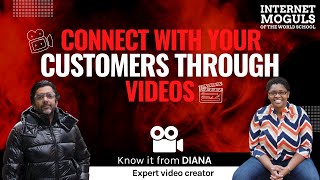
Diana Gladney talks with Avi Arya about how she helps entrepreneurs use video for their businesses. She covers her own journey overcoming camera fear, the equipment that works, and her coaching method for building an online presence through video content.
Doesn't matter who you are or how much success that you have, we all start from zero. And when you are really starting from day one, the first thing is to not compare your day one to somebody's day 1000. That's the best way to cripple yourself emotionally and even with the beliefs that you have is going to interrupt what you are trying to do.
Hey, guys, this is Avi Aria, father of two girls, six dogs, husband to a superwoman, a streetcar racer turned hotelier, now social media marketer and founder of Internet Moguls. Welcome to my channel. Ladies and gentlemen, boys and girls, it gives me immense pleasure to have announced to you one more Internet mogul. See, what we have been doing is traveling around the world and the last two years virtually and identifying people whose messages resonate with us. These are people who value their family above anything else and, and leverage the Internet to do massive things while being able to have location freedom and money freedom. Today's special Internet mogul is Diana Gladney. Diana, welcome to the show.
Thank you so much for having me. I'm pumped to be here.
Awesome. So, Diana, when we start the show, we have a format, right? And the format starts with the first question being a hero introduction because we believe everybody is a hero or heroine of their own life and, and they have to have an introduction that tells people why I'm different from everybody else. So I'm going to start with my hero introduction and I'll request you to tell us yours. Okay, Diana. My name is Avi Arya, father of two girls, six dogs, husband to a superwoman, a streetcar racer turned hotelier, now social media marketer and founder of Internet Moguls. Over to you.
My name is Diana Glady, a native out of St. Louis, Missouri, the youngest of six children to two incredible parents and an aunt to over 16 nieces and nephews. So huge family. And my passion is helping entrepreneurs simplify the video creation process because I believe everyone has a purpose and that if they leverage video, they get that purpose out there and help more people.
That is fantastic. I love it. The one thing that resonated with me the Most were the 16 nieces and nephews. Because I truly believe life throws curveballs and lots of challenges. Whatever happens at work, when we put the laptop screen down and we go back to the madness in the family, the nieces and nephews playing in the big family, we forget everything and we say, you know what? Life is beautiful. That was just one part of life which didn't work today. But everything else seems to be so beautiful. I have loved big families. Today, unfortunately, the world is getting more and more nuclear and people say I'm anxious, I'm depressed, and I'm all I'm saying, and I say these are triggers that happen when you feel certain parts of your life are not working. But when you go to the next room and you say hello to your parents, you say hello to your sister, when everybody's around you, things become okay. So find yourself that family. So I'm so happy and I can just visualize in my family in my head, you know, a big dinner at your place and 15, 20 people running around. And you're so blessed to be able to share that life. Diana, thank you for sharing that message with us.
Absolutely.
So, Diana, tell us a little bit. How did you get started into video creation and all of that? I love your background. I love the mic that you're using. Everything is so perfect. Were you always a perfectionist? How did you get into this? Tell us your background story.
Oh, absolutely. Well, to make everyone feel a little bit better, I absolutely did not. I've matured the equipment and matured the content and things like that just over the years in learning. So I started very much so ugly like everybody else, where you don't know what to do, you're very uncomfortable and just totally out of your element. I was never the person to be in front of the camera. I was always like, let me take the picture for you, or just recycling the few photos that I had around online. And I got started at the request of my business coach because I knew I wanted to get into the online space. I knew I wanted to get involved in sharing my message, but I wasn't sure how to do that. And so I hired a business coach to help me. And that was one of the first things that he said was that you needed to be visible using video. And so I went out and all around the house trying to figure out a ton of angles and nothing was really working. And eventually just settled on sitting in the car in 90 degree temperatures. So. And just, you know, I'm very nervous, just very much so out of my element. But I did that video and it was about 60 seconds long. And at the end of that video, I was like, you know what, it's not that bad. And so one video led to the next because he made me do a 30 day video challenge. And so over the next several months, I would upload a video that's maybe 60 to 90 seconds, a little bit longer sometimes and just continuously work on it and so the way that I eventually grew into increasing the kind of equipment that I use, making everything so much better is because I ran into so many problems like many people did. So that's something that helped me, was just identifying the problem and then trying to fix that one thing in the next video and just trying to improve every one little thing every next video.
That's fantastic. Thank you so much for sharing that. Everybody starts out messy and I love it. I can just visualize you in that 90 degree temperature in that car. And this is the only place I have to be able. No sound, nothing. And because the car have carpets. So your audio is all taken care of. Awesome. So tell us, I'd like to jump to see what equipment do you use now? Because you look fantastic by the way, and you sound fantastic as well. How does that happen?
So a couple things, I want to name out some makes and models for cameras and equipment, but it's just to say like the brand and then the model. So I use the Sony A6400 camera. The lens that helps to give the background blur, which is called like the bokeh, that is the 35 millimeter F1.8. And then the microphone, I'm using the Shure SM7B. It's very industry standard microphone. And I guess the sound kind of proves the why. And then to help with that, I'm using the Rodecaster Pro that adds different elements like help to reject some additional background noise and just a little bit more presence to the audio and some things like that.
That is fantastic. And tell us the headphone and why do you wear the headphone to hear?
Because sometimes you'll see people, they want such a clean look and they don't want the headphones to be visible. So these are just a regular iPhone, earbuds that come so I can hear. And that also helps because if you have audio coming out of your laptop or speakers, your microphone is also hearing that. And now you introduce echo. And the host is getting frustrated because like where's the echo coming from? Is usually the guest.
Lovely. And so, and your background, are there any RGB lights there?
Yes. So one of the lights is from ikea. It's about $40 US and it's just something small that lets you circle, circulate through a couple different colors. And then the other one actually is a regular LED light and it has a gel or filter over the top. And so this is usually what they would use before RGB lights became available. So you can just swap those out, usually get those at online Even just for like $8 or so. So that's what those two are.
That's fantastic. So tell us, you know, a lot of people before, see, we talk about your expertise, which is how to create videos and how to grow your brand using videos. But before that, a lot of people are crippled by the idea of looking at themselves in the camera. They don't like themselves. We don't in love with ourselves. How do we get over that?
I think it is something to be said about falling in love with yourself on camera, because in your mind you imagine yourself to be one version and the people around you kind of support that version of yourself, whether that's a job and a position and a role that you have, or in your local communities and the work that you do. And so you see yourself in your mind's eye of how you present yourself. Well, when you get on camera, you see from an exterior version, and when you're using the microphone and you're listening to yourself, you're now hearing something that's very different than what the body receives, which is just through your vocal cords and then your ears and how they hear it that way. So it's a very different experience. But you have to just get used to being on camera because the thing that has to drive you past the discomfort in those moments is really just going to be about why are you doing this? What's the core reason for why you're. You're actually showing up. And then over time, you'll get used to it. And so I've become very comfortable with my voice, become very comfortable with the way. In the state of the way that I look on camera. And I think that is just something of almost why people only look in the mirror maybe once or twice per day is because of some levels of discomfort. But when you're on camera, you're doing that probably almost daily. And so you. You'll come to grow into it.
Alrighty. So when it comes to finding your message, how does one find their message? What should I talk about? Like, I've never spoken on camera. Now after listening to Diana, I know what equipment to use. I know how to find my voice by doing practice. But what's my message? Am I really worth it? Most people have that concern.
Oh, absolutely. And I think that's normal because you're for the first time calling into question a belief system that you have and you're putting it to work. And I think your message is going to grow over time. And mine's definitely matured over time because if you're multi passionate, then you may start in one area. And I highly encourage everyone to start with where you are most passionate about what's something that frustrates you tremendously. We may watch things on TV or the news online and say, why don't somebody do something about that? Well, you may be that person that's supposed to start getting involved in your space or what have you and do something about it. And so, or something that just is really, you want to talk about it all the time and your family and friends are kind of tired. It's like, okay, we've heard about the baseball cards, like enough. There's a community of people that would absolutely love to connect with you about that and are just as passionate about it as you are or can glean some different insights from you. And so I always say start there, but that doesn't mean that you will finish there. And so where I started initially was to help entrepreneurs, primarily women, get started in how to start a business. Understanding and getting clarity around that and so that they can get stronger as far as personal development and things like that, to have some belief around them being able to do it. Well, that transition, the more that I got into video, I became more passionate about that. And so my audience also was growing with me. They were ready to make that transition as well. And so sometimes where you start is not where you finish, but it could be. But I always say start with where you're most passionate.
Lovely. That was fantastic. Now I found my message, I found what equipment I need and I've got open. I've started believing in myself, got a little bit of self love. All thanks to the last 10 minutes that I spent with Diana. Now how do I. When I go online and I start talking on Instagram or whatever, hardly anybody watching me how and, and I feel that it's, it's, what's the point? How do I get over that or increase my tribe or followers or should, you know, what would you say to those people?
Yeah, that's something that everyone deals with. And it doesn't matter who you are or how much success that you have. We all start from zero. And when you are really starting from day one, the first thing is to not compare your day one to somebody's day 1000. That's the best way to cripple yourself emotionally. And even with the beliefs that you have is going to interrupt what you are trying to do. Let that encourage you. But if any point it starts to deteriorate your belief system, step away from that. And the other Thing is to always centralize what you are doing and why you are showing up. Separate that from yourself. So when I show up and I'm doing a live stream, there's really. Sometimes I really just do not feel like it, but I'm not there for myself or because I felt like it that day. I'm committed to helping my audience in the things that I said I was going to do. So my focus stops being on myself and starts being on them and who it is that I'm designed to help. Now, in the early days, if nobody's there, it's okay because there's what's called the replay value, meaning that even though maybe somebody didn't show up online or somebody didn't see it initially when you post it, that has nothing to do with the success of what can happen. And most of the time, what happens for a lot of creators, which is later on when people have time in their schedule or later on in the day when it was best and most convenient for them, they will watch it. And some stuff like when it comes to YouTube, it'll show up later and that video will pop off. It could be six months, a year later, even two years later, and a video will take off and you will feel bad if you were like, well, I guess nobody's here. I'm going to just sit around. No, it's like, speak to the person who you're creating content for. And that's the only focus when you're doing that. So don't wait for a few more people to show up. Don't sit there and say, well, I guess nobody's coming, so no point in me giving the tips. No, sit and do your. Your podcast, do your show, do your Instagram live, whatever it is. As if there was that room full of people that will be there because if they watch it on the replay, you have to be in a position to ask yourself and truly answer. Do that. Do. Do your audience and those viewers, do they feel welcome or do they feel rejected?
That's fantastic. Diana, tell us about your work. What do you do? How do you help people? All of that.
So I help entrepreneurs simplify the video creation process. So when it comes to wanting to get started on YouTube, and the biggest problem and frustration is that you're a professional in your space. You understand what your business is about. You wrote the book already or you have several employees, whatever the thing is. And now it comes to introducing that into the online space. Completely foreign when it comes to cameras. And sometimes it can be difficult because you'll see those that are only photographers or videographers or somewhere there about. And that doesn't help because all you want to do is look nice on camera, sound great, present well, and get back to the business of why you're doing that. And my content helps them to do that. And so I offer coaching sessions as well as I do different speaking engagements. That's all about helping entrepreneurs leverage YouTube and online video so that they can share that message with the world.
That is fantastic. So people who are listening to this or watching this, have you converted what was once maybe your mess into your message?
So I'm going to ask for clarity on that to make sure I give the full, full answer. So what do you mean, particularly in the mess?
So there are two, there are two. There are two aspects to this. One is that my life was. I went through something messy and now I'm helping other people to sort out what was messy for me, which I cleaned up pretty good, and then now it's messy for them. So for, in your case, for you to be able to find your voice and to be able to get on camera and then how to do it and all of that, it was something which was alien to you and was very difficult for you. You figured it out for yourself and let me say 10 on 10 on how you did it. And now you're helping others to go through the same journey that you went through.
Absolutely. So I can definitely say from the mess to the message, that's exactly what happened. Because my initial focus early on, it didn't have anything to do with cameras or tech or any of the like. There may be some small discussions that we would have, but nothing to the magnitude of what it is now. And so the more I created a video, the more I recognized that there really weren't good answers or accurate answers out there for the problems that entrepreneurs were having as they're entering the content creation space. And so when I transitioned the content, it was really because it just, it was a need for it. And I was found myself to be more passionate about this than the previous thing that I was teaching about. And so what was neat about that was that now moving forward. And this is the message with video. There's a log, there's a history, there's a catalog of from the first video to the last video. And you can watch that progressive journey. So there's absolutely. From the mess to the message, that's exactly what happened for me in finding that more people need this more than they need the help with the personal Development, they still need those. But I'm just not as passionate about it to teach it. I believe I'm supposed to do this over here and transitioning and that's proven to be absolutely true in the right path for me.
So tell us, you know, talk to our clients or your prospective clients who might be listening to or watching this. Is there a step by step framework when you, when they get into your coaching? Tell us a little bit, a sneak peek into your coaching, what you teach them and how, how like maybe you can talk about the challenge or two and how you help them overcome that.
Sure, absolutely. So when somebody's just getting started, most of the time for most clients, they are that entrepreneur. You've had your business and you are experienced with that and you're trying to figure out the YouTube side of things in social media and it seems super overwhelming. So the first thing that we outline and identify is, is what is the message that you're going to bring or the problem that you're going to solve when it comes to YouTube? Because YouTube is a search engine, second largest search engine after Google. And if you type something in in Google, you will see YouTube videos that come up in search, sometimes above the written queries that'll show. And so we will outline what are some of the things that we need to create on that channel. And that starts with a copywriting framework that I learned from a mentor of mine, Ray Edwards, which is the pastor framework, which is about shepherding and guiding your people, but it's an acronym. And so that first thing that we always dive into, who is the person that you're trying to help, what problem are they having and what is their right now pain point that your videos are going to address. Because every video has to do a specific job, whether it's educating, entertaining or informing them or helping them and showing them how to do something. Even tutorial videos or something about a product for a company or service still achieves an aim. It has a purpose. So we go through and we think what are the things that your people are constantly asking you, constantly frustrated about? And then we figure out a way to outline the video strategy to make it make sense. So when people search for that, they come up as the go to resource on YouTube.
That is fantastic. Twice you mentioned mentors, a copywriting mentor and a business coach. If you don't mind me asking you before that, how old are you?
I will be actually 33 this year or this month rather.
Oh my God. Congratulations and advance on your birthday. I honestly, I mean, I would Love to, I love to compliment my guests, but you don't look 33 at all.
Okay, thanks.
But how do you. I mean, I love the fact that you already have coaches in every journey of yours. Why? And please tell our audiences why you needed coaches and why everybody needs a coach.
I can definitely give this credit to my mother and father because this is something that I saw them do and this is something that they taught me to do because they did not pretend as if they had all the answers. So they let you know, my high school band band teacher be my first, one of my first mentors or like even my middle school band teacher. And whatever area that I was interested in, I had to have like a mentor or a coach, somebody that was knowledgeable to help me along the way. And as I got older and as I moved into business, even as far as college and other stuff, I always had a mentor. There was even a book. It could be somebody like Napoleon Hill, who I really enjoy. His work can still be a mentor to you even though you don't actually know them. But when it comes to my life journey, there's always been someone there. And so mentors were always something that's been highly valued just in my family growing up. Something I've been taught to do, but something I've absolutely love to do. Because you can take your ideas to them and while they might may not vet every last one of them, it's somebody to bounce those ideas off of or someone that's going the journey already that can help to educate you. Not into the what to do's but the mindset that's required to make those different shifts and changes. So mentors have been like every step of the way. I could call a mentor name for anything from middle school up until today.
But when was it that you started your business and you hired this business coach to tell to when and when you did your video in the car.
This was five years ago.
Five years ago. And you had not started a business yet. How?
Yeah, no.
How did you invest money? I mean I believe in that you invest for everything. But what gave you the. Apart from your parents like you, you actually shelled out money to for that mentor and you didn't even have a business. People are like let me first make money and then I'll get it. But no, no, no, that's how. So how did that happen?
So I was willing to take away. So at the time I was just working a full time job. I was working in banking and I was willing to take away from my Paycheck because I didn't have like an exorbitant amount. I wasn't doing like exceptionally, exceptionally well off. But I was willing to commit and take from other things, you know, the next Netflix, Amazon Prime Video or whatever, and commit those funds, even fast food and stuff back to what something I believed in. So it was just solely like I believe in the what I'm supposed to be doing and I believe that this is the right person for me to hire. And so I started researching and looking online until I found someone that I that really resonated with their message and the content that they shared and things like that. And so I was like, okay, well I'm just going to take from my paycheck. So I didn't really have the money to hire them. They cost way more than what I would have expected. But I think every coach has for me. But it just was something I believed in it and so I was willing to put the money behind back of that faith.
Fantastic. I love that. Where do you get this work ethic from? Get everything right and you know, everything looks so, so perfect in your show and the way you show up. How does that. How do, how do. How do. Were you always somebody who was perfect at what they did? Oh, there's something that you learn through the.
No, I definitely can say that I think our essence of the who we are is always there. But there are certain things and events that bring that out of you. And so I really found, to be honest, my. I went to school on a full band ride scholarship and so band was always something I was super passionate about. And that if nothing else, completely revolutionized how I think about work and how much work it takes to produce something and that being like the song or getting the parts right. And so you go early in the morning before class, stay afterwards, come on the weekends and stuff like that and transitioning that into something else that I'm passionate about. It's the same kind of a work ethic. It's nice to say that those things came from family or. But you really have to do the work yourself. And so for me I found that to be something that was just something already there from band now applying that to something else that I'm super passionate about that you know, a couple years ago wind up having like a life threatening surgery and just a debilitating issue in sickness. And it really is a wake up call to when, you know, the doctors are telling me that you almost passed. Not that you could have, but you literally almost passed away. And so at that point things change. You don't the one days and the one day maybes those go away. And so it just became an all out consuming obsession to do what I love every single day. Not because I love it, but it's like, I don't know, it just, it just feeds into it every day.
That is fantastic, Diana. That brings us to the end of the interview. I have one last question to ask you. What are we going to see with this space of. I've never. To all the audience members, I've never spoken to Diana before this but I can just assume that you know, you know, you're a God loving person and you know, very important part of your everyday life because it just shows somebody who has a. My mom always says abhi, they will never, the storm may never end but you need to find the calm within the storm. And you spoke about the shepherd and all of that. So where with all the big ambition and the calm demeanor and I'm, and I say that as a fan, I love this because this is what I want. But for me, if I'm, if I have fire within you see it outside. I'm still working on having the calm outside while I'm fired up inside. But where do we see Diana five years from now? Like what's the matter goal, like what's going to happen?
I would love to say that I've had a level of significance in other people's lives to where I can go and watch their work. Like I can go and click on their channels, I can go to their websites and see their videos and see how video has impacted. And thankfully that I'm seeing that now with different clients, people in the community. But I'm just like on a massive scale because we have to think about like the Internet is global. Literally like with something as simple as a Gmail account, they have free website stuff that you can use a ton of things. You literally can become a global entity. And so I want to see where more people are impacting. Not like they got their camera stuff set up and that looks great, but the message that is coming through the camera and those people are making significant changes in their industries and just capturing weapons are able to make that significant change. And then that for me like, and I get it, it's five years, a short amount of time, but a lot can happen in five years and these last five years have proven that to me. So a timeless message if you will. But I'm just looking for more impact and more significance through the work that I'm Doing and seeing that in other people's lives.
Lovely. What is our communities? Everybody is called the Internet moguls. What is your message to the Internet moguls, people today who are slightly fearful, full of what may happen with all the crazy stuff that's happening on around the world, they're looking at online people just like yourselves and say, can I also leverage the Internet to make something.
Of myself, of some level of fear? The fear is only something that's worth acknowledging, but not something that's worth honoring. Meaning unless it's something that's going to save you from a life threatening type of a something, then it's something that is worth acknowledging. Otherwise, you want to honor the passion, the purpose, the reason why you're here. That has to always be bigger than the fear that you're having. Because showing up and doing the online stuff, we all started from exactly where you may be starting right now, sitting in a cubicle, listening to the podcast, watching the video, whatever it is and wondering. But the only difference the online stuff, we all started from exactly where you may be starting right now, sitting in a cubicle, listening to the podcast, watching the video, whatever it is, and wondering. But the only difference that takes you from there to here is a belief in yourself and that that is bigger than the fear that you're having in this moment. So always, whenever you have a fear that comes up and it rears its ugly head, you can always beat that giant up by looking it dead in the face and acknowledging it. And that is it something that I need to be concerned with because if not, I'm going around you and that's all that you really need to think about. Every step, every step, every day, just reconquer that fear.
Lovely. Ladies and gentlemen, boys and girls, I hope you loved every second of the 28 minutes and three seconds that we spent with Diana Gladney listening to how you get over fear. How do you create your first video? How you continue finding your mess and making it into your message and then amplifying your message with videos for all of you, people who are looking, entrepreneurs who are looking for a coach who can help you go from where you are today to the amaz Amazing opportunities online with video. I'm going to put the links to be able to find Diana and get into her coaching program. Thank you all for watching once again, my name is Abby Arya, father of two girls, six dogs, husband to a superwoman, a streetcar racer turned hotelier, now social media marketer and founder of Internet Moguls. Signing off for now you show me how to spread my way.
More from Avi

The strongest mindset doesn't begin with meditation. It begins at home. Before you conquer the wor

The strongest mindset doesn't begin with meditation. It begins at home. Before you conquer the wor

Your mindset isn't something you fix once. It's something you train every single day. Just like yo

Don't build a company just because your friends are. Build one because you're ready. A startup is

Everyone dreams of becoming the boss. Very few understand what that really means. The moment you b

Most entrepreneurs say, "I don't have time for coaching." The truth? You don't make time for what

Over hiring doesn't always solve problems. Sometimes, it creates them. Having a small buffer in you

"The highest-paid" isn't the goal. The highest-value is. People often ask why premium mentorship co

The founder will always be a bottleneck... at some stage. The goal isn't to pretend you're never th

People ask me how I stay consistent with my morning routine while traveling across countries and tim

People ask me how I stay consistent with my morning routine while traveling across countries and tim