How does a Website Design for your Hotel Guarantee Outstanding ROI?
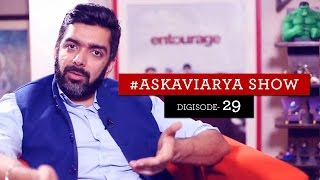
Avi Arya breaks down how hotels can use website design and digital marketing to drive revenue. Mobile optimization, video content, and social media reduce bounce rates and boost conversions. Standalone hotels face steeper challenges competing with larger chains for ROI.
Hello and welcome to another episode of the Askavyariya show. Today, as usual, as for the new format that we started only in December, we are going to talk about learnings from the Gita. We're going to talk about the seven puppies, how they're doing and how to take care of your dogs from all the dog lovers who are watching this show. And we're going to get into the core of the subject on 2016, digital marketing and, and we're going to talk about how to unbounce your visitors to make sure that your bounce rate drops and you start getting more conversions on your website. And then we're going to take some video questions which have been pouring in from everywhere else and that should be interesting and I'm looking forward to seeing them. So let's get into the show, the Gita section, it focuses on our learning. See you know what? In our office, in our day to day life, it's my personal firm belief to say we need to like we clean our bodies every day. We need to clean our mind and to clean our mind, we read, we talk to people, we look at YouTube videos. I do that every day. And I like to bring forth to the viewers of this show some of the things that made the maximum impact to my life during that day. So what I read recently was it's a story. There's this guy who goes to a more learned person, like a saint or a guru, and he says, you know what, Guru? I am moving to another city. I'm moving to New York. Can you tell me how my life is going to be there? Am I going to be happy? So the guru asks him, first tell me, are you happy where you are? He's like, not at all. I'm not happy where I am. The people are not good, the surroundings are bad. It's very negative. I'm not happy where I am. But can you tell me, will I be happy when I go to New York and what kind of city is it? The guru says, new York is not for you. Don't go there. So the guy gets his answer and he goes back. All this while that the guru is talking to this disciple of his, there's another person who's listening on. He works at the guru's ashram and he's listening on. Next day there's another person who comes and says, hi, Guru Guruji, we heard so much about you. I wanted to talk to you about, you know, my move, I'm moving to another city. He said, where are you going? He said, I Think you're going to New York? Do you think it's a good place and I'm going to be happy there? So the guru asked him the same question. He said, are you happy today and where you are? He said, oh, I'm ecstatic. I've got awesome friends, I've got an awesome family. My work culture is great. Everything is awesome. How do you think New York will be for me? The guru looks at him and replies, you must go. You be extremely happy over there. It's a great place to go to. All this while, the disciple is now confused. He's like, yesterday this guy came to the guru and he asked him. One guy asked him, should I move to New York? Is it a good place? I'm getting an opportunity? And the guru said, no. And today somebody came and the guru asked the same question or a similar question. And the guru said, new York is a good city for you. Let me ask. So he goes and asks the guru, why is it that different answers to two different people for the same city? You know, like yesterday you said you won't be happy. Today you told this guy you will be happy. So Guru says, happiness or not being happy does not depend on the city or your surroundings. It depends on how what you're inside. So the guy who came yesterday was not happy with what is inside him, and so he was not happy with what's happening around his life. So going to New York would not have changed anything. He would have been as miserable. But for the guy who's happy and he's happy inside and his surroundings are happy, when he goes to New York, it's going to be an equally awesome experience for him. This set me thinking every day in our work lives, in our family lives, as we go around with our, you know, spending our time, spending our time, which is infinite, we are meeting a lot of people. We're creating karma. We're doing so many things. Are we going to be happy? And we're looking at the future to be happy, but think. But this story taught me to say, if I'm happy today or if I'm working to become happy today, I'll be happy wherever I go. I just thought it's a great story, and that would be a good footnote to start the show. I hope you enjoyed the story. Today we are going to talk about spaniels. So I've had spaniels in the past, and I have a beautiful, beautiful cocker spaniel. He's about 12 years old now. And that's his photo. His name is Dude. And so if you're planning to get a spaniel, you know, and if you're planning to get a dog for the first time, it's one of the best breeds to get zero maintenance. I mean, they shed a little bit hair here and there, but you can, you know, shear them once or twice a year. They do feel hot in the summers if you're living in a hot place like India, very easily adaptable. They love kids, they love your parents. They'll. You can take them for vacations. Very easy vaccination. Immune system is absolutely fine. They love running. You can take them for your walks. They like to come with your company for you over the walks. And they, I mean, every dog is loving and loves back, but these people are very expressive. They express their love back. So Cocker Spaniel, if you're looking at Cocker spaniel, if you're looking at a dog like dude, if you're looking at other dogs like the ones that I showcased in this picture, go for Cocker Spaniel. They're the best, best dogs you can ever get. How to unbounce, bounce and unbounce. Very common digital term, the bounce rate. Again. I wrote an article on LinkedIn and I love writing on LinkedIn. You know, LinkedIn posts, they reach out to hundreds of people. You get, you know, this Post got some 129 likes and some shares and comments and all of that. A lot of backlash because a lot of people said, we're still talking about bounce rate in today's day and age. The easiest way to understand what is happening on your website. So just today. And I like to keep it relevant, I like to keep it current. Just today in the morning I got a call from this client of ours who got this unbelievable resort in the Andamans and I've not been there. He's been inviting me for a long time and he said my website traffic is not growing. We've been working with the company for two years and the website traffic is not growing. It's reached a certain high with 40% growth in the first year, another 20, 25% next year. This year is not growing. And what's going to happen in the future. So when we checked and we got back to the client, we realized the mobile site is not responsive. And the reply from the client at this point in time was, I saw data. Most of my customers are booking from desktops and the website is just a referral point. So let's not talk about the mobile website. Well, if you don't talk about the mobile website. If you don't make it responsive, you will not be able to do your entire digital marketing and make your SEO work. Google has made it apparent, Google has made it clear, Google has been firm about the fact that sites which are not mobile friendly, sites which are not mobile optimized, websites which are not made for the mobile devices are not going to be given preference. If the algorithm has stated that clearly, then despite your amazing design that you might have spent money for to fire the best design company in the world, despite the fact that your meta tags are perfect, despite the fact that you're off page on page, whatever you're doing for your SEO is great. Despite the fact that you've done your image search and you must do image search, your website will not perform unless you keep in mind your mobile strategy. Point number one. Point number two is what to do next if you've done all of this above. 2015 we spent advising clients on image search. So every hotel that we advised hired photographers, hired their photo teams and they got couple of hundred pictures for their restaurants, for their spa, for their front office, storytelling pictures. Then they watermarked these images and then they backtagged these images and uploaded them on the Internet, not only on Google, but on Pinterest, on Instagram, on Facebook. Because there is a social connotation to SEO as well. And the results were fantastic. Point number three, videos. As I've mentioned time and again, 2018 is going to belong to only videos. We're getting into. 2017 is the right time. We won't be, we're not late, but we're not early as well. For all of you viewers out there, if you're an individual marketer, if you're working for a brand, if you're a general manager for hotel, a revenue manager, or you know, you're running your own company, you're a startup or you're a huge brand, focus on your video strategy. If you have short to long videos for your brand and you're promoting them, you're backtracking them, you're promoting them. All of these things put together will ensure that your SEO rankings go up. It will ensure that your bounce rate goes down because your customer is more engaged today. So these three points are crucial today to get your website ranking out there. So It's a whole 360. You cannot just have a great design, you cannot just have little bit of SEO, you cannot have only image search, you cannot have just your YouTube videos working for you or your video strategy working for you. You have to have all those corners covered. Because you know what, when you started five years back or 10 years back in digital marketing, just doing a little bit made a huge change. But today, if you don't cover the entire compass, if you don't cover the entire spectrum of things, your SEO is not likely to move to the next step. So if you're being advised by a consultant or if you're a consultant yourself, if you're a brand or if you're helping somebody become a brand, please ensure that everybody realizes that Google, Facebook, all these channels have become even more prominent. At the same time, the number of people promoting their brands, their hotel, their travel company, their Personas, their mobile phone company, their underwear company, their whatever on the Internet has quadrupled, has gone up by 4,000% in just the last two, three years. Everybody's on the Internet. So the competition has gone through the roof. But the good news is whatever I've told you through this section of this video that you have to do everything unfortunately is not been done by everyone. People are just taking a piece here and there and trying to, you know, get the whole result of get ROI from the campaign. It's not working unless you do everything. So if you want to choose to be smart enough in 2016 to choose everything, to choose the right path to do a little bit of everything, that will make your digital strategy rock and that will guaranteed, give you the revenue that you're looking for. That will guarantee, ensure that you have less bounce rate. That will guarantee, ensure that you have more conversions. I hope this video helps. Please send me your comments, let me know what you've done, what changes you made for your digital strategy. So we can make, we can guide you, we can help you through this show evolve and get into an awesome revenue making 2016. Thank you for watching this section of the Ask API Arya Show. Let's do the questions now. I believe there are three questions. Let's do that, Abhijit.
Currently we are investing a lot of money into digital marketing, but we believe that we are not getting ROI against that money invested. Do you think in the next five years with the increasing investment into digital marketing is actually going to get us the ROI which hotels expect?
So this is an interesting question. ROI, how do I get ROI? How do I measure ROI? And is it measurable? Of course it's measurable. 100% it's measurable, it's data and it's available out there. How much money you're putting in, what are you getting out of it? But please factor this in your Mind Internet marketing, social media, SEO, Facebook marketing, reputation management, website, mobile, shooting videos, all of these are different channels of communication. Now once you understood that, once you got that in your mind that these are channels of communication, they're different channels of communication. Like in the past was the newspaper. I like the way I'm calling it the past. As a few years back, we were only dependent on newspapers like the TV was. Now TV is used for all startups or new hotels. All companies are using TV to launch and then once in a while to, you know, to get some momentum going, some traffic going. But mostly it's the Internet. And the Internet ROI happens. And listen to this carefully, the Internet ROI happens and happens only when you do the entire 360, when you do the website, when you do the mobile application, when you configure the loyalty program. See, because it's just one more channel of communication. So you cannot ask it to work in isolation. I put in say $10,000 into running a paid campaign on Google or I put in $5,000 on a Facebook campaign and I have not got 10,000 or $20,000 out of my 5,000 investment. Can that happen? Of course that can happen. In many cases it does happen, but it happens if everything is mapped. Because the person who's coming to your ad might also go to your call center and call you. Is the call center ready? Have they been trained to know where the query is coming and what answers to give? They might email you. Are you ready to reply back to that and you know where it's coming from. They might even ask you, they might want a live chat right there for somebody. Today, all OTAs, all major companies, all startups, and all large e commerce sites are putting in chat options. Why? Because everybody wants a human interface. So it's going to be offline and online together, working to make a deal happen. So you have to factor in all those things together. So unless you have all things, all communication channels, not just your social channels, not just chat, not just email, not just call center, not just your revenue management. Unless you have everything working in sync, you cannot measure roi. But if you have all of these things working in sync, you will definitely be able to measure ROI. And I'll tell you how you said you spent $50,000 in the whole year or per quarter or $10,000 for a campaign. And once you put all these factors putting together, because the customer might use your social media campaign as an entry point to your brand and then might go to another point, your offline, your newspaper, your tv, your Call center, your email, your chat, your reservations executive. So if all of those things are in sync, then your customer will be converted. He might not be converted on just that channel. Please try to understand what I'm trying to say. If he's coming from Facebook, he might not just stay on that Facebook landing page and give you a confirmation and saying I love your deal that you've shown me for the hotel and I'm going to convert right there. He might go elsewhere to TripAdvisor. Is that optimized? Do you have best pictures over there? He's going from there to the OTA. Do you have 80 plus pictures today? OTAs are allowing you to have so many pictures. Is that done? He goes to your call center. Does your call center know what is the website only offer you can give or the website only value creating offer? Because your OTAs and your other channels are maybe giving the standard packages and you have rate parity and all that to deal with. But when it comes to direct.com, you can give your value offer to say that a spa deal which is available only here or there's a breakfast deal which is available only here of free high end wi fi or you know, amazing 4G Wi Fi is available only if you book through the website. If all of these things are in sync, then the revenue is applicable definitely there, but not if it's working just in isolation. I hope I was able to convey that point. If you have still have more questions, if you have a specific campaign that you want to discuss, please give me your message on the comment section below and we will get back to you. Thanks for watching this part of the Ask Avyaria Show.
Hi Avijit, how are you? So I have a question for you for your Ask Avyaria show. The question is for social media marketing. I have a lot of issues with the footfalls that we can generate for restaurants or events. So I would like to hear some tips from you on how we can generate footfalls from social media, especially Facebook and Instagram. Thank you.
Hi, I wish I got your name but thanks for the question. Events Facebook started with Facebook events Instagram because of the channel being so vibrant, so colorful and now with the 15 second videos, these are just great channels for promote events and I don't know why you're saying that you've not been able to experience a lot of footfalls through these channels. Where in I would say that if you plan in advance, look at the search patterns and target your demographics perfectly. For example, if you're doing an event if you're launching a nightclub or what have we done in the last one year? My God, it's been almost the end of the year, 2016. Scary how time flies. So we've launched nightclubs this year. Nightclubs. Multiple nightclubs. We've launched a few humongous new hotels with their Teppanyaki bars and we've launched some celebrity chefs coming into this market. And at all of these launches, we created the events on Facebook, we accelerated it with the help of complimentary channels like Instagram. When I mean complimentary means that they're complimenting the campaign and not doesn't mean that it's necessarily free. In fact, I don't believe in free. You pay. It's so inexpensive in today's day and age. There will be a time when we'll be sitting and saying, my God, you used to be so cheap at one point in time. Right now it's very inexpensive. It's easy to try. You must try all these channels. So coming back to the point, create your event on Facebook, invite people at the same time, use a complimentary channel like Instagram for visuals and all of that and then do video ad campaigns on different channels, on Twitter, on Facebook videos, and make it make, make, make the whole 360. That's when you start seeing that a person who goes to Facebook and now he's talking to somebody on LinkedIn and then he goes to a Twitter and then he goes to see a Facebook video. So the whole life cycle of that target audience. So if you're launching a nightclub and you're typically targeting the 18 to the 30 year olds, you need the youngsters to come in, but at the same time you need 30 year old people as well because the youngsters may or may not have that much money to spend in a fancy nightclub. Because one of the nightclubs we launched this year was the upmarket one. So they wanted people to spend money and just not youngsters there. So we targeted both the 18 to 25 and then the 30 and above. Now these people in that 24 hour cycle, or let's go back one step and saying in a one week cycle from Monday to Friday, so you say if you have a launch after 10 days or 15 days and you see in those 15 days is there any festival, is there any major event happening? Where is your target audience going? Is there a cricket match happening? Is there a huge Bollywood blockbuster or a Hollywood blockbuster coming? Where is that target audience going to be busy? And accordingly I will choose spots on those sites to Give banner ads for my event. So basically start with an entry point, start with intermediary points and start with exit points. Like I've always said, you cannot just go into one channel, get an ROI and get out of it. Focus on the customer and his journey throughout 24 hours. Focus on the customer, your prospective guest, your visitor, the person who's going to give you that click and that booking, his 24 hour journey, his one week journey, his two week journey. In this case, it's a two week journey before the event. Make sure you know which are the events happening, which are the movies coming, which is a cricket match coming, which is a soccer match coming. Prospective guest going to be before the launch, online, I mean, and then wherever he is, start posting your ads using those channels. Don't let the audience miss you on any of his preferred channels. Then you see the magic of social media unfold. You will definitely get footfalls. Try this strategy and if it works for you, please come back and comment and let us know that it did. Thanks for the question by the way.
Hi Mr. Arya. First of all, I would want to thank you for putting together such a great show. It's been a very learning experience. Now my question to you is that recently I have been noticing a lot of OTAs and travel companies running a lot of ads on Facebook. I see it on my timeline every now and then. They are promoting their offers, they are promoting their packages. I am also getting a lot of information, where to visit in India, what are the top 10 places where I can go, exotic places, others don't know. Lot of information is coming on my timeline and it has never been the same before. I mean they are way more aggressive. If I talk about advertisement, I've been reading a lot of case studies and I found that they are also getting ROI through running these campaigns. Now my question to you is that if travel agencies and OTAs are able to generate ROI through running these campaigns, why hoteliers are not able to do it successfully? There are few hotels who are able to do it. Chain hotels, larger, bigger hotels. But then as far as standalone hotels are concerned, they are not able to generate ROI through social media successfully. Okay? The branding is there, brand awareness is there, engagement is also there. But as far as the ROI is concerned, individual hotels, especially standalone hotels, they are not able to be on the same platform as their counterparts. So what is your opinion on this? What should be the strategy to be followed to ensure that. Okay, everyone is getting the pie. Everyone is getting a share from the pie. That's my question.
Excellent question. I love the fact that a pertinent question like this has been brought to the fore. But I'm also sad about the fact that every year a question like this comes on the Askavyaria show. It just means that brands and brand consultants and agencies somehow have not been able to iron this out. You know, this has been going on for such a long time. Social media is not new. Social media has been going on for such a long time. Anyway, let me, let me try not to get frustrated with the fact that the agency and the brand are not finding common ground and try to answer this question. Okay, so social media is not new. This has been happening for a while. Brands tend to keep close to their chest, close to their heart, their brand guidelines. They're very wary of the fact that brand guidelines need to be followed and they explain their brand colors, their brand verbiage, their brand positioning as well as they can to the agency. Now, in one case, they fear Chinese whispers trickling in and, you know, ruining some part of the brand. I get that. But the other part where the brand must understand the brand and the brand consultant or the agency or the digital consultant or whoever's working for you, maybe in house, your in house team needs to understand that these are strict guidelines to work under. But in no way, in no way does that mean that you cannot experiment with channels that are, that are crying out seeking experimentation. Now. How can you not experiment with Facebook? How can you not experiment with Periscope, with Meerkat, with real live streaming, with events, with channels that are, that are crying out seeking experimentation now? How can you not experiment with Facebook? How can you not experiment with Periscope, with Meerkat, with real live streaming, with events, with you can. They're all mediums and they all coming with different features, so you will be with. You can. They're all mediums and they're all coming with different features, so you will be experimenting. The brand will never be ready. I have not come across one brand working with 15 countries, over 500 brands in the last eight to 10 years. I have not come across even one brand which is future ready because, and it's not, I can't blame the brand. The Internet, all these experimenting. The brand will never be ready. I have not come across one brand working with 15 countries, over 500 brands on the last eight to 10 years. I have not come across even one brand which is red, which is future ready social media channels. The periscope, the meerkat, all of these are evolving so bloody fast that you Cannot keep pace with them. So you cannot be future ready. At the same time, you need to be experiment. You need to be ready to experiment. But when you ready, all you need to do is to make sure that the verbiage, the brand colors and the positioning is because, and it's not, I can't blame the brand, the Internet, all these not compromised. So if it's a brand like a very luxury car, which is only for the high end market, or a very high end hotel brand, which is saying that we, you know, we say we sell, we have $500 suites and you know, those kind of, you cannot, you cannot, you cannot have a cash, social media channels, the periscope, the meerkat, all of these evolving so bloody fast that you cannot keep pace with them. So you cannot be future ready. At the same time, you need to be experiment. You need to be ready to experiment. But when you're ready, when you all you need to do verbiage for these people, you have to keep it dignified, you have to keep it regal, you have to keep it royal, you have to keep it, but at the same time you can personalize it. Keeping it regal, keeping it high end does not mean that you cannot have a personal communication with your audience. End of the day, the brand consultant or the agency needs to understand that they're dealing with people. What kind of people are you dealing with? Are you dealing with the 18 year old who's wearing sneakers and doesn't mind you backstrapping him and using whatever verbiage in fact he prefers it. He's a Twitter generation. You talk to him the same way. But if you're talking to a high end brand, who is to make sure that the verbiage, the brand colors and the positioning is then that brand verbiage, that those brand colors, those brand positionings need to be adhered to. Like for example, you meet an uncle or an aunt and you meet your teacher and not compromised. So if it's a brand like a very luxury car, which is only for the high end market, or a very high end hotel school, the teacher might be the same age as the uncle or the aunt, but you greet a teacher separately with the uncle or the aunt, you have a, you, you still treat them with respect, but you have some kind of brand which is saying that we, you know, we say we sell, we have $500 a formal communication with them, but you do not have a formal communication with your friends. But you might have a formal communication with your friend's elder brother, who might be of A certain age or the elder sister might be of a certain age. So communication can remain the same position positioning can diff sweets and you know those kind of. You cannot, you cannot, you cannot have a casual or positioning can remain the same as per the brand guidelines. Communication can differ depending on the sub brand. I hope I've not, I hope I've been able to explain to you by using the example of the aunt and the teacher and while you're addressing different geographies and different demographics, how you as a person start talking to people differently, Keep visual verbiage for these people. You have to keep it dignified, you have to keep it regal, you have to keep it royal, you have to keep it but at the same time you can personalize it. Keeping it regal, keeping it high end does not mean that you cannot those respect parameters in mind. Keeping those parameters of communication and you know, social norms in mind. You talk to different people, but you're still the same person and giving a different positioning while you're talking to different people. So is a brand, A brand is a real life person. While it has some connotations to it, while it has some regulations, it is talking differently. Have a personal communication with your audience to different people who are eventually going to become their paying customers. So this is my answer to your question and I would love to hear more from you on this. Please feel free to comment on our show and we look forward to being able to get into a dialogue and help you solve this problem better. Thank you for your question. End of the day, the brand consultant of the agency needs to understand that they're dealing with people. What kind of people are you dealing with? Are you dealing with the 18 year old who's wearing sneakers and doesn't mind you backstrapping him and using whatever verbiage in fact he prefers it? He's a Twitter generation. You talk to him the same way. But if you're talking to a high end brand, then that brand verbiage that those brand positionings need to be adhered to. Like for example, you meet an uncle or an aunt and you meet your teacher in school. The teacher might be the same age as the uncle or the aunt, but you greet a teacher separately with the uncle or the aunt. You have a. You still treat them with respect, but you have some kind of a formal communication with them. But you do not have a formal communication with your friends. But you might have a formal communication with your friend's elder brother who might be of a certain age or the elder sister might be of a certain age. So communication can remain the same, positioning can differ or positioning can remain the same as per the brand guidelines. Communication can differ depending on the sub brand. I hope I've been able to explain to you by using the example of the aunt and the teacher and while you're addressing different geographies and different demographics, how you as a person start talking to people differently, keeping those respect parameters in mind, keeping those parameters of communication and, you know, social norms in mind. You talk to different people, but you're still the same person and, and giving a different positioning while you're talking to different people. So is a brand. A brand is the real life person.
More from Avi

The strongest mindset doesn't begin with meditation. It begins at home. Before you conquer the wor

The strongest mindset doesn't begin with meditation. It begins at home. Before you conquer the wor

Your mindset isn't something you fix once. It's something you train every single day. Just like yo

Don't build a company just because your friends are. Build one because you're ready. A startup is

Everyone dreams of becoming the boss. Very few understand what that really means. The moment you b

Most entrepreneurs say, "I don't have time for coaching." The truth? You don't make time for what

Over hiring doesn't always solve problems. Sometimes, it creates them. Having a small buffer in you

"The highest-paid" isn't the goal. The highest-value is. People often ask why premium mentorship co

The founder will always be a bottleneck... at some stage. The goal isn't to pretend you're never th

People ask me how I stay consistent with my morning routine while traveling across countries and tim

People ask me how I stay consistent with my morning routine while traveling across countries and tim