How She Started Earning 6-Figure Income in Just 2 Years from Youtube @Premiere Gal
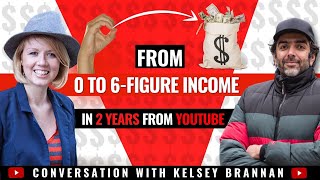
Kelsey Brennan, known as Premiere Gal, talks about building a YouTube channel to six figures in two years. She covers her content strategy, monetization methods, studio setup, and how she engages her audience to grow.
You don't need the latest gear. So if you just have the use of your phone, if you get to know that like a pro, don't worry about the latest gear that's coming out, like you don't need it. You just need good lighting. Like if you have a nice window, like if you have good lighting, you don't need to worry about getting the latest camera.
Hey guys, this is Avi Arya, Father of two girls, six dogs, husband to a superwoman, a streetcar racer turned hotelier, now social media marketer and founder of Internet Moguls. Welcome to my channel. I always say the shortest distance between two human hearts is always a story. You tell a perfect stranger your story and you win a heart for life. And all of us in the content generation space, meeting people, entrepreneurs, we want to win hearts and have them understand our story and our journey. I told you in our correspondence who I am. My name is ABHI Arya, father of two girls, six dogs, husband to a superwoman, a streetcar racer, turn hotelier, now social media marketer and founder of Internet Moguls. And now for our audiences, Kelsey, what's your story?
Wow, the six dogs thing, I can hardly manage one. I'm also a dog mom. Love it. My story is I, I'm a, I was a shredder, a shooter, editor, producer, full time and I started training some of the staff in my position and I really enjoyed sharing tips and tricks and helping people evolve. And so during my job I started a YouTube channel where I was teach tips and tricks that I thought that they would find useful. So I was giving back to sort of the shared community, the shared online community that I feel a lot of us learned from. And I had no idea that it would end up becoming my full time job. And so I've actually started my own company around the YouTube channel, hired a few contractors to help with the editing and I'm kind of in a growth phase right now, but I still put out weekly content just to help people become better video creators.
Perfect, perfect. And maybe know the name of your puppy.
Oh, that would be helpful. The YouTube channel is premiere Gal and you can, you can find it just YouTube.com premiere gal. That's where I post most of my content. But I'm also on the other socials, can find me on Twitter, Instagram and if you guys have iPhones. I recently jumped on Clubhouse as well.
Lovely. Awesome. So and what is your dog called?
My dog's name is May, like the month of May.
Lovely. Lovely. What breed? How old? Let us visualize him.
Yeah, It's. It's a girl. She's 10 months now, and she's a Labrador, a kind of blonde Labrador. And she's. She's a handful. She likes to eat a lot and she needs lots of walks. But I kind of escape from her for a short period of time when I come into the office to do some filming and stuff.
Yeah, I can only imagine that. Alrighty, so we're going to get in. Thank you for your introduction, everybody. Today. In the last six months or so, YouTube has seen many more millionaires and they published many reports. YouTube millionaires, YouTube creators who are being able to live a life of freedom from anywhere in the world, immigrate to any country they want, work from the beach, whatever. As long as they're creating videos, they have multiple ways of monetizing a channel that is making more and more businesses and individuals interested in how this YouTube journey works. So for all the audiences over here, most of us are fresh on YouTube. What would be the starting point you would suggest to everyone for YouTube for.
Getting started on YouTube? If you want to use it as a platform for monetization and to make money from, you know, start working with partners at the beginning so you can say, hey, like, I really love your tool. If you can give me a free copy of it or something, I can make a video about it. So that's kind of what I did, is I was still teaching how to do video editing production, but I was smart in the sense that I reached out to cool companies that I really liked and did some free marketing for them. And eventually that relationship built up. So now I have sponsors in almost all of my videos and they're able to do ad integration spots inside of my videos. And because YouTube monetization, once you get to a certain level, it, you know, it gets pretty good. You get a. It depends on your cpm, which is how much money you make per. Per million of views, I believe. And I guess just like the one tip I would have is just kind of be open to these possibilities and doing a lot of work up front, and then you can start to strategize as you start to get response from your audience.
So you're saying people in your industry who have tools, and everybody has affiliated tools that they. So you reach out to them, tell them about your channel, tell them about your audience, and they might be collaboration opportunities where you get paid to feature their tools in your videos.
Yes, that's. That's it. And there's different ways to monetize your videos. You can do A direct ad integration where you kind of fit their product nicely into your video. And I would recommend, you know, just doing products and tools that like you use because it just is way more authentic. You know, it doesn't make sense to just like reach out to random companies. It should be related. Or you could do affiliate marketing. Sometimes I do hybrid models where we negotiate an upfront sponsorship fee and then affiliate links as well. So that way you can continue to promote that video and feel like you're incentivized because you're like, oh, there's, there's more passive income down the line. So I may want to, you know, promote, promote this video in the future. So, yeah, part of my business models is each month finding, filling in the slots. And we're pretty much already booked until September right now with content. So a lot of times I'll book the sponsor and then I come up with the idea later because sometimes I'm like, I don't know what I'm going to do that week. You know, it's kind of week to week content. It's like fun Run and gun and it's an adventure. Like I'm just finished the video for this week and I had no idea what I was doing a couple days ago. It's kind of an adventure each week. So if you're up for something like that, it's kind of a thrilling gig in the sense that you're like, I don't know what's coming, but let's roll with it. And you kind of have to have that attitude with it, you know?
Got it, got it. How much time? When can you start sort of making YouTube dollars? Like you need a minimum threshold of views and subscribers.
Yes, I know that YouTube changed their rules recently where you need a certain amount of subscribers and views to actually start making money. When I joined YouTube in 2016, there was no minimum for it to be able to apply to be a YouTube partner. I don't know the exact numbers. Any of you guys watching can just do a quick Google, like, how many subscribers? How many views do I need? How many? Watch time. Watch time is like one of the most important parameters right now because you know, if more people are watching your content for longer, YouTube is going to suggest it. I forgot the original question. Arpi, what was it again?
That's all right. That's. That's all right. You did answer it. You know, how much time? So my question leading to this is when did you start getting your first check and how much was that first check? Just to excite.
How is it I got into the details? Yeah, gosh, in the beginning I was just making a few dollars, like $20 here and there. And then as I hit around 10K subscribers, that's when I started to see more. And about my second year of YouTube I think it started to get closer to a thousand per month and then it just continued to grow from there. If you go to Social Blade, it'll, if you put in a creator it will tell you an estimate of what they earn and sometimes it's like between like $150 to like $8,000 per month. And the reason why it's such a broad range is because everybody has a different cpm the how much you earn per thousand of views. So I think right now mine is quite high. I earn about $22 per thousand views because my content, a lot of people are watching it thoroughly. They're not just coming in like I'm not just like a vlogger where people are like, oh, I just want to watch a couple minutes. It's like a lot of people repeat watching and SEO driven because it's like how to do something. So that's a really good way of building a channel around how to do things. Like even if it's just how to grow a garden better, like what soil to use, like those are things that everybody is searching for on Google and Google owns YouTube. So it's a win, win.
Lovely. So the how to strategy is what works. So you're saying that you're cognizant of the fact that your headline subtitle description and the video format is a how to is answering a how to need in a step by step format. So maybe you talk about this, you know, in this video I'm going to talk about three things and then you talk about the three things and then you summarize it and then if you want more, if you want more information, go to the description. Can you sort of run us, run us through the format that you use for most of your videos?
Yeah, most of my videos, the most work goes into my pre production which is the research, finding the idea and then scripting it out and coming up with the procedures that I want to give people to learn. And, and I love doing that because it's very scientific. I really love science. And when I was young in school and you had to write out procedures for your scientific method and so I kind of do the same thing. I'm like, okay, if I was going to have somebody literally follow me, how clear do I have to be. And then I kind of add a little bit of personality in there. But basically it's a fun intro, kind of showing the effect usually. Or it's me saying in this video we're going to learn how to shoot Mobile Pro. And then it cuts to an intro and then I'll be like, hey, introduce myself, say what's going to happen, Kind of do a preview shots of what's to come. And then I usually say that my time codes are below because in YouTube you can put time coded chapters so people can skip around. So I like to say, hey, if you guys are in a rush, you know, no worries, you can skip around. Pause, take it slow. Because I think some people have left comments in previous videos where they're like, oh, it's too fast or it's too slow. And I'm like, dude, there's like a pause button like you can use anything you want. So, you know, listen to your audience too, like, and treat them like humans. Because at the end of the day it's like we're all, you know, we all have the same sort of needs as humans and connecting and values. So if you are making this type of content, be sure to kind of echo throughout all of your videos a shared value around your community because then people will be like, oh, I like this person because she understands that like, you know, stuff happens and you just have to roll with it if that's kind of your theme, you know. And then I'll jump into the tutorial, which if it's a software, it's primarily screen recording of what I'm doing and then cutting back to me on camera and then just an outro and somewhere in there I'll usually fit a sponsor. Usually a shout out in the beginning and then more detail at the end is usually how it's structured.
Got it. So you just reminded me to tell everybody that this show, I mean, I'm giving an idea sponsored by Restream. They sent me some nice swag. I don't know if you're in touch with Anya from restream. Very nice people over there, Anya and Patty. Yeah, you must. I think I'll make an introduction after this email. Yeah, they're always looking at affiliates, they're always looking at partners and they allow you to do what I'm doing right now. So I use Restream to go live on multiple channels at one point in time.
Oh, nice.
Yeah. So good people to know, good collaborations to have and yeah, they don't expect much except make the. Make it, make the brand felt when it's needed most.
Yeah, that's a good way to go.
Excellent. Great. So yeah, my next question is when it comes, so can people who are watching here? I think there are a couple of ways. One is I become a YouTube creator and I make money only through YouTube ads, sponsorships, collaboration, affiliates, and that's all I do. The other thing is that I have a business and I talk about my solutions and people find a how to answer to a solution and then they email me, call me, book a call with me and then YouTube allows me to become to get sales and leads. So what do you think is the is, you know, is are the various options that people can use YouTube for to grow their business?
Oh my goodness. I think the possibilities are endless. There's so much to do. I get daily emails from people all the time asking me if I can do some custom work for them. And like right now I don't have the capacity to take it on, which is why I'm sort of growing kind of a client based part of my business where I work with other employees that help fulfill those tasks. So I'm kind of like a agency of editors now where I can take on custom work and kind of project manage those things. So I didn't even expect that. But people are like, hey, can you help edit my music video? And like all this other cool things. And it's like, this is so awesome. And I'm not even doing any outreach at all. I'm not doing any advertising of my custom work. People are just flocking to me. And even with sponsors now, I don't reach out to any sponsors anymore. They're all reaching out to me via email and a lot of them, I have to either say, sorry, we're booked or book it for the next year, you know, so I think that once you get to a certain level, and now because I'm at over 300,000 subscribers, it's like that sweet point where a lot of brands are coming to us at this point. So at first it was me reaching out and now it's kind of returning back. All the hard work you put in kind of returns to you like karma, you know, going forward. So it's really cool.
That is fantastic. I love it. 300,000 and somewhere you hit the sweet spot and now brands are coming to you. So how much time did it take for you to reach this journey and was it a, was it a relief moment to say, oh my God, I don't have to put in all that hard work finally the world recognizes me and my channel for what it is.
Yeah. I mean, I feel like you're constantly. It's, it's not even like a, a relief of satisfaction about, you know, that idea of people coming to me. But now it's more like a competition with myself, sort of. I'm like, how much more can I improve? Like every video I do, it's like a competition with myself. Like, I need to improve this or how can I make my clarity better or the visual better? So it's still a lot of hard work each week, you know, and some days, you know, or some weeks, I would say you experience what is called creative block, like writer's block, where you're like, gosh, I'm just not feeling it. And sometimes I postpone projects because I'm like, hey, And I'm just honest with my sponsors. I'm like, hey, like, I need to take a personal day, mental health day, because I need to like, clear my head to make this video great, you know, because I don't want to make a video if I'm not 100% the creative premiere gal, you know, so it's still a lot of work. So there's not a full relief yet, but it's a relief in the sense that I don't have to worry too much about that next paycheck. You know what I mean?
Right. And that's, that's relief in itself. Congratulations for reaching that stage. You like the format? I'll ask you a question before everybody else comes in. How is the format of doing a how to video? Instead of you explaining it and just call like, like what I'm doing. I'm calling guests every week and I'm asking how to monetize YouTube and I let the expert do it. So how to monetize YouTube? How to. It's again, a how to series, but I'm not doing any hard work except the outreach. What do you think of that plan?
Yeah, I mean, I think that there's different for sure, different content models. I think some people prefer a more tight packed type of content. And yes, it is a bit more work to put it together, but it does provide a lot more views. I've done the interview format before and it just didn't really do well in my channel content. I'm not sure why. Maybe it was just because it's not that particular channel. About that, if I wanted to start more of like a podcast style interview style, I probably have to start another channel, like Gal Podcast or something. But yeah, I think it it is successful for a lot of people just coming in. And it's a better way. You don't have to edit, you just have to do the outreach. Granted, it still takes a lot of work to do the outreach stuff. I'm not undermining that, but it's something to consider to try out with your audience and maybe mix it up. But for my content, I've tried live streaming tutorials before and it just. It just didn't really work. It just didn't really work. It wasn't the right type of platform for the amount of information I like to give in a nicely packaged treat, I would say.
Alrighty. Value of hashtags and what more should be kept in mind while creating videos like description and, you know, keywords and tags?
Yeah, I mean, if You're a huge YouTuber, you. I've seen some huge YouTubers not even put anything in their description and it still gets millions of views. So when you're smaller and you have a lot of SEO kind of prominent content like I have where people are, it's highly searched for. It's important to have the right type of title in there that you think about. How would somebody ask this question when they're searching online? How to create my own motion graphics templates, fast and easy. You know, those type of keywords are really important. I use a service called Vidiq, which helps with my ranking of keywords on all of my videos. So I can try to hit that prime 100 out of 100 SEO score because ultimately that'll just help people find your content. But as I said before, if you have a prominent, you know, audience base that's very active, it's not as important, but it is when you're first starting out.
Got it. And anything else when you know, when you get a video, do you send it out to your email list or do you broadcast it on Instagram? Does it help to have other channels or sometimes get on a podcast or an interview to say this is a special video which is coming up?
Yeah, it's really good to diversify. For sure. I send a newsletter out every week. It's really important to collect people's email addresses. And the best way that I do it is through offering freebies on my site and giveaways. So I have people enter my giveaways and. And they put in their email address and they agree to be subscribed to my newsletter to capture, you know, their information so you can keep in contact with your audience. Because YouTube essentially owns all the data. Like I Don't have access to that. Like, YouTube is just the platform. I don't own it, you know, so it's important for you to capture it and find other ways of connecting with your audience as well.
Is there any metric that you keep in mind when you launch a video to say I. It has to reach 6, 3. Up 3,000 300,000 subscribers. At least 30, 30,000 10% people should watch till the very end. Or do you have such numbers?
It's so hard to predict. Like, I kind of. My upload my publish button is kind of like a gambling button for me. I'm like going to push it and like, just Hope that the YouTube algorithm picks it up and people start to watch it. But it's like, for me, because I'm doing it so often, I'm not as worried about it because I have so many videos that are accumulating views. But I would say, like, for example, my most recent video I published, I think it was last Thursday, it now has 22,000 views and it's growing at around 350 views per hour. So it's doing really well. And that's kind of a target that I set. But it's rare that I get around 30% of my audience watching it. It's a lot of new people all the time because not every one of my subscribers is like, oh, I want to watch every single video because it's very specific to an effect. So you have to look at it from the lens of like, how people reach your channel. You know, you can't compare it to some other type of channel where it's like daily videos about their life where people want to keep up every day. Some people watch me every week and that's great. Thank you so much for watching every week. But I don't expect every single subscriber to be like, I want to watch this video or binge watch all of them. Some people do, though. But something to keep in mind.
Have you tried the vlogging style of things?
I did kind of a hybrid style vlog when I was at Adobe Max a couple of years ago and I kind of vlogged a little bit and then shared some tips and interviews with people. And I think it didn't do that great. So I was like, I don't know if I like it and I don't know. I feel like vlogging for me, like, I don't really enjoy the process. I like more like intimate creation of ideas. I'm kind of introverted in that sense. So going up to People with a camera is just kind of awkward.
For me, on a skateboard in the middle of the mall and asking people for reviews or.
I like things to feel natural, and if it is a natural thing, then I will try it out. But for me, it never really felt natural.
Lovely. Now let's shift gears and go towards gear and tools and video equipment and a beautiful studio like the one that you have. A, what is most necessary to get started, and B, when you got started and you get the money, start coming in. How do you set up a studio like yours? Maybe we could break down your own studio and how you built it. But before that, what are the basics needed to get started?
Yeah, I mean, you need just a couch, a camera and a microphone. I started on my couch in my living room in my very small studio apartment when I was living in Washington, dc. I had maybe three feet to my kitchen sink where I was filming. And you just make do with what you have. And I think my approach was kind of like, anybody can do this. You know, you can be sitting on your couch, you can be anywhere. So I was kind of working out of my home space from my small apartments for the first few years, and that worked. That helped me grow. I think it was relatable to people. But I knew that I needed a space to be creative, to have that separation. So just last October, I started renting this space and put together like, a little backdrop wall there, neon sign. Got a couple desks in here, and we get a lot of free gear. That's one benefit of having a YouTube channel around. Video production is you get a lot of companies say, hey, can you mention our product? We'll send it to you and I'll be like, sure, send it over and we'll see if we like it. If we like it, then we'll. We'll give a little shout out. So, yeah, I have a server that I share my footage with. I have a couple computers. I have Mac and PC, because Premiere Pro can be done on both. And there's benefits to whatever platform you choose. But it's nice that there's that option. Lights. Of course, back here, I still have a couch. I'm still sitting on a couch. Kind of comfortable approach. And I film outside a lot, too, because when it's summertime, not during winter, but in summertime, I like to go out and, like, get some fresh air and show some effects and kind of change the scene up. Because just sitting in one place all the time, I just feel like it gets kind of boring. But that's kind of the journey now, but it really took me about three and a half years to finally get a studio space.
Nice. So tell us about storytelling, the importance of storytelling for people to resonate with you. You're talking about how to create videos, the tech stuff, the gear and everything. Many other people are in every niche. How do you differentiate yourself? What kind of stories, what kind of personalization makes your brand stand out?
That's a good question. I haven't done a self reflection about this. I think I'm just. I think I'm pretty like positive, you know, like especially now in this time that we live in, it's kind of strange world. And just like doing stuff that's creative and positive like can make a huge impact on people. And I think in terms of stories, I'm not sure. I guess each video that I do, I feel like it's a. It's its own story. Right. And how can I tell the story of how to craft something in an interesting way? But I get a lot of people reaching out to me that are like fathers too, that have like young girls that are like starting out. And so it's really great to be like sort of looked upon as like a role model to a lot of up and coming young teenagers who are interested in video. And I didn't really expect that to happen. But, you know, I think a lot of people relate to just like, you know, just some average gal that grew up in a small city is able to make YouTube her own career, you know, when it wasn't really a career. Like when I graduated high school, it was 2007. So then YouTube I just started, but there was no monetization, so I didn't even know that was even a career path. So keeping your options open, being positive and like going with the flow, but, you know, just being smart about the choices that you make and the relationships that you build is super important to my storytelling too.
Lovely. I see you got the silver plate. Do you have a time frame for the gold YouTube block?
Gosh, I mean, yeah, that's always the goal, right? To hit the milli, to hit the million. I don't really have a goal per se, but if we keep growing, it's eventually going to happen. Do I know when? I do not know. But I think it's slow and steady wins the race. And you know, with this type of content I make, I don't think you become an overnight sensation per se. It's kind of like a gradual process and it's a journey and life is A journey. So I'm just trying to enjoy the ride.
Lovely. So when it comes to freedom for you to be able to work from anywhere now that you're in this role and for everybody who's watching on why they should go onto YouTube and why they. You know how this monetization is so different. This check that comes from YouTube every month is a very different check because you could possibly be doing this from. You could move to a different country, have a studio set up like this and start your life pretty much anywhere. So talk to us about the freedom that you enjoy and how are you enjoying that freedom of having to have location freedom and maybe some time freedom as well.
Yeah, I mean, before COVID I could pretty much go anywhere that I wanted to. But you're still confined to your equipment and stuff. I try to have equipment that's as portable as possible so I can be more mobile. Um, but yeah, I mean the freedom in the sense is like you have the choice, as you were saying, to choose where you want to be in the world. And of course you need to think about your company and where you want to set it up and stuff like that. My company is US based. But I think also to keep in mind is that you can decide when to do your content, which is great. And one thing to be careful of when you're doing YouTube and working with sponsors is that I like to do to. To keep some of my freedom is usually I say within a month I'm going to publish their content. Even though I have around four videos I publish per month, I like to keep that freedom open to publish. Whenever I may change the concept, we may change it on a different date. But if you have such a strict schedule, sometimes it can feel a little bit overwhelming, at least for me. So it felt more restrictive when I was saying a specific date. But it is a 24, 7 almost job. You need to learn how to put the guardrails on. So you have this freedom. But you're also kind of like trying to find that balance all the time. So for me, I'm trying to work as close to a 9 to 5 as I can because if I sometimes I work longer because it's just the nature of getting a content out. You have to work late, sometimes 12 hour days. But yeah, there's. There's so much freedom in it and it's such a cool position to have and I'm super grateful for it. But you have to also take care of yourself too and you have to be prepared to work a lot on YouTube.
Got it. So when. When you said platforms are not hundred percent your own and they may go away, algorithm may change. So what do you do to diversify your audience? Do you tell people to go and follow you on Instagram and back and forth?
So I'm not a huge. I don't like too much to be like, hey, follow me here, do this. I would hope that people naturally would see that I'm on that platform and follow me. I put my lower third, like at premiere Underscore gal, because that's my handle on Instagram in my introduction. But I'm not like, hey, follow me there. Unless it's like, I'm doing a tutorial and I'm like, hey, I would love to see what you guys create. You can DM me on Instagram and share the final video with me. And that's usually a more natural way of doing it because of course, everybody wants to get more followers, especially when you're a brand or a creator like myself, because it helps get you more opportunities. So it's like you have to find that balance though, where you're not like, subscribe like blah, blah, blah, and it's like a little kind of annoying, you know. So it's really important to just like have a goal intended with that. Like, these are real people and I actually care about what you guys are creating. So, you know, reach out if you have a question, you know, rather than follow me, you know.
Got it, got it. So no T shirts or tattoos saying follow me. And I've seen crazy. I've seen crazy YouTube channels with all kinds of things to get followers and subscribers. What are the tools you feel beginners can use when they start creating content? Are subtitles and captions necessary and do you write them yourself?
So captioning is super important not only for SEO, because your captions are a part of the search engine, so it actually helps your content. But it's also super important for accessibility as well for people that are differently able to be able to access your content. So I upload my video and YouTube will auto generate captions and it does a pretty good job with, with my, with my English and my voice and it. There's a few errors that I get and I just have to go in and quickly edit them and then I publish them. I've had a few translations done on some of my popular YouTube content with different languages, so that helps too. But yeah, I do them basically myself just by editing. And then I also, my project manager helps do them as well. And then all my Social videos, I try to burn them in. So if I ever make like a teaser about a tutorial, I'll burn those in. Because on Instagram, it's just better for. If you don't. If you don't have the sound on and you're late at night, you don't want to wake up your family. If you're like watching something, it's really important to make it accessible. Not just for people that you know are differently abled and are deaf and cannot actually hear, but people that just don't have the sound on. It just makes sense. Right?
What's your take on people making YouTube videos from their phone?
Oh, man. Well, I think, you know, the. The latest iPhone with the super wide angle is super friendly for smaller spaces, right? Because you get a wider, wider view of everything that's going on in your scene. So if you're in a smaller space, it just makes sense. And the camera is pretty good. I would just say be careful with it because I know that there is some issues with the variable frame rate in Premiere Pro and it can cause some issues. So I don't film with my iPhone because of that. I haven't recently. I don't have an iPhone 11. I have an iPhone 10, but I shoot everything with my mirrorless Canon EOS R. It just works better for me.
Got it. But you will not frown down upon people who use their phones to create YouTube videos. That's not allowed.
No. There's like, you can get these really cool, like, portable tripods and adapters to put it on. They have like mobile gimbals now, so you can use your iPhone to get really smooth shots. There's like a lot of different cool tools you can also get. I forget the name of it, but I'll message it to you after this. It is an app on your phone that turns your iPhone camera into a professional camera. So you can adjust the ISO, the shutter speed, and it just makes it feel like an actual video camera when you're using it. So definitely don't frown upon it. I think it's. Why not. And it's so portable, right? So, like, you don't have to have extra bulk with you.
Oh, I would love to know that app, that Droid Cam.
Oh, it's called Filmic Pro and I'll write it in here so everybody can see fill. And it has like weird capital letters too, so I'm spelling it like that on purpose. It's like that Filmic Pro and it allows you to have more control with your camera.
Kelsey, this has been fantastic. Thank you very much for telling us your story. How you got started, the first check that you got, how you scaled to 300,000, how you. How you took your time to get your first studio, that you could do it from anywhere, a small studio apartment, as long as you have the right content. You said you tried blogging and all these other styles as well, but for you, a tight, compact video which is giving a step by step answer and taking a person from where they are to where they want to be at the end of the video, that has allowed you to scale your channel and also get more views. And so you saw that that's working and that's since then, always become your style. A lot of parents reaching out to you for making their kids into YouTubers. And so that's always a proud moment when people find that trust in somebody through YouTube. I'm sure that's a beautiful feeling. So lots of things we learned and I like to recap all of these things at the end of every interview so that my editor also makes a note of what are the things that we're going to be timestamping to make sure that we give full justice to this video when it goes on YouTube.
Yeah. And also get to know one camera really well. You don't need the latest gear. So if you just have the use of your phone, if you get to know that like a pro, don't worry about the latest gear that's coming out. Like, you don't need it. You just need good lighting. Like if you have a nice window, like if you have good lighting, you don't need to worry about getting the latest camera.
We like to know the person behind the scenes so that we make a relationship. We here at Internet Moguls with our community, with our, you know, with our agency work and everything between Vancouver and India. We like to know the people behind the interviews. And so therefore we ask a few questions. But this last question you is somewhat personal. Some people find it's sensitive. Some people have actually teared up on our show and they've said they've declined to respond to that question as well. So if you feel this is too personal and you don't want to reply, we totally understand.
Okay, now I'm afraid.
Alrighty. No, that's all right. Like I said, you can say no if this is too personal. Okay, so ready?
Yeah, I'm ready. I'm here.
Who's your favorite and why?
That was a good setup. Really. Oh, God. Oh, my gosh. So this is Iron man and The Hulk I see.
That's right.
Oh, gosh, I'm. I hope I'm not judged here. I'm not, like, a big superhero person or like, it's Marvel, right? Is it Marvel or is it. Okay, I'm glad I got that right. I would say, I think probably Iron man just because the suit is super cool. And I feel like I would be, like, super anxious if I was the Hulk because I would have to turn into, like, this monster. And this is just cuter as well.
Awesome. You know why I asked this question? Alrighty. I asked this question because I believe that you see in others what you have inside of you. So every soup quality that you see in a superhero is what you have inside of you. It's just a mirror reflection that you see in others. So thank you for being a Superhero on YouTube for so many people. I always believe one thing, Kelsey. One person watching one video and changing their trajectory in life can change somebody's life forever. And you don't even get to know about it. Some people come and comment, and most don't. I remember many years back, I attempted the brave attempt to start the game of golf. I'm 6ft 2 inches tall. I did not understand how my drive, I would hit with a driver 200 yards and then sway at least 80 yards to the right. Spoiled my entire game until I found a coach. The coach, for a similar height and built as I, he understood what I wanted and what I needed. And I remember, Kelsey, he just asked me to change my grip by a quarter of an inch. Just a quarter of an inch. That, and I would hit the ball the same way and it would go to 200 yards, not sway and land where I wanted it to land. Just that quarter inch of a change in direction from a coach changed the way that my game was. So 300,000 people, human beings. It's a big responsibility and it's a huge honor to have you on this show. Somebody who's actually changing lives of so many people every single day. Four videos a month, 48 a year. And we wish. We would love to get you back and when you're at 1 million, and I'm sure that will happen very soon.
Amazing. Thank you so much for having me, Avi. And it's been great. Your panelists are. And attendees are awesome. Congrats on the community you've built around it as well.
They are. They are amazing. Yes. All of these. All of them. They come every week and they're amazing human beings. They help us build a community. They help us, tell us, you know, where we're going, right and wrong, and it is fantastic. On behalf of all of us, Kelsey Brennan, thank you very much for your time, and we look forward to seeing you again soon. For all of you people, I hope you enjoying this format. About a month and a half ago, I told all of you people that I'm reaching out to people all over the world and getting the best experts to speak to you on our weekly shows. I hope you're enjoying this format and I hope you're looking forward to coming every week and learning something new and implementing it into your digital marketing life. You make me win every way. You showed me how to spread my way.
More from Avi

The strongest mindset doesn't begin with meditation. It begins at home. Before you conquer the wor

The strongest mindset doesn't begin with meditation. It begins at home. Before you conquer the wor

Your mindset isn't something you fix once. It's something you train every single day. Just like yo

Don't build a company just because your friends are. Build one because you're ready. A startup is

Everyone dreams of becoming the boss. Very few understand what that really means. The moment you b

Most entrepreneurs say, "I don't have time for coaching." The truth? You don't make time for what

Over hiring doesn't always solve problems. Sometimes, it creates them. Having a small buffer in you

"The highest-paid" isn't the goal. The highest-value is. People often ask why premium mentorship co

The founder will always be a bottleneck... at some stage. The goal isn't to pretend you're never th

People ask me how I stay consistent with my morning routine while traveling across countries and tim

People ask me how I stay consistent with my morning routine while traveling across countries and tim