How to be a Top #1 Personal Brand?
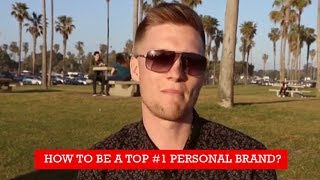
Mark Lack and others discuss building a personal brand through purpose, consistent habits, and relationships. They argue that aligning your goals with a deeper purpose matters more than chasing money, and that love and connection outweigh material success.
Nice to meet you.
You ready to go?
Yeah, let's go.
Me 2 times 6 years 6 gear master till I get there Philadelphia state of mind until I get my head clear DMV stand up Baltimore and what the politics of everything suck so just man don't know what to stand for at least I'm still upright even those not me, I'm me Balls in my hand when I'm spitting Cuz my potency stronger than any man's and I'm never laying down Feet are not in the sand Only vacations we get are at the bottom of a glass Knock me off again Popping vodka for a 10 this fifth is like a time machine A weekend in Japan Line by line my rhymes revealing what's inside of me Nothing to be proud of but at least I get it out of me. How did he kick the doctor out of a lobotomy? Whatever he's got should probably be put inside a bottle. Please FDA approval.
So at 18 years old, I found Tony Robbins on YouTube and was watching one of his videos and basically he said something along the lines of, you know, in order to really live the life that you're capable of, you have to find a purpose greater than yourself. You have to become your best version of yourself, which means constant and never end improvement. And you need to find a. You need to find some way that you can contribute and give back to the world. And so obviously at 18 years old, I really wasn't doing any of those things. And so what were you doing? I was playing professional paintball.
Okay.
So I was one of the highest paid, best professional paintball players in the world. And I had.
You were doing something with your life.
I was doing something, but I mean, it's, it wasn't like, wasn't impacting others, it wasn't what I'm doing now, which is essentially that, right? Giving back, contributing, finding different ways through time, energy and money to contribute in that value and serve people in a greater way. Always looking for different ways to improve who I am, mentally, spiritually, physically, mentally, financially. Finding different ways that I can always get a little bit better every day. And then as the years and decades go by, you look back and you've made so much progress. Most people are stuck living the same life, making the same money, in the same relationships, never really making any progress. And so now I'm addicted to just consistent progress in different areas of my life. Getting better in my health, getting better mentally, getting better financially, making more money, getting better. And how I'm getting, giving to the world. For me, I always need to be growing, and I found that you're the happiest, or at least I'm the happiest. And people are usually the happiest when they're growing and when they're giving, but the next one is grateful. So I think that if you're giving, if you're growing, and if you're grateful, those three GS or G cubed, giving, growing and gratitude are the three GS that ultimately are what I believe to be one of the best recipes for success. And I learned that at a young age. So I've been practicing figuring out how to grow, how to give, and how to be more grateful every day. The seed was planted in my brain around 17, 18, to start by that one YouTube video. Yes, to start to at least take one step every day, one consistent step every day to creating a better life for myself. A mentor of mine, Brad Sugars, he's a very successful businessman. I was at one of his events at 18 years old, and there was an audience full of hundreds of successful adults in their suits and ties. And he asked a question from the front of the room, and I was sitting in the very back, hiding just there to absorb information. And he said, how many of you, if in 10 years, could have achieved any goal you want, any experience you want, any life you want, any amount of money you want? If in 10 years you could have anything you want, how many of you would shovel elephant poop one hour a day, every day? That's it. One hour a day, every day, for 10 years straight. Just one hour a day. If in the end of the 10 years you could have achieved any goal, any financial, any financial guarantee, one hour a day, every day shall elephant. Everybody's ham enough, including mine. And I was shocked. I was like, wait a minute. This is a room full of successful adults and suits and ties. And here they are all with their hands up, saying they would achieve, they would do anything. They would shovel elephant poop for one hour a day, every day, if in 10 years they could achieve any financial goal or whatever. Everybody's hand was up. And so then what he said was, now replace the shoveling of elephant poop with reading a book for one hour a day, every day on the topic of the knowledge and skill sets you'll need to acquire, and in 10 years, you'll have done just that. And it was like a mic drop moment. I was like, whoa, All I have to do. It was a perfect analogy because I think kids 11, 10, 17, or even beyond that Associate reading a book to shoveling elephant poop. And so what was so good? What was so good was that I thought to myself, that was perfect, because reading a book is exactly like shoveling elephant poop, at least for kids, and especially if it's related to, like, school or knowledge, not like a fun fiction book or something. If you be. If you be the best version of yourself and you become a better version of yourself by becoming your best self, you can then give more to the world. So if you become a better version of yourself, therefore, you have more to give now, because you are a better person, you filled your cup up more, you can now give more to the world. And if you be more, you can give more. And the byproduct of that is having more. You're saying that as you've become a better marketer, as you've become a better marketer, you can give more value. And what do you have as a result? More income, more impact, more influence. Here's a great saying that I got from one of my mentors, John Asteroff, and it's the habit is more important than the effort. Or in this case, the ritual is more important than the effort. So the habit is more important than the effort. What that means is ultimately when you say, you know, I had a long day today, I'm tired, I'm not going to go to the gym. I said I was going to go to the gym after work or after whatever, I'm tired, I'm not going to go anymore. The problem with that is that you're talking yourself out of the habit, when in reality, what you need to do is commit to the habit, even if that means I'm going to go to the gym. And all you do is go one squat, two squats, and you leave. Because the habit is more important than the effort. Exactly. So the way that you condition a habit or a ritual is by doing it, not the effort. The effort is not the reflection of the ritual. The consistency is. Most people have it backwards. Most people think that the habit is the reflection of the effort and the consistency of the effort. That's wrong. A habit is how consistent something happens, not the effort and the intensity in which the consistency happens. And so for people out there, what they need to understand is if you're going to ingrain a new ritual, especially in the morning, how you start your day in a proactive state instead of reactive, you're not reacting to social media, you're not reacting to emails, you're not reacting to the news, you're Simply waking up and you're blocking all that out for the first hour or hour and a half, and you're in a proactive state, and you choose what's going to happen for the first 90 minutes of your day, and you plan what the next three, four, five hours is going to look like, then you can react later. But if you don't have focused energy for the first 90 minutes about how your day is going to be, how you're going to choose to show up, how you're going to choose to feel, and what ultimately you want to get out of that day, if all you did was go, I'm going to work super hard and focus for four hours, and then I'm gonna go to the gym for 30 minutes. That's four and a half hours. You have another eight hours, you can just go waste. You have another 12 hours, you can go and waste. Most people are just wasting their day because they wake up and the first thing they do is react, and the second thing they do is react, and the third thing they do is react, and they're constantly reacting. And the problem with that is if you're constantly reacting, you're never gonna proactively create the life you want. Life is very simple. You create yourself. You create the experience you want. This experience right now can be bad for somebody. This experience can be good for somebody. You can hate what you see in the mirror. You can love what you see in the mirror. You just have to understand there is no finding yourself. You're gonna change. Think about this for a second before you go. You're gonna change from a baby to a kid, to a teenager to a college student, to a young adult, to a grown adult, to an old person. You're different at every one of those stages. How did you find yourself? You're different at every one of those stages. Every 10 years, you will be dramatically different than who you were 10 years ago. So who is yourself? You're never gonna find yourself. Because then every five, 10 years, maybe one year, you're gonna have to recreate and find yourself. You see what I'm saying? So you never find yourself. You are constantly reinventing and creating yourself. The question I like to ask everybody in the business world is, and you know this as I know this as anyone I've sat with knows this. In the business world, who's achieved a level of success is at some point, you always hit what I'll refer to as the tipping point, where you go from trying to achieve success to figuring it out. You just hit the Tipping point. And you just, you've got it. And now it's not about achieving success, it's about scaling success. So when was the tipping point for you and your business?
See, like I said, the title of my book says the Accidental First Mover. So I didn't go with a vision. I just went with a lot of hustle. I needed to prove. My dad told me to leave the house.
Right.
And the culture I come from, we never leave the house. So I needed to redeem myself. So in an effort to redeem myself, I found. I discovered the Internet and we built the first business, we built the second business. The inner confidence that I got after building the second business changed something in my mind. I thought, if I. If I can do it twice, I can do it, you know, I can.
Do it further as well.
But then what happened was I started realizing, like you were just mentioning that it. I didn't believe in being aligned with the purpose. I thought money could be absolutely different in my own life, could be absolutely different. But as I grew as a person, as I grew in my own spiritual self, as I grew more aware of myself, my money and my. My money goal and my. My personal goals were not aligned. And that's where I felt things were, you know, slowing down.
Yeah.
Once I aligned them back, that changed everything.
Shorten the gap for the audience out there. I'll give you a little shot of it here.
What did he stand for?
Alan? So Mark Allen lack 444. So this was written about three, four years ago. And I was lucky and strategic in my ability to get people like John Assaroff to write the forward Brian Tracy to endorse it. So you can see here, I got a quote from John Assaroff, a quote from Brian Tracy, a quote from. From a guy who founded Outback Steakhouse, one of the largest restaurant chains in America. Built a billion dollar company. So this is an older book three, four years ago, when I just got started. But what really compelled and inspired me to want to write this book was ultimately on my journey, I saw that very, very few people out there had what I'll refer to as a buffet platter of. Of many of the things, not all of the things. Many of the things that it takes to live a happy, healthy, wealthy life and a fulfilling life at that. And I had read so many books, hundreds and hundreds of books. I mean, imagine we have one book here. Imagine if we stacked up hundreds of hundreds of books. I had read that many books and listened to countless thousands and thousands of hours of Audio tapes and been to so many hundreds of events. And I had realized very few people are good at making things simple. Albert Einstein, I think, or Steve Jobs is like the hardest thing to do is make something complex simple. And I think it's very easy to make the complexity of marketing and Facebook and social media and pixels and funnels and business and legal and accounting sound complex, because it can be. And it can be very overwhelming for some people. And I think that's what keeps most people out of. Out of it, out of living a great life, out of having great health, out of, you know, eating healthy is difficult. Is it? Or have you just become accustomed to eating junk food that is so easy for you? And so again, the point of the book and how it's really spawned for me was there are so many things out there. A full book this big on goal setting. Give me a break. I don't need 500 examples of goal setting. I need you to explain it to me in two or three pages. And had I read, which I have read books this big on goal setting and many of them, I was able to regurgitate the essence, the simplicity of goal setting in two or three pages. Had I read a book this big and many of them on power of the mindset, I'm able to regurgitate that in two or three pages. A book this big and many of them, and go to events and seminars and audio tapes on sales and marketing and all these things, etc, etc, etc, I'm able to regurgitate them in a shorter, simple way. If you and I are the first people that they're ever hearing this type of information from, from, I challenge you and I invite you to not take action on anything we're saying until you found other people that are saying something similar and also living a life and getting a result that you too want. There's a lot of good people out there that are able to speak articulately, they're able to speak intelligently and conceptually, and they're able to convince people, influence people to do something like give them money in a way that may not actually be conducive to the life that you want.
Exactly.
And so my advice is build up many, many references of lots of people saying similar things, like you and me and Gary Vaynerchuk and Grant Cardone and Tony Robbins and John Asaroff and Brian Tracy and Jim Rohn and Zig Ziglar and Les Brown and all these amazing people. We're all saying very similar things about the science of achievement and ultimately the art of fulfillment. How to live a happy, healthy, wealthy life. Alright guys, this is Mark Lack and I just finished my awesome interview and I wanted to wrap it up by saying, saying something special and a specific message for you watching right now. There's an old saying that I learned from a mentor of mine, Tony Robbins, and it's simple, it's this. The quality of your life is in direct proportion to the quality of your relationships. Now guys, I've interviewed over 1,1000, I was going to say 1 million. I've interviewed 1000 millionaires and billionaires and celebrities and top level achievers in a lot of different industries. And here's the lesson to for you guys, in addition to knowing that the quality of your life is in direct proportion of the quality of your relationships, on that note, specifically I've interviewed some of the wealthiest, some of the most celebrity people in the world, some of the wealthiest people in the world, some of the best achievers in the world. And I can tell you that none of that matters. And they've even told me this and this is what I've learned. And the message for you is this. No matter how much money you make, no matter what you've achieved, no matter what you're known for, no matter what legacy you leave, none of that ultimately matters. The only thing that matters in your life at the end of the day, on your deathbed is how much love you gave and how much love you received. At the end of the day, guys, the only thing in your life that matters right now is love. Give it, receive it, and don't worry about the destinations, the goals, the achievements you have. Because none of that ultimately matters if you're not giving and receiving love. Guys, I hope you enjoyed our interview and I hope you enjoyed this, this special message. Follow me on Facebook and on other social media platforms. If you guys like this interview and you want more special content.
More from Avi

The strongest mindset doesn't begin with meditation. It begins at home. Before you conquer the wor

The strongest mindset doesn't begin with meditation. It begins at home. Before you conquer the wor

Your mindset isn't something you fix once. It's something you train every single day. Just like yo

Don't build a company just because your friends are. Build one because you're ready. A startup is

Everyone dreams of becoming the boss. Very few understand what that really means. The moment you b

Most entrepreneurs say, "I don't have time for coaching." The truth? You don't make time for what

Over hiring doesn't always solve problems. Sometimes, it creates them. Having a small buffer in you

"The highest-paid" isn't the goal. The highest-value is. People often ask why premium mentorship co

The founder will always be a bottleneck... at some stage. The goal isn't to pretend you're never th

People ask me how I stay consistent with my morning routine while traveling across countries and tim

People ask me how I stay consistent with my morning routine while traveling across countries and tim