How To Become a True Personal Brand For Your Business | Interview With Nick Cavuoto
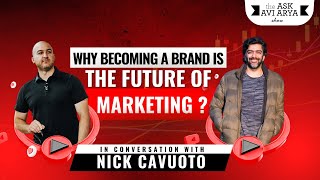
Nick Cavuoto talks about building an authentic personal brand as an entrepreneur. He shares how to create impactful content, overcome failure, and connect genuinely with your audience while growing a business.
I think failure is an important part of understanding the human condition. I think people need to get to, like, trust you before they're even willing to get to know you before then they'll buy from you. Entrepreneurs have two problems. They either don't start or they don't finish.
Hey, guys, this is Avi Arya, father of two girls, six dogs, husband to a superwoman, a streetcar racer turned hotelier, now social media marketer and founder of Internet Moguls. Welcome to my channel. Hey, guys, this is Avi Arya, father of two girls, six dogs, husband to a superwoman, a streetcar racer turned hotelier, now social media marketer and founder of Internet Moguls. And today we've got another interesting guest. More importantly, an amazing human being. We've had a couple of conversations, been connected online for a while, and I don't know where you get that heart from, man, but thank you very much for your patience, for your empathy and all of that. These words on the Internet are very loosely used today. Everybody says, oh, I have the patience and the empathy and everything. But I think the best part is you land up four minutes late for someone's interview or you miss a call, and that's when you find out if that how that person responds to you. I never want to talk to you again, and all of that. So instantly there's no empathy and all of that. So although I 100% respect everybody's time and everything, always, you know, inside my heart had a bit of a thing to go behind the scenes to get to know somebody. If things don't go as planned, how would people react? But. And I remember having that short conversation with you and everything, you were like, oh, life is great. Everything is okay. Things happen, all of that. So just to just right off the bat, Nick, how do you get that? Did you develop that hard or did you always have?
Yeah, man. You know, I'm very grateful that I think my family structure. I come from a really simple background. You know, my grandfather, actually my great grandfather, is an entrepreneur. My grandfather was an entrepreneur, my father was an entrepreneur, and my mother was an entrepreneur. So I come from, like, a very strong lineage of people who have chosen to do life the way that they've chosen to do it. And I think failure is an important part of understanding the human condition. And, you know, my father was a drug dealer from 13 to 30 years old and then found faith and his life really transformed and changed for the better. But my father wasn't afraid to tell us his stories of failure. He wasn't afraid to Share with the world things that are sometimes seemingly the more difficult things in life. And I think I just continue to lead with that. And I think, too, that, like, you know, we're born with a certain DNA and function, and part of my heart is to just show up as authentically or it's kind of buzzy. So let me say it this way, as real and raw as possible, because I think that gives people permission to do the same. So my heart just generally comes from a place of just, you know, wanting to serve and contribute, because that's the way that I believe God created me. So I'm just living out that truth.
So you said failure is important. So you think failure allows us to see. Be empathetic and see what other people might be going through and have experienced it. So, you know, sometimes you feel, God, the universe has given you that so that you can relate better?
Yeah, absolutely, man. Absolutely. I think, you know, when people talk about failure, which is something that I do a lot when it comes to entrepreneurship and content creation and, you know, I like to real time have people involved in my life. And I remember having the conversation with my wife around, like, she's like, man, you're really, like, sharing a lot, you know, and she's like, I'm not quite sure exactly how I feel about that. And I'm like, I totally understand. I said, but, you know, when it comes to our mission and the bigger picture, my goal is to unmute entrepreneurs. That's at the center of it. Part of the reason why is because there's been times in my life that I felt muted. I've hosted over a thousand live events for other people and never got an opportunity one time to speak on a stage when I was doing that seven years ago. And so I know what it feels like to be in the background with something really special to say, but without permission to do it. So that's where I feel like my heart for entrepreneurs. And when we talk about failure and things that happened in life or in business or whatever it may be, failure is a transparent story that allows us to connect with people on a deeper level. Because a lot of people say you need people to know, like, and trust you before they'll buy from you, I actually think it's in reverse. I think people need to trust you before they're even willing to get to know you. Before then they'll buy from you. And the quickest way to dismantle the wall of projection and what people might assume or think about you is to just be unbelievably. Honest with them. It's actually rare, which is quite concerning in my opinion. But for someone like me, it creates a very highly winning strategy when it comes to just allowing people to let me in.
Wow. And I love the fact that you're using this in the context of being business, because a lot of people are like, business is separate. And my trust and my letting myself being vulnerable is not with my business associates, with my clients. And you're reversing it. You put flipping the coin on its head and you're saying be vulnerable and share. Be honest, be open with your clients or to be clients. And, and so why have that differentiation between a client and everybody else? So I love that. So just a quick story, you know, Nick, who are you? Where are you from? Tell us a little bit about yourself.
Sure, man, absolutely. Well, I'm a simple kid from New York. I live in Denver, Colorado now in the US and my story is pretty simple, man. I grew up with entrepreneurial family. I have always been a gift giver, a go giver, if you will, in my life. I've always wanted to show up for others and just really help elevate their experience as a person. I failed out of college twice. I ended up graduating later in life. But at 19 years old, I was a two time college dropout. I didn't know what I wanted to do with my life. But my explosion in a real way was when I had to drop out of school the second time and call my father and tell him I need to come home. And it was a bit of a prodigal son moment. And my father said, it's all good, man. Come on back and let's, let's figure this out together. And the explosion led to a place that really changed my life, which was service. When I didn't know what to do, I served. And that has always shown up in my life in the most powerful way, that wherever there's challenge, there's opportunity. So when I see challenge in the form of business or life and I don't know what to do, I ask how I can serve. And that has been really the core thesis of everything that I've done in entrepreneurship and in business. The new normal for me is just being a person of generosity. Helping other entrepreneurs unmute themselves 10 year brands is really the behind the scenes of a business and an agency that I own. And that's what we do every single day, is we help entrepreneurs create daily content in less than an hour a month of their time. And it's 1,000 bucks a month. And it's crazy how just breaking down that barrier, we help them with so much more than just content creation. We give them permission to go give the world their greatest gift. And that's how it's shown up in my life now. So that's a lot of fun. I do a lot of coaching and that kind of stuff, but mostly I just do that because I just want to give and contribute and connect with others. It's big to my personal alignment, so that's what I do. Yeah, had a lot of fun. Worked with a lot of really big companies early on in my career, helped a lot of people make a lot of money, but at the end of the day, they were people who I felt like were doing something good in the world. And that's been a lot of fun. So, yeah, man. So that's my story. And yeah, starting up a podcast, mentoring millions, which is going to be launching this spring. And just having a lot of fun, living life with my three, almost four now kiddos, three girls and one boy.
So, yeah, man, that is fantastic. I love. I love a big family. I'm all about big families. And no dogs yet.
Oh, I got a dog, man. I got a bulldog. A little English bulldog, Coco. She's super sweet and our kiddos love her. Yeah.
Excellent, Excellent. Now that makes you my favorite friend.
There you go, man.
It has to be an animal world inside our own world and vice versa. So, Nick, when it comes to entrepreneurs who are today stuck, scared, anxious, uncertain about the future, but they still have to get up and show a brave front, what, what is your message to them?
Well, when it comes to human psychology and performance anxiety or uncertainty comes from a place of when we feel like there's a big challenge in front of us, or maybe you have an audacious goal, something you want to achieve that's really big, and you feel like you lack the skill to do it, and that's where most entrepreneurs become paralyzed and they get analysis paralysis. They don't know what to do because they stop asking the question of who and they've started asking the question of how, which removes empathy from the process and puts us into an engineer mind, not a heart centered, empathetic mind that says, how can I really solve this greater picture for someone specifically, they're so focused on the problem that they're missing the purpose. So what I help entrepreneurs do, who are uncertain, who feel like they have a big challenge and not a lot of skill in order to achieve it, is I collapse the gap by doing two things. Number One, I help them get excited again. I help them dream about the possibilities, which is the who getting them recenter refocused on whose life they're going to change, on who they want to collaborate with, on who they're going to connect with, what podcast they're going to be on. Right. I get it really restructured back into the people side, and then when it comes to the how side, I increase their level of belief. The number one issue that entrepreneurs struggle with is trusting themselves and trusting yourself. The foundation of that is your belief. Now, I'm so gracious and so grateful in my approach because I know that there's something rather divine that's behind me. So my trust, my hope, my belief is in something greater, that I believe that I have a mandate. I'm here on purpose. Right. Like, it's not an accident that I'm here. I'm here to do something very, very specific. And so that allows me to have a different level of audacious faith when it comes to belief. But you don't have to share my belief system. But you need to believe in something greater, and that is in and of yourself as an entrepreneur and what you're called to do. But secondarily, it has to do with who's got your back and whether that's God or the universe or, you know, whatever you want it to be. It's an extremely important part of entrepreneurship, because at some level, business becomes spiritual. It just takes time. But you can't evolve yourself at the rate at which entrepreneurs evolve without having a spiritual complex as part of that.
Love that. How do you get that spiritual part of yourself, too, if you've, like, you got into faith? Your dad, you know, sort of, you said, was saved by the faith that, you know, he got into. But what about entrepreneurs who don't have that? Should you surround yourself with the right people? How do you unplug and resow yourself in a garden where there are other people who are moving along rather than you? Because, see, a lot of people are in company. If they're in company of other people, it could be their own family members or people who are always negative, and it's difficult to pluck yourself out of that. What would you suggest?
Yeah, I mean, when your mission supersedes the mindset of the people around you, you have to let them go. I've done that in several different parts of my life. That's why my whole family lives back east in New York and I live here. It's intentional because my mission, my mandate, which is my God handwritten instruction that I feel that God has given me a very specific assignment to do. No one can get in the way of that. I don't care who they are. So that's a. There's a level of belief there that's extremely strong in what I feel like I'm supposed to be doing. And there's no 3D human who can get in the way of that. And I have to protect it. I have to protect the gift. So that's that. The secondary part on like, how do you achieve a higher level of awareness when it comes to spirituality? I think it's just by asking better questions. You know, it's allowing yourself to go to layers. Most people who are unwilling to tap into spirituality is because they've had a bad experience with it. Yep, me too. Right. I spent seven years as a pastor, as a minister of a specific book of gospel, and then ran from it for the next seven years after. So, like, I just don't judge myself based on where I'm at. I understand that my source is of love and compassion in a deeper sense of like, there are things in my life as a human that I'm going to go through and not understand. My responsibility is to find the source. So that's the three step process is like awareness. Increasing awareness has to do with asking better questions and also being more introspective and compassionately curious about the world that you live in and the way that you do life. The second step is responsibility. You ask yourself the question, what is my responsibility? With this increased level of awareness, then you use your mouth and you communicate. Because when you have to communicate something, it forces you to formulate the big idea. And even if it's not fully developed, you're getting closer. And so that's the fun part about communication. So it's active listening on the front end intuitively, like to your heart, to your body, being expressive of tapping into a different frequency. And then talent, it's actually broadcasting that information.
Nice. So, you know, I love when you said that you believe in the universe and God has a written plan for you. I believe that because when I see you speak, when I hear you speak, you connect from the heart. And just maybe seven years of, you know, being close to the church made you a better speaker. And now in your entrepreneurship journey, you're using your speaking skill to be able to connect with more people. So everything has a plan. Like Steve Jobs said, the dots connect only when you look back. When you're moving ahead in life, it sometimes easy love that let's talk a little bit about personal branding. I saw some of your videos and, you know, you search up your name, the first thing that comes up is personal branding. So tell us about your take on personal branding. A lot of people like to hide behind the logo. What's your take on that?
Yeah, man, absolutely. I think here's the bottom line. The future of business is centered on human connection, and it's centered on, essentially, authenticity is the best way to describe it. People buy from people like, they don't buy from companies. They're not buying products and services. They're buying from people that they trust. They're willing to get to know and have a human experience with and develop a level of affinity. You know, if you go to purchase a car, they should spend the first 10 to 20 minutes, like, getting to know you as a human being and not just say, oh, let me tell you all the features of this vehicle and why it's so great. Nobody cares. They can buy from anybody. But you need to make it about the reason why they're going to buy from you. And that has a lot more to do with building relationship. So relationship and connection are the future of business, undoubtedly, 100%. And here's the spit test. If 50% of the people like you in the United States, you can become president, they like you, and they're getting hired by the corporation, if you will. So the idea on that is like they're casting a vote for an individual with a belief system, with a policy, procedure, whatever, But a lot of people don't even know the policies. They just will care about the individual. And if they're red or blue. So at the end of the day, that's the unique factor around it. And personal branding is, like I said, it's the future of how all the future's already here, but it's on how all things will work in the future. I'm actually concerned the government will regulate personal brands at some point, let's say five to 10 years, because it's going to be so incredibly disruptive to the status quo of corporate America. So, yeah, at the core thesis of personal branding, the questions you should ask yourself, what is personal branding? It's your story, it's your energy, and it's your magic. And your magic is essentially your unfair advantage. The thing that makes you so much different than everybody else in the world. And if you can define those things, I think it separates you from the pack and allows you to be the number one person in your audience, whatever your audience might be. That People will follow and want to connect with in a greater way.
Lovely. I just love that when you said they might just regulate it, it makes me want to do it even more now.
Absolutely.
Tell us about your agency and your service. Where are entrepreneurs in their life and business journey when you find them and what's the transformation your agency gets them through?
Yeah, man, great question. So the reason why we started the agency, like I said, was because it was on the court thesis. I needed to solve the problem for myself first. And my sister actually used to work for Gary Vee. So for those of you who are part of vaynernation or love Gary Vee, you'll appreciate that. Yeah, right. It's awesome. So she's worked for Gary and so we got a lot of insight. I got insight early on, like 2017, 18, 19, around unique processes. They weren't releasing to everybody. What my sister's name. Yeah, Nadine. Nadine, yeah. So she worked with Gary and I mean, a lot of fun, a lot of strategy, a lot of deeper understanding when it comes to this whole idea of personal branding that we saw Gary doing. But a lot of people didn't understand behind the scenes how he was doing it. And since he's released a lot of information about it. But I built a process in 2019 that was similar to his team Gary Vee approach and just kind of kept it as an ace in my back pocket. I didn't feel like it was time to release it. I was also going through an agency split with a previous agency that I had. And so I was kind of like, this will be a great idea one day. Then with COVID when that hit In March of 2020, I lost over half a million dollars in two days from my coaching business and then also from the agency. The partner split. I just kind of grabbed my favorite clients and that was the decision between me and my partner. And then he took the rest of the clients and they were elective practitioners. So you can think about elective practitioners were shut down for a minimum of 60 days. And it went in the maximum of about 120 days. And I had a coaching business that was predicated on live events. So I went from like 50, 60k a month, so it was actually like over a half a million dollars to 4,4k a month. And so it was a gut punch. But with 100 years of entrepreneurship in my family, there is a lot of resources asked deeper questions and what to do, how to do it. Whatever my kids rate at their private school didn't change my mortgage didn't change, my car payment didn't change. So what did I do? The same thing that I did when I was 20 years old and I fell out of college twice and said, dad, I need to come home. And he said, okay. And I made a decision to serve. I made a decision to go serve my community. And I started a mastermind and my housing development and said, hey, for six weeks, business owners, you know, let's get together and talk more. And then got a phenomenal mentor. His name's Tony Greb Meyer. He runs a $50 million company here in Denver. And to work with him, you got to scratch six figure check. And he chose to help me for free. And it's amazing that when we show up to be of contributions and service, we get like opportunities that we could literally, quite literally never afford. And he helped me break through that season of COVID And then going into 2021, I said, oh, I think it's time to do this big idea. And so I said, how can we make it disruptive? How can we make it unique? And I said, I got it. We're going to create 30 pieces of content. So daily content for online entrepreneurs. We're going to do it at a rate that is so inexpensive that it's a no brainer thousand bucks a month. And we're going to solve a time problem, not just an expertise problem. And the time problem was most entrepreneurs are like, I don't create enough content to stay in front of my audience and be relevant because I don't have the time to do it. So we said, we'll do it in an hour a month. So imagine if you're an online entrepreneur and in one hour a month you can show up to an interview where I have an Emmy award winning producer sitting there across from you who has 35 years experience and they're like, here's exactly what you need to go out and do. Here's the exact questions that need to happen. We just have you show up. There's no scripts, there's nothing that you have to memorize. We show up, we ask the questions, the responses come through and then we have a team of phenomenal creators on the back end who create and publish the content for you on four different platforms. It's a thousand bucks a month. So it was just the right timing for the product. And I'm extremely proud to say that in 50 days we're a half a million dollar company and we haven't even launched it yet. What's interesting is I lost a half a million dollars in March of 2020, and it took 50 days to get it back. That is the game of entrepreneurship. Entrepreneurs have two problems. They either don't start or they don't finish. I didn't make a decision to just cut the line and go. I'll just go get a comfy job at PayPal where I can make a quarter of a million dollars a year and work 30 hours, 40 hours a week. I made a decision to stay the course, and I believe that God honored that and was able to intervene. And I also think the market honored that because I was forced to create a disruptive product that now that I know will have unbelievable success. I mean, this is content marketing for entrepreneurs. This is like the Netflix of content marketing for entrepreneurs. And we're just getting started, dude. This is going to be unbelievably disruptive at scale.
And so people who want to find your company and your product, what's the best resource to. I'm going to plug it in over here, dude.
Yeah. Thank you so much, man. TenureBrands.com is the place that you're going to want to go. And we developed the personal content machine, and that's what we're set out to do. So, yeah, we have you show up for an hour and we do an interview with you. We publish and create your daily content. And here's the fringe benefit. What most people don't understand is, number one, there's so much free coaching that's happening into helping people who have a great mission, who are online entrepreneurs, coaches, consultants, experts, helping them actually become better speakers. It's a byproduct because we want you to continue using our service. And to do so, we need you to be able to deliver better. In addition to the fact that it unmutes them, there's so much staring at the screen, watching that blinking mouse, going, what am I going to say today? What do people want to hear? And it's like, no, no, we got to reverse that and get them into the method in the process of just expression through empathy. And when they do that, it makes the entire process of communication from a sales perspective, from a marketing perspective, from a client delivery perspective, so much eas.
Lovely, Lovely. I have one more question on personal branding. So a lot of people say, I have a B2B company, or I work in a. I have a factory, I sell products, I shoes, or I'm not necessarily needed to be the face of the company. What would you say to all these B2B players who are sitting on the fence and saying, Personal branding is not for me.
Oh, man. They're gonna have a fun conversation with me. I think that, you know, B2B, direct to consumer, however you want to look at it, it's human to human marketing. You know, for the first time in history since the printing press. I mean, Gary talks about this a lot, but we're experiencing the highest level of disruption when it comes to communication at scale. If people don't see that, they've already lost. So let me increase your awareness. If you don't agree. Okay, go do research on it. Go look at the numbers. Go watch how if someone watches one video of yours, you increase the chances of them purchasing by 94%. So the math and the data doesn't lie. And that is also a part of business. It's spiritual and it's math. At some point, that's what it's deducted to. So for someone who's in B2B, who's doubting the process of human connection or personal branding, you have to understand that at the highest level, all of communication is two way. Look at Elon. I mean, he has four letters in one name, and he has a personal brand, and yet he also has thriving businesses. But he doesn't hide behind the logo. He has a star quality to him that's incredibly unique. Or Steve Jobs, most people. Who's Elon Coo.
Right.
Nobody knows. Right. Well, you know, with Steve Jobs, you had Wozniak, but that's because a movie was created. But what was the movie called? It was based on his name, not on Apple. Right. So the personal brand is actually everything. And if that's a misstep, like, it's just a massive vulnerability to not understanding the bigger picture in this whole entire game. Bezos. I mean, I can trump. I can go on and on and on and on about how important it is for a founder, a CEO, whoever, to be out in front and to be building a personal brand. And again, if it's not seen and if it's like we're going to just do business as usual the way we've always done it, that alone is the highest failing strategy of entrepreneurship that exists.
Wow. So it's highest on the list of what not to do.
It's number one on the list of what not to do is personal branding. And the thesis that's number one is we're going to continue to do what we've always done.
Interesting.
The market's too disruptive. Yeah.
I'd like to shift the gears a little bit. And can you tell us A little bit about how you set up this amazing studio. I like the DSLR camera, I like the Shure mic. Can you just give our audience a little bit of a rundown on how this studio works?
Yeah, man, absolutely. So I've done over 500 Zoom calls in the last 12 months. So it's pretty wild. Like looking at, hey, you know, how you do one thing is how you do everything. So if I'm running tenure, which is based on a long term relationship, that's what ten year means, right? So if it's based on that and it has to do with quality and consistency, you know, I just feel like, yeah, again, how you do one thing is how you do everything. So I have a mirrorless dslr. It's set up on a little tripod on my desk. I have an Atomos on top so I can record my. My own visuals to increase the quality of it. So it's like a. It's its own SSD drive with a monitor. And then, yeah, the Shure mic. When Shure came out, the SMB 7 is the most popular podcasting mic that's out there. This one is specifically engineered very similar, but it has a USB C plugin so that you can go direct to your computer versus having to get the whole entire audio set up. So, yeah, I think mostly every single time I get on a zoom call, especially with someone who's new, that's the first thing they notice. They're like, whoa. I like. You're like right there, you know, and they're like, wait, is this like a video or are you actually there? You know, I know. So, yeah, the gear that I use, It's a Sony A6000, which is a mirrorless DSLR. I have a Sigma 16 lens. It's a 1.4 16, which essentially means that I can grab a lot of light. So as an iris that can grab a lot of light, which allows that zeroing in and the blurring in the background. And then the Shure mic is epic. Just look up the new Shure podcasting mic with USB C. I can't remember the Name of the MV7. This might be the MV7. Yeah, MV7. If you go to solo to Nick Cavuto on there, I have a zoom upgrade where you can actually see my entire gear list. And so you can check that out. Yeah.
What about your headphones?
Yeah, these are. These are just beat headphones. I remember I was at Target one day with my wife and I was like, oh, I obviously like things that are like black and white. Or black and gold. And so. So I just saw them and I was like, yo, those look cool. So I just snagged them. There's no method beyond that one.
And. But mic headphones on while you're interviewing allows you to be more in sync with how you're sounding.
Yeah, it does. More than anything, I think it helps me really zero in and focus. You know, I'm. You're kind of over here on my screen, so when I'm blocking out the noise, I can hear only you, which helps me feel like I can just stare right into the target of that lens, right into the middle of it without having to vary because I can still like hear you and it noise cancels everything else out. So it definitely helps me with focus, no question.
Lovely. Love that. So I remember last time when I spoke to you, I asked you similar questions, after which I've got a lamp for separation. I've got a. Hey, I didn't plug this one in. And then I learned this from you last time. I was like, you know, I need. When, whenever the next interview happens, I have to show that I learned something and I upped my game. So. So here, I've got some lights over here.
Yeah, come on now. Dude, look at that, man. I love it. Yeah, I do. I have an elgato light, by the way.
That's. And I got the ADR mic, which sounds pretty good. Closer to my mouth. Yeah, that is.
That is my. My secondary favorite mic. By far the best for the cost. By far.
Lovely. Yeah, yeah, it is. It sounds pretty good. So. Okay, so I have one last question before we pause this interview and I just want to say thank you to you offline entrepreneurs right now. Travel, hospitality, bakery, real estate, clothing, all sorts of entrepreneurs. What is that one service that they should hit you up for?
All entrepreneurs should hit me up to help me develop daily content for you. If there's people who want coaching, I do that on a one, on one basis. If I feel compelled and I really want to help somebody and there's kind of like no terms associated with that meaning, like it's just I show up in their life in a daily way and help them grow until it makes sense and I feel like it's time to release them. So those happen quite organically with people that I get closer and closer and closer to. So it's more relationship driven. But yeah, for people like, who are trying to solve a problem of connection, engagement, driving more top of funnel traffic, being somebody who's worth following, you literally will not find. I Mean, in our process of interview, create and publish, each step costs a thousand dollars if you go to market.
Sure.
The way that I'm able to do it for such a low cost is because I know the process better than just about anybody else besides Team Gary Vee. And second, secondly is because I have spent so much time investing in my audience. Everybody. We built a team from 0 to 20 in 45 days.
Nice.
Everybody who's a part of my team is a part of my community. And so they're willing to go to bat for me because they understand the mission and they understand that like if we can all take less for a little bit of time, then we will all reap rewards when it comes to like our actual mission. And the money is a byproduct of doing what we're already love doing and doing it well. So yeah, if somebody is interested in unlocking themselves of becoming somebody who's worth following, of going from an executive to a personal brand or from an entrepreneur to a personal brand and really doubling down on that strategy, you know, step one is create daily content minimally and we just have the best way to do it.
So you're saying that lead with results and you know, tell people this, these people invested this much money. This is the result that they got in invested 25,000, got 72. So it's a, we're testing out a new newer products and newer services. So it's not going to be 25 for you, it's going to be 15 for you. That was the second point. Bring down the price, lead with results.
And.
Go after people who have great products but not necessarily complemented by or supplemented by good marketing system.
Yep. You know, really amazing brands have no guarantee of having a great product. So like if I'm a personal brand and I'm solid on the personal branding side, I actually didn't have amazing products until about two years ago. So I spent the first five years roughly with like trying to figure it out.
Oh.
I mean the amount of time that I spent with trying to like create the perfect agency system, process product was exhausting. But I'm asking. That's me asking the wrong question. That's the how. Like the how solves itself if you have the right team. So what I needed to get back to was the core, which was my mission. So you actually need to lead with mission, then you need to prove with results just to, just to suffocate the excuse. Like this is what they did, this is what they got. And I always expect like a 2 to 3x return. I don't believe in business miracles because I'm not trying to build a business on miracles. I'm trying to build a business on like really good ideas and systems that I know that have worked for others in a way that's aligned for me. So that's on the brand side and the product side. You know, this could be for SaaS companies, this could be for, you know, there's, there's a lot that you could go through for that. Um, and if they're missing brand, then you're solving a marketing systems and a brand problem and it's just like a little bit of a different angle. So when you do your discovery, figure out like what the core problem is, you really have somebody who's massively charismatic, someone like me, maybe the gift of gab and you just know right away they probably have amazing content and they have really, really poor systems because they don't have the proper team and infrastructure. I thankfully have solved that, but it took a long time. Now you go the opposite way. If they have amazing product, be it Cody. Right. Cody created LIP kits. Their brand didn't explode until Kylie Jenner partnered with them. Brand product. So that's the connection association you're trying to make. Don't work with people who are mechanics. Meaning the mechanic mind is like, oh, I can do this myself, I'm a technician. You don't want to work with technicians. You want to work with influential people who lack system and process. And by the way, our teams never go fast enough. Never. So I'm thinking three months. I'm doing the calculation in my head, like that's a lot over that course of time. But I'm also intrigued by the fact that some of this shit that's been on my list for a year can finally get done.
Right, Exactly. So the thing is, for an agency model, a one year program is like, let's lose weight in one year. Rather than that, I wanted to make it a bootcamp format.
Yeah. And I love the bootcamp idea. That's kind of like we'll strategically lead you and we'll consult you, but we'll do the work for you. Because now I associate that with like, do I need to hire other people to do this or are you guys just going to do it all? So if you're handling implementation, then solve the implementation issue, but you also need to sell the implementation problem. So in E myth you have visionary or eos, you have visionary implementer inclined delivery. Usually a lot of entrepreneurs have vision and client delivery. If they're lucky they have someone who's really good at it on their team. But implementation still, it's strategic. So it's like what is your plan? What is your vision? What do you want to see accomplished? What are the things that have been on your list for the last three months, six months or a year that needed to get done yesterday that still aren't done? That is the question. If you can answer that question for people, then they're already gonna know that you know what you're talking about. But I would truncate the problem to solution. Solve one problem for one person with one solution. And the solution needs to be like ours is just a three step process. It's really, really simple. So like the only thing I keep remembering about what you said was vsl and I'm just being honest. So like I'm thinking about all the other things. I know there's more to it, but that's just the thing that stuck. And I kind of have a bad relationship with VSLs because I invested $40,000 to get something like you're talking about done last year and it was a complete bust. Didn't fucking work for shit. So the unique thing is like we'll slow walk you through the process. What I want, what I want to have undoubtedly is a lead generation and sales process that is fully automated, that has my voice right. You know, that's what, that's what I really want. I want people to buy into the big idea of what I'm doing and I want a team that can do it fast and the right way that I don't have to go redo it again. But that's the actual problem is like you're solving the pain. Points for the entrepreneur is the checklist like the things they've wanted to do forever that they just have not been able to get done and they're frustrated about that and they will pay to solve that problem by the way, just to have the problem gone. It's literally has nothing to do with results. The secondary thing that you're solving is, you know, you have to empower something that is rather evergreen. Like we're going to build this system for you so that you can focus on doing your best work and you never have to worry about lead generation from a, from your pitch ever again.
So we do, we say I help you create a super week, super month, super year ahead. And in the super week, do you think if all the systems are working for you, what would you do best? If there was not if you didn't have to check back and look every time on what's not working. The guy said, I would love to get on my sales call. So if you get your BSL and your webinars and everything getting you four or five qualified 45 minute leads a day and that's all you need to do and everything is taken care of by the team, how would that day look like? So somewhere leading from there. But this is very valuable. Nick, I really appreciate this.
You're welcome, man. I would back up a little bit. Dan Kennedy talks a lot about this. Maybe study some of his stuff on like what you're actually selling with tenure. We're not selling content, we're selling time. And you'll notice that one of the things I said first was we help entrepreneurs create daily time, daily content in less than or in around one hour a month for a thousand bucks a month. I literally suffocate every excuse with just a statement. Right. So because it's so compelling. So like if you could say like 12 weeks again is a common timeline for accelerators. I've done a million of those. So truncate the time, maybe even lower and solve one thing. So we are going to help you create an entire lead generation system for your business and we're going to do it a week and it's going to cost you seven grand. And then try to get the tail end as after you guys do that, implement and then launch, then try to do something on the back end where you get them recurring or where you get them into your next level program. Because as soon as we have your trust, why would I go anywhere else? As soon as you deliver on exactly what you said you would do. And it's exactly what I wanted. One problem, one solution for one person. That's a different level conversation. If you're solving time. It's the number one thing for entrepreneurs that they do not have, which also most of them actually have money time.
Over anything else because they're entrepreneurs who are just starting off and they just shut off their brains just listening to the price because they'd rather not do anything that's expensive. So this is for people who already have say about half a million dollars or $250,000 in revenue at least.
Oh yeah, yeah, yeah. You got to go 10 to 20k, 10 to 25k a month recurring minimally. Minimally. Because yeah, it' not a hustle problem. They're on the opposite side of the spectrum, which is they don't have time or they just don't give a Shit, they know what they're good at and this is not what they're good at. Like, I'm a great brand marketer. I suck at direct response. I suck at making offers because I just want to like contribute. I don't want to tell people to buy my shit. I have a long term strategy which is to give thank you economy which creates short term opportunity for me. Then people want to work with me. So like, but the problem is, is like I don't have the infrastructure behind Nick the Tornado that's going to actually go capitalize on the revenue that's sitting right there. And it's not, I just, I'm not receiving it because I haven't asked for it. So that's the interesting thing is like if you're collapsing time, you're collapsing ask and you're doing it in a way that's creating human connection at scale. Like those are all verbiage and terms and kind of big ideas that like I would attach to and going like, yeah, that would make me really intrigued to work with you guys. But I think you need to create a shorter win for your products. I think you're like, we can create this complex thing in a week and if that goes well, we have a million other things that we can do for you. But I know that this is the one problem that most people in your situation have. And that level of audacity and knowing will also allow you to charge high ticket 5 to 7k for a week, which is way more profitable than what you're doing on a monthly scale because you might be able to like, that's my thing. Someone's like, well, why don't you just charge three grand a month? Because people will pay that. I'm like, because that will fuck up the entire system. Like, we're selling 2, 3, 4, 5 of these a day.
Wow.
So our pool is just so much larger. So yeah, I mean we'll be a million dollar business by April and we started at the first of the year. So anyway.
Alrighty. So ladies and gentlemen, boys and girls, this is Avi Arya, father of two girls, six dogs, husband to a superwoman, a streetcar racer turned hotelier, now social media marketer and founder of Internet mogul, signing off for now. Thank you all for watching. Don't forget to comment and let us know what's that one takeaway that you got from this interview? And I'm going to send you one book from one of our favorites, Gary Vaynerchuk, for that one comment on this one interview. Thank you all.
More from Avi

The strongest mindset doesn't begin with meditation. It begins at home. Before you conquer the wor

The strongest mindset doesn't begin with meditation. It begins at home. Before you conquer the wor

Your mindset isn't something you fix once. It's something you train every single day. Just like yo

Don't build a company just because your friends are. Build one because you're ready. A startup is

Everyone dreams of becoming the boss. Very few understand what that really means. The moment you b

Most entrepreneurs say, "I don't have time for coaching." The truth? You don't make time for what

Over hiring doesn't always solve problems. Sometimes, it creates them. Having a small buffer in you

"The highest-paid" isn't the goal. The highest-value is. People often ask why premium mentorship co

The founder will always be a bottleneck... at some stage. The goal isn't to pretend you're never th

People ask me how I stay consistent with my morning routine while traveling across countries and tim

People ask me how I stay consistent with my morning routine while traveling across countries and tim