How to build a successful personal brand using storytelling I Masterclass with Scott Ayres
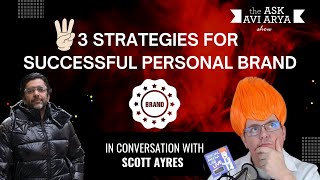
Scott Ayres talks about building a personal brand through storytelling and authenticity. He discusses his journey as a social media expert, practical branding techniques, and the data-driven approach behind the Social Media Lab project.
Spoken at many, many events around the country. But, you know, it's, it's. And that's the, the thing I would take away from that if I'm somebody watching this is you don't have to be this over the top, of course, but it's okay to have some branding. It might be just a pair of.
Glasses, just some teardrop tattoos all over the face.
And I don't know about that, but. But if that's your thing, sure, but.
Hey, guys, this is Avi Arya, Father of two girls, six dogs, husband to a superwoman, a streetcar racer turned hotelier, now social media marketer and founder of Internet Moguls. Welcome to my channel, Scott. Thank you very much for taking the time out for this show. My dad always says that the most expensive thing you can ask from people is not their money, but it's their time. Thank you very much, Scott, for giving us your time.
Yeah, you know, thanks for having me on. And I'm interested to see where this conversation goes.
For sure, 100% sure. So this is how we like to start. I always tell my audience the shortest distance between two human hearts is always a story. You tell a perfectly perfect stranger story and you connect for life. So I told you my story before we got started. Now for you to tell us your story. Over to you, my friend.
I don't know how much you want to know. That will be the, the, the rough part of that. Yeah, I mean, I would say first and foremost, I, you know, I am a married to an amazing woman. Almost 27 years I've been married. I got three kids, 14, 13 and 10 year olds. And from there, you know, my life is just a journey when it comes to what I've done for a living. You know, in the United States, you know, jobs are just things that just provide for your family, in my opinion. And so, like, I've done everything under the sun you can probably imagine, from bagging groceries to selling appliances, to working on appliances, to being a telemarketer, to running a pizza restaurant, to being a. I installed air conditioners. I was a youth minister at churches. I was a sports and recreation minister. I sold cars. I had my own auto shipping business for a few years. And then the last 10 years or so I've worked from home remotely in Texas, where I'm located. You can tell that from my lack of the proper use of the English language. And I say y' all a lot. I've worked remotely last 10 years in the social media space by accident. It was kind of funny. I Started, I had my auto shipping business, and I had a lot of downtime because most of my customers, you know, they'd book to get their car moved. They bought on ebay or their kid was moving across country for college or whatever, and a lot of downtime. So I was really diving into learning social media and what social media look like and how to get clients on social media. And there's a company called Fanpage Engine that was the. The custom tab maker product on Facebook where you made your own landing pages on Facebook and stuff. And I really. I really dove into it. I wanted to learn it. And because I loved it, I love the product. And I started making videos wearing a whole different look than this. I called myself the fan page pimp. My wife had never liked that. But I wore a big purple hat and big glasses and made funny videos and how to use their product. And that company actually reached out to me and said, hey, you know our product better than we do. You're helping our clients better than we are. Why don't you make some videos for us? I'm like, sure, people get paid for that. And so I started this. I started making videos for them. They started paying me. And then he's like, hey, why don't you write some blogs for me? I'm like, what's a blog? And so I started writing blogs for him. And then probably three or four months later, he said, why don't you come up with me full time? And so I closed down my auto shipping business and I worked for him for about three years, running all support and social media and blogging and training and videos. And then, oops, my computer just shut off. Hopefully it comes back. Hang on just a second.
No problem.
I still got you. It looks like I was weird. Yeah. And so then I went to work for another app company called Post Planner, and I ran all their supports, ran all of their social media and blogging and podcasting and live videos for about four years. And now I've been with Agora Pulse working for what I call the Social media lab for the last four years, where I dress up like this and it's like my daily attire now at this point. And my whole job now is teaching people what's working and what's not working in social media marketing, basing it on science, not just on guesses and, you know, thoughts and ideas, but like, hey, let's test the weird little things that big marketers like a. Let's say a John, you know, a John Lee Dumas, which I think you have on your show or had on your show here recently, yesterday. You know, I want to test, like, I want to say, okay, John, you said. And I've talked to him once or twice. If that. You say that works. Let's, let. Let's test it. Does it really work? You know, Mari Smith, you think that works? Let's see. Does it really work? And so I like to poke holes and things. That's really my main job is testing those things on a smaller scale, on a scale that's more applicable to businesses in the real world, not these massive accounts with millions of followers. You know, you don't really know if it really works for the real, you know, the average Joe running his business. So, yeah, I've been in that round for four years or so. I love it. It's kind of fun. I get to dress up and, you know, talk to, you know, people all around the globe. And before, before COVID of course, I was traveling and speaking a lot at events around the country and had a lot of Global. In 2020, I had a lot of global speaking gigs, but they all got tossed out the window really quickly. So now everything's virtual, of course. So it is what it is, which is kind of my life saying, is it is what it is. Whatever it is, you got to deal with it.
Absolutely.
And that's kind of where we're at.
Now, Scott, when it comes to, you know, it comes to personal branding. It's a. It's a loosely used word in many contexts. Very few people understand what a personal brand is or should be. Sometimes it's over glorified. But let's just break it down for what it is. I am who I am. A lot of people will like me. A lot of people will not. So the more vulnerable I can be about who I am will attract a few people. That's one way of looking at a personal brand. The other way is that I also understand who my eventual audience is, and I tailor makes a part of my personality to be nice to them. Like, we do go in school. We go out on a limb for people that we love to say, I want to, you know, sort of. So what would your definition be of a personal brand?
You know, I think it's. That's a hard one. I say, not really hard, but you got to decide, like, where do you want to be? Like, who can you look back on five years from now and go, I'm proud of that, you know, and I struggle with that as a guy wearing an orange wig and a lab coat. And you Know, it's like I have to look back and I go, okay, am I going to be proud of that later on in life? For me, I am, because I know I'm helping people. I'm giving. I'm the honest, real person in the get up as I am. If you saw me wearing a ball cap and a hoodie, which is my normal attire, I'm who I am no matter what. So I think our personal brand, I think you've. You've got to be honest, you've got to be real, you've got to not be rehearsed. I'm the least rehearsed person there is when it comes to live video. Like, I do multiple live video shows per week, and I don't rehearse any of it. You know, I have an outline maybe I kind of know what I want to talk about. But from there, I like, I just got done with an interview with somebody on a show about two hours ago. He didn't know the questions until about two minutes before we started. I didn't know his answers. We just talked for an hour. And that's. I think that that's just. That's me. My personal branding is being real and being honest. And hopefully people who've been around and saw me enough in the last 10 years know this is the real me, regardless of what I look like at the time, this is who I am. I'm very honest and very upfront. So I think personal branding, you've got to be consistent with your voice. You got to be consistent with your message. People, especially now with 2020, now, 2021, people see through the 100%. They see through the crap now, and they want real. They want real people. Like, I love. This is one of those weird things. Like, I don't watch a lot of news. I'm not a news guy, but every once in a while, I'll turn on today's show in the mornings. And I loved when all of the. The anchors were at home, working from home, doing the weather. Owls at his home in his backyard doing the weather. Savannah's doing her thing at home, whatever. And you saw a real side of them, and you saw their house. You saw the messiness, perhaps, or them not being rehearsed and not overproduced. And I love that. I think now what's happened is 2020 really taught a lot of people that it's okay to be real. It's okay to be honest. It's okay to be a little rough around the edges. And people want that. They. They like that authenticity, I think.
Got it perfect. I like your definition of a personal brand. Be real vulnerable. Be who you are. It's easy. You don't have to rehearse much, and people connect with you if they're meant to be awesome. So, you know, I had a series of conversations with Gary Vaynerchuk, and he talks about not so much to be. Don't focus so much about on your weaknesses. Pound your strengths. Keep on telling people, this is what I do, this is what I do. And, you know, he keeps on repeating the same thing where he's coming from, his story and all of that. Now I see you have a story. I see the brown, the. The orange wig. I see a beautiful set. I see if when you're saying it's a lab with a scientist, it does look like a lab with a scientist. It looks like a show. And I've seen you at the Social media mastery world, and I've seen a lot of people stop and take pictures with you. There was one time you were trying to get into a guest, somebody was giving a lecture, you were trying to get into one of the rooms, and there were people who wanted to take pictures before you got into the room. So I don't know, eventually. So all this takes time and effort to every day get up and say, you know what? I'm so comfortable in my hoodie. Can I not wear the lab coat? Can I not do this to my hair? But you show up every day. What is your logic behind creating this Persona? Gary Vee talks about attention. What is your take on this?
You know, it's twofold for me. There's the personal side and there's the company side, a personal side. You know, I've got a wife and three kids that I provide for, so I'm gonna do whatever I gotta do. There's that side. So, you know, if you asked me to wear, you know, a dress, I'd probably show up in a dress if you paid me, right? So there's that side of it, but the real side for on a branding side, you know, we created this little character you can see on my mic flag. And four years ago, about three and a half, four years ago, and we ran with that character. He was in all of our blog images, and we were doing a podcast and a blog, and it was probably a year and a half into the social media lab, and I decided one day, and you can't see it, it's hanging up over on another wall over here. I was like, you know, it'd be funny to show up in a company meeting. Our company's based out of Paris, France, and I'm in Texas, so we all work remotely and stuff. We have a big company meeting every week, and we're about 115 employees now at this point. And so I showed up at that meeting wearing a different wig and a lab coat and just said, hey, I want to say something. Everybody just cracked up, and we're dying laughing because here I am in this goofy wig, not as good as this one. And. And. But that. That instant, in that moment, I went, hmm, I may be onto something here. And so we decided to start a live video show about a month and a half later. And my manager was like, hey, why don't you do this live video show with Owen video? And, you know, here's what we want to talk about. You want me to do it? I'm like, hey, what if. What if I showed up with the wig on and a lab coat on? He's like, you don't have to do that. I'm like, well, what if I did? He's like, well, if you want to, sure, go for it. I'm like, you know, I don't think people remember me, you know, in my ball cap and my hoodie, because that's just what I look like every day of the week. They're gonna remember this thing. And so we went about three, four months in the live video show, and it took off like crazy because you get this goofy guy and this and this thing. We had Owen video going. We went to social media marketing world that year, and this was now two years ago. And. And at that. And I walked, of course, I walked out in the hotel, which was. It was the weirdest thing to go in public with this look for the first time. I'm walking through the Marriott in San Diego, and of course, everybody's in suits and ties. And here I am walking over to the convention center, and I got a lot of funny looks. And this little kid stopped me, said, mommy, mommy. It's syndrome from the Incredibles. And he wanted to take my picture. And of course, I went ahead and posed for the picture because I thought it was funny. And then I walked into the. To the convention with 6,000 people or so there, and our head of sales, she's like, you're coming with me. And she walked me in and out of every aisle of the entire audience right there before the keynote speaking, you know, speech started. Everybody was laughing, taking pictures. Mike Stelzer gets on stage, and he starts, you know, talking about live Video and this is 2019 and our show don't be going about three or four months. He's like, man, there's, you know, live video on Facebook is really hot right now. It's a lot of stuff you can do with it. You can connect with your audience with it. And here's a few examples of shows that are really crushing it and doing it well. And lo and behold, boom, there's my face on screen. And in the orange wig, in the lab coat on all the screens in front of 6,000 people. And I went, oh. And I went. My phone started blowing up immediately and Owen, who was my co host, he was up in front of me a few aisles. He's like, holy crap, you see this? And then Michael, Mike and I know Mike Selzner from Social media Market World. He mentioned us like three or four times and showed my look, my face. And then the rest was kind of history. Like the next three days. That's social media market where I. You mentioned that I probably took 300 selfies with random people that I don't know, I don't know who they are. I have no idea. They're like, hey, I'm with the picture of the orange haired guy. And it was funny. Our CEO, Emerick, he's a Frenchman, he put on a wig at the last day. I had an extra wig. And he wore it around be funny the last day at the conference and at the end of the conference, he looked at me, he said, what? You just pulled off at basically a cost of about 60 bucks. That's about all. This costs about $60 we could never have paid for with any marketing budget ever because the brand recognition was tied in immediately because everybody was going, oh, you're the orange haired guy from Agorapulse.
Yes.
Oh, you're the orange. You're the scientist from Oregora Pulse. And then that brand just went boof and took off really quick. So the connection happened so fast for us. And granted, Mike, Mike mentioned us on stage, really helped out, of course. But it stood out like, so I go to events now. When we'll ever have events again, you know, I'll go to events, dress up like this. I don't have to even be on stage. And I'll get more attention than people on stage.
How amazing is it to even, you know, you know, and I know it's so true because I know you have seen you, you know, the gentleman. For all of you people who are watching the gentleman, what he said is absolutely true. He does not need to get in on stage, to get the attention that people buy with dollars to get on stage.
I know. And I speak, you know, at events. I've spoken at many, many events around the country. But, you know, it's. It's. And that's the thing. The thing I would take away from, if I'm somebody watching this is you don't have to be this over the top, of course, but it's okay to have some branding. It might be just a pair of.
Glasses, just some teardrop tattoos all over the face. And.
Yeah, I don't know about that. But. But if that's your thing, sure. But it could be a certain color ball cap or you wear a certain color shirt or have something that stands out. That's different. People remember. Remember that they. They'll forget. You know, they'll remember the big people, the big names. But if you're not a big name, don't forget you really, really fast. But I don't need a business card. You know, at this point, I just kind of say, hey, here I am. I show up. The funny thing was, last year at Social Media market, we're on 2020, which was the last event that I got to go to. Um, I went to a breakfast and I went to a dinner. Not dressed up. I was just me. And nobody recognized me, which was kind of amazing because I knew all the people. They all knew me too. And so I'm like, hanging out, hey, what's going on? And they're like, who's that? And it took him a second ago. Oh, wait a minute. You're Scott. You know, and so it was. It was kind of a funny thing. So it's. It's kind of a fun thing, too, because now I have this way where I can just show up as stuff, dress as the everyday guy. And no one really knows who I am because no one knows what my hair looks like. They don't know what I look like. So, yeah, it's an interesting thing. So, I mean, branding wise, it's really done well for us to establish a brand for us and stand out. There's a guy named Yellow Tuxedo Guy. He's another one. He runs a company. He runs. He's actually an owner of a baseball team, the Savannah Bananas and Savannah Georgia. He stands out as well because he wears yellow tuxes everywhere he goes. A yellow hat, and he really stands out. So I think personal branding, figure out what that is. I mean, it could be. Like I said, it could just be a pair of glasses. You may wear a Funny color glasses. You wear that every video. People expect it, they recognize it. I like, you're wearing a yellow hoodie right now. Maybe that yellow hoodie is your thing, right? Every time. And people just. They start to eventually just go, oh, yellow hoodie. I know who that is. Um, and so I think it's okay to have that. Like, I literally. I change out of this in my office when I'm not on a live video show. I hang this back up. I even hang. I wear the same polo shirt. I hang it back up. You know, I wear the same thing in every video. That way when people see it, they see the consistency of it.
And then you can be a celebrity at will. You don't want people to recognize you. You want some anonymity. I like that.
Yeah. It's brand recognition. That's all. That's all it really is. And it helps me. Even on the personal side, outside of the branding of Social Media Lab and Agora Pulse, people know this as me. They trust me. They've seen me enough over the years that, you know, I'm welcome on anybody's shows. I can be on people's podcasts, you know, and that's. That's part of that consistency in the branding. So figure out your branding, whatever that is, and stick to it. That's the thing is you gotta stick to it for a while. But quirky does pay off.
And you put it. You put it off so well. It's so brilliantly done. Thank you so much. All the effort that goes behind the scene every day you get up. There are so many days you might be all have personal, business, family, all kinds of challenges to be able to show up every day being a personal brand so that people get attention and then attention is not only for you, it's for them. When people seek out attention, then that's when you give them the nuggets of knowledge which they take home and change their businesses. So thank you very much. I understand the effort that goes behind creating a personal brand to be able to help. And the message that I want to give right now in this section of the video to everybody else is individuals like Scott who are actually working hard to stand out, are doing it. We all do something for ourselves and a lot for the community. So on behalf of all of you people, I'd like to thank Scott for putting in the effort to say we are all there to give you. To give you knowledge, attention, guidance. But guess what? You don't have an attention span. So I'm going to capture your attention Work hard for it, and then give you what you need. So, Scott, thank you. I see you, and I really appreciate and acknowledge everything that you do on an everyday basis.
Well, I appreciate that. Yeah, it's a. It's an interesting thing. Like, you know, for me, you know, I put this on and I know I'm on. I'm live. I've got to be a little different. If you do enough live video and you have, you know, you're a little different on live video than you are when you talk to the guy at the gas station.
Right.
You know, it's a different. You have to be a little bit louder. You're a little more animated. You look, you know, he's a look at different directions. So it does help me personally, because since I do so many live videos, you know, it helps me kind of get into character, if you will, and get ready and prepared like I use on my own live shows. You know, I do a countdown timer that has this fun music before it, and it kind of gets me going like I'm a boxer, you know, walking up to the ring and it gets me ready to start talking and kind of being on and being live, you know, for an hour or so with somebody. So, yeah, it's definitely a little. It takes a little bit of time and effort to. To get used to that, for sure.
I'm sure. And so thank you very much for that. So, next. Tell us, Scott, a little bit about the Social Media lab. What do you guys do over here and how often does it happen and when can you watch your live videos and all of that?
Yeah, I mean, you can. The Social Media lab we've been running now for. We've been publishing probably for three and a half years. Our cadence is a little bit off at times. Sometimes we publish twice a month. Lately, we've only published like once a month. We've hit an interesting phase where we've done so many organic tests that it's. We're now in a retesting phase, which is a little more complicated to retest old stuff. But now we're trying to get into a phase where we test something organic per month and something paid per month. Dealing with social media and, you know, when we spend, you know, we'll run ads that are a couple thousand dollars to kind of play around with different things. Like I'm running an ad right now testing carousel ads on Instagram versus single image ads. So something like that. So, yeah. So once or twice a month, we typically will publish a blog post, podcast. We usually use Lines up with it. I actually just switched recently to. Because I've done the live show now for, like, two years, and I've done it by myself now almost a year. And I've started a separate podcast just with the audio from the live video shows where I'm interviewing other experts and. And people in social media. And so it's kind of a, you know, it's always a test. Everything's a test with us, you know, like we did. And in Q4 of 2020, I ran a bunch of tests, you know, testing, okay, let's. Let's publish a podcast every day for about a month. And it was a little snip. It was little snippets from my live interview shows. And so I went from like, literally two podcasts a month to 28 to 30. And our downloads, you know, of course, doubled overnight. But I think we really ticked off the core group people because they weren't used to that much content coming out. They were used to our cadence of, you know, once or twice per month. And it was database. It was 10 minutes long, you know, or over. And so now I moved into doing a separate podcast called Social Media Lab Live. That's just the audio of all my interviews. And I do. I do. I do a live video show on Wednesdays on the Agora Polls Facebook page, where I'm just interviewing, you know, different people in the social media marketing space and kind of doing a data angle on it on what they've done in social media. You know, what are some advice. You know, some advice they can give us on social media, but always kind of leaning towards that. How can we get some data back to it and apply to it, not just your guesses about what might work or what, you know, what does work, doesn't work. So a data angle on it. And of course, I do a live video show also with a company called Restream called Livestream Labs. I actually did that earlier today where we're just talking about live video and things to test in live video and what you can and can't do. So, you know, there's a lot of content that comes out. We've slowed down a little bit on Social Media Lab because we're, like I said, we're three and a half, four years into it. And so now it's more like, okay, what can we do with old content to get it in front of new. A new audience? We may not need to keep on, you know, pumping things out as fast as we were. Now it's just like, you know, how do we take the content that was really performing well and make it better and get more people to see it? And so, you know, it's an interesting kind of concept. Our whole concept, though, is focused on a hypothesis and. Which is, you know, using the scientific method. How can we test this? What does it look like? And he's just putting the data out there. Whether I agree sometimes I'm usually wrong. Like, most of the time, I'll make a guess. I think this is going to happen. And then it's never right. Which my wife would agree with, especially. I never write in her eyes, of course. But, you know, I think that's the difference in a lot of stuff, because a lot of times people won't, you know, they won't report when they're wrong. You know, they only want to talk about when they're right. I'm willing to say this was my. My hypothesis before I made the test. I ran the test, and you know what? I was wrong. And here's what we do with it from there. And so that's kind of what we do and what we talk about. And like I said, we speak at events. I do a lot of virtual events, a lot of webinars. And, you know, I'm switching over now a lot more to YouTube and YouTube videos that are shorter and talking about our experiments. So I think you. You've constantly got. I think as a brand and as a blogger and a podcaster and a live video, you got to pivot at times and see where people are at and what content they want. I mean, 2020 and 2021 has changed a lot of things for people and how they want content, how they consume it. You got to be ready for that. Like, you've got to be ready to go, okay, I need to go shorter. Maybe my live video shouldn't be an hour.
Maybe those constant, you know, like, after 2020, the biggest word on Google was pivot. But as social media marketers, you know, and the kind of work that you're doing, you're pivoting all the time, you know?
Yeah, it's like an everyday thing. I mean, it's like every day, okay, well, this week I'll try this, you know, and. And that keeps it fun, too, because I'm a guy, you know, I'm in my. I'm older than you, actually, because you said your birth. Yeah, you said how old you are in my intro to you when you introduce yourself, I'm actually older than you. And I've had more. I've had probably 30 different jobs since I was 18 years old. And I'm a guy who gets bored really quick. And I like change, and I like doing something new and trying new things and just going with the flow. Drives my wife crazy. I've been married almost 27 years. Drives her crazy because I'm like, yeah, I'm gonna change jobs tomorrow. You know, I'm gonna do something different. But the cool thing about social media that this job, especially four years in, the longest I've ever worked for a company in my life, is every day is new. Right? Every day is something different. I'm always doing something. I'm talking to different people. You know, I'm not doing this. I'm not, you know, putting the square peg in the round hole every day. I'm doing something different constantly. And that's made it really interesting for me personally, you know, because it's different. It keeps me engaged enough where I'm.
Like, I have two more questions.
Sure.
Tell us a little bit about agorapulse. How does it help people? And, you know, what kind of people should subscribe for a service like this?
Yeah, I mean, agorapulse. What? You know, the main thing with agorapulse is we are a social media management tool that helps you. Not just plain content. There's a lot of apps that just let you plan content and post it, but we go farther than that. You can manage your comments, you can manage your messages, you can manage your Twitter, like your retweets and your mentions. You can follow hashtags everywhere to see when people are mentioning you are mentioning a competitor, even. You can follow your comments on your Facebook ads, which you can't do with any other software out there. And then if you have a team where we really kind of come into for the most, we do all that. But for agencies, people who have a team, that's really where it comes into play. Because you're, you know, you're managing, let's say, 15 clients and you've got a staff of six or seven people. It's hard to do that. You can't do that on the platforms. There's just no way. You would be. Your life would be miserable trying to log into every page and keep up with everything. So we really help people have teams to coordinate all their social media and assign messages and comments to certain people on the team based on, hey, maybe Susie just says Instagram, or Bob just does Facebook or whatever it might be. So that's really where it comes into play. And then if you are an agency or you take on clients. The reporting side of it is fantastic because you can actually create reports inside of Gorapulse, brand it with your brand. So, you know, your Scott marketing, you know, or whatever, you put your branding on it, you send it to your client and you look really, really smart and you did nothing but push a button, which, which makes your life a much, much easier. So that's kind of like a 60 second elevator pitch. That's, that's kind of what we do is we help people run their social media, manage their teams and just kind of put all. It's almost a CRM, you know, inside social media to allow you to kind of do a lot more than just. Because if you try to like even on Instagram, I got my phone in front of me, I have like 10 Instagram accounts.
Whoa.
If I, if I try, because I use it for testing, if I try to manage the comments and the messages all on the app, I can't do it. It's an all day affair. But I can hop into Agora Pulse and be done in about 20 minutes, you know, so it's, it's kind of that, that, that aspect of it.
I'm also going to put in the description here. We'll ask you for the description so people can read to the link of the Agora Pulse. Excellent. I have a last question.
Sure.
Now this is the, this is one question which is a bit sensitive. A lot of people have said. Yeah, a lot of people have said no to answering this honestly. There are some people, there are some people who've teared up in the past and so it can get personal and if you choose not to answer it, and I understand that. All right.
All right, I'm ready.
Ready. Okay. Who is your favorite superhero and why?
Oh, man. I'm not, I'm not a fan guy. I'm not a fanboy. So I don't follow, you know, big speakers and. Oh, you talking about superheroes? Superheroes is different. Like my superhero is my wife, you know, so I'll say that. Now as far as like super superheroes, you know, I've got the Hulk behind me, so I have to go with the Hulk.
Yeah.
Because he's just, he's big and green and awkward. So I have to go with the Hulk. But I'm not, I am not a, I'm not, you know, I'm not a fantasy sci fi guy.
Why I asked this question, Scott, is because I believe you see in others what you have inside of you. We all have a superpower inside of us. And if you have the power to demolish through fears, anxiety, all kinds of challenges in life, I think that's the quality that Hulk has, and that's why you resonate with him.
And plus, he's a little weird. You know, he stands out a little bit.
He, you know, he does, definitely.
And he wears the short. And I remember, I'm a kid from the 70s, so I remember Hulk coming on in like 1980. 1981, right after Dukes of Hazzard. And that TV show was like the best show ever. And the original Hulk was the best, in my opinion.
The guy who. He had a T shirt on, a ripped T shirt.
Yeah. He'd rip the T shirt off and his shorts would all of a sudden rip and be bigger than what they were when they started. Bruce Branner was this geeky little sciences. Yeah. So, yeah, for sure. I remember that. Big time.
Lovely. So I'm just going to pause the interview and come and say hello to you after the show. But for all of you watching, ladies and gentlemen, we learned so much about the art and science of personal branding. There is a science to it. There's an art to it. There's a human being behind that personal brand who gets up every single day to say that I need to be seen.
And I need.
When people do see me, they expect a certain outcome. So for that outcome, he's got a show. And on that show, he talks about. He tests out various things. I love the fact that he talks about the thing where you vulnerably tell everybody, I might. I'm not getting it right. Most of many of the times I'm testing things. Come, let's test things together. Because that's what social media, search engine, the whole world of Internet marketing is about. Very few people have got it all figured out. So this is one of the most honest conversations we've had. Saying, I'm not saying, here's my free ebook and you get this and you 7x your business in 300 days. And this is saying that I am experimenting and I'm learning with you. All of you people. If you happen to meet Scott or see him online, you must make sure that you tell him that you saw him on the Askavi Aria show when he spoke about the Hulk. And don't forget that selfie. He's very generous with selfies. He's already been battle tested for 300 selfies in one day. So there we go. Alrighty, ladies and gentlemen. Thank you once again. Please put in your question in the comments and we'll be happy to connect you with Scott's online show and the link for Gora Pulse and everything in between. Ladies and gentlemen, thank you for watching. Once again, this is ABHI Arya, father of two girls, six dogs, husband to a superwoman, a streetcar racer turned hotelier, now social media marketer and founder of Internet moguls, signing off for now.
More from Avi

The strongest mindset doesn't begin with meditation. It begins at home. Before you conquer the wor

The strongest mindset doesn't begin with meditation. It begins at home. Before you conquer the wor

Your mindset isn't something you fix once. It's something you train every single day. Just like yo

Don't build a company just because your friends are. Build one because you're ready. A startup is

Everyone dreams of becoming the boss. Very few understand what that really means. The moment you b

Most entrepreneurs say, "I don't have time for coaching." The truth? You don't make time for what

Over hiring doesn't always solve problems. Sometimes, it creates them. Having a small buffer in you

"The highest-paid" isn't the goal. The highest-value is. People often ask why premium mentorship co

The founder will always be a bottleneck... at some stage. The goal isn't to pretend you're never th

People ask me how I stay consistent with my morning routine while traveling across countries and tim

People ask me how I stay consistent with my morning routine while traveling across countries and tim