How to build confidence in front of a camera and create videos to grow your business
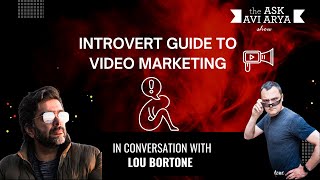
Avi Arya and Lou Barton, a TV executive turned video marketing expert, talk about overcoming camera shyness and using video to grow your business. Lou shares strategies for building confidence on camera and why video marketing works for entrepreneurs.
Foreign.
Hey guys, this is Avi Arya. Father of two girls, six dogs, husband to a superwoman, a streetcar racer, turned hotelier, now social media marketer and founder of Internet moguls. Welcome to my channel.
Good, thank you. Nice to see you. My pleasure. Where are you coming from today? I'm in New Hampshire in the U.S. oh, nice. Lucky you. I'm on the the other coast. Let me see if I have everything set up properly. Okay, I think we're good. Yep, yep. Now.
Now. And I wanted to go overseas, meet more people and study streetcar racing. So these were my two dreams. And in, in my 18 year old friend circle, I was the only one who had a dream. And I was happy about that. One day everything changed when my dad called me to his office and he said, I remember walking into his office as if it was yesterday. There was a red carpet on a wooden floor and there was the smell of incense. You know, he had just finished his prayers and there were these two landline phones, you know, these phones which had cords from coming from, you know, the wall. They were off the hook. My dad's phones were never off the hook. I knew there was a serious conversation happening and so he said, son, I've lost a lot of money in my business and we've had a family separation. Now the only way that we can move forward is I can't send you overseas for studying. We're selling the house in the next three months. We sold the two cars that we had behind the reception of my dad's small 27 room motel. I was lost. I didn't know what to do. One day an international tourist walked in, paid us in Dutch gilders, the currency of Euros before the currency of Holland before the euros came in. And I was like, hang on. And I converted the money. It turned out to be double Indian rupees. I'm saying, hang on. If an international tourist can pay me double from what an Indian customer is paying, why don't I convert all 27 rooms into international tourists? That would be great. However, during that time there was a new phenomenon on the market called the Internet. And I was like, I need that. There were only two places in Delhi, the British School Library and the Sheraton Hotel. And both of them are prohibitively expensive. After six months, I saw an ad in the paper. Satyam Computers. Looking for cyber cafe partners, I approached the person, Rohit. Rohit is still a friend of mine after 25 years. I was one of the first people to approach him back then after three months of unnecessary paperwork, he gave me a 6 computer cyber cafe in my dad's motel. Now I had 24 hour access to the slowest Internet on the planet. Nothing would work except some websites never opened completely but the chat was working and on chats I was convert talking to people. Somebody said create a website. After six months of finding some people who are working for large companies creating websites for American companies I found people who said I'll make it in six months, six months we got a sketchy website done. Somebody said put a toll free number for different countries Somebody said write some articles and blogs about India travel. I did everything in the next two, three years that slowly we started getting queries people started responding back and forth. I didn't even know they're real human beings. My first experience of electronic mail on the 15th of December a family of four came I'd to the airport, picked them up. They were real human beings by the way. They came in, checked them into the hotel room 302 they paid us $400 for a 14 day stay. That's when I remember telling myself this bloody Internet thing work and put on my it did extremely well then on the basis of all these Successes by then TripAdvisor, Facebook, Google, all these companies came to India. They were already working with the large conglomerates they wanted to now work with smaller companies. So they reached out to me and they said can you be an evangelist for us, for small businesses that what you've done? As you can see, I love talking. When they gave me an opportunity to speak, I grabbed the opportunity. I said let's do it. So they took me around the world and I spoke on stages told them how I converted my Dad's Hotel from 1 to 5. We did all of this. That's when people started coming to me and saying abhi, can you do this for us? Can you do this for us? That's when I said fine. In 2009 with a four member team completely bootstrapped I started my own digital marketing agency called Internet Moguls and we went from 4 to 225 people working with 700 clients in 10 countries in 11 years with a long journey ADO is tiring failures, all of that but we built a very substantial company with lots of clients. The Marriott, the Hilton, Mercedes Benz. Some of the top clients around the world still continue to work with us. During that time I got hired by 23 speaker bureaus to say we represent you and we speak. And I started and when people are saying what you do so I tell this entire story That I told you in eight minutes, in under eight seconds. How do you do that? I said, here goes. My name is Avi Arya, Father of two girls, six dogs, husband to a superwoman, a streetcar racer, turn hotelier, now social media marketer and founder of Internet moguls. So people said, wow, I like the way you storytelling all of that. But I sometimes started feeling fake because I talk about my two girls, my six dogs, my superwoman wife. They're all living in Vancouver, Canada, for the last 15 years. And I'm going back and forth and I can't. I can't get my brain to, you know, I love my family, but I also love this baby that I created from scratch. Internet moguls. And how does. How do. How does an entrepreneur explain to the world that I love my business as much as I love my family? Sorry for saying it, but I do, you know, and I can't live. I can't live without one or the other. But that meant that I'm taking six international flights, Vancouver to India six times a year, and rest of them domestic, all over Asia. I was taking 52 flights a year for three years in a row. And I was very proud of it. I had this board of all my boarding passes and saying, this is how a company is built. And all the youngsters who joined my company said, wow, this is how it's built. But I was like, you know, this is all rubbish. It's not working out. Kids are growing up, I'm missing. And I didn't want to be that kind of father. My dad was always there for me. I didn't want to be like this. So I remember one day coming back and started sending video, send an email to all my clients saying, we do video meetings, we do everything, and we give you a 5% discount on all the retainers. Almost nobody replied back to me. And the people who replied said, you know, like, come on, this is not going to work. Even my team resisted. We can't do this. I said, we have to change it Slowly but surely. We started. We created zoom rooms in the office. No more meetings, no more this. Slowly we started doing it. We got about 10, 15%, 20% traction. And I started doing webinars to do sales instead of meeting people. Webinars for an agency was unheard of. I'm going and giving pictures to people saying, all the CMOs come in. I'm going to tell all of you people what I can do. And then we book individual calls so that everything could come onto videos. My efforts were working My speaker bureau said, I love what you're doing in the video world. What's the system called? I said, there's no system. I just want to get back to home, to Vancouver, spend more time over there. That's why I'm doing all of these changes. They said, no, put a system around it. Because we want to showcase this as a workshop to our clients. So I put a system around it. I wrote a book, the Micro Video mastery method, the 33 micro videos that allow you to grow your business and stay close to your family. So this sort of took off. This became my message, how to run large businesses using videos. So videos for salespeople, all of that. And so that's when I got interested. And then all of that happened. Pandemic happened. Webinars took over. And I've been in Vancouver. I haven't gone back to India for a year. By the grace of God, the companies are fine. Everything is great. When I say great means the business is down in the hotel part of it. We still own and operate the hotels, but the agency is doing fantastic. Webinars are doing extremely well. And you're now between me and my daughters, who are now we're spending a lot of time together. We are on a mission to interview people around the world. We met them, and now we're talking to people online and meeting people like you, who understand videos, who, you know, who get it, who know, like, how it's done and broken out in a format so that we can take this message to more and more people through this podcast called Internet Moguls of the World. Thank you for your patience. That's my story so far.
Awesome. That's great. Thank you.
So I just want to get to. For full respect, I just wanted to make sure I get your. What's the best way to pronounce your name? Lou Boton. I'm going to start record and we're going to get right into the show. Ladies and gentlemen, boys and girls, one more episode of the Internet Moguls of the World, where me and my daughters, we travel around the world now virtually and find experts, gems who have leveraged the Internet to grow their business and spend more time with their families. Today's guest is Lou Boton. Lou, welcome to the Internet Moguls of the World show. Lou, I always say the shortest distance between two human hearts is always a story. You tell a perfect stranger a good story and you win a heart for life. And that's what social media is about, right? We're winning hearts every day. So My story is. My name is Avi Arya, father of two girls, six dogs, husband to a superwoman, streetcar racer, turned hotelier, now social media marketer and founder of Internet moguls. My dear friend Lou, what is your hero introduction?
Wow, that's a tough one. My name is Lou Barton. I am the father of 23 year old twins, two pugs.
Wow.
One is here. It's the way to keep her out of trouble. And I am a TV exec turned.
Can we have the names of your pugs?
If. Yes, this is Regina and Rocco is in the other room, hopefully napping because I try to keep them close by when I'm doing podcasts and webinars and things.
Love that, love that. And I love the fact, you know, I always wanted to be a twin with my brother so I could send him. Because my mom used to call us for homework. She used to say, okay, one hour of homework with the elder one, one hour with the other one. And I always wished if I had a twin, I could send my brother twice to do the homework. And I couldn't do it. So that was my only intention of having a twin. I'm sure it's a lot of fun having twins at home.
Yeah, I have boy girls, so they couldn't. They're very close. They live in Boston and I'm in fantastic.
Families that lives close by are. It's just like. Before we do that, I wanted to know. Tell us something that you've never told anybody on a podcast. Something about your childhood, your. I was fond of streetcar racing, your first girlfriend, or anything about your life that made you who you are.
One of the things I rarely if ever talk about is that I was in a rock and roll band and we were this close to a record deal. But close doesn't matter in that business. But I had a lot of fun in the rock band. So.
How old were you then?
My outlet to sort of, you know, I was 18. Not enough. Yeah, well, this was, you know, close to 20 years ago. I was in the TV business and it was changing drastically and consolidating. And a lot of folks would talk about the intersection between the Internet and tv. Even back then they were calling it convergence, right. And it took an extra 20 years, but it actually eventually happened. So I made the transition from TV in Los Angeles. I moved back east and realized that, you know, I can probably do this myself. The time that I realized that was my partner who was a videographer, had this big camera, you know, $15,000 camera. And then one day he Sold it. And I'm like, why did you sell your camera? He said, because I can do video with this. So that's when I knew, okay, this online video stuff really has a future. So, I mean, with a $500 iPhone or less, fantastic.
That's how the journey started. But you made a move all the way from there. Was it your resolve to do whatever it takes?
In a way, but it was kind of driven by family, you know, similar to you. My family was in Boston, and my wife and I and I had. At the time, the twins were two. You know, we were in Los Angeles. We didn't have a lot of family out there. So when my company got sold to Disney, I decided that was a good time to get out and move back to try something else.
Why your fascination and belief and conviction in videos?
It's funny because I'm introverted and I'm shy, and I don't particularly like being on camera. So I like to help other folks who may be a little more camera shy get their message out. And what I believe is that video can is the fastest and most effective way to get your message out to the world. And I want to, you know, give other people that ability. So tell us to get their messages.
We also have. We talk about shyness to awesomeness. You know, find your brilliance. So tell us, talk to the introverted people who are listening over here. How should they get over their shyness and, you know, find their awesomeness?
You have to realize that your message matters. And you have to realize that it's more important to me to share my gifts with the world and my message than it is to get over your shyness. And when I first was doing this and was first on camera, I would put my kids on camera, my dog, anything to take the attention away from me. And then what you realize is that you can do this and you're not going to look foolish. And even if your first videos are not that great, your next videos will get better. So if you really want to, you know, get your message out to the.
World, you just have, okay, so it's not about you. It's the other person in mind. Like I always say, if you have a message in your heart, a product or a service that can go and change somebody's life, then you, my friend, may be doing a disservice to the world, society at large by not sharing that message and hiding behind your shyness. But at the same time, I'm. I'm. I'm petrified. I'm, you know, Lou I can't. I can't say something. Give me a. Give me a hack or a tip on how I should make that happen. Like you said, maybe get a dog with you so that the attention goes from, you know. So give us a few hacks.
Yes. Well, I mean, the great thing is that, you know, if you really don't necessarily have to be on camera, you can do videos that are PowerPoint webinars or screen shares or animations. So there are other ways to get your message out. I mean, at some point, you want to be camera so that people can see you and build that know, like, and trust. But again, you know, it's really just a matter of starting, you know, realizing that your first few videos may not be that great. I think Facebook Live is a great training ground because Facebook, when you do video, Facebook Live, it's usually less formal and it's usually less pressure. So I have a lot of my clients start there and kind of build a little bit of confidence before they do other kinds of videos. Live video. Live streaming is a great way. Again, it's. It's not highly produced. In some cases, you know, if your lights are a little bit off, no big deal. And then I think people realize that once they get started, they, at least I got my clients.
You know, like, there are three things you need to get known. You need to get leads, and you need to get sales. How do videos fit into all three aspects?
Yes, I think that video accelerates the sales process and gets you there quicker, whether it's awareness or leads or conversions and sales. Because as I mentioned, video really helps build know, like, and trust. People can see you on camera. They get a sense of who you are. Like, you, you know, you shared your story, and people say, oh, my God, you've got six dogs. And then you have talk about. And so I think it's really the know, like and trust factor that helps make that connection and really helps move the process along more quickly. You can say, oh, well, if I've been blogging, you know, people will get to know you over the course of time and they know your articles, but if they see you and hear you.
And what about, you know, like, Your website has 99 video ideas. Can you share some amazing video ideas with us over here? Mm.
Yes. I actually have a little card deck with all different ideas on it. So sometimes I just say, okay, go and pick an idea or any topic, like, what's your favorite movie? And you can talk about your favorite movie and maybe how that applies to business. And I Am a big fan of the Godfather of movies. And I don't really necessarily apply that to business other than say, well, you know, if you really want to sell something, you have to make people an offer they can't refuse. And that comes from my favorite movie. Blah, blah, blah. Give us a couple of more point to talk about. Sure, you can talk about. I'm pulling these right off these cards. The top five influencers in your industry, which is a great way to sort of give shout outs to people. You can talk about your favorite productivity app. I mean, most people have phones these days and there's a million apps on them. You can talk about your favorite iPhone app. You can do a an about me video, which is great because that really helps share some of your story to folks and maybe share some facts that people may not know about. So there's really no limit except your imagination. I mean, you can talk, you can do anything, look around the room and say, oh, I'm going to talk about how we got this rescue dog from China and things like that. And eventually, once you kind of get comfortable talking about stuff like that, you can bring it back to your business. It doesn't always have to be about sales or your business. It can just be, hey, get to know me and understand who we are. And that way you'll be more comfortable.
So when it comes to entrepreneurs who have a business, what is your strategy to get them started on videos?
To get them started. I say, before you even do the video, think about your goal. What do you want to do? Do you want to get people on the phone? Do you want to sell a product? Do you want to sell a course? So begin with the end in mind and then reverse engineer that and what's the best way to do that? So before we even talk about videos, we talk about, you know, what is your business goal? If you say, oh, I want to sell, you know, 100 courses. Okay, well, let's backtrack a little bit and figure out how we can use videos to accomplish that goal. A lot of people just start with the video and throw things against the wall and hope something sticks when you really want to use it. Yeah, but again, you just have to use it as a tool to achieve your business objective. So it's not necessarily that video is the end.
Just creating a video. Video is a means to an end. So you must know the end objective very clearly. What is it that you want to convey? And then use all these card ideas that Lou has. Lou, can you give us two more card ideas? Those are very fascinating.
My top 10 tools. What are the top 10 tools that you use in your business that you want to share that you like? I talk about loom video, where you can share video, emails and zoom, obviously. And especially in the last year, all the tools that we've used. One more idea in sort of a lockdown.
Sure.
You could talk about your best day ever. So if you can remember your best day, whether it was growing up or whether it was a year ago or 10 years ago, it's a great jumping off point to just tell people a little bit about your background and why that's important to you or why you were doing it.
When it comes to webinars, you know, there's also videos. A lot of, like we, a lot of people say, you know what? I'm, I mean, I'm doing a live session with my audience, my student community, 150 entrepreneurs coming in and I'm talking to them. Everybody's on screen, everybody can see each other on screen. And one guy is talking non stop and he's like, I'm scared of cameras. I'm trying to talk in front of people. I said, my dear friend, you're in front of 100 people right now.
Every, you know, any screen is video. And again, you know, it might be a webinar, it might be a little video mail or FaceTime that you're doing with your phone, but it's all video. So the more you get comfortable with that, the better. And again, as you know, particularly in the last year when we have not been able to do in person events or networking events, we've really had.
So what do you have any strategies for people when they do their webinars?
For webinars, again, you have to, I think you have to treat it like an event and promote it. A lot of people just think, oh, I'll just announce that I'm doing a webinar and people will show up. And that may have been the case a few years ago when webinars were a little bit more novel. But now that they're constant, always happening, you really have to give people a reason to want to attend and talk about the benefit, that nobody wants to show up and just hear you talk about yourself or your product the whole time. You really want to see what is the viewer going to leave this webinar with? What is the outcome or the benefit that they can have? I like to give a lot of value on the webinars and not use it as a sales pitch, but use it as a way to Share, you know, important information that people can leave right away.
Do you suggest your clients outdoor videos, indoor videos, stay in your room videos, real life vlogging videos. How do you suggest different videos to different people?
It depends on the client and their audience. So part of it is like knowing where does your audience hang out and what does your audience want to see from you. And the other part of it is I always talk about people have to find their video sweet spot because some people love being on camera. Some people would rather do PowerPoint slideshows, some people would rather do Facebook live, some people would rather do pre recorded videos. So once you find your sweet spot, whether that's live video or animated video or PowerPoints, that's a good way for you to reach your goal because you're comfortable.
It's almost like saying, do you like chicken or do you like beef or do you like vegetarian? So you have to try a little bit of everything.
Yeah, I always encourage my folks, you know, do do something outdoors with, with your phone. Do something, a zoom interview or something like this with another person so you can see how that goes. And eventually, you know, people come upon, they say, I really like doing these interview videos. I think I'm going to do more.
Tell us a little bit about your company and your work and how you help people.
Sure. Gosh, I've been doing this for over a dozen years and if you had told me that I would be an entrepreneur when I first started, I would say no way, because I like the structure of having a company and a boss and all that. And what I realized along the way was that you really can make your own way. And I did it almost by, not by choice necessarily because my company had been sold. And when I came back east, I just decided, oh, you know, this Internet thing is legs. So I just kind of jumped on that bandwagon a bit during the dot com bubble back in, I think it was the early 2000s and really just had to evolve and change. I mean, the fun thing about being an entrepreneur is if something isn't working today, you can try something else tomorrow. So I made a lot of mistakes over time, but realized that what I was best at was helping people take the power of video in their business, no matter what their business is, and grow their businesses more with it. Whether you're a lawyer or a chiropractor or, you know, a yoga instructor, it doesn't really matter. Video can help you in almost every business.
So tell us.
I can't really think of any business.
Where it wouldn't your message to entrepreneurs who are listening and they're getting inspired by your journey. You moved from one course to the other, started a business. You were, you were working in a, in a structured job environment. So people who are, like, right now on the fence, should I or should I not? You know, should I? What, what, what would be your advice to people?
I think the, at the end of the day, it's, if you want to control your own destiny and not be subject to like, oh, is my boss going to give me a raise this year and is my company going to go out of business, then you really have to decide, you know, if you want to be an entrepreneur, you're in control. You make the rules. You get to decide who you work with and who you don't work with. So that's, you know, it's not an easy jump to make. But when I realized, you know, I had 25 people working for me when I worked for the entertainment company in Los Angeles, and then to come back here, it's like, oh, my God, I've got to deal with this all myself. It's a little scary, but it's also a little empowering because you realize you can, you can really do things the way you want and build the business the way you want it. Build it. So if you want to say, you know, I want to work noon tonight.
And what are the challenges that you face when you started your own business?
Well, part of it was honestly working from home, which I know most people are doing it now, but, you know, 10, 12 years ago, it was not as common. So it was a lot of it was just getting used to, okay, I've got little kids running around the house or dogs running back and forth. So part of it was just getting. Adjusting to working from home and being disciplined enough to actually, you know, what I realized right away was this is not going to be a nine to five kind of thing. I'm going to have to. Especially when you're younger, I'm going to have to work during the naps. I'm going to have to work after the soccer game. But on the bright side, oh, my God. As you know, I was able to go to all the baseball and soccer games and school things. And what I know now, you know, 20 years later is like, you can't really get those years back.
That is so lovely.
I love that.
I've got more questions for you before we wrap this up. 1. So for people who are wanting to get in, in, in, you know, sort of follow your footsteps and Actually start helping people do videos. What do you think of that as a business for others?
Yeah, absolutely. I mean, the. The great thing is that you don't need a lot of fancy equipment. The. The ability to broadcast to the world is now at our fingertips and on our phones. Whereas when I first started in business a million years ago, there were, you know, a handful of cable networks and four TV networks, and they had all the. They controlled the screen. And now the screen is whatever you want it to be. So it's like my kids, who are 23 next week, they don't make any distinction between television and iPhone and iPad or, you know, Xbox. It's all just information or entertainment on a screen. So I would say if folks want to get into that, they can realize that.
And my last question. Now, this is a question, you know, because we like to go behind the scenes. We like to understand the entrepreneur. So it might get a little personal. Some people feel it's overwhelming and not. I mean, so if you feel, you know, it's too personal, you can choose to sort of ignore it. All right, so here we go. Are you ready? Who's your favorite superhero?
Yeah.
Alrighty. And why.
That's a good one. I would have to say Batman because, well, because he's a millionaire, so that's pretty awesome. But because he's also a bit of a loner, and I love that, because.
Why I ask this question is because you see in others what you have inside of you. And you explained it so well. We look at everything and we say, this is who we love, because we have a little bit of that. So you explained it so well that I like Batman because of these two reasons. So, Lou, thank you very much. You know, my dad always says the most expensive thing you can ask for people is not their money, but it's their time. You gave us your time today, and you, you're going to be inspiring lots of entrepreneurs through this podcast. Thank you very much for giving us your time. And on the Internet Mogul show once again, ladies and gentlemen, don't forget, at the end of this show, give me your three best takeaways. Go to Instagram. Post your three best takeaways, tag Askavi Arya on Instagram. And one lucky winner gets one book on entrepreneurship couriered to their home every single Sunday morning. So thank you very much for listening and watching the show once again. My name is Avi Arya, father of two girls, six dogs, husband to a superwoman, a streetcar racer, turn hotelier, now social media marketer and founder of Internet bogle Thank you, Lou. Thank you very much. Alrighty. That was fantastic. That even if they, they did, you know, that's what makes a good show. Lou, are you, are you, are you active on Instagram? Okay. Okay, so I'll send.
Not so much on Instagram, Facebook, LinkedIn, YouTube. But I will definitely promote. You know, I mean, I have an.
Account, so I'll also send you a invite. So I just wanted to stay in touch. I don't want it to be just, just a one off thing, you know. And like I said, we are in Vancouver, Canada. We run an agency here. And in India, at any point in time you have a book coming out, a promotion event, but whatever. And you need us, we have a very decent following online. Anything that we can do to help you, I'd love to remain a friend for life and so feel free to reach out.
Thank you.
Yes. And once again, happy birthday to your kids for next week. Alrighty. Bye for now.
Oh, that's right, it's on Sunday. So thank you so much. Yeah, bye. Bye.
More from Avi

The strongest mindset doesn't begin with meditation. It begins at home. Before you conquer the wor

The strongest mindset doesn't begin with meditation. It begins at home. Before you conquer the wor

Your mindset isn't something you fix once. It's something you train every single day. Just like yo

Don't build a company just because your friends are. Build one because you're ready. A startup is

Everyone dreams of becoming the boss. Very few understand what that really means. The moment you b

Most entrepreneurs say, "I don't have time for coaching." The truth? You don't make time for what

Over hiring doesn't always solve problems. Sometimes, it creates them. Having a small buffer in you

"The highest-paid" isn't the goal. The highest-value is. People often ask why premium mentorship co

The founder will always be a bottleneck... at some stage. The goal isn't to pretend you're never th

People ask me how I stay consistent with my morning routine while traveling across countries and tim

People ask me how I stay consistent with my morning routine while traveling across countries and tim