How To Connect With Your Audience Through Videos | Avi Arya | Julie Hansen |
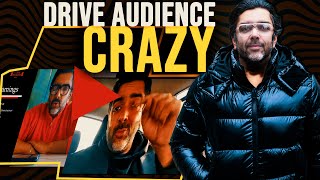
Avi Arya and Julie Hansen discuss how to connect with audiences on video. They cover body language, eye contact, and energy management, plus how acting skills apply to presentations and marketing.
That first you need to understand how this universe works. I'll tell you a little bit about how I feel this universe works and then how you work. Because once you understand how that ecosystem works, you're just a small part of it, then you understand how things work.
Whether you're an actor, a salesperson, entrepreneur, a leader, your business is based on relationships. Whether you're talking to one person or thousands of people through video, they're having a relationship with you. So we really have to learn how we build that relationship. A lot of times I see people with very blank expressions and not, you know, if I turned up the sound, I wouldn't know if they were sharing good news or bad news. But the fact is, if your face has nothing to say, why are you using video?
Is it going to be very crazy if we ask you to give us a demo of how to go big?
Uh, no, it's not going to be crazy. You want to. You want to see that?
Okay, let's do it. Good evening, ladies and gentlemen. I hope you're all doing well. Thank you for joining another Thursday masterclass. And today's special guest is Julie Hansen. Julie, thank you very much for giving us your time. How are you doing?
Oh, I'm doing great. Doing great. Especially after that meditation. I'm going to start all my presentations with that. That's wonderful way to start.
Awesome. It's just. It's just a way of getting. Getting centered and making sure that all other distractions leave the mind and we're focused on what we have to learn for the day. So, guys, can we all give a big, big Internet moguls welcome to Julie over here. Julie. My dad always says the most expensive thing you can ask from people is not. Is never money, but it's their time, because that's the. It's so finite and it can be pulled in so many different directions. We started this community after Covid started, and so every single person has gone through a lot in the last few years and then rebuilding their businesses. And for you to be able to take time to do this is really, really appreciated. So from all of us, a big welcome in the comments.
Thank you. My pleasure to be here.
Alrighty. So, Julie, you know, we have a format, so we say we give something called a hero introduction. Right. So I'll start and then we request you to tell us yours.
A hero introduction of.
Yes. No, it's. It's. It's how you. How you. When you have no fear in this world and you just want to connect with the whole World from your heart, how would you introduce yourself? So I'll tell you mine and then we'll inspire you to tell us yours.
Okay, sure.
Okay. So I say my name is Avi Arya, Father of two girls, six dogs, husband to a superwoman, a streetcar racer, turned hotelier, now social media marketer and founder of Internet Vogels. Over to you.
Wow, that was very nice. I'm Julie Hanson. I'm an actor and an author, helping people communicate better. Because when I grew up, I was not a great communicator. And so I turned to acting to really help me get outside of my comfort zone and learn how to connect with people. And through that, I found my true self and my own authenticity. And now I'm blessed to be able to help other people with that journey and being able to connect with others.
Lovely, lovely. I need some mint. Alrighty. So guys, we are going to have the next about 40, 45 minutes with Julie. So, Julie, if I'm correct, we're going to do. You're going to do a presentation route and then we go to a Q.
And A. Yeah, Yeah. I think you need to allow me to share my screen.
Absolutely. So, team, can you please allow Judy to share her screen and everybody who's excited to learn and taken the time out? Because I know most of our people are in India right now. It is late 9:15. Yes. And the class goes on till 11:11, 11:30. So these are people who really want to learn and do something with their lives.
So that's what I love. People who really want to hear the message.
So. Absolutely. So, Smruti, can you please give Julie.
There we go.
There you go. Awesome. Awesome. Thank you. Smriti, over to you. So I'll be. I'll be taking. Sitting here, taking notes. We have a note taker over here as well. So what happens is that somebody takes notes along with me. We merge the notes together Within a week, 10 days, the blog is up on our website and we make a podcast out of this, we make a YouTube series out of this, and we send you all the links within a week. 10 days.
Cool. I love it.
All right, over to you, Judith.
Got a system. I like that. Okay. Well, I am so thrilled to be here again. Working with people who really want to improve is, you know, you're my people, I'm with you. So I want to give you some really good tactics you can take away and learn from this. So what I'm going to share with you today is, as I mentioned, I been an actor. I've also Been a salesperson. I'm an entrepreneur myself, and I'm going to share some acting secrets that most people don't know to help you use video to build relationships and ultimately drive sales and build your business. And the reason I throw relationships in there because whether you're an actor, a salesperson, entrepreneur, a leader, your business is based on relationships. Whether you're talking to one person or thousands of people through video, they're having a relationship with you. So we really have to learn how we build that relationship. We always say in sales, people buy from people they like. People buy based on emotion, not necessarily logic. So the problem is in this virtual world is that it is harder to build those relationships. And Harvard Business Review found that that's just absolutely a fact, that people tend to cling to the relationships they had because they don't feel as connected virtually. And that's a problem if your business relies on that new lifeblood of new business. Right. New relationships. So we're going to talk about how we can overcome that. You know, the. The other challenge with being on video is, first of all, speaking on camera is a completely unnatural act. Nobody is known, nobody is born knowing how to do this. And the fact that we've been thrown into this environment, many of us, just when Covid started, without really the tools to help us navigate. It's amazing that some of us are doing so well. But there's a lot of things that people don't know that we've sort of skipped over and how we connect with people through video. It's not unlike an actor going from stage to screen. And I know because I was an actor, and you learn a whole different skill set when you're talking to an audience face to face. And, you know, it's. It's very different. You're using different skills. It's a new medium, right? And so I learned as an actor when I, you know, like most actors, my path was live theater for. For several years, and I was. I was very well trained in that. And then I had an opportunity to audition for a film role. And I went in feeling pretty confident, and I got in front of that camera and I was like a deer in headlights, right? I didn't know where I should look, how long, if it was okay to look away, what I should do with my hands. Just completely blew it. So needless to say, I did not get that part. But what I learned is that this requires new skills when we're going from in person to virtual to video. And many actors have made that transition and they didn't naturally just end up there with their theater skills. They had to take training in how to communicate on camera. And so the fact that we haven't really recognized that in the business world as entrepreneurs is a misstep, I think. And it doesn't help people understand that you're not going to naturally be good at this.
Right.
Most, you know, of course, there's people that are naturally good at something, but most people are not naturally good at it. But there are some skills that you can learn. And so I did learn those skills. And eventually I. It helped me get parts in some roles. You may be familiar with Sex and the City. There I am looking very sad in one of the episodes that was one of the character's mother's funeral. But anyway, so I had a fun career doing film, television, video, and commercials. And now I've parlayed that into my business. And what I found was when the pandemic struck and everybody was trying to communicate on video, that nobody had these skills. And so I put out a book called Look Me in the Eye Using Video to Build Relationships and drew on my experience as an actor and as a presentation coach to really help people navigate this world and not just turn on a camera and expect to be good at it. And then I created the Selling on Video Masterclass, which is a series of videos where I model many of the techniques, like how to make eye contact, how to read body language, how to get people engaged, and have exercises that you can do on your own and record yourself. It's my effort to help people transition into this new medium. And so today I thought I'd share with you a couple of my favorite techniques from the book and the masterclass. And then, of course, any questions that you might have, we'll take those as well. So I'm going to share some acting secrets for connecting with your audience. How to use your eye contact and your body language to really further that connection. And then importantly, what the camera sees, which means what the audience sees and why and how we need to cheat for the camera and what that means. So let's dive in. Let's start with the last point there. What the camera sees, why we need to cheat for it. Now you're probably thinking, well, why do actors have to cheat? Why do I have to cheat for the camera? Well, a cheat means we are making some adjustment for the benefit of our audience. And it happens all the time, both in person and on video. You know, in person, we often position ourselves, perhaps if we're doing an in person presentation so people can see the slides behind us feels a little awkward, but we do it right same way on video. So, for instance, if you see a film and the actors are having a conversation, they are often so close together, like, much closer together than they would be if. If they were in real life. And that's because the camera can only get the full scene. It can only see all the dynamics if they're standing that close. Actors in the acting role, they call that a mouthwash scene, as in, I hope the other actor uses mouthwash because you're right on top of each other. So there's a lot of those things that actors know. They learn to adjust for video. And so I want to share with you some of those. Some of those things. And look at how the camera distorts and reads different behavior and how we can adapt to that. The first is to know about the camera is that it really is a lie detector. And just as the human eye is a lie detector, we're very good at telling what's going on with somebody without them necessarily verbalizing it. So, for instance, if you have thoughts in your head like, ugh, I need to do a video, or I hate the way I sound and look on camera. Anybody have that thought? Or I'll do it, but nobody's going to watch this. This is a problem because the camera picks up your feelings and how you feel about just being on camera and going into that video or virtual call matters because it's going to be. It's going to be broadcast to your audience through your face, through your eyes, through your tone, through your energy. So you're not getting away with pretending it's not there. So we have to get in the right mindset. I don't know if anyone's familiar with the show Fleabag, but she verbalized it really nicely. She said in that series, she does a lot of talking to the camera and said the main relationship in that series was between her. Her character was called Fleabag and the camera. And she had to convince herself that anyone, the other side of that camera was instantly complicit and instantly a friend of hers. She had to look at her camera as a friendly entity. And that's really the secret behind. One of the secrets behind great video is you have to make friends with your camera, whatever that means. A lot of us by now have sort of a, you know, an acrimonious relationship with our camera. It's like we have to use it, but we don't like it. We have to get past that we have to start seeing it as our champion and our friend and the lens through which we're going to communicate with our audience. The other way the camera distorts things is you may have heard this expression that the camera adds 10 pounds, which there is some truth to that because it flattens everything out. But it also takes away a lot of our natural energy because again, we're communicating in two dimension, not three. But we don't have that in person energy that we're able to give off. And oftentimes we're seated when we're doing videos or having virtual meetings. And so it's just a natural lower energy state. So we need to bring a heightened version of ourselves to video. Like I said that you can't, you know, the camera's a lie detector. So you have to be authentic, but you have to get in a heightened state. And oftentimes people, well, I want to be natural, I want to be myself. And what happens is that's often confused with being comfortable. And being comfortable does not read well on camera because like we saw, your energy is already naturally down because of the fact that you're on camera. And then if you get too comfortable, if you're in your comfy chair and you start leaning back and then your energy goes down and down, it's very hard to engage with people with a low energy. You have to bring more energy. You also have to warm up. Actors know that you can't go from 0 to 100 in terms of energy level. The minute that camera light goes on. You have to get there beforehand. You have to be in peak state when you hit record or when you hit start that meeting. I have a free warm up that you guys can use. I'll give you the address again. It's on my website, but it will help you. It's seven minutes. It will warm up all your expressive muscles, your body, get you energized, so you can be in peak state for those calls. The other thing you can do is your position matters. There's a position I call the camera ready position. It will instantly make you look more engaged and interested. If you're seated, it means sitting up straight. Somebody can try this. Now sit up straight, get your feet planted firmly below you, back straight, and then just hinge forward. About 15% didn't have to be that precise. You look like you're on the edge of your seat and you can't wait to have a conversation with this person. That's the state that really reads well. Then of course, if you're standing, trying to be weighted evenly on both feet. The other thing to remember about the camera is that the camera is the eyes of your audience. I think many of us know this, but we don't maybe give it enough credit. It's really important that we connect through the camera with our eyes. If you've ever been in person with someone who you're talking to and is looking down at the table or looking at their phone, you don't feel important, right? You don't feel like they're interested. And yet that happens all the time on video, doesn't it? Whether it's recorded video. I see a lot of recorded videos where people are looking down, they're looking at their script or virtual meetings. They're looking at our image. And this feels to the receiver like, gosh, is he listening to me? Is he interested? Live call. Like, why am I on this call?
Right?
So we. We can do the opposite of that which. Which actors do really well in certain instances. These are some movies where in film and shows where the actor talks directly to the camera, maybe you've had that experience where suddenly the actor turns to the camera and they talk directly to you, and you feel like, oh, my gosh, they're. They're in the living room with me. And that's actually a technique, and it's very powerful and it's very compelling. Because even though they may be talking to a million people, it feels like they are talking to you. And that's the power of video, if we use it well. And that's a technique called breaking the fourth wall. And in acting, in the acting world, the fourth wall is that screen that separates us. And so we have to find ways to break through that because it can keep people very distant. So we can bridge that virtual gap by thinking about, how do we break that fourth wall? And eye contact is one of the most powerful ways because we now have that wall with our audience, don't we? It's very easy for them to just feel very passive and watch it or don't watch it. But if you feel like somebody is actually seeing you, whether they can see you or not, it really draws you in, and it makes you feel engaged and like you want to be there and be involved. The other thing that I mentioned about video is that you can use it to really make people feel like you're talking to them. But you have to think about, even if you're talking to a broad audience, say you're putting out a video for your business and you're talking to who, you know, could be 100 people, a thousand people at a time. Think about talking to one person. Because everybody's having their own personal experience. And so if you think about talking to one person, it makes you more direct, it makes you more authentic, because it gets very presentational and generic. If you start thinking about, I'm talking to a thousand people, and even my body language and my talk track might get a little more general. So thinking about talking to one person makes you very specific and personal, and it feels very intimate. And that's part of that breaking that fourth wall. So talking to one person is important. The other thing we need to know about the camera is it doesn't like fast or vague movements. You've probably been on calls where people use their hands a little too much too quickly, and all it is is distracting.
Right?
It takes you away from the message and the connection on camera. Less is more. And I love this quote from Sir Michael Caine. Theater acting is an operation with a scalpel. It's a little broader, right? You have a little more room for error. Movie acting is an operation with a laser. It's very precise and specific. So you want to try to keep your movements precise and specific as well. Trying to operate within this frame, because this is the reality of what people see. And if you're constantly going outside of frame, they start to wonder what's out there. And it reinforces the artificiality of your connection. So making those slow, deliberate gestures don't bring your energy down, but instead of getting bigger and louder and faster, think about increasing your energy and focus and intensity. We have to remember that on video, people are really seeing if we're seated, particularly, they're seeing the tip of the iceberg. If we could see the full iceberg, you would have a lot more information about that object. Like, oh, I better not hit it. It goes pretty deep. It's not just this little land mass on top. Well, the same is true of people. What we're doing on video when we're seated is we are eliminating a lot, 85% of our body language that used to be help people get context and meaning to what we're saying. We have to realize that we have to use this space to communicate everything we did with our full body in person, which means we need to use this real estate. This is prime real estate. And. And a lot of times I see people with very blank expressions and not, you know, if I turned off the sound, I wouldn't know if they were sharing good news or bad news. But the fact is if your face has nothing to say, why are you using video like that? Could be a phone call, right? So really use your face to support what you're saying. Make sure that your emotions are connected to your face and your voice and part of that warmup will help you do that. Because we've often been taught in business to be very buttoned up and very businesslike and reserved. And that doesn't, again, that doesn't read well on video. People want to know you, they want to see your personality. So we've got to energize ourselves. We've got to warm up to be able to allow people to see that. So I covered a bunch of things very quickly there. You know, how to connect with, with your audience. Some quick ways to do that with eye contact and body language and energy and how to get in that peak state. And just as before we wrap up and take some questions, you can get that seven minute virtual video warm up at Julie Hanson. I'm sorry, Julie Hansen Live. Got an extra dot IN there. Julie Hansen, Live Resources. And if you'd like copy the book, it's on Amazon. Look me in the eye and you can get more information about coaching and classes and training. If you're interested in learning more@selling on-video.com so with that I will open it up for questions.
Lovely, Julie. That was fantastic. Sir Michael Caine, definitely a legend. And thank you for quoting that. You know, often, often we forget and we get out of frame. And so thank you for bringing us back and giving us that perspective once again. So before we open it up to Q and A, I want to, I want all of you people to give a big thank you on the bulb on moments. So we call it Bulborne moments. We call it star moments. What are these moments that we are collecting from every investment in time that everybody's making? So in a one hour conversation, if somebody can go back with two, three bulb on moments, star moments, write them down in your diary. And as the year goes, as this mastermind grows, you have 40, 50 star moments. And those are what you need to work upon. So that's how this whole session works. So I am going to be calling Sangeeta ji. Sangeetha, would you like to switch on your video and ask Julie a question? Yeah, Smriti will help you. Okay, just one second. We're just going to get these people on and meanwhile I'm going to take a picture for our Facebook group.
Well, thank you.
It's nice to read this chat. I'm glad that you found it informative.
Awesome. So I'm now going to invite a couple of people together. So all those people that I'm inviting you can switch on your videos one by one. Be ready. So after this I'm going to be calling Michael Pinto. Then I'm going to be calling Lata. Then I'm going to be calling Sandeep Takral, Narender, Sanghvi, Adi Chapia. So be ready with your questions and Astha Tatya as well. Alrighty. If any of you have questions. Yes, Radha. After that all of you people just be ready on standby and one by one you can switch on your cameras after this. Okay. Sangeetha, over to you.
Hello ma'.
Am.
Thank you so much for amazing, you know, informations. So my question is ma', am, how to reduce our consciousness camera consciousness.
How to reduce your self consciousness of being on video?
Yeah.
Okay. So nervous and just too picky about. Yeah. You know, picking yourself apart.
Right.
Sometimes I'm in very high energy but I can't show it up on camera.
Okay.
All right.
So often that happens because we're nervous. And what happens when we're nervous, even if we're high energy is if we're not warming up our body, everything gets tight.
Right.
And so then it's really hard to communicate, to express yourself because your body is in that fight and flight reaction.
Right.
So it's kind of shutting down. So part of that warm up. The reason is to keep that energy flowing. So keep that high energy flowing, move around, shake it out right before you get then go to the video and what we're aiming for. I think oftentimes people are trying to do something perfect like trying to create a piece of art. And we're human, we're not going for artwork.
Right.
What people want is they want to see you and they want to see your interest in them and your passion for what you do and how you're going to help them. So don't worry about some of the little flubs. Just try to communicate your message and connect with the other person. And don't over analyze the results. As long as your message is clear, you're connecting, you're making good eye contact. That's often enough to grab someone's attention. Okay.
Thank you ma'.
Am.
Thank you so much.
You're welcome.
Alrighty. Next we have Adi. Adi, you have a question? Yeah. Radha, you can join us as well Asta, if you want. For sure.
Okay. May I?
Oh sure. Go for it.
Okay. Thank you so much, Julie, for such an insightful discussion. So I just wanted to ask, you know, because sometimes you feel confident the way you are natural the way you speak, but there are a lot of, you know, the new trends coming up, you. That you should speak like this, that that would attract more attention or you should have some movements. So I am bit confused here. So whether I should say, stay to my natural self or how much do I, you know, decide that I have to follow the trends. Because I found for myself that that was very disturbing, that there's a certain natural way where I can communicate with people. I can, you know, I'm very confident in that. But I get little baffled up when I say, okay, the way you speak might not interest a lot of people, but this is the trend. You should follow it, follow it up. So how much we should, you know, train ourselves again and again. Is it like it's a continuous practice or what would you suggest on that?
Right, right.
Well, first of all, you don't want to just follow every trend blindly. There's a lot of advice out there that I think doesn't fit everyone. So what we want to do is take your natural, authentic style and just adapt it for this screen. So it looks to me like you're a gesturer. Is that right? Yeah. Okay, so we don't want to turn you into not a gesturer.
Right.
We want to just make sure that those movements are as crisp and clear and in frame as possible. And what you're going to have to do is just record yourself and look and see where your movements are. Maybe getting a little too, you know, too busy. And then practice that. I would say practice it. Not just, you know, when you're recording videos, you want to practice it when you're speaking in person.
Right.
Just really, you know, being more precise with your movements, perhaps, and just getting. You want to develop that muscle memory because what you don't want to do is just what you said, you don't want to be thinking about, oh, I need to look at the camera, I need to move this way, I need to move that way. You have to develop that muscle memory. So it's just second nature.
Right.
Okay.
And how much is the practice? Like, you know, because when, like I would say 20 years back when I started taking my, you know, sessions and with the, with other people and talking to, communicate to the group of people, I started practicing in the forefront of mirror. I used to speak to see, observe myself. So now it's like, okay, making a video and checking it yourself, but I still sometimes go to the mirror back because I Think so that is my natural way to connect with myself. To see, however, am I lacking? So is it. Is it okay or should I like, you know, one of the person suggested, maybe that's an old method. You should not do it because it gives you a little, you know, not the proper.
Right. Right.
I've. I've never been a proponent of talking to the mirror to practice because you're trying to both communicate and try new things and you're judging yourself at the same time there. It's. It's not possible. Okay. As an actor, I learned that you. You have to separate those two because. Yeah. That's. The recording is the best way to do that. Best judge of that.
Thank you so much.
You bet. Great question.
Thank you, Radha. Now we're going to go to Mr. Prabhakar.
Hi, Julie, this is Prabhakar. Hi, Bangalore, India.
Nice to meet you.
One of the questions I had is already answered because Radha asked that question. Whether it will help in talking to oneself in front of the mirror.
Okay. Yeah.
The other questions I have. So you said because you are in front of a camera, you have restricted movement and you have to learn how to make gestures within the short space that you have. Does it mean that what you can't do with your gestures, you do it with voice modulation?
Is it possible what you could do with gestures, you can do with voice modulation?
Yeah, that's.
Question. Yes. Your voice is your other tool.
Right.
Your voice is just as much as a tool as your gestures, as your face, as your body language. Yes. So you have a variety of tools. And as actors, we call that we have our toolkit. We have our voice, we have our body language, we have our energy. So using those tools and different variety is, you know, is important. And trying not to, you know, if we rely too much on just one tool, sometimes that doesn't have the impact as if we're using all of our tools. Well, so that's absolutely. Voices is very important.
The other question I have, there are two. Two different perspective. One is you are speaking to a video. You're taking a video of yourself and you're speaking to the camera. So another occasion, you have live audience. Is there a difference between the two?
Yes, there is. Because the tendency when you have a live audience is that you're going to want to look at them. And that means looking at your screen and so understanding that every time you look away from the camera, just like I am now, I'm breaking that connection. And you don't really know what I'm Looking at.
Right.
So we have to really understand how to look at the camera even when there are other people live. And how we read that body language while looking at the camera, which is something I cover in the book. It's a acting technique.
Right.
If when you're talking to a camera, it's. It's acting, it's as close to acting as anybody's going to get. So, yes, they are. They are different for sure. Thank you. Thank you. Who's next? I think we had a couple in chat, didn't we?
Can I ask a question?
Yes. Okay.
So, hi, and I want to thank you. And I want to say that I. I think that I have made my first step towards acting after this class.
Okay, you have.
Okay. So what my question is that why when I record my video, then I generally do it from my smartphone. So from the front camera when I try to record, I actually, my eyes by default go towards the screen on which I am present. So I am not looking into the camera. And this similar thing happens in the back camera also because I, I think that the whole smartphone is the camera and this happens in my head. So how to tackle with that so that when the final video comes, then I am looking inside the camera only.
Right, Right.
You know that you brought up a great point because we are very precise in eye contact. We know when someone is looking at us and look, I'll just look a little off. And it's just a little bit off. But it's like it bothers us.
Right.
We're disconnected. We wonder what's going on. And it's very difficult to find that, that sweet spot on the phone. So if you, you're going to have to, you know, memorize where it is, be able to quickly find it. You're going to have to get that, you know, in your brain if you're going to use this smartphone, because it's not intuitively where you think it is. And the same with the iPad. You know, the camera isn't where we think it is right in the center when it's horizontal. So locating that and being able to quickly get to it and hold that gaze there is important. So the thing that would make it easier is if you have your. Do you use your smartphone on a tripod or something? Yes. Are you just holding it on a tripod? Okay, so that's good because if you're moving it, then anytime you move, it's going to really have a lot of variation. So. Yeah. And if you, you can start by putting a little sticky, you know, arrow pointing to it to get you started. But you need to develop that memory.
Nice idea. Thank you so much.
You bet.
Thank you. Harshit. Now we have asa.
Okay.
I'm unable to start my video.
Yeah. Yes.
Okay. Okay.
Thank you, Avi. Hi, Julie. Thank you so much. This was really an enriching session. I had a question around recorded videos. So when we, when we have, we are doing a live session, we have audience right in front or, you know, if it's a coaching session going on. So audience is there and maybe connection becomes a little easier. But when it's a recorded video and I am, yes, talking to one person, but it's a larger audience that I'm catering to, then how important, you know, it is to be structured. What you spoke about, like, not being casual, and when I say casual, it's like, with certain boundaries, of course, but how structured should it be and how do you really go about establishing a connect there? Because there are a lot of variables there. We, we talk about what are the keywords we're using, what the title has to be, what's going to be the thumbnail. All those things are there. But when it comes to, you know, me talking there, looking into the camera and, you know, being myself or doing whatever, how much of this plays a role and what do I really need to do? If you could give me those, you know, certain things which impact the watch time, maybe.
Yeah, I mean, there's all sorts of things that impact watch time, but I think the most engaging thing to another person is being seen.
Right.
Is having someone look at you and talk to you. There's something subconsciously that even though we know they're not there, we feel like, oh, this person. I got to pay attention to this person. They're looking at me.
Right.
So using that eye contact is vital and all those other things help. But I think that's ultimately what people are going to connect to. They're not going to pay attention to somebody who never looks up or is constantly all over the place trying to manage a bunch of tools. That being said, I think when your question seems to be about how do you make that an engaging session even though people aren't engaged with you? Well, you have to think about those. You have to imagine they are engaged with you. If they were there and you said something, would they react? Like, if I say something funny, you know, I'm going to give a. I'm going to pause and see them laughing.
Right.
You have to, I would say, imagine the best possible response from your audience. And that brings out the best in you. And it brings out. It builds in those natural pauses. And I might say, you know, and I might, you know, and I asked you guys a couple questions and you weren't verbally reacting, but I said, so, so can you see how that can help you? And then I'm going to pause because the other person is thinking about it, whether they're there or not, they're going, yeah, I guess you're not going to just go see how that can help you. So now let's talk about.
Right.
It's still a real conversation. People are still with you. You just can't see them. And so you have to start to trust that. And that's really what you learn as an actor is how to talk to a camera even when that other person isn't there.
Right.
And imagine them being there. And so that takes practice. But thinking about what. What would. How would they react to what you just said? And give them a beat to have that reaction.
Got it.
Thank you so much.
Thank you. ASA Kavita Agarwal. Can you please get Kavita online, please? Thank you, Julie. This is hugely, hugely useful. Valuable for everyone, taking notes on the groups and everything. And everybody's putting in their comments. Thank you so much. Yes.
Yes. Yeah.
Thank you so much, Julie. Even I was preparing on the same front. I just came up with a program as, like me and my mic. How can a person remove. Remove his or her stage fright? So, like, you very well described each and every aspect. Even I was working on the same.
Oh, really? Yeah.
This is like your every step was very wonderful, very practical. So thank you so much for guiding once again.
Oh, you're welcome. My pleasure.
All right, thank you, Kavita. Okay, so guys, we have time for two more questions and the people who were already on screen, if you can just send me a message on chat and I'll activate your video. Okay, Padma, go for it. Please activate Padma and then we'll close it with Mantesw. Mantesh. You please let Mantesh on as well.
Hi, Julie. Thanks for such an insightful. Such an insightful session. Now with me, the challenges when I'm talking live, you know, I don't go much on live sessions, but like this, you know, webinars or zoom there. So that's completely okay. But when I am speaking in front of camera, the recorded ones, you know, that are floated later on, I mean, normally it's okay, but when I come in front of the camera, I get too serious. I mean, my expressions gets completely.
Yes.
I just Cannot smile or laugh.
I completely.
It's all gone. Any hack because because of that, I have to reshoot again and again and again.
You know, so.
I feel I'm faking because when I am talking content, I am true self. My true self is very serious expressions. So any hack which can bring smile, you know, during.
Yes, yes, and yes. Absolutely. That is. That is a very common problem. And part of the warmup, and I think it's in the seven minute warmup, if you download that, is doing what I call an over the top read. So right before you go to shoot, read your script and just go bigger than you would ever do in real life, like belt it out and throw your arms around and just really get silly. Smile, be overly expressive, overly enunciate certain words, just as dramatic as you can be, and then record. Because what that does is that pushes your comfort zone.
Right?
That's way above. And so your next take will be, you know, it will be less, but it will be elevated. It will be nicely elevated. You'll have, you know, used those muscles, got those warmed up. That's my best advice. And that works really well. But you got to go big. A lot of times people go, you know, a little big, and it's like, no, that's not big enough. Sometimes when I do this in a class, people go big and everybody's like, oh, that's the level you need to hit. So I suggest you even record yourself going big and ask somebody, is that too much? Is that enough? Because we're not very good judges of how we come across and where we can go with our energy. We need to find that highest range so we can, you know, even just peel back a little bit and get to that peak spot. So try that. Let me know how it works.
I'm sure. Thanks a lot.
We'll try.
Julie, is it going to be very crazy if we ask you to give us a demo of how to go big?
No, it's not going to be crazy. You want to see that?
Okay, let's do it. Let's do it.
Let's see. Let me think. All right, I'll do a little. I'll do a little Shakespeare quote. How's that?
Awesome. Let's do it.
Okay. All right, so. All right, so ideally, I would warm up first. So you have me meditate, which is not the opposite of getting your energy up.
Right.
It's focusing it, I guess, but. Okay. Okay. So I might say all the world is a stage and all the men and women merely players and all the People, the men and the women, they all have their parts. And a man in his time plays many different roles. Like, I would never do that on camera.
Right.
But now I do it. Now I say all the world's a stage. And all the men and women, they're merely players. They have their exits. They have their entrances. And one man in his time plays many parts.
Lovely. So what you're saying is it's almost like elasticity. Like, see how you can stretch yourself? And when you come back, you don't shrink. You come back to a very normal size than what you would. So in your. Most of us are in our heads and we playing small. So you go big and you come back slightly. Somewhere to the middle.
Exactly. That's a great analogy. Like a rubber band, like stretching that, you know, so you're, you. You're playing outside of your normal range, which is usually where people's sweet spot is, as far as, you know, energy and being able to connect and having your audience really, really read that. So, yes.
Fantastic. Fantastic. Okay, so we have last question from Mantesw. Mantesh, over to you.
Thanks, Avi. Hello, Julie. This is Mantesw from Bangalore, Karnataka, India. My question is that when the content is too long, how do I bring it in front of camera? Because it's not going to be very easy. So can you give me some tips.
When the content is too long? Yeah. How do you bring it off camera in terms of how do you shorten it? Or. Okay, so, yeah, I mean, there's, there's a limit to how long people are going to watch, especially if it's not something they've asked for in terms of a video, if we're trying to get in front of them. And typically, you know, and Avi probably knows a lot more about this, but two minutes, I think is, you know, for an unsolicited video is the maximum. So I think you just have to focus. I think many times we try to pack way too much information in our video. And I really think you got to think, what's the one thing I want them to walk away with?
Right.
And I might tell it in a story, I might give it some context, but, you know, instead of doing that long, you know, content, full video, can you break that up into separate videos, taking different pieces of the problem and addressing it and creating a story as opposed to just giving it all out at once? Because people aren't going to watch it as much and they're going to miss the point.
Right.
Because you're just, you just, you Know, I know that tendency to want to give people, give people so much and we have to fight against that and try to break that up into smaller chunks.
Makes sense. Thank you, Julie.
Thank you, Mante.
Good luck.
All right, so ladies and gentlemen, a couple of things before we go. What we're going to do is that first, if you love this session like all of us did, I've taken notes and so is the note taker here in the group. So what we like to do is we like to light up the chats with fire. Can we please do that for Julie? And yeah, and I'm going to take a screenshot of that and maybe send this to you.
It is a lot of fire on there. You're literally fire.
Absolutely. You delivered it.
Six fires. I love it. That's awesome.
That was fantastic. Hearts and fire.
Hearts and fire. Like that.
So what we're going to do is that I've got a link because we all loved it. We all got notes, we got a structure on what we should do. Guys, for all of you people, I'm going to give you the link to the. Julie, are you going to be putting the link to the seven minute warmup?
Yeah. You want me to put that into chat?
Yes, if you could please. Then make sure that everybody gets it right away and gets into your world, your ecosystem. So guys, Julie has a seven minute warm up. How many people want that seven minute warm up? Just say I in the comment box and then she's sending you the link. We want all of you to practice it almost right away.
Okay, Coming, coming, coming.
No problem. Take your time. And so it's seven minutes. I'm sure you can do it today or latest tomorrow. And then second, what I'm going to do is I'm going to send you a link to Julie's profile and I would love all of you, I'm going to do that. I want all of us to go and say thank you and give a review for Julie's work. We've got a taste for an hour on how she is and how she teaches and how magnanimous she is with our, with her without teaching and our tips. And so, yeah, so those are the resources. Julie's already put the link over there.
Yeah, go scroll down to the bottom for the, the video warm up to sign up and you just put your name in and email and then you'll be able to download it or you get a copy of it in your email.
Got it? Has everybody got, got that link? Just, just say yes and just confirm it in the comments, please. Okay, Julie, what's the best channel to follow you on Instagram? Or LinkedIn?
Or LinkedIn?
LinkedIn. Okay, so, guys, can we all go and connect with her on LinkedIn? And then for all of you people, all of you people who put the fire in hearts, I would request all of you people to do what you want to do, which is to say thank you back to Julie. And the best way to say thank you is to leave a review of the work that you put into this world. So, Julie, I will start with that review first thing after I finish the session, and then I'll request everybody else to do it as well. This was really, really very simple, very to the point. But there's so many things we don't even think about. Sit straight and lean 15 degrees, look 1 person in the eye, make that hard connection. Even if they're not there, they can feel it. Make sure that you know that you're within that frame and you're not getting out of the frame, because then people feel you're doing other things, and so therefore, give them that respect and eye contact and many other things that we learned from you, which are going to be part of the blog, which we post within a week, and the video and everything. So within a week, 10 days, we send you a link to all the work that we have got from this one hour that we spent with you. So, yes, and also I'm going to put the link to the book and all of those things as soon as we finish the session. So, Julie Hanson, thank you very much for your time. Ladies and gentlemen, can we all give a big, big, big thank you to Judy? Awesome.
Yes. Thank you all so much. It was a pleasure joining you and look forward to connecting with some of you.
More from Avi

The strongest mindset doesn't begin with meditation. It begins at home. Before you conquer the wor

The strongest mindset doesn't begin with meditation. It begins at home. Before you conquer the wor

Your mindset isn't something you fix once. It's something you train every single day. Just like yo

Don't build a company just because your friends are. Build one because you're ready. A startup is

Everyone dreams of becoming the boss. Very few understand what that really means. The moment you b

Most entrepreneurs say, "I don't have time for coaching." The truth? You don't make time for what

Over hiring doesn't always solve problems. Sometimes, it creates them. Having a small buffer in you

"The highest-paid" isn't the goal. The highest-value is. People often ask why premium mentorship co

The founder will always be a bottleneck... at some stage. The goal isn't to pretend you're never th

People ask me how I stay consistent with my morning routine while traveling across countries and tim

People ask me how I stay consistent with my morning routine while traveling across countries and tim