How to Drive Traffic Through Content | Marketing Strategist - Tyler Basu 😎 | IMOTW
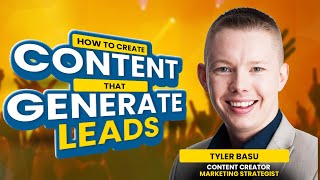
Tyler Basu, a marketing strategist, breaks down how to drive traffic through content. He covers defining your audience, repurposing content across platforms, building ad budgets, and using tools like content calendars to stay organized.
Basically, I help entrepreneurs create content that drives leads and sales, not just audience growth like you mentioned. On a personal level. Also a dad. I've got a one year old and a four year old now, happily married for nine years. It'll be nine years in a couple of weeks. Yeah. I define content as any type of information that you publish online. I mean, if you're a business owner, an entrepreneur, you need to protect your time. And so you probably only have a little bit of time each week where you can actually create your content. And then everything that happens afterwards, the editing, the repurposing, the publishing, the promotion, probably shouldn't be you. Sounds straight. Sounds dry.
My name is ABHI Arya. Father of two girls, six dogs, husband to a superwoman, a streetcar racer turned hotelier, now social media marketer and founder of Internet moguls. What is Tyler Basu's hero introduction?
Wow, man. I should work on that. I should work on that. Basically, I help entrepreneurs create content that drives leads and sales, not just audience growth like you mentioned. On a personal level. Also a dad. I've got a one year old and a four year old now, happily married for nine years. It'll be nine years in a couple of weeks. And my wife, also an entrepreneur, you know, her and I, we are both building businesses in the middle of the pandemic and we're grateful to both be growing. And so, yeah, that's a quick introduction from me.
Lovely, lovely. How's Theresa doing? How's her business doing?
Yeah, she's good. She had to move everything online. Cause she was, you know, she was hosting in person workshops and In February of 2020, she's getting the emails that everybody's canceling in person workshops. You can, you can't go. So she moved everything online. She's doing three to four workshops a week using Zoom right now and she's creating her first online course. So, you know, after 10 years of watching me talk about building an online business and doing content marketing, now she's doing it. And so we both get to, you know, we both get to work online and be entrepreneurs now. It's a lot of fun.
That's amazing. That's amazing. Tyler, for our audiences, tell us, simplified, what is content marketing?
Content marketing means getting, getting your message in front of the right audience and doing it in a way that helps grow your business. So growing your audience is part of it. But you and I have both seen a lot of people build audiences online and not know how to extract customers from those audiences. You know, there's influencers that look great on Instagram and they got no money. And so I'm an advocate. I'm an advocate of making sure that you have the content that will do your selling for you. Like, have that sorted out first and then go create the content that grows your audience. Because if you make the mistake that I've made before. When I first started creating content back in 2012, 2013, I put out a hundred plus podcast episodes. I was writing articles for publications every week, growing an audience, but I had no business model behind me, no products or services to offer those people. So the whole thing was like a hobby in getting attention for myself, but not actually building a real business around that. So I've learned from my own mistakes. When we started this agency, as much as I wanted to start creating content to grow an audience right away, I started with the content that would help put calls in our calendar, application forms, webinars, free resources to get people on an email list, things like that. Once I had all those in place, now we're putting out more content. You know, now I've got doing a podcast, three episodes a week, more active on social media. It's like, now our focus is audience growth. But I didn't make audience growth my first priority. I made it like my second or third priority after making sure I have a good offer for a specific audience and the content that would help convert a lead into a sale.
Got it. So you're building the whole machine. You're saying most people build it backwards. Build an offer your target demographic, build an offer for them, Build lead magnets for them, Build appointment calendars so that they can book times with you for them. Build all the call to actions, basically. And then on top of that, fill up the funnel with content which will automatically. Then when you wake up in the morning, you have either a call booked or you have your leads coming in and all your webinars getting filled. Okay, got it.
Yeah. And this is where like, people need to decide, are they content creators primarily, or are they entrepreneurs and marketers primarily? Because if you're an entrepreneur and a marketer first and foremost, then your priority is to see growth of your business. And you don't get to spend all of your time on creating content because you got other stuff you got to do too. You got to talk to your clients, you got to work, you got to support your team, you got to manage your finances. There's other areas of your business you need to focus on. Focus on. But if you're a content creator and you're spending all of your time on creating content, growing an audience, and you someday hope to build a business around that, then you need to very quickly figure out what that audience needs help with and then give them the product or service that would help them. Otherwise, you're just growing an audience for the sake of driving attention for yourself. But it's not like you're not going to be able to monetize that attention unless there's a proper business model behind that. I hope that makes sense.
Sense, absolutely. So you're speaking to two types of people and you're giving them the same message. An entrepreneur or a content creator. Or it could be a con. Somebody who's listening here could be in the content creating business for other entrepreneurs. Who you are, you need to understand who your demographic is. What is the eventual outcome? You want a webinar failed, you form a form filled, you want a zoom call booked, calendar booked, all of that lead magnet. Once you know the eventual outcome, then only get into writing or creating content.
Yeah.
So how do you define content? I mean, for you, content is, what is it? Are you, are you like somebody who loves to sit down and write a 4,000 word article or somebody likes to shoot a video?
Yeah, I define content as any type of information that you publish online. I mean, we're talking to the online marketing crowd here, right? So we're not talking about having a physical magazine or whatever, but any, any, any information that you publish online with the objective of helping to grow your business in some way. And I've done a bit of it all. I started with writing articles because that was what I was most comfortable with. Back in 2012, 2013, the first content I ever created would have been blog posts. And then in 2013, I started, I was interviewing people. Those became podcasts. And then by, I think it was 2016 or 17, I started realizing how important video was. I was working for thinkific at the time. You and I, we did a lot of collaborations together there. And that's where I really started jumping into webinars, video content, YouTube, online courses. If I had to start from scratch today, knowing what I know now, if you're in 2020 and beyond, you're starting to create content, I would absolutely say start with video. Even if, even if you like writing, even if you like talking and you want to do a podcast, start with video because that's what people consume the most of. You know this. You've seen the stats. Like 80% of the traffic on the Internet is people watching videos.
And our community is also mostly micro Videos mastery. So they're going to love this.
Yeah. And the barrier to entry is so low. If you have a decent phone, decent microphone, maybe some lighting to make it a little nicer, like, you're good to go. You can record videos, but. But the really great thing about the videos as well is you can repurpose them. So I'm not saying you don't have to do blog posts, you don't have to do podcasts, but if you start with video, it's very easy to give that video to a writer or to a podcast editor, have them strip the audio, and now you have a podcast, give the transcript to a writer, they make the article. So it can become those other forms of content quite easily. But if you start with an article and then you want to now turn that into a video, you basically have to recreate that content now in video format. It's not as simple as just a repurposing exercise. So, yeah, I would say like 20, 20 and beyond. Start with video, you're going to have the most amount of options for what you can do with that content. And you're not gonna, you're not gonna exclude anybody because everyone will watch a video.
Sure. So you're saying create a video, and from the video you can have your podcast taken out and somebody can look at it and make a blog as well. So you can reverse engineer to different forms of content, but start with video.
Yeah.
Okay, great. So, Tyler, when it comes to, when you work with a client and you want to create content, what? And so let's imagine lots of clients are listening to this and they might be creating content for themselves, or they will use this conversation to have a more informed conversation with their content creators. What are the questions they should ask themselves? Why? What, what kind of content? How long? All of that.
Yeah, that's a good question. And because there's no like, one size fits all content strategy for businesses, you have to ask those questions to figure out what type of content makes sense for the specific business or entrepreneur you're talking to and for whatever their goals are. So some of the main questions to ask, number one, who's the audience you're trying to reach? They should be potential buyers. Don't just build an audience because you want people's attention. Define who the ideal buyer is for whatever product or service you have. So create a profile for that buyer and then ask yourself, where does that person spend their time online? Are they spending time on Facebook? Maybe they're not. Are they spending time on YouTube? Maybe they're not. Are they on LinkedIn? Maybe they're not. Again, depending on who your market is, they don't all have the same behavior. So you're trying to figure out who are we gonna try to reach with this content or with this campaign, where are we gonna reach them and then what type of content will best do the job for whatever our particular goal is. If your goal is just engagement, attention, video works great. But if your goal is generate leads, there's other types of content that are better for generating leads. If your goal is generate a sale, there's certain types of content that does a good job of like replacing a conversation with a salesperson. But it's not all the same.
How could you give an example, like how you break down somebody for just any kind of industries? 35 to 45, male, lives in California, drives a Ferrari or whatever. Can you just break it down for us?
Sure. So yeah, I went through this exercise just like in the past couple of weeks. So I'll use an example that's fresh in my mind from a client we worked with. But there's this client that sells B2B services for software companies, like technology companies and service companies. Really high ticket stuff. Like a client is worth $10,000 and up. Okay, so we start with who's your market? The market is CEOs and VP of Sales, VP of Marketing. Where are they spending their time? Some of them are on Facebook, but a lot of them are on LinkedIn. So those are like the two main platforms we wanted to focus on. So we're sharing content to get their attention. We're putting videos where we talk about where the client's talking about their area of expertise, which is outbound sales. They're talking about that in their videos. We're putting those videos on LinkedIn, but we're putting them on Facebook where we can spend some money to promote them and targeting the people with those job titles. In the United States, it's really cheap to get views on videos on Facebook right now. So Those are the two places that we're getting attention for this client, Facebook, LinkedIn to this video content.
Sorry, would you break it up? Men, women, 35 to 45, above a certain income bracket, working only for Google and Amazon, assuming that they haven't lost their jobs at thought at those senior level positions.
Yeah, yeah. So you can, for the really big employers, you can target employees of the very big employers. But then this particular client is not going after the huge corporate corporations. They're going after like other seven figure businesses where their sales team is only a few people. There's not like a thousand people on the sales team. So we targeted by job title and country. And then the ages, like there was a minimum age and a maximum age that we're sending these videos to. But once somebody watches the video, the next thing we want them to do, download this free resource so that we can get their email address. So we put together this outbound sales playbook, a free guide. It's a PDF guide. And anyone that watches these videos, they're invited to go grab that free guide and then we get their email. Okay. To get them to book a call. There's an application form that filters through. So we've got, like, we had to, we had to plan out to make this campaign work, to make it so that we can grow this, this client's audience. But we can also generate leads and we can also put calls in their calendar. We needed that awareness level content, which was the videos. We needed the free guide to generate the leads. And then we needed an application page. If somebody's interested in their services, they fill out a form, they book a free call, and then their sales team will take the call. And then a bunch of automated emails in between. Like, there's all these, you know, there's all these emails telling that prospect what to do next, you know, guiding them through that process. So it took, it took all three types of content. I can't use that exact same campaign for other businesses because they might have a different audience, they might be on a different platform. Depending on what they're selling. Like, an application form might not be the thing to do. So, like, that's why we start with asking those questions of who are we trying to reach, what do we want them to do, and what type of content will help them to do that. And then based on those responses, now you design a campaign that drives awareness, but also gets the lead and also converts the lead into a sale or into, at the very least, a call with a salesperson.
Got it. That was beautifully, very step by step explained. Thanks. Now, you know, Tyler, I've seen that, you know, on your live calls on Facebook, you talk about a content calendar that you also give out to people who subscribe to your list. What is in that calendar? How. Why should everybody have a calendar? How does that have that calendar?
Yes. So we've got. I think what you're referring to is my actual template on Asana of like the production line for managing content. Is that what you mean?
Right, right, right.
Yeah. So again, like, if you're if you're a business owner, an entrepreneur, you need to protect your time. And so you probably only have a little bit of time each week where you can actually create your content. And then everything that happens afterwards, the editing, the repurposing, the publishing, the promotion, probably shouldn't be you, because these tasks can very quickly fill your week. And now you basically have the job of a content marketer, not a business owner anymore. You know this, like, for the amount of content you put out, it's not all you touching it. You have your team supporting you. Right.
100%.
So we use Asana for a lot of our project management. I've used Trello as well, so I've got templates there as well. But we basically create like this production line for the moment a topic is decided on and that content is getting created. Maybe it's a video, for example. There's these stages that the piece of content goes through, and at each stage, there's checklists of what to do and so that you can assign different tasks to people and give them deadlines. But the point is that the entrepreneur is not supposed to be the one on the production line. They're supposed to be the one that's maybe involved in creating the content and then the moment it's created. Okay, now it goes through an editing process, then it goes through a publishing process, then a promotion process or repurposing, whatever the next steps are. So, yeah, I'm happy to share that template, if that's the template you're referring to.
Can we share it on the screen right now if you have it?
Yeah, let me pull up.
Yeah, that'll be awesome.
Yeah, give me a moment. We can keep chatting as I.
As I pull it up till we come to the next question. I wanted to know back to the future, the how can I forget his name? Yeah. Michael J. Fox. There's a rumor that both of you had the same pill and stopped growing. Stopped aging after 20. Is that correct?
Yeah. You know what? The last few times I went to the liquor store, they didn't ID me. I was kind of disappointed because I've been. I've been getting IDs. I'm 30 now, but I have been getting ID'd all the time for the past 10 years. And so it's not a rumor.
It's not a rumor.
Yeah.
You did follow that magic pill when you were dead. You stopped going after 20.
Yeah, you should see. Yeah, my parents both look very. And my grandfather, he looks, you know, he looks good for his age, I think. I get his genes.
Lovely, lovely. Your grandfather is the one who was from originally India?
Yeah. I mean, he lived in. In Burma, or called me, I guess Myanmar, but Burma during wartime, and then they had to leave as when he was young. And so then he spent a bit of his youth in Calcutta, and then he ended up in the UK to go to university. That's where he met my grandmother, who was from Scotland.
You have. You and Mari Smith have something in common there.
Oh, yeah, she's from Scotland. Okay. Yeah. Let me. I'm just pulling up my asana now. I have the ability to do a screen share, right?
Yeah, go for it. Yeah, you do.
Okay, I can. And I can share the links to these. To these templates. One. One second here.
I've just made you the host.
Yeah, yeah. If you could give me permission to share, then we're good to go. You can see this, right?
Yeah, absolutely.
So, yeah, I've got these different workflows for the type of content that is being published. So like a blog post, a podcast, or a YouTube for your audience, because I know so many of them are producing videos thanks to your guidance. Let me show you this one here. So this is like a template of how we would structure that production line of creating your content. So I have a card right here where there's all of these subtasks involved, like you're choosing the topic, the keyword headline, you know, recording the video. Then there's all these editing tasks in there, and then there's the publishing and promoting tasks. And again, this is a template. So it's up to, you know, somebody who uses this. They can customize it depending on what they plan to do with their video. But this way, you know, the moment you're creating a video, you just duplicate this and it copies all the tasks, all the checklists, and then this will be very helpful for agencies or content managers that are, like, delegating tasks to other people. So you take that video and you just move it through these stages of production. Like, as things are getting accomplished, you're creating it, you edit it. Edit, publish, and then complete it. I got. You know, I have similar workflow for. If you're doing a YouTube video or a podcast episode, like, the steps involved change slightly. Right. So here's like a podcast episode. There's different things that you do in the editing process and the uploading, creating show notes for your website and so on. And then I like asana because you can assign individual tasks to a person and give them a deadline. Right. So, I mean, Just working. I think the best thing to do is just work backwards from when you want the thing to be published. Like, hey, if you want this podcast episode to be published two weeks from now, okay, that's the deadline of publishing. And then, and then from that you work backwards through all these, these prior steps involved. Is that helpful?
Absolutely. No, no, that makes a lot of sense. Thank you very much.
Yeah, no problem. And I'm happy to share that, you know, you could, I mean, mimic that whole thing on like a spreadshee, right? You can, you don't necessarily have to use asana. The point is that you design the way that you're defining and documenting all the things that are happening to your content so that you can give those tasks to freelancers or other people on your team and, or work with an agency, whatever the case is. But you as the entrepreneur, don't do it yourself. Yeah, go ahead.
Yeah, so, and I just, I was just reiterating it for the audience that this, this system, this standard operating process becomes so very, it looks simple, it looks very n it out, but it's become very important because consistency is the key to be able to get to generate leads and business on the Internet. And most people stop making content because content making becomes a very expensive and time taking activity if not planned properly. Just the way Tyler showed it to you right here.
Yeah, yeah, exactly.
Awesome. Tyler, tell us. So what, what else do you, would you recommend to so our community, the 2,230 people in our community right now, these are people who are small businesses and decently successful, profitable, but they don't know what is the next step that like you correctly said, they're not YouTubers, they're not content creators, you know, they are, they're business owners and they, but they want their business to be out there in the market while they are working on their business. And so one of the things that we say is that, you know, like you said, at the end of every YouTube video, at the end of every Instagram IGTV video, put in a link, allow people to come back to you so that you're funneling people with whatever content you're doing. We say that in micro video mastery as well. And you beautifully reiterated that what in today's day if an entrepreneur says I'll do exactly what you say, 30, 60, 90 days, what should be their short term power pack plan to be able to get in leads coming, how long does it take?
Yeah, so what I would say, especially for any business owner that is new to inbound marketing or online marketing and content marketing where you're trying to put out information that attracts clients. So it's different from relying on referrals or direct outreach or stuff like that because you're trying to get people to come to you. And so rather than committing yourself to this like life sentence of hey, I'm gonna do five videos a week or a video or one video a week even for the next few years, like, rather than committing fully to such a long term thing, think in terms of campaigns and so maybe think in like terms of three months at a time. I think that's a pretty good time frame for most entrepreneurs. So, hey, for the next 90 days, we're going to produce some content to try to get fill a pipeline and get leads for like the one specific thing. And then we're going to create our awareness content based on the goal of getting the attention of who we think is an ideal buyer for that. We're going to create one free resource to use to build our email list and get the leads. And we're gonna rely on one primary piece of content to convert those leads into sale. And so that way like you got a nine, it's a night, it becomes a 90 day project, not a life sentence, 90 day project. And then you just like map it out of. Maybe you do plan to do six to 12 videos to get the attention of your market. And then if you add repurposing to that, so let's say you're doing what you make one new video a week, but it is getting repurposed and people are pulling quotes from it and making it into an article and pulling clips out of it. Like, you can create your daily posts on social media by doing that repurposing, but really you only had to create that one original video, you know, one per week. But anyway, I would ask yourself for the thing that you're trying to sell that you know, the product or service, what does it help somebody do? Like, what is the outcome that it helps somebody accomplish? Let's say, for example, you're a mortgage broker and you help people get financing for their home. Okay, that's what you want to talk about in your content is all of those frequently asked questions that a potential client would have. Some of the fears or frustrations that they would have about getting their mortgage financing, some of the goals they have, like are they trying to get their dream home, Are they trying to finance a renovation? Like what are they trying to do? What are the objections they might have in the sales process and what are some of the values, there are beliefs that they would need to have to be to buy from you. Do they need to believe it's the right time, that the market is good, it's not going to crash, like whatever. And so those are the things you talk about in your content. You know, you mentioned earlier you tell people to hook people up front and I think it's important to give that hook of who you are and how you help people. But you might not even have their attention yet if they don't know who you are. So to get their attention, call out the thing that you can help them with. Like, hey, are you struggling to get approved, you know, to get a mortgage on your dream home? Watch this video because I'm going to share three tips to help you get pre approved. By the way, my name is Aviary and I'm from XYZ Mortgage Broker and we've helped hundreds of people do this stuff, you know, so hook them with that promise of why your content is going to help them. Now you've got their attention and then once you've given them some education up front, you then you tell them what the next step is. And so that will usually be the thing where you generate the lead. The next step is go grab that, go, you know, go take that, download that checklist or take that quiz or fill out the assessment, whatever, whatever way you're going to get their contact info.
Got it. Perfect. This brings us to our. We asked you for some time. Yeah. So we bring this to our last question which is how now you've got, we've understood how to create the content, how to make a calendar, how to make sure that you have a hook story offer. I love the one video idea, one video repurpose, you know, pull out quotes from it and all of that. I love what you the analogy of not getting into a life sentence and just making a three month campaign makes it so much lighter to say, oh, I can do this.
And then you can rinse and repeat like you know, the night. Then after 90 days, if the campaign did well, you can, you can automate that. Like let's say in the first 90 days you put out content that built your audience. You used a resource to build your list. Maybe you did a live webinar to convert the leads into a sale and it worked. You can automate that and keep that going. Like just put some ad budget to those videos, keep them going, keep them out there, keep building the list from that resource and keep sending them to that webinar that got people to buy it. Like, just keep it going.
And.
And then in the next 90 days, you could maybe choose to do a different campaign or choose to sell something different or choose to go after a different audience. But it's the same. It's the same process you go through.
It's the same process, Tyler. So my. I've got my last question, and then I've got. Which is that how do you. Now, we spoke about all of that. When it comes to marketing, do you have, like, a specific budget? Like, I say that, like you said, you have a client who's high ticket, $10,000. So do you reverse calculate and say, I'm going to spend 40% on Facebook ads, 20% on this? And I mean, can entrepreneurs get some kind of a ballpark to say how much they should spend or. Because that's what paralyzes people from even getting into the online content marketing space. So saying, you know, I have no idea. My agency tells me that spend some money, let's figure it out in three months. That sounds too scary to me. So how. How do you. How do business owners get prepared for the upcoming investment? Was an expense debate.
Yeah, yeah. No, that's a really good question. The first thing you want to figure out is what you're actually willing to spend to get a customer. So take whatever your main offer is, whatever your core offer is. Maybe you sell a $5,000 service. Okay. Of that $5,000 that you would collect from a client, how much of that can you spend to get them? And you still have enough leftover to fulfill the service or deliver the product. And you have your profit margin. It's all baked in there. And for most businesses, like service providers especially, that's going to be around 10, 20% of the value of a customer that they're willing to spend to get the customer. If you're selling digital products like online courses, you could probably spend like 50% or more to get that customer. You might even just be trying to break even on selling a digital product so that you can upsell something afterwards. But anyway, that's step one is figure out exactly what you're willing to spend to get a customer and then ask yourself, for you to get one customer, how many people need to be in the sales process? So maybe if the sales process is calls, how many calls do you need in your calendar to get one client? If the sales process is a webinar, how many people need to attend the webinar to create that one sale? So then you arrive at what you're willing to Spend to just get somebody into your sales process, like registered for the webinar or scheduling a call on your calendar. Once you have that number, you work backwards one more time. Figure out what percentage of my leads actually go make it to the sales process. And then that tells you what you can spend to get a lead. And now you're starting to get a lot more clarity on when you do content marketing in general. You have these benchmarks for how your campaign needs to perform. And that's why you can't really believe anyone that says, oh, you have to do Facebook ads or you have to do LinkedIn ads. The answer is no, it might not. Like, the numbers might not work. So you have to figure out what you're actually willing to spend to get attention and get a lead. And then what platform can you accomplish that for with how much time you.
It obviously won't, may not happen in the same month. How much time do you think a plan should wait before the agency can start showing the math working?
If so, if you send people, if it depends on if you're getting in front of people that are looking for a solution right now or you're having to warm them up a bit first, like, so a low hanging fruit for a lot of businesses is like Google AdSense because, or Google AdWords because there's people searching for specific products, specific industries, and you can just bid on those keywords and send people straight to your signup page or free trial or, you know, whatever, because they were already looking for a solution. So those ones are more instant. I've had campaigns where we turned on like Google Ads and the next day there was leads coming in. But for the ones where you're building an audience first you got to give yourself at least a few weeks, like at least a few weeks to build the audience that you're telling them to go, you know, download your free resource or become a lead. And then the moment somebody is a lead, there's generally a couple weeks of follow up at least. You know, I was just having this conversation the other day with somebody that does email marketing for a lot of the online course creators. And he said, you know, he's been a part of big launches, millions of dollars in course sales. And he says all these clients he's worked with, when they actually looked at the data of who was buying their, their courses, they were people that were on the email list for at least three months.
Wow, I love that.
Yeah, like across the board, like some of the big launches that you would know, you would recognize some of these names, and they do a big launch of their course every year. But the people that bought were the ones that were actually nurtured for several months before they were asked to buy. So if you need money now, you have to go after the people that are looking for a solution today, like they and get in front of them as they're looking for you. But for the people that aren't ready to buy today and they don't even know who you are yet, you need to, like, have the right expectation that it could take several weeks and probably even several months to build an audience that you convert into leads, and then you're nurturing and following up with those leads before they buy.
Sam.
More from Avi

The strongest mindset doesn't begin with meditation. It begins at home. Before you conquer the wor

The strongest mindset doesn't begin with meditation. It begins at home. Before you conquer the wor

Your mindset isn't something you fix once. It's something you train every single day. Just like yo

Don't build a company just because your friends are. Build one because you're ready. A startup is

Everyone dreams of becoming the boss. Very few understand what that really means. The moment you b

Most entrepreneurs say, "I don't have time for coaching." The truth? You don't make time for what

Over hiring doesn't always solve problems. Sometimes, it creates them. Having a small buffer in you

"The highest-paid" isn't the goal. The highest-value is. People often ask why premium mentorship co

The founder will always be a bottleneck... at some stage. The goal isn't to pretend you're never th

People ask me how I stay consistent with my morning routine while traveling across countries and tim

People ask me how I stay consistent with my morning routine while traveling across countries and tim